The Angolan town is best known as the resting place of former UNITA rebel leader Jonas Savimbi, who was shot and killed by Angolan government troops on February 22, 2002.
After surviving more than six assassination attempts, and having been reported dead at least 17 times, Savimbi was killed on 22 February 2002, in a battle with Angolan government troops along riverbanks in the province of Moxico, his birthplace. In the firefight, Savimbi sustained 15 gunshot wounds to his head, throat, upper body and legs. While Savimbi returned fire, his wounds proved fatal; he died almost instantly. Savimbi's somewhat mystical reputation for eluding the Angolan military and their Soviet and Cuban military advisors led many Angolans to question the validity of reports of his 2002 death in combat until pictures of his bloodied and bullet-riddled body appeared on Angolan state television, and the United States State Department subsequently confirmed it. He was interred in Luena Main Cemetery in Luena. On 3 January 2008, his tomb was vandalised and four members of the youth wing of the MPLA were charged and arrested. His body was exhumed and reburied publicly in 2019. His family and Unita officials had demanded his reburial for many years to no avail. The impasse was broken after his long-time foe, Jose Eduardo dos Santos, stepped down as president in 2017. His successor, Joao Lourenco, agreed to their demands and his body was exhumed, with DNA tests confirming his identity. Durão Sakaíta, one of Savimbi's eldest sons, told the Lusa news agency that the family would "finally be at peace" after he was reburied. He is now interred next to his parents in the village of Lopitanga, Bié, Angola.
Aug 3, Sunday, Luena, Angola
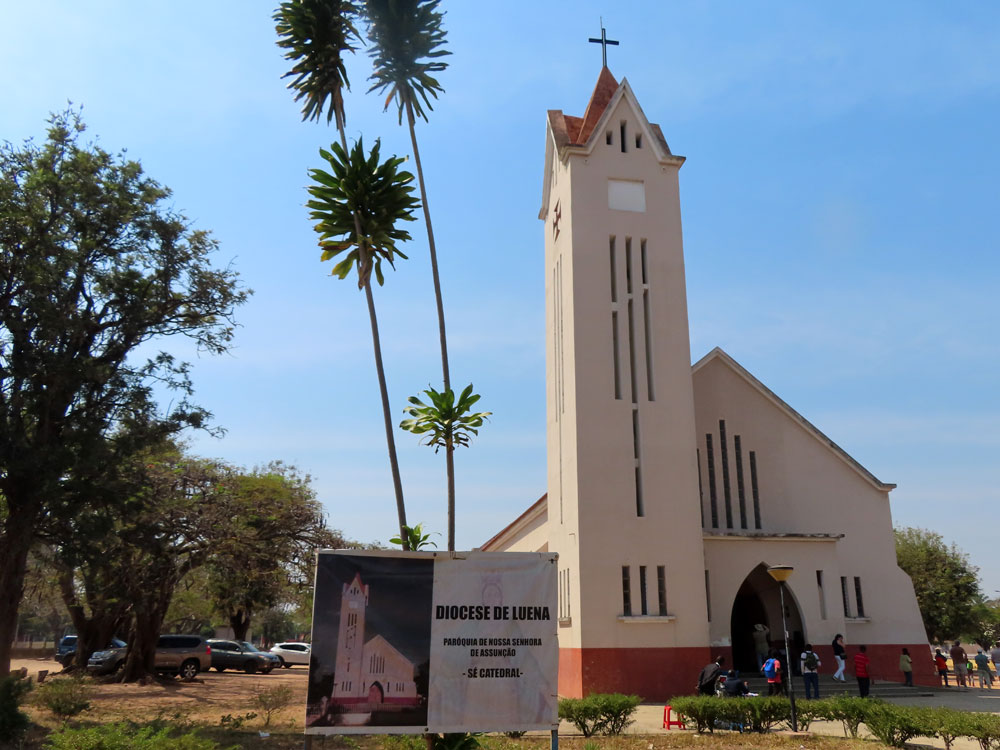
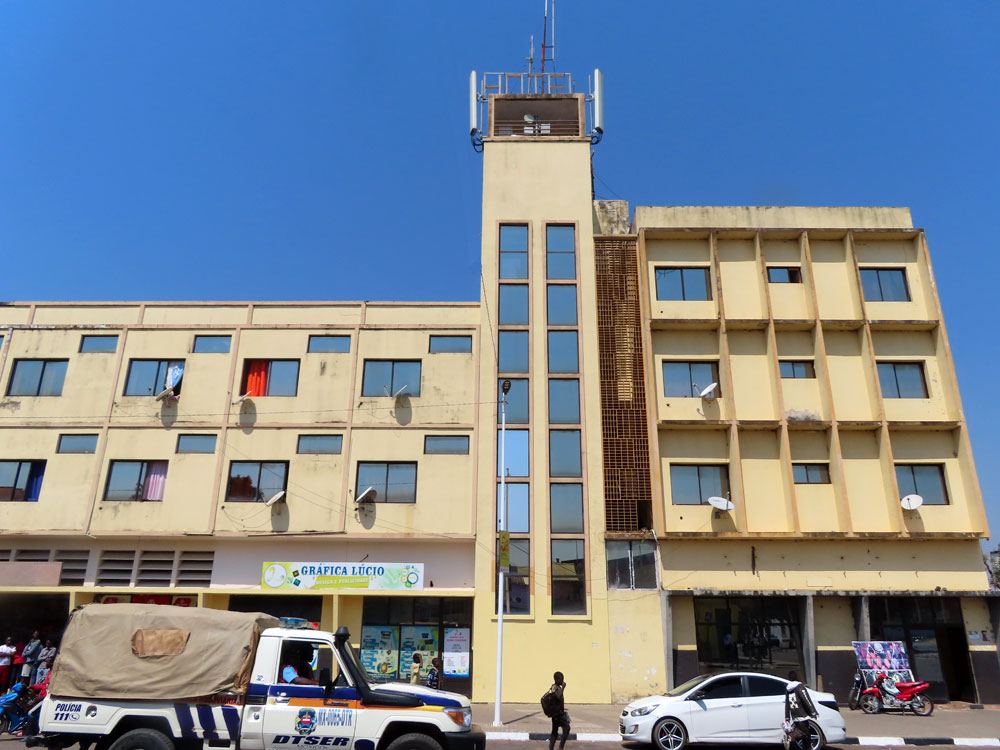
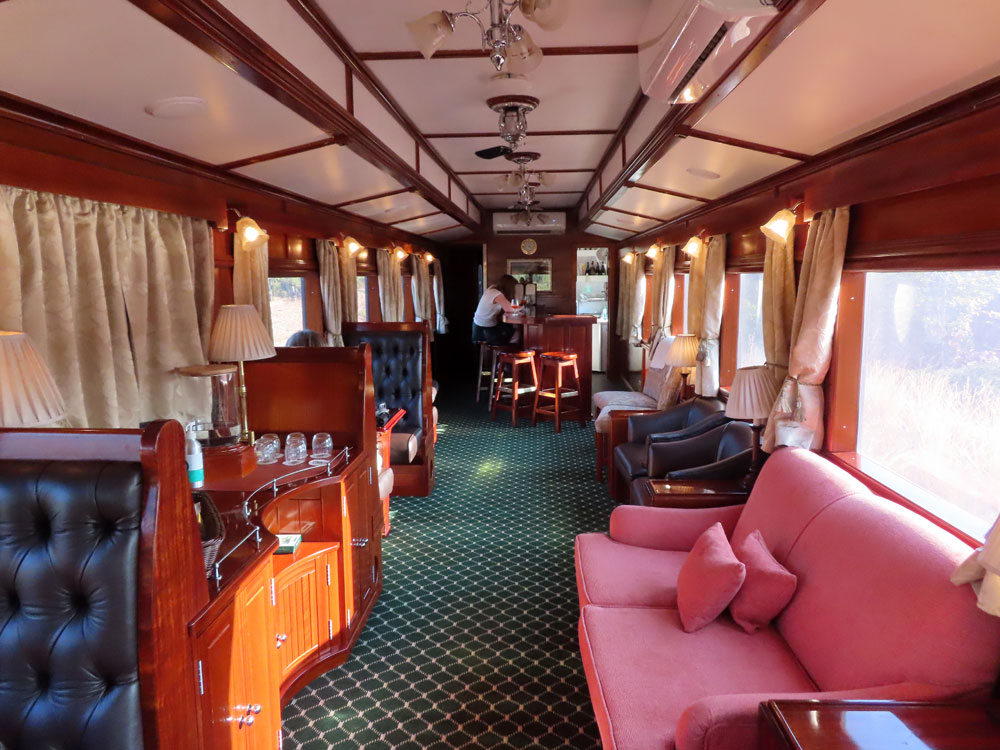
There was a walk around Luena, a larger town than the previous day at 10 am but Chris decided that her ankle was not ready for this and just got off for a few minutes and looked out from the station and then went up to the observation car. There was seem to be only one other lady who stayed on the train.
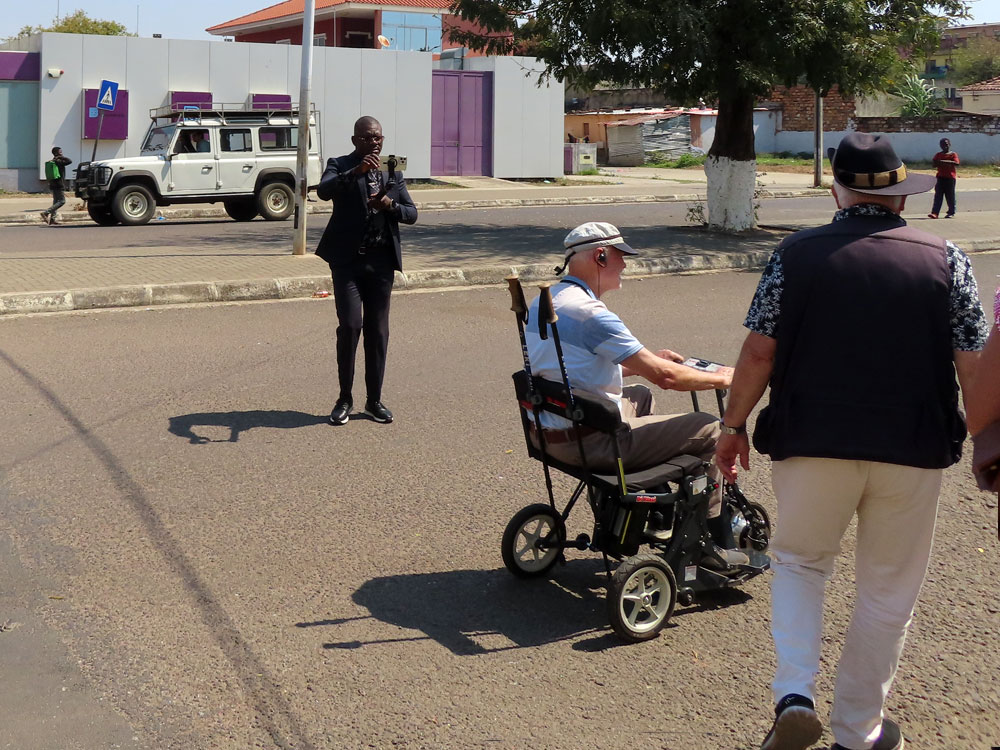
Walking round the town we were constantly photographed by the Secret Police who followed us doggedly. I have no idea what they do with the photos, but we have found similar activities in a number of countries like Spanish Sahara, Turkmenistan, China. Angola does not have a publicly acknowledged "secret police" in the traditional sense, but it does have various security agencies, including the National Police (Polícia Nacional de Angola or PNA) and the Intelligence and State Security Service (Serviço de Investigação e Segurança do Estado or SINSE). The PNA is a paramilitary force under the Ministry of Interior, responsible for maintaining public order and internal security. SINSE, on the other hand, is responsible for intelligence gathering and state security. There have been past instances of human rights concerns related to the actions of these agencies, particularly during the civil war and its aftermath
It did mean however that streets were closed off by uniformed police for us to walk along, and could cross the roads with impunity
The group came back around 11:15 and we had an animated conversation with Tim until lunchtime. After lunch we went back to the observation car until 4.30 when we backtrack to the other lounge car for the second group talk with Nicholas on various scenarios involving Angola.
We went back to the cabin and changed for dinner and then returned to the middle lounge car for our nightly margarita, talking to Peter and Eddie and then Glenda. Glenda join us for dinner back to the cabin for another journey of the train through the night until at least 2 am in order to catch up on the schedule. The rails seem particularly bad to Chris during the latter part of this so she is still dreaming of a decent night sleep.
To get a larger photo, click on a thumbnail below
 |
 |
 |
 |
 |
 |
 |
 |
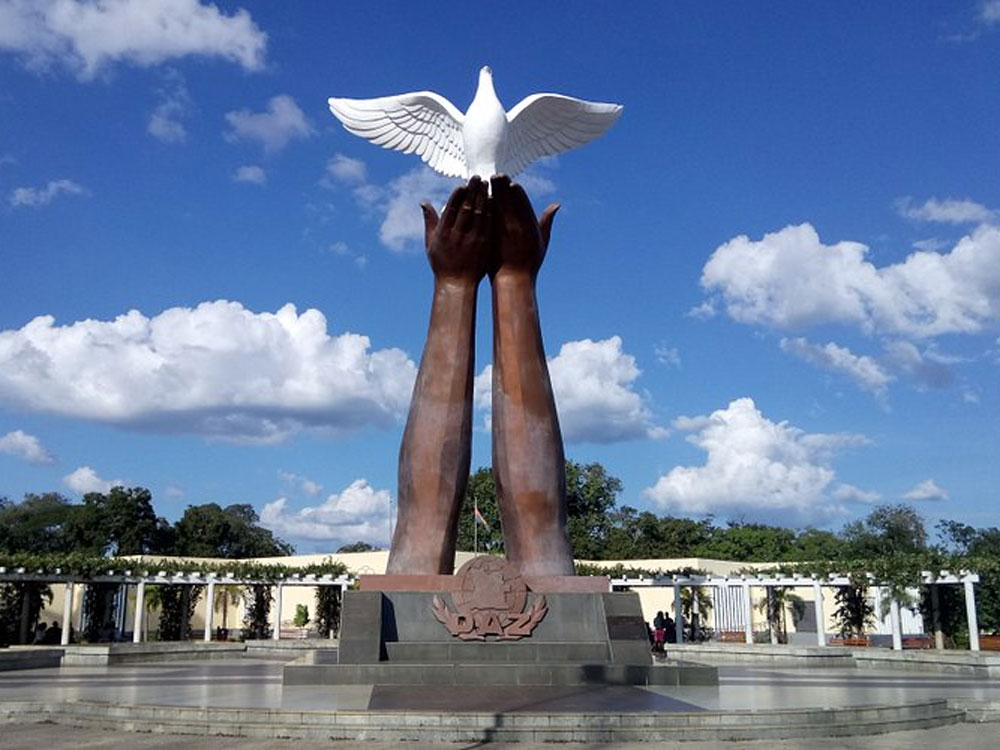
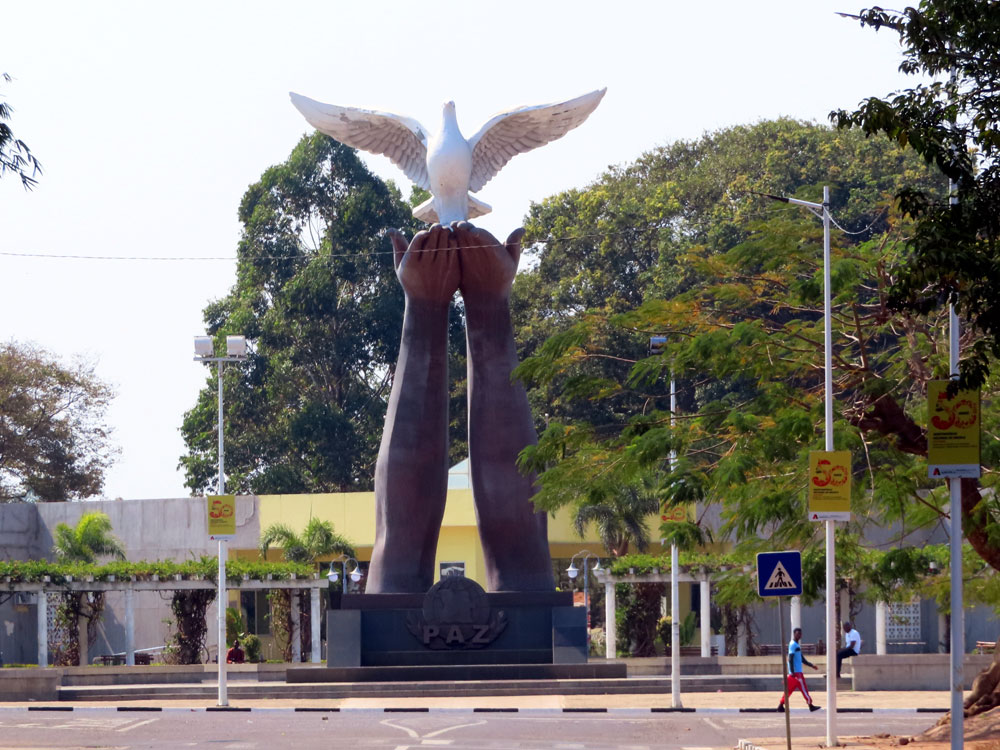
| The peace Memorial | Jonas Savimbi was killed here in 2002 | An Angolan Russian jet from Civil War | Secret Police at work |
 |
 |
 |
 |
 |
 |
 |
 |
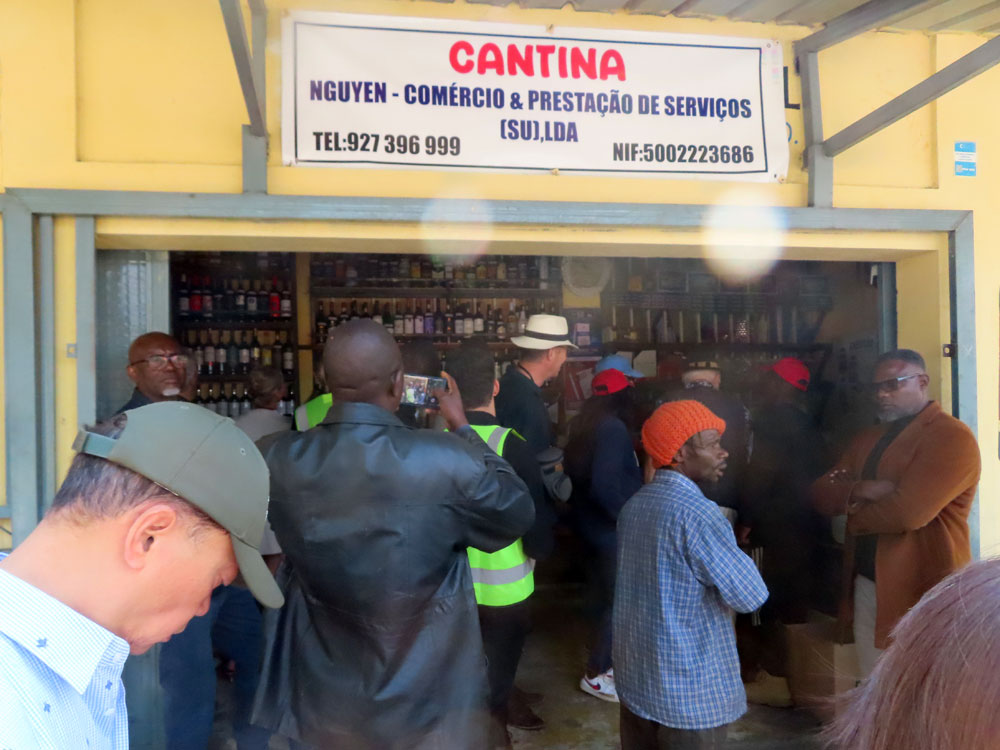
| And this little scenario played out at a small bottle shop .. | ..where guests from the train wanted to buy booze.The local in the | orange tea cosy hat was drunk, shoved to the floor by the police. | But with foreigners looking on he appeared to suffer no more |
 |
 |
 |
 |
 |
 |
 |
 |
| The ubiquitous Secret Police | Checking his camera | This chap (probably) was a real journalist. I asked him if he was .. | ..Secret Police, and he showed me his Press Pass |
 |
 |
 |
 |
 |
 |
 |
 |
 |
 |
 |
 |
 |
 |
 |
 |
 |
 |
 |
 |