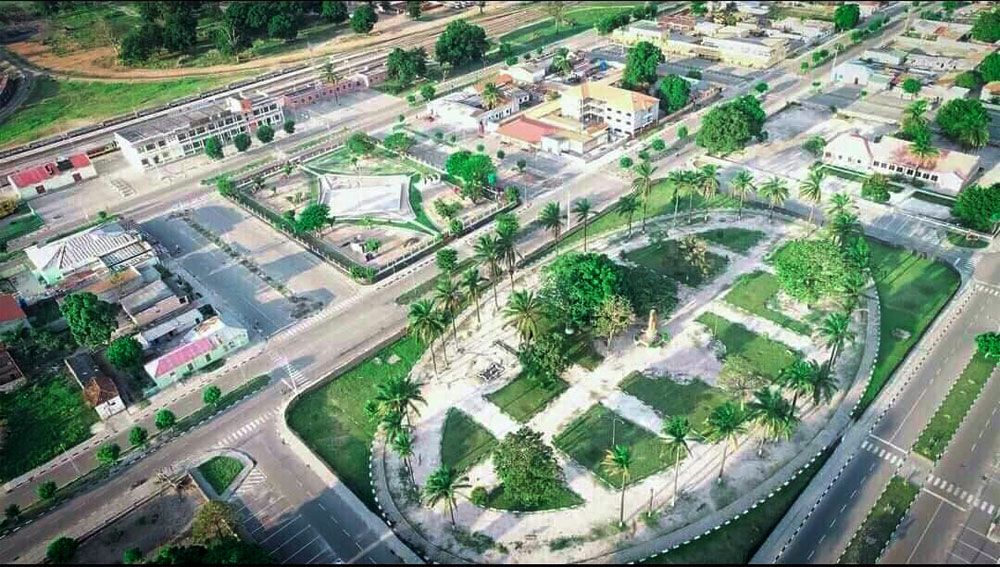
Until independence, the town was called Teixeira de Sousa having been named after the Portuguese Prime Minister António Teixeira de Sousa. The town once had a population of nearly 90,000 due to its creation as a stopping point on the Benguela railway, which continued east to cross the nearby Luao River and enter Dilolo, where it connected to the Katanga rail network. It was developed as a railroad town by Sir Robert Williams, a friend of Cecil Rhodes. The town has downsized considerably since independence.
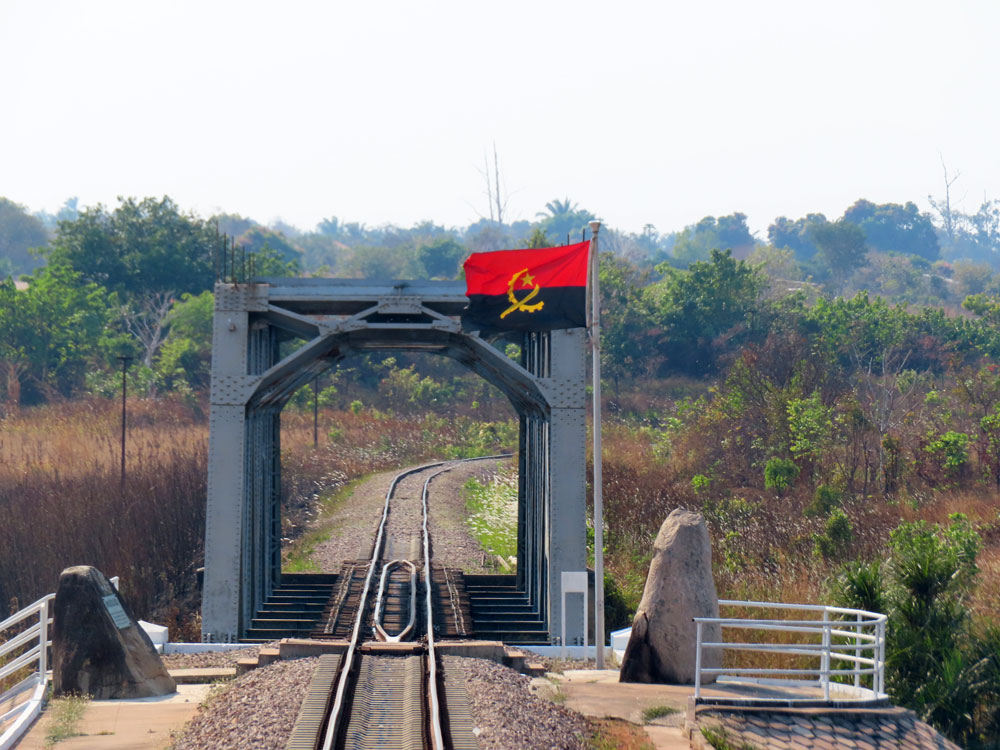
The Benguela railway connects Luau with the port of Lobito, Angola to the rich minerals of the Katanga province of the then Belgian Congo. The railway and town were very successful until the Angolan Civil War, when the infrastructure of Angola, as well as most industry, ceased to be productive. As a result of the war, there are also considerable amounts of mine-fields around the town, making transportation and development considerably difficult. After the war, the railway was slowly rebuilt, and the first train reached Luau in August 2013. Today the town is isolated, as thee is little cross border traffic, and appears to have half the pre-civil war Population
Aug 2, Saturday. From the DRC to Luau, Angola.
The clocks went back an hour overnight and when we woke up quite early, we were already on the border. We stayed here for some time with Lawrence negotiating us out of the DRC.
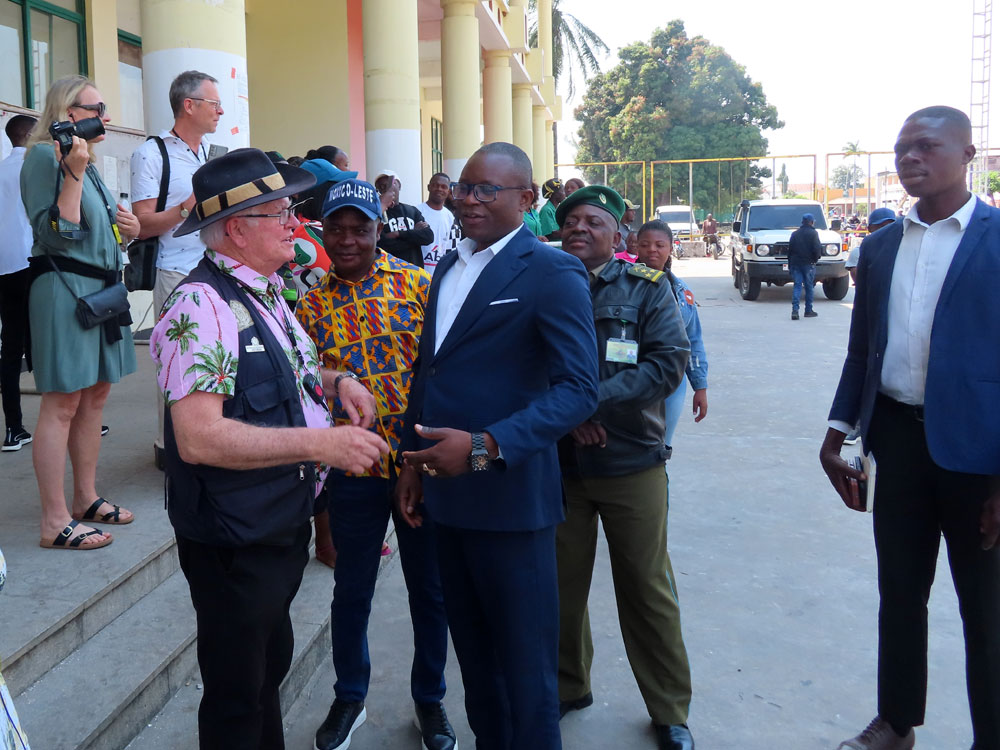
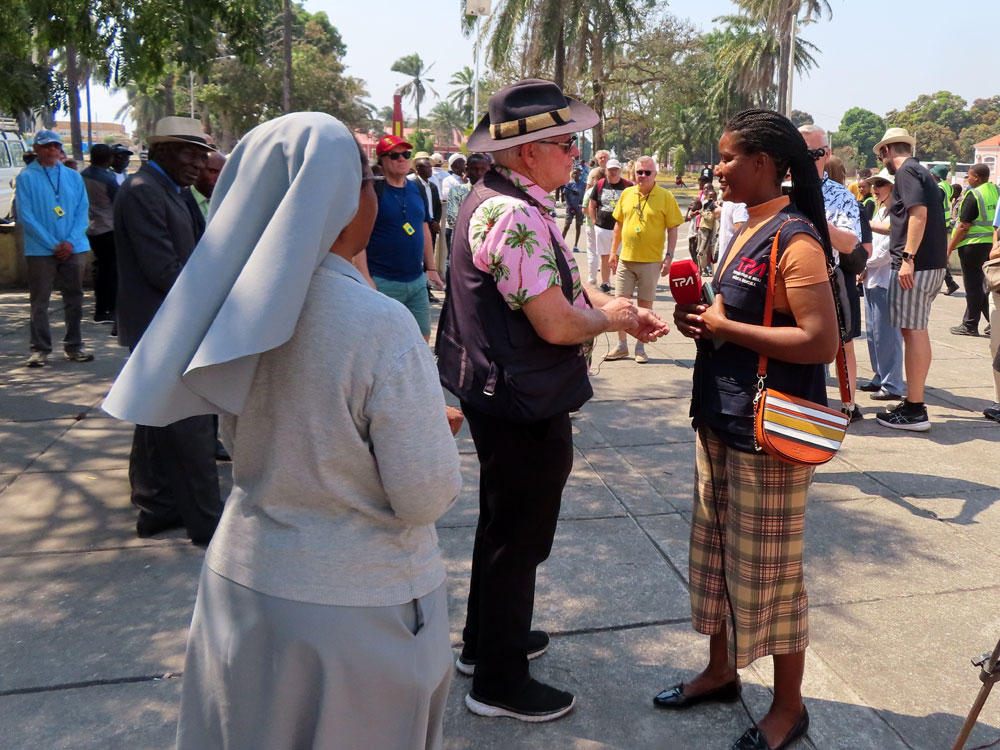
After breakfast we went straight up to the observation car but then found that in fact, there was a walk at 10:30 am so it was not really worth the effort. We all followed Nicholas round this small town of Luau and were accompanied by half the town. Apparently nothing happens at all in this town which is right on the border and our arrival was the highlight of the year, cameras recording as we walked round the block of three tree lined avenues near the station and then back to native dancing show.
But by this time my ankle was hurting so much and I went back to the train. But they did not have any doors open onto the train so I just sat on an ice box near the train for 15 to 20 minutes until the door was opened. After this very little happened during the day. After lunch we sat in the nearest lounge until lecture at 4 pm by Nicholas on Angola. Then sat at the back of this lounge for another half an hour reading and eventually went back to the cabin for half an hour to change before returning into the lounge again for a margarita, then dinner.
One of these unfortunate things about being in the civilised country of Angola is that apparently they do not deal with Starlink and so they will not be any Internet for the next three days.
Thought for the day. On Monday 28 July bad rioting had broken out across Angola because of price hikes on petrol. Angola is one of Africa’s largest oil producers, but the country does not have enough refineries to meet domestic demand, so it imports diesel and gasoline at high prices. At least 22 people have been killed and more than 1,200 arrested in violence that erupted during protests this week in Angola sparked by the government's decision to raise the price of fuel, the president's office said on Wednesday. Joao Lourenco's office released the death toll in an official statement and said that 197 people were also injured in the two days of violence that began on Monday and spread from the capital, Luanda, to at least six other provinces in the southern African nation. Earlier this month, the government said it was removing subsidies on diesel and raising the price by more than 30%.
It is likely that this was the reason for continual armed police following us day and night in Angola, including guard at all level crossing. It crossed my mind that the lack of Internet may have been to stop us finding out about the riots. It is unclear whether Starlink is currently approved by Angola Government
To get a larger photo, click on a thumbnail below
 |
 |
 |
 |
 |
 |
 |
 |
 |
 |
 |
 |
 |
 |
 |
 |
 |
 |
 |
 |