
Railway Museum
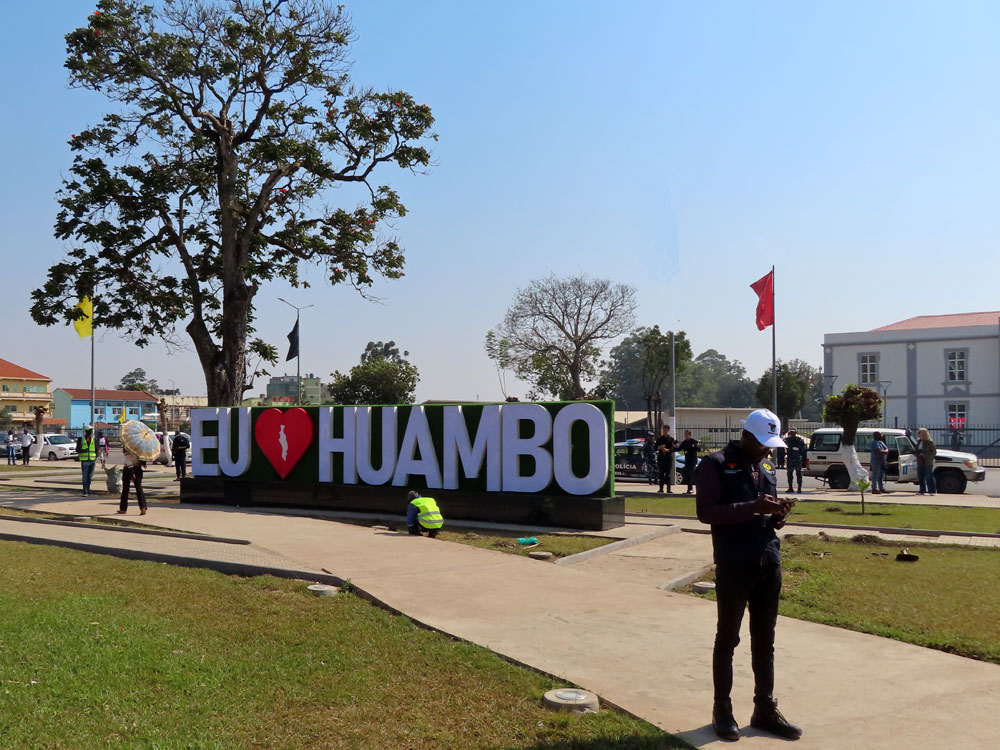
Huambo, formerly Nova Lisboa, is the third-most populous city in Angola, after the capital city Luanda and Lubango, with a population of 595,304. The city is located about 220 km E from Benguela and 600 km SE from Luanda. Huambo is a main hub on the Caminho de Ferro de Benguela (CFB) (the Benguela Railway), which runs from the port of Lobito to the Democratic Republic of the Congo's southernmost province, Katanga.
The origin of Huambo and the economic importance it reached under Portuguese administration is very closely linked to the construction of the Benguela Railway, which had started in the coastal town of Lobito in 1902. This railroad had been devised by the British entrepreneur Sir Robert Williams as the easiest and cheapest way to link the rich copper mines of Katanga, in Belgian Congo, with a point on the coast from which the mineral could be exported. The Lobito bay was admittedly the best natural seaport in the whole continent. The construction of the railway initially advanced with great difficulty, due to the ruggedness of the terrain, the prevalence of malaria and, to some extent, the resistance of the natives. Huambo was found to be a strategic place for many reasons. A benign climate (greatly due to its high altitude, 1,700m) and the presence of abundant water resources in and around made of it an ideal spot to have a hub on the railway. Once this was achieved, the works progressed comparatively faster and the link with the Belgian Congo border was completed in 1929. By then Huambo had become the site of the most important railway workshop in Africa.
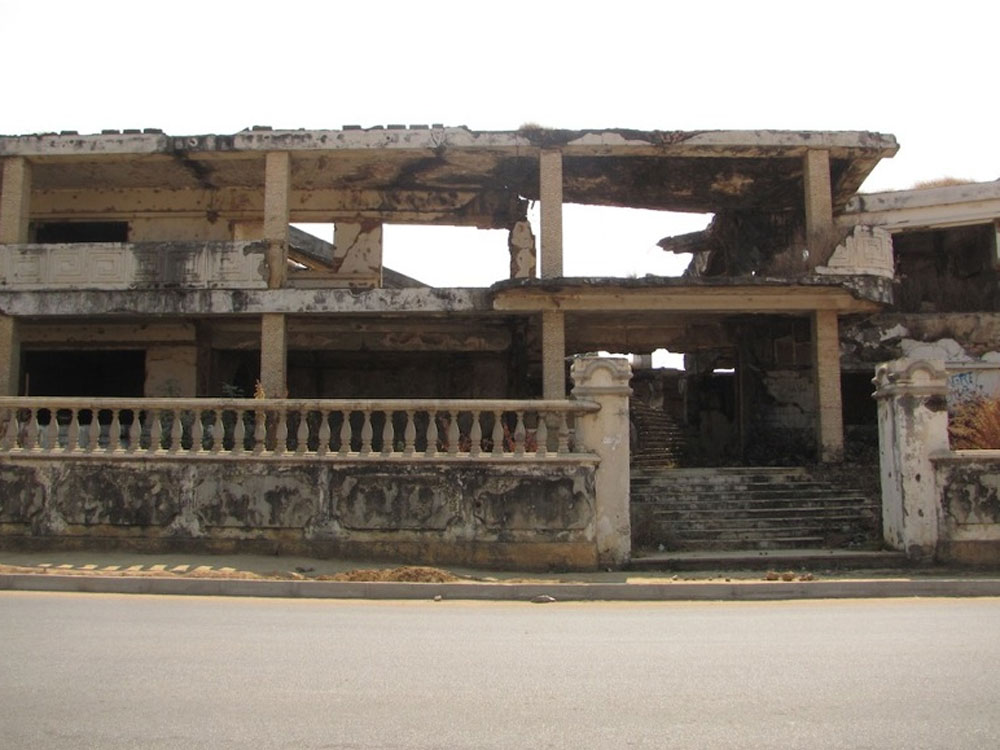
Huambo became the site of the brutal 55 Day War and other battles during the bloody civil war between the MPLA and UNITA, that lasted from independence in 1975 until the death of rebel UNITA leader Jonas Savimbi in 2002. The city was besieged, extensively damaged, and its civilians were massacred en-masse or fled the city. It ws only after Savimbi's death that peace returned to Huambo, and indeed to Angola
Aug 5. Tuesday, Huambo. Angola
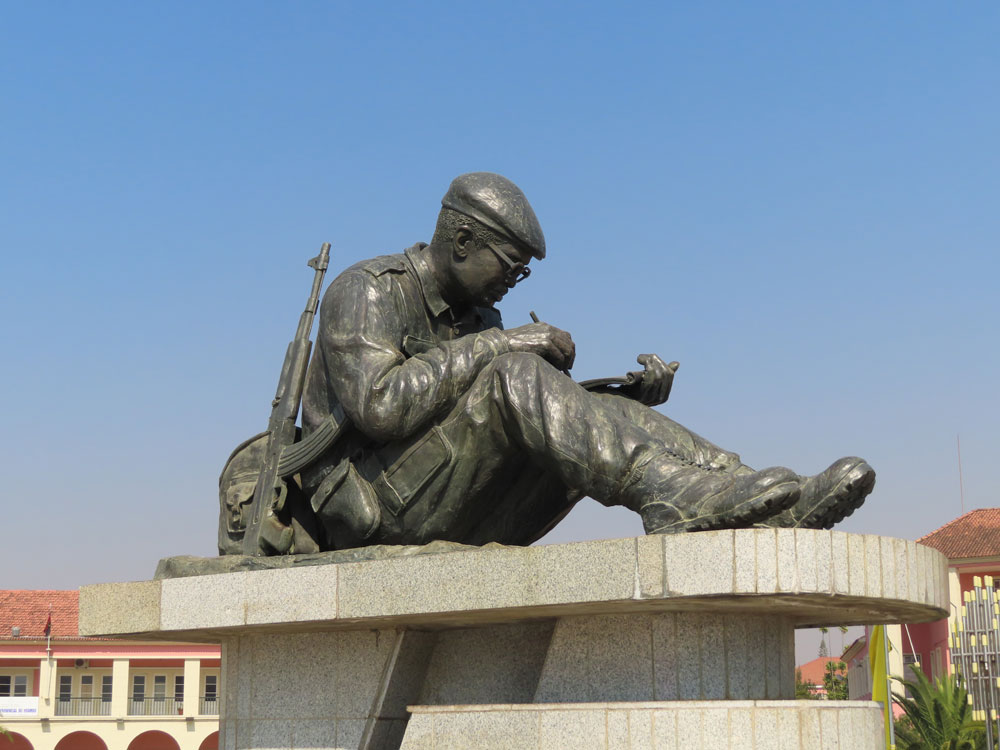
We alighted at Huambo at 9 am and we were first driven to a very large square roundabout where there was a statue of Neto, the first president of Angola in 1975 when independence was obtained from Portugal. Chris sat on a bench there but others walked around.
We then proceeded to to another park where the guide wanted us to alight. Nicholas thought that this was futile: but the guide eventually won the day that we stayed on the coach and were there for well over half an hour. Eventually the others returned, just one or two have bought a souvenir. The guide was unable to understand that we were slightly annoyed by this waste of time.
Then a shorter stop at the church before reaching the site of several somewhat dilapidated tanks, remnant of the Civil War which ended with a peace accord in 2002.
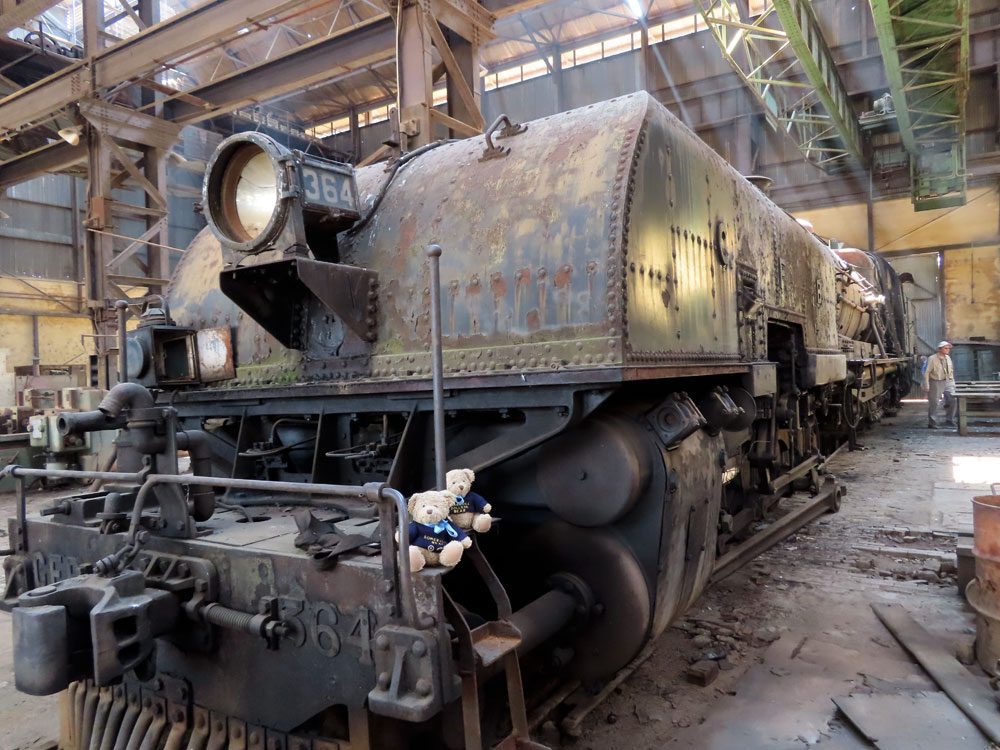
The final stop was at the workshops of the Benguala Railway. The workshops had long since been abandoned and there was a ghostly effect in these damaged and dusty huge workshops. Rohan Vos was in his element here and gave various explanations of technical things. We were marched to another of these immense abandoned buildings where there were steam engines as well as random abandoned machinery. One was the discernable ghost of a steam express locomotive, that must have been really something in its day.
Back on the train with about 30 minutes to spare before lunch, we sat in the middle lounge And proceeded to the observation lounge after lunch. The final lecture by Nicholas at 4:15 pm: on the last battle of the Cold War - the Battle of Cuito Cuanavale which was fought intermittently between August 1987 and March 1988, south and east of Cuito Cuanavale, Angola.
Before lunch we had had a long chat with Rohan in the middle lounge, he telling us all his problems especially with South African politics, he also said that he had checked out on our booking procedure and his his staff had assured him that it had been done quickly and efficiently. After the talk, we remained at the back of the middle lounge observing the scenery which had been quite dramatic between 1 pm and 4 pm as a train to descended from a high plateau. Then back to the cabin to change for the 1920s evening, before a cocktail in the lounge chatting to John and Glenda indeed along with others in magnificent 20s dresses and headbands. Dinner was followed by Lawrence presenting his team , so dinner was a trifle longer than normal. Eventually back to the cabin, sleepwalking.
To get a larger photo, click on a thumbnail below
 |
 |
 |
 |
 |
 |
 |
 |
 |
 |
 |
 |
 |
 |
 |
 |
 |
 |
 |
 |
 |
 |
 |
 |
 |
 |
 |
 |
| Savimbi's bomebd house. The ruins date from 2002 and it has neither been leveled nor restored. Presumably neither option . | . is politically possible here. The police would not let us stop, nor get out of the bus, just a photo from our movong bus | ||
 |
 |
 |
 |
 |
 |
 |
 |
 |
 |
 |
 |
 |
 |
 |
 |
 |
 |
 |
 |
 |
 |
 |
 |
 |
 |
 |
 |