July 21 Monday. Kigali to Dar es Salaam
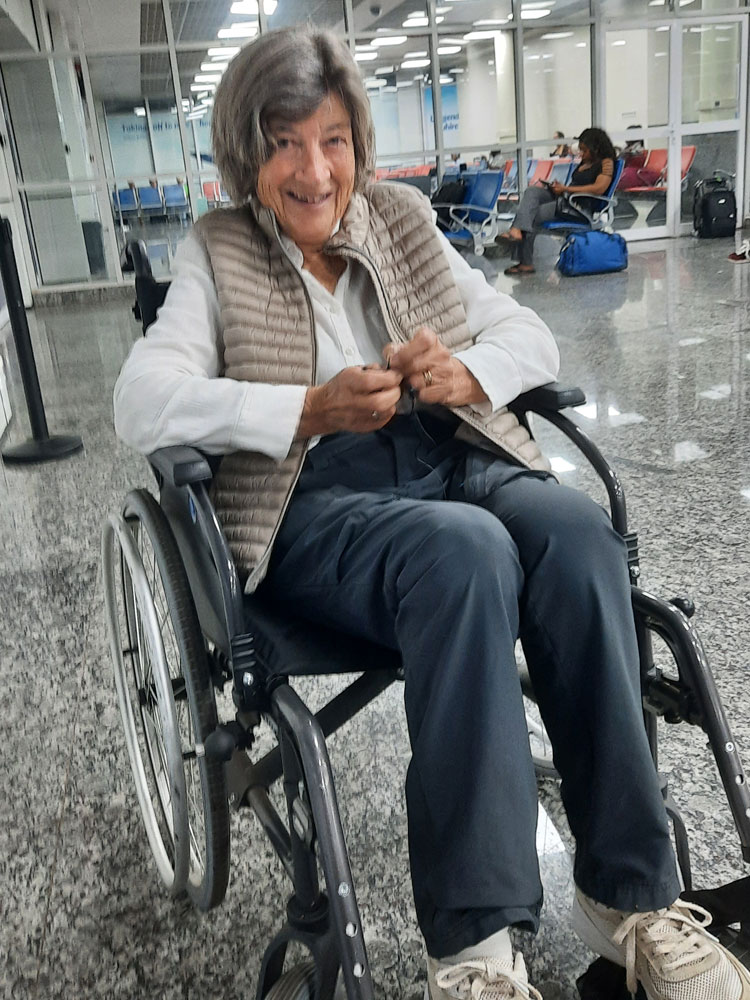
A long night with a 2 am take off on Ethiopian Airways to Addis Ababa and then a change to Dar es Salaam. It turned out that we stopped at Entebbe en route to Addis Ababa as well. The planes were full nearly all the way but each hop was fairly short so it was not too painful, but we did not get much sleep at all. We landed in Dar es Salaam after 11 am . The ankle was still problematic and I had had a wheelchair which was great fun off the plane right through passport control and luggage retrieval to the front door of the airport. Using this wheelchair service certainly saves time in foreign airports like Dar: we thought the terminal had been built since our last trip here which had been chaos coming through into the country. This time it was a new terminal with better immigration services
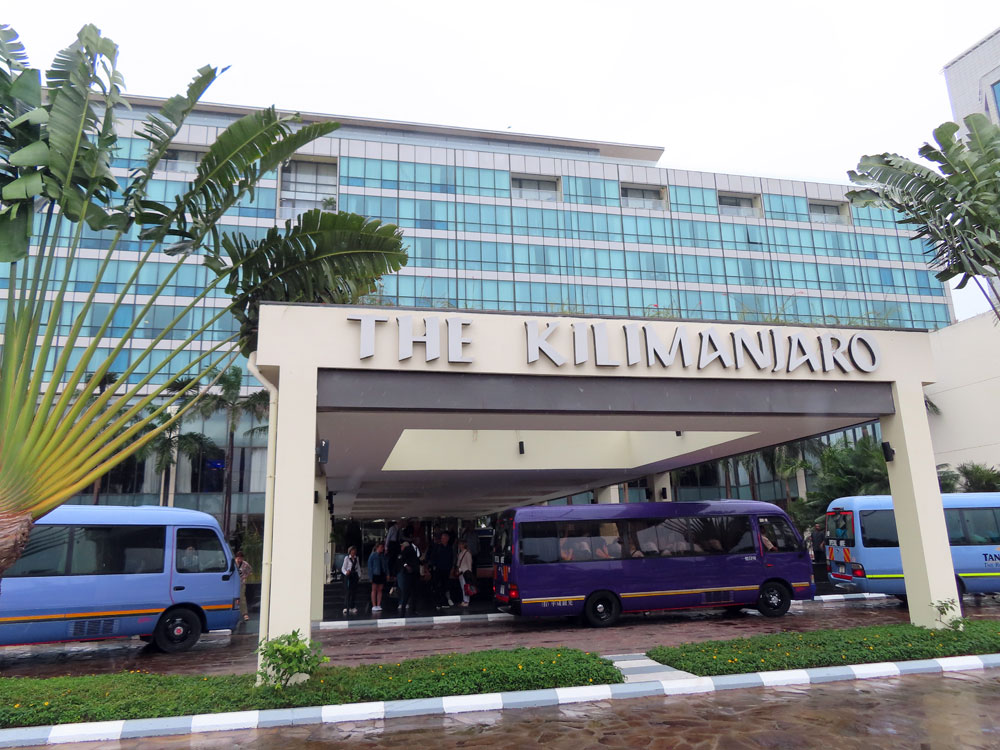
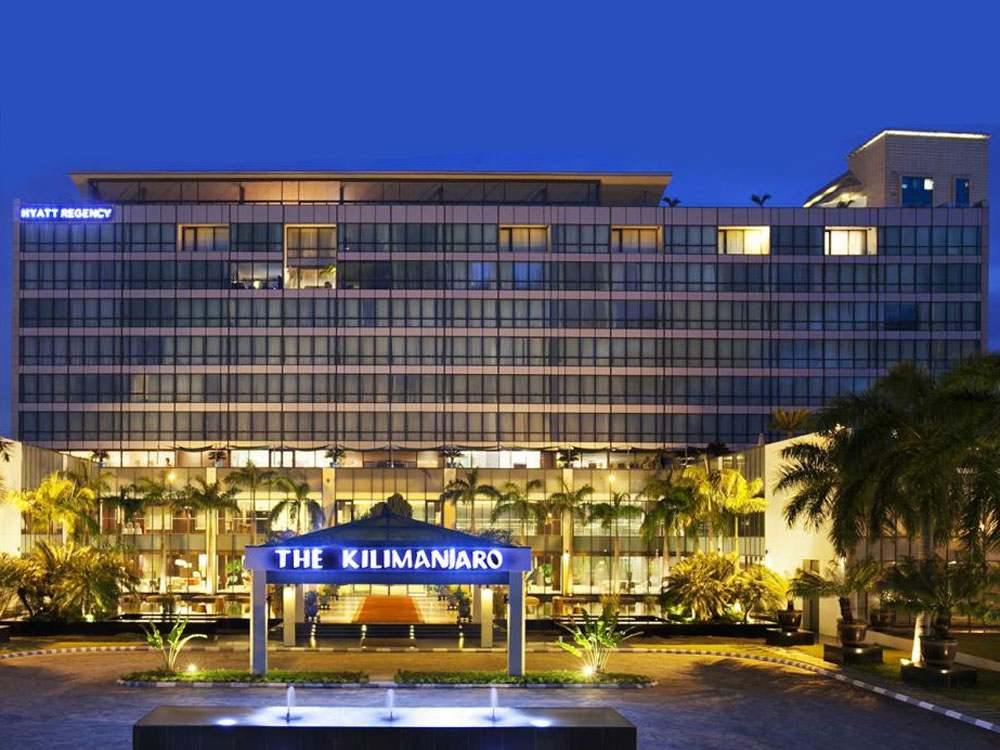
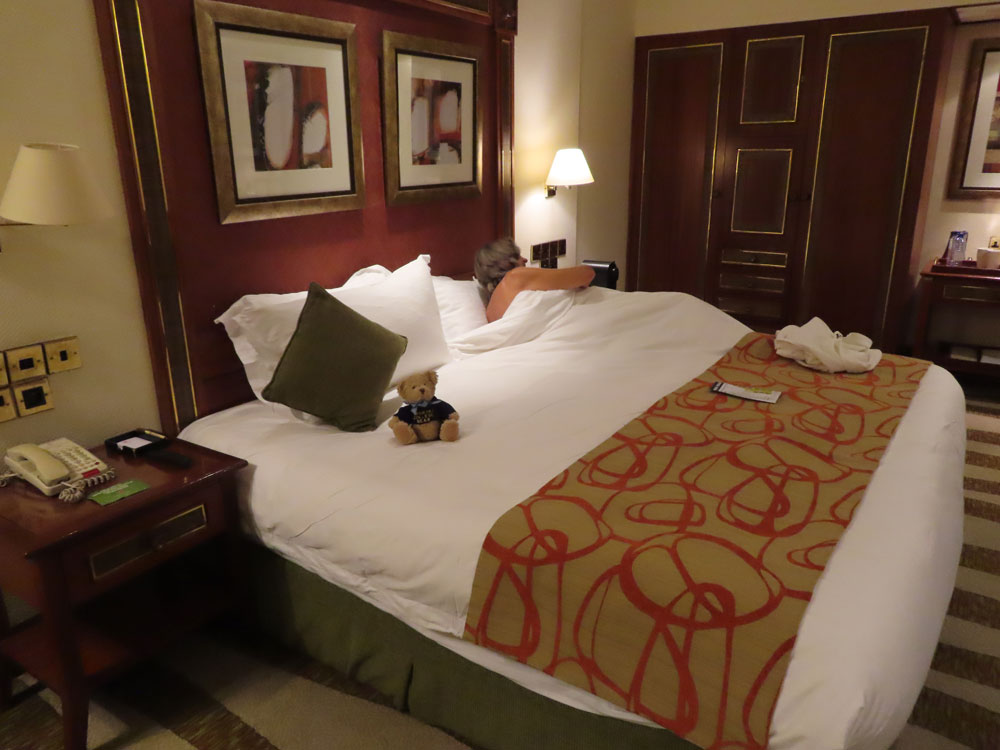
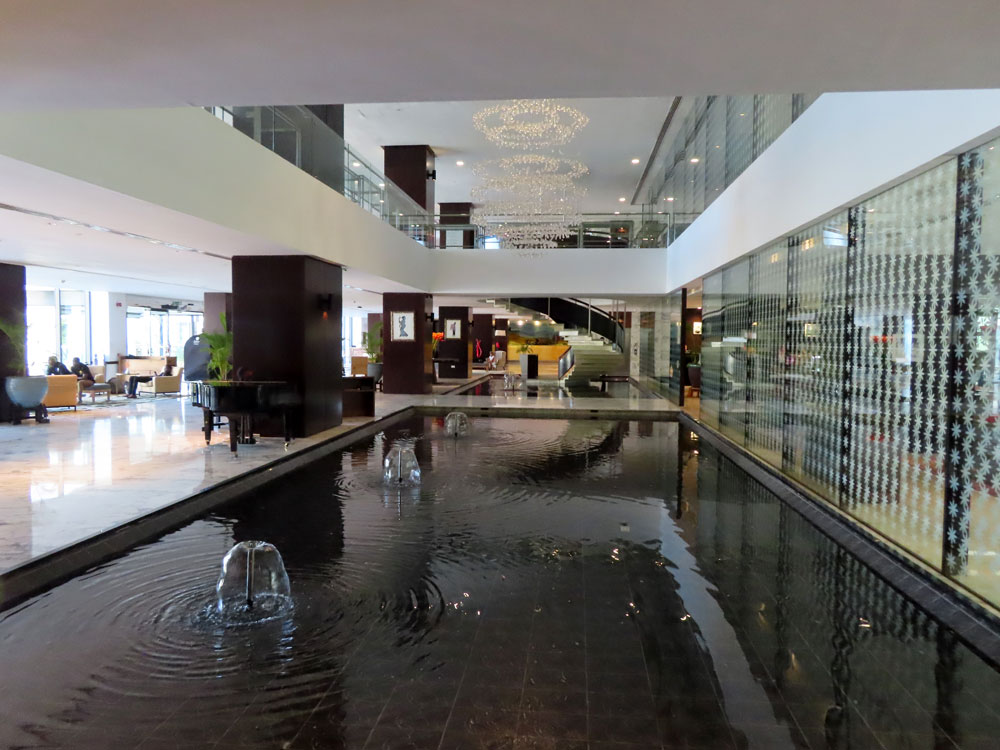
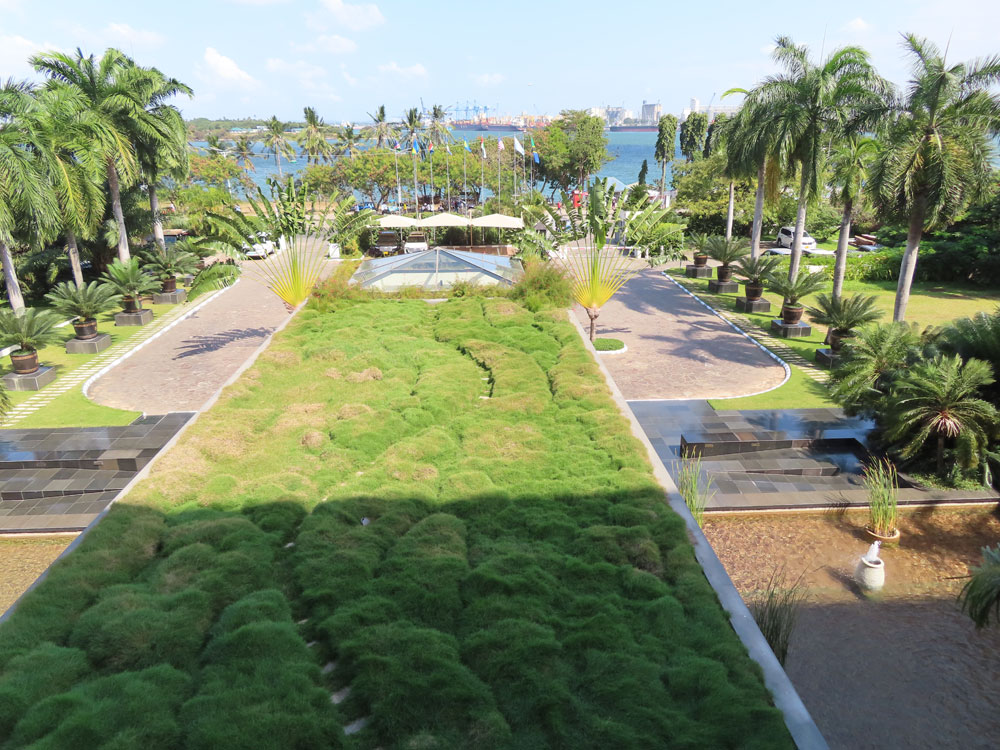
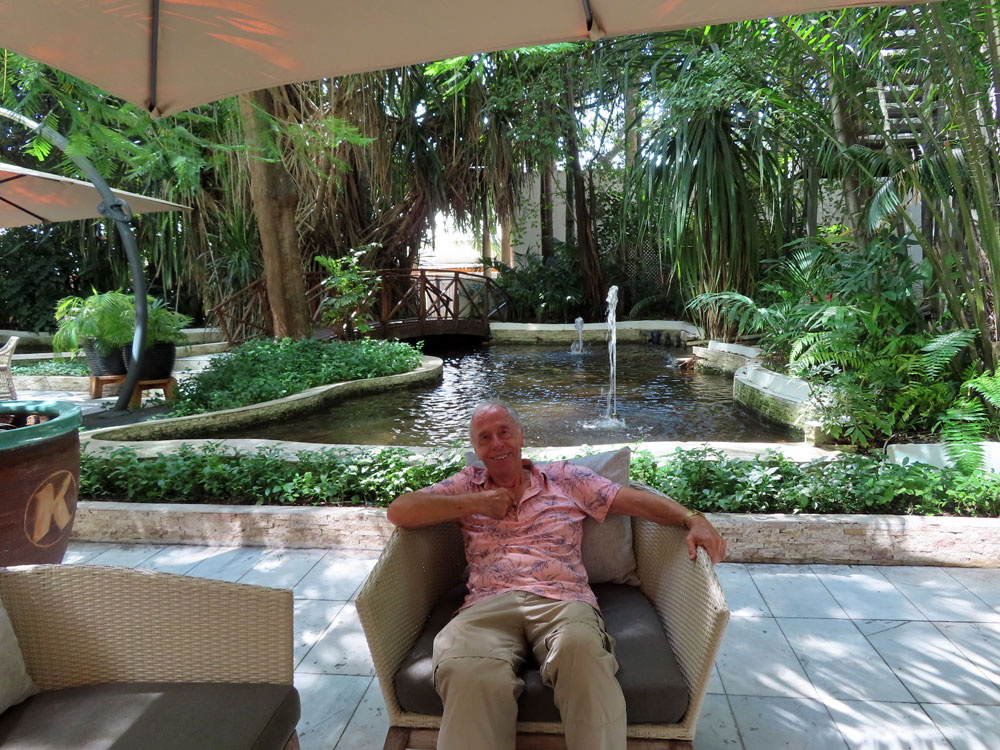
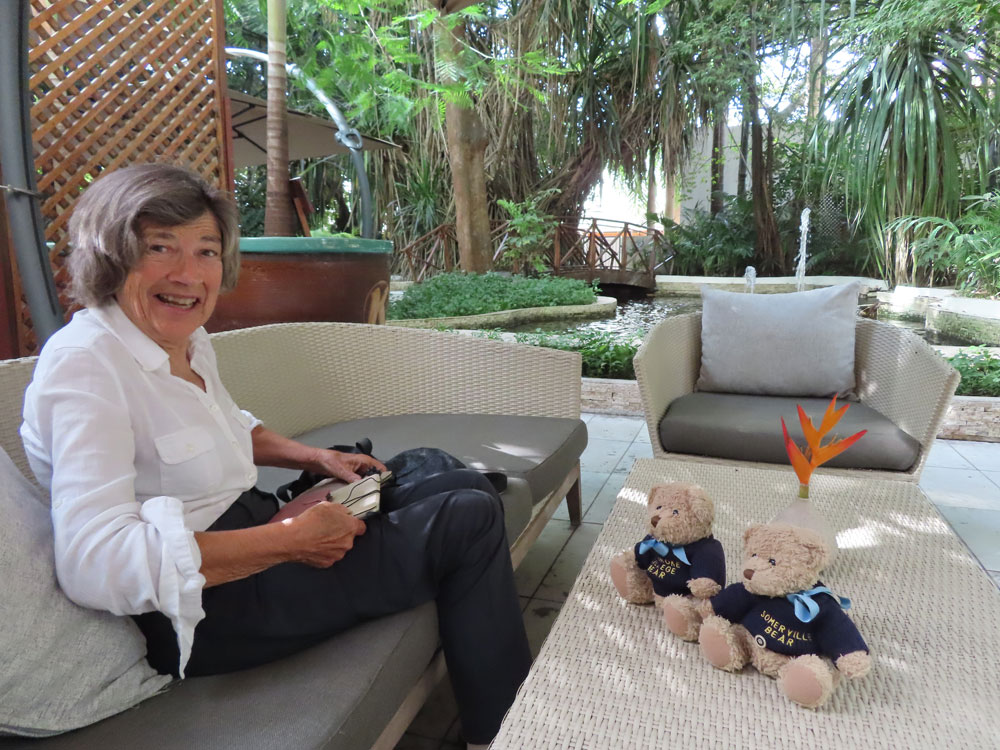
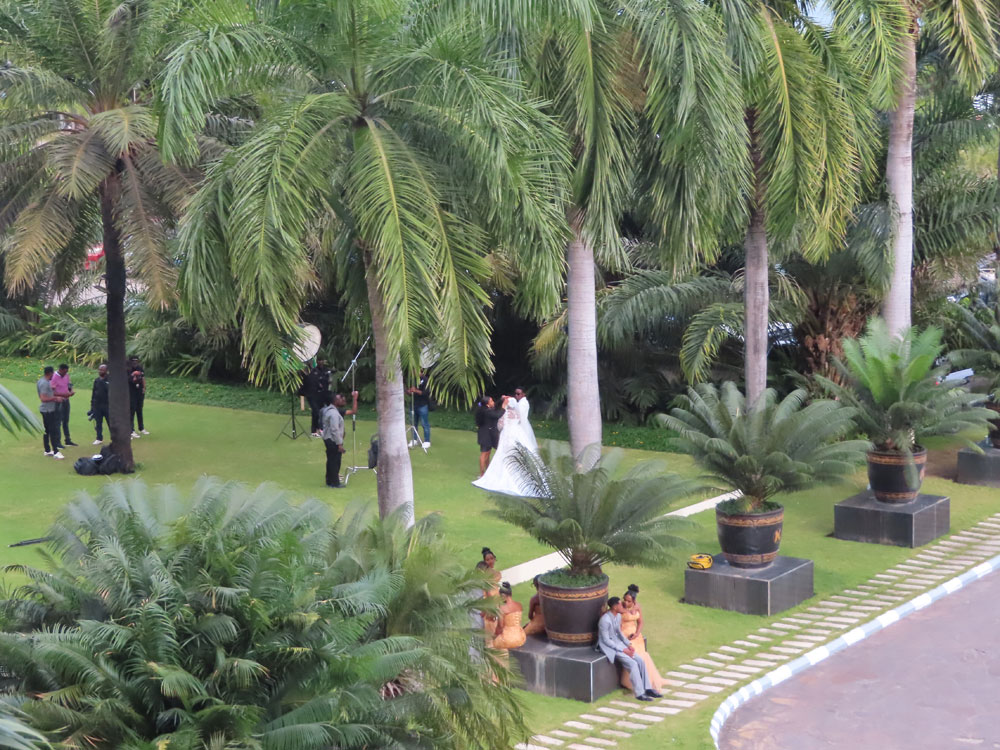
We were in the hotel Hyatt within an hour, needing a taxi to get there as the Uber network did not seem to stretch to the airport. The reception was good and we were shown into room 503 which had a view over the front of the hotel: rooms overlooking the swimming pool were double the price which hardly seemed worth it for one night. We unpacked a little and then had a coffee and a snack before going down to the Club Room. Here we were able to get a coffee and biscuits. We sat outside in what was a really idyllic place with a fountain playing on a pond.
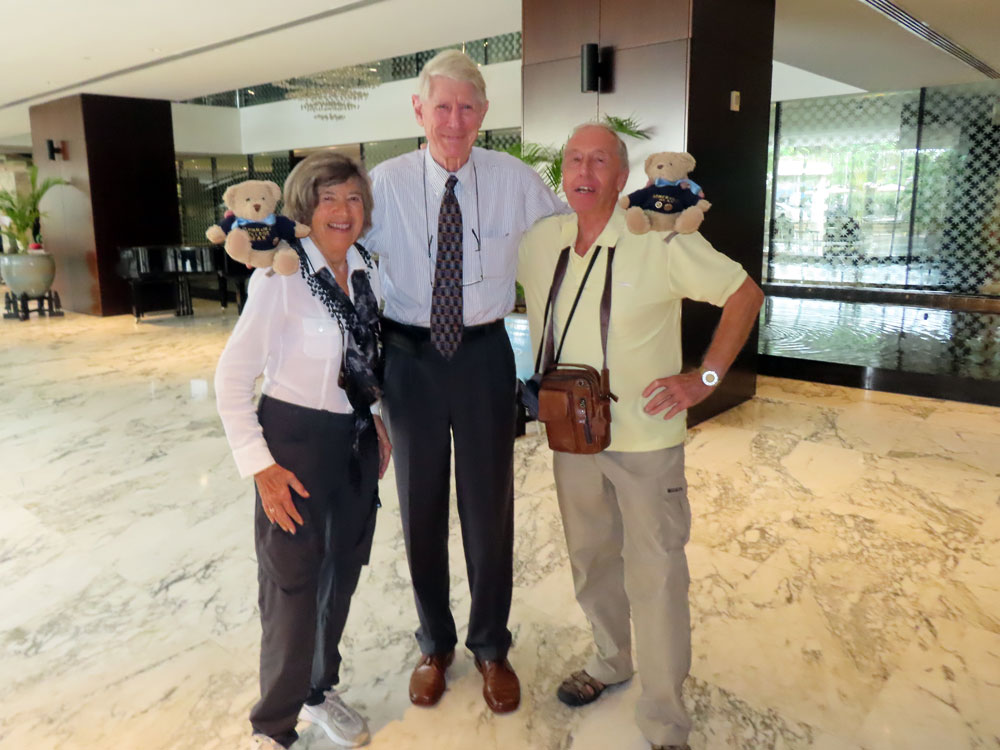
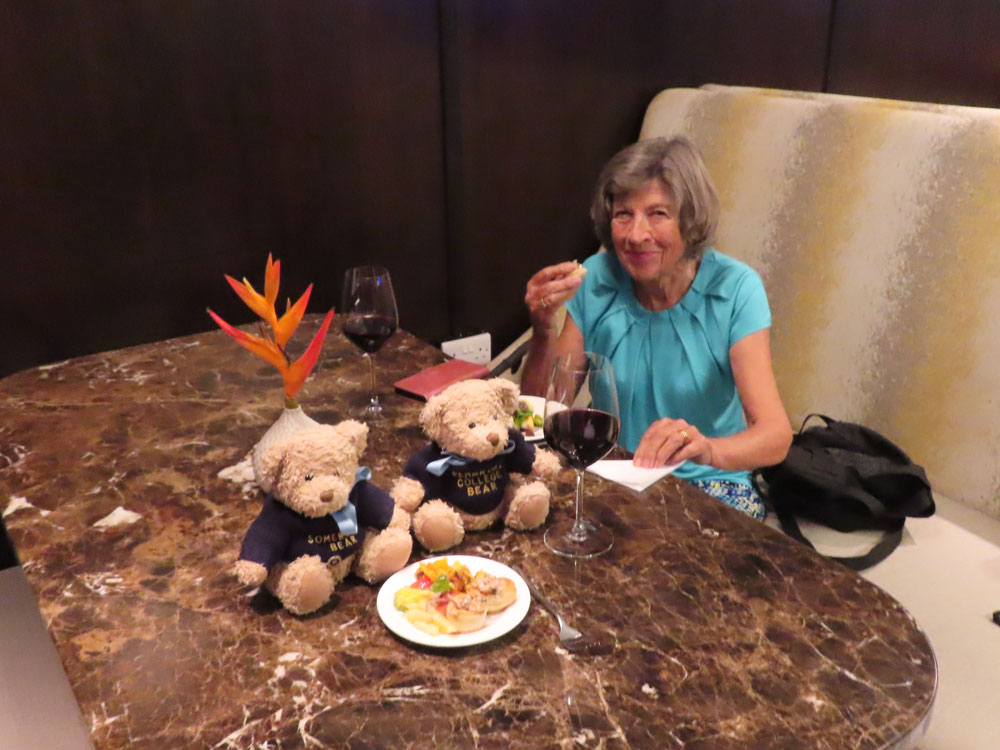
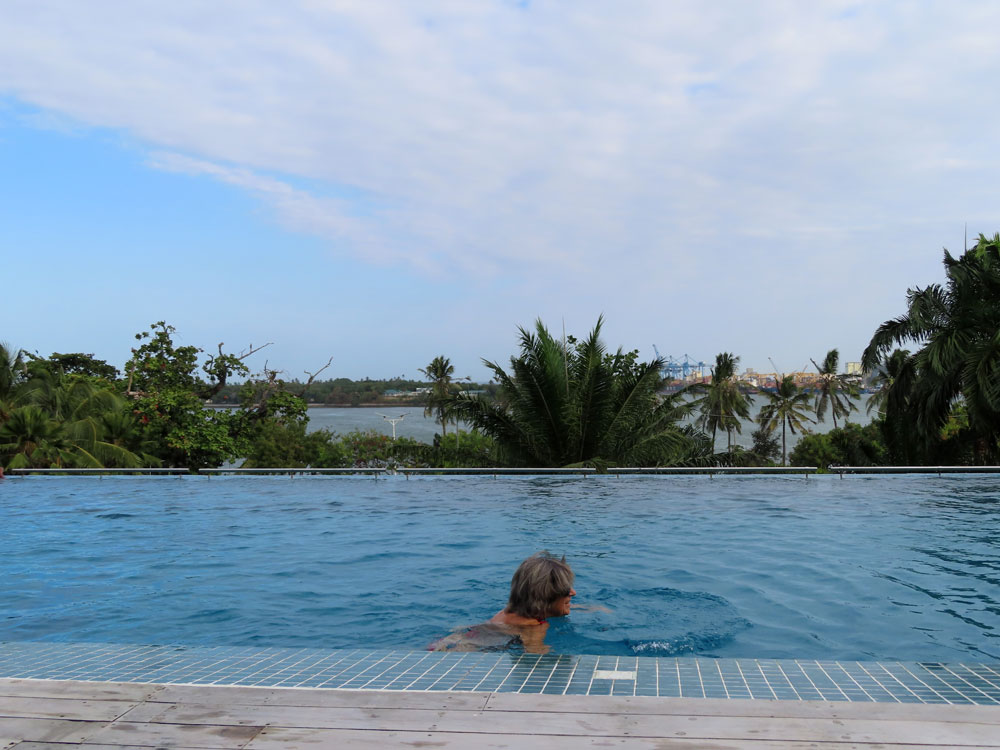
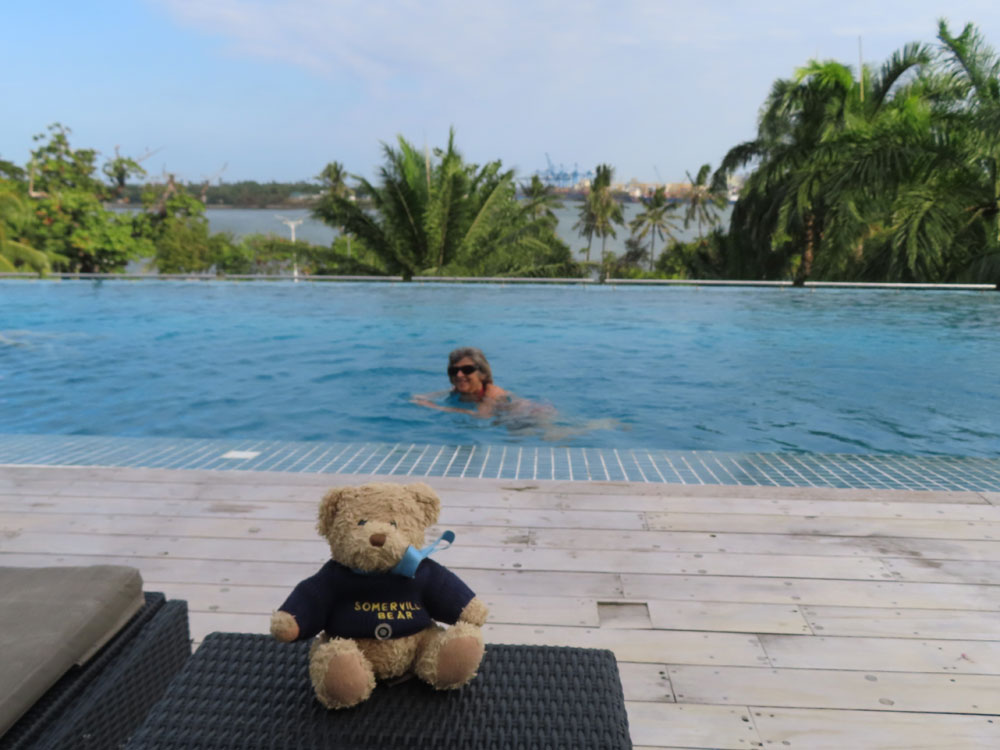
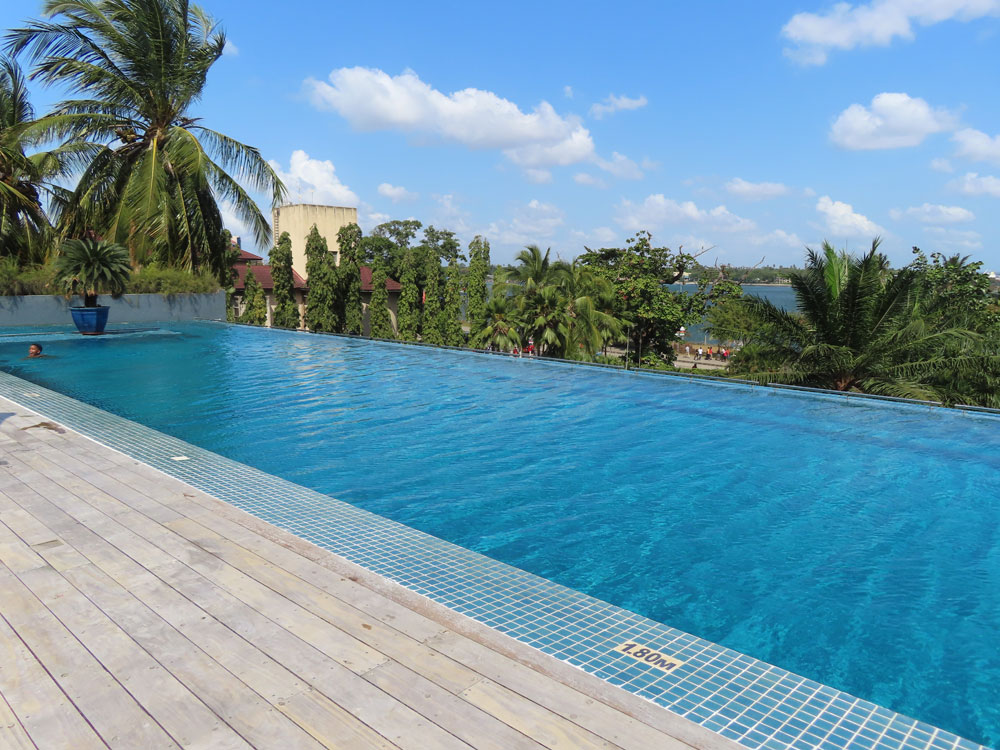
At 4 pm we came back up to the room and I got changed for a swim. The swimming pool was large and overlook the sea, great to swim in but difficult to get in and out. It was marginally spoilt by four or five yelling kids the whole time we were there. We then went back to the room and I cut David’s hair and we had a bath before going down to the club room for a free drinks at 6 pm . We had a glass of wine and there were wonderful tapas to eat which provided us with more than adequate dinner. David introduced himself to Peter and Ad die, from the Netherlands, who were also going on the Rovas rail train tomorrow and after awhile we joined them for an hour or so having a good conversation on the world and past history. We then retired to the room about 9 pm ready for a start not too early in the morning.
To get a larger photo, click on a thumbnail below
 |
 |
 |
 |
 |
 |
 |
 |
 |
 |
 |
 |
July 22 Tuesday, Dar es Salaam to the Rovos Rail Train.
We had a pleasant breakfast in a large area a restaurant of the hotel . David had problems with the hotel on checking out as they wanted to charge him for a dinner that we had not eaten And had he had to wait a long time and did not really get an apology.
The root of the problem was not the charge for a dinner we did not have, but was a management problem in that they do not have the right protocols in place to deal with this sort of event speedily and efficiently
1. On checking out, the receptionist want to charge me for dinners we did not have
2. She said she would have to find the paper work with my (non existent) signature
3. She disappeared for several minutes and returned with a sheaf of papers which she proceeded to view
4. She then told me she had to call Restaurant manager. He did not answer his phone.
5. She then got an assistant manager to the desk, who again waved her arms around for some minutes. And was not able to find out anything one way or another
6. Eventually we were told we could go and that the hotel would “sort it”. No apology was offered
7. By now 20 minutes had passed with us at the desk, and our fellow travellers curious as to what we had done wrong
8. The staff are clearly more concerned with avoiding displeasing their line superiors, than they are with the guests
9. My assumption is also if I had tried to leave the hotel during this 20 minutes, that I would have been prevented from leaving by security
As I said the hotel have a management problem. I assume that the receptionist was following instructions
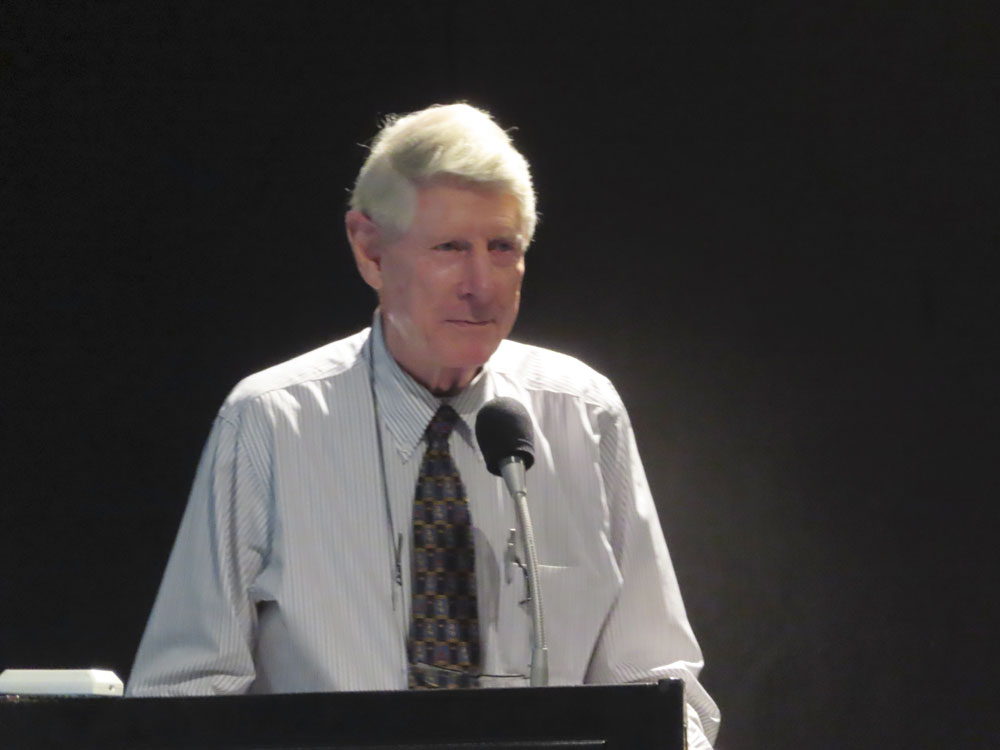
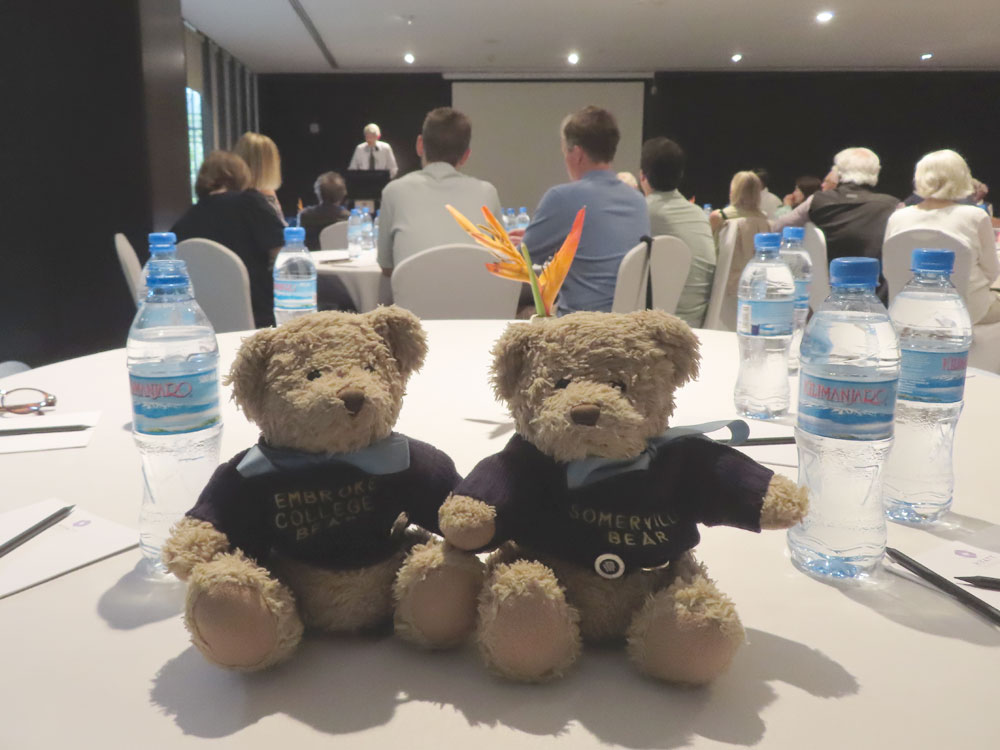
We then checked in to the Rovos rail desk. Here we came across Rohan Vos again, and presented our bears to him (he had his photo with them on our last trip on Rovos) and he was absolutely delighted and insisted on having his photo taken with them on his own camera. We then went in to a large conference room and sat round large tables and waited a considerable time until the briefing was given on the trip. Here Rohan gave a good address on what the trip would entail and who the guest lecturers, Nicholas Schofield and Tim Butcher, would be. Rohan and Tim would be boarding the train at Ndola. This was so Rohan could to be in charge going through the maybe problematic Democratic Republic of Congo.
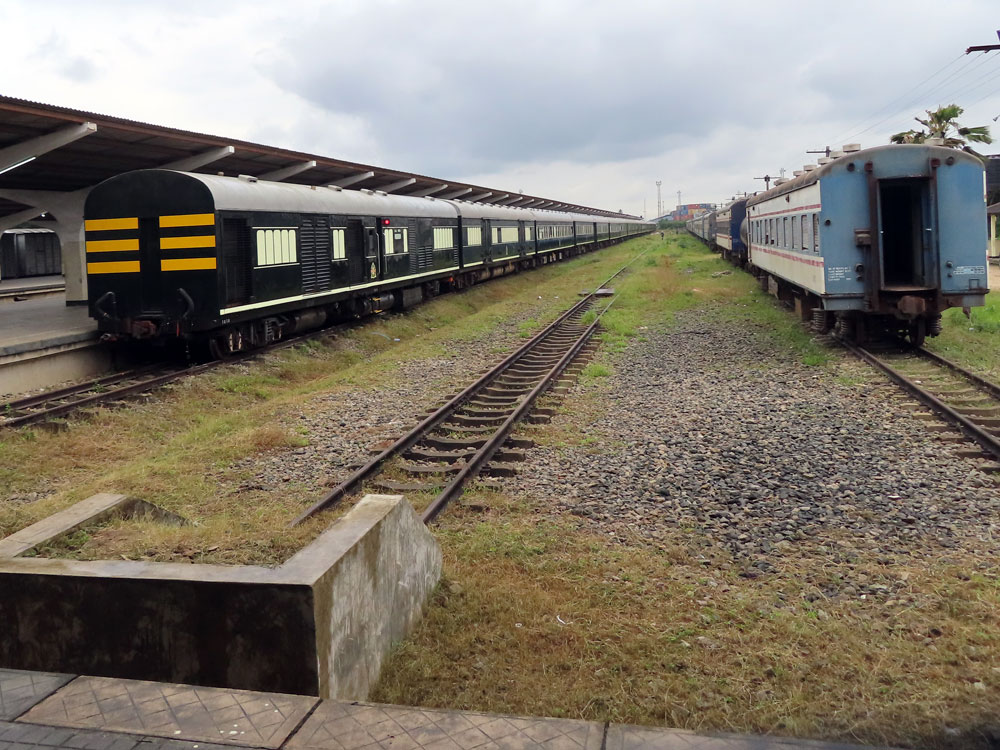
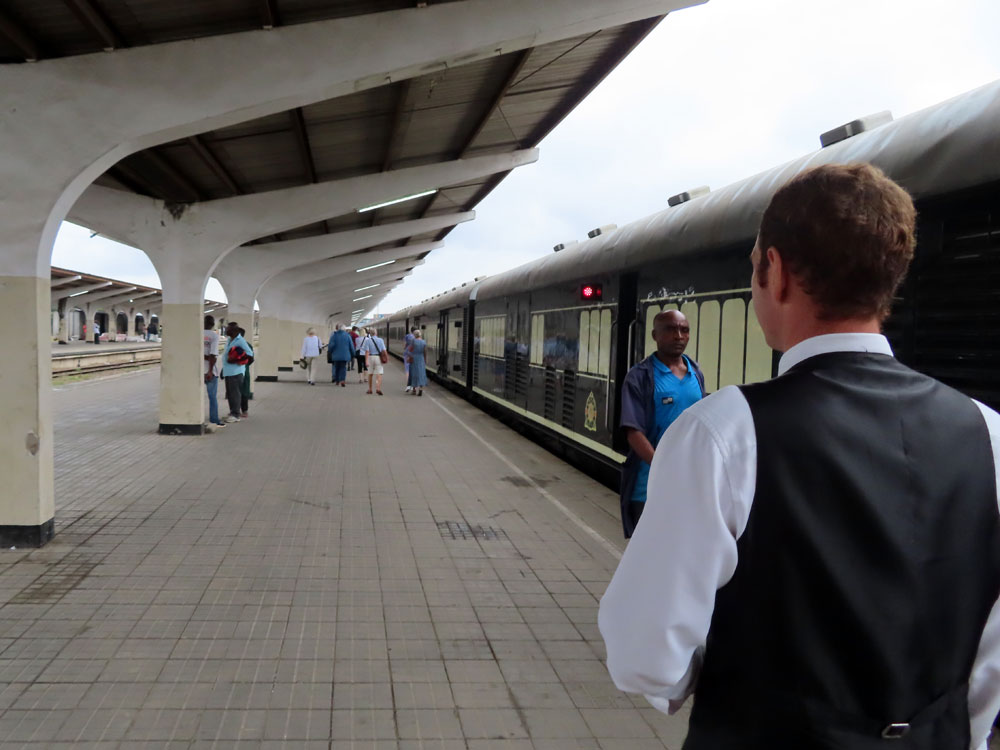
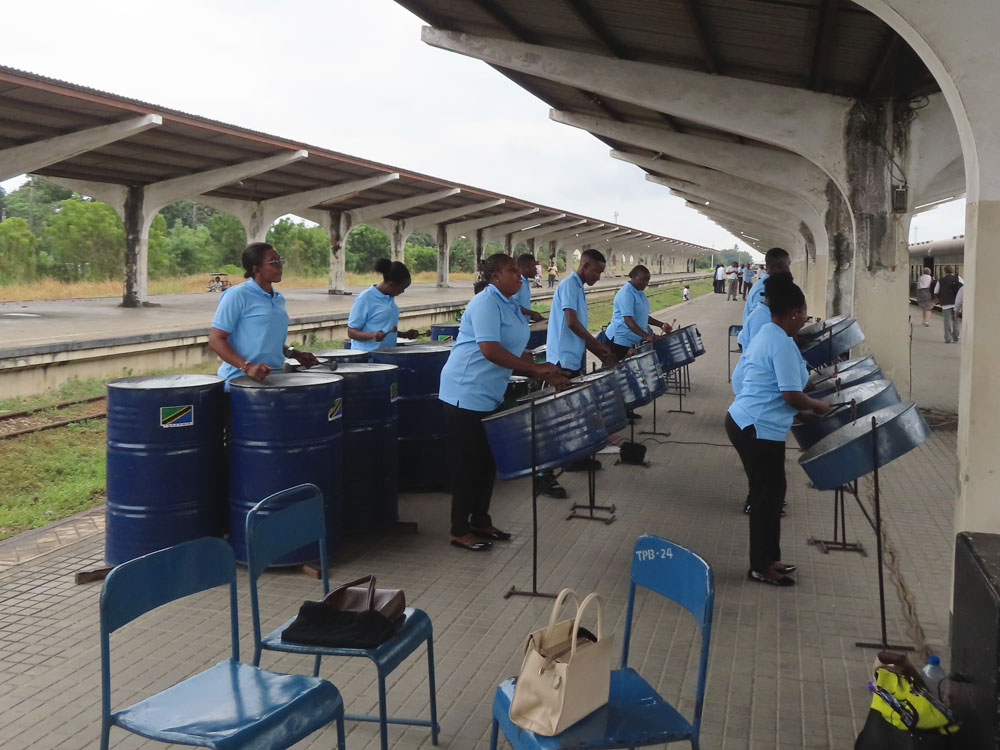
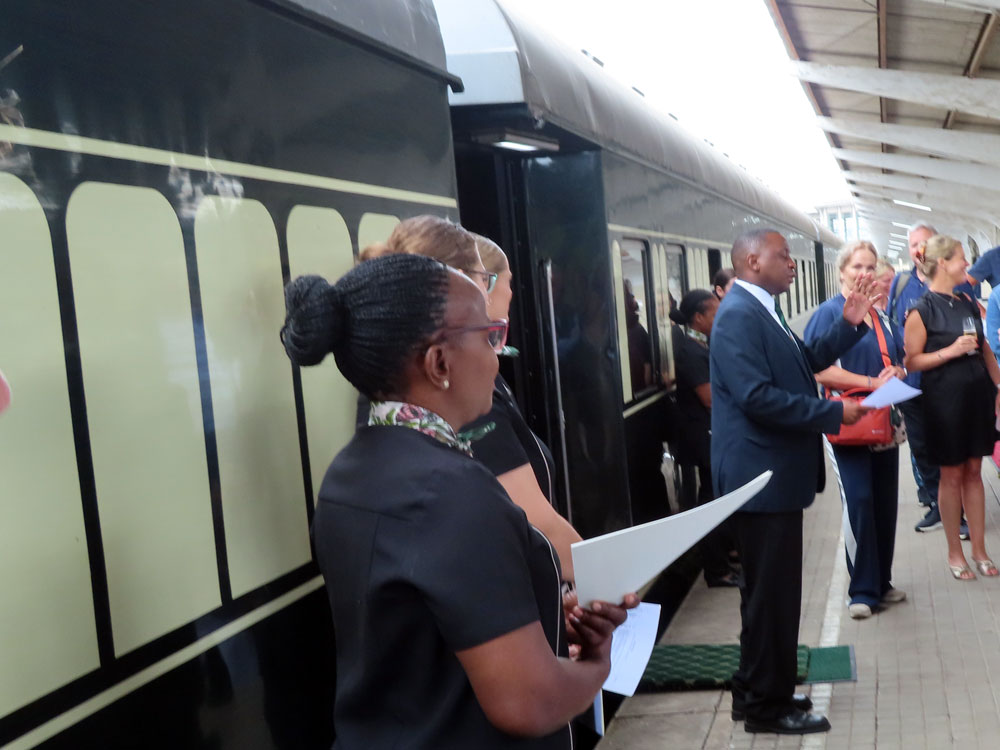
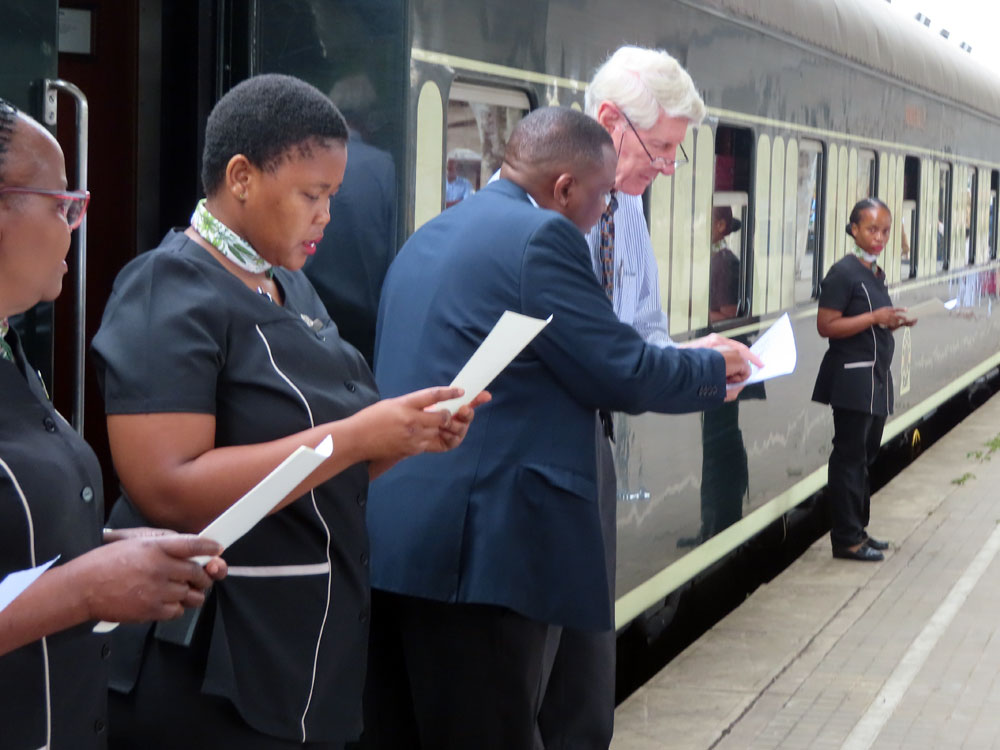
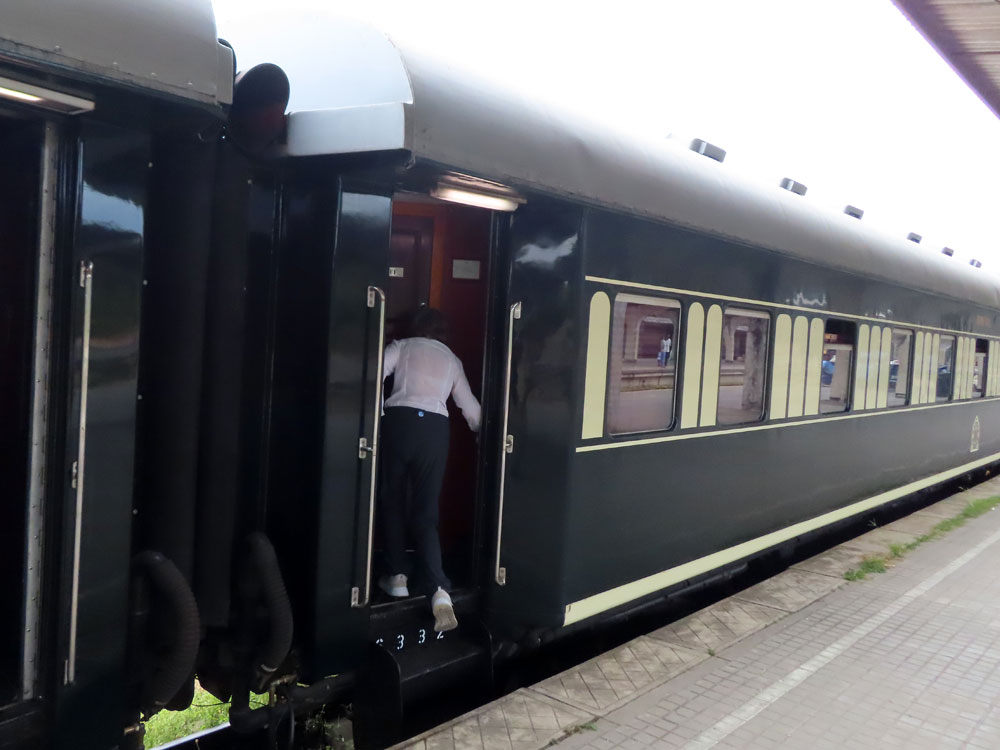
We were then driven out to a railway station a little way on the outskirts of town through a very dense traffic. We received a welcome drink on the platform and then a list of names was read out for guests to a specific hostess who would take them to their rooms. At the end there was just us and one other couple who remained and we eventually found where we were meant to be and our hostess was Vivian. We found our cabin , called Letaba, and immediately commenced the difficult task of fitting everything in a very small cabin. Vivian arrived during this and very routinely went through the rules of the train with not much enthusiasm. Later we found her constant tidying up and resetting the cabin temperature to 22 degrees three times a day very, very annoying.
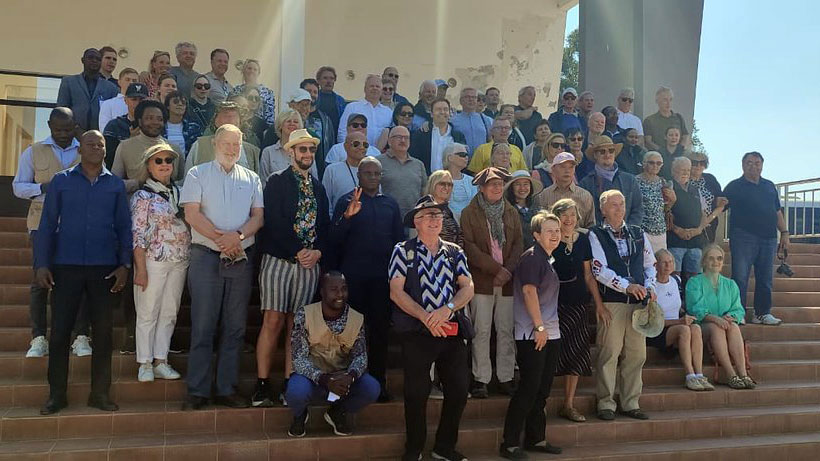
A group photo of all the passengers and some of the crew
We started out on the Tazara Railway, a railway linking the port of Dar es Salaam in east Tanzania with the town of Kapiri Mposhi in Zambia's Central Province. The single-track railway is 1,860 km long and is operated by the Tanzania-Zambia Railway Authority (TAZARA). The governments of Tanzania, Zambia, and the People's Republic of China built the railway to eliminate landlocked Zambia's economic dependence on Rhodesia and South Africa, both of which were ruled by white-minority governments. The railway provided the only route for bulk trade from Zambia's Copperbelt to reach the sea without having to transit white-ruled territories. The project was built from 1970 to 1975 as a turnkey project financed and supported by China. At its completion, the Tazara was the longest railway in sub-Saharan Africa. Tazara was also the largest single foreign-aid project undertaken by China at the time, at a construction cost of US $406 million (the equivalent of US $3.29 billion today).
The Tazara is sometimes regarded as the greatest engineering effort of its kind since World War II. The railway crosses Tanzania in a southwest direction, leaving the coastal strip and then entering largely uninhabited areas of the vast Selous Game Reserve. The line crosses the Tanzam Highway at Makambako and runs parallel to the highway toward Mbeya and the Zambian border, before entering Zambia, and linking with Zambia Railways at Kapiri Mposhi. From sea level, the railway climbs to 550 metres at Mlimba, and then reaches its highest point of 1,789.43 m at Uyole in Mbeya before descending to 1,660 m ) at Mwenzo, the highest point in Zambia, and settling to 1,274.63 m at Kapiri Mposhi.
We went for lunch four or five carriages down the train at 1 pm this lasted for 75 minutes or so reasonably good. The wine waiter was a bit poncy and David was not impressed with the quality of his wine. During the morning I realised I was suffering from a cold and it steadily got worse during the day. After lunch. I had a siesta and tried to sleep with the rocky movement of the train. The tracks in Tanzania are meant to be 7 out of 10 but go down in quality once we reach the DRC. During this first day just getting along the corridors to the dining room seemed an eternity: let’s hope that I will become more accustomed to them in the future.
We went to the nearest lounge at five for some tea and chatted to Peter and Addie again. Then dinner at 7:30: nearly all the men were wearing (advised, but not compulsory) jackets and one lad was even in a DJ. The food was excellent but my cold had worn me down and I retired before the cheese and chocolate desert, which David said was delicious. We were asleep before 10 pm and the train remain stationary during the night so we got a good nights sleep.
To get a larger photo, click on a thumbnail below
 |
 |
 |
 |
 |
 |
 |
 |