
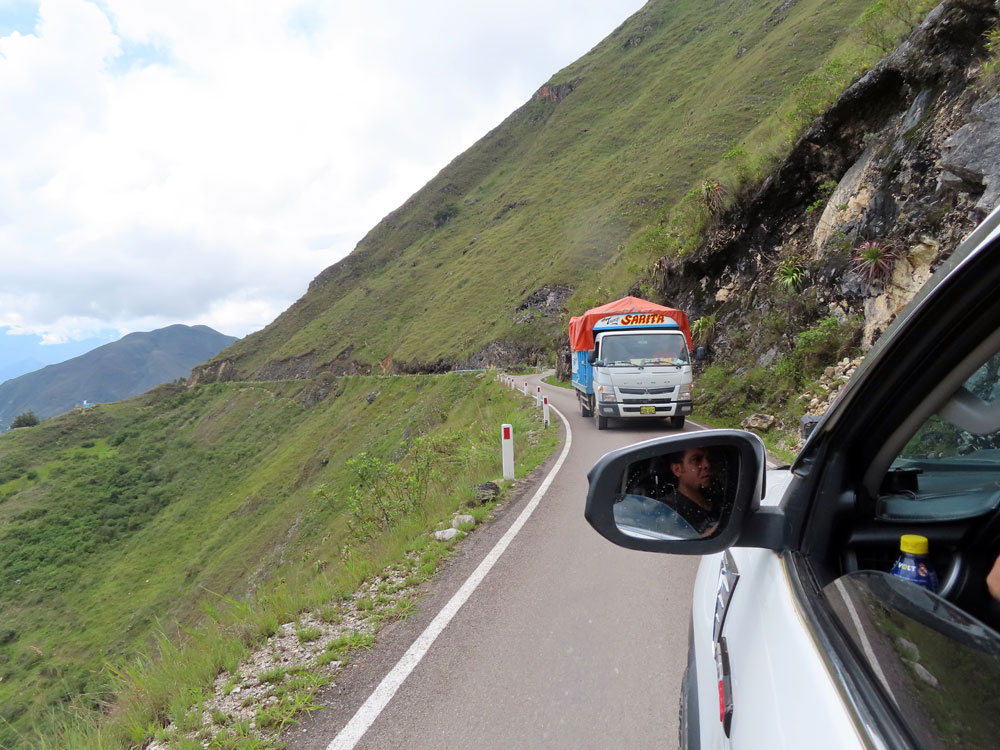
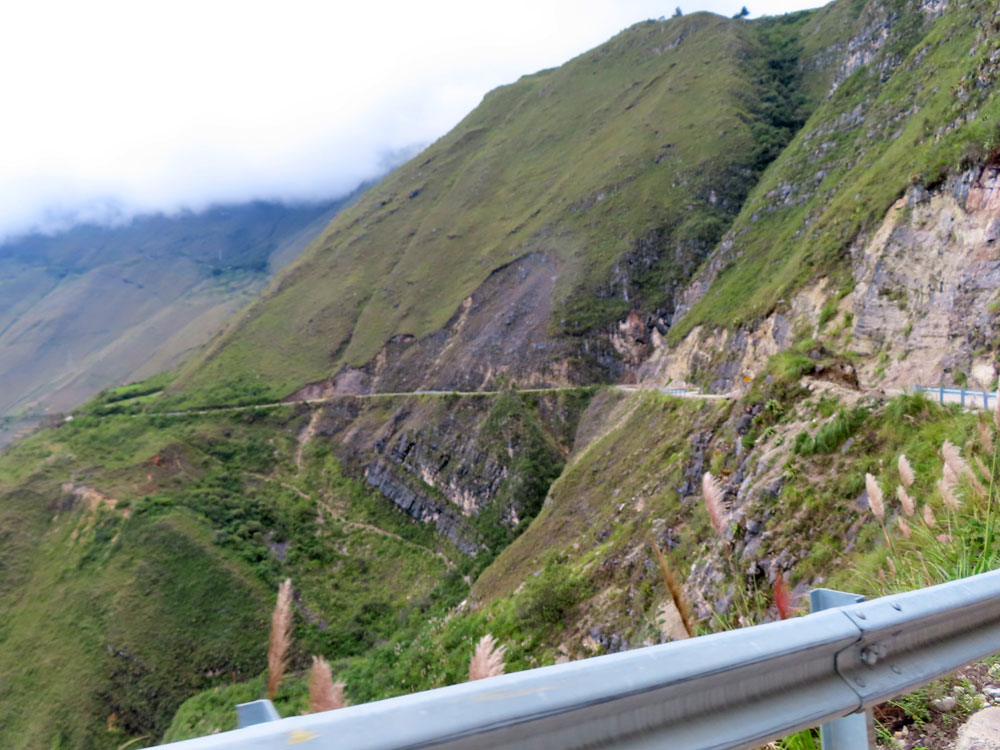
Friday, January 10. Cajamarca to Leymebamba. We were all packed and ready to go at 8 am outside the hotel when we received a message that our new driver was stuck with his car blocked in by another car. Eventually our new guide, Julio, arrived with Alfredo at 8:15 am.. his English seemed really good and we were soon quite at ease as we drove north east of the city on the nine hour drive to our next destination. If you believe what is on UTube, then this is the most dangerous road in all of the Americas
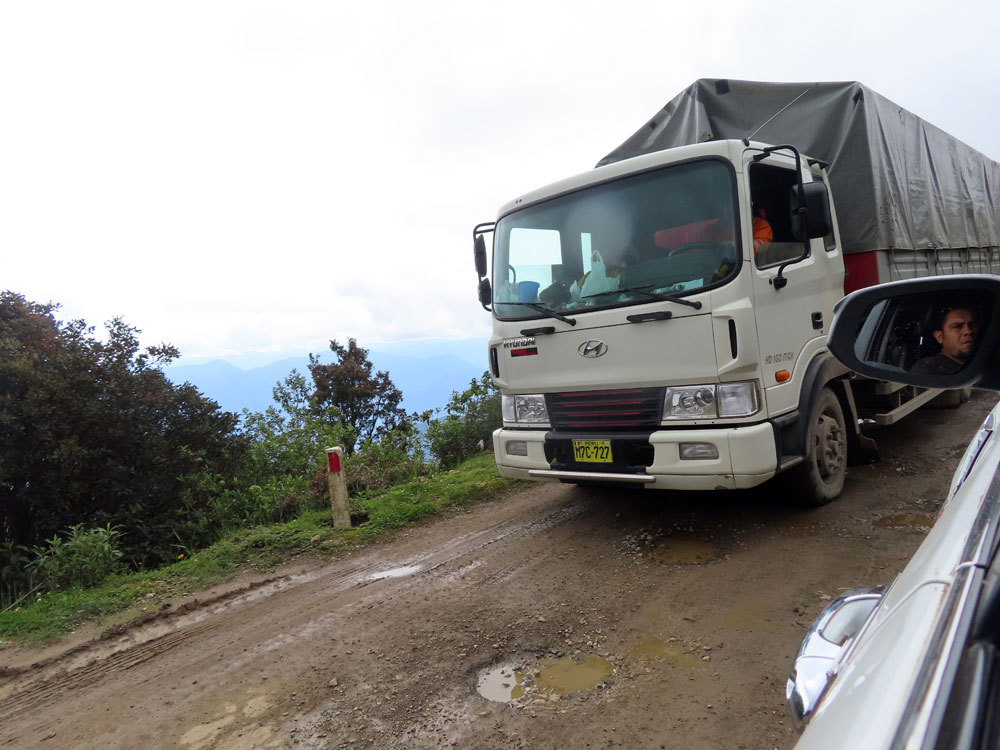
The scenery in these mountainous ranges was quite magnificent although the sky could’ve been bluer. We ascended to 3600 m during the course of the journey and had views on either side from the very zigzag road which deteriorated after a couple of hours. We stopped for a short walk on the ridge between two valleys and then stopped for lunch at 2 pm in a mountain restaurant where we had trout, beans and rice.
I was surprised to find that it was only two hours more to our lodge hotel,Kentiitambo, a short way outside the town of Leymebamba
Click on thumbnail photo below to get larger photo
 |
 |
 |
 |
 |
 |
 |
 |
 |
 |
 |
 |
 |
 |
 |
 |
 |
 |
 |
 |
This was a small lodge with just two Log cabins and said to be the home of many humming birds. I struggled to get up the ascending path to our cabin. This being much further than we thought and the altitude was obviously having an effect on my lungs. The cabin was quite delightful inside, but the view from the balcony could have been improved by cutting down some of the trees and there was no sign of any hummingbirds . Having arrived at 4:15 pm. We were invited to go up to the main house at 5 pm: this we did, but we’re not quite sure for what reason. Anyway we sat there by the fire for 20 minutes or so and got connected to the Internet, then returning to sit on the balcony covered in blankets as it was quite cold.
At 6:50 pm prompt we were again in the main house as ordered but just sat by the fire ignored for at least 10 minutes!. Eventually we were served a glass of wine and called to the table at the same time where some appetising canapés appeared. As soon as we had finished these a plate of trout and pumpkin and potato accompaniment followed. David’s plate was removed as soon as he had finished and a mango moose appeared for him, even though I was still eating the salad on my plate: the moment I put down my fork my mango moose was also there. A really eerie dinner in many ways.
Back in the cabin we kept ourselves warm by reading in bed till as late as possible, but this was unlikely to be after 9 pm as dinner had finished before 7:45 pm. At this time there was constant barking by a large number of dogs , so we wonder what will happen during the night
Click on thumbnail photo below to get larger photo
 |
 |
 |
 |
 |
 |
 |
 |
 |
 |
 |
 |
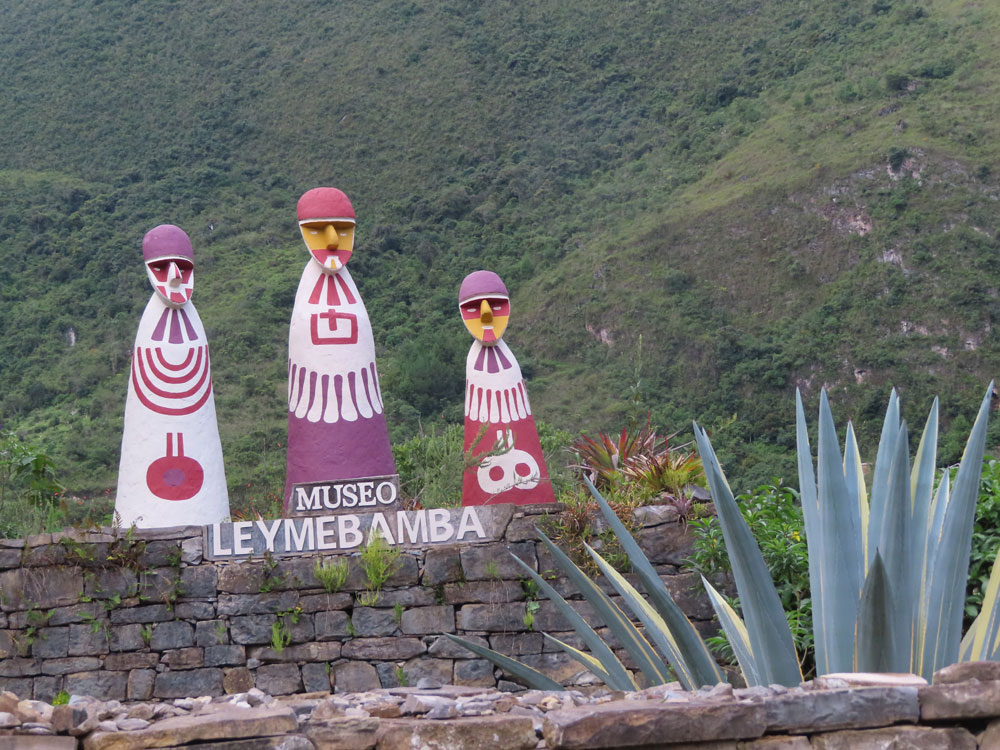
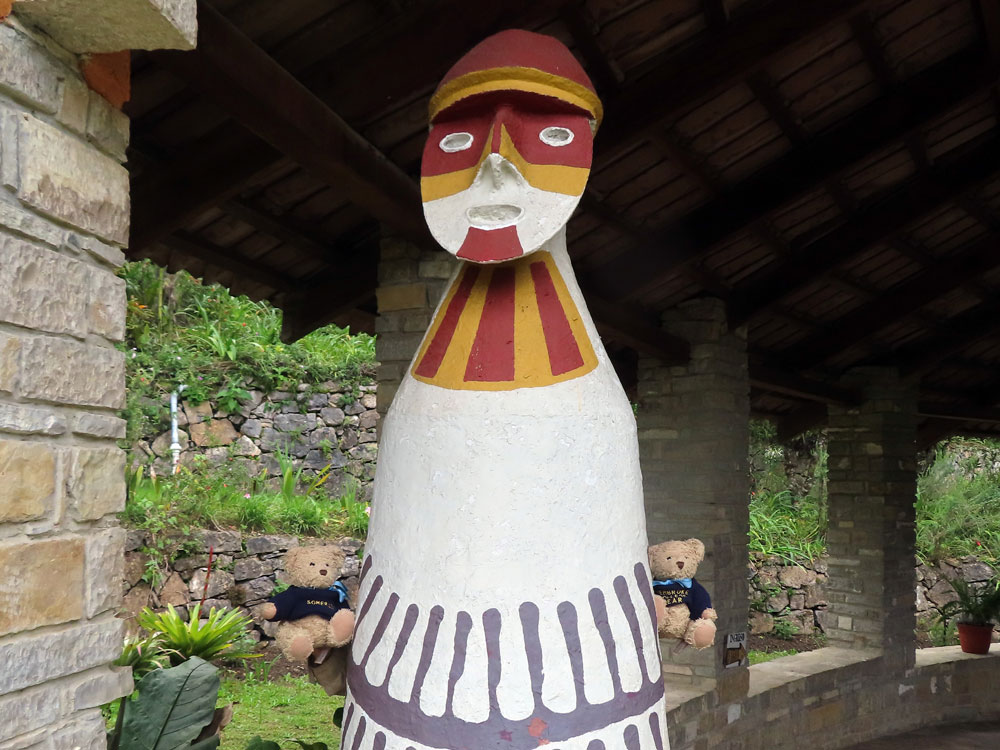
Laymebamba Museum
Saturday, January 11 Leymebamba to Chillo We had a pleasant breakfast of the fresh mangoes, but no conversation with the Chica of the house once again. This was after a disturbed night due to all the local dogs howling every 15 minutes or so.
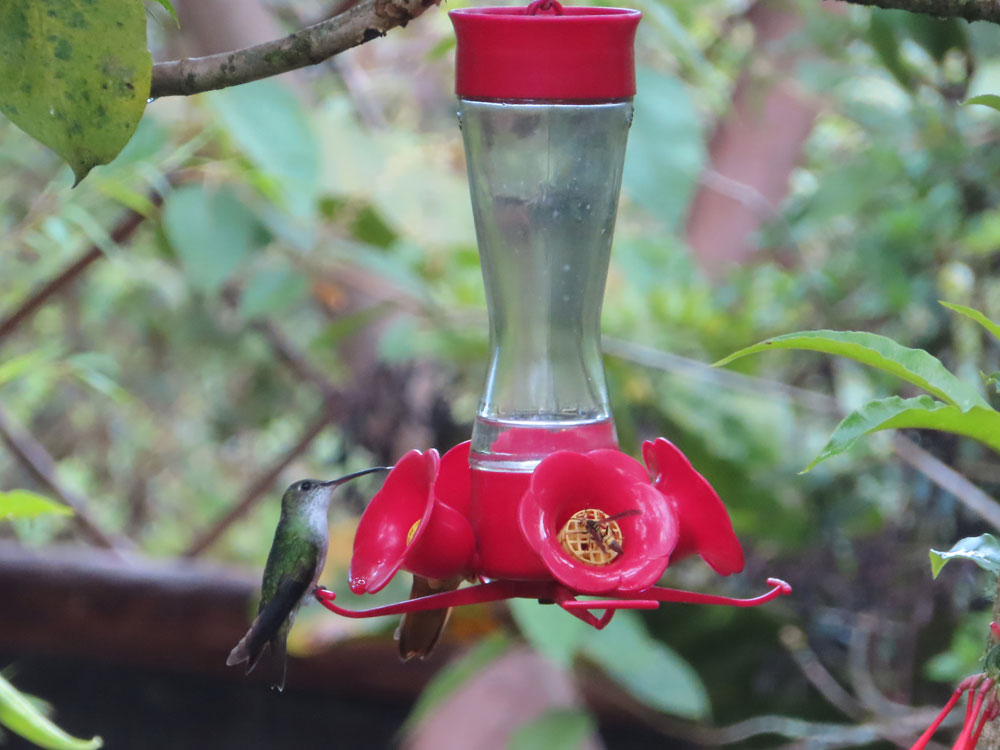
We packed up and went down to the gate by 9 am, only to find the museum just opposite did not open until 9:30 am . So we sat in the café with hummingbirds there for half an hour and eventually the museum condescended to open by 9:40 am. This was a very well laid out museum showing all the things that had been found with the discovery of 200 mummies in the cliffs about 11 hours walk from the town. Some of them had been split open by robbers who hoped to find gold inside them. The mummies had been discovered in 1996 and the museum opened by 2001 with a lot of help from the local community and also money from the British museum. It was very well laid out and the climax was the temperature controlled sealed room with all the mummies in.
We met the Museum director, Sonia, there was somewhat in despair as to the number of visitors she was receiving together with the fact that the British museum was cutting off its funding. So when we have finished our tour we had a 20 minute chat with her, David giving her advice on websites and social media sites which might provide her with more people.
The Chachapoya used to bury their dead in a crouched position, inside wooden sarcophagi, then wrap the sarcophagus in cloth and sew a human face on the front. Despite the humidity of the area, and the activities of huaqueros, hundreds of mummies were discovered, with skin and even hair still intact. Seeing a room full of mummies is undoubtedly a highly-memorable museum experience.
The museum also has a unique exhibition of quipus (the famous 'talking knots' by which the Incas recorded facts and figures, in the absence of a written language). They are in an exceptional state of preservation. Quipu are recording devices fashioned from knotted cords. They were historically used by various cultures in the central Andes of South America, most prominently by the Inca Empire. A quipu usually consists of cotton or camelid fiber cords, and contains categorized information based on dimensions like color, order and number. The Inca, in particular, used knots tied in a decimal positional system to store numbers and other values in quipu cords. Depending on its use and the amount of information it stored, a given quipu may have anywhere from a few to several thousand cords. Objects which can unambiguously be identified as quipus first appear in the archaeological record during 1st millennium AD, likely attributable to the Wari Empire. Quipus subsequently played a key part in the administration of the Kingdom of Cusco of the 13th to 15th centuries, and later of the Inca Empire (1438–1533),
Click on thumbnail photo below to get larger photo
 |
 |
 |
 |
 |
 |
 |
 |
 |
 |
 |
 |
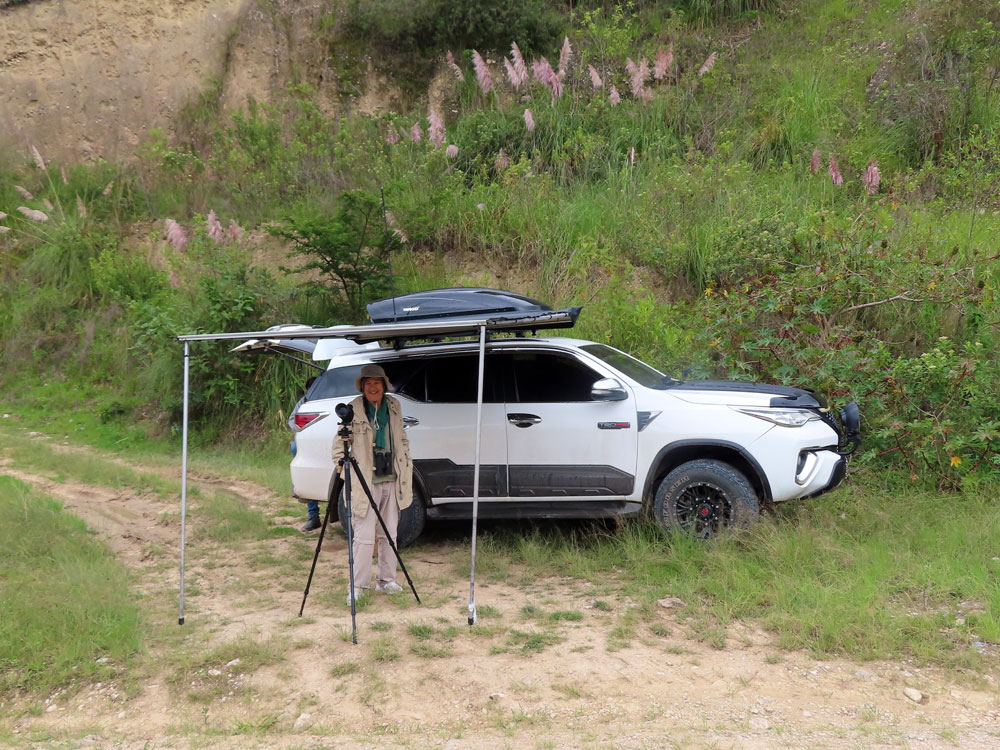
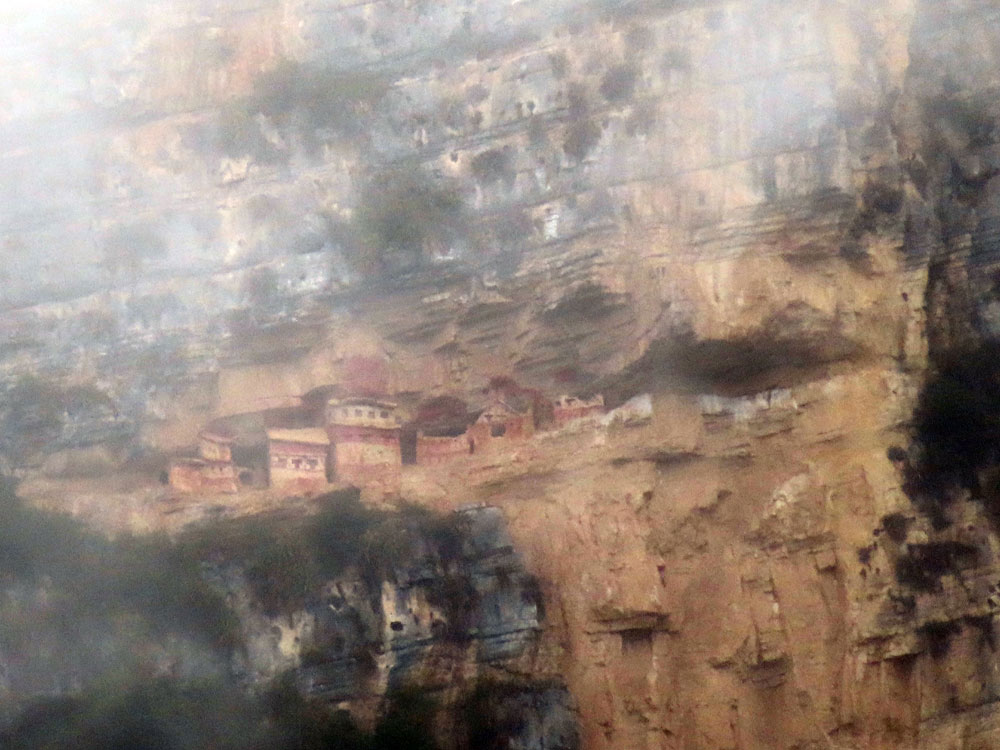
By this time it was raining hard but we had already decided that I was not up to the 2 1/2 hour walk to see some funeral houses in the cliffs, so we drove round to the other side of the valley and set up a telescope, through which David was able to see the houses and he also got some photos of them too. And I managed just to make them out with my left eye and right eye looking through the telescope, odd.
Revash Mausoleums
Revash's funeral mansions are located in a straight line along the narrow hall that was shaped by the cavity excavated in the rocky wall of the imposing canyon. They remain almost intact except for the mummies located inside, which were destroyed by rodents and pillaged long ago. The mausoleums resemble small housings and conglomerates. They form miniature "villages". The funeral buildings are located at an altitude of 2,800 m above sea level.
The mausoleums do not show Inca cultural influences, but they surface relatively late in Peruvian archeological history. Archeologists have estimated that the mausoleums might date to the 14th century AD. and that they were connected with the funeral architecture known as chullpa, which was common in ancient Peru during the period Tiahuanaco-Huari (around 1000 AD)
There was a path that we could have used to get closer, but we thought that Chris would have found it too difficult. So instead we just used a telescope that our guide had brought for the occasion.

Click on thumbnail photo below to get larger photo
 |
 |
 |
 |
 |
 |