
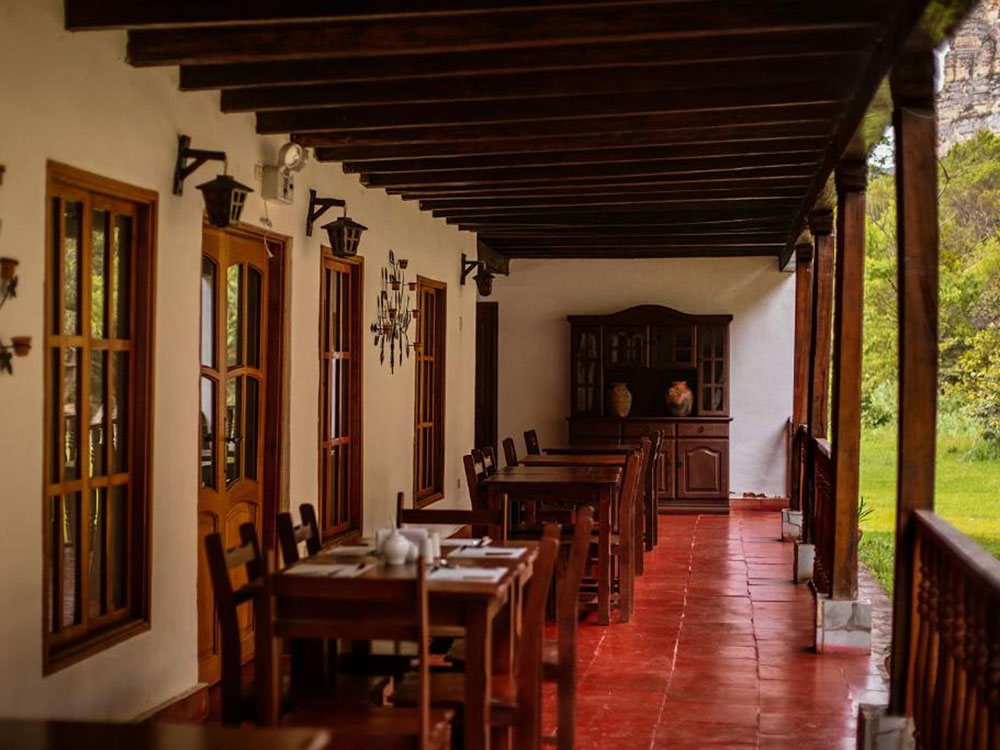
After a packed lunch here we drove back across the river to Chiloe where we arrived at 2 pm at the Donna Lola guest house which had just four rooms and supposedly friendly owner that we saw none of this friendliness. 3 pm we went and sat with our iPads in a little gazebo, managed to get the Wi-Fi connected and I had a cup of tea. Then we went for a walk with Julio for about an hour and this was very pleasant walking along the river and then through a small village. He was very knowledgeable about the plants and the birds. Back at the guest house we read some more and I had a cold shower and sat outside again before retreating due to insect bites. Then dinner at 7 pm in a somewhat dismal dining room. Together with Julio: a reasonable meal but again served a breakneck speed. Then back to the room for more reading.
Click on thumbnail photo below to get larger photo
 |
 |
 |
 |
 |
 |
 |
 |
Sunday, January 12. Donna Lola‘s to Chachapoyas The hotel restaurant seemed much nicer at breakfast then it had the previous evening.This been due to now being on a larger table with colourful place mats and not a pub table. Breakfast was simple and the juice was very good. We had to wait for Alfredo for a few minutes and then proceeded the 20 minutes to the cable car depot: this was a very impressive building, seemingly ahead of its time. From here we boarded a bus for a three minute ride to the cable car start. We had a cabin to ourselves and really enjoyed the 20 minute ride over to the Kuelap ruins.
Cable Car to Kuelap
h
Click on thumbnail photo below to get larger photo
 |
 |
 |
 |
 |
 |
 |
 |
 |
 |
 |
 |
Kuelap Ruins
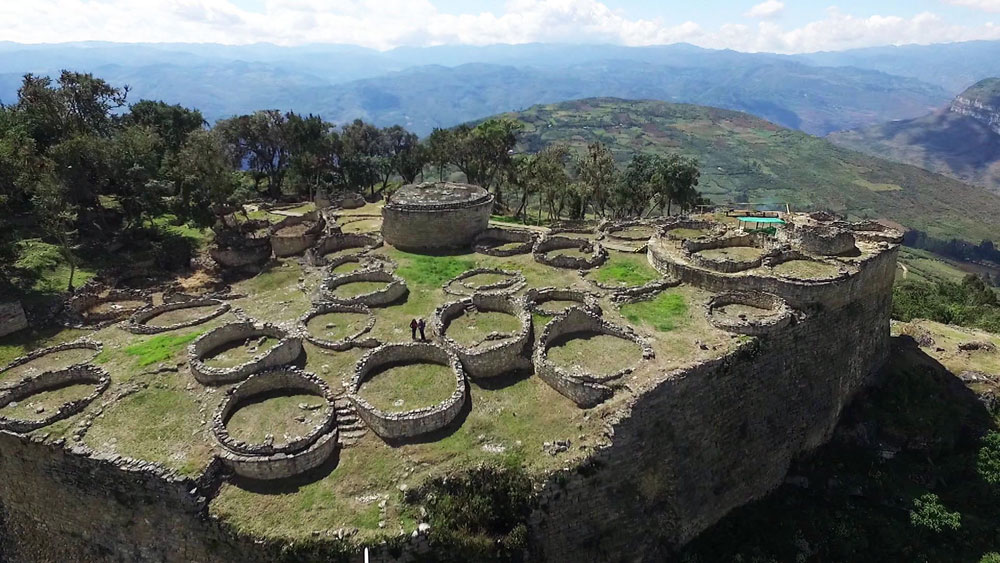
Then a half hour trek so along a paved path with quite a few steps to the actual ruins. I found this quite tiring and had to stop for breath several times. The site had suffered an earthquake in 2021 and the majority of it had been closed to the public. But there were still a significant amount to see. It was a shame the Peruvian government had announced that there was only 5% to see and of course a dramatic fall in visitor numbers resulted . This site was a temple for the Chachapoyas. People who predated the Incas. The Chachapoyas, also called the "Warriors of the Clouds", was a culture of the Andes living in the cloud forests of the southern part of the Department of Amazonas of present-day Peru. The Inca Empire conquered their civilization shortly before the Spanish conquest in the 16th century. At the time of the arrival of the conquistadors, the Chachapoyas were one of the many nations ruled by the Incas, although their incorporation had been difficult due to their constant resistance to Inca troops.
The Spaniards reached here and lived peacefully with this tribe but the site was abandoned about 400 years ago, seemingly burnt as art of a local cival war. Only the nobility lived around the temple, the common people being outside the area. All the houses were around, some with an outside kitchen building.
Kuelap was built by the Chachapoyas culture in the 6th century AD on a ridge overlooking the Utcubamba Valley. Most of the development os the site appears to date from 900 AD to 100 AD. Kuélap is now-abandoned walled settlement and covers an area of about six hectares, 584 m from north to south and 110 m at its widest. The walls are 10 to 20 m high with masonry of limestone blocks finely worked (some blocks may weigh 3 tons).
There are also water canals made of stone, which are believed to have supplied water to the settlement from a spring at the top of the mountain.
The city has three entrances: two on the east, the other on the west. The main entrance is trapezoidal in shape and may have had a corbel arch;it becomes narrower until it allows the passage of one person.
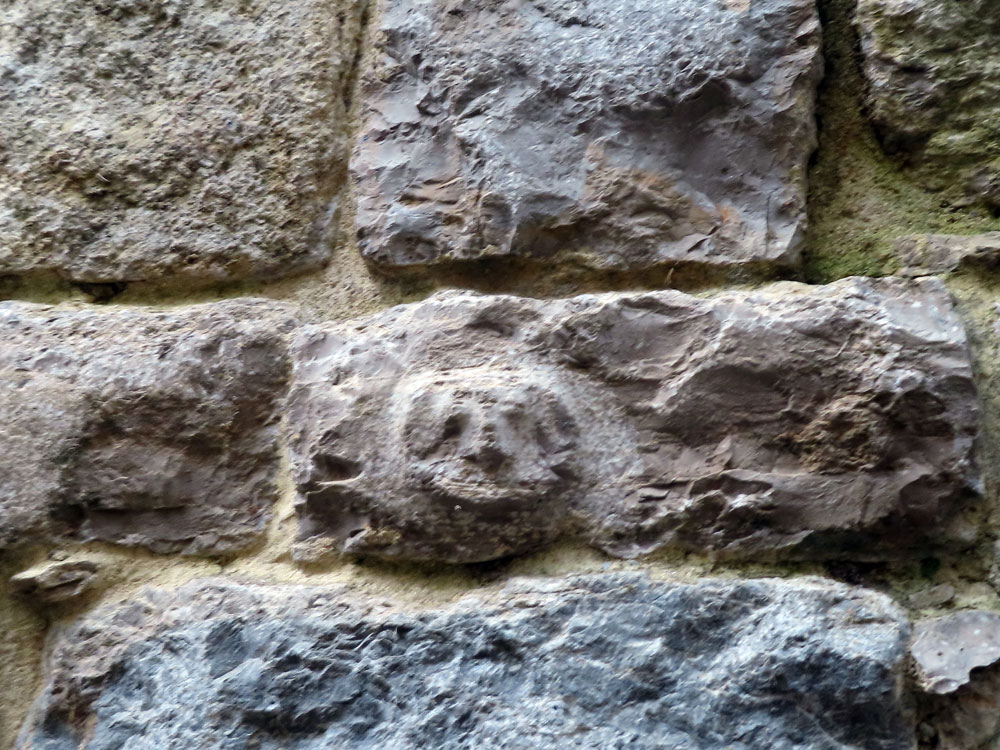
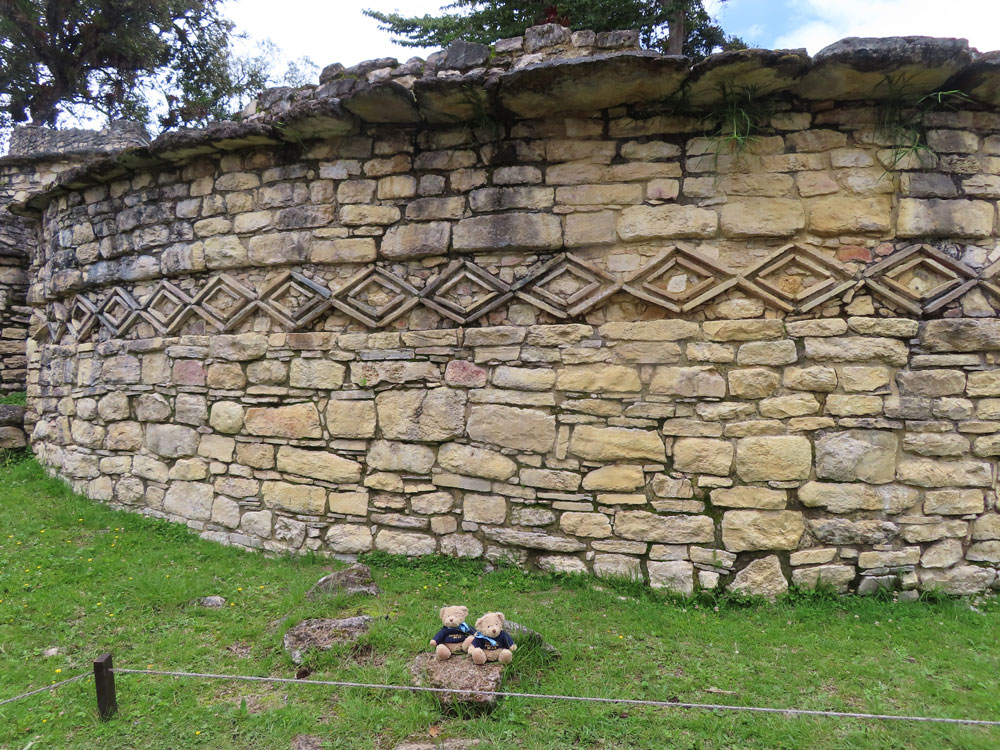
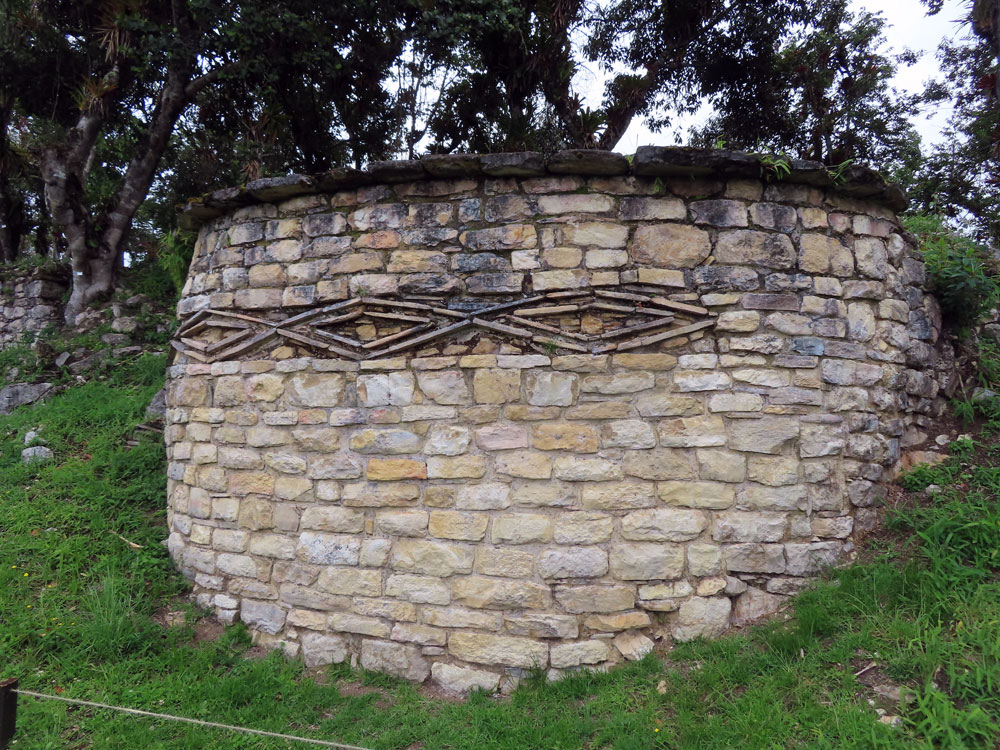
All but five of the 421 structures in the site are circular; those five are quadrilateral. Only the foundations or walls of the structures remain, some of them up to 2 meters high and 50 cm thick.Some walls have friezes, of rhomboid and zigzag shapes, which are protected from the rain by cornices .A few of the structures have been restored.
The city may have had some 3000 inhabitants, but was abandoned in 1570 due to the Spanish Conquest. As a consequence the city deteriorated and was covered by tree roots. Since 2013, it has suffered a series of structural instabilities that culminated in the collapse of a section of the perimeter wall in April 2022.
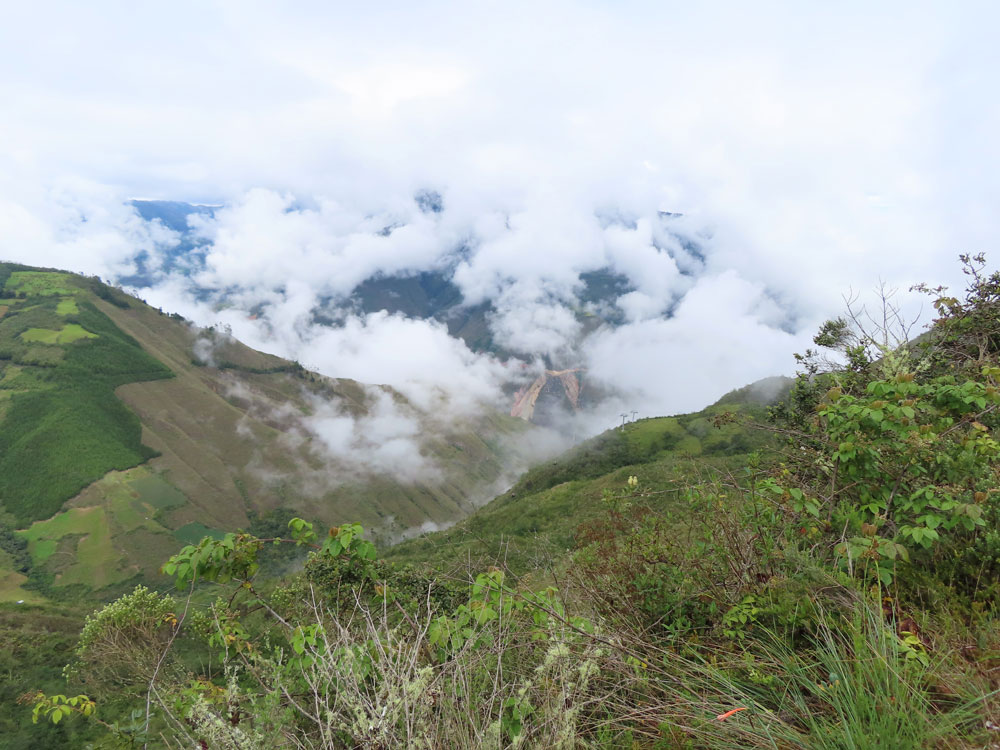
Having spent an hour or so walking round the site we then retraced our steps and got the cable car back at about 1:30 pm. This time it had stopped drizzling and we got better views of the wondrous valley below And of the rainforest that we went over.
Click on thumbnail photo below to get larger photo
 |
 |
 |
 |
 |
 |
 |
 |
 |
 |
 |
 |
 |
 |
 |
 |
 |
 |
 |
 |
 |
 |
 |
 |
 |
 |
 |
 |
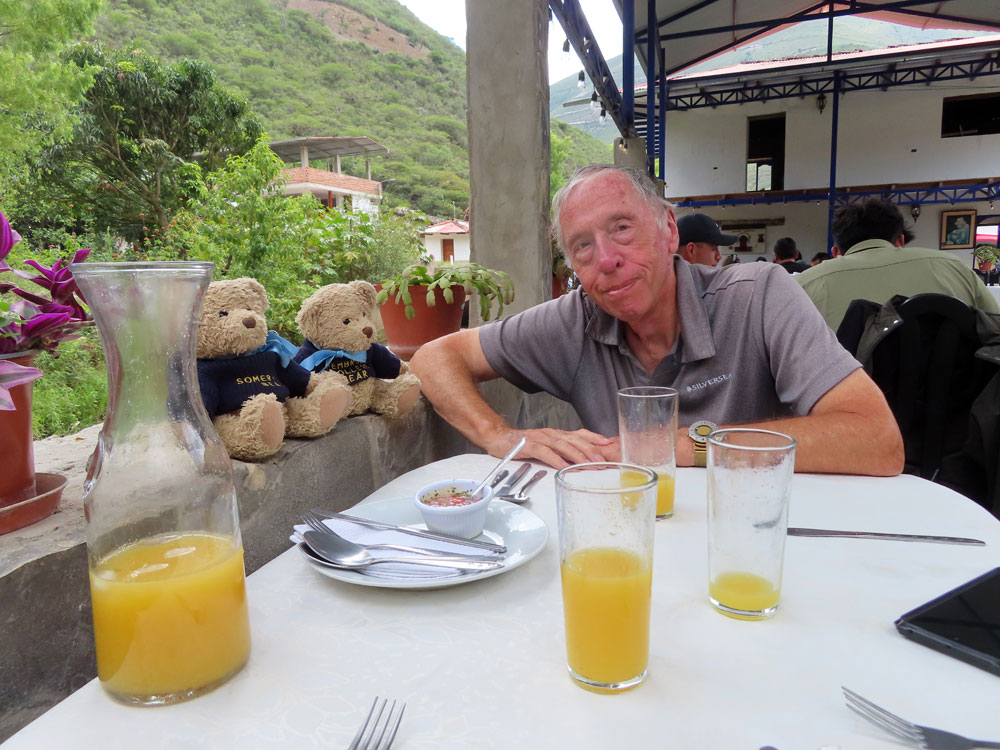
We then had a five minute drive to Tingo where we had a lovely lunch beside the river with good weather.

Click on thumbnail photo below to get larger photo
 |
 |
 |
 |
After this, we made our way towards Chachapoyas, Stopping to look at some sarcophagi way up high above the river using a telescope. Sometimes you think that every cliff must have these burials. I was amazed that I could see through this with my left eye better than with my right eye
. 
Click on thumbnail photo below to get larger photo
 |
 |
 |
 |
 |
 |
 |
 |
We arrived at the Xalca Hotel soon after four this was a charming Spanish colonial building very well kept and with exquisite gardens and seating area inside the courtyard. But unfortunately it did not have a bar or café. We rested in the room for a while and then went for a walk up to the plaza and the pedestrian main Street finding a café that Julio had recommended: we intended to visit this later on in the evening. But back in the room we felt lazy and just had some gingerbread and Satsuma’s and drank some rum and tonic having obtained some ice from reception. A really enjoyable day.