
Tuesday 23rd April. Valley of the Kings and Luxor
Early wake up call at 5:30 am and then breakfast before boarding the coach at 6:30 am. Then a 25 minute drive to the Valley of the Kings. Here we had an area ticket which entitled us to enter three of the tombs that were open that day. There were also other tombs where one could buy an extra admission and we went in one of these as well: this was well worth while at just £3 each. Movement was so much easier in the one we paid for, while in the general ticket tombs there were queues and little opportunity to stop and wonder
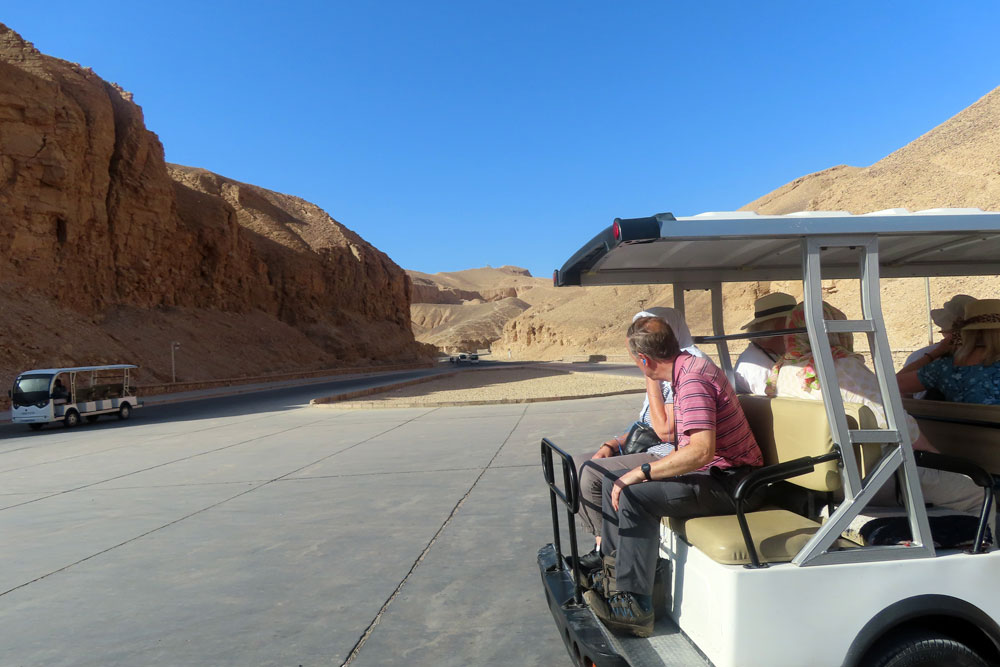
It was an incredibly hot day, temperatures reaching over 40° but there was a pleasant wind in the valley. After entering these four tombs we drove to the funerary Temple of Hatshepsut, Which we also remember from our previous visits. This was the site where 52 tourists had been massacred in November 1997. At both of these sites little electric golf carts transported us from car park to temple.
Our last call of the morning was to a linen weaving complex, which was a bit of a con as the products they were selling no way could have been made on site. And none of them had any prices on and turned out to be quite expensive in our view.
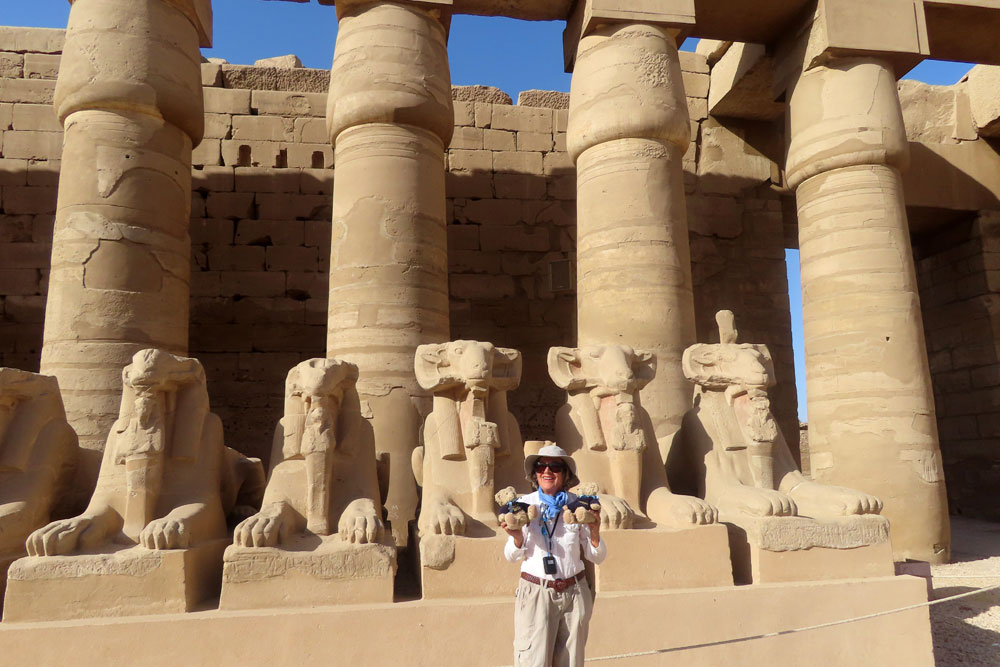
We were back aboard for lunch by 12:30 and went out again at 2 pm . First to do the Karnak complex which is a largest temple complex in Egypt and truly takes one‘s breath away. We spent two hours there before moving to the smaller Luxor complex, where we just had an hour. The avenue of the Sphinx which join the two temple complexes was great fun, with over 1000 of these sphinxes.
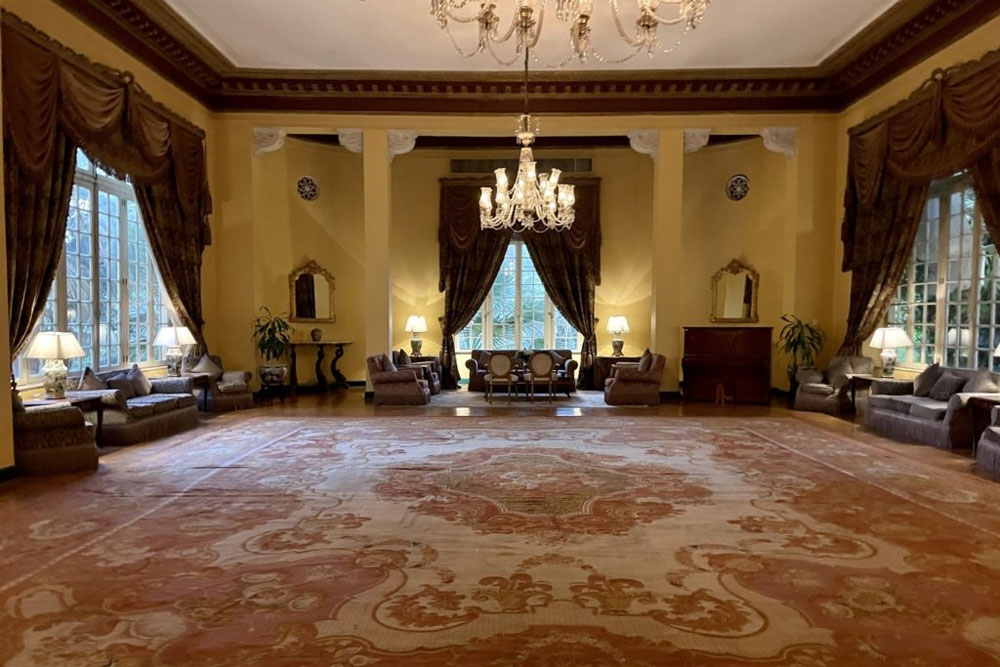
Then on to the Winter Palace Hotel for a cocktail, The cocktails were wondrous. We had them served in the hotel's Victoria Lounge. It was a bit drab, so we took our drinks out onto the terrace which was a much better place to enjoy them
Back aboard at 6:30 pm. Chris had a swim and then a shower before dinner with Aurial, Keith and Jenny.
Valley of the Kings
The Valley of the Kings is an area where, for a period of nearly 500 years from the Eighteenth Dynasty to the Twentieth Dynasty, rock-cut tombs were excavated for pharaohs and powerful nobles under the New Kingdom of ancient Egypt.
With the 2005 discovery of a new chamber and the 2008 discovery of two further tomb entrances, the Valley of the Kings is known to contain 65 tombs and chambers, ranging in size from the simple pit that is KV54 to the complex tomb that is KV5, which alone has over 120 chambers for the sons of Ramesses II. It was the principal burial place for the New Kingdom's major royal figures as well as a number of privileged nobles. The royal tombs are decorated with traditional scenes from Egyptian mythology and reveal clues to the period's funerary practices and afterlife beliefs. Almost all of the tombs seem to have been opened and robbed in antiquity, but they still give an idea of the opulence and power of Egypt's pharaohs.
This area has been a focus for Egyptologists and archaeological exploration since the end of the 18th century, and its tombs and burials continue to stimulate research and interest. The Valley of the Kings garnered significant attention following the discovery of the tomb of Tutankhamen in 1922, and is one of the most famous archaeological sites in the world. In 1979, it became a UNESCO World Heritage Site alongside the rest of the Theban Necropolis. Exploration, excavation, and conservation continues in the area and a new tourist centre has recently been opened.
Click on any of the thumbnail photos for a larger version
 |
 |
 |
 |
 |
 |
 |
 |
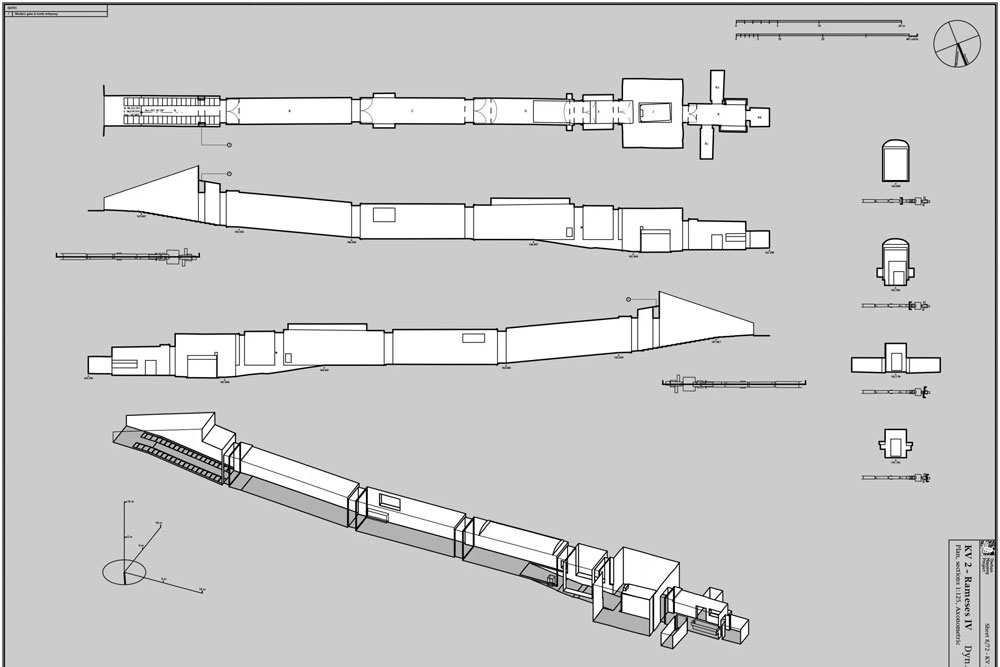
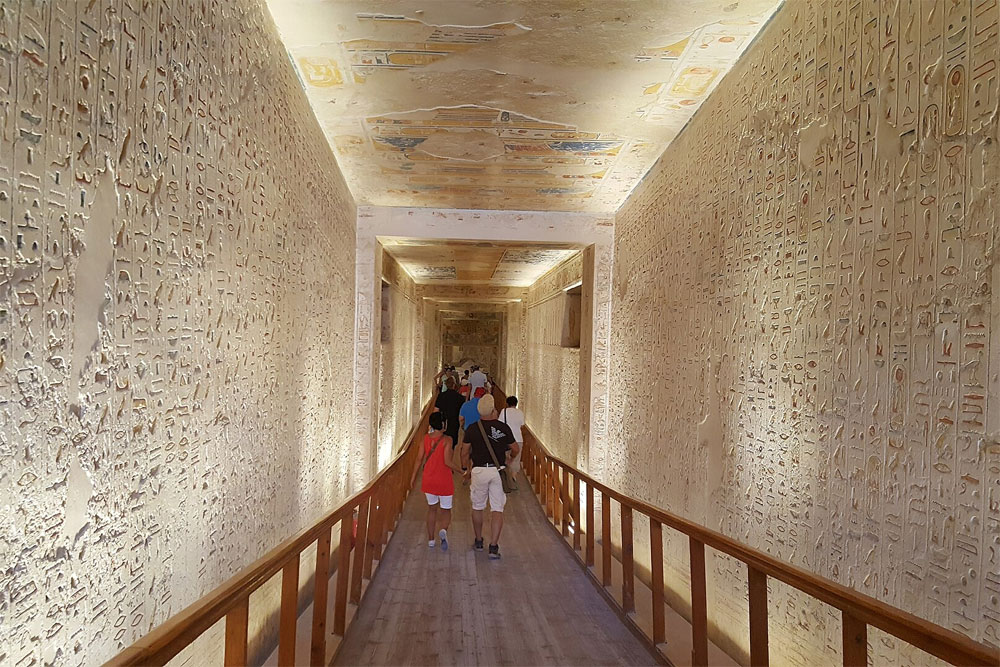
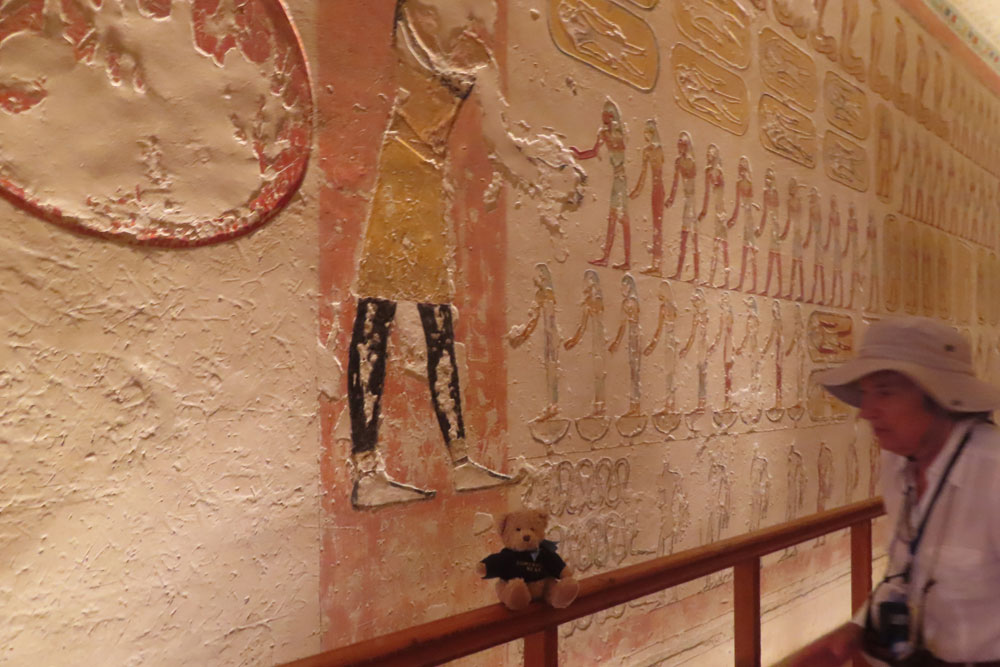
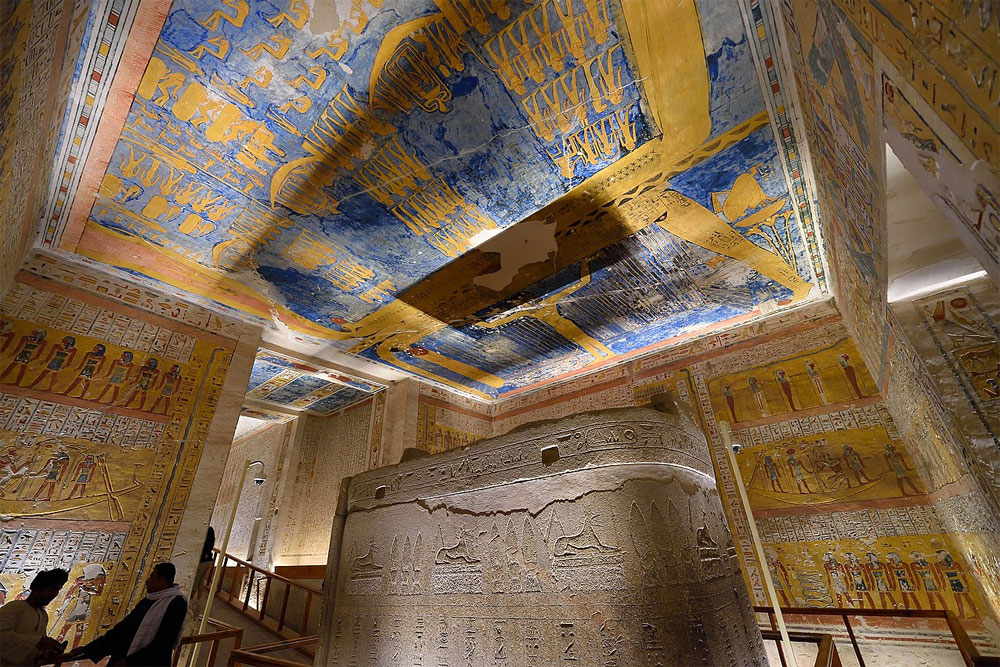
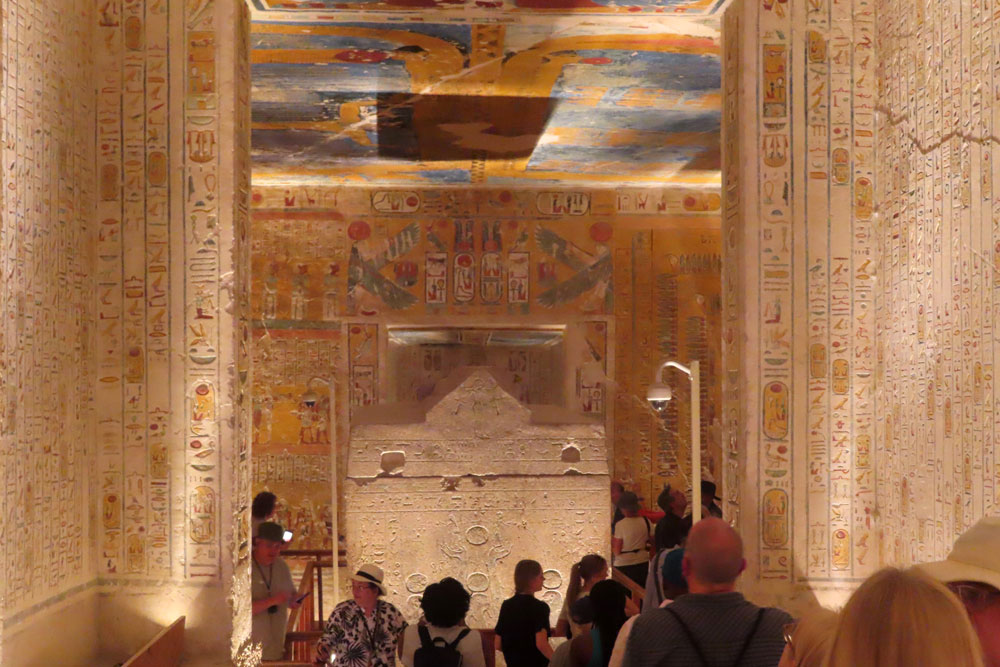
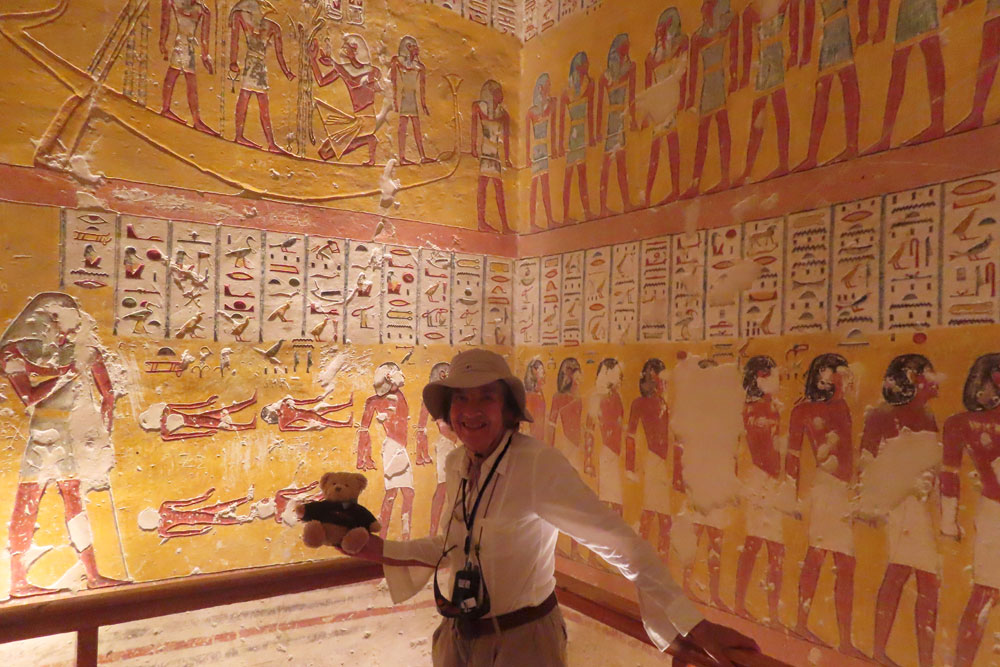
KV 2 - the tomb of Ramesses IV
The tomb is mostly intact and is decorated with scenes from the Litany of Ra, Book of Caverns, Book of the Dead, Book of Amduat and the Book of the Heavens.
Like other tombs of the 20th Dynasty, KV2 is laid out along a straight axis. The successors of Ramesses III from this dynasty constructed tombs that follow this pattern and most were decorated in a similar manner to one another
Click on any of the thumbnail photos for a larger version
 |
 |
 |
 |
 |
 |
 |
 |
 |
 |
 |
 |
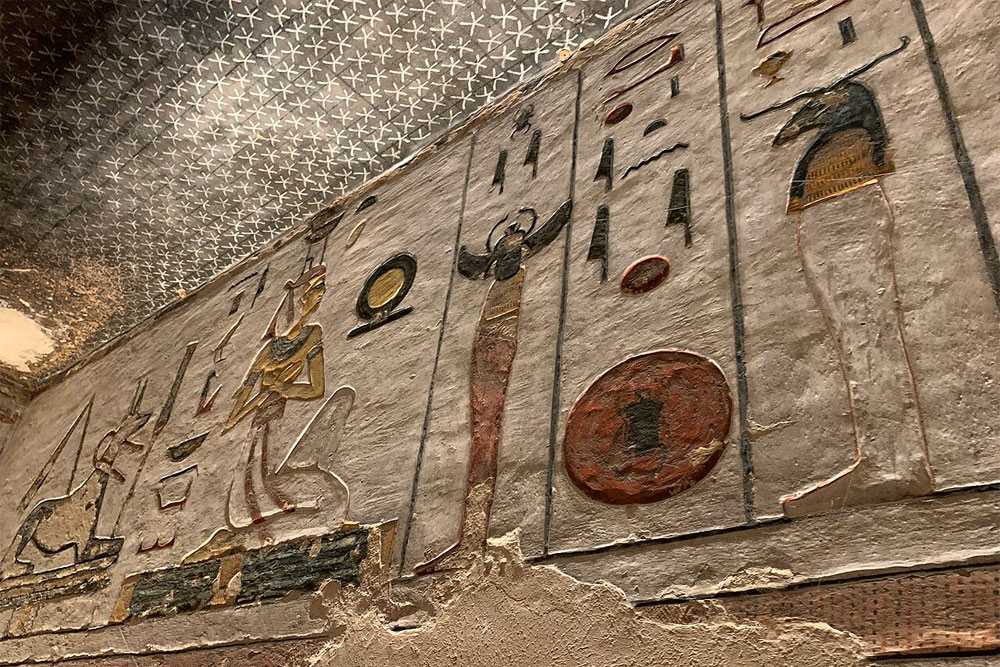
KV 11 - tomb of Ramesses III
The tomb was originally started by Setnakhte, but abandoned when it unintentionally broke into the earlier tomb of Amenmesse (KV10). Setnakhte was buried in KV14. The tomb KV11 was later restarted and extended and on a different axis for Ramesses III. The tomb has been open since antiquity, and has been known variously as "Bruce's Tomb" (named after James Bruce who entered the tomb in 1768) and the "Harper's Tomb" (due to paintings of two blind harpers in the tomb).
Most tombs have a long, straight corridor — but this one takes a slight turn because it ran into a neighbouring burial site!
Click on any of the thumbnail photos for a larger version
 |
 |
 |
 |
 |
 |
 |
 |
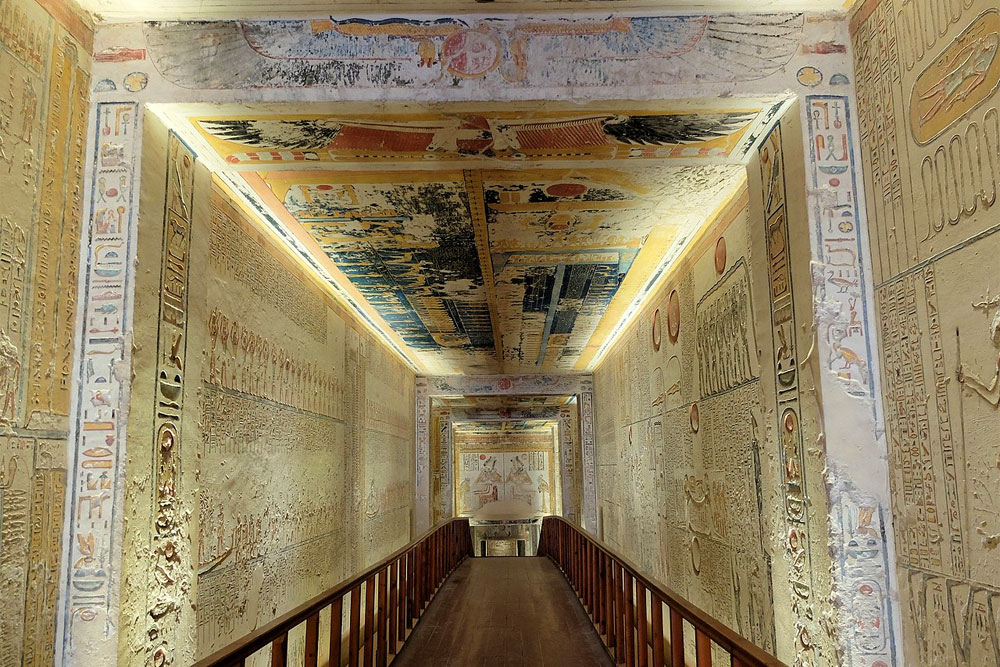
KV 9 - tomb of Ramesses V and VI
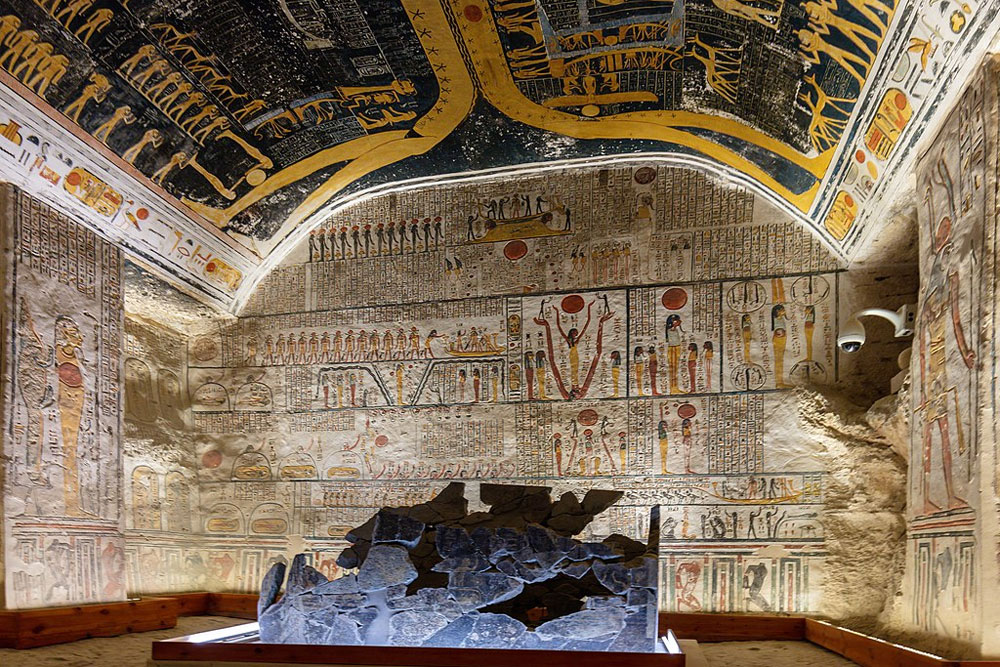
KV9 is the well-preserved tomb of Ramesses V and, later, Ramesses VI, in the Valley of the Kings. Ramesses V constructed KV9 and it is believed that he was originally interred there, but it was later reused by his uncle, Ramesses VI, as his own tomb. Fragments of the inner anthropoid sarcophagus were found in the tomb and are now in the British Museum in London. The mummies of both pharaohs were found in the KV35 mummy cache in 1898.
The tomb is very beautifully decorated with many scenes from the Book of Gates, the Book of Caverns, the Book of the Heavenly Cow, the Book of the Dead, the Amduat, the Book of the Day, the Book of the Night, and the Book of the Earth. There are also scenes of the deceased with deities, astronomical scenes, and scenes of the resurrection of Osiris, deities, and enigmatic compositions. Graffiti in Greek, Latin, and Coptic are written over the scenes, indicating that the tomb has been open since antiquity.
Click on any of the thumbnail photos for a larger version
 |
 |
 |
 |
 |
 |
 |
 |
 |
 |
 |
 |
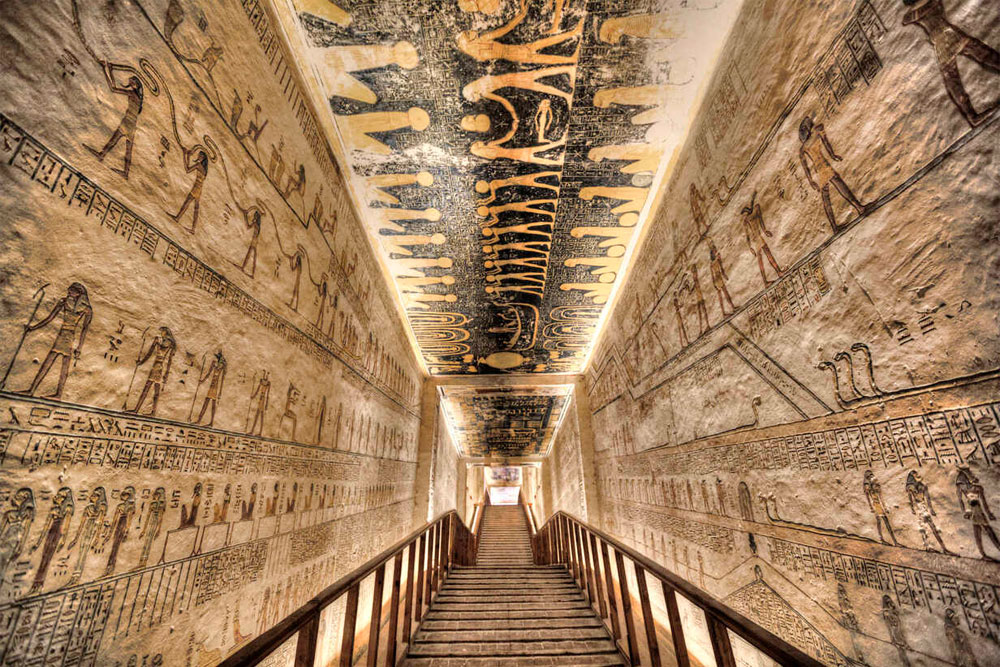
KV 6 - tomb of Ramesses IX
Tomb KV6 is the final resting place of the 20th-Dynasty Pharaoh Ramesses IX. However, the archaeological evidence and the quality of decoration it contains indicates that the tomb was not finished in time for Ramesses's death but was hastily rushed through to completion, many corners being cut, following his demise.
Running 105 metres into the hillside, the tomb begins with a gate and a shallow descending ramp followed by three successive stretches of corridor. The first of these has four side chambers – two on each side – but none of these are decorated or finished.
KV6 has been open since antiquity, as can be seen by the graffiti left on its walls by Roman and Coptic visitors.
Click on any of the thumbnail photos for a larger version
 |
 |
 |
 |
 |
 |
 |
 |
Temple of Hatshepsut
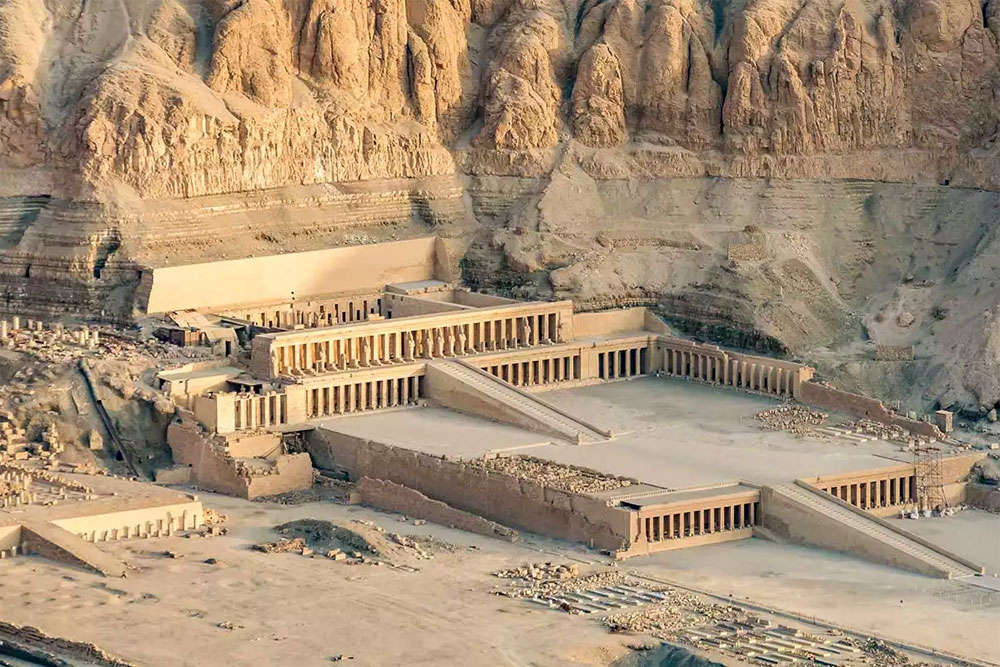
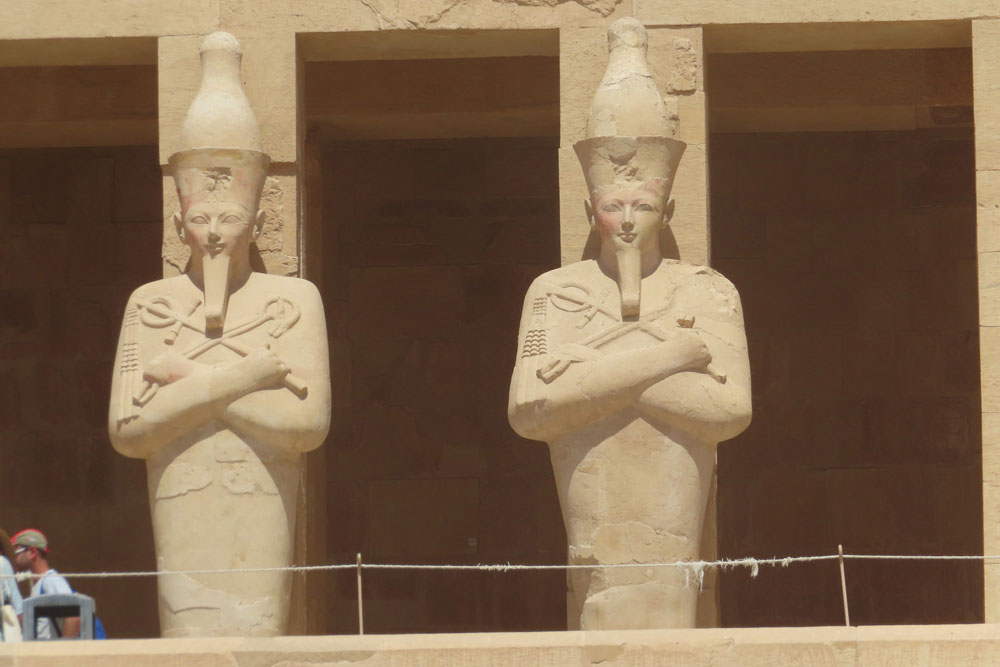
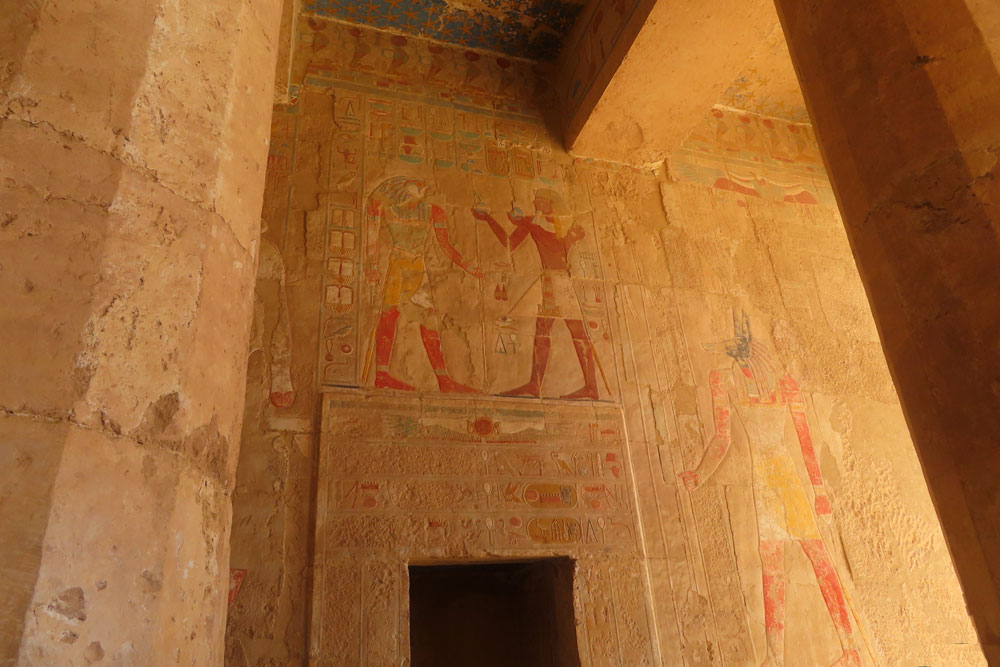
The mortuary temple of Hatshepsut was built during the reign of Pharaoh Hatshepsut of the Eighteenth Dynasty. It is considered to be a masterpiece of ancient architecture Its three massive terraces rise above the desert floor and into the cliffs of Deir el-Bahari. Her tomb, KV20, lies inside the same massif capped by El Qurn, a pyramid for her mortuary complex. At the edge of the desert, 1 km east, connected to the complex by a causeway lies the accompanying valley temple.
Across the river Nile, the whole structure points towards the monumental Eighth Pylon, Hatshepsut's most recognizable addition to the Temple of Karnak and the site from which the procession of the Beautiful Festival of the Valley departed. The temple's twin functions are identified by its axes: its main east-west axis served to receive the barque of Amun-Re at the climax of the festival, while its north-south axis represented the life cycle of the pharaoh from coronation to rebirth.
Click on any of the thumbnail photos for a larger version
 |
 |
 |
 |
 |
 |
 |
 |
 |
 |
 |
 |
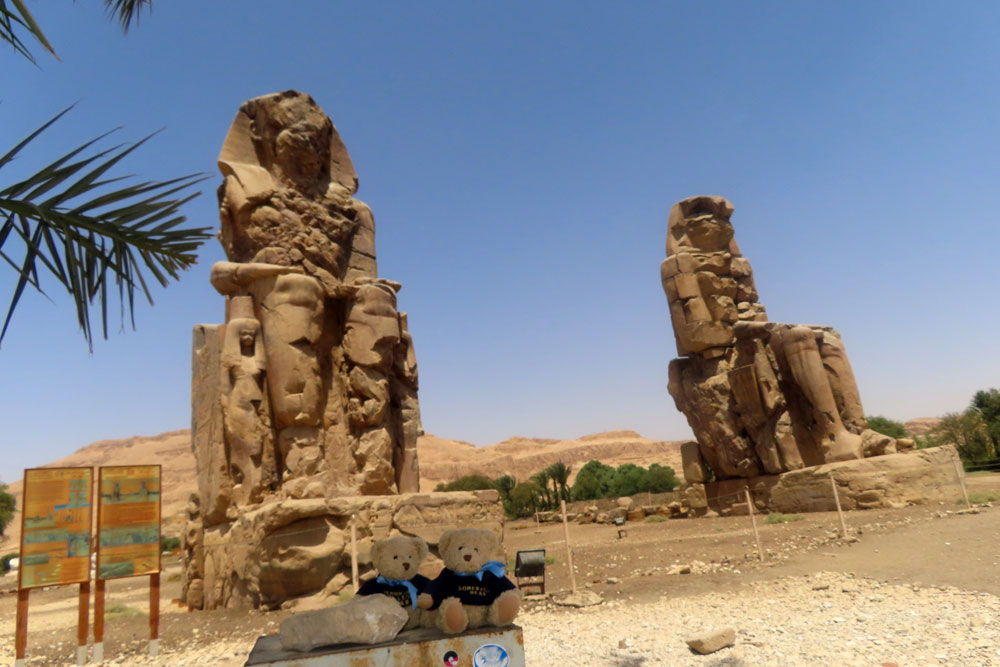
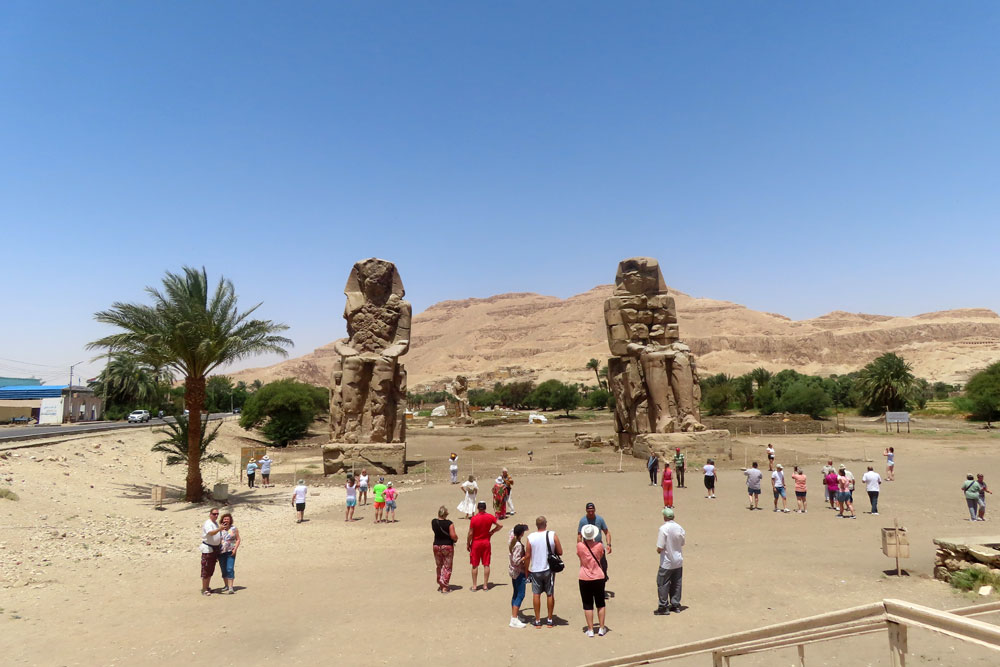
On the way back to the boat we stopped at the two giant statues of Amenhotep III. . And less prosaically at a very bad linen shop, where I am sure that guides made their cut. From there back to the boat for lunch
Click on any of the thumbnail photos for a larger version
 |
 |
 |
 |
Karnak Temple
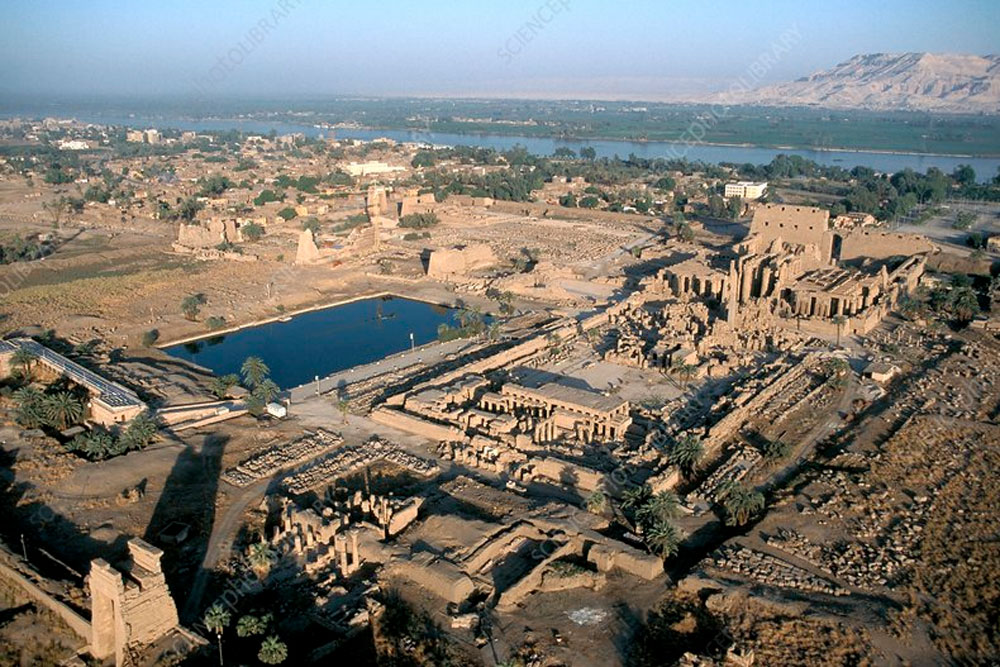
After lunch we headed for the east bank and Karnak Temple
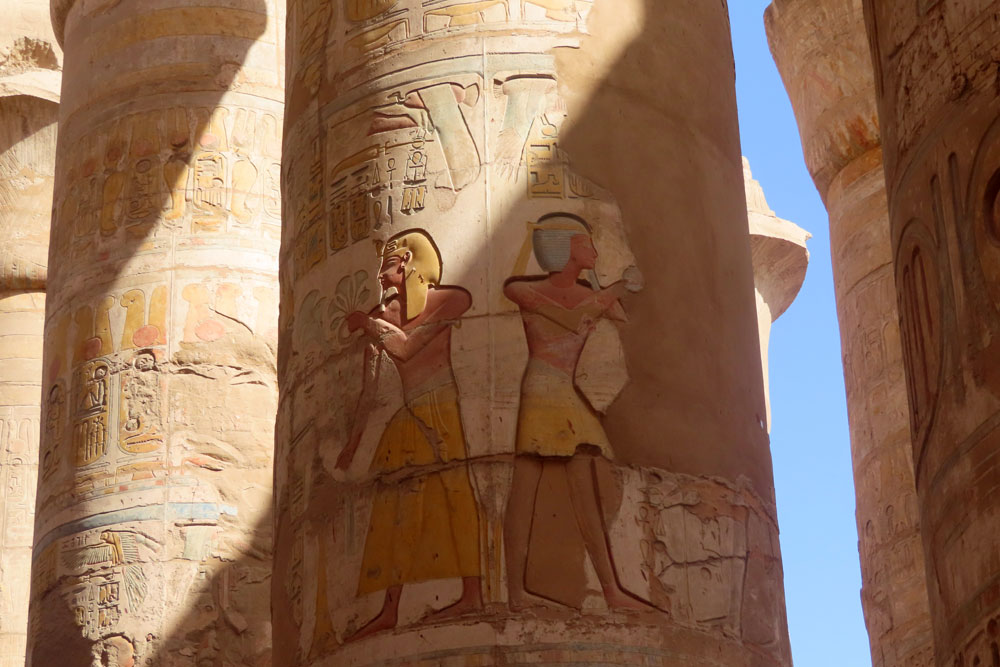
The Karnak Temple Complex comprises a vast mix of temples, pylons, chapels, and other buildings. Construction at the complex began during the reign of Senusret I (reigned 1971–1926 BC) in the Middle Kingdom and continued into the Ptolemaic Kingdom (305–30 BC), although most of the extant buildings date from the New Kingdom.
The area around Karnak was the ancient Egyptian Ipetisut ("The Most Selected of Places") and the main place of worship of the 18th Dynastic Theban Triad, with the god Amun as its head. It is part of the monumental city of Thebes, and in 1979 it was added to the UNESCO World Heritage List along with the rest of the city
Karnak gets its name from the nearby, and partly surrounded, modern village of El-Karnak, 2.5 kilometres north of Luxor.
Click on any of the thumbnail photos for a larger version
 |
 |
 |
 |
 |
 |
 |
 |
 |
 |
 |
 |
 |
 |
 |
 |
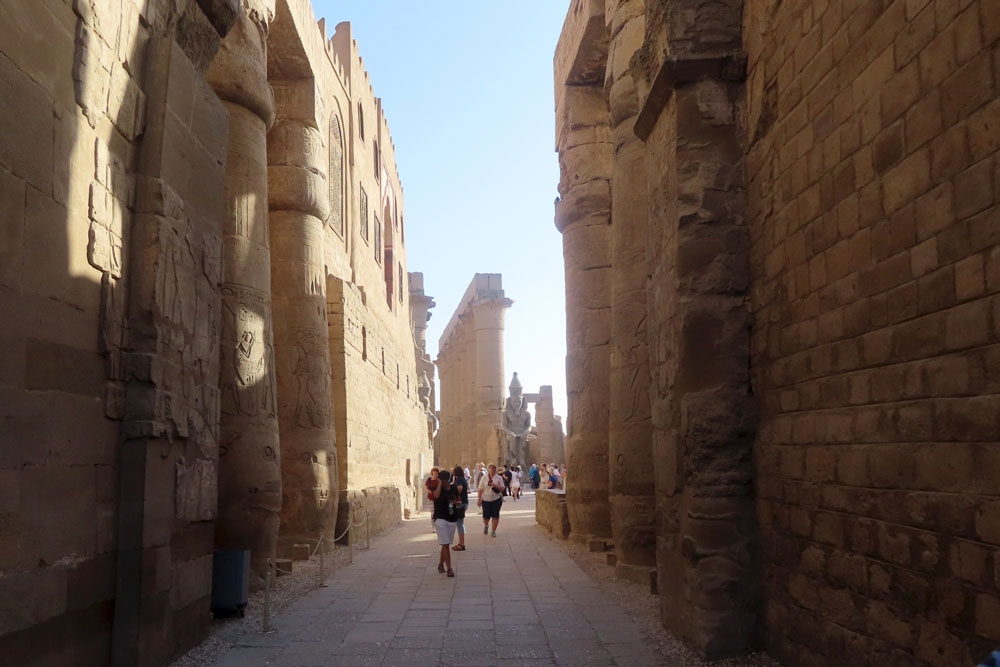
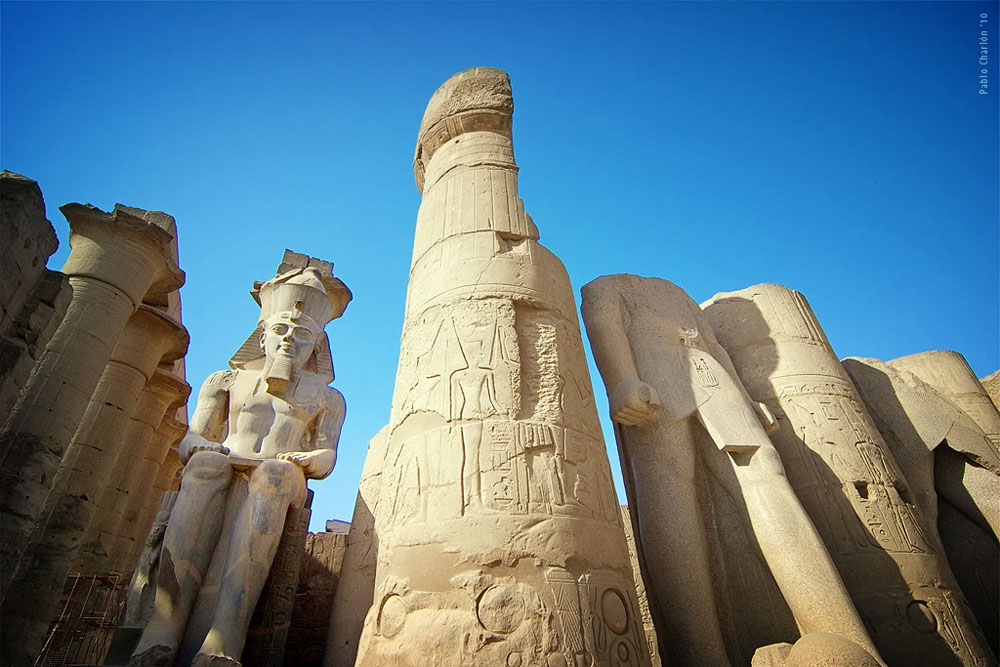
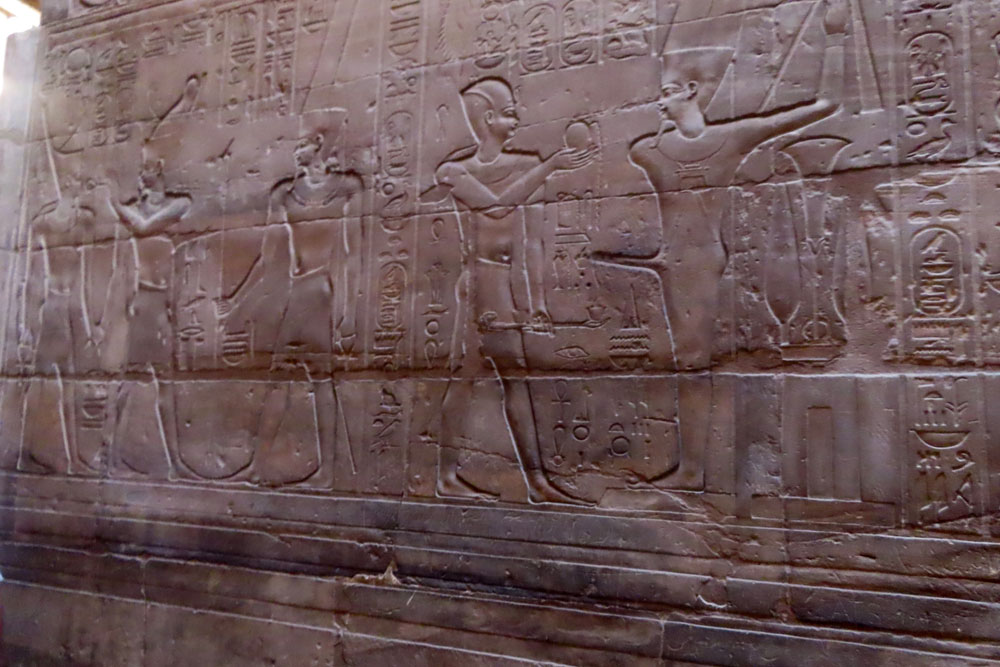
Luxor Temple
The Luxor Temple is a large Ancient Egyptian temple complex in the city today known as Luxor (ancient Thebes) . It and was constructed approximately 1400 BC. Unlike the other temples in Thebes, Luxor temple was not dedicated to a cult god or a deified version of the pharaoh in death. Instead, Luxor temple is dedicated to the rejuvenation of kingship; it may have been where many of the pharaohs of Egypt were crowned in reality or conceptually (as in the case of Alexander the Great, who claimed he was crowned at Luxor but may never have traveled south of Memphis, near modern Cairo).
To the rear of the temple are chapels built by Amenhotep III of the 18th Dynasty, and Alexander. Other parts of the temple were built by Tutankhamun and Ramesses II. During the Roman era, the temple and its surroundings were a legionary fortress and the home of the Roman government in the area. During the Roman period a chapel inside the Luxor Temple originally dedicated to the goddess Mut was transformed into a Tetrarchy cult chapel and later into a church.
The church was later replaced by a mosque which still functions today
Click on any of the thumbnail photos for a larger version
 |
 |
 |
 |
 |
 |
 |
 |
 |
 |
 |
 |
Cocktails at Winter Palace Hotel
Old Winter Palace Hotel, is a historic British colonial-era 5-star luxury hotel on the banks of the River Nile
The hotel was built by Benjamin Herbst for the Upper Egypt Hotels Co, an enterprise founded in 1905 by Cairo hoteliers Charles Baehler and George Nungovich in collaboration with Thomas Cook & Son (Egypt). It was inaugurated in 1907 with a picnic at the Valley of the Kings followed by dinner at the hotel and speeches
The 5th Earl of Carnarvon, a collector of Egyptian antiquities who financed archaeologist and Egyptologist Howard Carter's discovery of Tutankhamen's tomb in 1922, stayed many times at the Winter Palace.
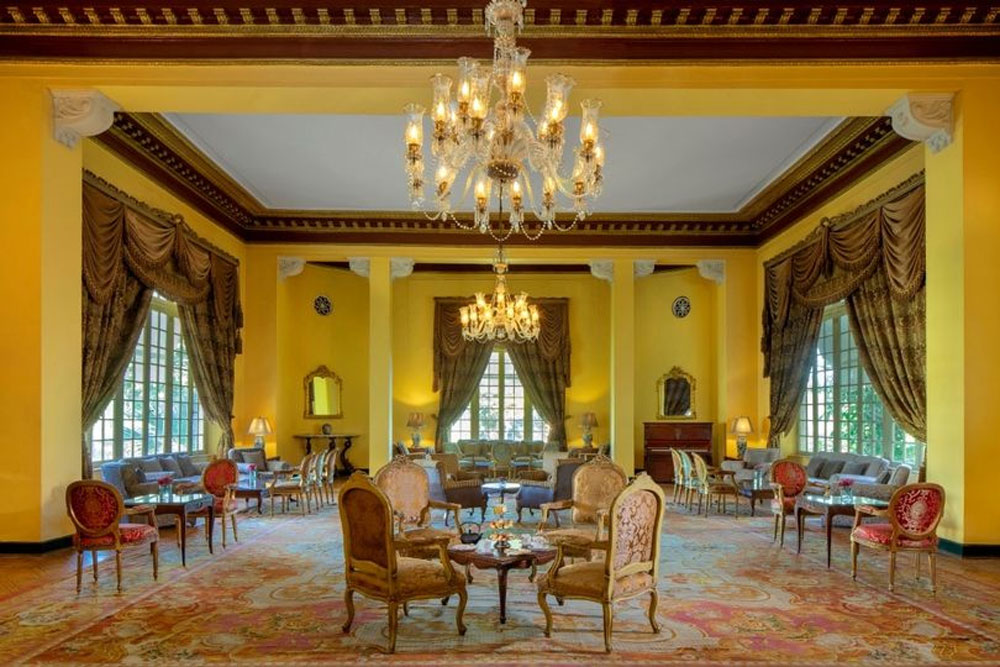
Victoria Lounge where we had our cocktailes is tired, dark and dismal with a threadbare carpet. Whilst the cocktails were fine, the fact that we were seated in a bare, soulless lounge, where the furniture had been stripped out, meant that the occasion was not enjoyable, and best forgotten The hotel has a publicity photo of the lounge, but this bore no resemblance to the room that we had our cocktails in The carpet was threadbare, the room was dark, there were not enough seats for everyone (and we were only 25 people). Staff were conspicuous by there absence. As reviewers on TripAdvisor have pointed out, the hotel needs closed down and thoroughly upgraded It cannot live on its past glories, and for me was so bad that I would never return here again
Click on any of the thumbnail photos for a larger version
 |
 |
 |
 |
 |
 |
 |
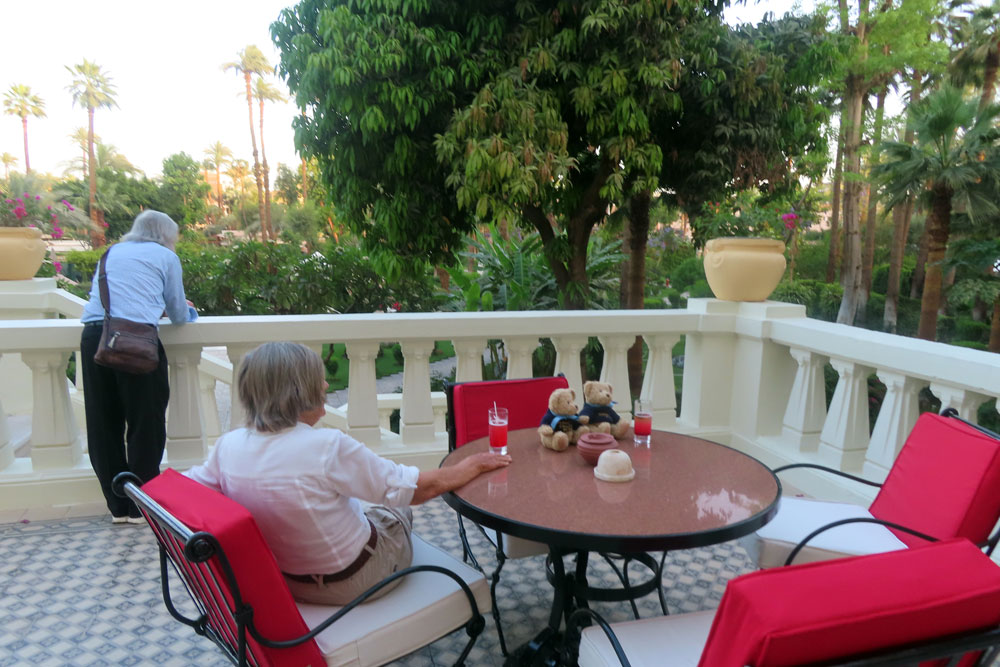 |
| The lounge for our drinks should have looked like this | But was like this - empty, with a threadbare carpet |