
Sunday 21st April.. Abu Simbel & Kom Ombo
As expected we were woken up at 3:45 am for our trip to Abu Simbel.
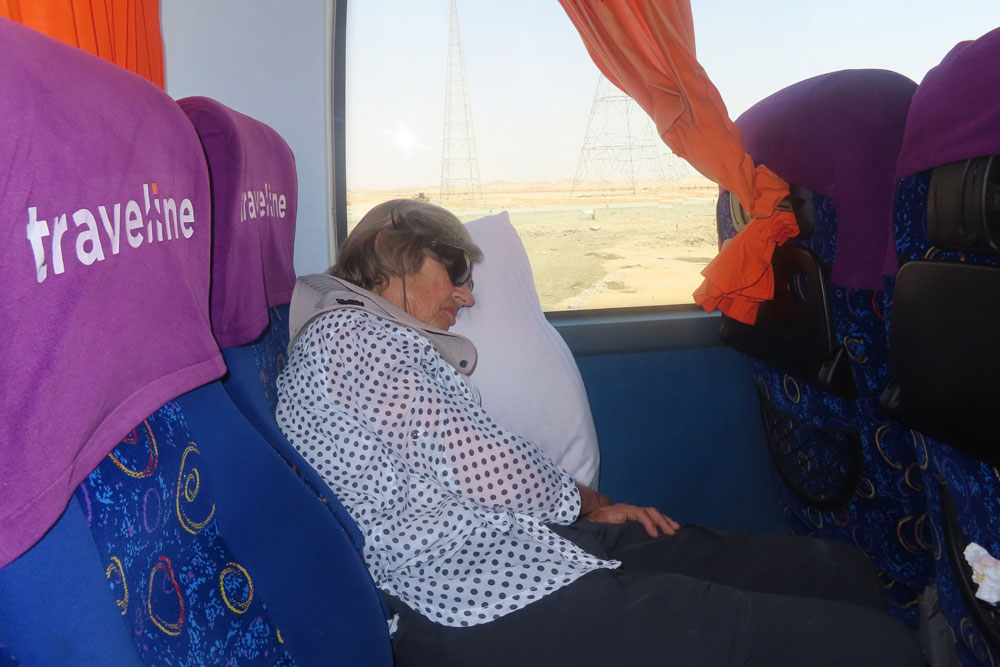
We enjoyed two glasses of fresh orange juice in the cabin before setting off on the coach at 4:15 equipped with a breakfast box, we also took a pillow each and Chris promptly went to sleep for almost 3 hours on the coach and never touched the breakfast box.
We arrived at Abu Simbel Around 8am and left at 10am. It was very hot here, with temperature reaching low forties centigrade (later on north of Luxor temperatures fell to a maximum of 33 degrees)
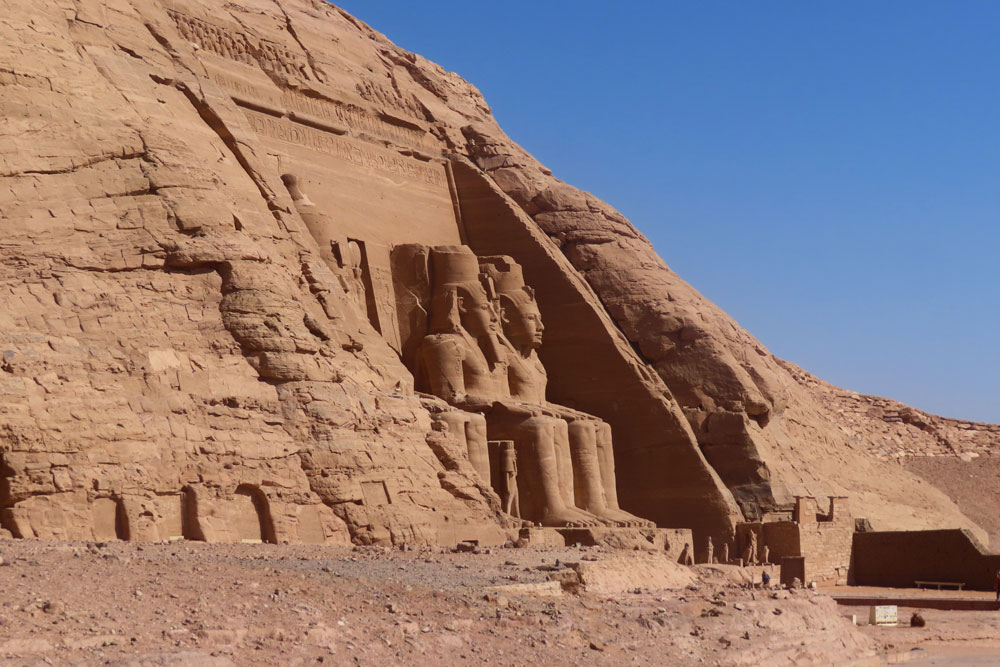
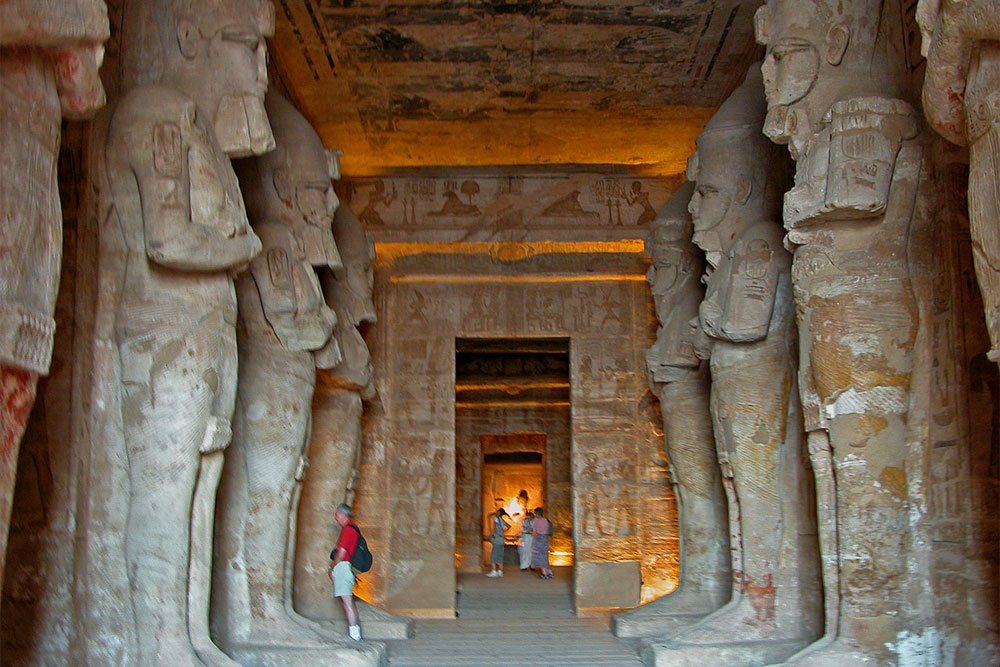
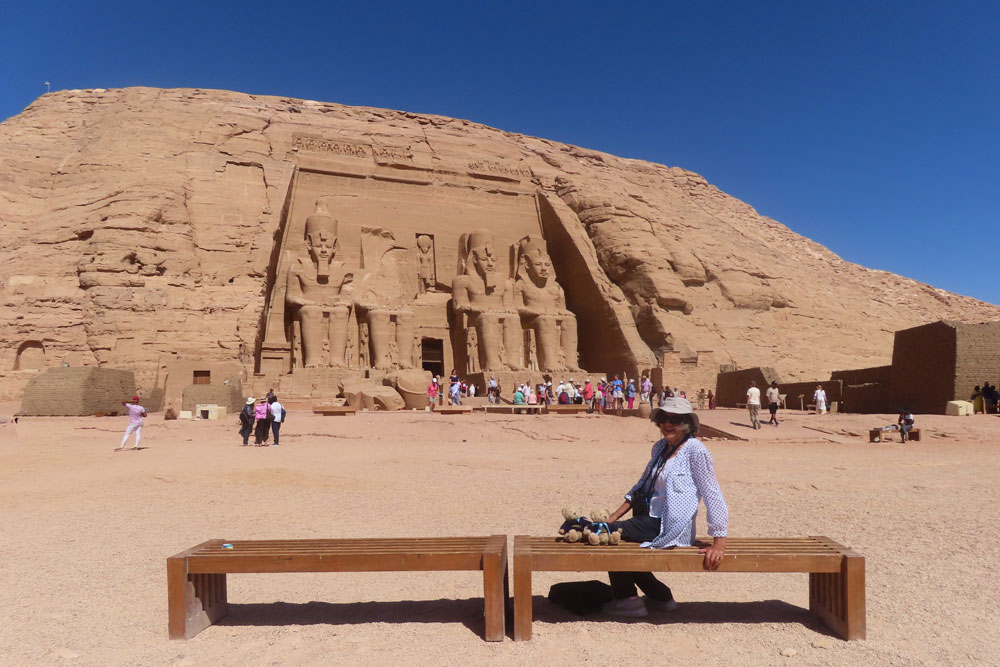
Abu Simbel is a world heritage site. The two temples there which have been rescued from lower land when the Aswan High Dam created Lake Nassar in the 1970s . The temples were truly fantastic, even though Chris could not see a lot of the detail of the carvings. Mustafa gave us much information about them. And we posed for the necessary iconic photos in front of the temple
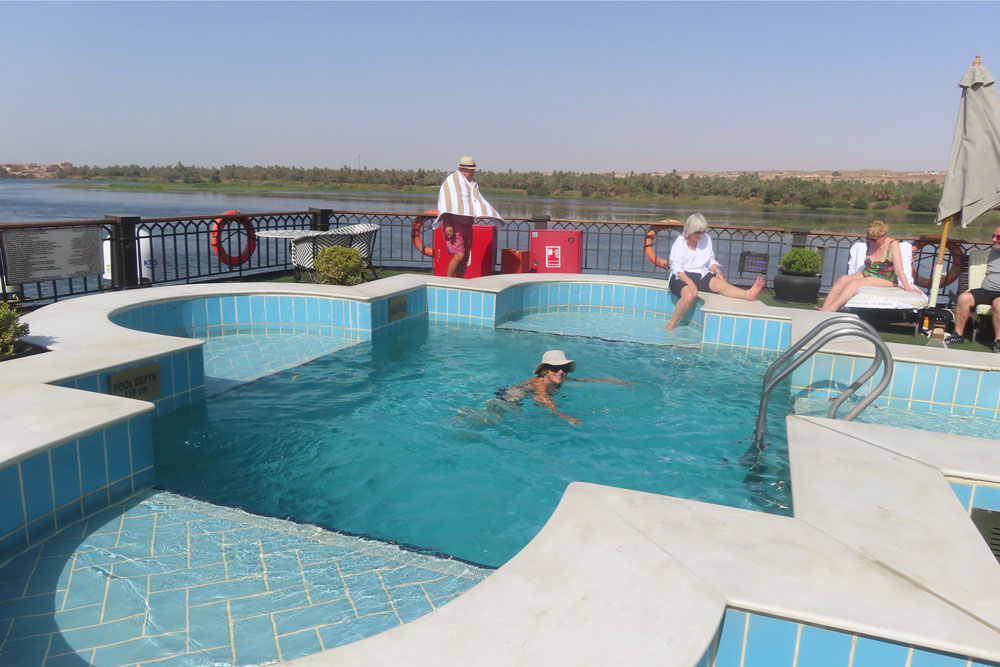
On leaving Abu Simbel , the bus made it back to the ship in record time arriving there at around 1.40 p.m. The ship moved promptly at 2 pm with everybody aboard in order to to reach Kom Ombo. We had lunch and then went up to the Sun deck where Chris had a swim. The boat cruised downstream and we had time for afternoon tea before heading out again to visit Kom Ombo temple.
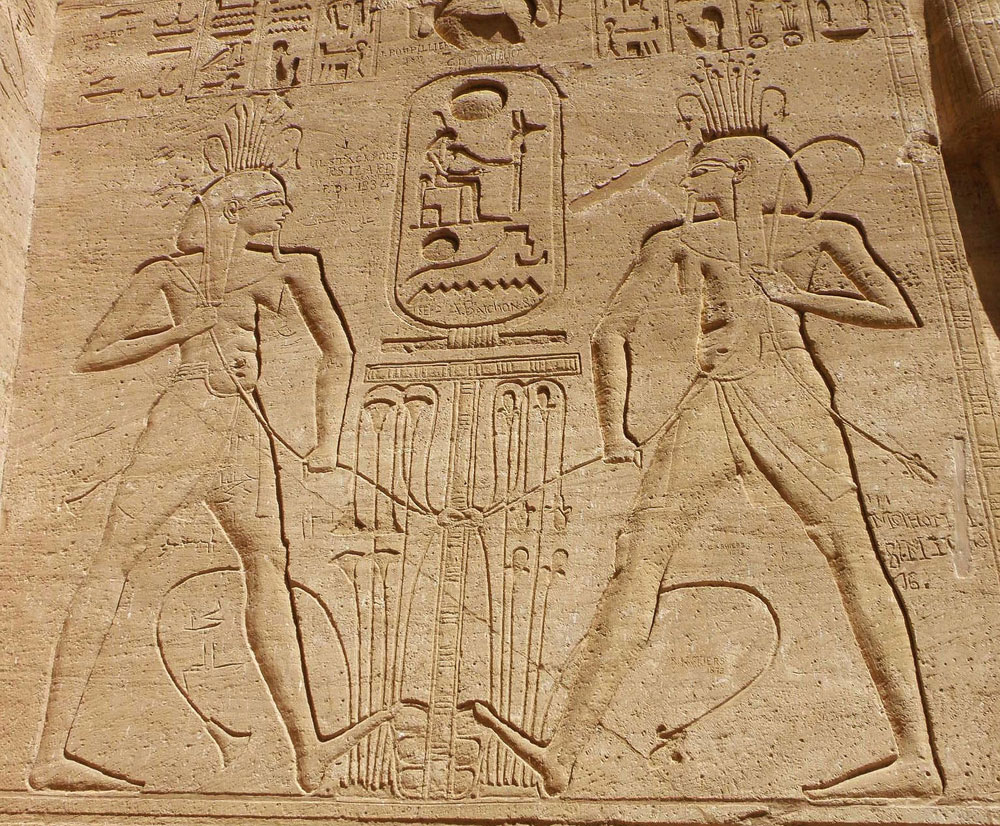
We were able to walk straight off the ship to this temple, which was also so impressive. One of the things that impressed us was a blue painted ceiling in an open air structure. We also learnt that only kings and queens had cartouches (the elliptical hieroglyph - hieroglyphs are the writing system ancient Egyptians used for inscriptions mostly on walls of temples and tombs. ) and pharaohs each had two different ones - one with birth name and one with pharonic name.
Back onboard we sailed again. Then there was a managers cocktail party followed by a disastrous gala dinner where the steak was well done instead of rare and pretty tough to bootl. We could not eat it, nor could the others on the table. Strangely the staff removed the plates still laden with food, without asking why we had not eaten it. On the way out of the restaurant, at the end of the meal, the Manager made the mistake of asking us if we had enjoyed the meal. David put him right on the problems he had with the chef pre-cooking food too far in advance and leaving it to stew in hotplates. To be fair to the ship, next day, he asked us to have a rare steak for lunch, to show that the chef could in fact cook a rare steak. And it was rare, moist, and perfect - it could be done if they set their minds to it
Abu Simbel
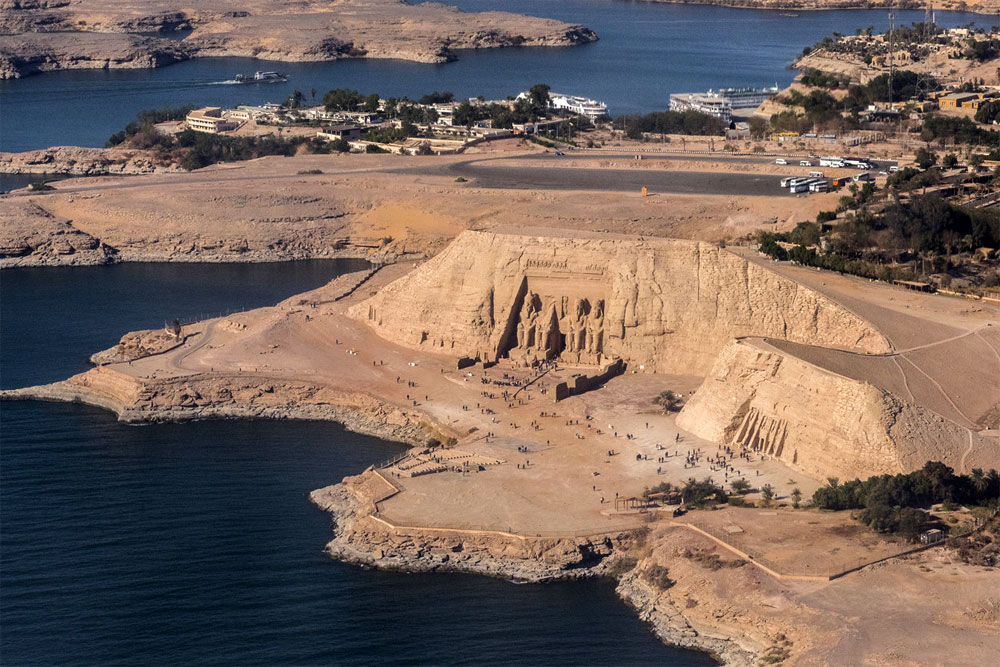
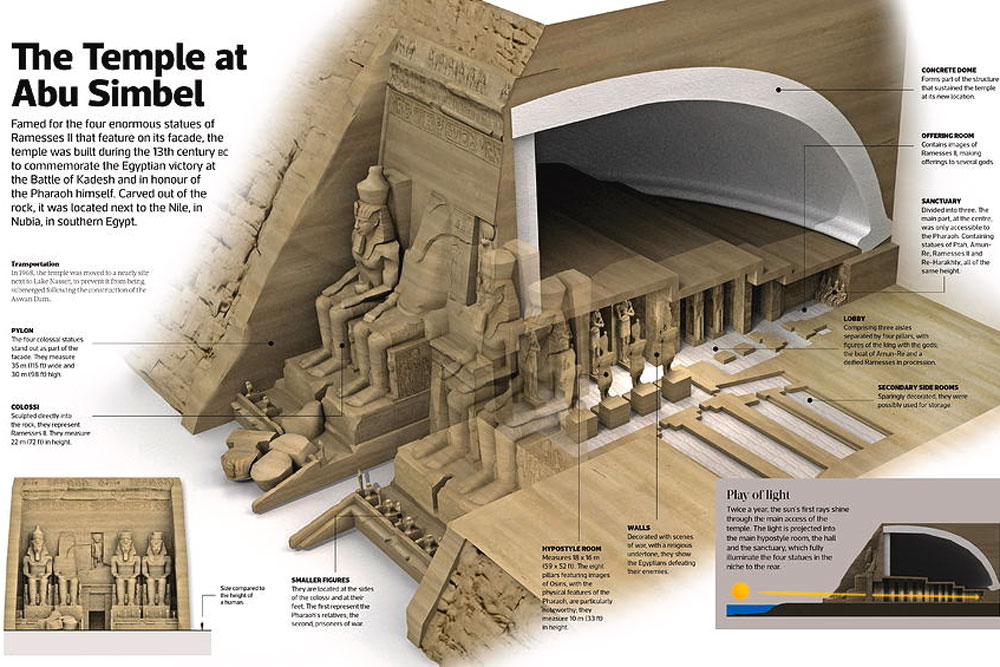
Abu Simbel is a historic site comprising two massive rock-cut temples near the border with Sudan. It is located on the western bank of Lake Nasser, about 300 km southwest of Aswan by road. The twin temples were originally carved out of the mountainside in the 13th century BC, during the reign of the Pharaoh Ramesses II. Their huge external rock relief figures of Ramesses II have become iconic. His wife, Nefertari, and children can be seen in smaller figures by his feet.
Sculptures inside the Great Temple commemorate Ramesses II's heroic leadership at the Battle of Kadesh. Construction of the temple complex started in c. 1264 BC and lasted for about 20 years, until 1244 BC.
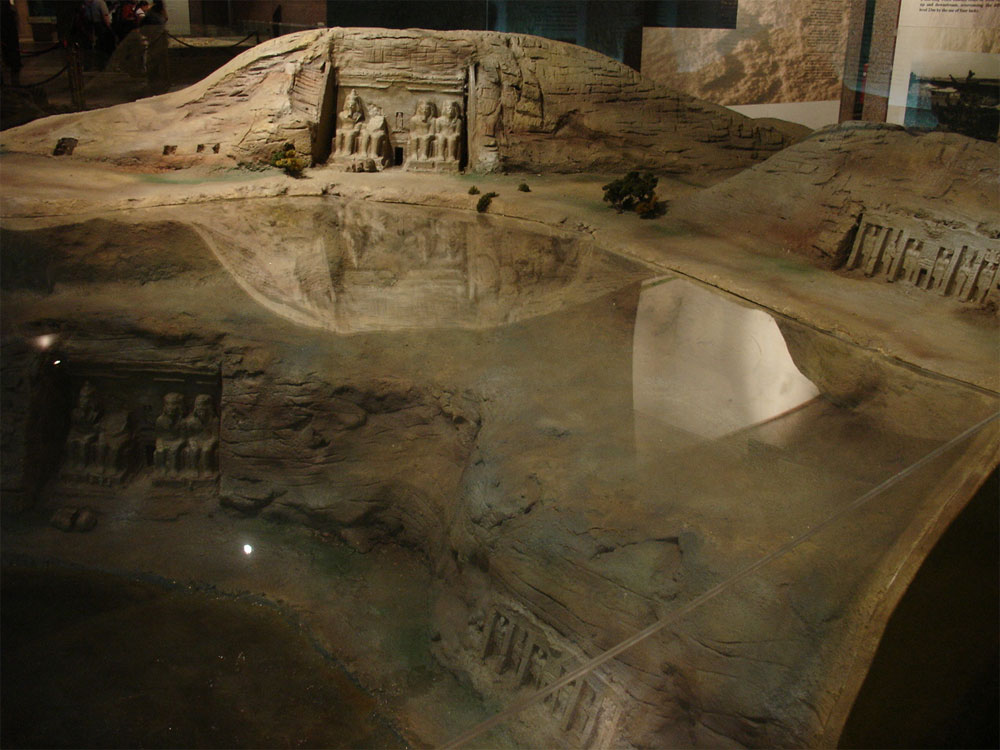
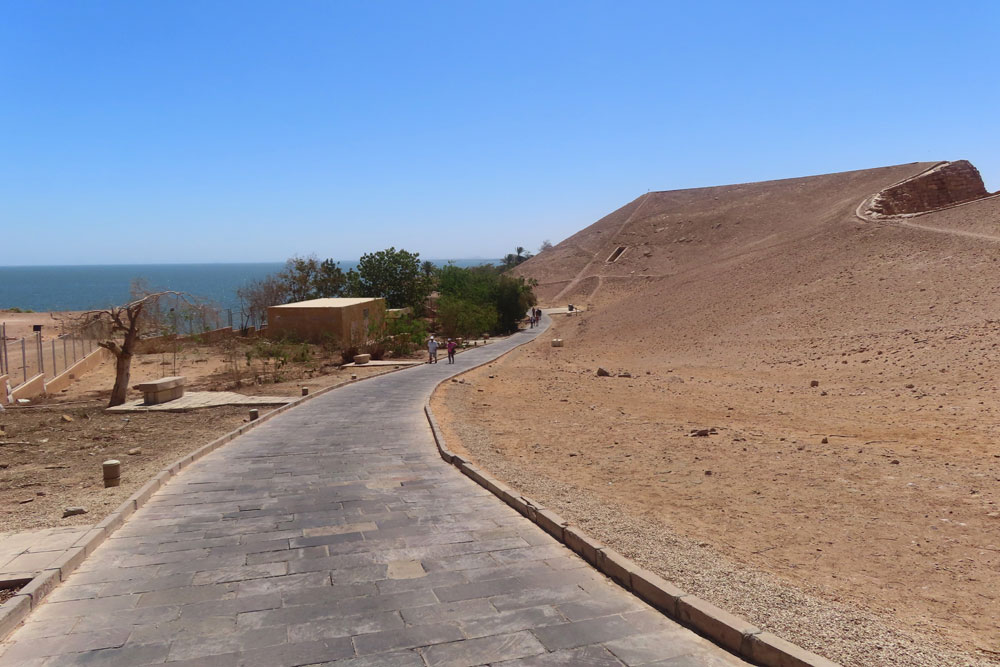
The complex was relocated in its entirety in 1968 to higher ground to avoid it being submerged by Lake Nasser, the Aswan Dam reservoir. An artificial hill was with a domed structure to house the Abu Simbel Temples.
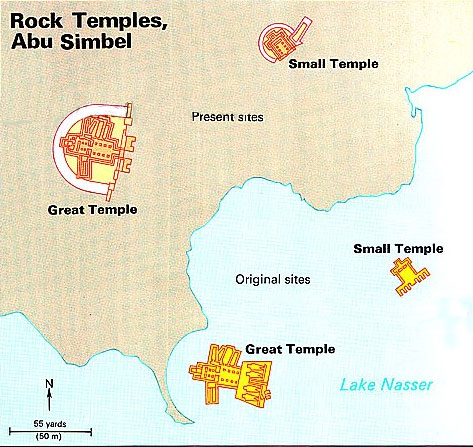
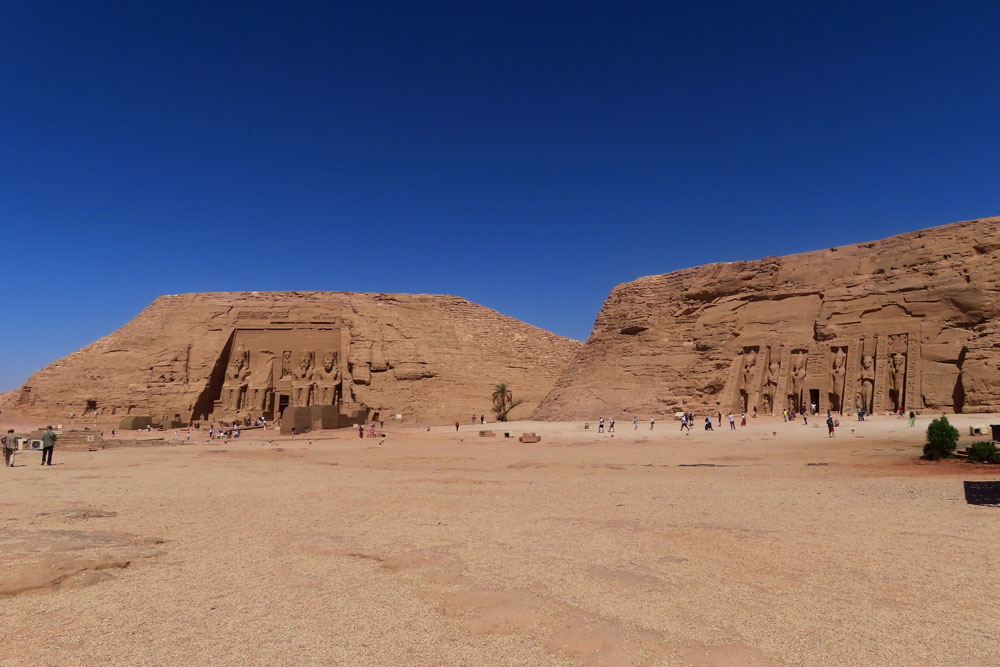
During his reign, Ramesses II embarked on an extensive building program throughout Egypt and Nubia, which Egypt controlled. Nubia was very important to the Egyptians because it was a source of gold and many other precious trade goods. He, therefore, built several grand temples there in order to impress upon the Nubians Egypt's might. The most prominent temples are the rock-cut temples near the modern village of Abu Simbel, at the Second Nile Cataract. There are two temples, the Great Temple, dedicated to Ramesses II himself, and the Small Temple, dedicated to his chief wife Queen Nefertari.
The salvage of the Abu Simbel temples began in 1964 by a multinational team of archeologists, engineers and skilled heavy equipment operators working together under the UNESCO banner; it cost some $40 million. Between 1964 and 1968, the entire site was carefully cut into large blocks (up to 30 tons, averaging 20 tons), dismantled, lifted and reassembled in a new location 65 metres higher and 200 metres back from the river, in one of the greatest challenges of archaeological engineering in history. Some structures were even saved from under the waters of Lake Nasser.
Today the complex consists of two temples. The larger one is dedicated to Ra-Horakhty, Ptah and Amun, Egypt's three state deities of the time, and features four large statues of Ramesses II in the facade. The smaller temple is dedicated to the goddess Hathor, personified by Nefertari, Ramesses's most beloved of his many wives.
The Small Temple, was built about 100 m northeast of the temple of Ramesses II and was dedicated to the goddess Hathor and Ramesses II's chief consort, Nefertari. This was in fact the second time in ancient Egyptian history that a temple was dedicated to a queen. The first time, Akhenaten dedicated a temple to his great royal wife, Nefertiti. The statues, slightly more than 10 m high, are of the king and his queen. On either side of the portal are two statues of the king, wearing the white crown of Upper Egypt (south colossus) and the double crown (north colossus); these are flanked by statues of the queen.
Click on any of the thumbnail photos for a larger version
 |
 |
 |
 |
 |
 |
 |
 |
 |
 |
 |
 |
 |
 |
 |
 |
 |
 |
 |
 |
 |
 |
 |
 |
 |
 |
 |
 |
 |
 |
 |
 |
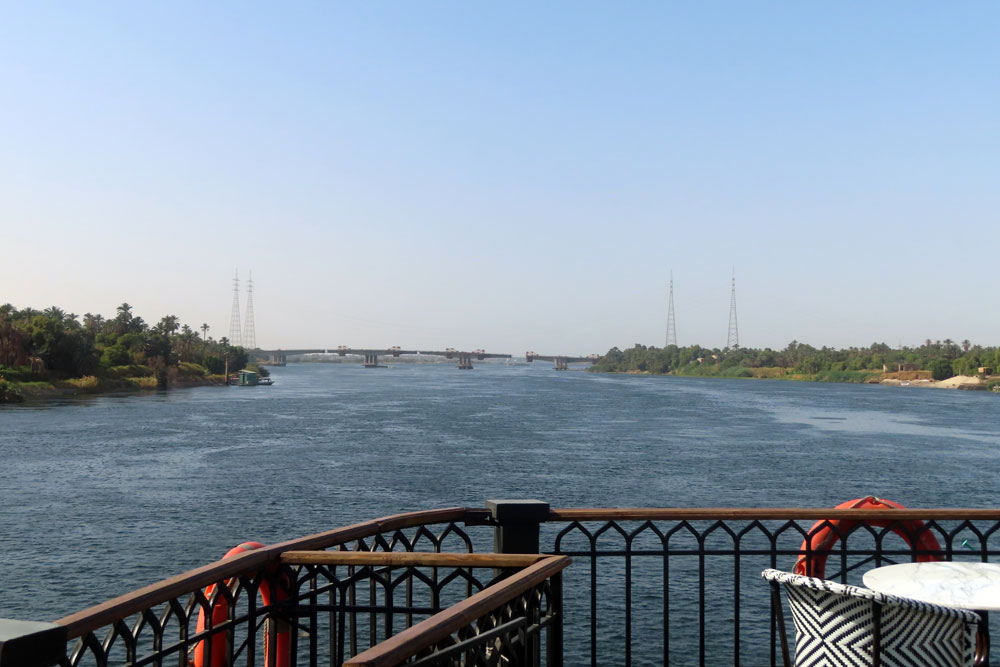
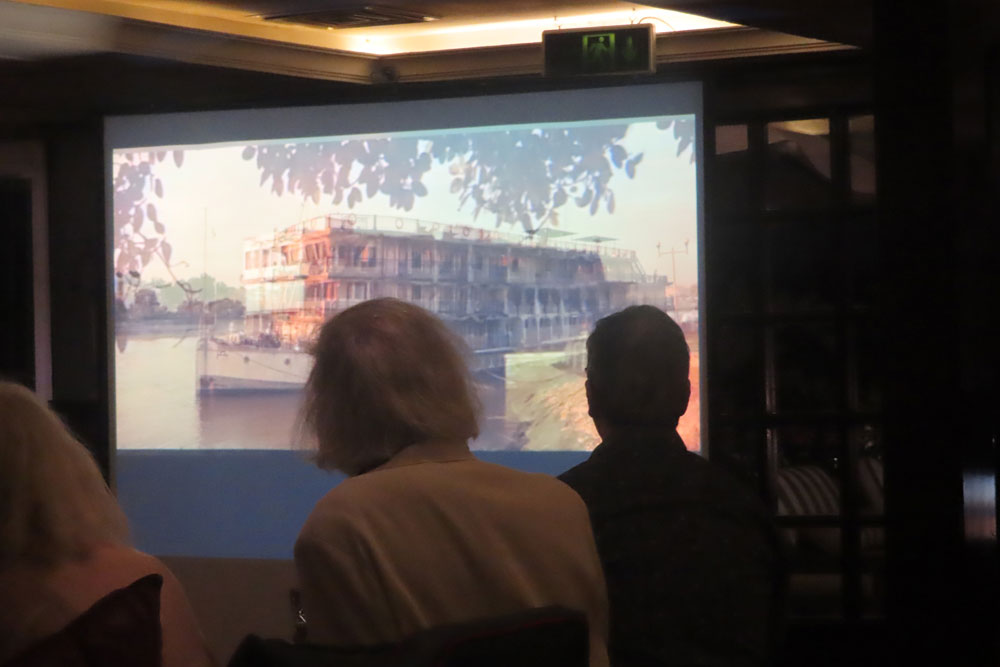
Back on the SS Misr, we relax as we steam on to Kom Ombo
Click on any of the thumbnail photos for a larger version
 |
 |
 |
 |
Kom Ombo Temple
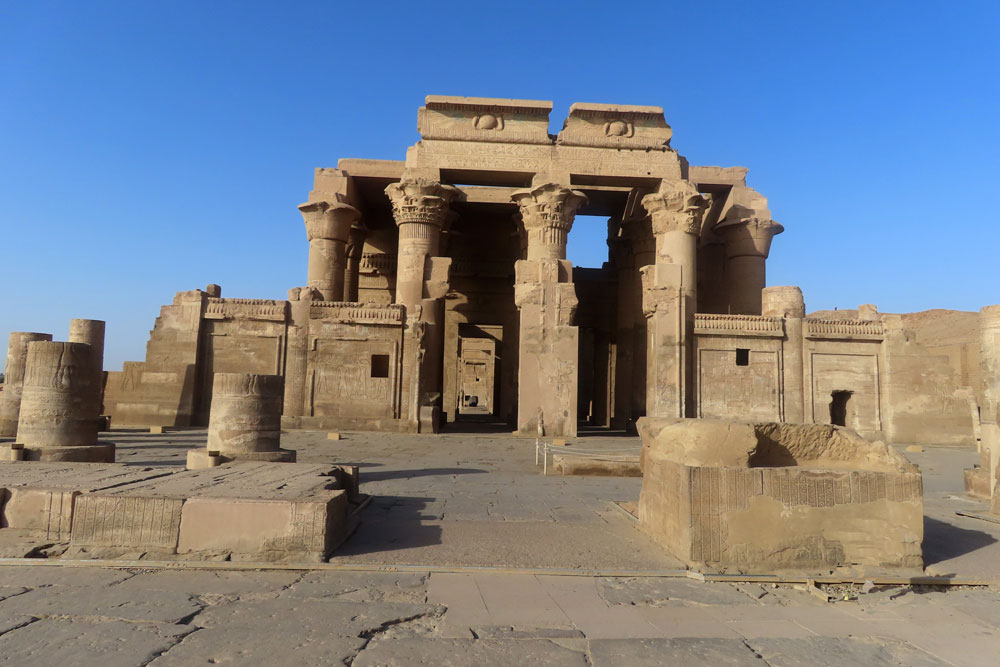
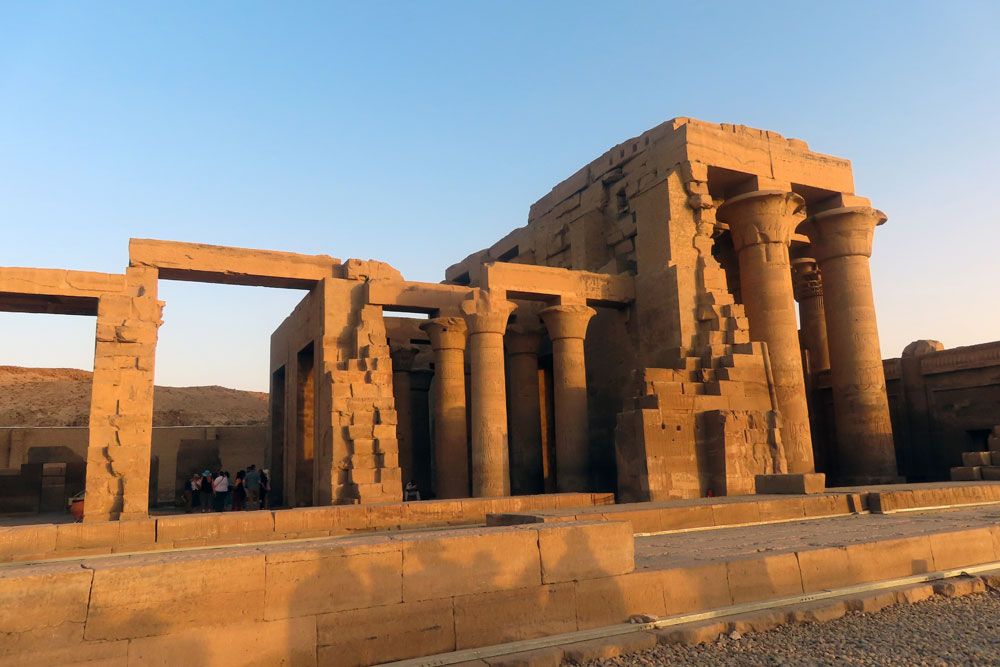
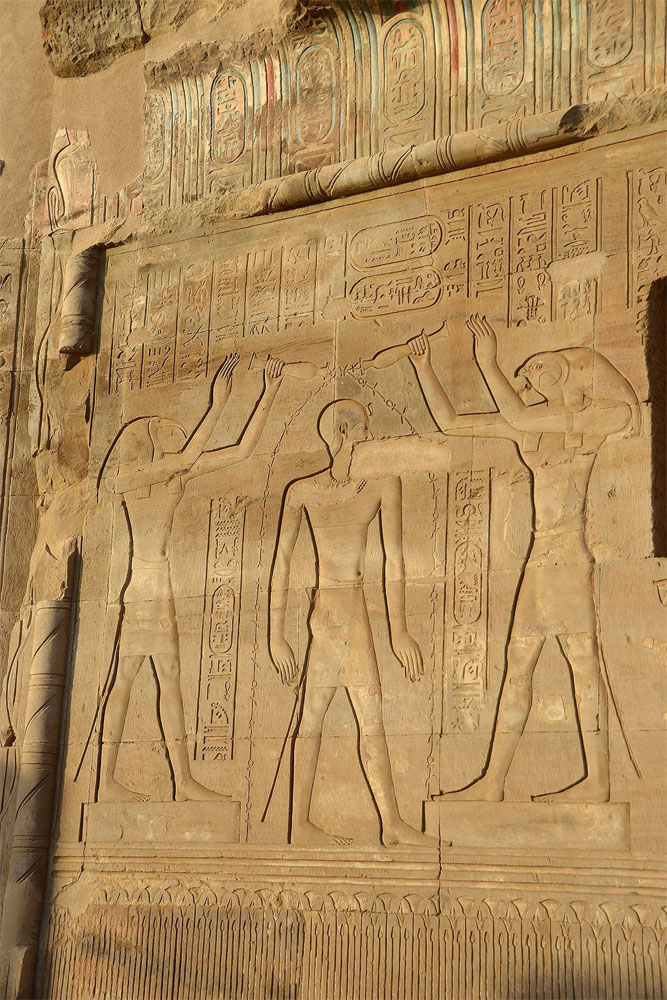
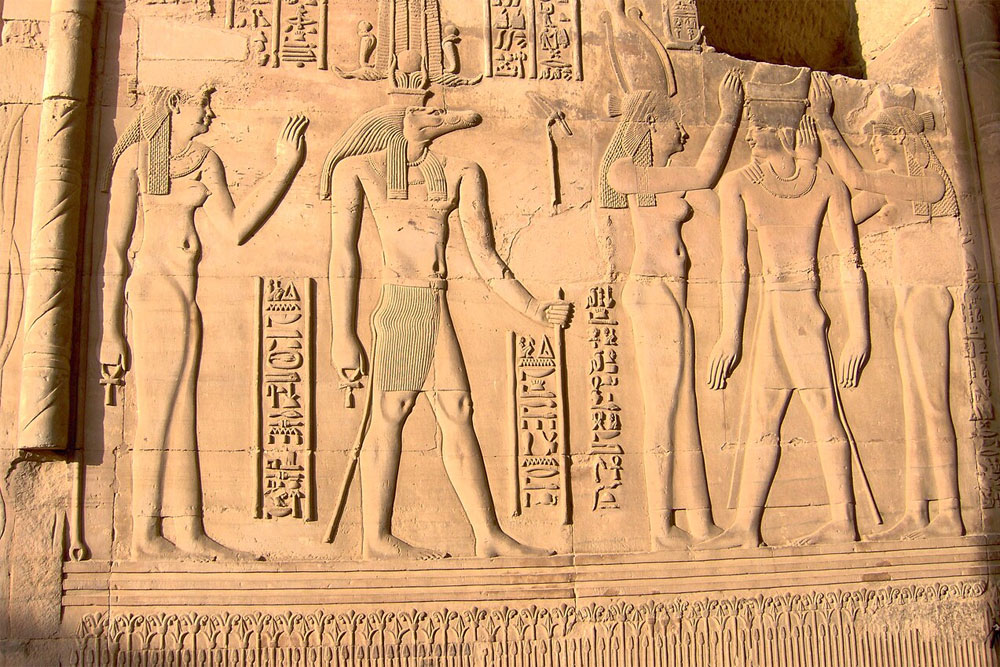
The Temple of Kom Ombo is an unusual double temple. It was constructed during the Ptolemaic dynasty, 180–47 BC.Some additions to it were later made during the Roman period.
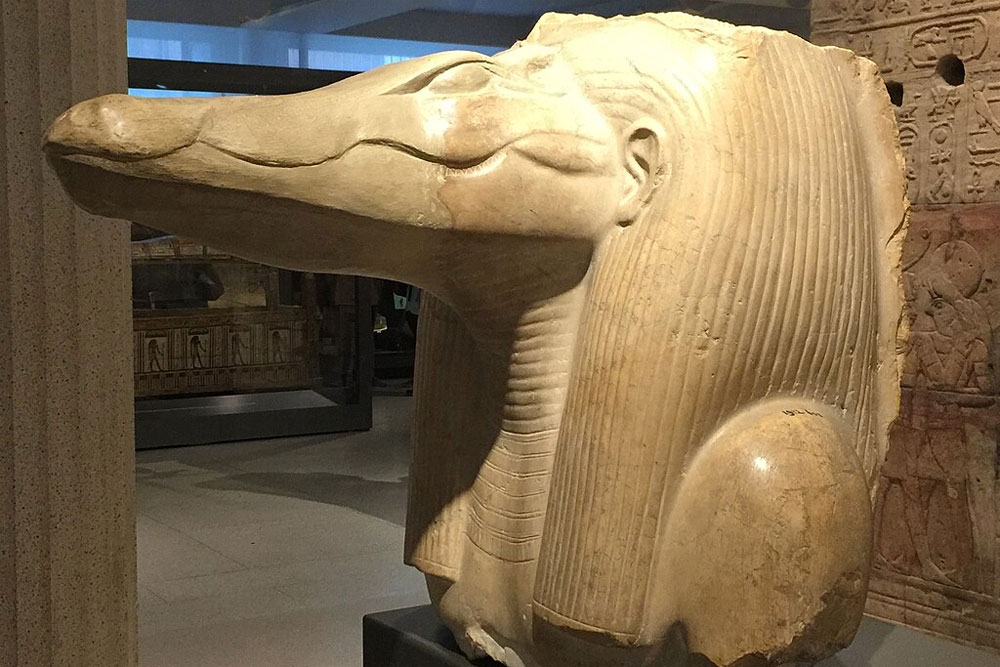
The building is unique because its 'double' design meant that there were courts, halls, sanctuaries and rooms duplicated for two sets of gods. The southern half of the temple was dedicated to the crocodile god Sobek, god of fertility and creator of the world with Hathor and Khonsu. Meanwhile, the northern part of the temple was dedicated to the falcon god Horus the Elder. The temple is atypical because everything is perfectly symmetrical along the main axis.
Much of the temple has been destroyed by the Nile, earthquakes, and later builders who used its stones for other projects. Some of the reliefs inside were defaced by Copts, who once used the temple as a church. All the temples buildings in the southern part of the plateau were cleared of debris and restored by Jacques de Morgan in 1893.
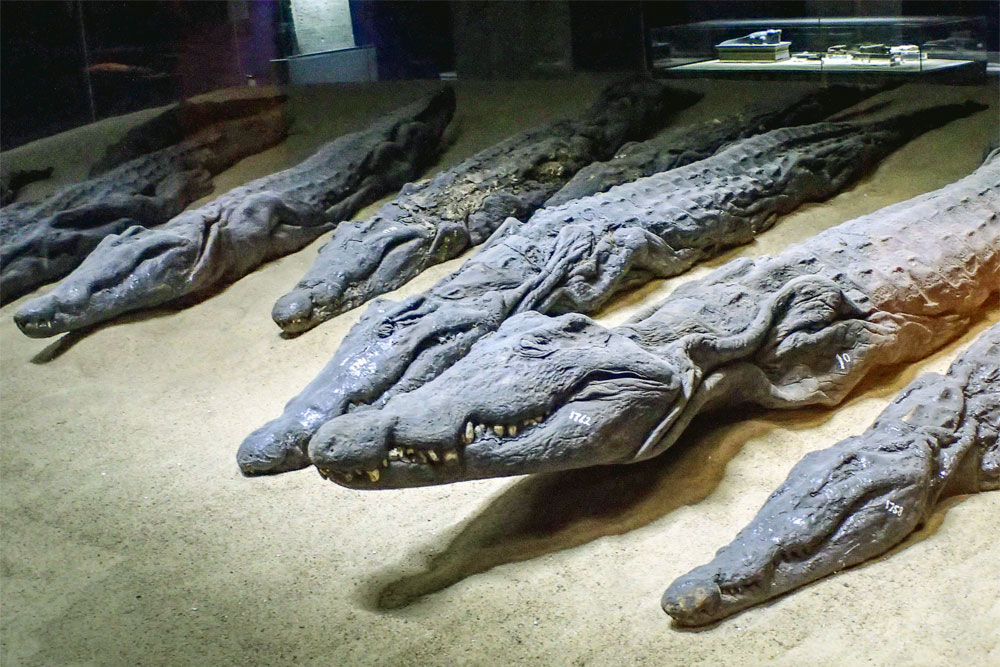
Crocodile Museum
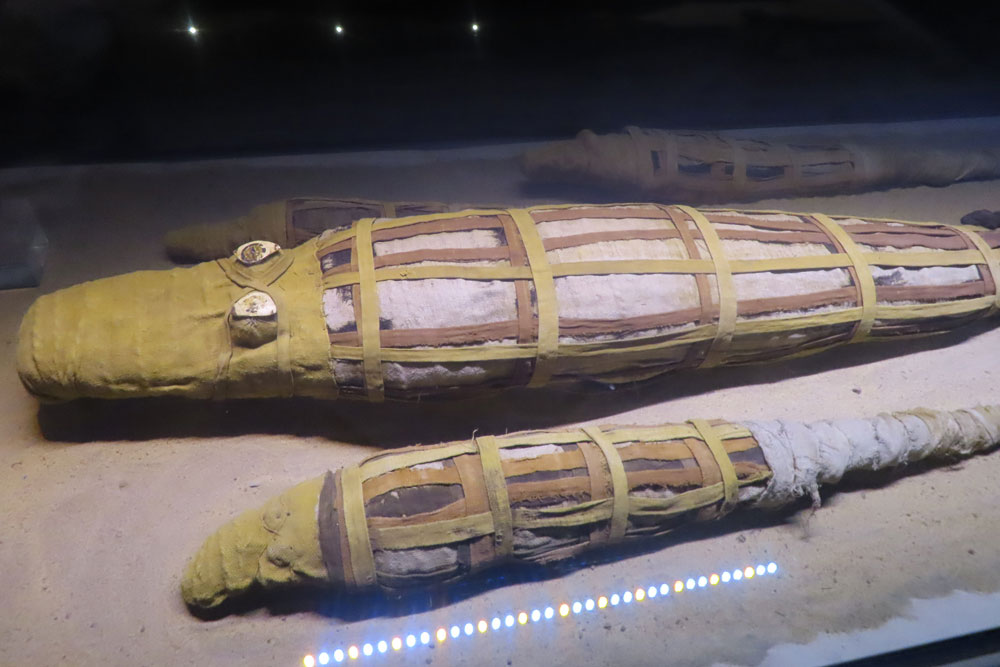
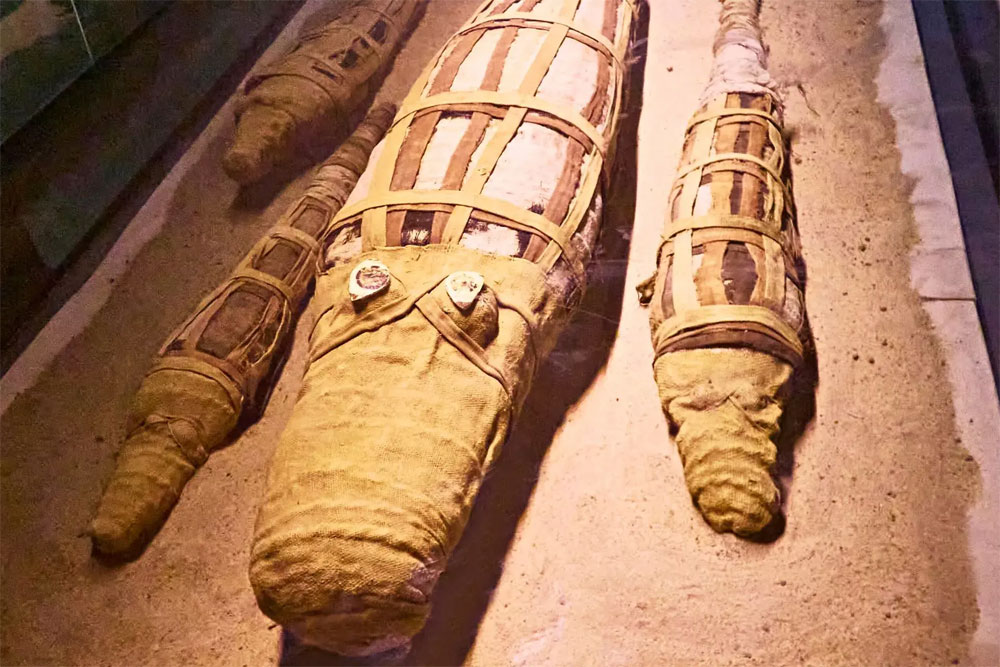
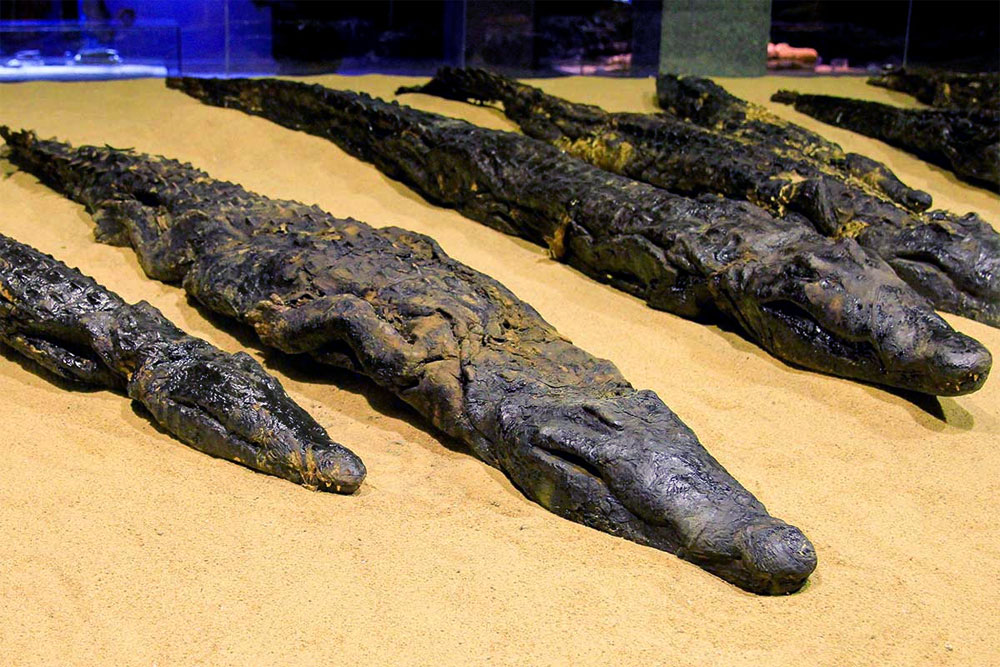
A few of the three hundred crocodile mummies discovered in the vicinity are displayed in The Crocodile Museum.
Other exhibits include offerings to Sobek left by faithful pilgrims and explanations of the complicated process of animal mummification.
Click on any of the thumbnail photos for a larger version
 |
 |
 |
 |
 |
 |
 |
 |
 |
 |
 |
 |
 |
 |
 |
 |
 |
 |
 |
 |