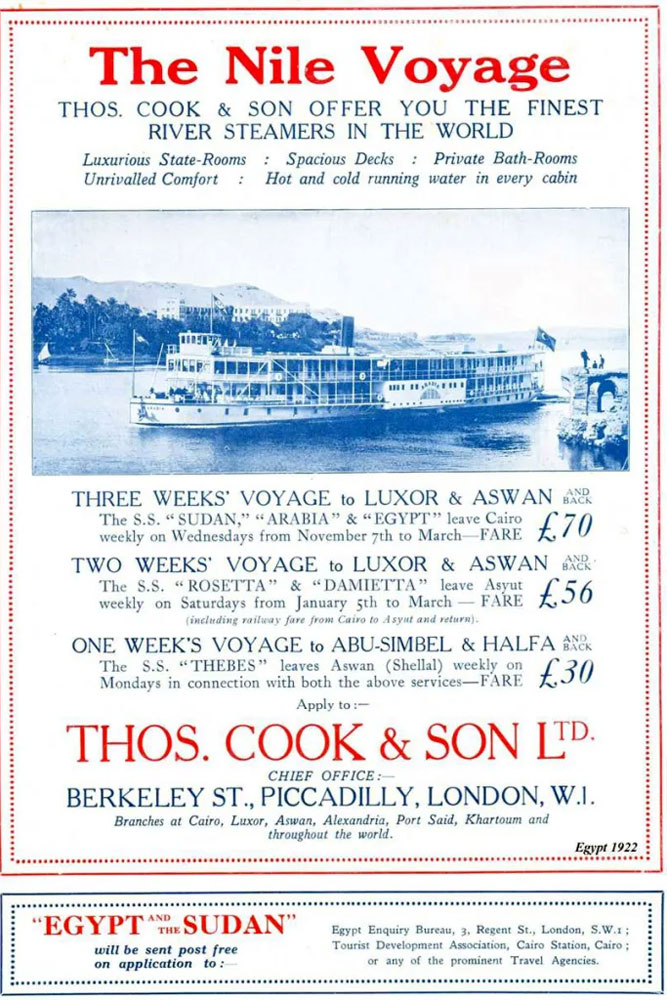
Nile cruises have been around for a long time
After a very light breakfast of just fresh orange juice and fruit we set out, the 26 of us, to the Nubian museum. We were divided into two groups for our whisper machines.. We were in the Ramesses group with. Amr (pronounced Amr", who was the senior of the two tour guides
Chris felt a little queasy on the coach and this feeling of nausea continued for most of the day until she was physically lightly sick at the Philae Temple in the late afternoon. Which, as is the wont with food poisoning, sorted out most of the symptoms
In the morning , we enjoyed our guided tour of the Nubian museum with some very fine statues on display
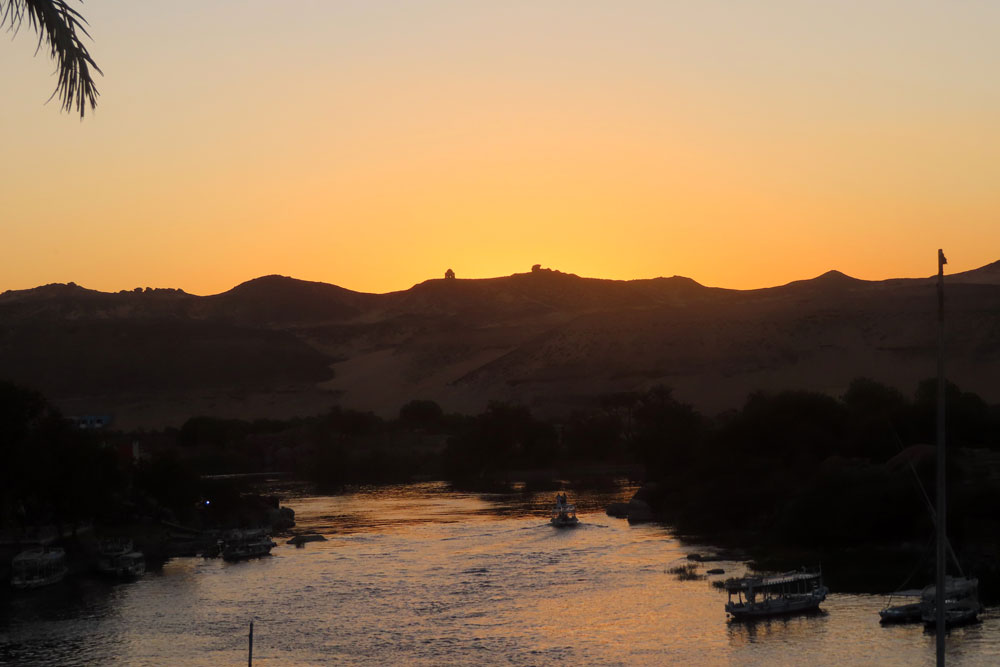
We got back to the boat in time for a fire drill up on the top deck at 11:30. Then Chris tried to have a sleep until 12.45 to be ready for the next outing to the high dam, the temple and the old Cataract hotel for afternoon tea at sunset.
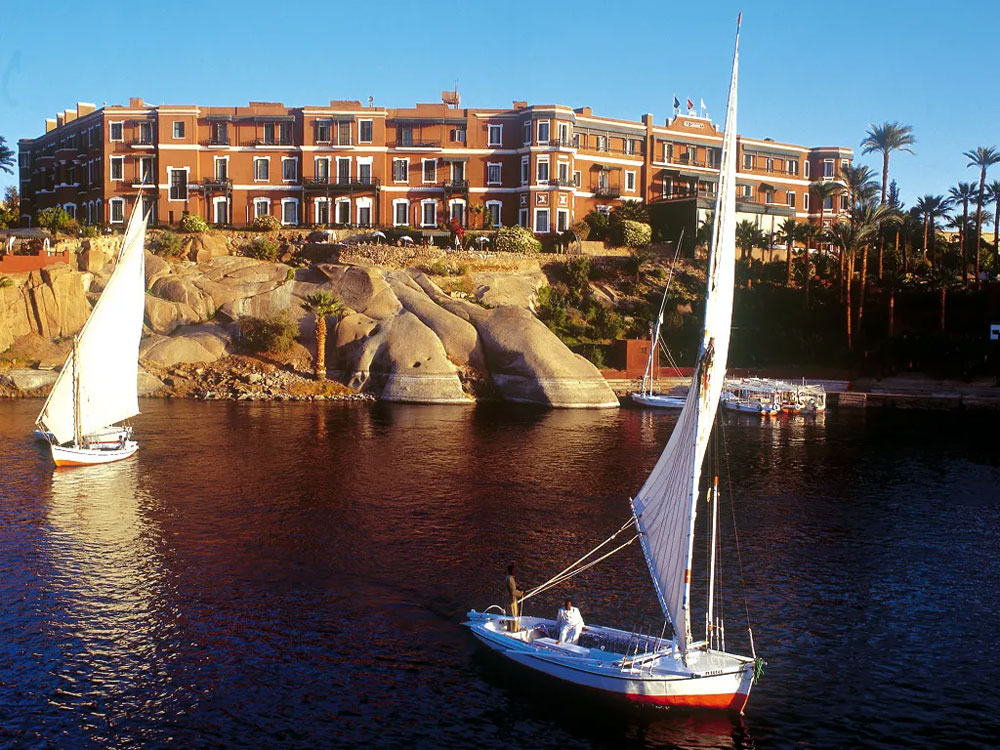
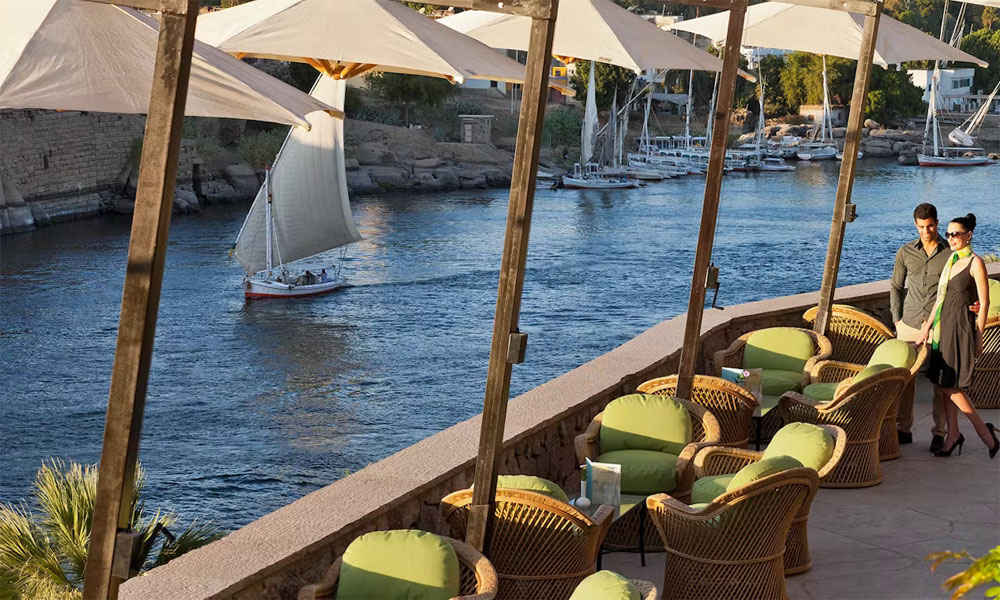
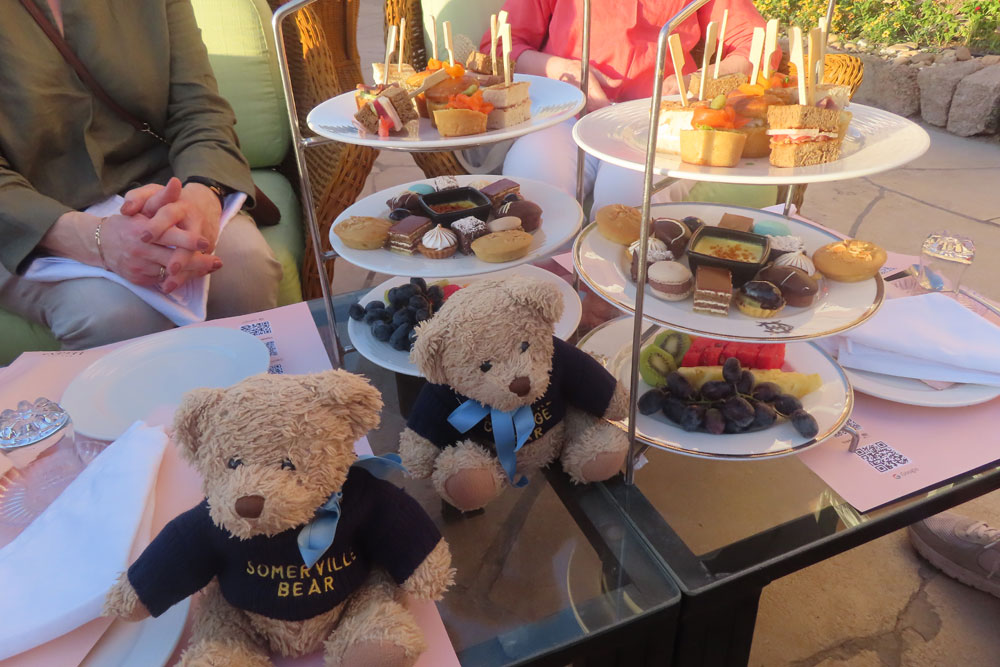
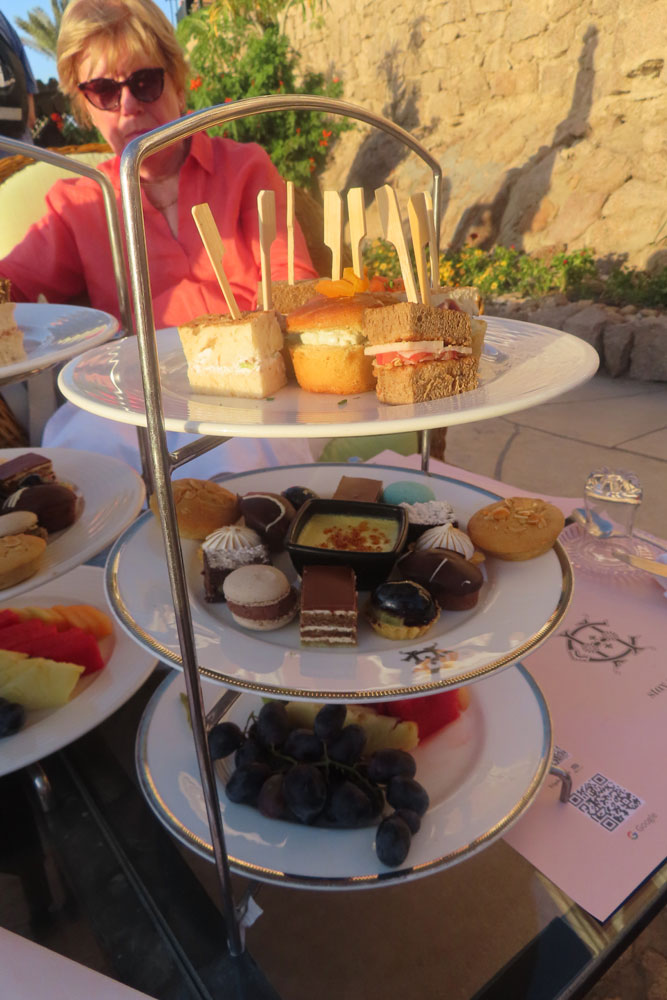
By the time we got to the Philae Temple , she really struggled just walking round it, and was eventually sick. But was feeling slightly better by the time we got to the Old Cataract Hotel. The hotel terrace, where we had the afternoon tea, was truly beautiful overlooking the Nile and the graceful feluccas sailing past. Chris was only up to some fruit and none of their tempting cakes. Regrettably David seriously attacked the traditional three layer cake stand , laden with cakes and sandwiches
Back on the bus, we heard the jolly news that wake up the next morning would be 3:45 am, for a 4.15am start for our trip to Abu Simbel. So we just ordered a bowl of soup for dinner in our room and had a really early night. Hopefully Chris will feel much better when she wakes up in the early hours of tomorrow morning.
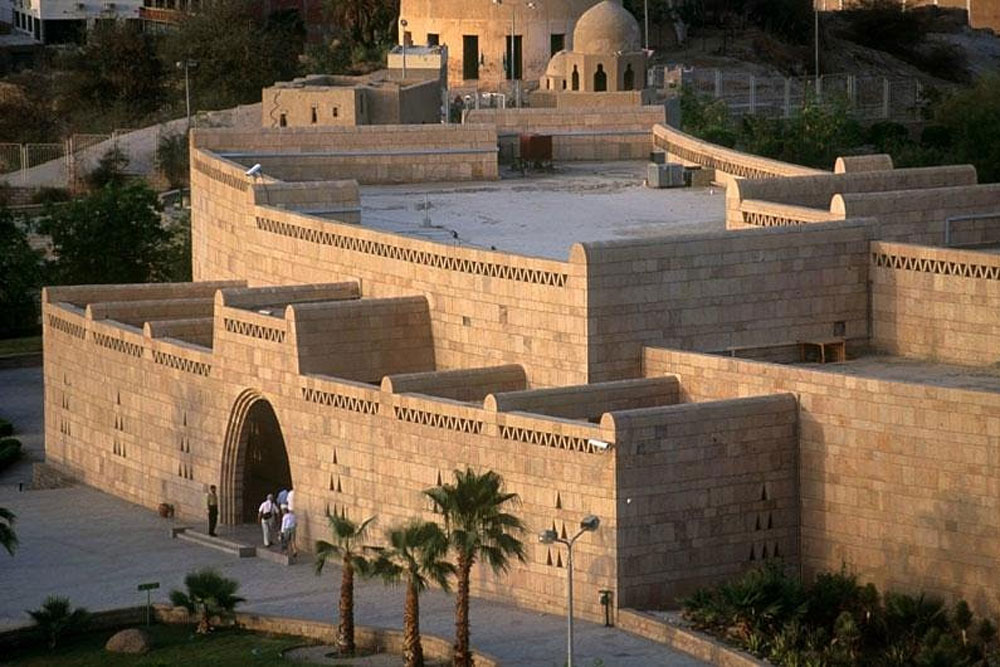
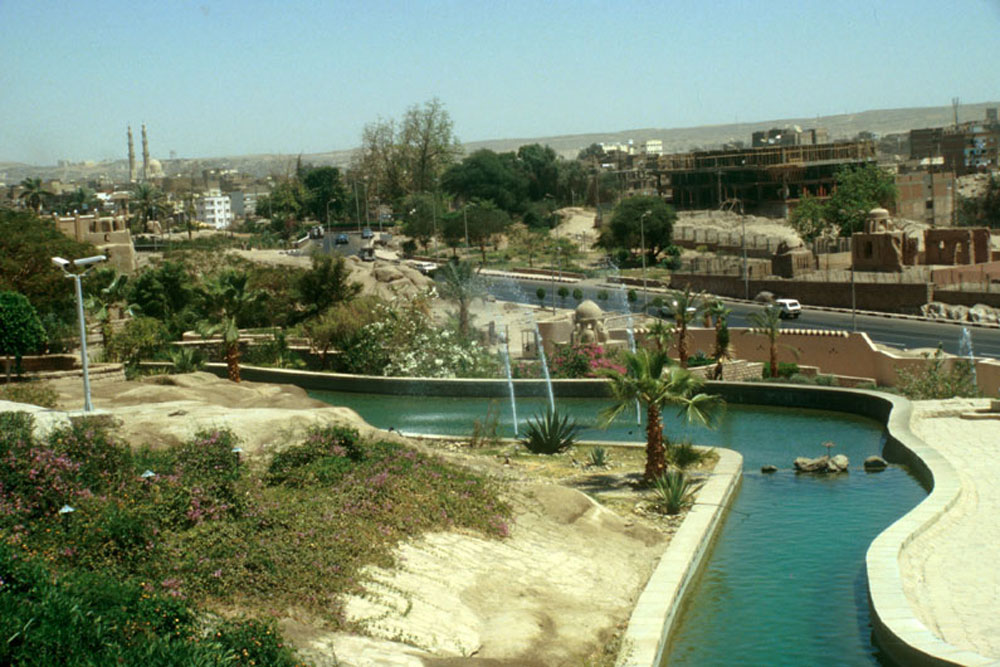
The Nubian Museum at Aswan
The Nubian Museum was built following the International Campaign to Save the Monuments of Nubia. It cost approximately US$22 million to build, and is set in large grounds
The Nubians, an ethno-linguistic group indigenous to a region comprising southern Egypt and northern Sudan, make up one of Egypt’s forgotten minorities. Nubian language, history and culture are not taught in Egyptian schools and many people warn that future generations of Nubians could lose their native culture. Nubians in Egypt faced several waves of displacement in the 20th century: The building of the Aswan Dam by the British in 1902, development projects in 1912 and 1933, and the construction of the Aswan High Dam in 1964 and the creation of Lake Nasser. However, the Nubia Museum, in Egypt’s southernmost province of Aswan, is a treasure trove of Nubian history. The three-story building houses some of the most important artifacts of Nubian civilisation.
The museum exhibits rare pieces from ancient and modern Nubia. It is divided into 17 sections, each of which showcases a phase of Nubian history. “The museum is the Nubians’ window into their own history,” said Awad Hassan, a researcher into Nubian history. “It collects some artifacts that would have been [scattered] in different places now, at best, and totally lost, at worst.” There are more than 5,000 artifacts in the museum, spanning pre-historic times to the Kingdom of Kush to Christian Nubia and Islamic Nubia. The museum houses what is believed to be the oldest solar calendar, which dates back more than 13,000 years. There is also ancient jewellery, pottery, statues, mummies and a host of Islamic and Coptic artifacts.
Click on any of the thumbnail photos for a larger version
 |
 |
 |
 |
 |
 |
 |
 |
 |
 |
 |
 |
Aswan Low Dam & Aswan High Dam

Aswan High Dam
The Aswan Low Dam is a gravity masonry buttress dam. The dam was built by the British at the former first cataract of the Nile, and is located about 1000 km up-river of Cairo. When initially constructed between 1899 and 1902, nothing of its scale had ever been attempted; on completion, it was the largest masonry dam in the world. The dam was designed to provide storage of annual floodwater and augment dry season flows to support greater irrigation development and population growth in the lower Nile. The dam, originally limited in height by conservation concerns, worked as designed, but provided inadequate storage capacity for planned development and was raised twice: between 1907 and 1912 and again between 1929 and 1933. These heightenings still did not meet irrigation demands and in 1946 it was nearly over-topped in an effort to maximize pool elevation. This led to the investigation and construction of the Aswan High Dam 6 kilometres upstream.
The Aswan High Dam, is one of the world's largest embankment dams, which was built across the Nile at Aswan between 1960 and 1970. When it was completed, it was the tallest earthen dam in the world. It upstaged the previous Aswan Low Dam initially completed in 1902 downstream. Based on the success of the Low Dam, then at its maximum utilization, construction of the High Dam became a key objective of the new regime in 1952; with its ability to better control flooding, provide increased water storage for irrigation and generate hydroelectricity, the dam was seen as pivotal to Egypt's planned industrialization. Like the earlier implementation, the High Dam has had a significant effect on the economy and culture of Egypt.
Before the High Dam was built, even with the old dam in place, the annual flooding of the Nile during late summer had continued to pass largely unimpeded down the valley from its East African drainage basin. These floods brought high water with natural nutrients and minerals that annually enriched the fertile soil along its floodplain and delta; this predictability had made the Nile valley ideal for farming since ancient times. However, this natural flooding varied, since high-water years could destroy the whole crop, while low-water years could create widespread drought and consequently famine. Both these events had continued to occur periodically.
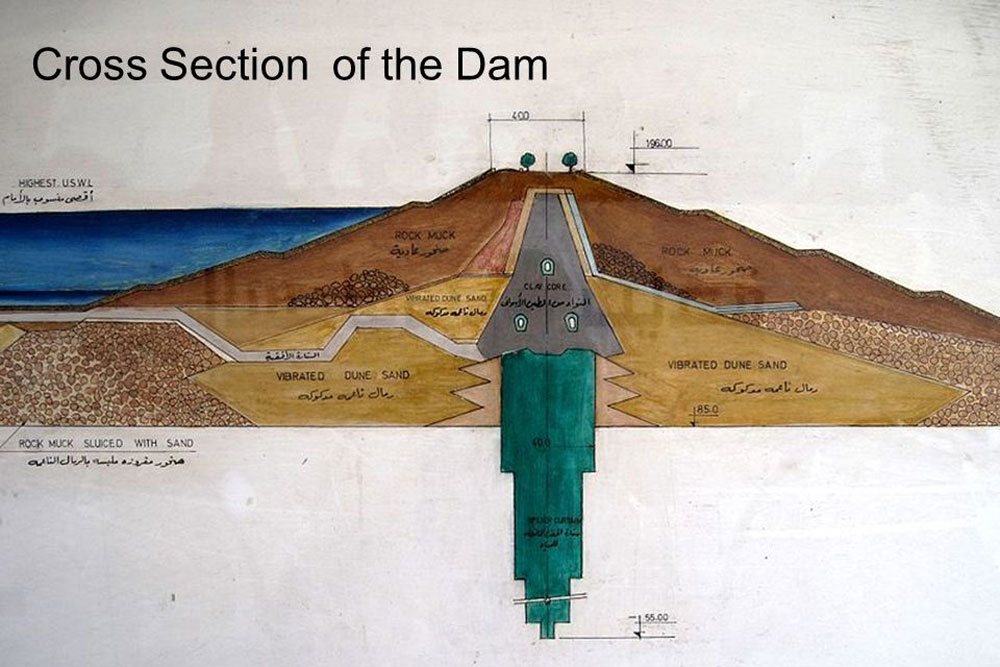
As Egypt's population grew and technology increased, both a desire and the ability developed to completely control the flooding, and thus both protect and support farmland and its economically important cotton crop. With the greatly increased reservoir storage provided by the High Aswan Dam, the floods could be controlled and the water could be stored for later release over multiple years. The Aswan Dam was designed for both irrigation and power generation, and dam incorporates a number of relatively new features, including a very deep grout curtain below its base. Although the reservoir will eventually silt in, even the most conservative estimates indicate the dam will give at least 200 years of service.
In June 1956, the Soviets offered Nasser $1.12 billion at 2% interest for the construction of the dam. On 19 July the U.S. State Department announced that American financial assistance for the High Dam was "not feasible in present circumstances." In July 1956 Nasser announced the nationalization of the Suez Canal. Nasser planned on the revenues generated by the canal to help fund construction of the High Dam. In 1958, the USSR proceeded to provide support for the High Dam project. . Debt service payments amounted to $113 million per year, and Egypt believed that they got more than that from increased crop production.
The High Dam is about 4 km long. It is 1km wide at the base, 40 metres wide at the top, and 111 m tall. It contains 43 million cubic metres of material. There are emergency spillways and the Toshka Canal links the reservoir to the Toshka Depression. The reservoir, named Lake Nasser, is 500 km long and 35 km ( at its widest). It holds 132 cubic kilometres of water.
Lake Nasser flooded much of lower Nubia and 100,000 to 120,000 Nubians were resettled in Sudan and Egypt. The Nubians were not happy with this and Nassar is still reviled by Nubians today
The Aswan High Dam made an appreciable contribution to Egyptian GNP, however the returns were well below what the planners had anticipated. The principal limiting factors on the High Dam's contribution to Egyptian output are a shortage of land suitable for reclamation, the high cost and long time required to bring reclaimed land to full productivity, and an inadequate water supply to meet power and irrigation goals simultaneously. The last limitation arises in part from the allocation in a 1959 agreement of more water to Sudan than was originally foreseen and in part from differences in the seasonal demand pattern of agriculture and the hydroelectric plant for the water. Irrigation requires very heavy use of water during summer months, while power generation needs peak during the winter.
Click on any of the thumbnail photos for a larger version
 |
 |
 |
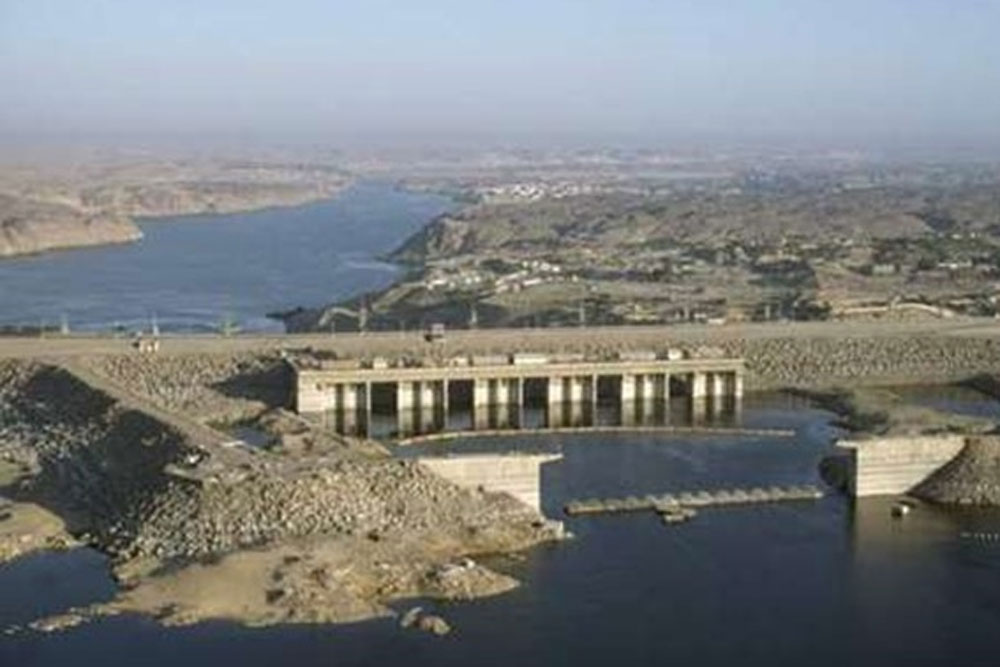 |
| Fire drill on Misr | Guarding the Low Dam | On top of the low dam | Aerial view of low dam |
 |
 |
 |
 |
| Cross section of High Dam | High Dam |
Philae Temple

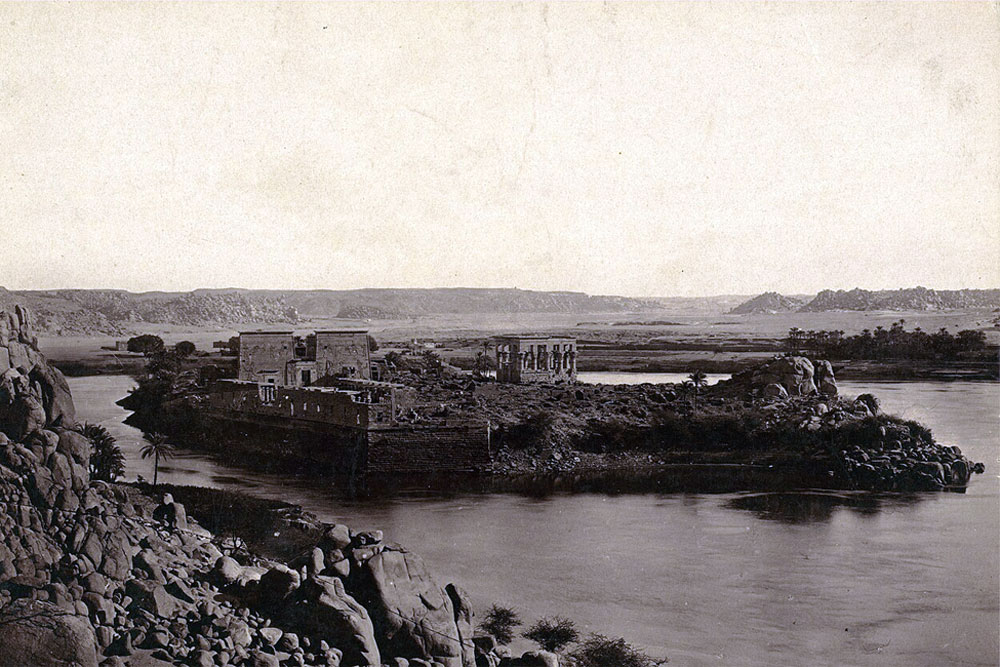
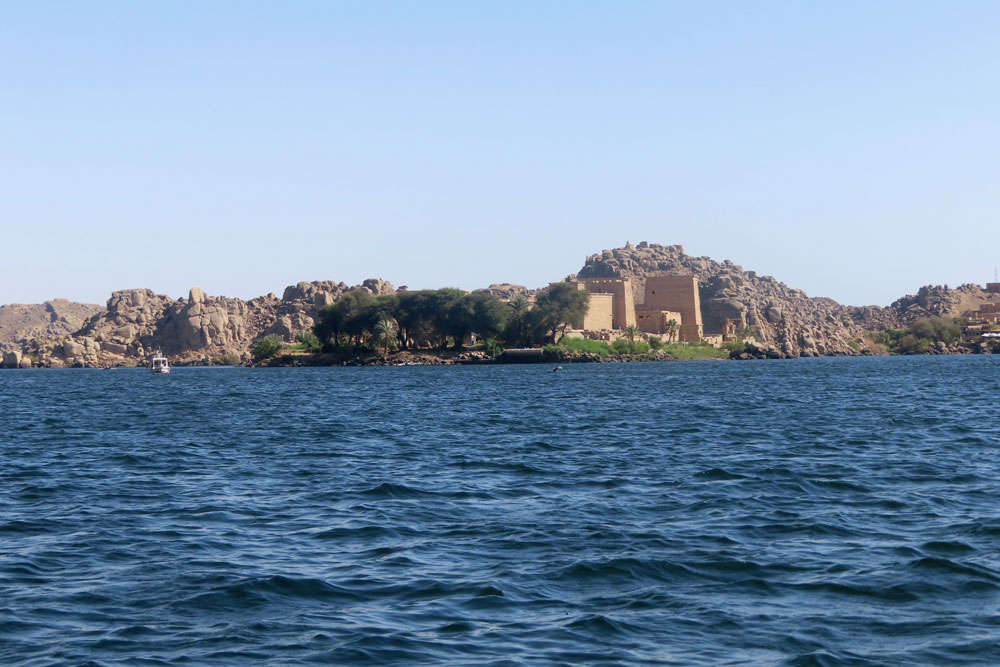
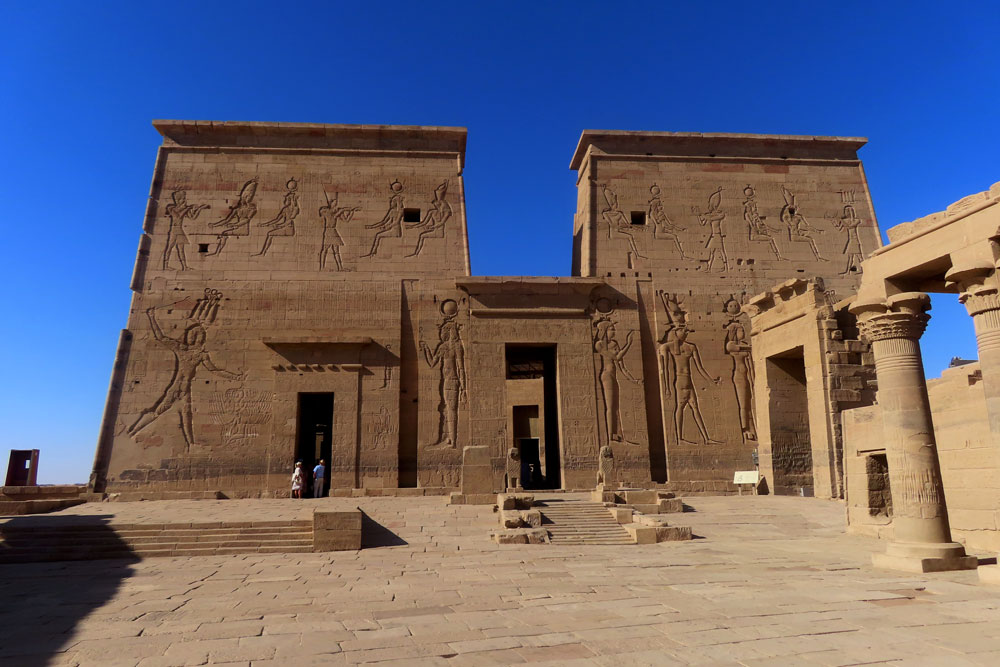
The Philae temple complex is an island-based temple complex in the reservoir of the Aswan Low Dam, downstream of the Aswan Dam and Lake Nasser. Until the International Campaign to Save the Monuments of Nubia, the temple complex was located on Philae Island near the First Cataract of the Nile. These rapids and the surrounding area have been variously flooded since the initial construction of the Aswan Low Dam in 1902. The temple complex was dismantled and moved to nearby Agilkia Island as part of the UNESCO Nubia Campaign project, protecting this and other complexes before the 1970 completion of the Aswan High Dam.
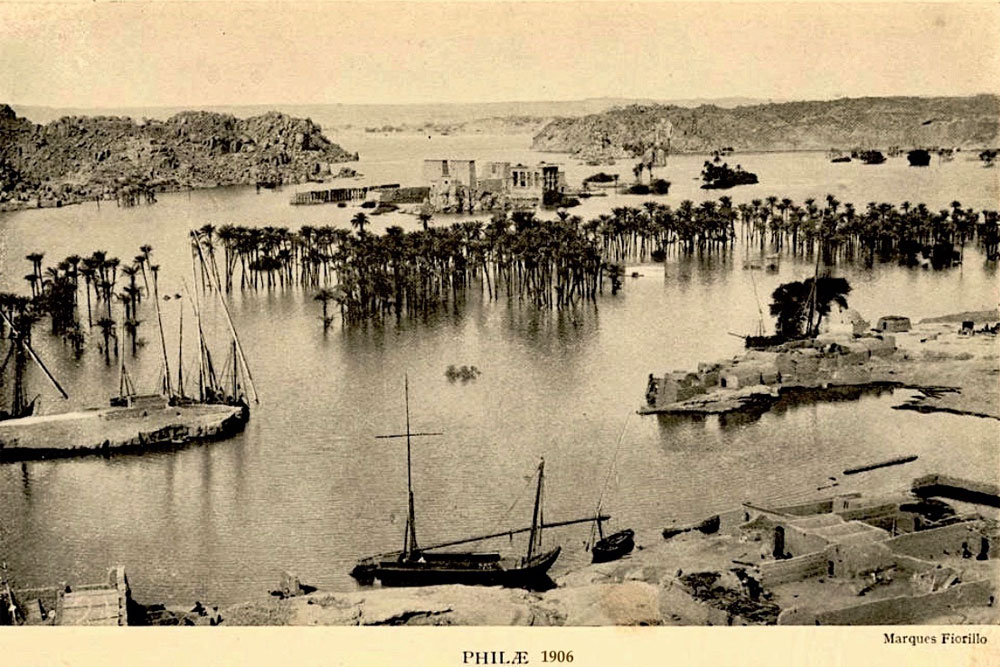
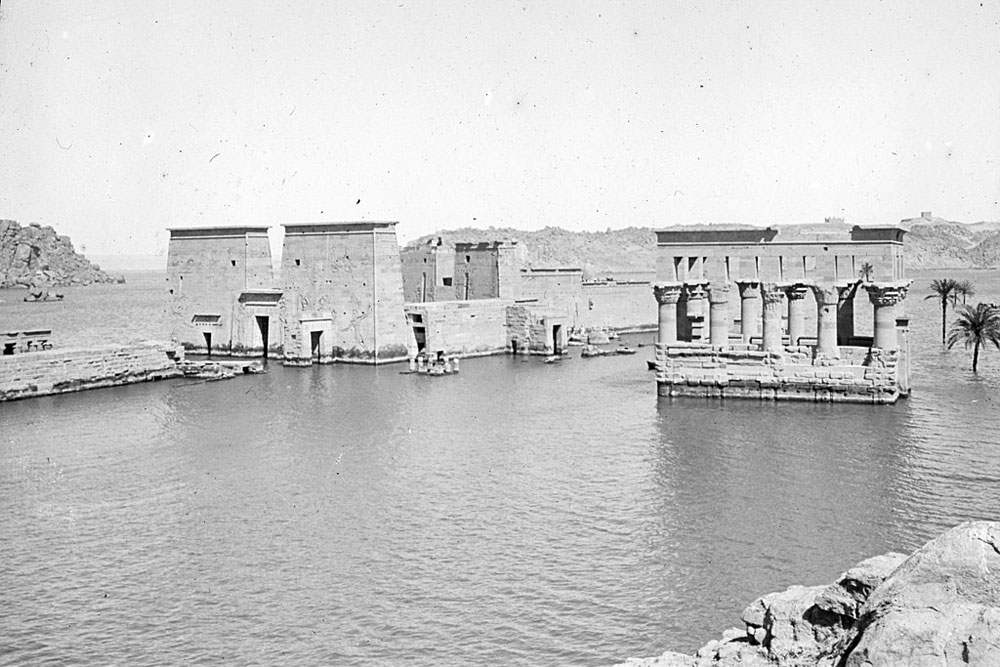
In 1902, the Aswan Low Dam was completed on the Nile by the British. This threatened to submerge many ancient landmarks, including the temple complex of Philae. However, the British prioritised the advancement of Modern Egypt at the expense of the complex. The height of the dam was raised twice, from 1907 to 1912 and from 1929 to 1934, and the island of Philae was nearly always flooded. In fact, the only times that the complex was not underwater was when the dam's sluices were open from July to October. It was proposed that the temples be relocated, piece by piece, to nearby islands, such as Bigeh or Elephantine. However, the temples' foundations and other architectural supporting structures were strengthened instead. Although the buildings were physically secure, the island's attractive vegetation and the colours of the temples' reliefs were washed away. Also, the bricks of the Philae temples soon became encrusted with silt and other debris carried by the Nile.
Click on any of the thumbnail photos for a larger version
 |
 |
 |
 |
| Before the dams | After the low dam was constructed | After the low dam was constructed | After the low dam was constructed |
With each inundation the situation worsened and in the 1960s the island was submerged up to a third of the buildings all year round. In 1960 UNESCO started a project to try to save the buildings on the island from the destructive effect of the ever-increasing waters of the Nile. First of all, a large coffer dam was built, constructed of two rows of steel plates between which a 1 million cubic metres of sand was tipped. Any water that seeped through was pumped away. Next the monuments were cleaned and measured, by using photogrammetry, a method that enables the exact reconstruction of the original size of the building blocks that were used by the ancients. Then every building was dismantled into about 40,000 units from 2 to 25 tons, and transported to the nearby Island of Agilkia, situated on higher ground some 500 metres away. The transfer itself took place between 1977 and 1980.
Click on any of the thumbnail photos for a larger version
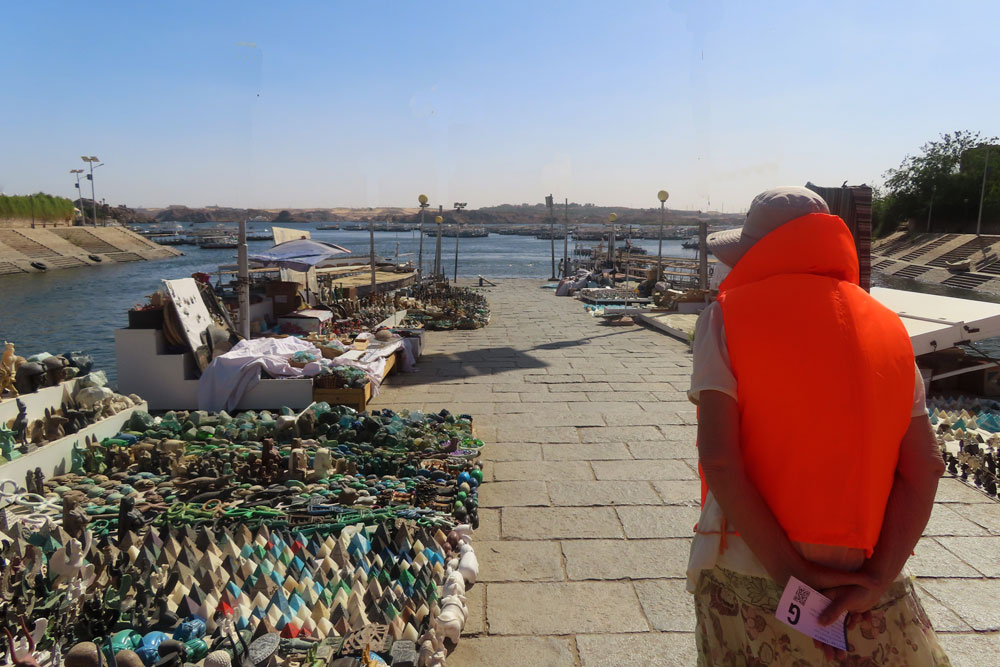 |
 |
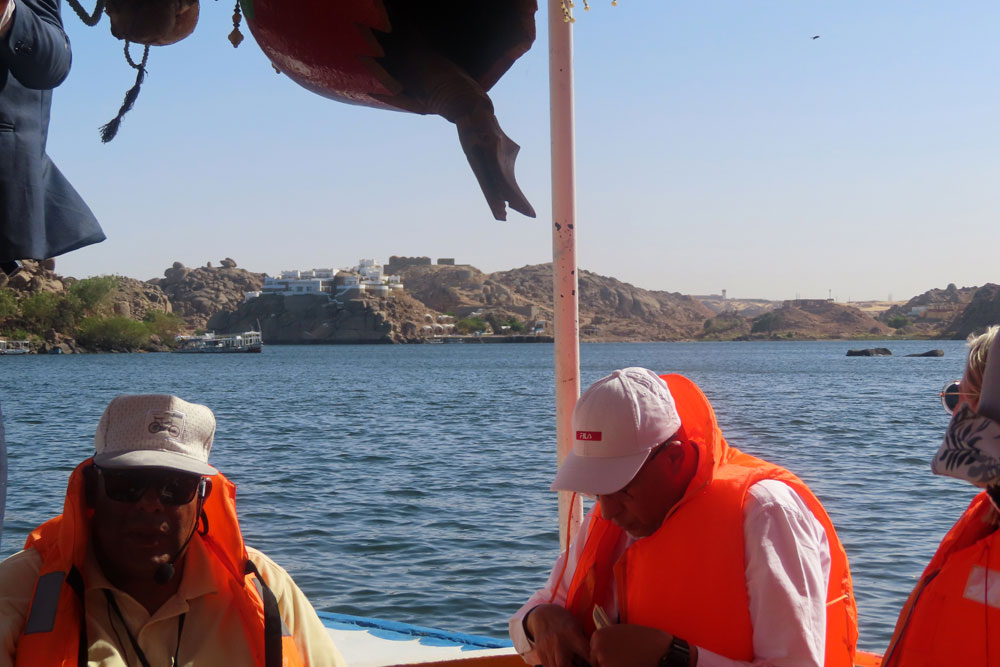 |
 |
 |
 |
 |
 |
 |
 |
 |
 |
Afternoon Tea at Old Cataract
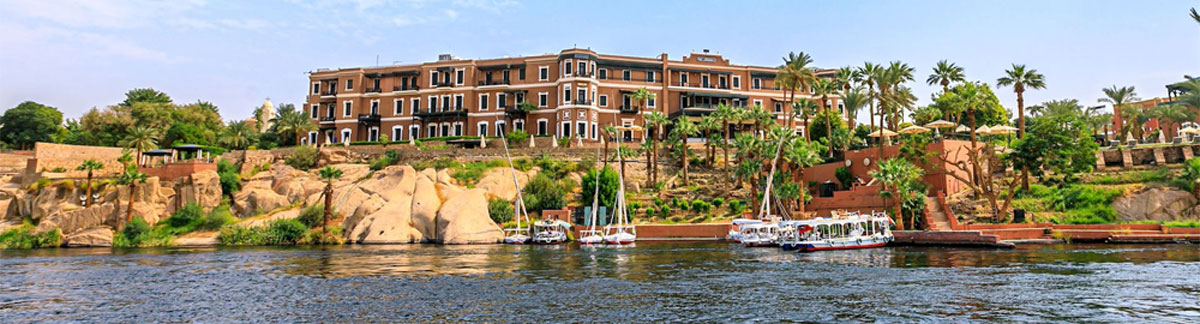
We finished the shore excursion at the Old Cataract Hotel
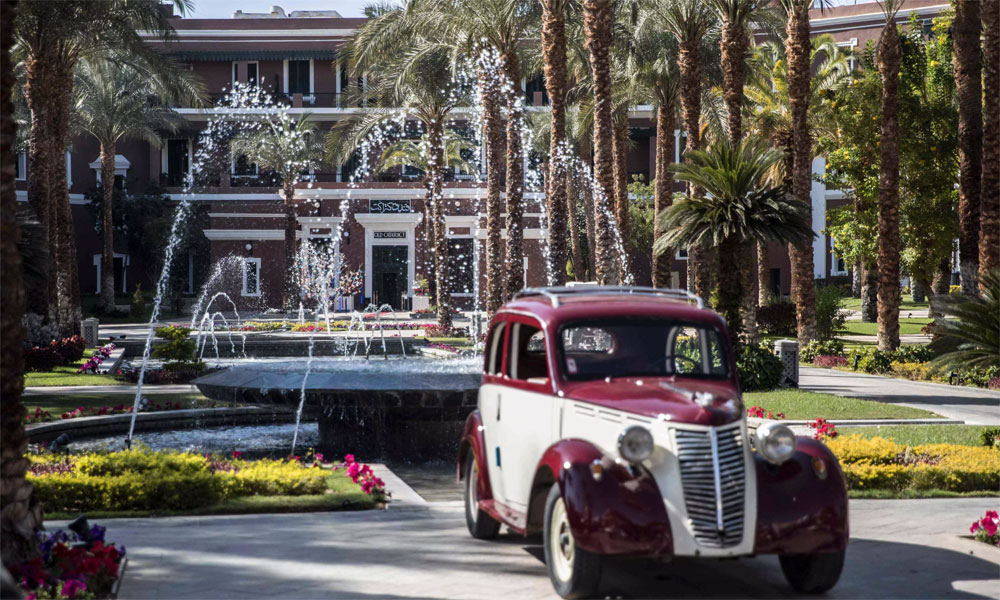
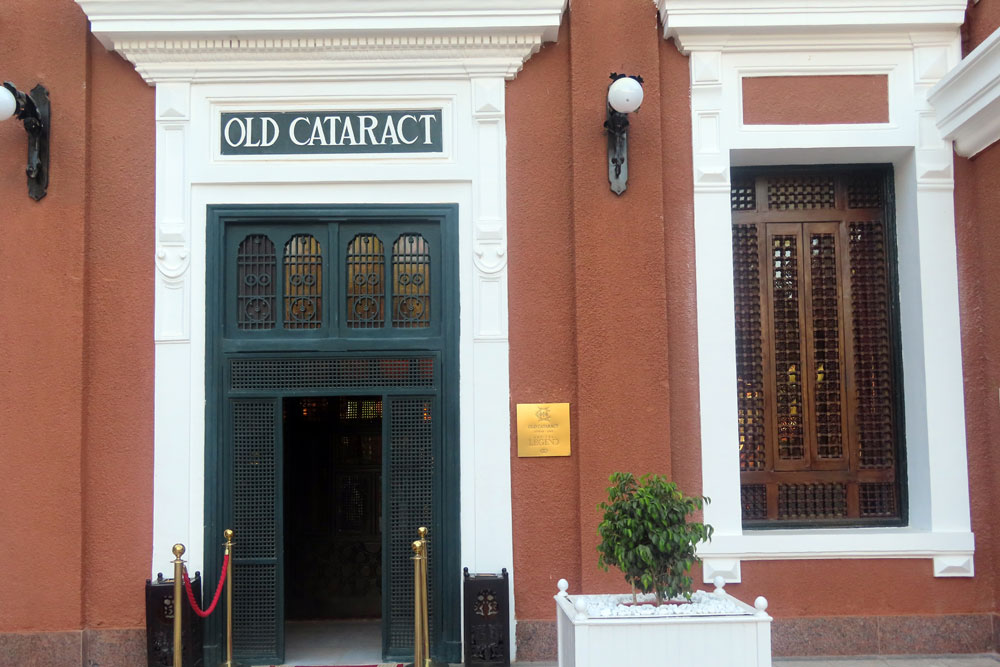
The Hotel was built in 1899 by Thomas Cook to house European travelers to Assouan (as Aswan was then known). Its guests have included Tsar Nicholas II, Winston Churchill, Howard Carter, Margaret Thatcher, Jimmy Carter, François Mitterrand, Princess Diana, Queen Noor and Agatha Christie, who set portions of her novel Death on the Nile at the hotel. The 1978 film of the novel was shot at the hotel.
Afternoon tea on the terrace of the Old Cataract is certainly a thing worth doing for the memories, and for the buns
Click on any of the thumbnail photos for a larger version
 |
 |
 |
 |
 |
 |
 |
 |
 |
 |
 |
 |
 |
 |
 |
 |