 |
 |
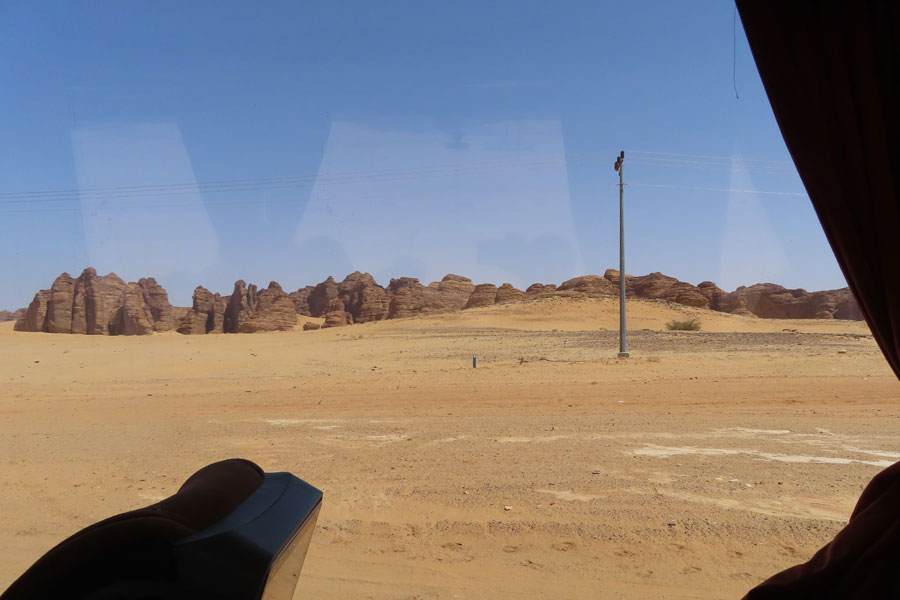 |
Al Ula is a compelling archaeological gem. Among the most significant archaeological discoveries in all of Al Ula, Dadan was the ancient capital of the Dadan and Lihyan kingdoms. Expertly carved from a towering, red-rock formation overlooking the valley's oasis, the Dadan Kingdom dates back between the late-9th and early-8th century B.C., and the Kingdom of Lihyan dates from the 5th-2nd century B.C. During your visit, see more than a dozen tombs cut into the red-rock cliff faces east of the city. From afar, these look like simple dark rectangles. A closer look reveals skillfully crafted funerary monuments, including the seated, approximately 50-metre-high lion sculptures that mark the famous Lion Tombs.
May 5th
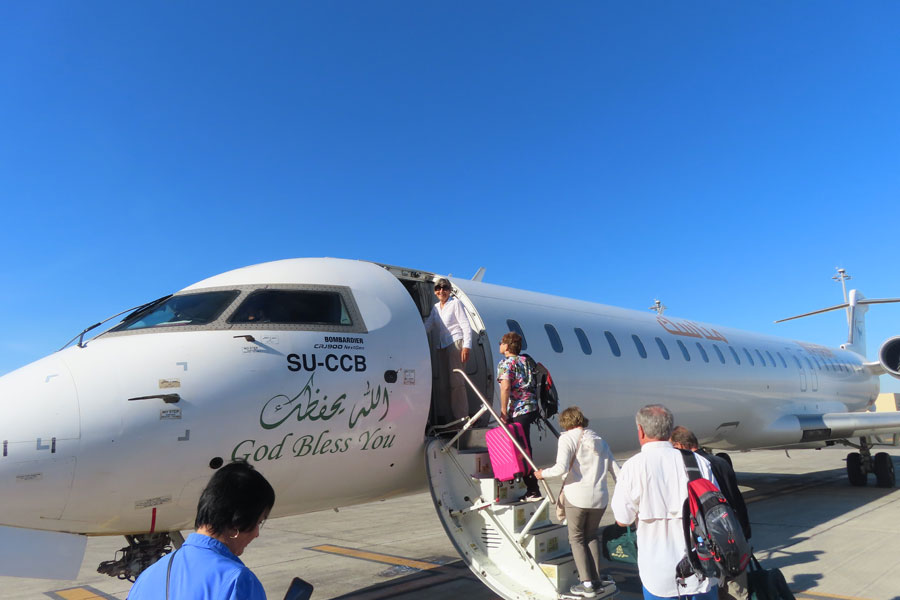
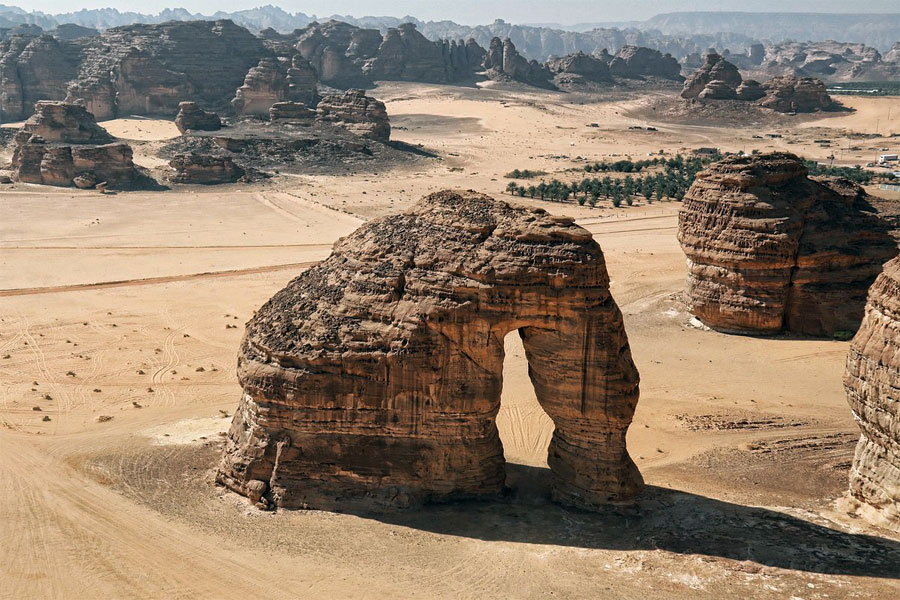
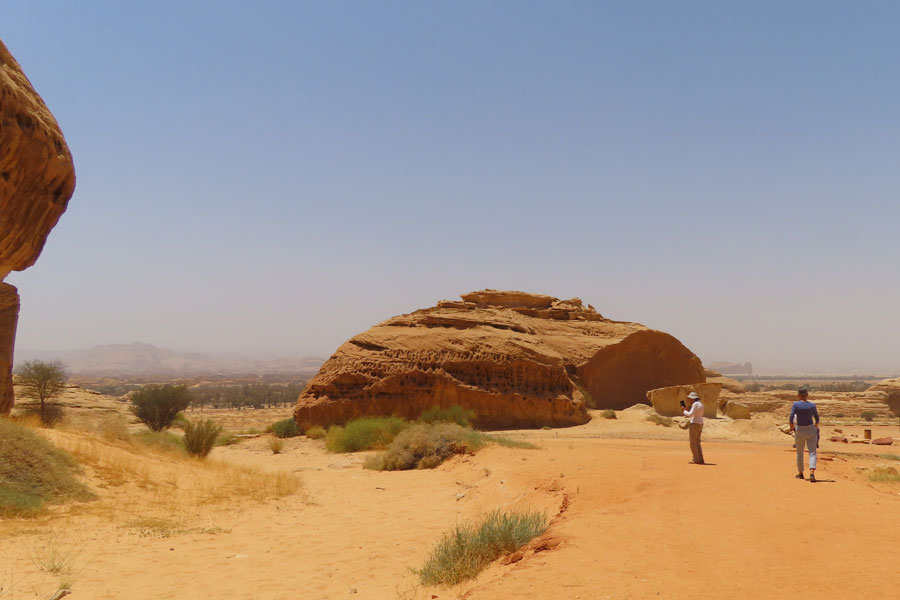
Up at 5.45, a quick breakfast and off at 6.30. 72 of us boarded a plane at 8.30 for the one hour flight north. Our 1st stop was at Elephant rock, a charming location, located near the Madain Saleh The amazing Elephant Rock is so huge that people look like tiny creatures standing with it. Made naturally out of carved rocks and standing about 50 metres in height, the rock is named after its shape, which resembles that of an elephant.
click on a thumbnail to get a bigger photo
|
|
|
click on a thumbnail to get a bigger photo
 |
 |
 |
 |
 |
 |
 |
 |
After numerous photos from all angles and a passion fruit drink that was to die for, then we went to Hegrah, an impressive tomb of the Nebareens ,who created Petra. The rock face had been protected for centuries by a layer of mud: what will happen to it from now on? Then a short hop to many more tombs, being allowed into the last one reached.
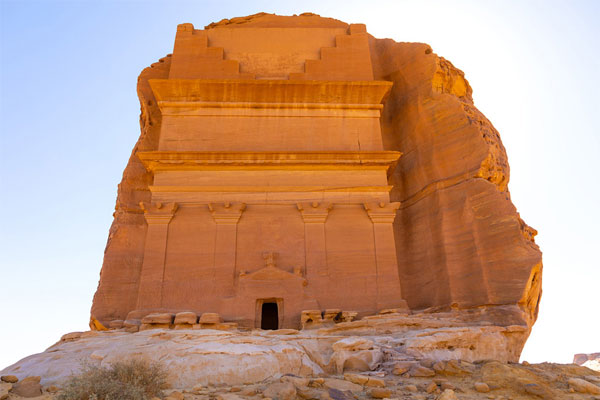
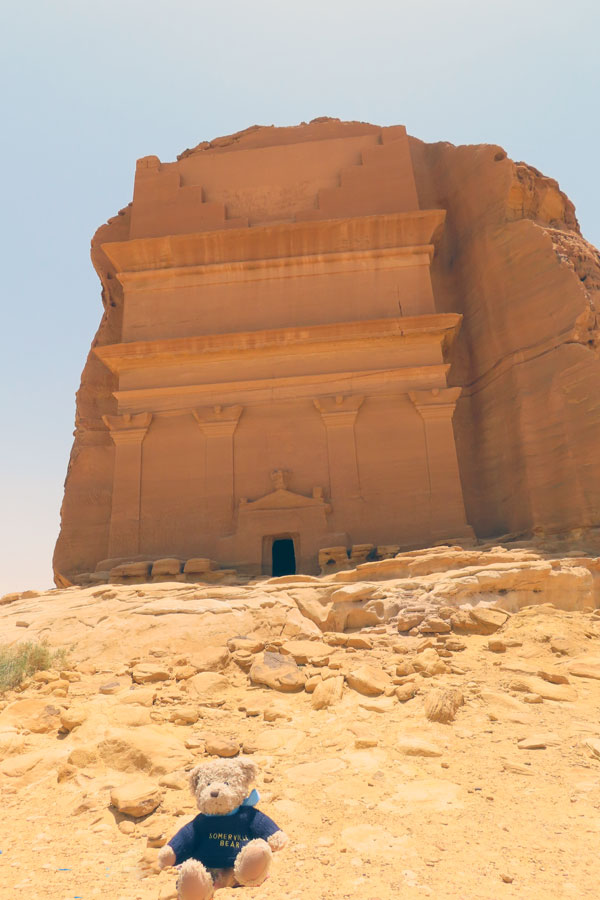
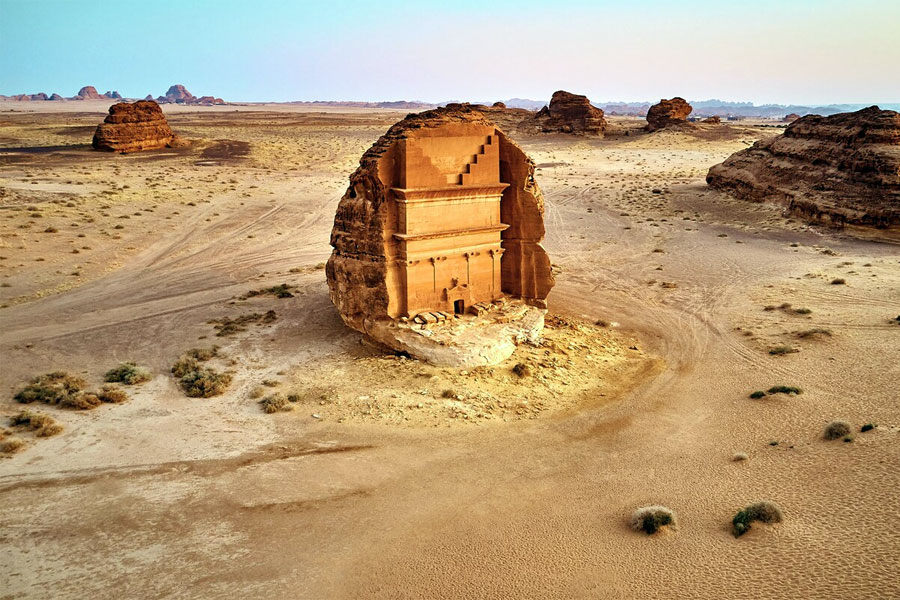
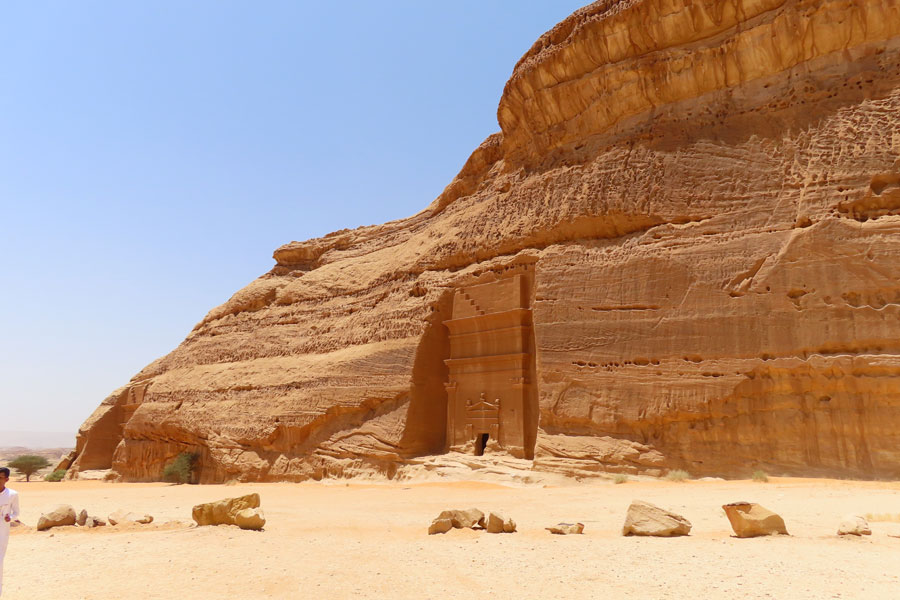
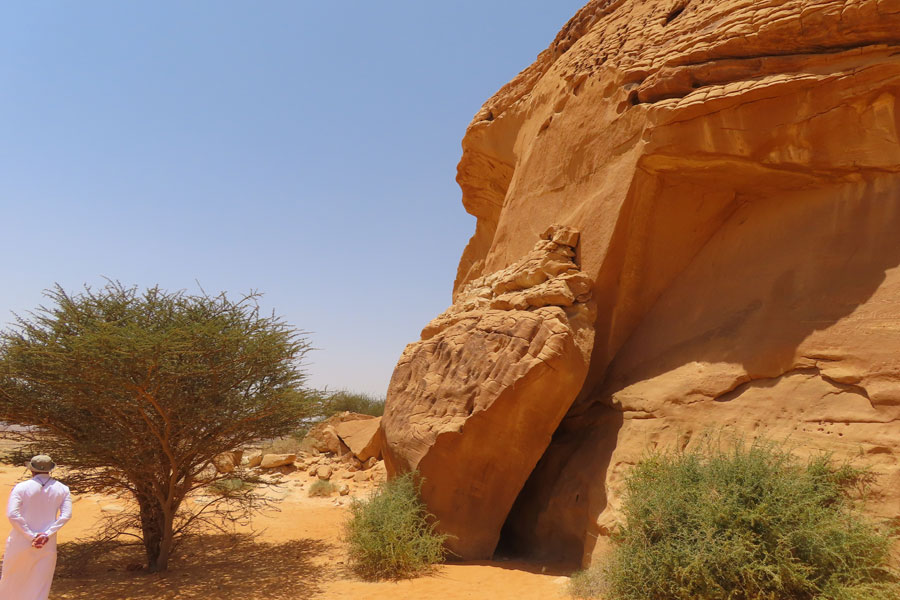
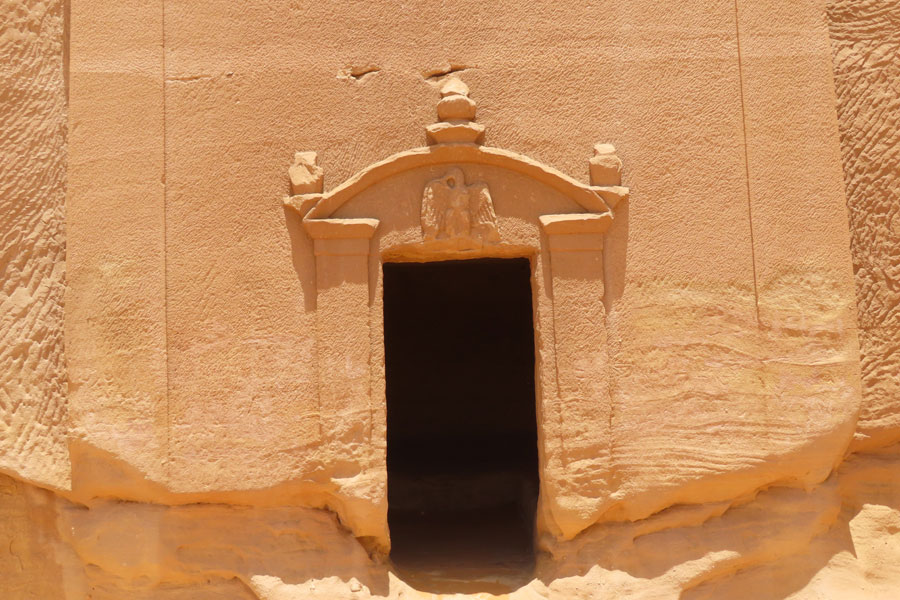
Tomb of Lihyan son of Kuza. The structure is said to have been erected in the 1st century CE and is unmatched when it comes to ancient design and architecture. Moreover It was also the first Saudi site to be declared a UNESCO World Heritage Site. The tomb is chiseled out of the rock from the top down which is an old Nabatean architectural technique and a major part of the Nabatean roots. A visit to this site offers insight into the culture and religion of these ancient Arabic nomads. It offers a lesson that we can learn from the history of previous perished nations. Even though the architecture of this tomb is unrivaled, it appears that the entire structure was never completed. Towards the base of the tomb, the craftsmanship is not as precise, which can be observed rather clearly. Still It is one of the most iconic places in the kingdom of Saudi Arabia and a place to reflect on the history and lessons we can learn from the past.
click on a thumbnail to get a bigger photo
 |
 |
 |
 |
 |
 |
 |
 |
 |
 |
 |
 |
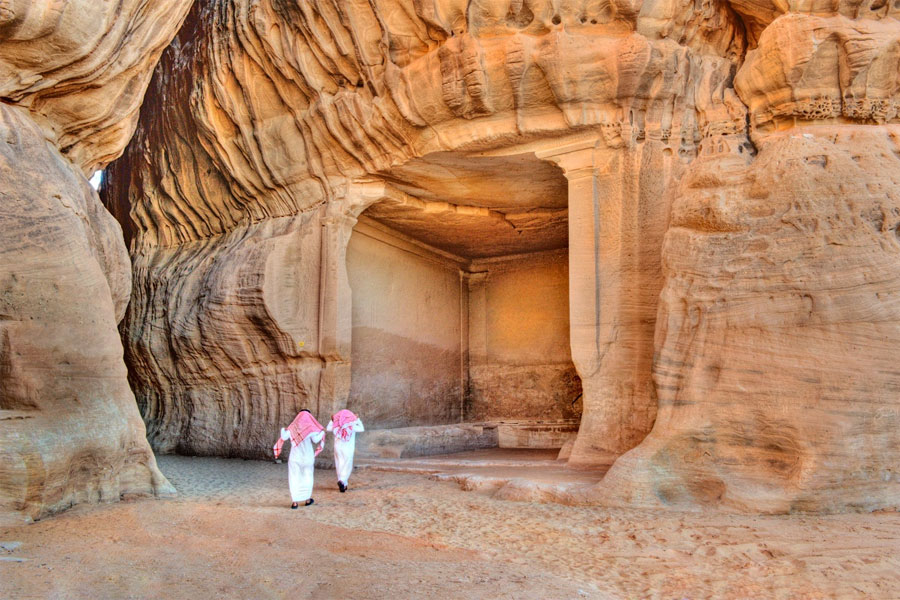
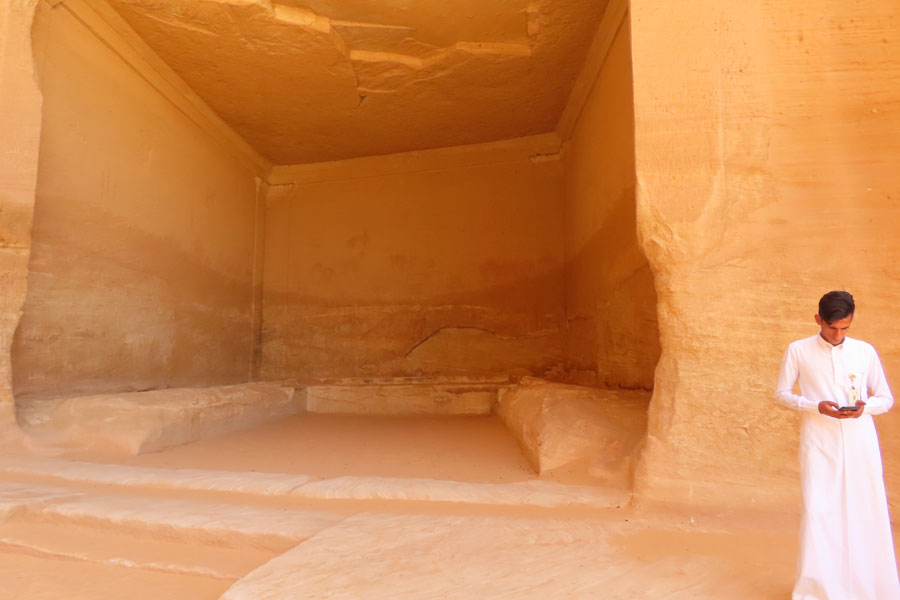
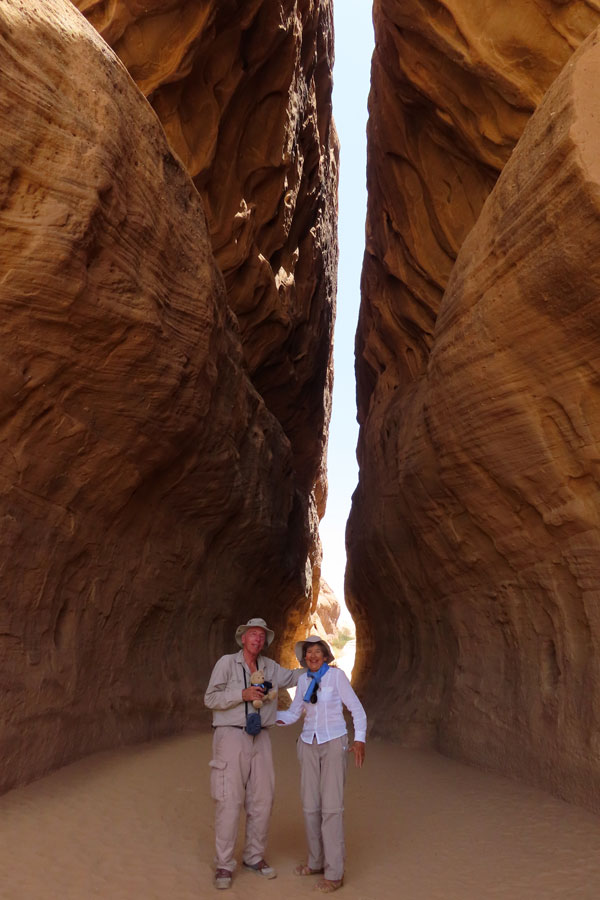
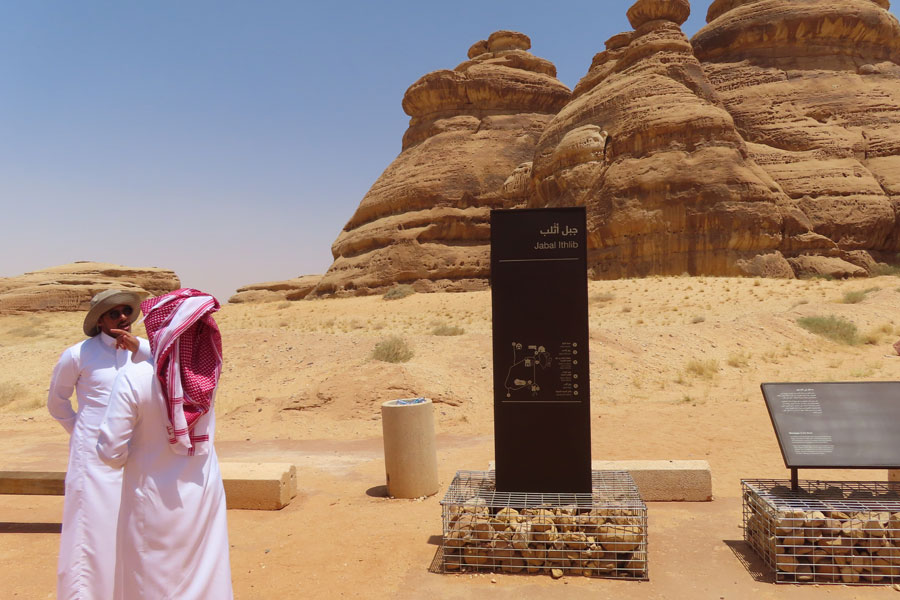
Jabal Ithlib - Located to the east of Al Ula, Jabal Ithlib is a glorious, natural mountain and a cultural site. Historically, it was a place of worship for Nabateans who were ancient Arabian nomads from the Negev Desert. The attraction of Jabal Ithlib is the ‘Diwan’ which is a large room carved into the rocks of the mountain that looks like a dining area. It is historically believed to have been an important room for gatherings such as royal banquets and political meetings and also has an open front, which was probably designed for outside or public observers. Apart from that, the cultural roots and mind-blowing landscape of the mountains is what attracts tourists from all over the world. The mountain can be accessed from a passage through the Siq canal which lies to the left of Diwan. Past this canal is the central area of the mountain that has many carvings and inscriptions that may have had something to do with ancient religious practices. There is also a water channel that flows through the centre of the mountain range and leads into a natural water basin and eventually into a cistern.
click on a thumbnail to get a bigger photo
 |
 |
 |
 |
 |
 |
 |
 |
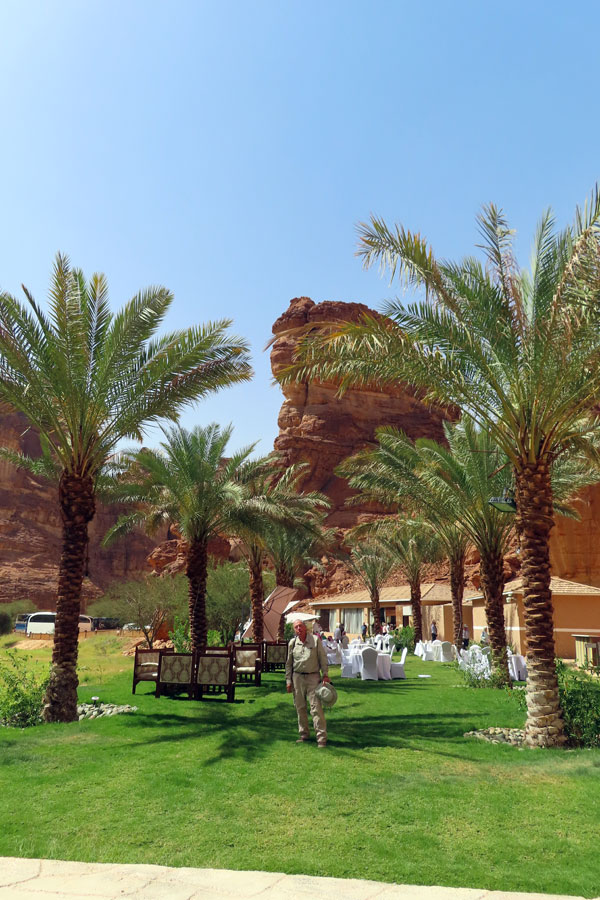
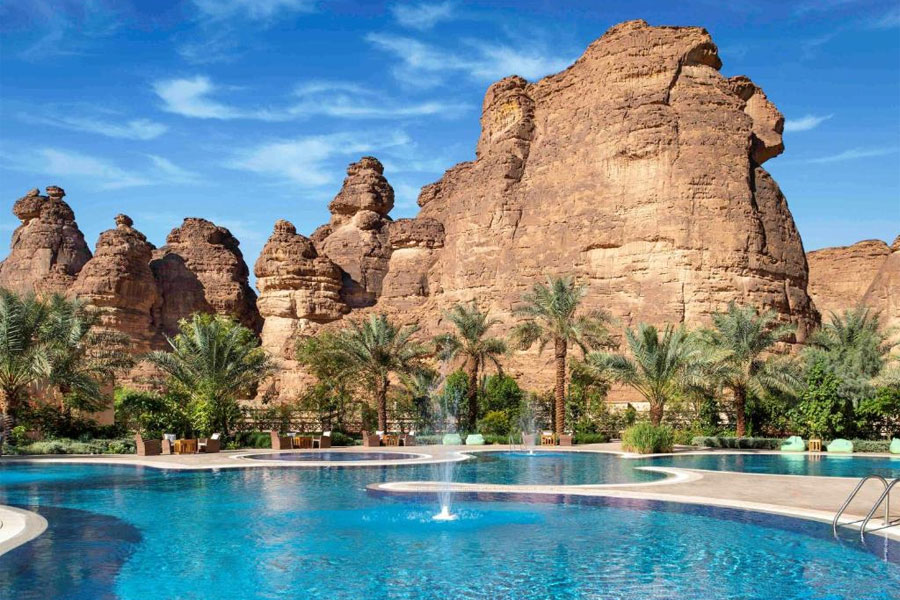
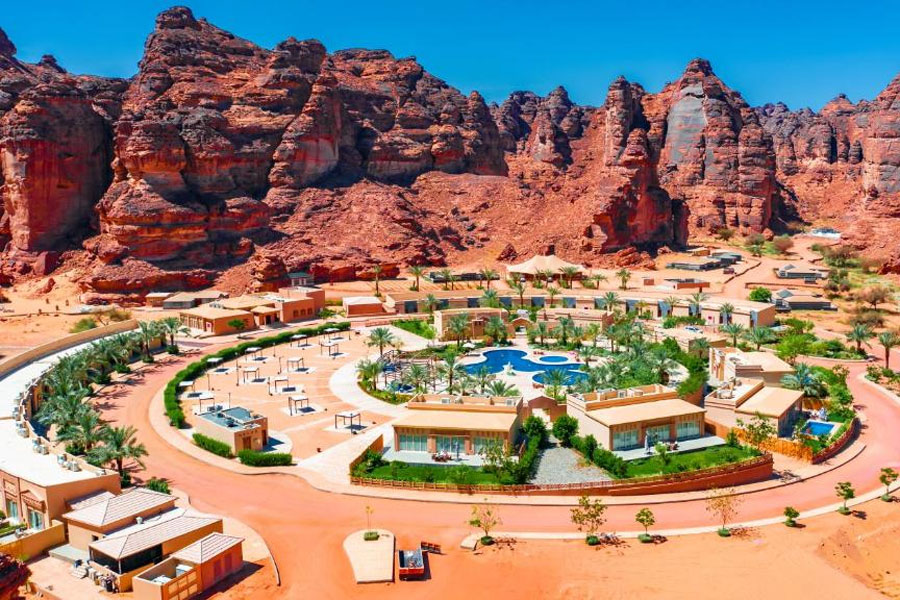
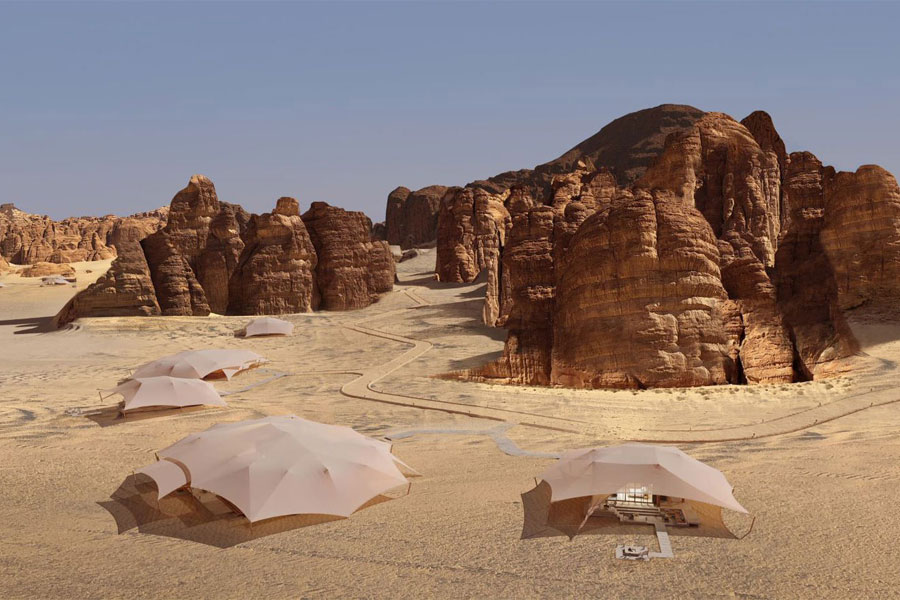
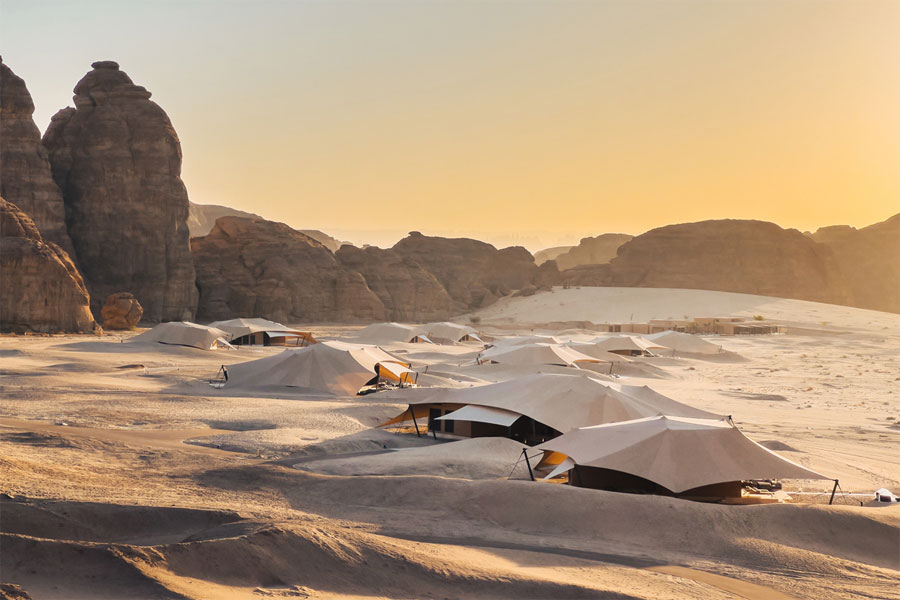
The next stop was lunch at the Shaden hotel: this was where we were to stay, the key being given to us after lunch. It was a pleasant buffet, nothing special. The mountains or rocks around the hotel, run by Accor, were fantastic but the place was poorly maintained.. between 3 and 5 Chris went for a swim in the fantastic pool.
click on a thumbnail to get a bigger photo
 |
 |
 |
 |
 |
 |
 |
 |
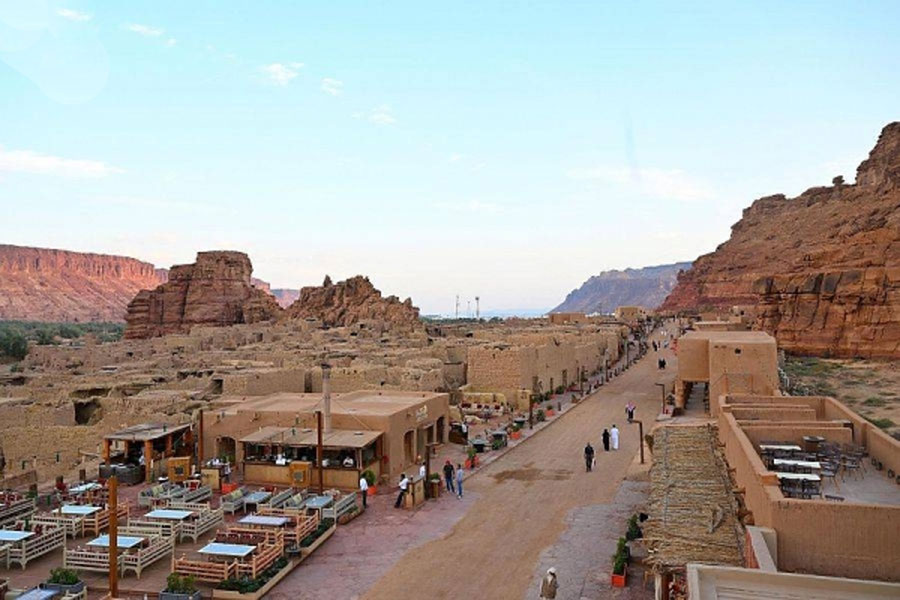
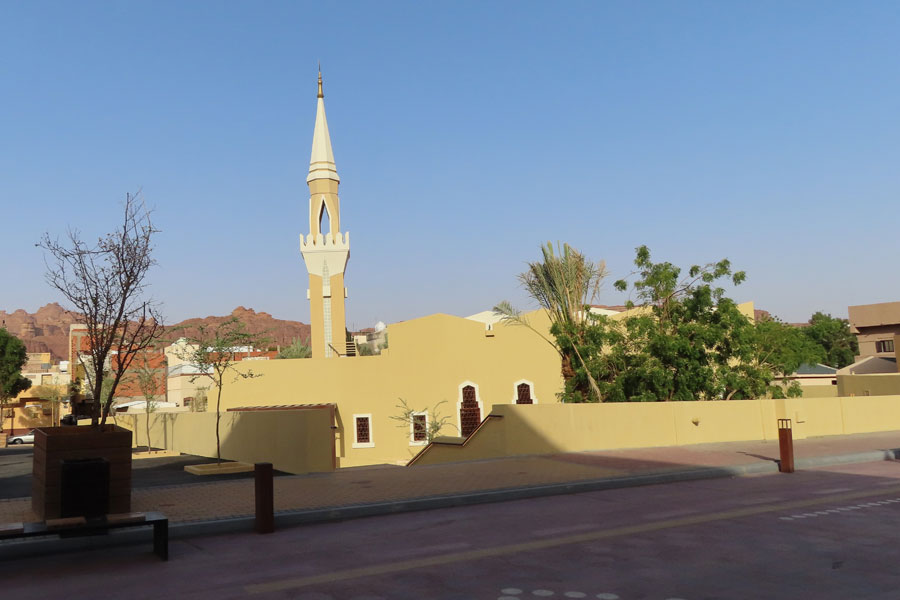
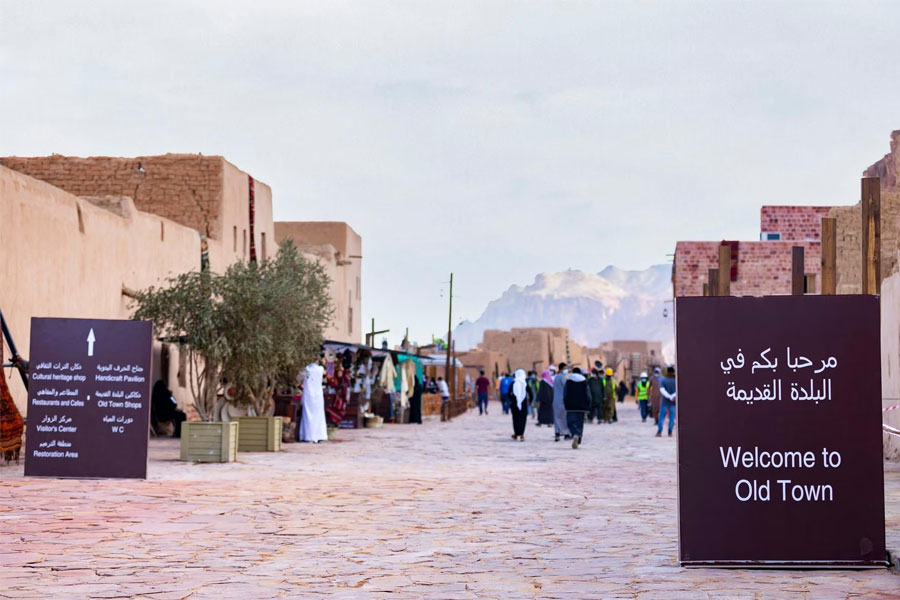
At 5 we set off again for the old town of Al Ula. A golf buggy took us the last 400 metres. There, 4 of us had an incomprehensible guide.. The city inhabitants had been removed about 6 years ago, in the way that only a strong government can do, and this shopping opportunity had replaced it!!; but the guide did eventually show us some old dwellings , which would be restored in the coming years. The Saudis seem to believe that the tourist market wants mainly shopping, with as little about the actual sites as possible
But the bottom line was that Al Ula Old Town was a modern shopping mall, and the real old town had all but disappeared
Chris sat down with Chris and Tiquita from Auckland for a wile, before walking back through the town and getting a buggy back to the bus: David arrived a few buggies later, sulking a trifle according to his wife!. Thence to dinner
click on a thumbnail to get a bigger photo
 |
 |
 |
 |
 |
 |
 |
 |
 |
 |
 |
 |
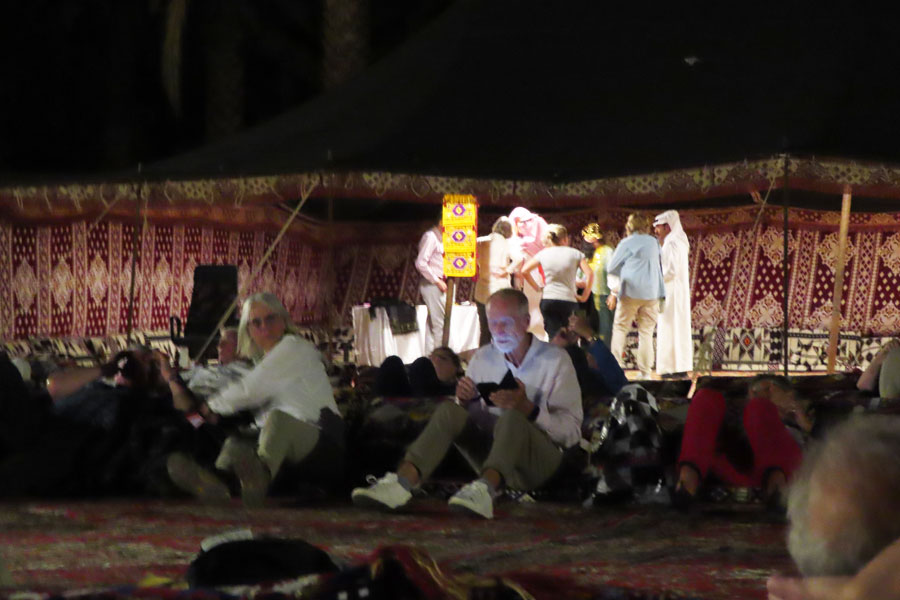
Dinner at a "Bedouin barbeque", tables of 5 where we sat with Chris & Tiquita. First of all there was Saudi dancing by the white and red checked Saudi bedouin: this was very natural and they were obviously enjoying themselves. The buffet was mediocre in spite of a barbecued lamb.
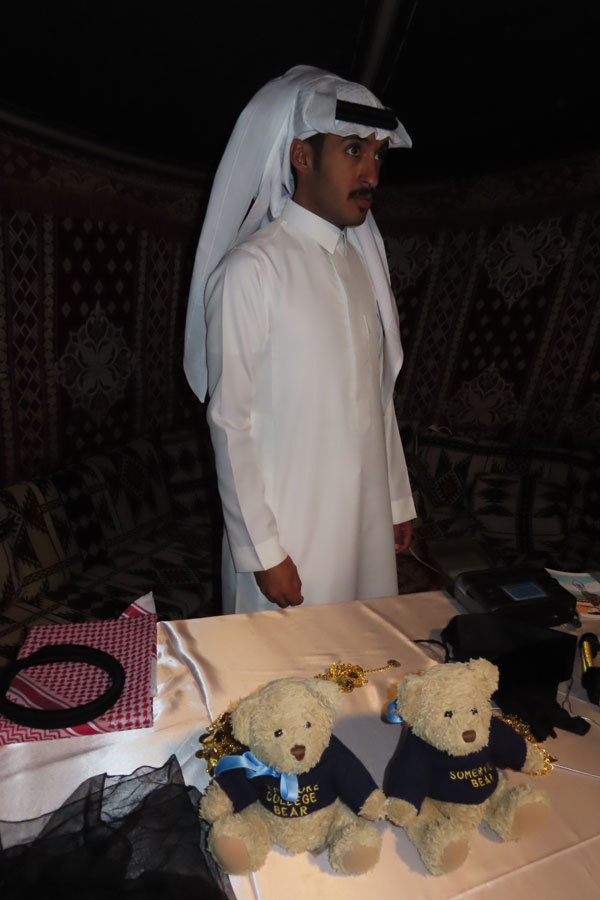
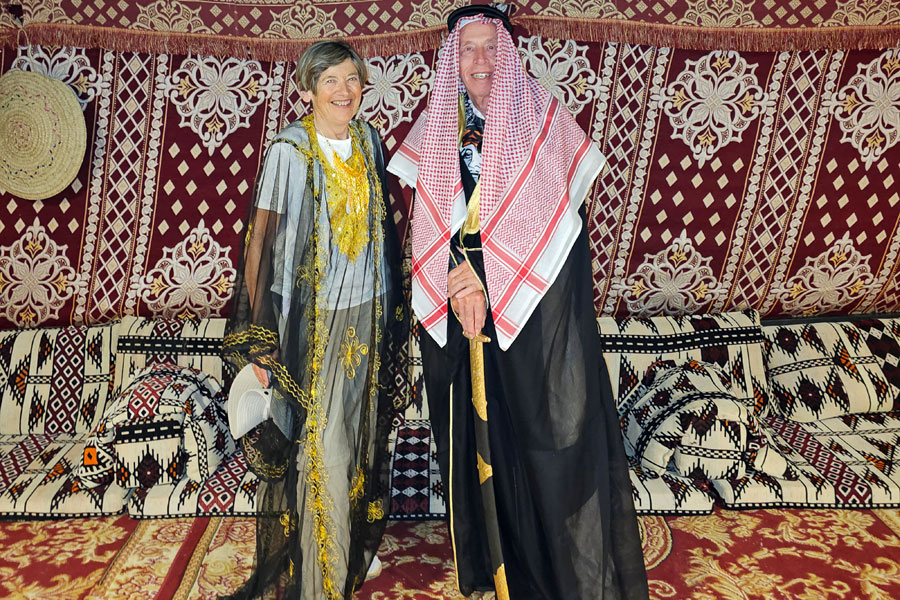
This was followed by "an opportunity" to don local dress, David surprising Chris by volunteering for this, and they took a good picture of us dressed as bedouin (below). And then an hour of stargazing - for those who could see any stars! - but the presenter was a good speaker and it was interesting hearing about the zodiac signs.
click on a thumbnail to get a bigger photo
 |
 |
 |
 |
 |
 |
 |
 |
 |
 |
 |
 |
Back in the hotel we enjoyed a coffee on our terrace with its wondrous floodlit views
click on a thumbnail to get a bigger photo
 |
 |
 |
 |
 |
 |
 |
 |
May 6th Still at Al Ula.
Chris had a panoramic swim soon after 7. The suitcase had to be on our bus before 8am, and we then wandered down to breakfast- the area between the rooms and the restaurant a wilderness, just dust, though not far. Only the bread at breakfast was memorable and we were unable to sit outside .
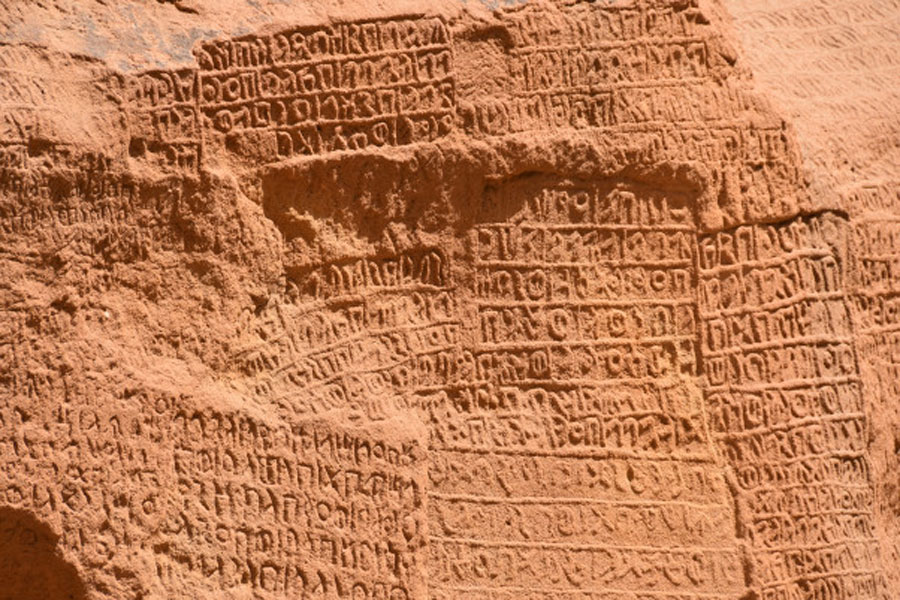
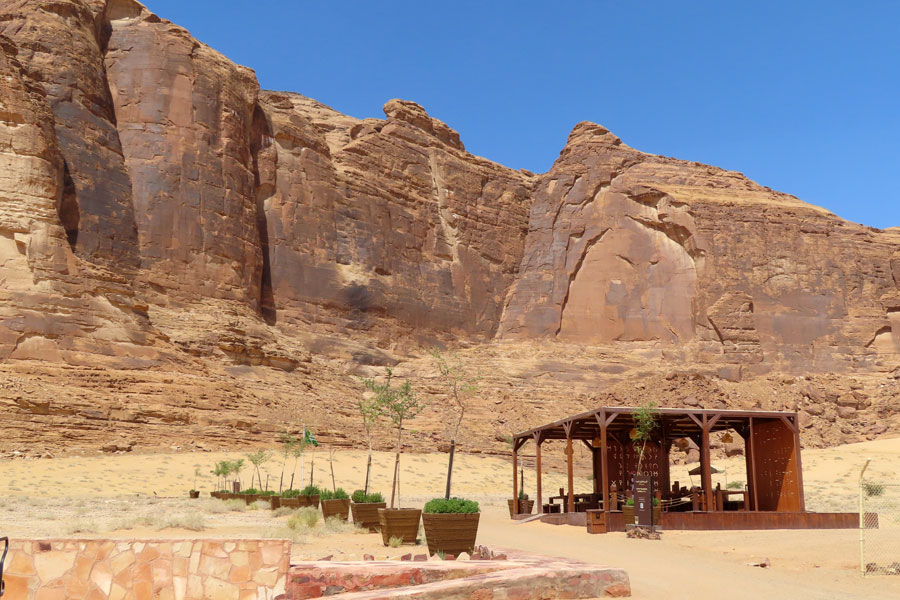
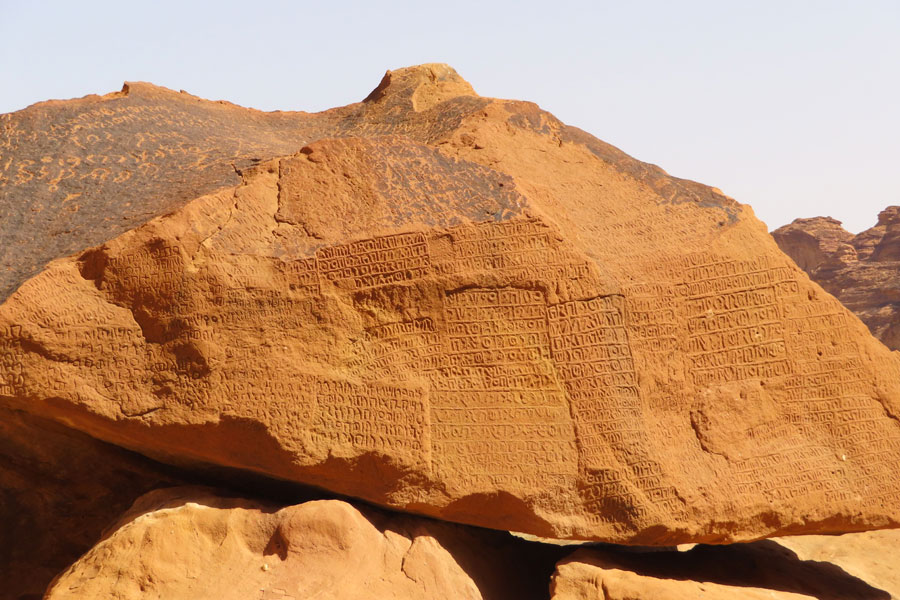
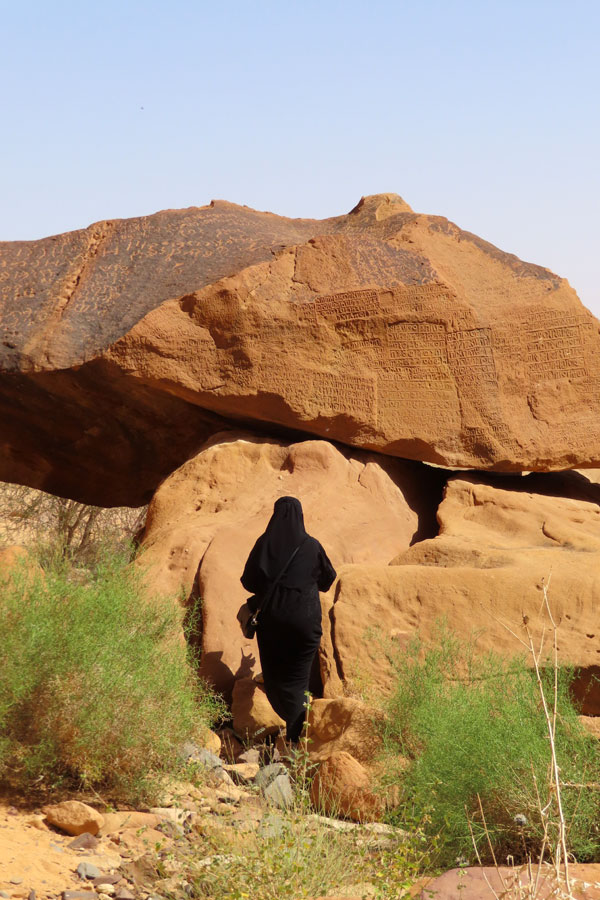
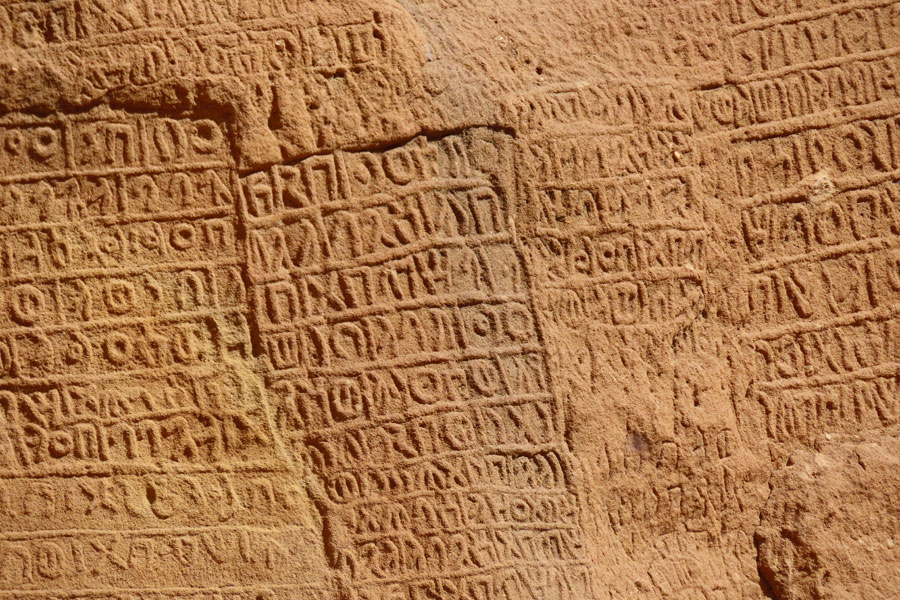
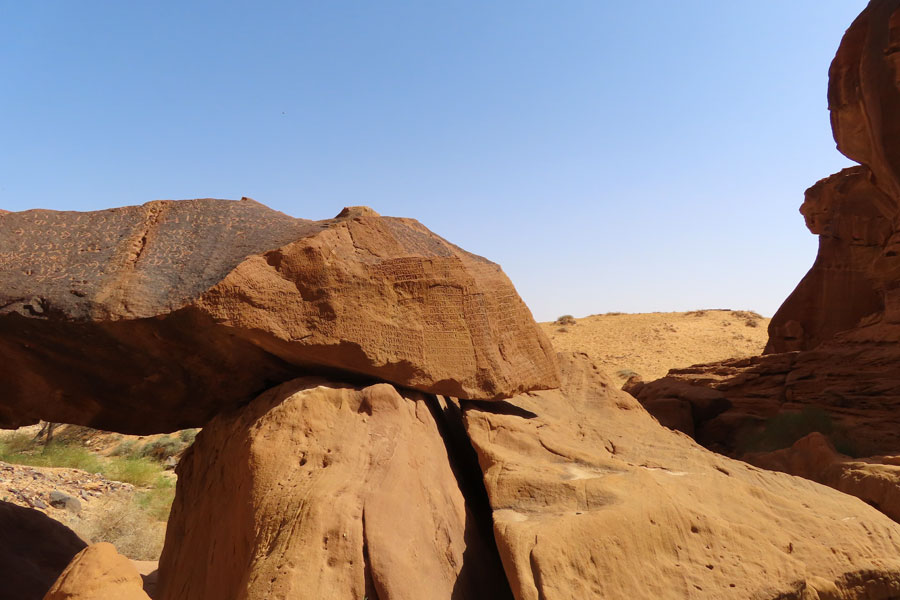
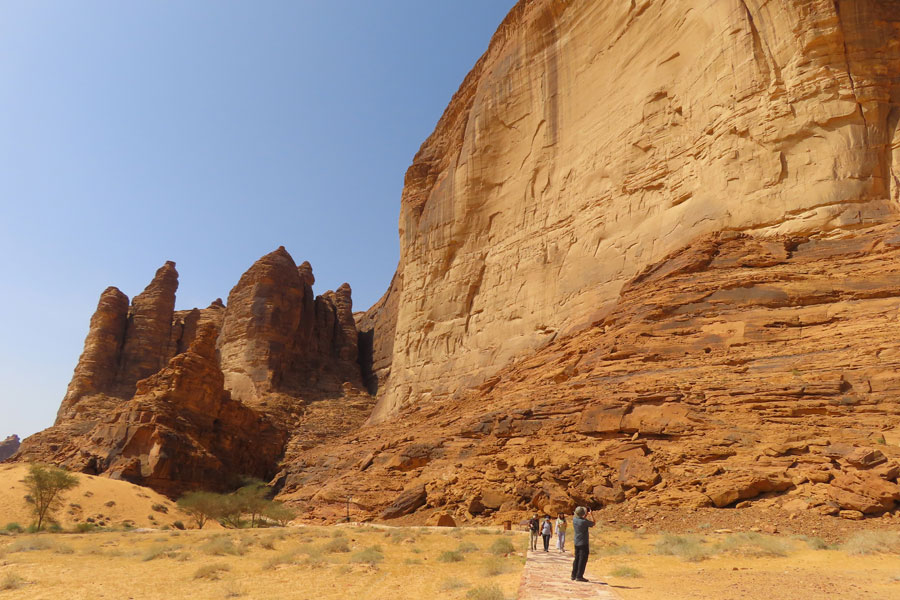
We left at 9 am and drove to Jabal Ikmah , were we walked to the´library´; rocks with writings carved upon them fairly high up, over 2400 years old. While there are thousands of pre-Arabic inscriptions across numerous sites in the Valley of Al Ula, Jabal Ikmah stands out by far as the most important. Etched and carved into its golden stone, its hundreds of centuries-old inscriptions have even earned the site official UNESCO recognition for historical significance with its induction into their Memory of the World Register. Then we had a go ourselves at ´writing´, or etching, with hammer and chisels.
click on a thumbnail to get a bigger photo
 |
 |
 |
 |
 |
 |
 |
 |
 |
 |
 |
 |
 |
 |
 |
 |
 |
 |
 |
 |
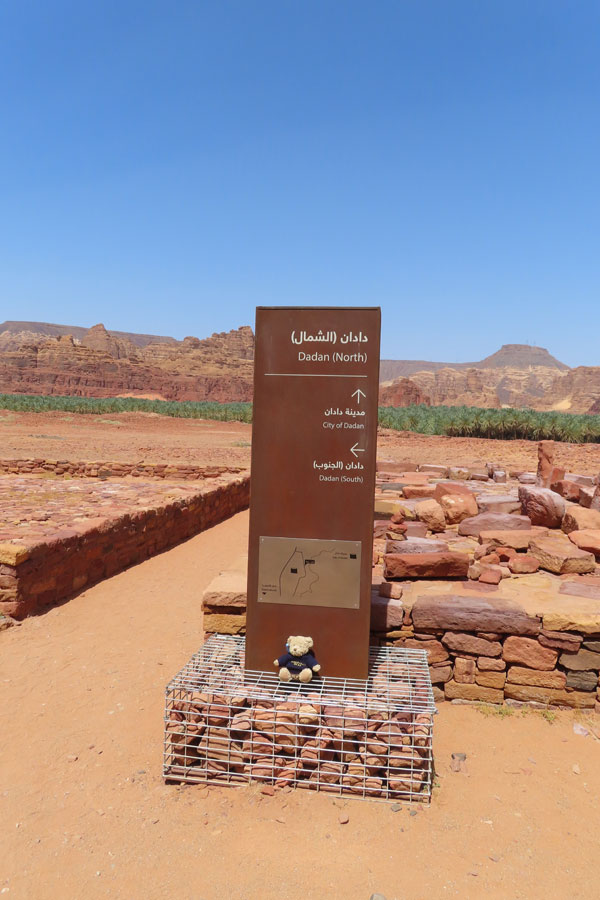
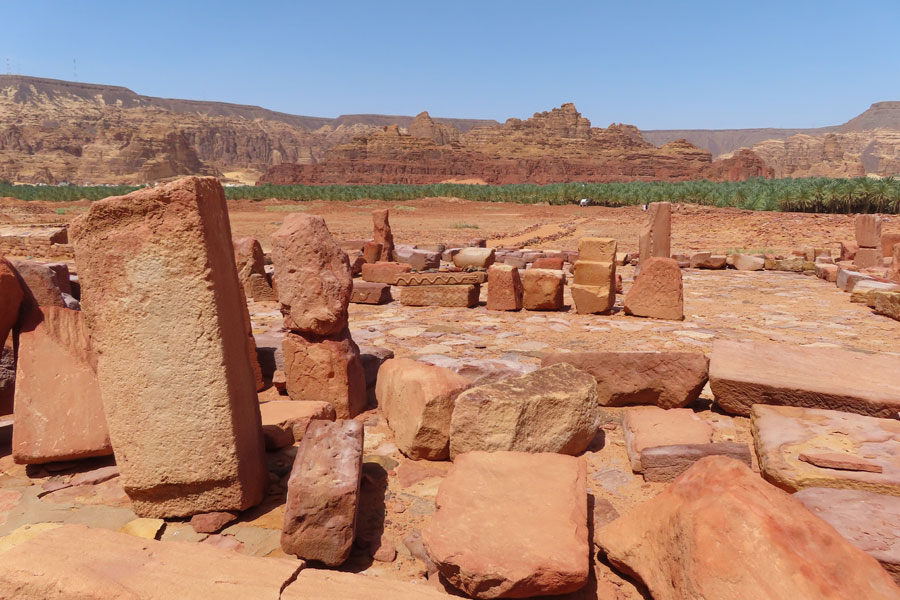
Dadan
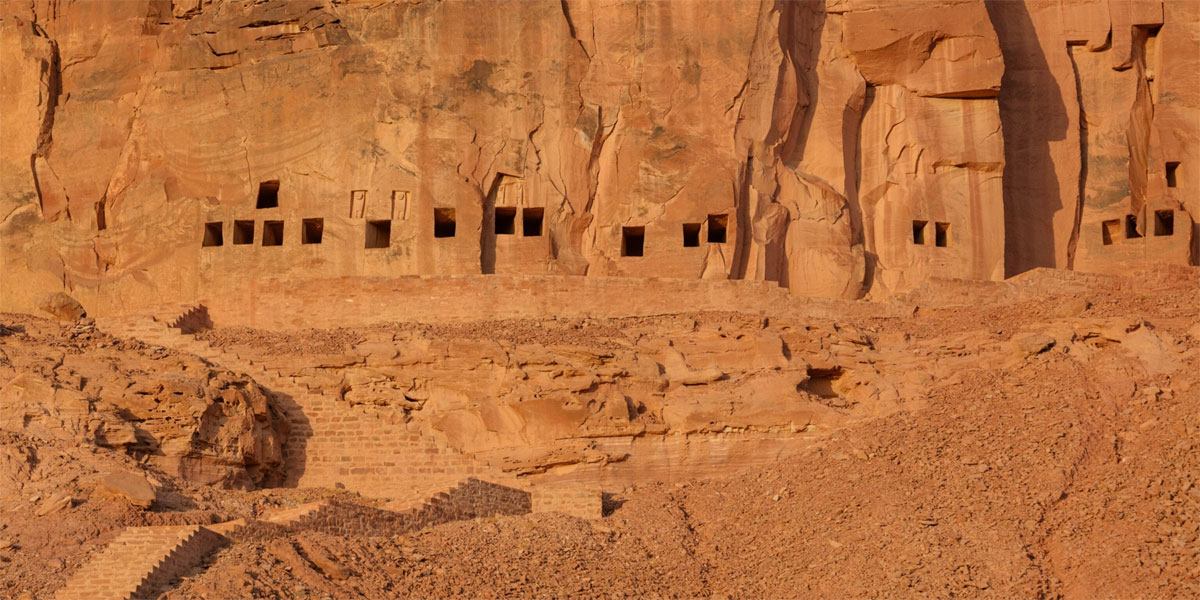
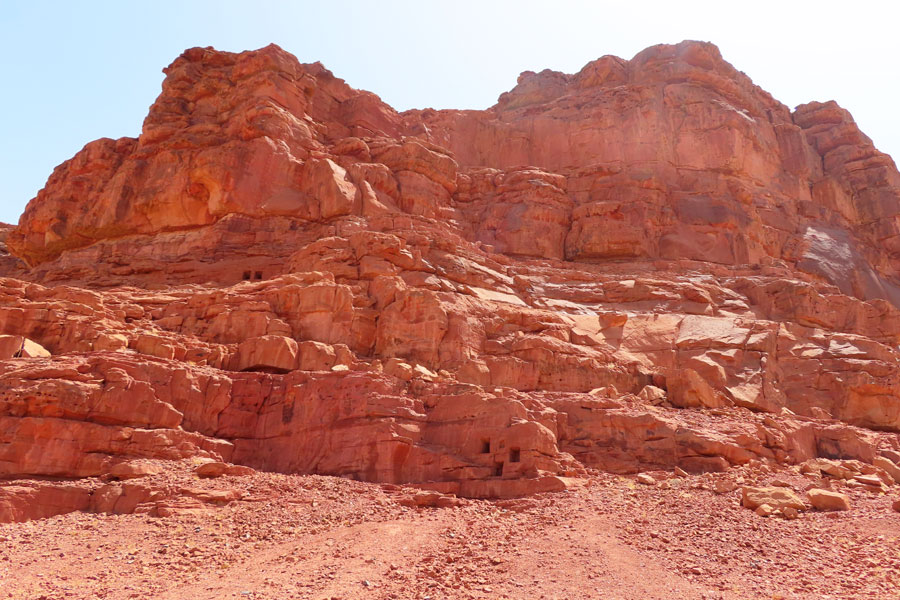
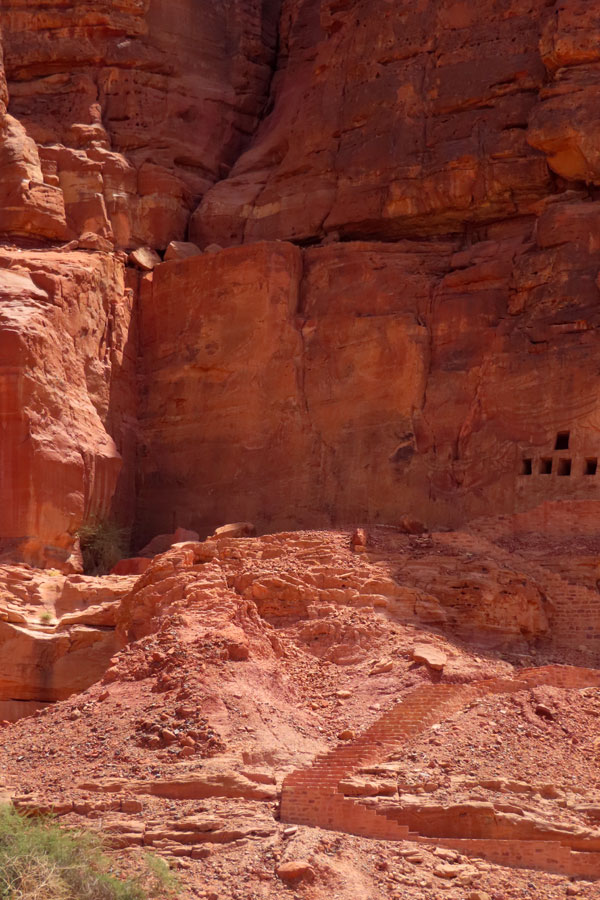
Seeing more tombs before driving on to another site at Dadan , with pictures of lions, an interpretation centre and more high up tombs. They have discovered about 1400 , up to the president day. Being on a major trading route, Dadan was inevitably exposed to other cultures. Archaeologists found a whole fortified city buried under the sand, and influences from other cultures are apparent in their statues, decoration of their buildings, and tombs. The Dadan tombs were excavated in Jabel Dadan, the mountain rising beside the fortified city. These tombs tend to be smaller and simpler than those of the Nabataeans. Dadan tombs usually consist of square niches hewn into the rock. According to their religion, the souls of the dead would reach heaven more quickly if buried in the mountains, a belief that was also shared around the same time by the Lycians, in modern-day Turkey.
click on a thumbnail to get a bigger photo
 |
 |
 |
 |
 |
 |
 |
 |
 |
 |
 |
 |
 |
 |
 |
 |
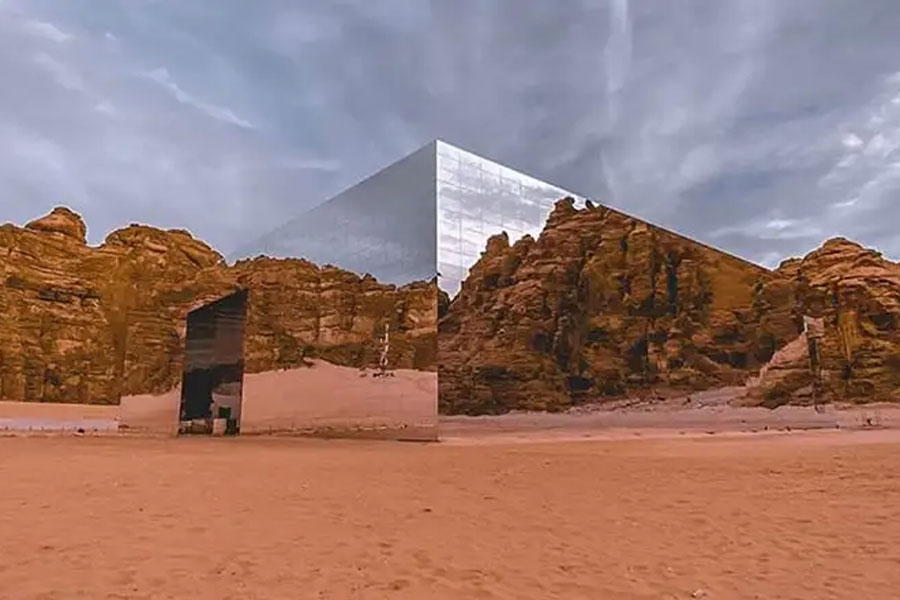
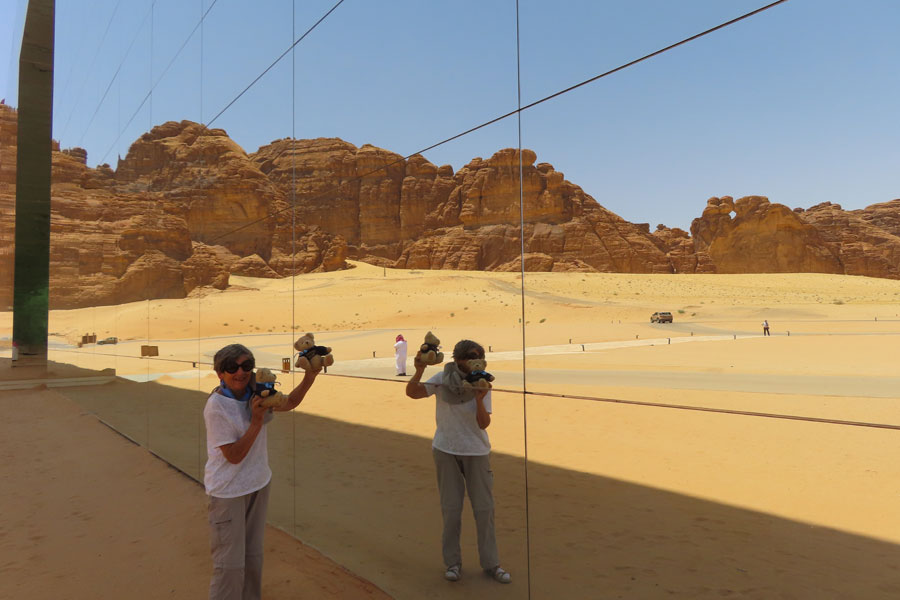
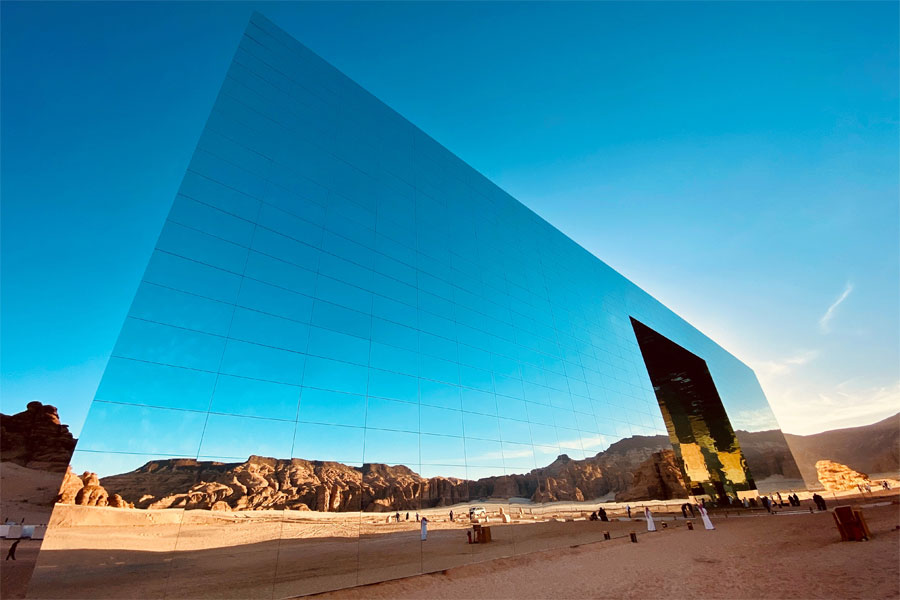
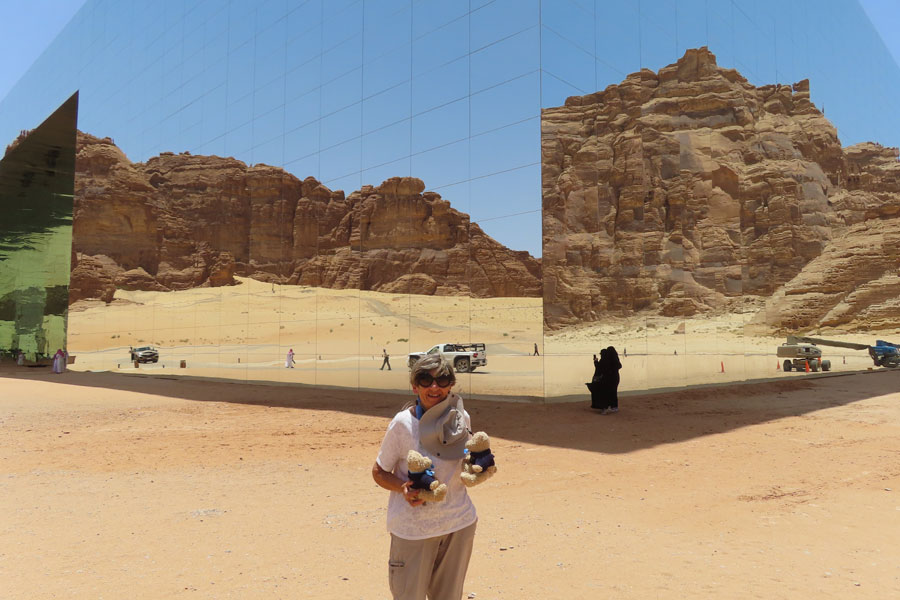
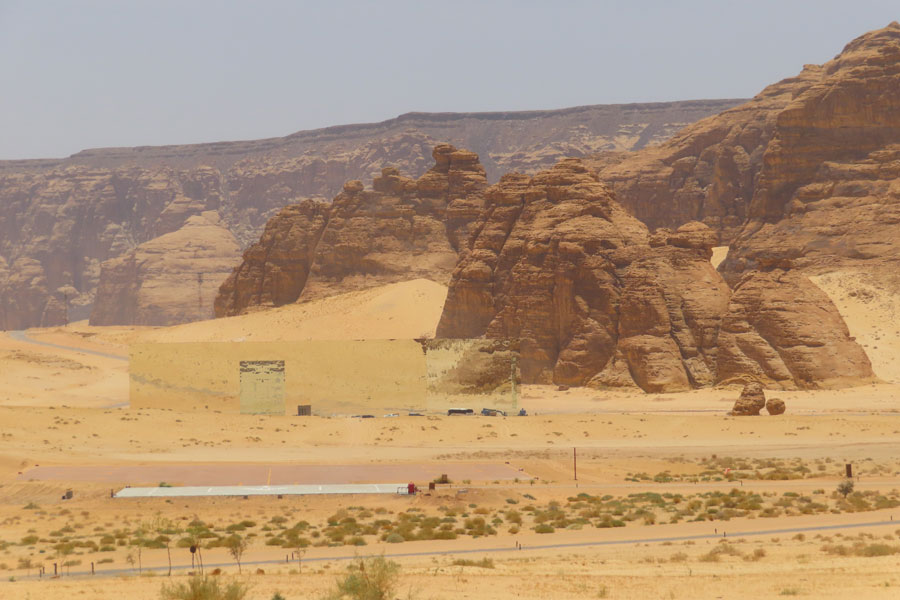
Our final stop was at Maraya, a theatre, art gallery, exposition hall, etc, etc, built on the outside entirely of mirrors, thus enabling it to ´disappear´into the landscape, as all one saw was the reflection of the surrounding rocks. Quite fantastic. David took great exception to the visit of the Health minister!!.
Maraya is a stunning piece of art set in the desert canyon of Ashar Valley. Designed to blend into the surrounding landscape, it rises from the sand like a mirage. The state-of-the-art structure is covered in 9,740 mirrored panels reflecting Al Ula's beauty, making it the largest mirrored building in the world, according to Guinness World Records.
Maraya, meaning mirror or reflection in Arabic, celebrates Al Ula's significant role in history as a crossroads of cultures for centuries. The mirrors themselves become a contemporary canvas, reflecting the remarkable heritage of the area. As the perfect modern ode to the past, Maraya is the centrepiece of Al Ula's growing cultural scene.
click on a thumbnail to get a bigger photo
 |
 |
 |
 |
 |
 |
 |
 |
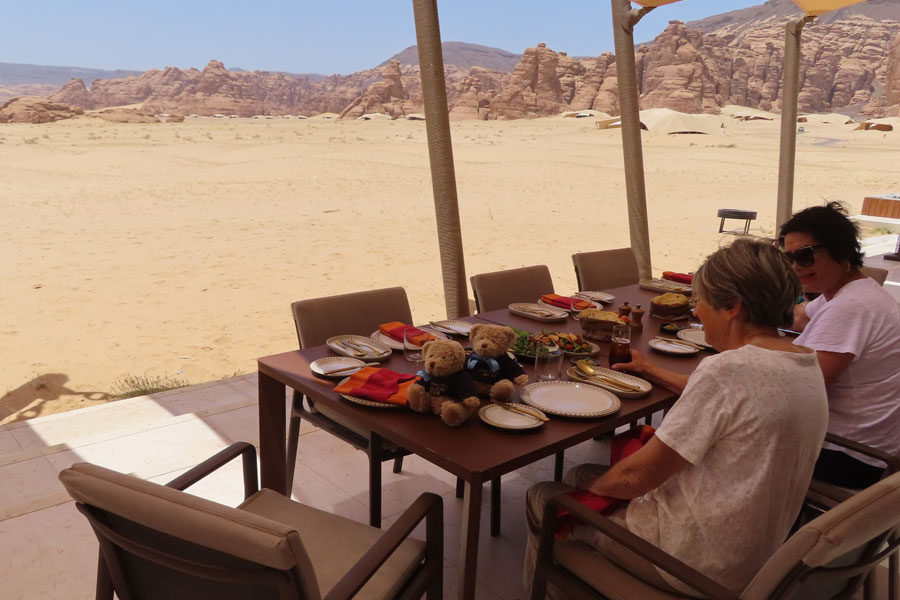
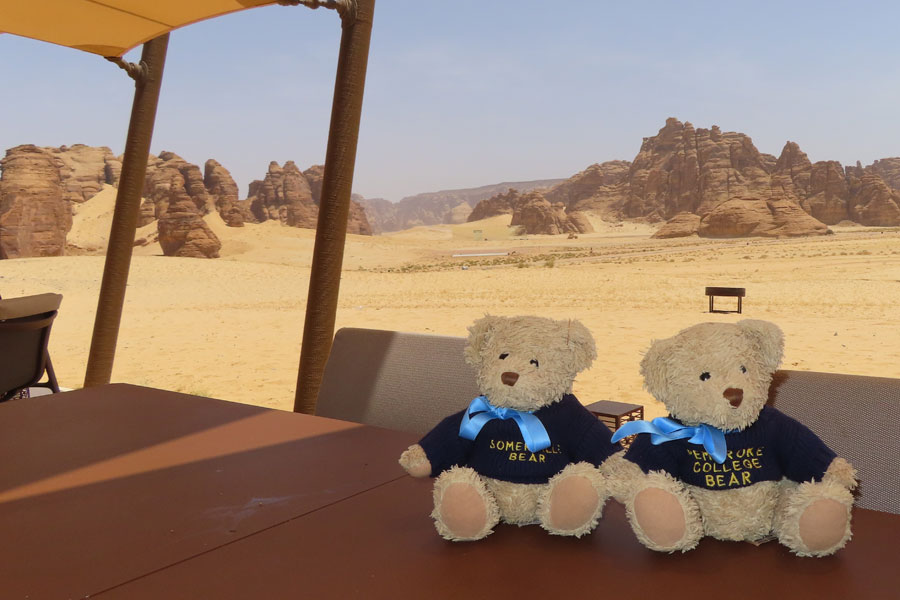
Lunch was at the Banyan tree where the food was truly first rate and the view stunning. The mirrored building could be discerned below in the desert. We had a long chat with the Egyptian restaurant manager.
click on a thumbnail to get a bigger photo
 |
 |
 |
 |
 |
 |
 |
 |
Our flight back was at 3.15, getting us in to Jeddah by 4.30. We eventually got back to the ship at 18.00 and within 15 minutes there was a lifeboat drill and then we sailed by 19.00.
We had canapes and mock champagne after a chat with Martin. Poor starters but excellent sea bass in the Terraza. Back in the cabin Chris settled down to watch the Coronation on TV- which despite her absence, Charles had ploughed on with.
click on a thumbnail to get a bigger photo
 |
 |
This two day trip was a truly memorable part of our stay in Saudi Arabia, which we feel lucky to have seen. Hopefully Saudi guides will improve in future years, and the controlling nature of the country will mellow - but any rough edges we experienced were a small price to pay for being among the first tourists to visit Saudi Arabia.