
Yanbu's history dates back at least 2,500 years, when it was a staging point on the spice and incense route from Yemen to Egypt and the Mediterranean region. The Invasion of Dul Ashir took place in Yanbu two or three months after prophet Muhammad's return from Buwat. He appointed Abu Salamah Ibn Abd al-Assad to take his place in Medina while he was away commanding another raid. Between 150 and 200 followers joined this operation to al-Ushayra, Yanbu. They had 30 camels that they rode upon by turns. When they arrived at al-Usharayh, they expected to raid a rich Mecca caravan heading towards Syria led by Abu Sufyan. Muhammad already had the knowledge of this caravan’s departure from Mecca and waited for about a month for this caravan to pass. But the Mecca caravan had already passed so he waited in vain.
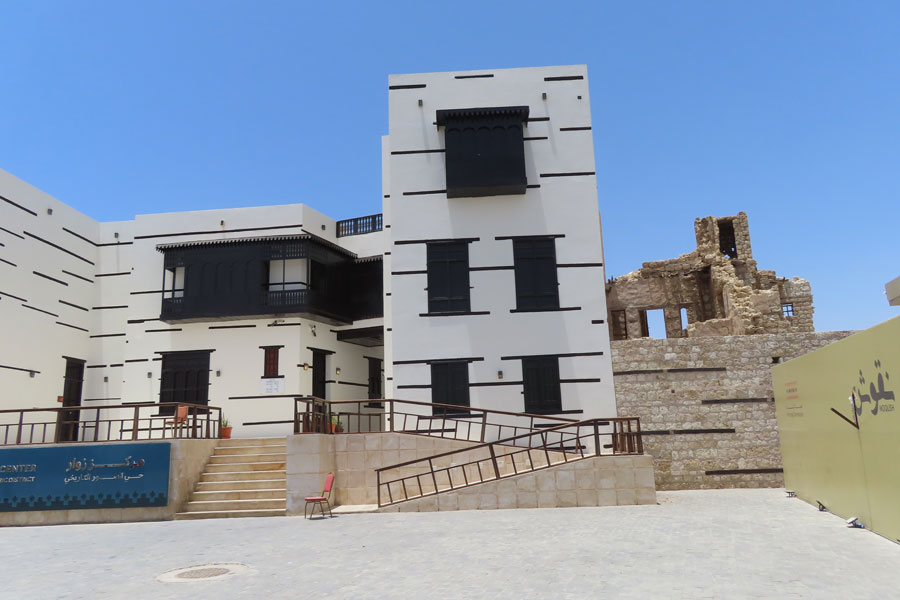
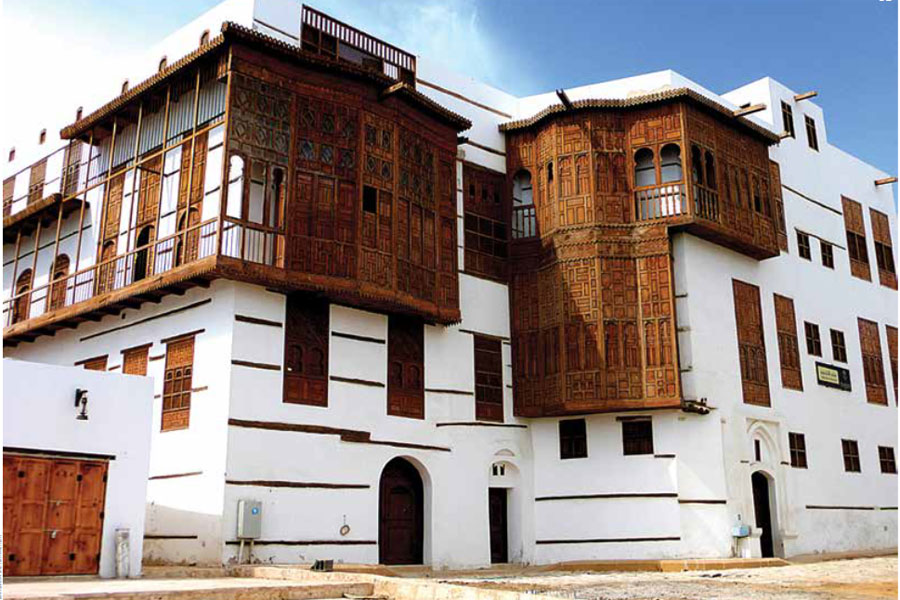
Yanbu served as a supply and operational base for Arab and British forces fighting the Ottoman Empire during World War I. On July 27, 1916 the Ottoman garrison surrendered in the Capture of Yanbu to the Arab revolutionary forces. The bright white rendering and dark wooden screens of a recently restored house (photo above) stand out in a row of tumbledown neglected buildings. The house is famous for its former resident: British intelligence officer Thomas Edward Lawrence, better known as Lawrence of Arabia, who lived in the old town of Yanbu at some point between 1915 and 1916 at the beginning of the Great Arab Revolt. Lawrence's former home is the first to benefit from the Saudi tourism ministry's restoration project for Yanbu’s old quarter. Over the past century, the once elegant two-level home became a ruin, crumbling down despite calls from historians to protect the site, restore the house and open it to the public, says Ahmed Al Mahtout, the local mayor. "We just finished the first phase of restoration and hope by the end of the year we have it fully ready for visitors," he told The National. "The residence derives its value from its history and a lot of foreign tourists [would] like to stand in the home of the British intelligence officer."
It remained a small port town until 1975, when the Saudi government designated it as one of the country's two new industrial centres (the other being Al Jubbah on the Persian Gulf). Extensive government and private development have taken place at the port and surrounding area, which is based on the petrochemical industry.
May 7th
Went on a three hour trip to the original Yanbu, past semi barren areas with dead palm trees . Yanbu al Nakhal, "the valley (or spring) of palm trees" known for its springs, farms, and old charm. The city held an important role as the commercial centre for convoys of pilgrims and trade between Sham and Mecca. The springs give Yanbu its name. The palms synonymous with al Nakhal and that once spread across all the villages of the city extending to the Red Sea.
On de busing, we walked about 15 minutes to a water depositor that had pathways to all the connecting farms, who had a set day and time to receive their allocation. We also saw camels, ruins of old houses, henna plants and date palms, then back to a non existent market, and to a coffee house where we tasted delicious honey. There was a group of local men who danced there, obviously really enjoying themselves.
click on a thumbnail to get a bigger photo
 |
 |
 |
 |
 |
 |
 |
 |
 |
 |
 |
 |
 |
 |
 |
 |
 |
 |
 |
 |
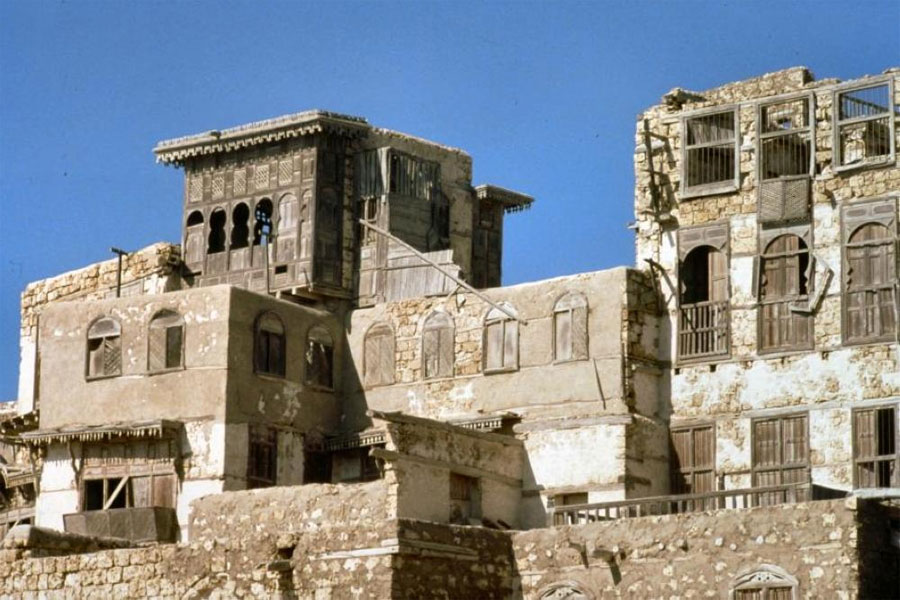
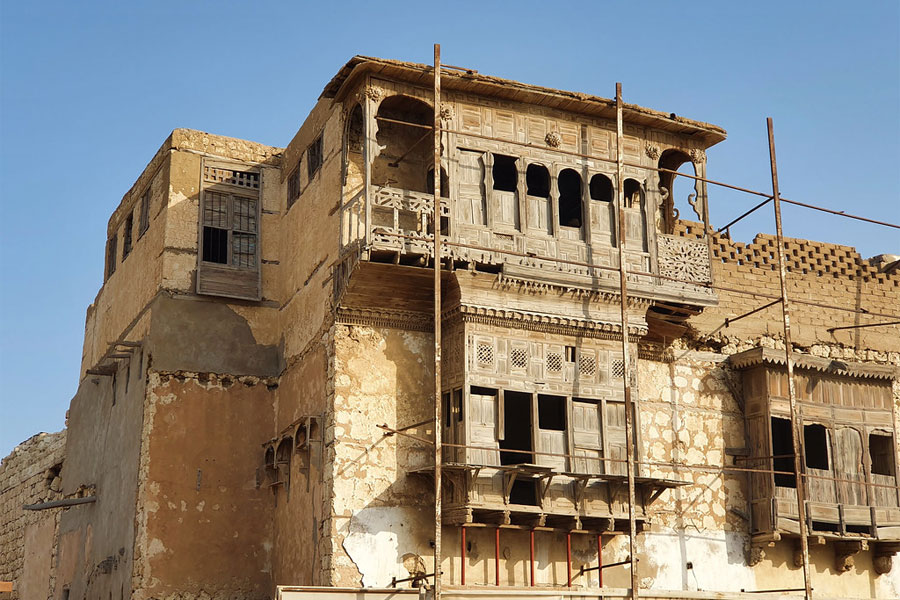
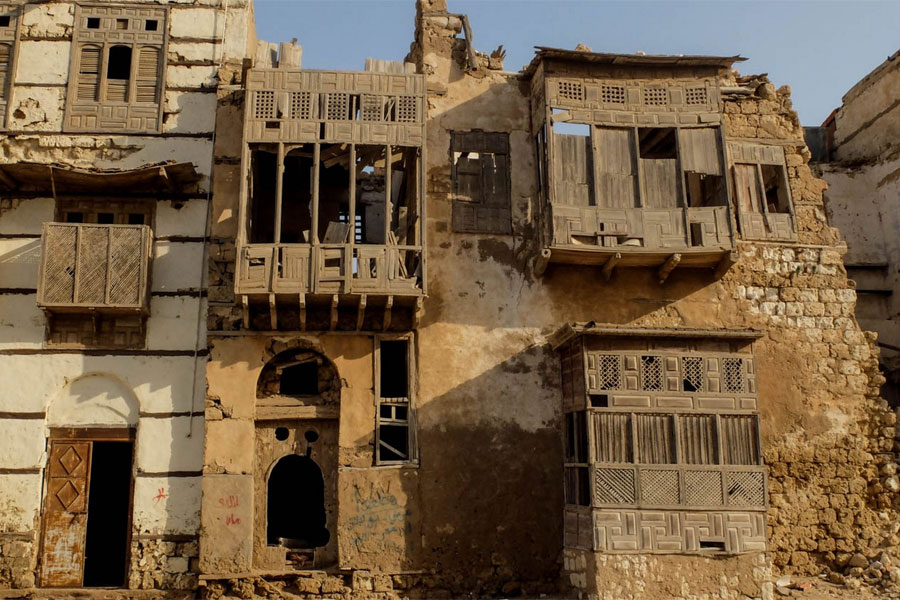
Then back to the port and a tour of the old town with grand old houses, a covered night market and then a very attractive coffee house where we had coffee, dates and pomegranate juice.
Yanbu Historic District includes about 100 heritage buildings, including mosques and various traditional markets. On the ground it covers a very small area - just a few streets, and the old buildings are, in reality, ruins. However Saudi money is clearly in the process of restoring them, and they will undoubtedly be restored soon. Though it is difficult to know whether the restoration will be "authentic", or the creation of just another shopping mall.
Back aboard we enjoyed lunch in the restaurant before a talk by Alexandra on Saudi. Then Truvia, tea, a non impressive talk by Javier on birds before the Captain's Welcome Aboard, followed by dinner with Duncan Grant, the guest relation manager. We really enjoyed talking to him, along with Nancy, Kim and Philip, all of whom had been on board for more than 60 days, being part of the group of 43 people doing the Pole to Pole voyage - the Bipolars. Afterwards we listened to Name that Tune and chatted to Martin and to Fred and Jane Tantis, he having left Malta, at the age of 19, and he being a future potential bridge partner on board for Chris
click on a thumbnail to get a bigger photo
 |
 |
 |
 |
 |
 |
 |
 |
 |
 |
 |
 |
 |
 |
 |
 |
Silver Cloud from Jeddah to Dublin