Baltimore to Trim
Unfortunately, another bad night so was not up to singing happy birthday for David. After another delicious breakfast with the best orange juice scones and everything that we had had in Ireland, we set off to do another loop of the Wild Atlantic Way.
Our first stop was Tragumna Beach, which was a delightful little cove, where people were swimming. We then went via Leap to Glandore where we found a very nice café that did coffee and cakes looking out over to Union Hall. So it was here that we toasted David‘s birthday.
We then drove over the bridge to Union Hall where we had a long chat with three people outside their house: The gentleman had played rugby at the same time as David, obviously from the south. We went into the Church of Ireland church there. And then went down to see the plaque where the RIC barracks were burnt down in 1921.
We had a brief stop and looked over Galley Head Lighthouse..
We then left the coast and the Wild Atlantic Way behind us and drove through central Ireland for 3.5 hours, on fast roads, till we got to Trim. Once checked into the hotel we had a walk in the evening sunshine .
We had a nice room overlooking Trim Castle. We had to change out restaurant table to get a view, but the set menu offered on out "active retired" package was somewhat constraining - David had a hamburger well charred - as apparently Irish law dos not allow for rare hamburgers!, and I had a too large portion of fish and chips. I did not even appreciate the pear and almond tart that followed!
Trim and the River Boyne Drive
I had a really bad night again, and the breakfast was fairly basic and in a peculiar room that was partly laid up for a wedding. We then went for a walk round town starting first at the library: here they knew nothing about the looting of Trim by the ADRIC in 1921.
We then went into the information office and found an incredibly knowledgeable lady who was just so helpful and gave David a book called Trim 1920. From here we went into the castle and had an hours tour of it with a local guide who was very knowledgeable but did play to the Americans in the group. Also he ranted on about films .
Then we went back to the hotel room for a quick snack before setting off on the Boyne Valley Drive. First stop was Newgrange where we knew that we could not get an online ticket as it been booked up for the next two weeks.. But we did get in to see the exhibition, and had distant views of the Newgrange tomb
Then we took over an hour accessing the site of the Battle of the Boyne - due to 'road closed' signs. Eventually we found a way of getting to the site, but it was closed. However the nice man on the gate allowed us in, and we had time to wander round the grounds
Dinner was the same basic, restricted menu, so I had soup, pasta and a chocolate brownie: David smoked salmon, fish and chips and strawberry roulade
Back to Dublin Airport
Drove back out to the battle of the Boyne site again after breakfast. Here David had a long chat with Noel French, the author of the 1920 Trim book that the tourist office lady had given David. What a coincidence that he was now acting as a guide at this site!.
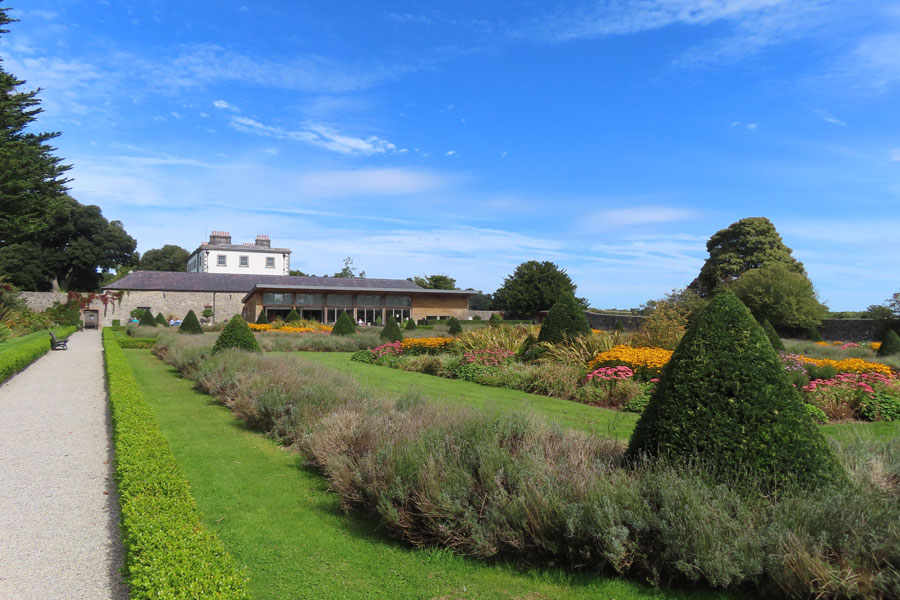
After this we had a lovely lunch in the garden cafeteria there.
Unfortunately not enough spare time to fully explore the delightful garden. Back at the car we found that the GPS had stopped working, so we did not know how long it would take to get to the Airport. En route, Balbriggan proved disappointing, but David got the GPS to splutter into life. We got to the airport by 14.30, the Ryanair flight took off about half an hour late at 17.30, and were back home, both still coughing heartily, by 23.00.
Trim Castle Hotel
A fabulous view over the medieval castle from our bedroom window. The hotel itself was more 3 star, then the 4 star it boasted
To get a larger photo, please click on thumbnail below
 |
 |
 |
 |
 |
 |
 |
 |
Tragumna Beach, Glandore, Union Hall, Galley Head Lighthouse.
To get a larger photo, please click on thumbnail below
 |
 |
 |
 |
 |
 |
 |
 |
 |
 |
 |
 |
 |
 |
 |
 |
Trim
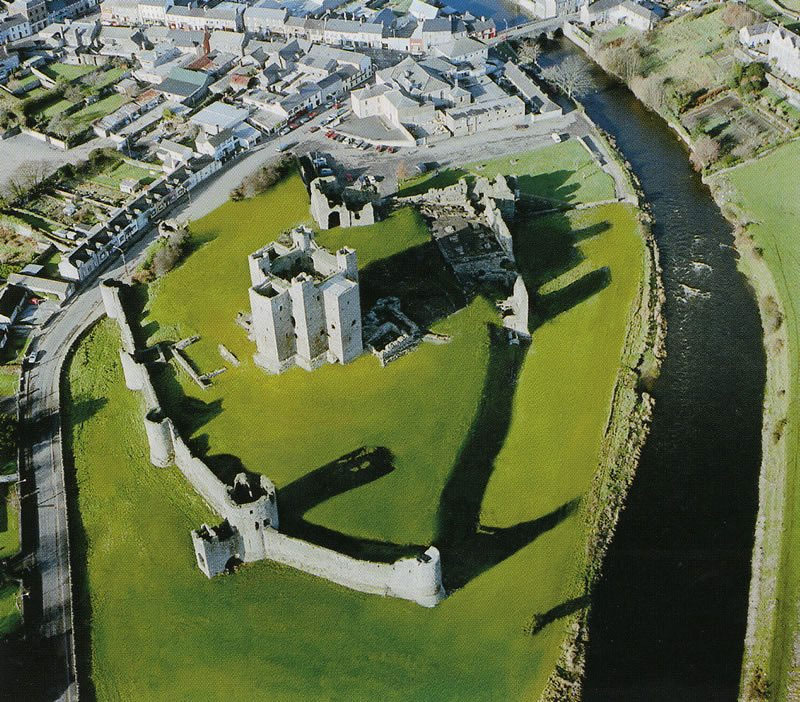
The town is noted for Trim Castle – the largest Norman castle in Ireland. One of the two cathedrals of the United Dioceses of Meath and Kildare – St Patrick's cathedral – is located north of the river.
Trim became one of the most important Hiberno-Norman settlements in the Middle Ages. In the 15th century the Norman-Irish parliament met in Trim. Arthur Wellesley, 1st Duke of Wellington is reputed to have been born in Dangan Castle between Trim and Summerhill, and a large column to him was erected in the town in 1817. Other features include two ruined church complexes, the Boyne River for fishing, and the Butterstream Gardens, visited by Charles, Prince of Wales in the mid-nineties.
Trim Castle (or King John's Castle) is Ireland's largest Norman castle. It was built in the late 12th century following the Norman invasion of Ireland. Trim and the surrounding lands were granted to Hugh de Lacy, Lord of Meath, a Norman baron. Richard II of England stayed there before being ousted from power. Once a candidate to be the country's capital, the town has also occupied a role as one of the outposts of the Pale, and sessions of the Irish Parliament were sometimes held here, as in 1542. It was also designated by Elizabeth I of England as the planned location for a Protestant Dublin University (known as Trinity College Dublin). However this was revised by Sir Francis Drake, who advocated the case for locating the university in Dublin.
During the Irish War of Independence, local companies of the Irish Republican Army took Trim RIC Barracks, a large structure located on the current site of the Castle Arch Hotel, secured the arms from the barracks and then burnt down the Barracks. A large part of the town was burned as a reprisal by the British Crown forces on 26 September 1920. Local memories recall the townspeople sheltering down by the Boyne for a few nights as the Black and Tans and the Auxiliaries burnt out several businesses and the town hall.
To get a larger photo, please click on thumbnail below
 |
 |
 |
 |
 |
|
 |
 |
 |
 |
 |
 |
Hill of Tara
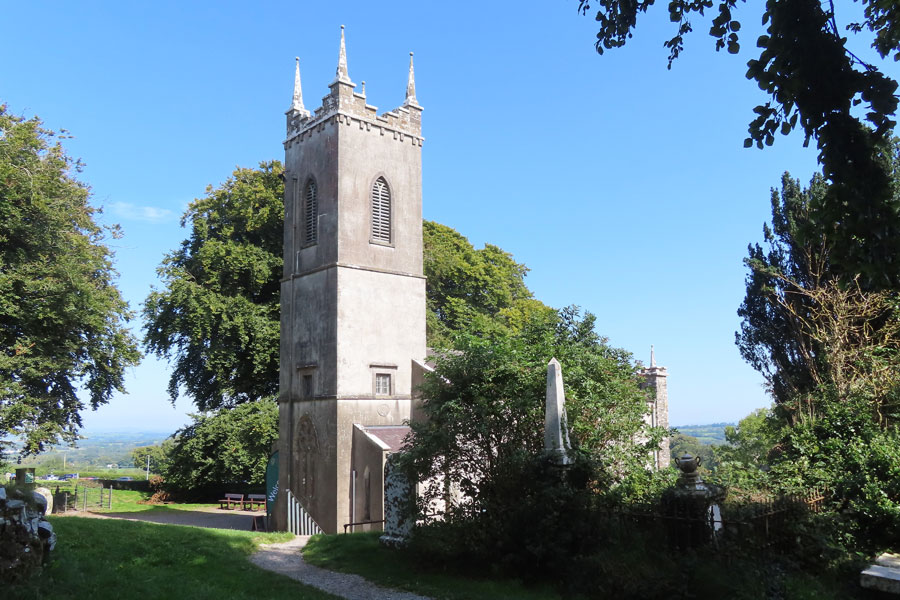
The Hill of Tara is a hill and ancient ceremonial and burial site near Skryne in County Meath, Ireland. Tradition identifies the hill as the inauguration place and seat of the High Kings of Ireland; it also appears in Irish mythology. Tara consists of numerous monuments and earthworks—dating from the Neolithic to the Iron Age—including a passage tomb (the "Mound of the Hostages"), burial mounds, round enclosures, a standing stone (believed to be the "Stone of Destiny"), and a ceremonial avenue. There is also a church and graveyard on the hill. Tara forms part of a larger ancient landscape and Tara itself is a protected national monument under the care of the Office of Public Works, an agency of the Irish Government.
The Stone of Destiny served as the coronation stone for the King of Tara and hence High King of Ireland. According to legend, all of the kings of Ireland were crowned on the stone up to Muirchertach mac Ercae, c. 500 AD
It is only really in the aerial shots that one can see the site properly. On the ground it is a series of random ditches
Getting to the Boyne Battle site saw us driving down miles of single track roads, with copiouis grass growing in the centre of the road
To get a larger photo, please click on thumbnail below
 |
 |
 |
 |
 |
 |
 |
 |
Newgrange
It is an exceptionally grand passage tomb built during the Neolithic Period, around 3200 BC, making it older than Stonehenge and the Egyptian pyramids. It is aligned on the winter solstice sunrise. Newgrange is the main monument in the Brú na Bóinne complex, a World Heritage Site that also includes the passage tombs of Knowth and Dowth, as well as other henges, burial mounds and standing stones
Newgrange consists of a large circular mound with an inner stone passageway and cruciform chamber. Burnt and unburnt human bones, and possible grave goods or votive offerings, were found in this chamber. The mound has a retaining wall at the front, made mostly of white quartz cobblestones, and it is ringed by engraved kerbstones. Many of the larger stones of Newgrange are covered in megalithic art. Some of the material that makes up the monument came from as far as the Mournes and Wicklow Mountains.
There is no agreement about its purpose, but it is believed it had religious significance. It is aligned so that the rising sun on the winter solstice shines through a 'roofbox' above the entrance and floods the inner chamber.
To get a larger photo, please click on thumbnail below
 |
 |
 |
 |
 |
 |
 |
 |
The Battle of the Boyne
The Battle of the Boyne Visitor Centre is in Oldbridge House, County Meath and gives an in-depth insight into the battle between King William III and his father-in-law King James II in 1690.
The Battle of the Boyne was a battle in 1690 between the forces of the deposed King James II, and those of King William III who, with his wife Queen Mary II (his cousin and James's daughter), had acceded to the Crowns of England and Scotland in 1689. The battle took place across the River Boyne close to the town of Drogheda, and resulted in a victory for William. This turned the tide in James's failed attempt to regain the British crown and ultimately aided in ensuring the continued Protestant ascendancy in Ireland. The battle took place on 1 July 1690 (old calendar, 12 Jul on today;s calendar) . William's forces defeated James's army, which consisted mostly of raw recruits. Although the Williamite War in Ireland continued until the signing of the Treaty of Limerick in October 1691, James fled to France after the Boyne, never to return.
William arrived at Carrickfergus, and marched south, arriving at the Boyne with 36,000 men. The Jacobites were 23,500 strong. At the main ford near Oldbridge, William's infantry, led by the elite Dutch Blue Guards under Solms, forced their way across the river, using their superior firepower to slowly drive back the Jacobite foot soldiers, but were pinned down when the Jacobite cavalry, commanded by James II's son James FitzJames, 1st Duke of Berwick. Having secured the village of Oldbridge, the Williamite infantry tried to hold off successive Jacobite Irish cavalry attacks with disciplined volley fire, but many were scattered and driven into the river, with the exception of the Blue Guards. But eventually the Williamites prevailed,
The casualty figures of the battle were quite low for a battle of such a scale—of the 50,000 or so participants, about 2,000 died. Three quarters of the dead were Jacobites. William's army had far more wounded. Williams army marched after the retreating Jacobites, and reached Dublin 2 days later. The Jacobites then retreated to Limerick, where they were besieged. The stand off was broken with the Treaty Of Limerick, he Flight of the Wild Geese, which allowed the Irish army to depart for France,
To get a larger photo, please click on thumbnail below
 |
 |
 |
 |
 |
 |
 |
 |
 |
 |
 |
 |
 |
 |
 |
 |
And so, back to Spain.
The Boys insisted on returning with a bagful of authentic souvenirs
To get a larger photo, please click on thumbnail below
 |
 |
 |