
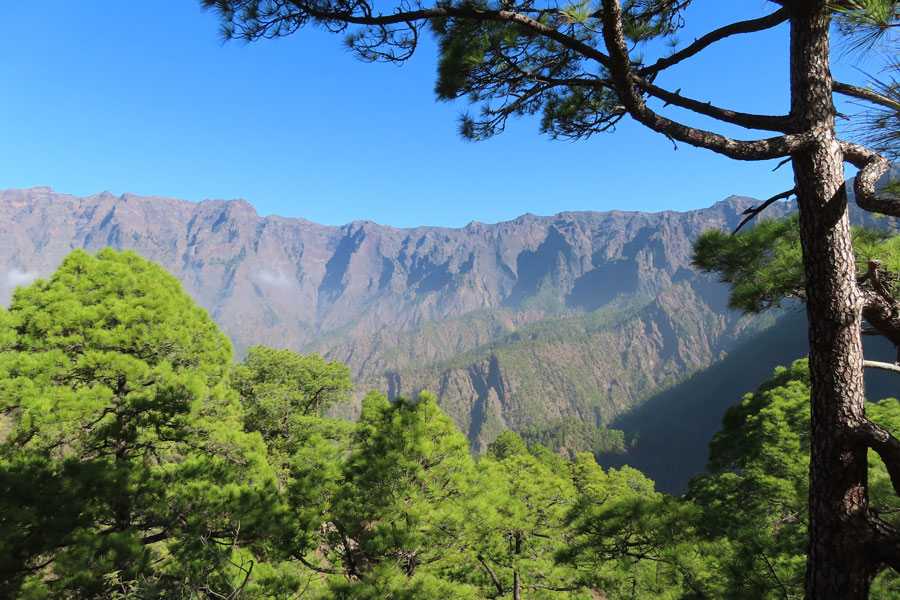
Volcanoes dominate the island of La Palma. The island sits over a hot spot in the Earth’s crust. Beginning on the seabed 4,000 metres below sea level, the volcanoes grew to emerge above the waves and through the clouds to form a mountainous island. The highest point is 2,423 metres (7,950 feet) above sea level. The peak flanks La Caldera de Taburiente, a giant collapsed volcanic crater with a canyon exiting it.
An eruption at the Cumbre Vieja volcanic ridge, comprising the southern half of the Spanish island of La Palma in the Canary Islands, lasted from 19 September to 13 December 2021. It was the first volcanic eruption on the island since the eruption of Teneguía in 1971. At 85 days, it is the longest known eruption of a volcano on La Palma. The eruption has caused the evacuation of around 7,000 people, and the lava flow has covered over 1000 hectares. The lava flow is about 3.5 kilometre wide in its widest point, about 6.2 kilometre long and has reached the sea, destroying more than 3,000 buildings, cutting the coastal highway and forming a new peninsula.The town of Todoque, including its easternmost neighbourhood Los Campitos, was completely destroyed by lava
 |
 |
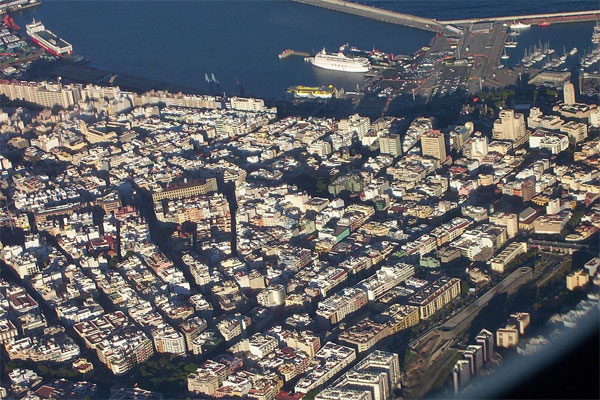
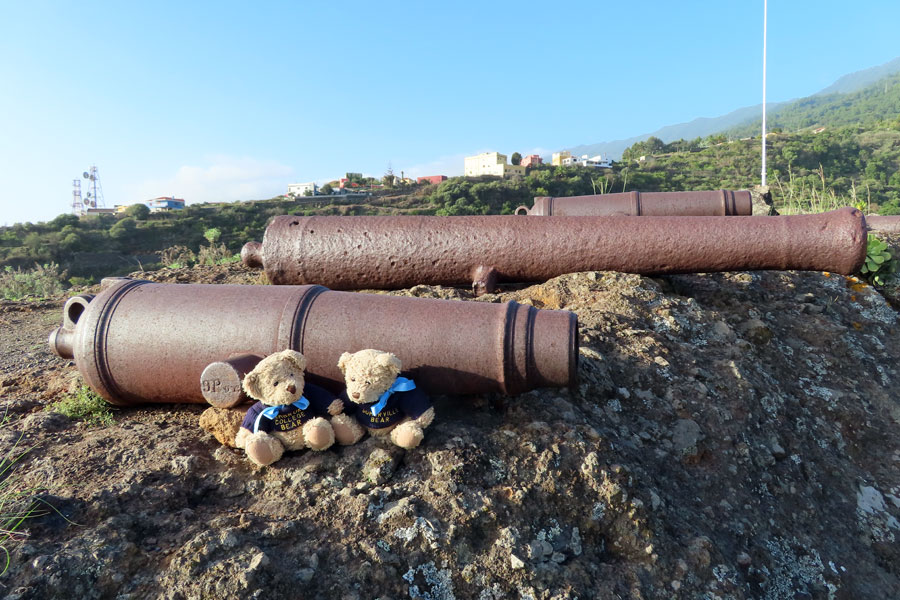
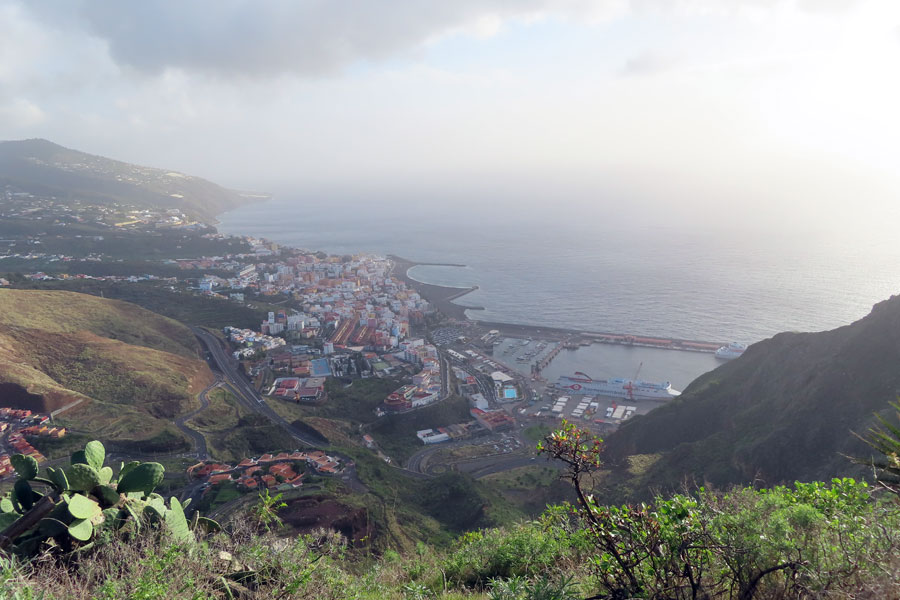
The Spanish port town of Santa Cruz de la Palma began in 1493 and supported the sea route from Europe to the New World. In the 16th century Santa Cruz was the third most important port in Europe, after Antwerp and Seville. But it attracted trouble. The pirate Françoise Le Clerc or ‘Peg Leg’, ransacked the town in 1553, leading to the construction of the forts Castillo de Santa Catalina and Castillo de la Virgen. History buffs should walk the cobbled town streets amongst colourful colonial buildings.
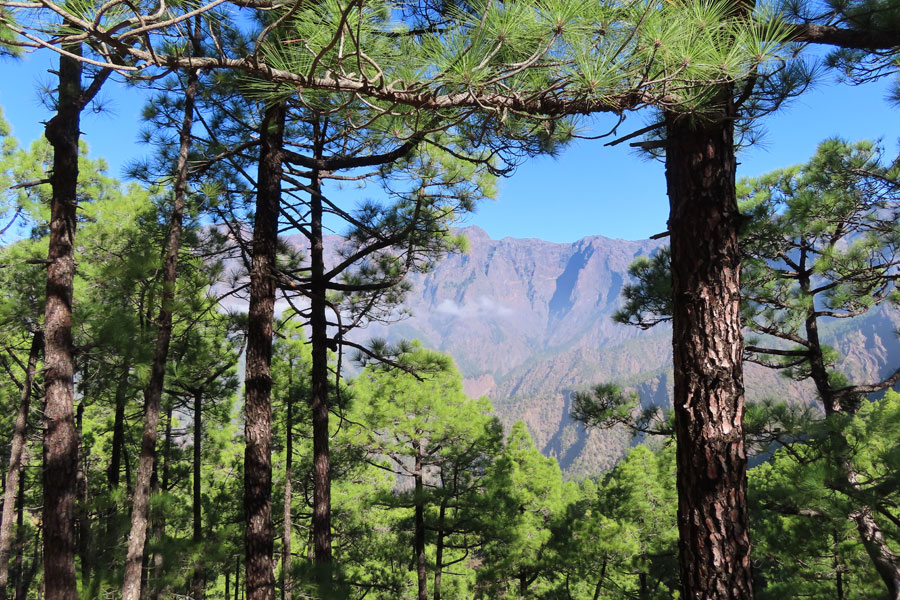
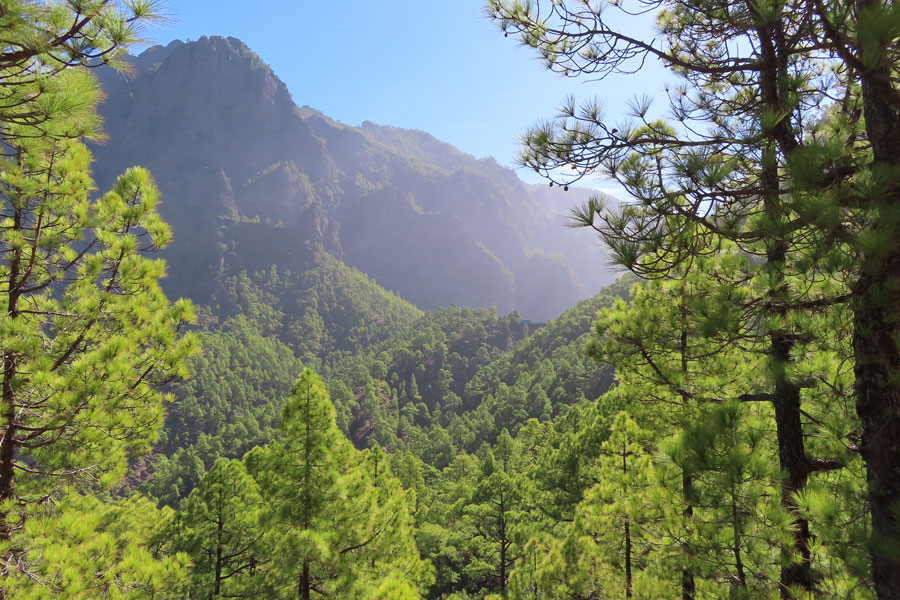
Several vegetation zones are traversed if you travel up the mountains. Dry coastal scrub gives way to a woodland with large Canary Palms, a plant now grown worldwide. Higher slopes catch moisture from clouds, creating the lush laurel zone of semi-tropical forest. Next is a Canary Pine forest and finally an alpine zone of shrubs. The highlight here is the tall pink flowering spikes of the La Palma Bugloss.
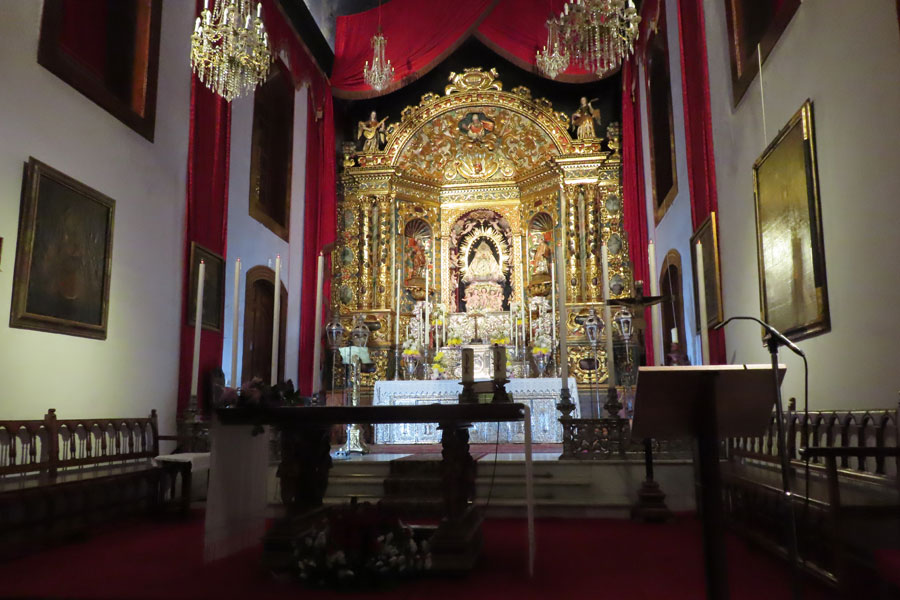
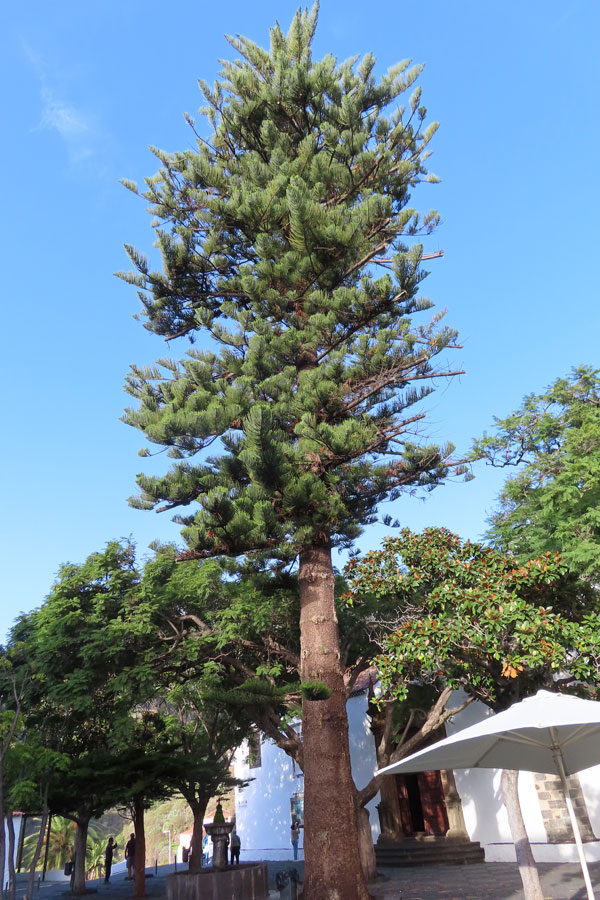
Our morning tour took us for a walk in the National Park. First stop was the 15 th century church of Nuestra Senora de las Nievess, just up from Santa Cruz ; gorgeous gold altar. Then a loo stop at the top of the mountain as we crossed to the warmer, bluer skys, side of the mountain. We then drove into the National Park set in a huge caldera The road through the park was not really designed for tour buses, so there as an ebb and flow one way system, rather like a single track railway line. Parked high up there and went for a 20-30 minute walk with views of forest. Then we drove an extra bit to see the volcano formed in 2021 and its larvae flows.- Back to the ship by a quicker route with lots of tunnels.
Click on any thumbnail photo and get a larger photo
 |
 |
 |
 |
 |
 |
 |
 |
 |
 |
 |
 |
 |
 |
 |
 |
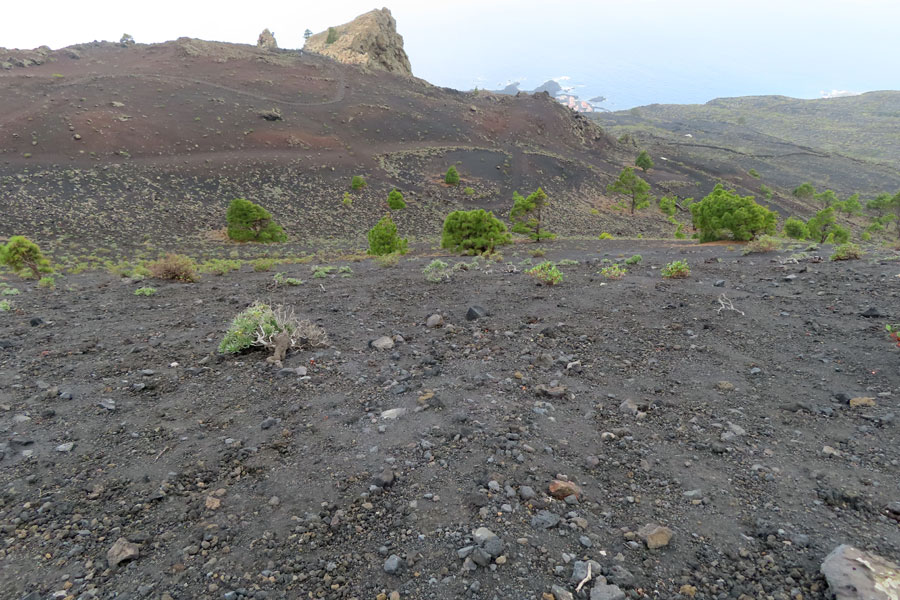
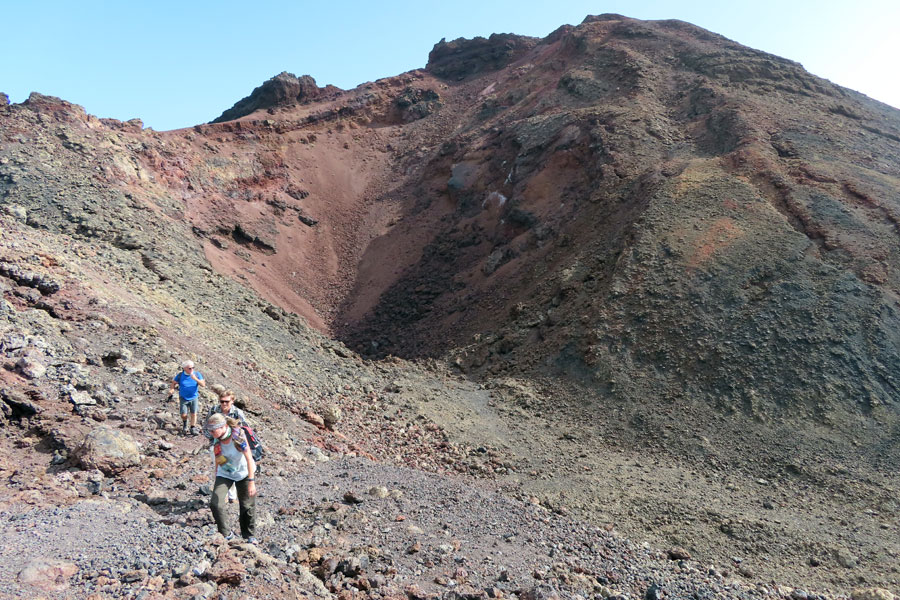
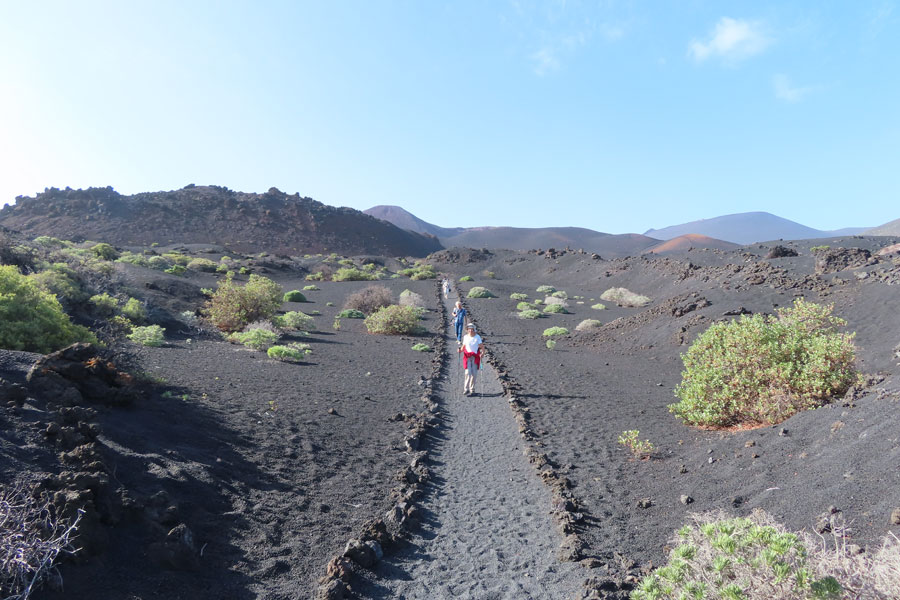
A quick lunch and then off on the Walking among volcanoes tour. A Belgian guide, no doubt quite knowledgeable but with a singsong voice that sent us to sleep! Our destination was a Marine Reserve with a varied landscape made of black sand beaches and coves, salt flats, pine forests and vineyards. Our hike gave panoramic views of the south volcanic area. The start point was at San Antonio Volcano Visitor Centre, where we got an introduction of the volcano's history, which last blew in 1949 and has now been repopulated by hardy Canarian pines. We walked along the crater rim. The views down into the crater were great and also panoramas of the sea beyond and o the islands of La Gomera and El Hierro.
We then started on the hike itself with a very difficult downhill slide for some 20 mins. We then reached fairly level ground, but had the dubious bonus of an unannounced 2 km detour to another caldera. us
 |
 |
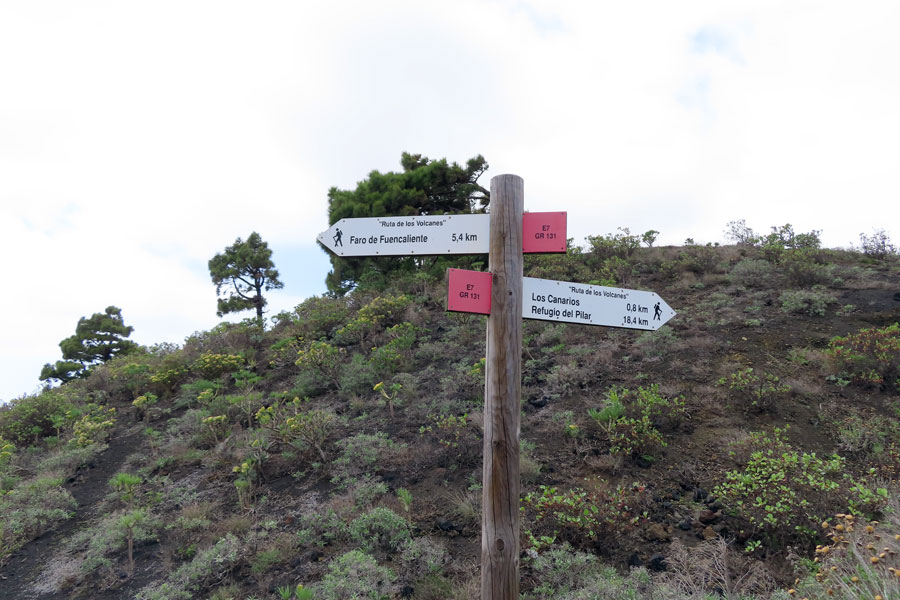
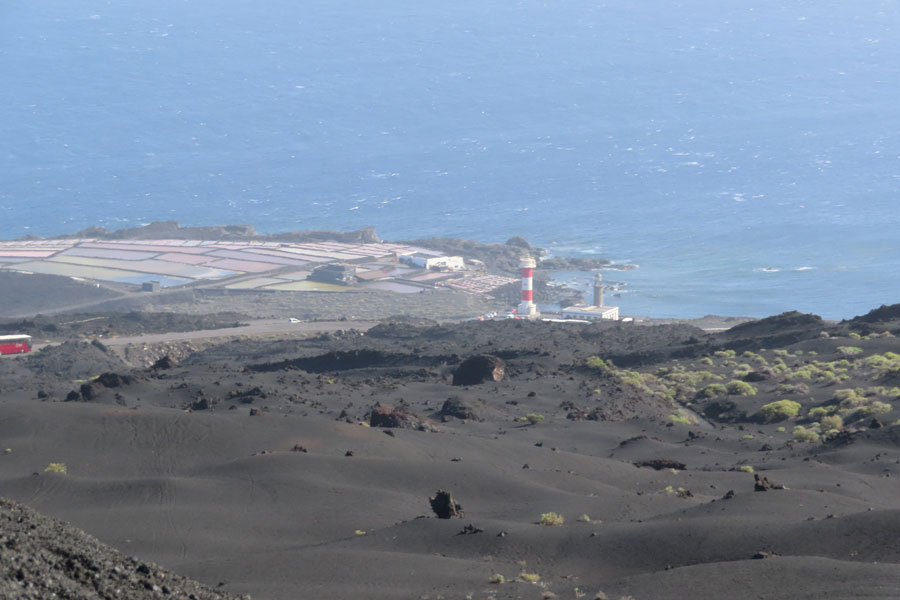
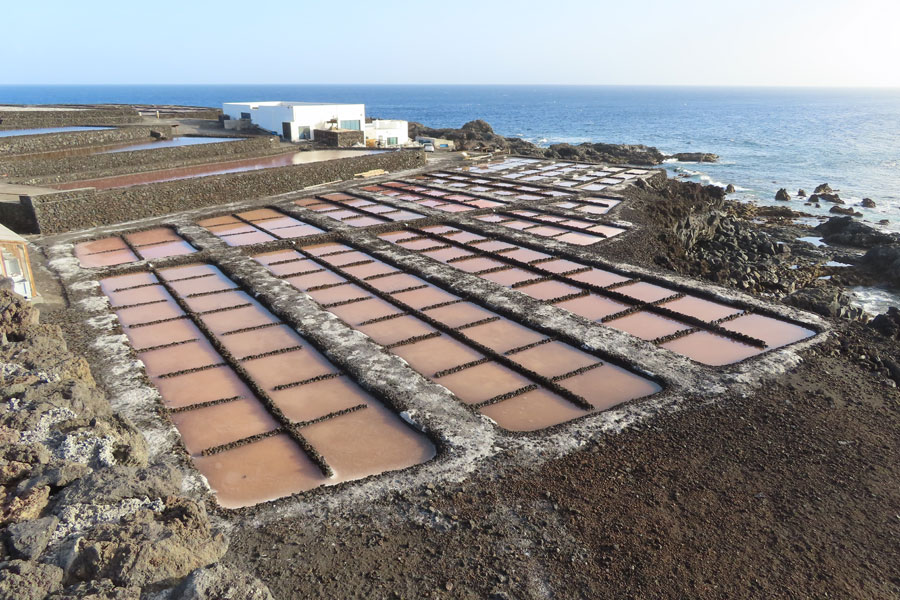
A 8 Km hike downhill took us to Teneguia Volcano, and ended at the Lighthouse and the old Saltworks of Fuencaliente, an area ornithologists, botanists and scientists take a keen interest in and which in 1994 was declared an Area of Scientific Interest. The bus met us some 1.5km short of the lighthouse, and Chris and many others took the opportunity of getting it down to the cafe at the lighthouse, There we met up for a beer and cake. Reboarded the bus for the 1.25 hours drive to Santa Cruz de la Palma.
Click on any thumbnail photo and get a larger photo
 |
 |
 |
 |
 |
 |
 |
 |
 |
 |
 |
 |
 |
 |
 |
 |
 |
 |
 |
 |