 |
 |
 |
 |
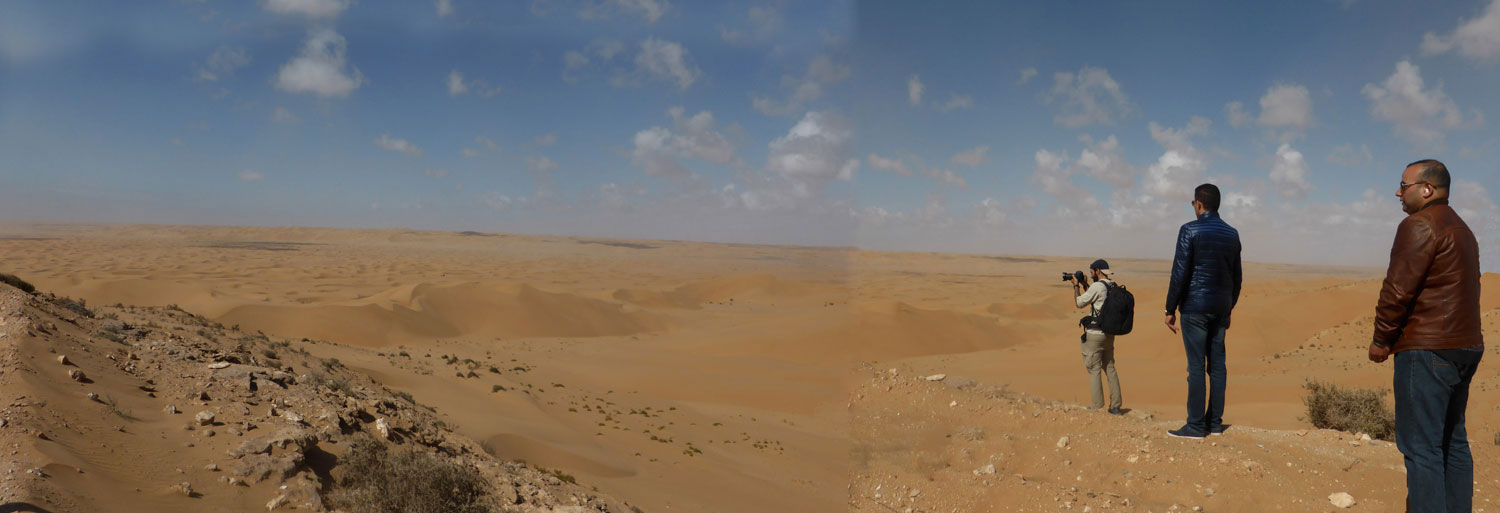
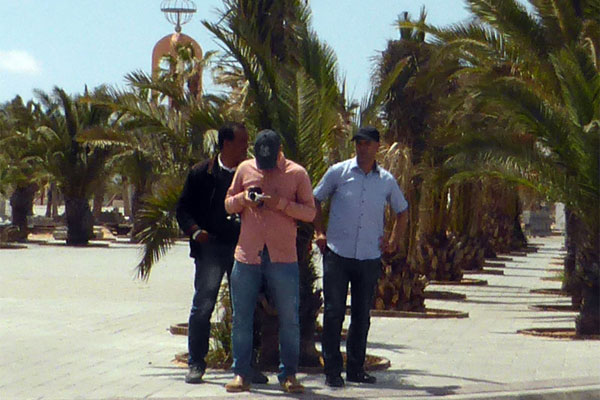
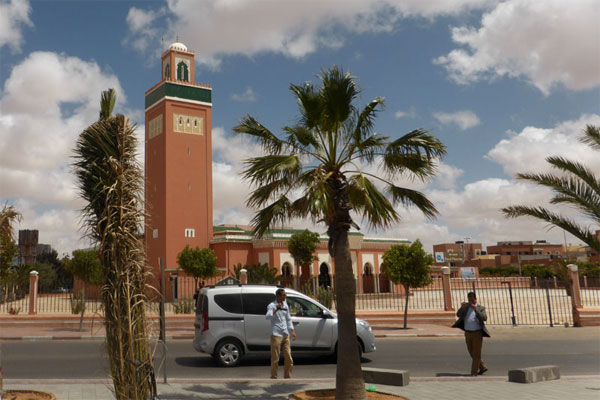
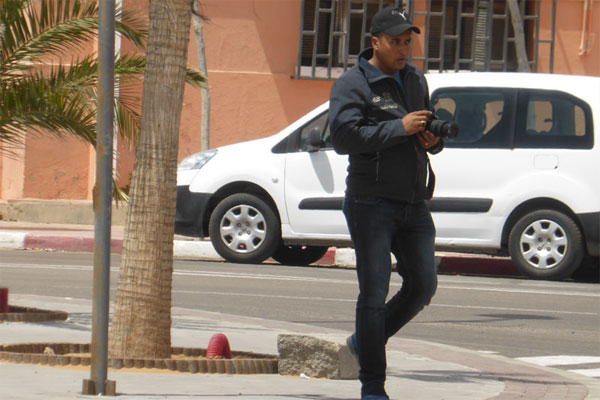
We visited Morrocan Sahara in 2018 - click
In 1984, the African Union's predecessor, the Organization of African Unity, recognized the Sahrawi Arab Democratic Republic as one of its full members, with the same status as Morocco, and Morocco protested by suspending its membership to the OAU. Morocco was readmitted in the African Union on 30 January 2017 by ensuring that the conflicting claims between Morocco and the SADR would be solved peacefully and stopping the extension of its exclusive military control by building additional walls. Until their conflict is resolved, the African Union has not issued any formal statement about the border separating the sovereign territories of Morocco and the SADR in Western Sahara. Instead, the African Union participates with the United Nations mission, in order to maintain a ceasefire and reach a peace agreement between its two members. The African Union provides peacekeeping contingent to the UN mission which is deployed to control a buffer zone near the de facto border of walls built by Morocco within Western Sahara.
Until 2020, no other member state of the United Nations had ever officially recognized Moroccan sovereignty over parts of Western Sahara. In 2020, the United States recognized Moroccan sovereignty over Western Sahara in exchange for Moroccan normalization of relations with Israel.
In November 2020, the ceasefire between the Polisario Front and Morocco broke down, leading to armed clashes between both sides. The Economist in Nov 2021 wrote
"THE TEA was highly caffeinated, but the mood was dour. As the night wore on, the sound of artillery could be heard in the distance. Fifteen or so Sahrawi soldiers had set up camp under one of the rare thickets in the Western Saharan desert. The youngest among them, looking no older than teenagers, scoured the sky for surveillance drones. “War is the only way,” said one. A little before midnight a radio operator received news that Moroccan batteries were opening fire. Then came the thunderous echo of falling missiles. The decades-old conflict between Morocco and the Polisario Front, a nationalist movement seeking independence for Western Sahara, is heating up again. Over the past year Morocco has logged with the UN more than 1,000 “incidents” of Polisario firing on its units, though Polisario says it has staged more attacks than that. The fighting has mostly involved artillery duels along the world’s longest frontline—a 2,700km (1,700-mile) wall of sand, or berm, built by the Moroccan army and sown with mines."
There is little chance that Polisario will achieve its dream of independence for Western Sahara. Some observers think that is for the best. Without the support of Morocco, an independent Sahrawi state might struggle. It would have help from Algeria, which is richer than Morocco thanks to abundant hydrocarbons. But Algeria itself is in turmoil. Efforts to wean the economy off oil and gas have faltered. Big protests in 2019 led to the president’s resignation. The public, though, sees the new one as a puppet of the army. The state is preoccupied with cracking down on groups associated with the pro-democracy Hirak movement.
Morocco is better prepared for the future. It is home to Africa’s largest car and plane manufacturers and its fastest trains. Over 60% of Moroccans have received two jabs of covid-19 vaccine, compared with 10% of Algerians. More than a third of the country’s energy comes from renewables. Yet Sahrawis on the Moroccan side have plenty to be unhappy about. Those who talk of independence say they are denied jobs. Activists are hounded by the police. As for Morocco’s offer of autonomy, Sahrawis point to the repressive monarchy. It would not be like Scotland in Britain, they say.
Of course things are worse on the other side of the berm, where many Sahrawis have spent their whole lives in dusty camps. Some took part in the Hirak—and have thoughts about Polisario’s leadership. Mr Ghali is 72. Yet Polisario’s greying leaders seem disinclined to hand over to a new generation. For now, anyway, the focus is on the war. No one trusts the UN to find a just peace. In the Boujdour refugee camp a young Sahrawi woman says renewing the old ceasefire is out of the question: “We would not allow that.” The mood is the same on the frontline, where a fighter called Omar stands armed and ready. “If there are negotiations in the future, it will be under the sound of guns,” he says.
Tour 1
Explore Dakhla, located at the tip of a thin peninsula, heading ashore to capture a sense of the landscape and culture of this magical place. Historically, Dakhla was once a Spanish colony named Villa Cisneros and an Old Spanish lighthouse still stands on the outskirts of town. Disembark the ship and depart on 4x4 vehicles across the modern part of Dakhla toward the mainland. Drive along the Laguna of Dakhla, a paradise for migratory birds. Venture into incredible scenery until reaching Sahraoui camp set up overlooking the Laguna and a beautiful white sand dune. Discover the Sahraoui culture, which is exclusively nomadic and centered on dromedaries (the Arabian camel). Enjoy a tea ceremony and visit the replica of a Sahraoui family encampment, noting the breathtaking view from the top of the White Dune. Dakhla is uniquely situated between the desert and the sea. Many migratory birds rest here before continuing their journeys north or south. Return to the ship with a new appreciation of the remoteness of this region and the nomadic nature of the local culture.