
Belgrade Fortress
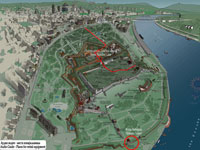
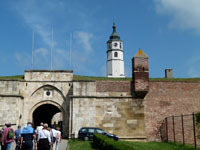
After almost two millennia of continuous sieges, battles and conquests, the fortress is today known as the Belgrade Fortress. It is located on top of a 125-meter high ridge. The cliff-like ridge overlooks the Great War Island and the confluence of the Sava river into the Danube, and makes one of the most beautiful natural lookouts in Belgrade
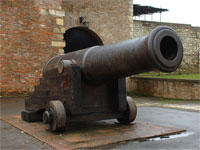
A Roman legion built a fortified camp on the hill. In the period between AD 378 and 441 the Roman camp was repeatedly destroyed in the invasions by the Goths and the Huns. A fort remained in one way or another since then. In 1521 the fortress, like most parts of the Serbian state, was conquered by the Turks and remained (with short periods of the Austrian and Serbian occupation), under the rule of the Ottoman Empire until 1867, when the Turks withdrew from Belgrade and Serbia. During the short period of Austrian rule (1718–1738), the fortress was largely rebuilt and modernized. The fortress suffered further damage during the First and the Second World Wars.
Click on any thumbnail photo to get a larger version
 |
 |
 |
 |
 |
 |
 |
 |
 |
 |
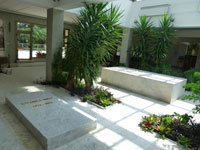
Tito's Grave
Josip Broz Tito, born Josip Broz; (7 May 1892 – 4 May 1980) was a Yugoslav revolutionary and statesman, serving in various roles from 1943 until his death in 1980. During World War II he was the leader of the Partisans, often regarded as the most effective resistance movement in occupied Europe. While his presidency has been criticized as authoritarian, Tito was "seen by most as a benevolent dictator" due to his economic and diplomatic policies. He was a popular public figure both in Yugoslavia and abroad.Viewed as a unifying symbol, his internal policies maintained the peaceful coexistence of the nations of the Yugoslav federation. He gained further international attention as the chief leader of the Non-Aligned Movement, working with Jawaharlal Nehru of India, Gamal Abdel Nasser of Egypt and Sukarno of Indonesia (not all of who were libertarians). However world leaders from East and West courted him shamelessly, and he courted them.
Tito was the chief architect of the second Yugoslavia, a socialist federation that lasted from 1943 to 1991–92. Despite being one of the founders of Cominform, soon he became the first Cominform member to defy Soviet hegemony and the only one to manage to leave Cominform and begin with its own socialist program.
After Tito's death in 1980, tensions between the Yugoslav republics emerged and in 1991 the country disintegrated and went into a series of wars and unrest that lasted the rest of the decade, and which continue to impact most of the former Yugoslav republics. He remains a very controversial figure in the Balkans.
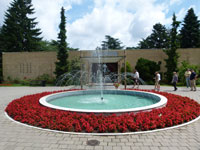
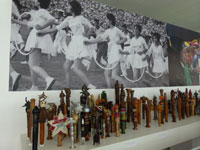
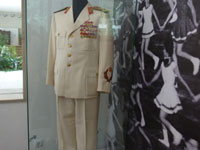
Tito was interred in a mausoleum in Belgrade, which forms part of a memorial complex in the grounds of the Museum of Yugoslav History. The actual mausoleum is called House of Flowers and numerous people visit the place as a shrine to "better times". The museum keeps the gifts Tito received during his presidency. His last (of many) wife Jovanka, survived him, and was later buried in a tomb beside his.
Click on any thumbnail photo to get a larger version
 |
 |
 |
 |
 |
 |
 |
 |
 |
 |
Church of Saint Sava
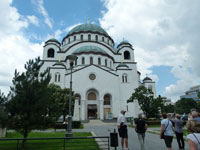
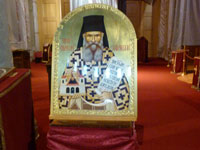
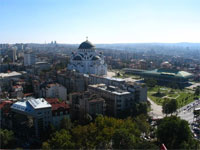
This is a Serbian Orthodox church on the plateau above Belgrade. It is one of the largest Orthodox churches in the world. The church is dedicated to Saint Sava, the founder of the Serbian Orthodox Church and an important figure in medieval Serbia. It is built on the Vračar plateau, on the location where his remains were burned in 1595 by Ottoman Grand Vizier Sinan Pasha.
From its location, it dominates Belgrade's cityscape, and is perhaps the most monumental building in the city. The building of the church structure is being financed exclusively by donations.
Construction of the church began in 1935. The work lasted until Second World War Axis invasion of Yugoslavia in 1941. The church's foundation had been completed, and the walls erected to the height of 7 and 11 meters. After the 1941 bombing of Belgrade, work ceased altogether.
The occupying German army used the unfinished church as a parking lot, while in 1944 the partisans and the Red Army used it with the same purpose. Later, it was used for storage by various companies.
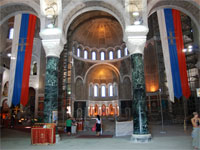
In 1958, Patriarch German renewed the idea of building the church. After 88 requests for continuation of the building—and as many refusals, permission for finishing the building was granted in 1984 and construction of the building began again in 1985. The walls were erected to full height of 40 meters. The greatest achievement of the construction process was lifting of the 4,000 ton central dome, which was built on the ground, together with the copper plate and the cross, and later lifted onto the walls. The lifting, which took forty days, was finished in 1989. As of 2009, the church is mostly complete. The bells and windows had been installed, and the facade completed.
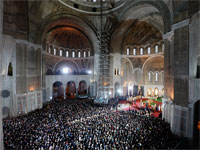
The interior is still unfinished but enough artistry is on display that you can see how splendid the finished cathedral will be. Once finished St Sava will be able to hold 10,000 worshipers.
Click on any thumbnail photo to get a larger version
 |
 |
 |
 |
 |
 |
 |
 |
MS Treasures
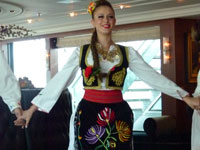
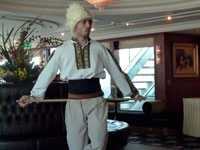
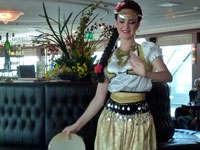
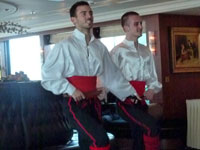
Put on a display of traditional Serbian dancing
Click on any thumbnail photo to get a larger version
 |
 |
 |
 |
 |
 |
Royal Palace and White Palace
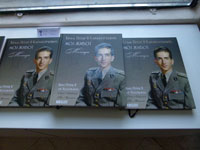
We had tour of the Royal Palace and Chapel, followed by dinner in the white Palace.
The Royal compound is a complex of residences built for the Karađorđević royal family between 1924 and 1937. The compound consists of two primary residences: The Royal Palace and the White Palace. The royal compound covers an area of 134 hectares,
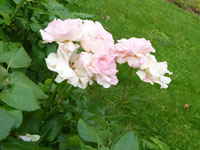
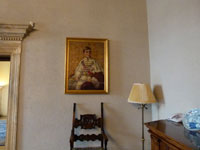
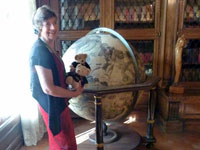
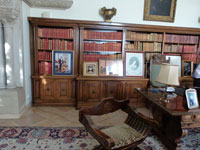
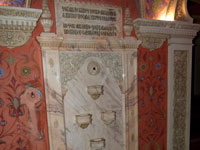
The Royal Palace of Serbia was built between 1924 and 1929 with the private funds of King Alexander I. The palace was the home of King Alexander I and King Peter II. Today, the palace is home to Crown Prince Alexander, Crown Princess Katherine and their three sons. The chapel was built reflecting the monastery Church of Saint Andrew on the River Treska in Macedonia where the Holy Place of the medieval Serbian King Vukashin is located. The palace is surrounded with pergolas, park terraces, swimming pools, pavilions and platforms. The ground floor reception rooms are beautifully appointed. The Formal Entrance Hall is paved with stone and decorated with copies of medieval frescoes from the Monasteries of Dechani and Sopochani. The Blue Drawing Room is decorated in the Baroque style; the Golden Drawing Room (Palma Vecchio) and Dining Room are in the Renaissance style with impressive wood carved ceilings and bronze chandeliers. These rooms are ornately decorated with paintings of old masters and Renaissance painted Florentine Cassoni from the Royal collections. The Greater and Lesser Libraries are decorated in the same manner.
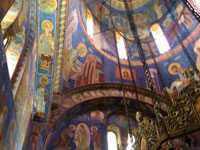
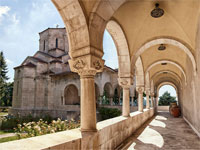
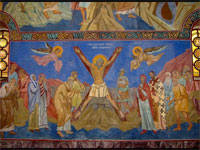
The Royal Chapel is attached to the palace and is devoted to Saint Apostle Andrew The First-Called, the patron Saint of The Royal Family of Yugoslavia. The church was built at the same time as The Royal Palace and is attached to it through a colonnade with semicircular arches from where there are magnificent views towards Belgrade, as well as to the terraced rose gardens. It is covered with frescoes painted by Russian painters who travelled around Serbia and copied the frescoes of the most famous Serbian medieval monasteries. The final decoration was chosen personally by King Alexander I . During the Communist era, the church was repeatedly desecrated, it served as a storage room for cleaners and gardeners. One of the most obvious signs of desecration is a bullet hole in Christ’s forehead (see photo below) and a scratch of the Angel’s wings, representing the communist symbolic "murder of God". The church is today still used by the Royal Family.
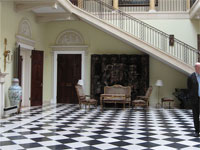
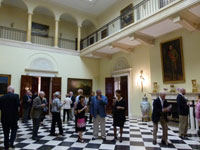
The White Palace is a former royal residence of the Karađorđević dynasty. The palace is located in the Royal Compound in the same complex as the Royal Palace. Its interior was decorated with English Georgian and 19th century Russian antiques by the French design firm Jansen, which later decorated the White House during the administration of John F. Kennedy.The palace was commissioned and built with the personal funds of King Alexander I for his three sons. Alexander was assassinated during a state visit to Marseille, France, the same year construction on the palace began. Supervision of construction was overtaken by the Prince Regent Paul until its completion in 1937. Prince Paul was the only member of the royal family to reside in the palace before the outbreak of the Second World War and invasion of Yugoslavia. Following the end of the war, the new communist government seized the assets and property of the royal family. The White Palace was periodically used by presidents Josip Broz Tito and later by Slobodan Milošević for official state functions and foreign visits. Milošević received U.S. envoy Richard Holbrook at the palace before the NATO bombing of Yugoslavia began; Milošević later officially resigned his presidency in front of the palace fireplace.
Click on any thumbnail photo to get a larger version
 |
 |
 |
 |
 |
 |
 |
 |
 |
 |
 |
 |
 |
 |
 |
 |
 |
 |
 |
 |
 |
 |
 |
 |