
Trujillo
 |
 |
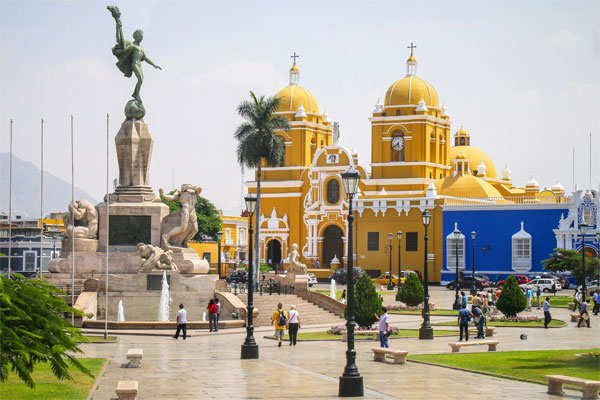
Trujillo was a cradle for some of Peru's most important ancient cultures, whose people left a legacy of fascinating archaeological sites. Relatively few visitors make it to this region, but that's their loss and your gain – these hugely significant ruins are yours to explore in peace. On this archaeological tour you'll begin by visiting the 1,500-year-old Huacas del Sol and de la Luna, two religious structures whose walls are made up of thousands of moulded adobe bricks and decorated with extraordinary friezes. After briefly stopping to take note of a much more recent era in Trujillo's history at the Spanish-built Plaza de Armas, you continue to the Archaeological Museum to put the ruins into context. Next you visit the pre-Inca temple of Huaca del Dragón before taking lunch at Huanchaco Bay, where local fishermen still set sail in reed skiffs whose design dates back to the Mochicas. We visited Huaca de Luna on the Explorer
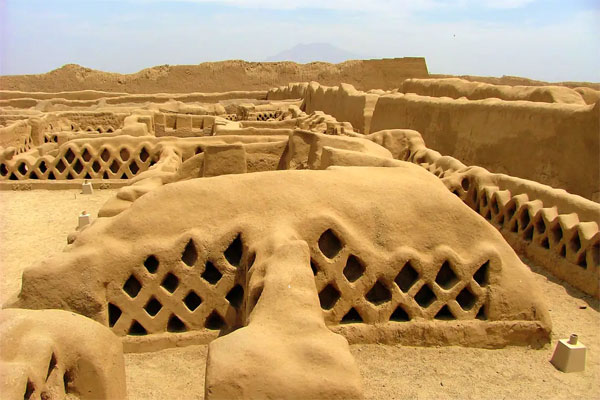
Trujillo bisects the remnants of Chan Chan, a sprawling adobe city built by the Chimú culture between 1000 and1476 AD and preserved by the desert conditions. As you drive in, you might notice clusters of reeds among the sun-baked earth — remains of ponds that once served as Chan Chan’s water supply. With the high mudbrick walls glowing golden in the late afternoon sun, it feels more Valley of the Kings than Peruvian edifice. It all seems inscrutable at first, but your eyes gradually home in on the details. Some areas have intricate friezes of geometric and zoomorphic designs along with lattice-like walling that lets in breezes from the nearby ocean.
El Brujo
 |
 |
We visited On the Explorer. From Chiclayo it’s around a two-hour drive to El Brujo, a truncated, stepped pyramid complex created by the Moche culture (200 BC to 600 AD). At moments on this journey, you’d be forgiven for thinking you’d wandered into a desert-like version of Southeast Asia: the highway splices paddy fields, rice being a staple part of the diet in the coastal north. Look for great bags of it being sold by the roadside. You then follow the Pan-American Highway south, moving out of the desert and into the surprisingly verdant Chicama Valley with its maize and asparagus plantations. Snow-white cattle egrets pick their way through the stalks.
El Brujo archaeological complex, where an extraordinary mural adorns a Moche pyramid. Also visit the Señora de Cao Museum, housing the tattooed mummy of the first ruler of the Moche civilization, the Lady of Cao.
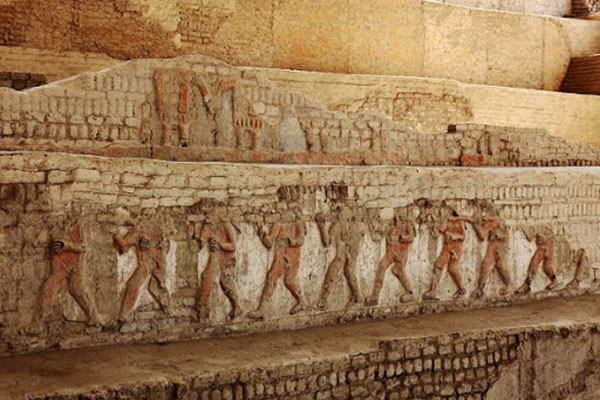
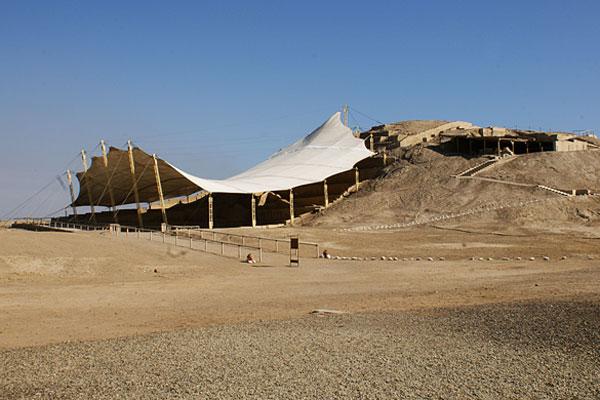
El Brujo rises out of nowhere at the end of a long minor road that comes out at the slate-grey Pacific — the background rumble of its waves accompanies you around the site. A lone armed guard stands watch at the top of the main ruin, the Temple Cao, like a knight prowling battlements. The Temple Cao itself is a 30 m (98 ft) high pyramid made out of adobe mudbricks. It’s a bizarre Russian doll of a structure in which outer temples were built around earlier ones by successive generations every time a priest (thought to have been the leaders of Moche society) died. El Brujo’s strangeness is immediate. An area in front of the Temple Cao appears sprinkled with bits of pottery and other archaeological detritus. But a closer glance reveals a white lump to be a human pelvic bone. Around it lie scraps of tattered cloth — original Moche textiles, preserved in centuries of dust. ‘We can’t walk there,’ said my guide, Janette, matter-of-factly. ‘A lot of this place is still being investigated.’ Archaeology in northern Peru is thrillingly in the raw. Giant friezes embellish the temple façades. One depicts a line of well-endowed prisoners being led to sacrificial slaughter. ‘We think the victims were made to drink a hallucinatory brew that made them… stand to attention,’ said Janette, with a wry smile. Then she pointed to another set of bas-reliefs. ‘Look: human foot bones.’ I squinted at some dancer-like figures. Sure enough, lumps of whitish bone slotted into the wall, forming the figures’ ankles.
Cajamarca
 |
 |
The drive from Leymebamba to Cajamarca , a boutique colonial town set in a fertile dairy-farming valley, is long — around nine hours of snaking mountain road. However, the only traffic you’re likely to encounter is free-roaming livestock. My driver pulled over at times to let me walk for a little way along the empty road and admire the views. The Andes rise up around you, the mountainsides flecked with splashes of magenta from wild bougainvillea and indigo blue from jacaranda. There’s also the odd brownish patch where farmers have lit fires, believing the smoke will bring rain.
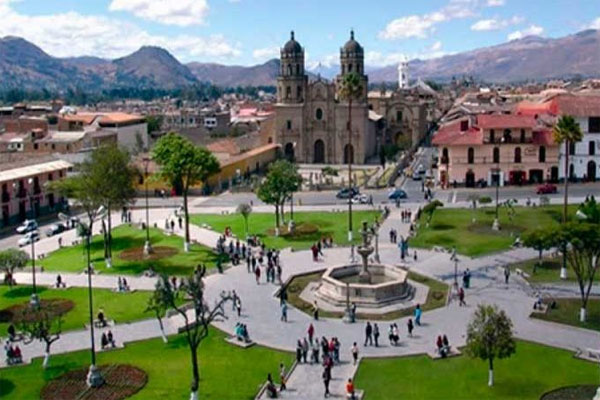
This pleasantly walkable cluster of cobblestone streets has a large, fountained central plaza that acts as the town’s de facto living room. Just off this main square, hidden away amid plateresque churches and other colonial relics, is the Cuarto del Rescate (Ransom Room). Inca emperor Atahualpa bargained with Pizarro to fill this room with treasure in exchange for his freedom. Peek through the trapezoidal doorway and you’ll see niches where idols and war trophies were kept, as well as the stone on which Atahualpa was eventually executed. Precisely tessellated stonework aside, it’s an unremarkable ruin, but a good guide can bring it to life. Mine, Manuel, regaled me with (unapologetically biased) tales of how Atahualpa verbally sparred with Pizarro, exposing the conquistador’s illiteracy.
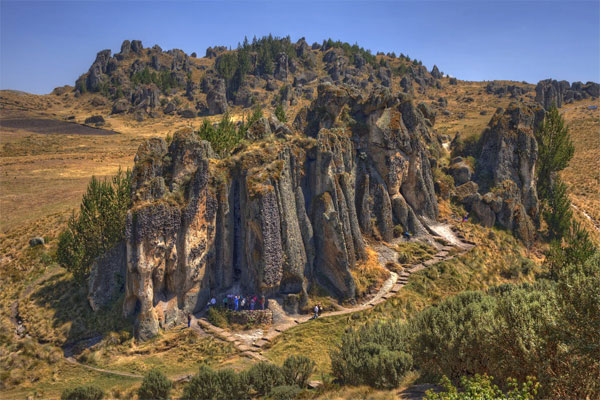
Cumbe Mayo. Reaching this site created by the Cajamarca culture (circa 500 to 1000 AD) involves a 45-minute drive out of Cajamarca up a bumpy, chicaning mountain road, the altimeter ticking up to 3,500 m . As you climb, you’ll glimpse highland women wearing traditional dress of wide skirts and rainbow-patterned shawls. They sport tall straw hats in place of the squatter, bowler styles seen in the south. Cumbe Mayo (‘thin stream’ in Quechua) is the well-preserved remains of a pre-Inca aqueduct or canal. Like Revash, it’s less of a ruin, more of a good walk. You pass through a winding dale peppered with gorse-like yellow bushes, the air ringing with the cawing of Andean rockpeckers. Spiked crowns of glacially sculpted columns known as Las Frailones (the Tall Friars) rise up around the dale, some standing up to 60 m (196 ft). Their surfaces have eroded into shapes resembling human faces. The local explanation for their humanoid appearance is livelier: they were originally wrongdoers who were petrified in an electrical storm sent by Pachakamac, the Inca creator-god. Manuel led me to an area where the canal disappeared under a weighty boulder, or rather an altar. Surprisingly, Cumbe Mayo’s water wasn’t used for irrigation but for religious rituals. Manuel pointed out where the straight-sided channel suddenly entered a couple of carefully crafted zig-zags, which represented the sacred staircase, or the path to heaven.
Leymebamba
 |
 |
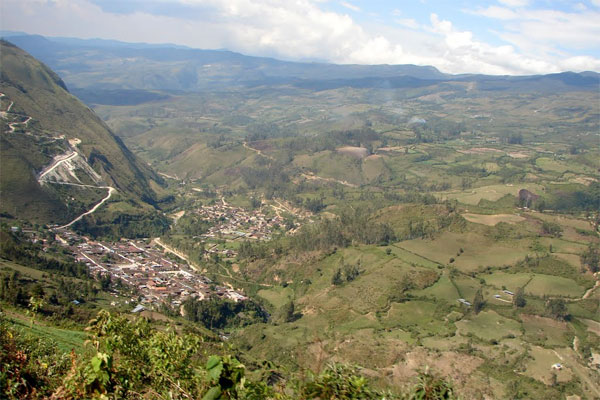
Travel to the small mountain town of Leymebamba to see a cache of over 200 mummies discovered in a nearby cave by grave robbers. Believed to be between 500 and 1,000 years old, the mummies are extraordinarily well-preserved and many retain their original textiles and grave goods, painting a vivid picture of the ancient Chachapoya civilisation to which they belonged.
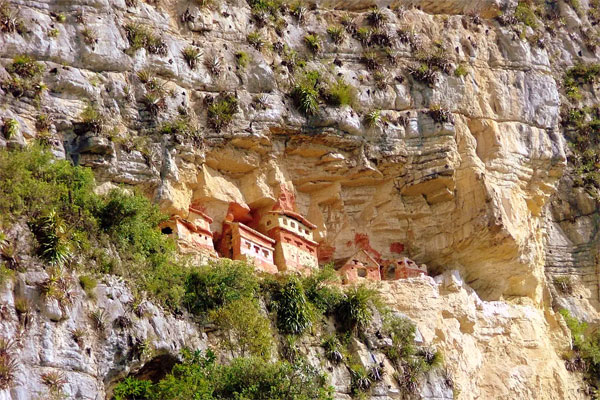
Revash is 90 minute drive from Leymebamba. and is less archaeological ruin, more scenic experience. The only way to witness this 13th-century burial site of the Revash culture is on foot. The wide, paved trail begins in a modest highland village, and you’ll pass through outlying homes and smallholdings before reaching a cliff-edge. Itinerant chickens, schoolchildren dwarfed by enormous backpacks, and the occasional villager leading a pony share the first section of path with you. You then traverse the cliff’s flanks on a narrow, stony track to reach a viewing platform. Opposite and slightly above sit chullpas (funerary buildings or tombs) constructed into an overhang on an impregnable-looking limestone cliff face. In fact, most of the tombs were looted by huaqueros (grave robbers or treasure hunters), leaving only skeletal remains inside. But the chullpas, which resemble miniature reddish mudbrick cottages, are largely intact, along with a series of red pictograms. Their meanings have been largely lost, but one is thought to represent a sacred feline figure.
Kuelap
 |
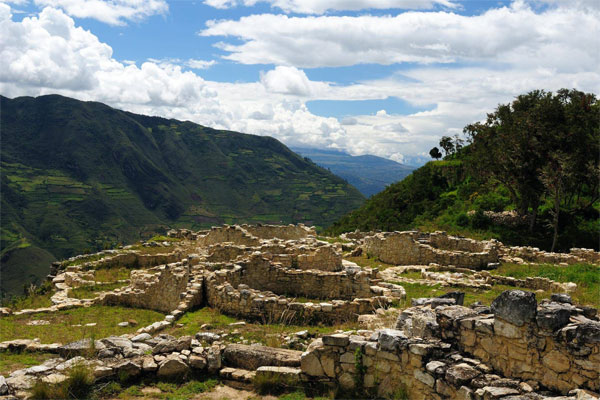 |
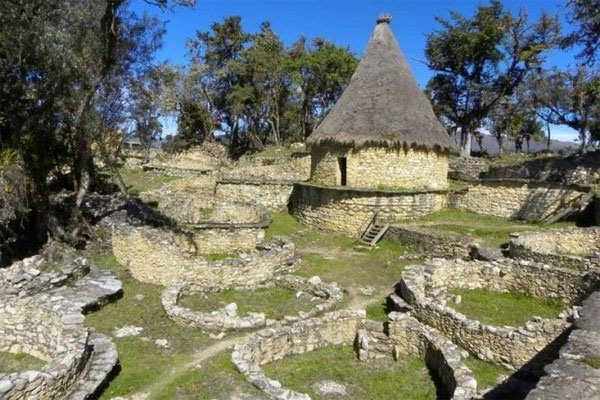
The Chachapoya culture (800 to 1476 AD — the name roughly translates to ‘cloud warriors’, a possible reference to their foggy homeland) built this limestone brick settlement running directly north to south along an escarpment 3,000 m above sea level. It’s protected with backfilled walls 20 m high and looks like a fortress, though current thinking compares it to the Vatican, a religious or ceremonial nucleus whose walls signified power and prestige. All around the site lie yawning mountain passes, one with a great looping syncline visible in its exposed strata.
It is no exaggeration to say that in terms of archaeological significance, Kuelap is on a par with Machu Picchu. However, tucked away as it is in a little-visited mountain realm, it receives a tiny fraction of the visitors, meaning that those that do come are often met with the increasingly rare feeling of having an extraordinary treasure all to themselves. Leave the beaten track far behind to visit this remarkable site, quietly commanding a view from its mountain perch on the far edge of Andean civilisation. The complex contains around 400 circular stone houses, set across multiple levels and enclosed by a colossal wall – the largest stone structure in South America. Parts of the fortress are still thatched by a tangle of jungle plants, and bromeliads sneak between nooks in the stonework, all adding to the sense of stumbling upon an undiscovered ruin. The recently inaugurated Kuelap cable car adds a new dimension to a visit to the site and is sure to increase visitor numbers to the region - a welcome boost to the local economy. The telecabinas cross the valley in just 20 minutes, which means the overall journey time is about 30 minutes shorter than when travelling by road and the magnificent views across the valley ensure a scenic start to your Kuelap experience.
Inside the ramparts, cloudforest has partly reclaimed the ruins. Unlike Machu Picchu, Kuélap’s vegetation has been partly left to run wild. Trees, mosses, orchids and fuchsia have wiggled their way into the site’s drystone roundhouses in a way that reminded me of Cambodia’s Ta Prohm. The greenery helps wick away water, contributing to the site’s preservation. Other shapes emerge as you explore: a watchtower, buildings decorated with enigmatic friezes of zigzags and rhombuses, and an inverted cone-like construction named El Tintero (‘The Inkwell’). Its purpose has intrigued archaeologists; theories range from solar observatory to bone depository. Getting there is also fun: you take a 20-minute cable car trip over a forested gully with sweeping views of the surrounding mountains. Tip: minutes after you set off, look back at the rock face to glimpse some human remains — including a skull — stashed in difficult-to-reach burial niches. Kuélap is best visited en route from Gocta to the whitewashed highland town of Chachapoyas, which makes a pleasant base for exploring the area.
Chachapoyas
 |
 |
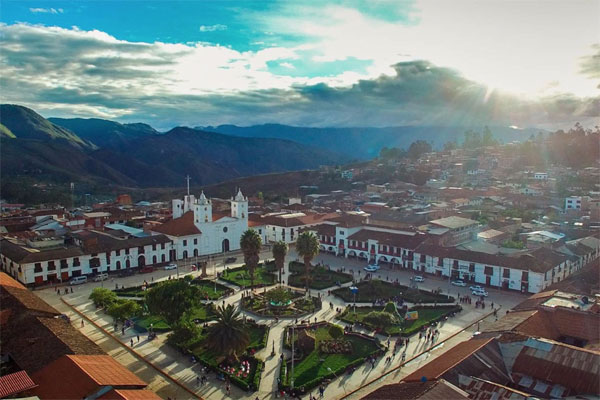
From the second you step out of the car in the Chachapoyas region the air feels moist, as if newly rinsed. Bromeliads cling to tree trunks, and you might catch hummingbirds flitting past, their wings beating a rapid tattoo. You’re now in cloudforest. It’s an area where weekly calendars revolve around the local cattle market. Legend and folklore abound: waterfalls are jealously guarded by mermaids, and the screech of an owl can curdle the blood of local people, for whom it signifies the ‘cry of death’. All mischief or unexplained happenings are attributed to sprite-like creatures called duende.
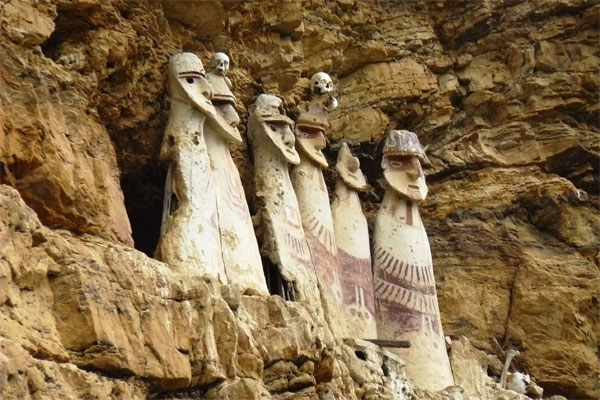
The mysterious figures standing guard over a cliff face at Karajía (45 km north of Cachapoyas) reveal a morbid detail on second glance: human skulls perch on top of their stern, mask-like faces. These are in fact the unique tombs of ancient chieftains, part of the Chachapoya culture which was contemporary with the Incas. Set into this remote and inaccessible cliff, the striking sarcophagi face east to greet the rising sun. The seven (originally eight) sarcophagi stand up to 2.5 meters tall, constructed of clay, sticks and grasses, with exaggerated jawlines. Their inaccessible location high above a river gorge has preserved them from destruction by looters. However, an earthquake toppled one of the original eight in 1928. They have been radiocarbon dated to the 15th century, coincident with the Inca conquest of the Chachapoya in the 1470s. The construction is painted white and overlaid with details of the body and adornment in yellow ochre and two red pigments, such as the feathered tunics and male genitalia visible on the Carajía purunmachus. Often the solid clay head will boast a second, smaller head atop it. The purunmachus of Carajía are unique because of the human skulls that sit atop their heads, visible in the photograph
Gocta Falls
 |
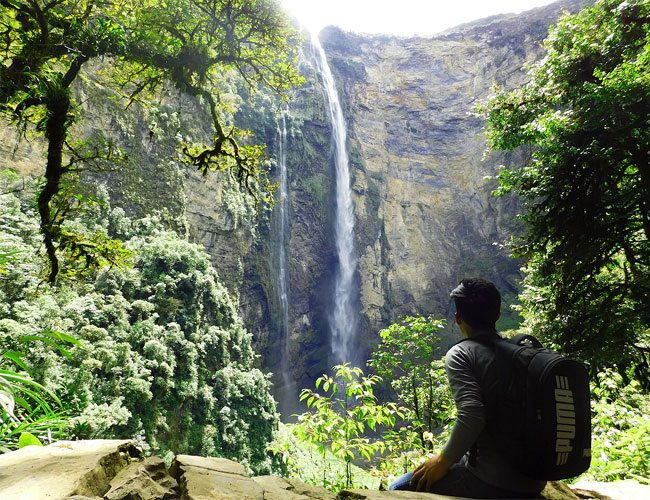 |
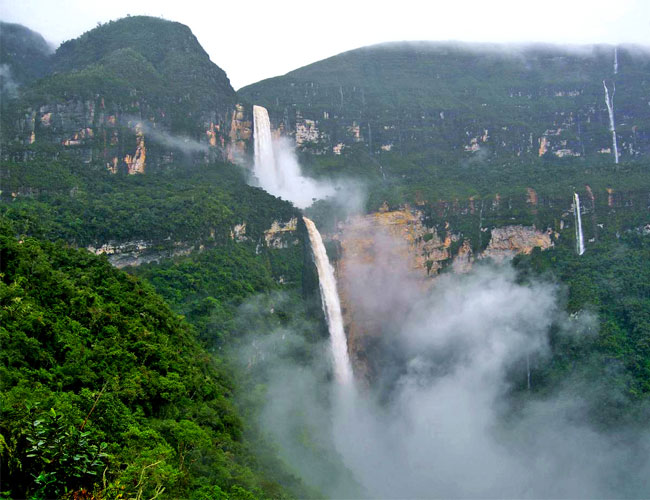
Gocta is a perennial waterfall with two drops. It flows into the Cocahuayco River. Although the waterfall had been well known to locals for centuries (it is in full view of a nearby village), its existence was not made known to the world until after an expedition made in 2002 by a German, Stefan Ziemendorff, with a group of Peruvian explorers. The waterfall, which can be seen from several kilometers away. In 2006, the Peruvian government announced that the area surrounding the falls would be developed as a tourist attraction. A small hotel was built 10 km from the base of the waterfall, with all rooms having views of the waterfall. Tourists can now hike the trails by foot or horse to the misty base of the waterfall. The nearby town of Chachapoyas is located at an altitude of 2,235 meters . The waterfall is at a slightly higher altitude and thus clouds can be seen to occasionally eclipse part of the view. Depending on who you believe, they are between 5 and 18th highest in the world
Here is an updated review as we went yesterday (2023). We drove to Cocachimba. You park on the square opposite the ticket counter which is in the middle of the village. You get a reduction if over 60 - PEN15. Otherwise an adult is PEN20 - cash only. You are asked to sign a disclaimer about you are happy to walk alone. You then walk up the hill to the entry of path which is about 100m away. Take water, insect repellant and sun cream. - you'll be asked to fill in your details so if you get lost, hopefully they come looking for you. There is a map on here of the paths - the one from Cocachima is number 2. Maybe save the map to your phone. This walk, walk 2, is described as Easy/Facil but that's a bit an underestimation. I am 64 and fit and walk 7kms every day but I would describe the walk as intermediate at least - it's up and down a lot and it's not always an easy terrain. It took us 1hour 45mins to get to the falls and the same to get back. My phone told me it was 11kms there and back.
It is an impressive water fall standing 771 meters high, one of the world's highest. The water flow was low during our visit making it less impressive that it could have been but it was still worth the trek. We stayed in Chachapoyas . There is about an hour's drive to Cocachimba where the trek to the base of the lower falls begins. It is about 10 km to the falls and back, and the path is rugged and anything but flat. There are substantial climbs and descents involved and it is warm and humid amid in the subtropical fauna that blankets the mountain side. An alternative is to rent a horse and handler (see note below) that will escort you to within 2 km of the base of the falls and wait for you to return. Contrary to what several people told us, the last 2 km is not flat and has several climbs and descents before arriving at a mirador which presents fine views of the lower falls. A further hike of half a kilometer takes you to the base. The community that manages tourism at the falls has a stable on the main square and horses can be rented there. Cost at time of writing was 40 soles round trip. We booked our horses through the tour company which ensures availability upon arrival.
Chiclayo
 |
 |
From Cajamarca it’s a very long drive to the coast, swapping highland scenery for flatter, sandy coastal plains. The northern coast is a desert hinterland quite divorced from more familiar images of a green, mountainous Peru. Chiclayo is an unprepossessing town, little more than a base for exploring the nearby sites. That said, it does have some winsome quirks. Pop your head into the Mercado de Brujos (witches’ market), where witch-doctors ply the customer with a cabinet of curiosities: dried herbs, powders and packaged remedies claiming to cure a host of ills, from headaches to heartache. There are also stalls piled with luscious produce, from tuna (prickly pears) to lúcuma, a fleshy, nutty-caramel fruit beloved of northerners. Try it in ice-cream form.
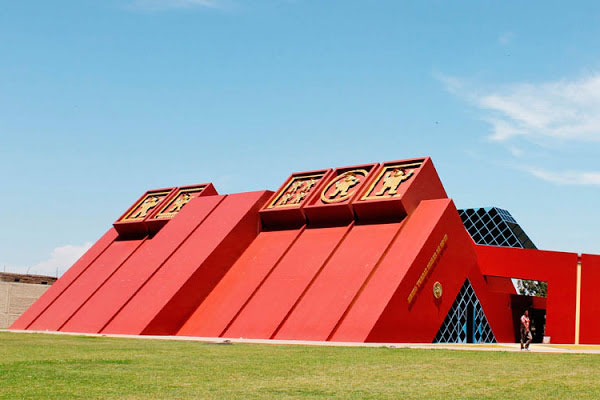
The town of Lambayeque lies around 20 minutes from Chiclayo by road, and it’s the proud owner of one of the best museums in South America. This scarlet Toblerone of a structure was purpose-built to house the priceless objects discovered by Peruvian archaeologist Walter Alva in the tomb of a Moche noble known as the Lord of Sipán. (The original burial site is about 48 km (30 miles) away). Representing one of the most important archaeological finds to be uncovered in the Americas within the last 30 years, the Sipán burial site contained the intact grave of an ancient Moche nobleman. This 'Lord of Sipán' was interred in full regalia, dripping in gold and precious metalwork. The original remains and grave goods are now housed in the excellent Royal Tombs of Sipán Museum, while the extensive burial grounds contain in situ replicas. No stay in Chiclayo would be complete without visiting these hugely important monuments.
Chaparri Bears
 |
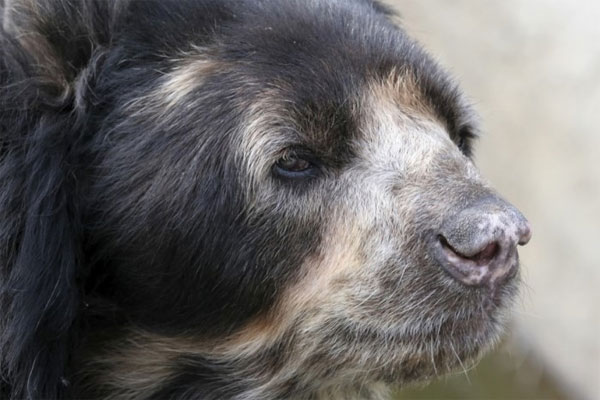 |
The Chaparri Conservation Area is a community-owned and managed reserve protecting a pristine area of grassy rolling hills, backed by vertical rock walls and studded with trees and cacti. The remote habitat shelters a wild population of threatened species including the Andean spectacled bear, and there is also a rescue centre for bears and other animals confiscated from illegal captivity. You can explore the park on a network of trails, providing excellent wildlife and bird-watching opportunities. To visit the rescue centre you need to spend a couple of days at Chaparri Eco-Lodge, a 90min drive from Chiclayo on the coast of northern Peru.
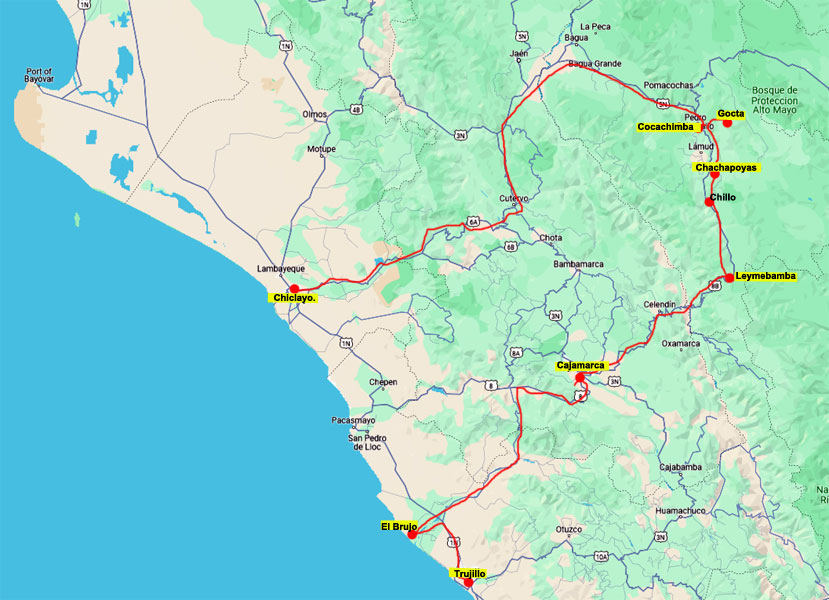
Day 1. Lima Discover the exciting new pre-Columbian site at Caral. Depart Lima by road for 3 hours to the UNESCO World Heritage Site, Caral, a city 26km inland from the coast founded circa 2,600BC. It is a monumental construction which is overturning many of the accepted theories of Peruvian archaeology. Indeed, it is believed to be the oldest city in South America. The arid site lies on the southern fringes of the Supe Valley, where further ruins are continually being revealed. There’s time to explore this remarkable ancient city which, in complete isolation from other cultures, managed to reach an unparalleled degree of sophistication, with religion as the binding factor of control and social cohesiveness. Return to Lima. Stay Antigua Miraflores (9.2 on booking.com)
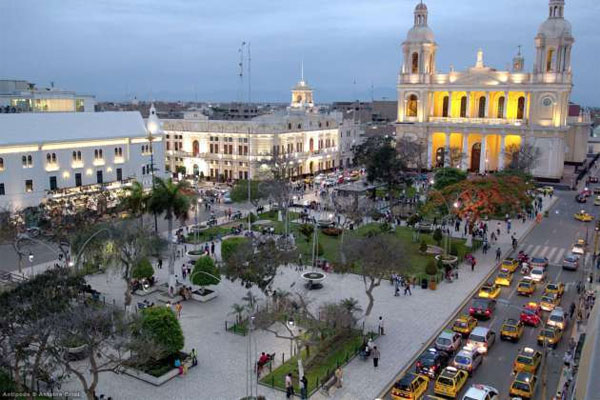
Day 2. Fly Trujillo City tour, visit the Archaeology Museum. Trujillo, set in a coastal oasis, in the morning. In the afternoon there’s a guided tour of this port city, which has an attractive colonial heart. Visit this historical centre including the ‘Plaza de Armas’ and its cathedral which was built in 1647. Surrounding it are a number of attractive mansions from the Spanish colonial era. Afterwards, continue to the archaeological museum run by the National University of Trujillo. The collection is installed in a 17th century house featuring seven rooms of artefacts from the pre-Columbian cultures of northern Peru, in chronological order. Casa Andina Std (8.1 on booking.com , not great, but could be worse)
Day 3. Trujillo. Visit Huacas del Sol and de la Luna and the Chimu city Chan Chan. Discover two temples 5km from Trujillo which date to the Moche Culture. Firstly visit the 1,500-year-old Huaca del Sol (Temple of the Sun), built with many millions of moulded adobe bricks. Directly opposite, the Huaca de la Luna (Temple of the Moon) dazzles with its decorated walls and impressive friezes. Have lunch at a restaurant on the coast at Huanchaco Bay, where fishermen continue to venture out to sea in fragile straw skiffs. In the afternoon, take a tour of Chan Chan, the extensive pre-Columbian adobe citadel of the Chimú empire, considered the largest of its kind at over 20km2. The partially restored city gives a true insight into ancient Peruvian civilisation. It was founded somewhere between 850 and 1300AD – no-one is sure, but it is older than the Inca empire which subdued it in 1470. At the apogée of the city’s influence it housed somewhere between 30,000 and 60,000 people and stored a wealth of gold, silver and pottery. Casa Andina Std (8.1 on booking.com , not great, but could be worse)
Day 4. Private road transfer to Cajamarca via El Brujo. Into the Andes: it’s a drive of at least 6 hours (excluding stops) to Cajamarca – a beautiful trip. The sinuous road rises from the austere rocky desert of the coast through green valleys carved between the steep mountain walls of the Andes. Simple farmsteads and livestock dot the bucolic landscape. En route to Cajamarca, you’ll visit El Brujo – “Temple of the Wizard”- a Moche-built complex of adobe temples, where the Señora de Cao, a mummified, tattooed female Moche leader was discovered, and is on display. The graceful colonial town of Cajamarca is the commercial centre of Peru’s northern highlands, and lies in a fertile, flowery region of cattle pasture. One of the biggest cities in the Inca empire, Cajamarca was the place where Pizarro ambushed and put to death the emperor, Atahualpa. Hotel Laguna Seca (8.8 on booking.com)
Day 5. Guided excursion to Cumbe Mayo. Within easy reach of the town are the pre-Inca aqueduct and petroglyphs of Cumbe Mayo, the highlight of today’s excursion. Visit the colonial hacienda of La Collpa, a cooperative farm owned by the Ministry of Agriculture, which breeds cattle and is set amidst attractive lakes and gardens. The tour then continues to the picturesque Andean village of Llacanora, visiting the nearby cave paintings, before arriving at the pre-Inca aqueducts of Cumbe Mayo. These water channels run for several kilometres and are said to be the oldest man-made structures in South America. From this isolated plain at 3,600m you can also appreciate the enormous and unusual rock formations of the area. The tour finishes with a visit to the pre-Inca ceremonial site of Layzón, which dates back to 200 BC. Hotel Laguna Seca (8.8 on booking.com)
Day 6. Road transfer to Leymebamba. By road to the agreeable town of Leymebamba. The spectacular route twists and turns through varied scenery – rolling hills, verdant farm terraces and arid mountain landscapes. Drive up to the lip of the Marañon Canyon before the long descent to the river below. Crossing the river at Balsas, you ascend 3,600m up the eastern side of the canyon. From the top, it is 50 minutes down to the village of Leymebamba. The drive takes about 9 hours in total, travelling via the market town of Celendín, famous for its straw hats.
Day 7 Visit Leymebamba Museum, the tombs of Revash and continue to Chillo. In the morning visit Leymebamba Museum which houses over 200 mummies found at Laguna de los Cóndores in 1997. Drive to Yerbabuena, followed by a 2-hour steady walk uphill to enjoy a close-up view of the spectacular tombs of Revash. This extremely photogenic site is perched on a yellow cliff and the tombs resemble miniature houses, with rust red pictographs. The site dates back to 1,200 AD. Continue on to Chillo, an hour’s drive away following the line of the Utcubamba River.
Day 8. Full day guided expedition to hilltop Kuelap. The Chachapoyan civilisation (from 0AD onwards) was organised into a system of chiefdoms which left behind a series of sophisticated cities even more grand and mysterious than those of the Incas. You start early for the two-hour drive up to the citadel of Kuelap. The all-weather road winds round the mountain opposite – and as you climb, you begin to appreciate the feat of manpower and engineering which built the towering walls that completely encircle the whole of the elongated hilltop above. For those looking for something a little bit different, the recently inaugurated Kuelap cable car adds a new dimension to a visit to the site. The telecabinas cross the valley in just 20 minutes, which means the overall journey time is about 30 minutes shorter than when travelling by road and the magnificent views across the valley ensure a scenic start to your Kuelap experience. When you get there you’ll be overwhelmed by the vast scale of the place. It’s atmospheric too: occasional shafts of sunlight may pierce the mist which swirls through the massive stone ramparts and cloud forest. You’re just a few degrees south of the equator, but here at 3,030m the climate is cold yet humid. The monumental limestone redoubts enclose temples and dozens of roundhouses the construction of which started in about 500AD. and continued up to Inca times. The renowned historian John Hemming describes Kuelap thus: “of all the ruins in Peru…the most spectacularly defended, the strongest by European standards of fortification”. Yet recently, speculation has focused on the site as being less of a defensible fortress and more of a ceremonial centre. Judge for yourself, as you explore the complex and enjoy the views over the river far below.
Day 9 Land transfer to Chachapoyas via Karajia. Take a morning drive to the tiny hamlet of Caserío Cruz Pata, the starting point for a 45-minute walk to the archaeological site at Karajía, the burial place of some of the elite Chachapoya warriors. The site is known for the colossal sculptured sarcophagi: some of these statues, carved into the rock face, are up to 2.5m tall, and intricately decorated. In the afternoon drive to Chachapoyas, a pleasant town which lies at a highland crossroads between the Amazon basin and the coast and is named after the mysterious Chachapoya civilisation, about which little is known but which has left a vast and rich archaeological heritage in the region Hotel Xalca (9.0 on booking.com)
Day 10 Trek to Gocta Falls. Travel by road to the small town of Gocta to begin the hike to the Gocta waterfall. Walk through a cloudforest, which is home to orchids, giant ferns, yellow-tailed woolly monkey, mountain sloths and the cocks-of-the-rock. Set over two drops measuring 771m, the fall was unknown outside the immediate surrounding villages until a German explorer spotted them from afar in 2005. He measured them and discovered they were the third-highest falls in Peru.. Overnight in Cocachimba, the closest village to the falls. Cotca Andes Lodge (8.7 on booking.com)
Day 11 Road transfer to Chiclayo. Continue by road to Chiclayo. It is a 9-10-hour drive through the narrow Utcubamba canyon and into the foothills of the Andes finally arriving at Chiclayo, an important port on the north Pacific coast. It is also situated in one of Peru’s most important agricultural regions. Los Portales Hotel (not on booking nor tripadvisor)
Day 12 Chiclayo - Visit Sipán, Tumbas Reales and Sican Museums, Túcume. Situated 35km from Chiclayo, Sipán is an extensive burial site of the Moche culture – a civilisation that flourished on the north coast of Peru between 100 and 800AD. Several royal tombs, filled with 1,700-year-old funeral offerings of the Moche culture, were uncovered containing pieces worked in precious metals, stone, pottery and textiles. The most startling discovery of the original excavation was of an entombed Moche leader, who became known as the Lord of Sipán. This was followed by the finding of an even older tomb – predating the former by 200 years. There is a site museum featuring details of the excavation work and replicas of some of the finds. Later, visit the Royal Tombs of Sipán Museum where the original pieces are now exhibited. The museum, 17km from Chiclayo, is a replica of the Moche pyramid under which the tombs were found. In the afternoon, travel to Ferreñafe, 18km north of Chiclayo, where the Sican Museum’s reconstruction of the Lambayeque tomb provides visitors with an unparalleled insight into this complex culture. The exhibition covers everything from daily domestic life to craftsmanship and manufacturing processes used to produce the distinctive gold and ceramic works of art. The museum also provides the perfect introduction to the next part of the excursion: a trip to Túcume, a vast Lambayeque archaeological complex, known as the Valley of the Pyramids. The settlement appears to date back to around 1,000-1,100AD with the largest and most impressive structures found in the monumental sector to the north and northeast of La Raya Mountain. Los Portales Hotel (not on booking nor tripadvisor)
Day 13 Chiclayo Chaparri Conservation Area and spectacled Bears. Travel to Chaparri Reserve, a conservation area in the cloud forest not far from Chiclayo. Under the protection of the local community, this habitat is regenerating naturally, allowing threatened species to recover. The Chaparri Ecolodge, where you will spend two nights, is a charming, family-friendly place to stay where adobe cottages blend in with the landscape. This is a truly back to nature experience: there are no TVs or mobile phones allowed, just a soundtrack of birdsong and the theatre of hummingbirds fluttering at dawn. Here you have an opportunity to see spectacled bears in their sanctuary enclosure, being prepared to return to their home in the wild, along with rehabilitated foxes, deer and condors. The place is alive with exotic birds too. There’s a real cornucopia of wildlife to enjoy, a magical delight for both children and adults alike. Chaparri Eco Lodge
Day 14 Fly to Lima and connect with international flight home.
We get off the ship on morning 4 Jan, and 14 days would get return Lima - Madrid on 18 Jan. Iberia have a reasonable Premium Economy that day Leaves 20.50 gets ot Mad at 14.00 . And Business is worth looking at when booking