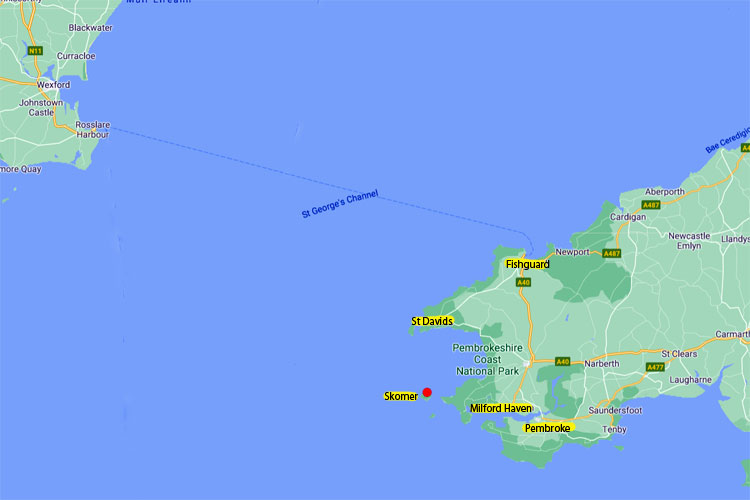
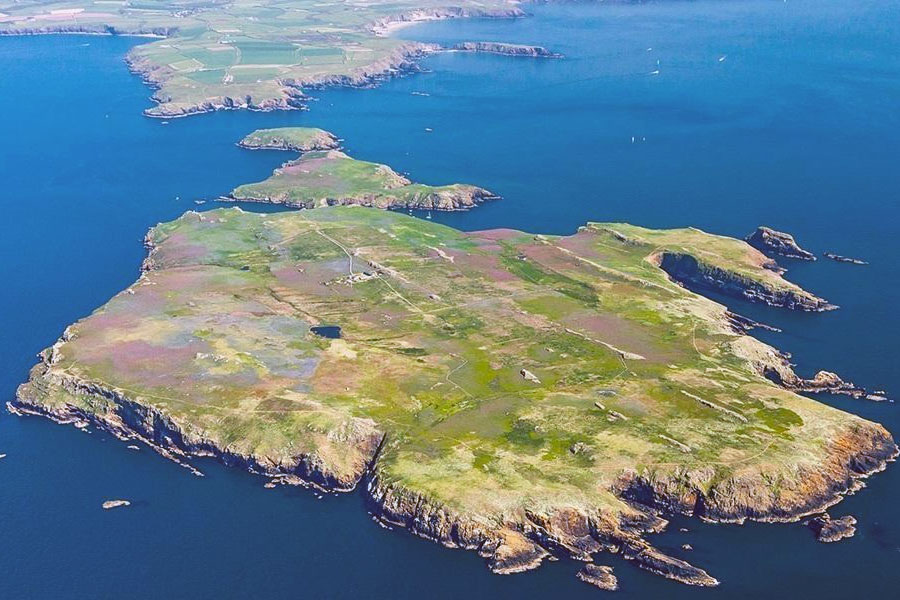
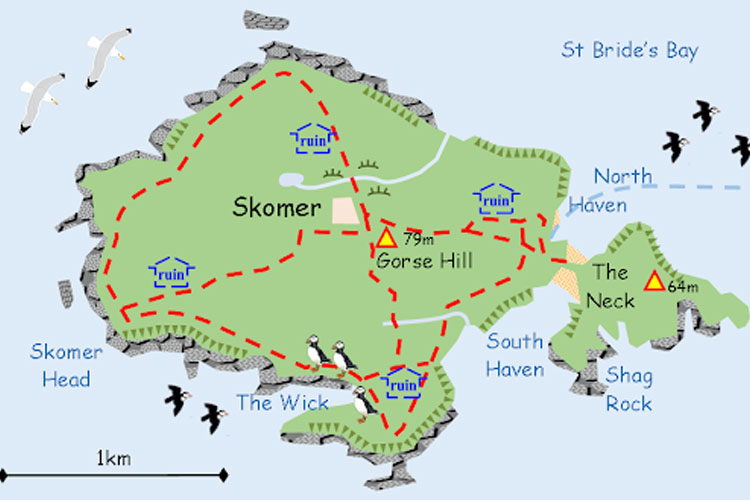
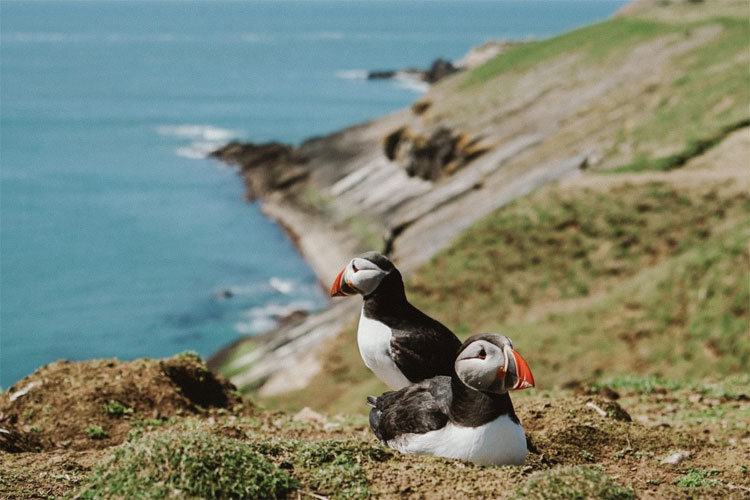
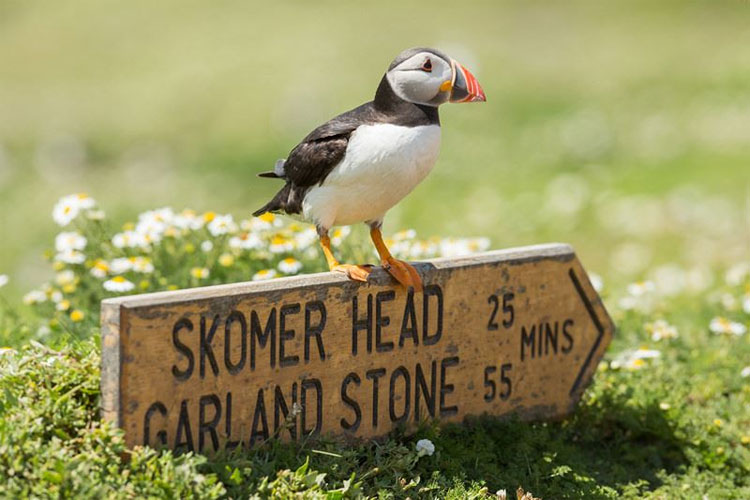
Located less than a mile off the beautiful Pembrokeshire coast, Skomer is truly a wonderful place to visit for the day or stay overnight. Well known for its Puffins, yet there is so much more to the bird paradise including Manx Shearwaters, Dolphins, Harbour Porpoises, Atlantic Grey Seal, Razorbills, Gannets, Fulmars and the unique Skomer Vole. The island is surrounded by some of the richest waters for wildlife off the British Isles from delightfully coloured sea slugs to magnificent cetaceans.
During spring the island is covered in a display of beautiful bluebells so vast that the whole island appears blue! The old fields, the valleys, the cliff tops. No part of the island is spared from this bluebell explosion. A shade of pink is added to the island’s colour during the summer as swathes of Campion cloak the landscape.
Skomer Island has been designated a National Nature Reserve, Ancient Monument and Full Maritime Nature Reserve. The old name for Skomer Island is Skalmeye –the Isle of the Sword or Cleft/Cloven Isle, possible referring to the island being nearly cut into two.
There is evidence of human occupation going back some 2,000-5,000 years with a farming community of up to 250 residents. Rabbits were introduced in the late 1200s and Skomer became a rabbit warren. Today it is better known for the Skomer vole, its bird life and the spring flowering of the bluebells -giving the whole island a blue touch.
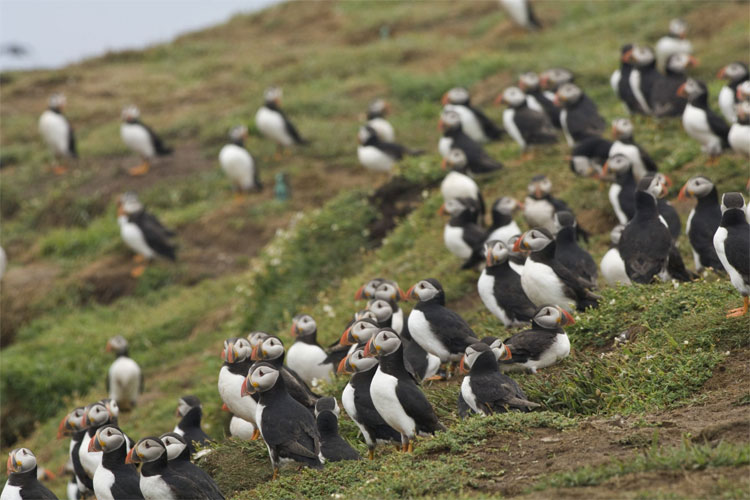
The island offers excellent habitats for seabirds nesting in the cliffs and ground nesting birds. The largest concentration of Manx Shearwaters worldwide is found on Skomer and neighboring Skokholm and more than 25,000 Atlantic Puffins have been counted here in one season.
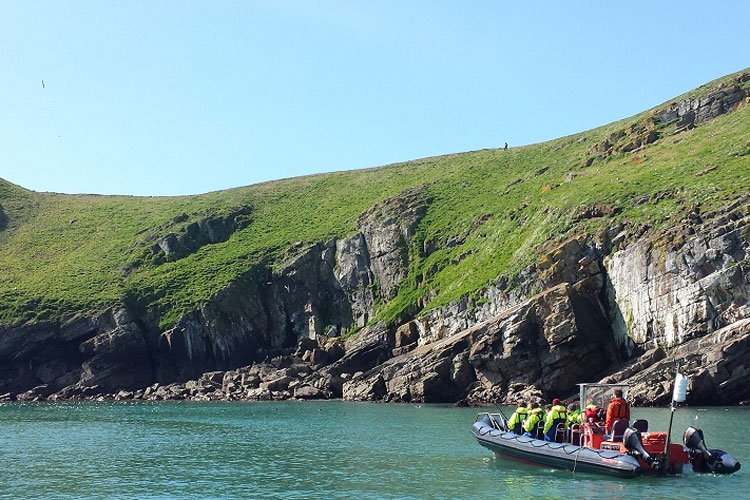
Access to the island is limited to 250 visitors per day, but Zodiac cruises permit to appreciate the seabird colonies in the cliffs much better. 172 bird species have been recorded, with Black-legged Kittiwakes, Razorbills, Northern Fulmars and several gull species showing the largest numbers. Northern Gannets visit from a neighboring breeding site and harbor porpoises and dolphins are occasionally seen, while grey seals can be seen year-round.
 |
 |
 |
 |
 |
 |