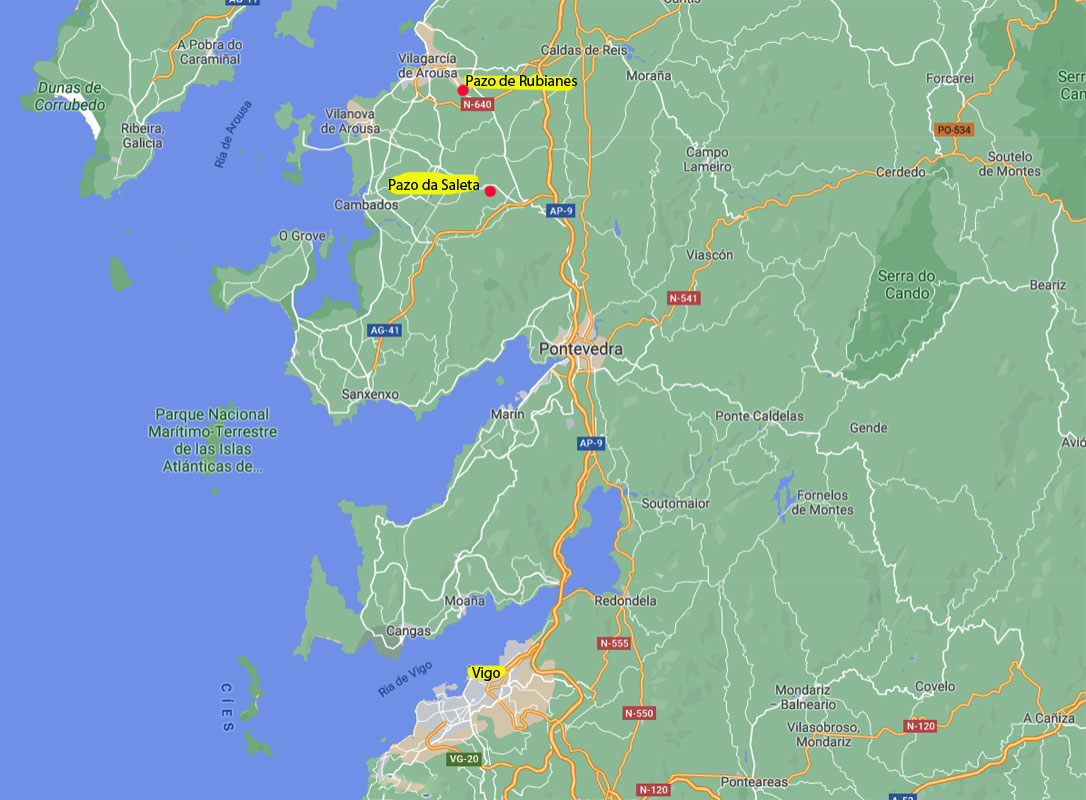
Located in in Galicia, in the northwest of Spain on the Portuguese border, Vigo is perhaps the country’s most underrated destination. Considered by many as “just’ an industrial fishing port (meaning the seafood rarely travels further than a mile to your plate), Vigo seduces everyone with its cuisine, landscape and warm Spanish welcomes. Like many of Galicia’s coastal towns, life in Vigo has been dictated by the ocean. The city dates back to Roman times and Romanesque architecture such as the churches of Santa María de Castrelos, Santiago de Bembrive, San Salvador de Coruxo can be found all over the city. From the 16th-18th centuries it became alive with commercial trade and buccaneers looking for sunken treasure. The town still enjoys its status as having sunken treasure in its waters, and debates about who would own this if ever discovered periodically colour local conversations.
The old town and fishermen’s quarter are worth exploring, although unfortunately with the port’s rapid expansion in the 20th century, many of the original fishermen’s houses were demolished. However, remnants of the city’s Medieval past are still visible and a trip along the Spanish-Portuguese border will reward you with the beautiful walled Medieval city of Tui and the Velansa Fortress. The 13th century fortress offers a splendid view of the fortified Cathedral of Tui on the opposite side of the River Miño. Mount Castro, a castle fortress actually in the city, commands a magnificent view of Vigo and the bay.
We are on the tour "Amazing Gardens and Galacian Mansions"
Visit the stunning gardens and manor homes of Galicia on this memorable excursion that also features a Spanish wine and food tasting.
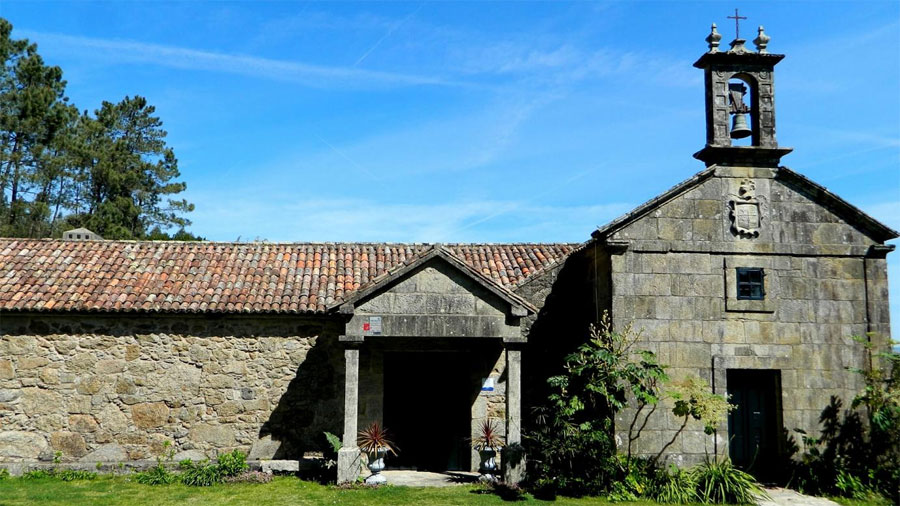
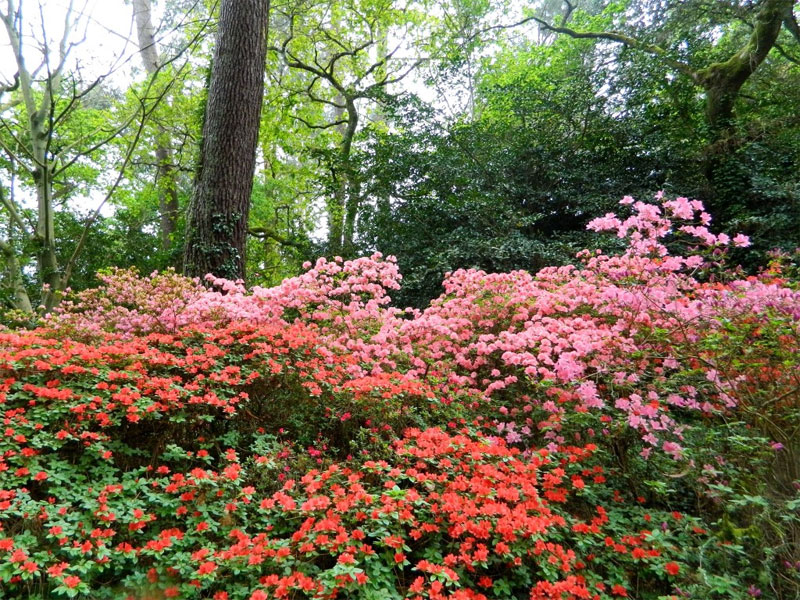
Departing the pier,drive 45 minutes to the magnificent Pazoda Saleta, a Galician manor dating from the eighteenth century. This pazo features a surprising garden considered " one of the largest private gardensin Spain" and recognized by the Spanish Committee of Man and Biosphere Program of UNESCO. Designed in 1970 by landscape architect Brenda Colvin, this massive garden currently has one of the most diverse botanical collections of Galicia with species from Australia,New Zealand, South Africa, South America, United States, and Asia. The garden is so vast that it cannot all be visited, extending to two hectares with a style typically English and picturesque, with wild, romantic and exuberant elements that integrate seamlessly into the beautifully sculpted landscape.
 |
 |
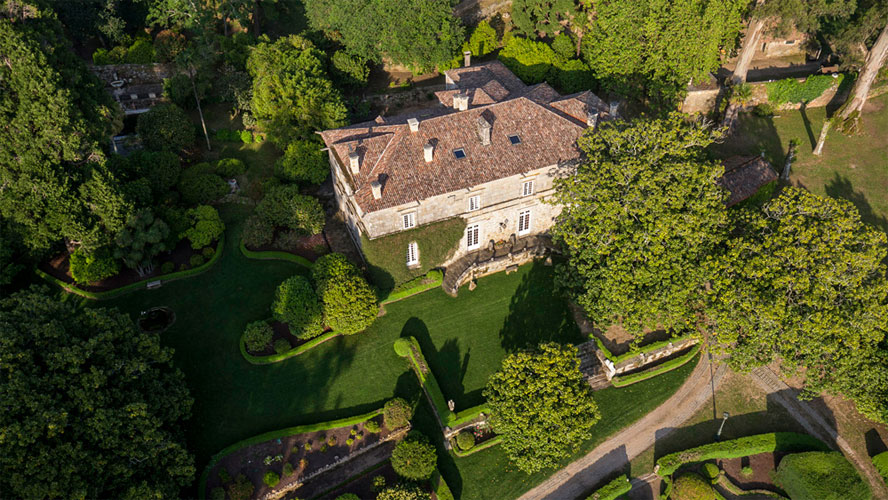
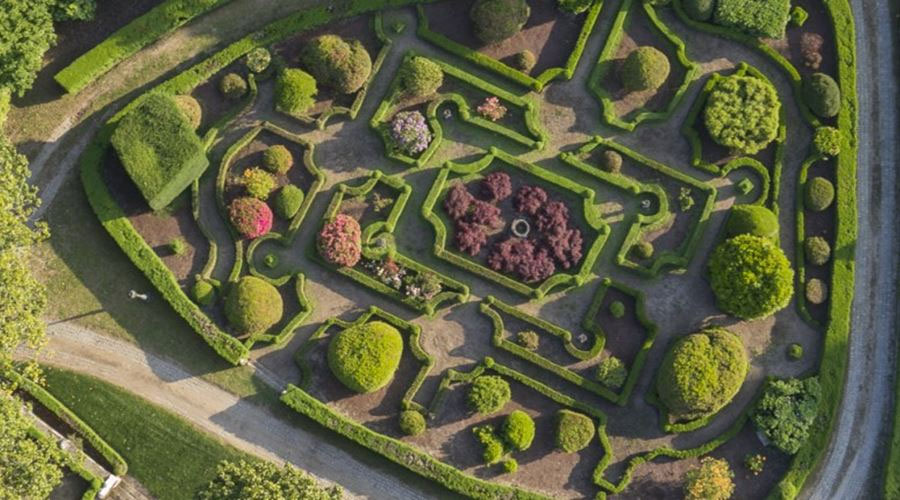
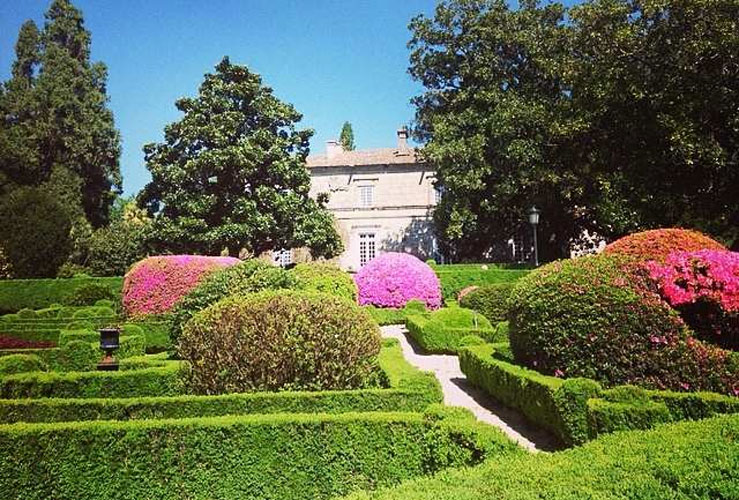
Also visit the impressive Pazo de Rubianes, located in the Arousa estuary (Pontevedra), home to one of the three official lordships in Spain.The main building was constructed in 15th century, though in the18th century the tower was pulled down and a summer residence with rectangular plan was created. The gardens, covering more than 11 hectares, have remarkable eucalyptus trees spanning 12meters, and also imposing olive and magnolia trees.Stroll the geometrical flower beds made in the French style, with sequoias and camphor trees punctuating the scenery.The garden's grandiose magnolias Magnolia grandiflora L. have been included in the Galician Monumental Tree Catalogue.As available,see the rooms inside Pazo Rubianes, and taste the wine made directly from the grapes of the Pazo together with some delicious tapas.
 |
 |
Make the return 1-hour drive to Vigo