Steep, stacked banks of evocative buildings and cobbled streets perch scenically over the River Duoro, in this authentic, atmospheric Portuguese city. Famed for its wine and bright azulejo tiles - which turn streets into art galleries - Oporto is a charming taste of the real Portugal. Wander the uneven paths of the country’s second-largest city, which are soaked with history, tradition and eye-catching details.
Start in the gorgeous, historic Ribeira neighbourhood at the River Douro, and walk up through tiny alleys and narrow streets lined with restaurants and cafes. Catch your breath with a coffee, and be sure to try the famous pastel de nata pastry as a sweet accompaniment. Enjoy views of the colourful city from the skeletal Ponte de Dom Luis I bridge. Its design might ring a bell - the structure was created by a student of Gustav Eiffel, and has a similar aesthetic to his famous tower creation.
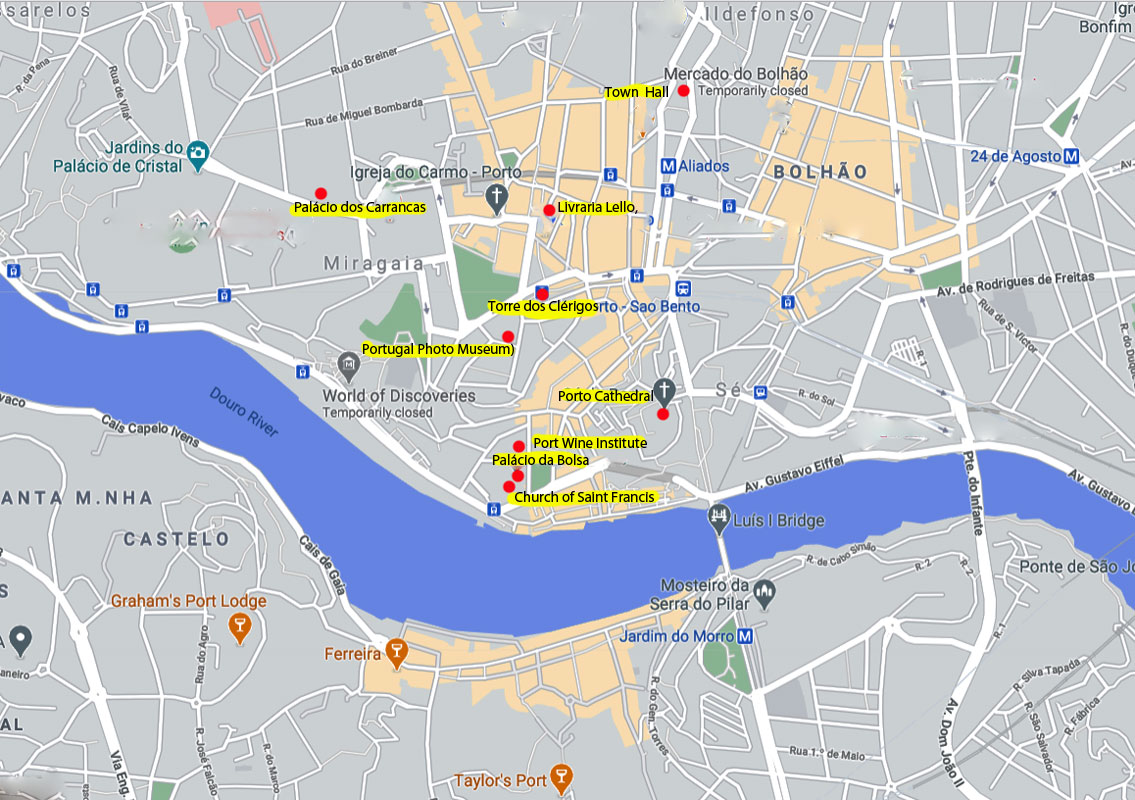
Porto Cathedral sits on a rise of steps, towering above the city and offering spectacular views down. The cloisters are a highlight - with beautiful mosaics of the renowned blue and white tiles gleaming.
If you’re hungry, the indulgent Francesinha sandwich will fill you up for days. A Portuguese take on French toast - it’s packed full of ham and slathered in cheese, egg and sauce. Or settle in for a feast on some of Portugal’s ubiquitous salted cod, Bacalhau. The climate nurtures the revered vineyards, which surround the city, helping to produce harvests of perfect grapes. Head out to landscapes coated in vineyards from the Douro Valley to try some of the finest local wines.
Porto is a mysterious city that reveals its charm to the visitor through time. Take your time, wander through the mazes and alleys of the city. Take in the old, bohemian spirit of the city. Hike through the Ribeira and Foz do Douro regions (the latter, at sunset). Porto may not be in every tourist's Iberian Peninsula itinerary, but it's well worth a visit if you want to see a city that has changed economically, but that has kept its old traditions.
If you want to visit several museums, consider the Porto Card which provides free access to several museums and further discounts, optionally also free public transport access.
City centre
West of city center
We are booked on trip to BRAGA & PENEDA DO GERêS NATIONAL PARK
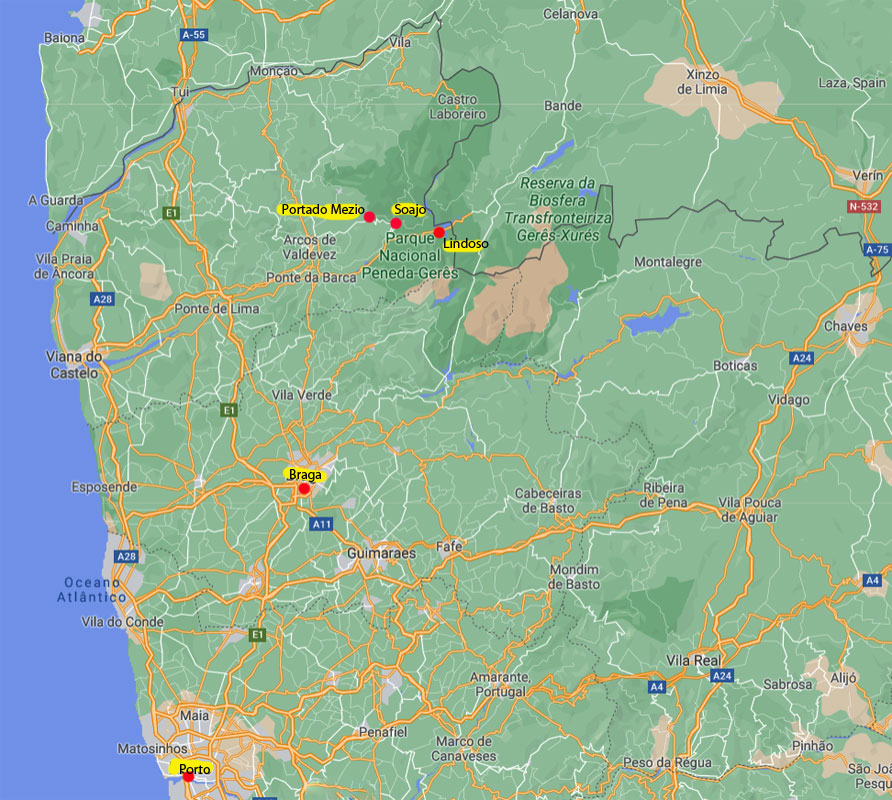
A 50 minute drive to the town of Braga, regarded as the religious centre of Portugal . Braga was founded by the Romans in the year16 B.C.and named "Bracara Augusta" in honor to the emperor Caesar Augusto. The Swabians made it the capital of Galécia in the 5th century, from where derived five Roman Roads, covering a vast territory from the North Douro until the Cantabrian.In the 8th century it was occupied by the Arabs and liberated in 1040. It later became the primary seat of the Kingdom of Castile and, until Portugal became independent from Spain in the late 1700s, the city was ruled by archbishops. Due to its history and number of churches, it was nicknamed the 'Portuguese Rome'.The architectural and cultural development of the city is closely intertwined with the Church's history and the combination of two important artistic periods -theRenaissance in the 1500s and the Baroque in the 1700s . See a perfect example of displaying of different styles in the Cathedral, or 'la Sé', a primitive Romanesque building that has been developed, restored and redecorated over the centuries
.From Braga ,head to the northwestern part of Portugal, the most preserved natural area of the country, with the Peneda Gerês National Park.One of the few places where we can still find untouched native forest, where mountains and forests come together with human life,and tradition and history meet nature, with Portuguese fauna and flora finding their way through old villages and roads.
Stop at"Portado Mezio",one of the five gates to the Peneda Gerês National Park,and entrance hall to the magnificen timmensity of the mountains and valleys of Soajo and Peneda. A territory so magnificent that UNESCO considers it a World Biosphere Reserve. Here enjoy a typical lunch based on local products.From here proceed to Soajo, an ancient village and a perfect postcard from North of Portugal. Then head to Lindoso, a small village inside the National Park famous for its castle and for having the biggest concentration of granaries in the Iberian Peninsula. An "espigueiro" (granary in Portuguese) is a traditional construction where people used to store corn to dry in the wind. At the end of your visit, commence your approximately 1.75-hour drive back to the ship.