
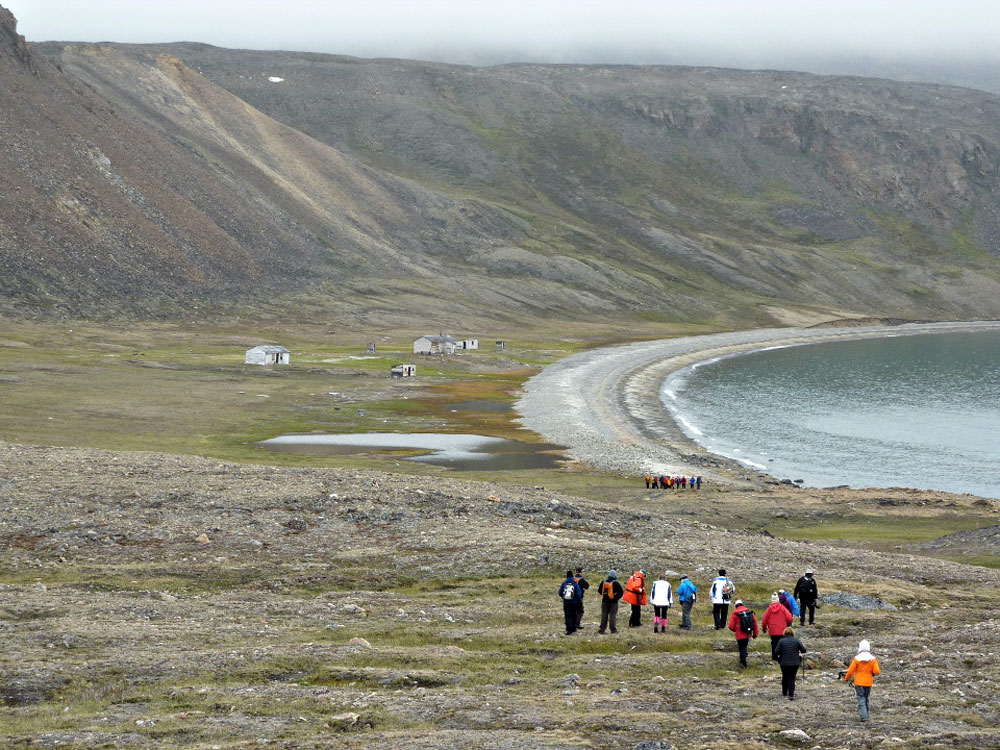
The ship anchored at Dundas Harbour before 7 am but we did not disembark in our zodiac group until after 9 am, ours being in the third group to depart.
An outpost was established at the harbour in August 1924 as part of a Canadian government presence intended to curb foreign whaling and other activity. The Hudson's Bay Company leased the outpost in 1933. The following year, 52 Inuit were relocated from Kinngait (then called Cape Dorset) to Dundas Harbour but they returned to the mainland later
The RCMP sent three constables to open the detachment at Dundas Harbour in August 1924, deposited there with fuel and provisions by the Canadian Government Ship Arctic: Constable E. Anstead in charge, with Constables G.T. Makinson and V. Maisonneuve. By official accounts, the buildings were “erected without mishap and the stores were placed in a storehouse situated about a quarter of a mile from the living quarters,” no doubt a precaution against marauding polar bears. They passed a quiet winter, seeing no one and scarcely any wildlife. They travelled only very little, due to the “inhospitable nature of the interior” of Devon Island and the rugged ice of the frozen sea. For the first three years of their existence at the post, the men did not even have radio contact with the south. They waited for the annual visit of a government ship to receive the year’s news.
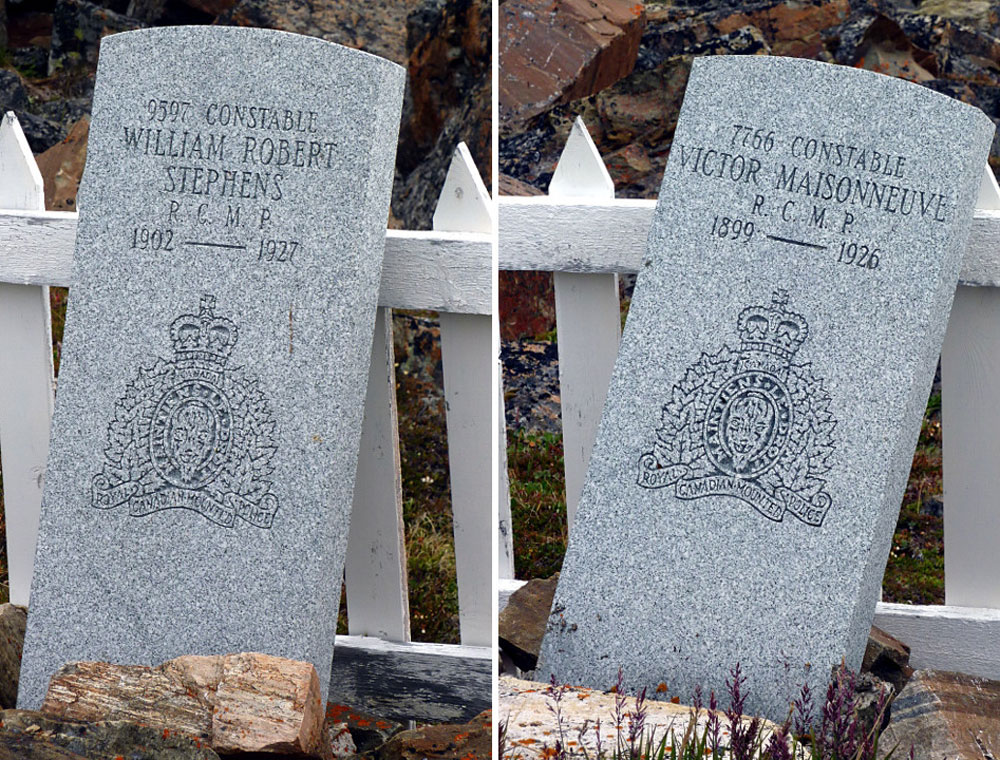
In 1926, the Constables pioneered a travel route across Devon Island, enabling patrols to shuttle between Craig Harbour and Dundas Harbour. Constable Maisonneuve, still there in the spring of 1926 but due to transfer out that summer, committed suicide on June 16. Another officer, Constable W.R. Stephens, shot himself by accident while walrus-hunting the next summer . Both of the men are buried in a small graveyard here.. It is difficult to know what really happened with the 2 deaths,: it is difficult to shoot yourself if hunting with a rifle, and thee was only one survivor of the 3 RCMP to tell the tale. There also lies the young daughter of one of the Inuit families hired to help with the policing duties, primarily patrols of the surrounding country.
While the RCMP was operating its post at Dundas Harbour, the Hudson’s Bay Company was given permission to establish a post on Devon Island, for which purpose the Company entered into a lease agreement with the RCMP to use the now empty buildings at Dundas Harbour. On its way north in 1934 with the new traders bound for the Devon Island post, the HBC’s ship Nascopie picked up three Inuit families from each of Cape Dorset, Pangnirtung, and Pond Inlet, along with their dogs and sleds and other belongings, and delivered them all to the facility at Dundas Harbour. They were voluntarily or involuntarily attracted by the promise of good hunting and fox trapping in the region.
The next summer, ice and weather hampered the resupply at Dundas Harbour, so the Company decided the concept was unworkable, and when the Nascopie got there in August 1936, it picked everyone up and abandoned the HBC’s effort at Dundas Harbour. The Inuit associated with that short-lived post were given the option to return home, which one Pond Inlet family and all three Pangnirtung families did. The others all moved with the HBC to re-establish a post at Arctic Bay, and some of those ultimately moved farther west to new posts, first at Fort Ross and then at Spence Bay (now Taloyoak). Recently there has been an apology by the Canadian government for this treatment of the inuit - qtcommission , it is worth reading.
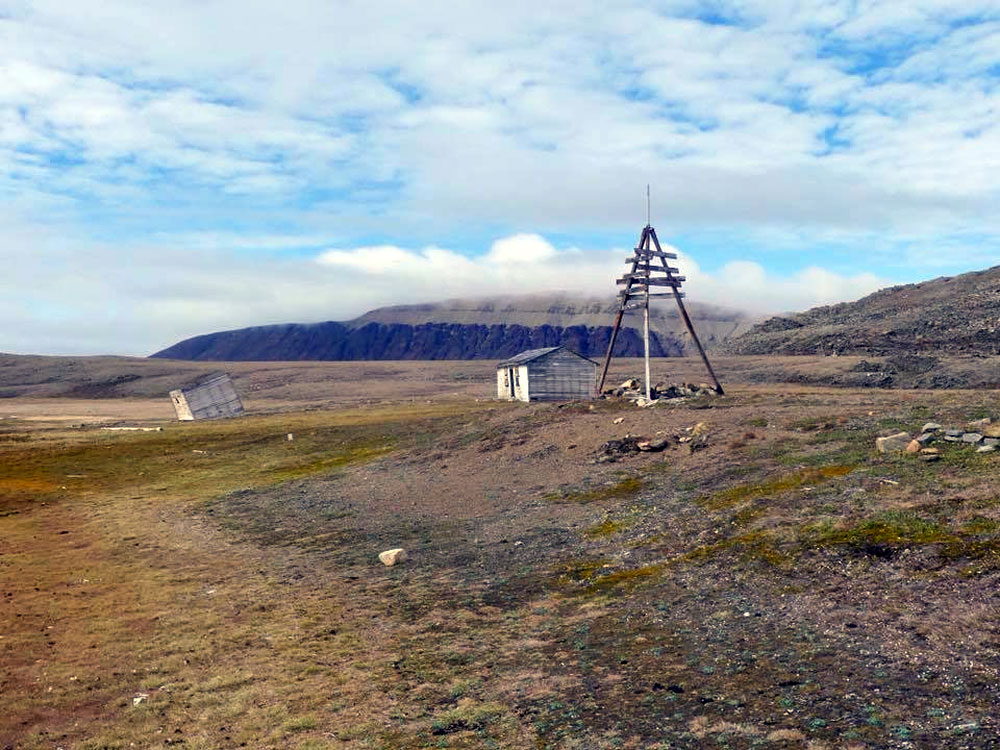
Dundas Harbour was populated again in the late 1940s to maintain a patrol presence, but it was closed again in 1951 due to ice difficulties. The Royal Canadian Mounted Police detachment was moved to Craig Harbour on southern Ellesmere Island.Only the ruins of a few buildings remain, along with one of the northernmost cemeteries in Canada.
We had a wet landing and then a walk over a beach and then across very boggy land to the old, Royal Canadian mounted police hut

For a larger photo, click on the thumbnail photo below
 |
 |
 |
 |
 |
 |
 |
 |
 |
 |
 |
 |
 |
 |
 |
 |
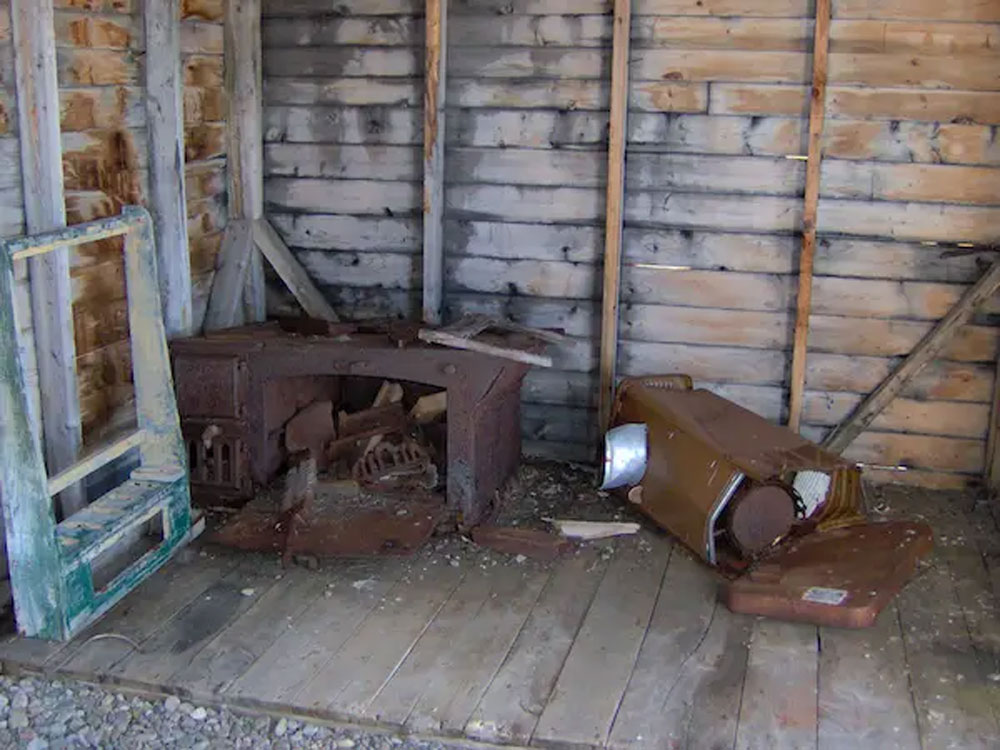
We were able to enter the old police hut and then walked up to the cemetery where two of the three police officers were buried along with one inuit. Chris found the walk quite challenging and resolved to take two sticks out on future walks.
Back on the Silver Wind, pleasant lunch once again in the restaurant and then a quiet afternoon. We visited the expedition desk to express our dismay at such scanty historical information provided by the ship: Dave Katz the expedition leader, was somewhat pathetic in his response to us, but Mila seemed to appreciate our input .
Then Chris tried to get help from reception for her lack of ability in sending WhatsApp photographs, the receptionist were quite helpful but in the long run we have problems with internet access for anything other than basic email reception.
There was lecture by Ryan on avian bird flu, quite interesting, but what did it have to do with the north west passage ? Too very odd lectures at recap and briefing with that by Philip on the ice conditions and that of Ryan, trying to be very funny, talking about Ernest Hemingway‘s connection to the north west passage. Then cocktails and canopies in the panorama lounge before a dinner in which we eventually got to talk to the chef . Coffee in Dolce Vita as the panorama lounge was yet again invaded by the bingo hordes.