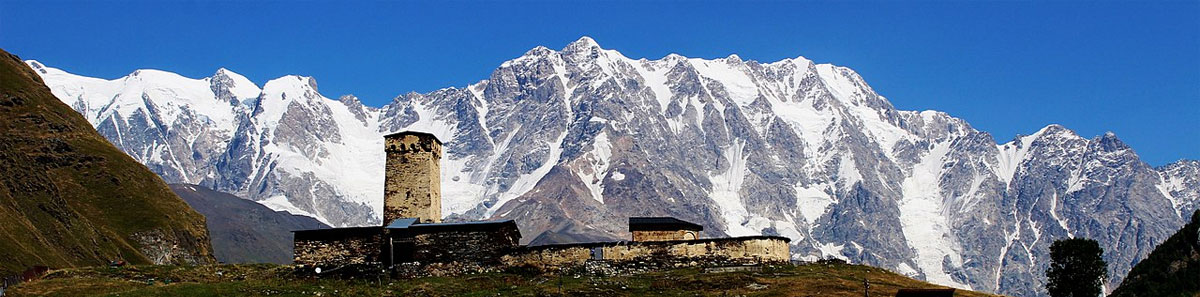
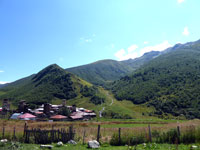
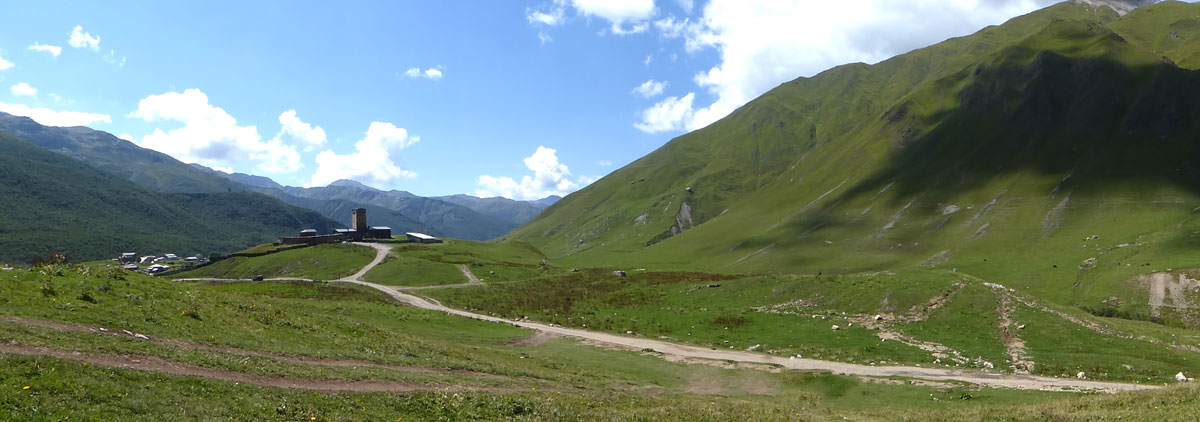
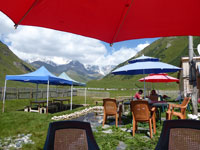
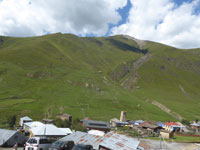
Ushguli is a community of four villages located at the head of the Enguri gorge in Svaneti, Georgia. Recognized as the Upper Svaneti UNESCO World Heritage Site, Ushguli is one of the highest continuously inhabited settlements in Europe. Compared to somewhat more developed towns like Mestia, Ushguli has been "saved" by its particularly inaccessible location, which helped preserve the villages' timeless feel.
Ushguli is located at an altitude of 2,100 metres near the foot of Shkhara, one of the highest summits of the Greater Caucasus mountains. About 70 families (about 200 people) live in the area, enough to support a small school. The area is snow-covered for 6 months of the year, and often the road to Mestia is impassable.
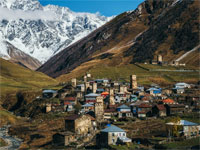
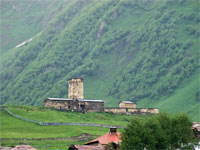
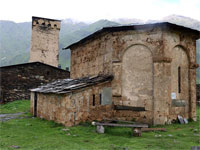
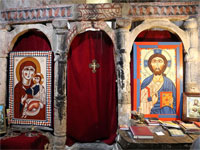
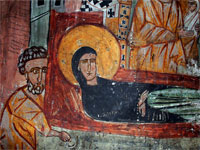
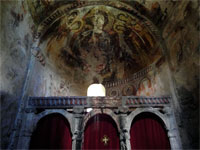
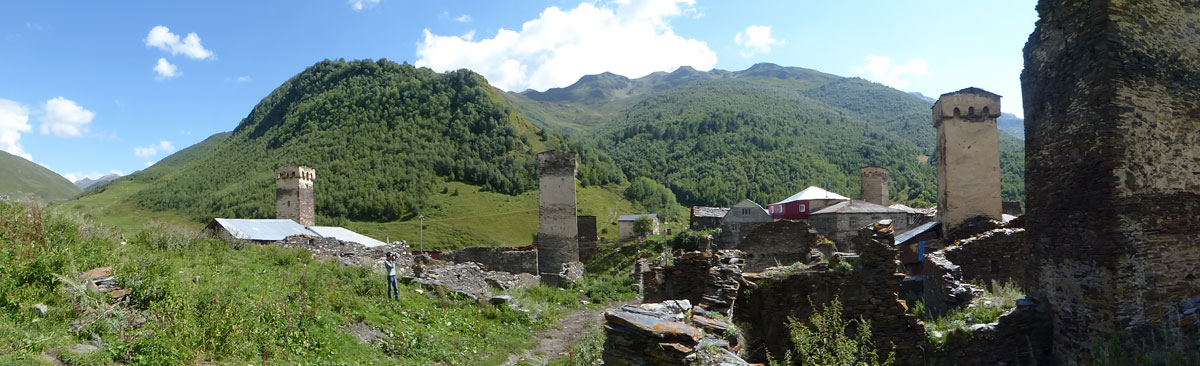
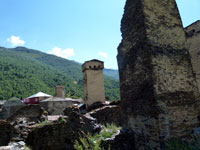
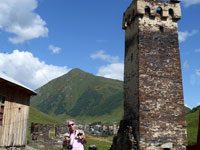
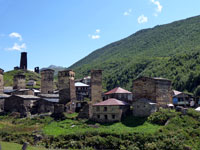
Typical Svaneti defensive tower houses are found throughout the village. The Ushguli Chapel located on a hilltop near the village dates back to the 12th century.
Tough and taciturn, speaking an archaic Georgian dialect and practicing a version of Orthodox Christianity owing much to earlier beliefs, Svan cultural identity is distinct. Isolated by an annual six-month winter, until the early 2000s Svaneti remained a lawless place; blood feuds and banditry were widespread. Stymied by its remote location, Ushguli had long endured a terminal decline, as harsh conditions combined with instability to drive depopulation. However, as Georgia has emerged from post-Soviet chaos, security has returned to Georgia, including Svaneti.
Once the country’s most dangerous road, the route to regional capital Mestia has now been upgraded. In Zhibiani, one of the larger villages, ancient Svan defensive towers overlook the winding lanes and wandering livestock. Substantial stone buildings of two stories, upper floors fronted by enclosed wooden balconies, lie in varying states of repair. Despite its rough and ready nature, for centuries Svaneti proved a safe and remote repository for art and learning, usually under the protection of Orthodox monasteries. On a hill overlooking Zhibiani, against the backdrop of Shkhara’s snowy 5,000m massif, LaMaria monastery remains home to the Bishop of Upper Svaneti. A bearded and robed monk rings the peel of three bells every day.
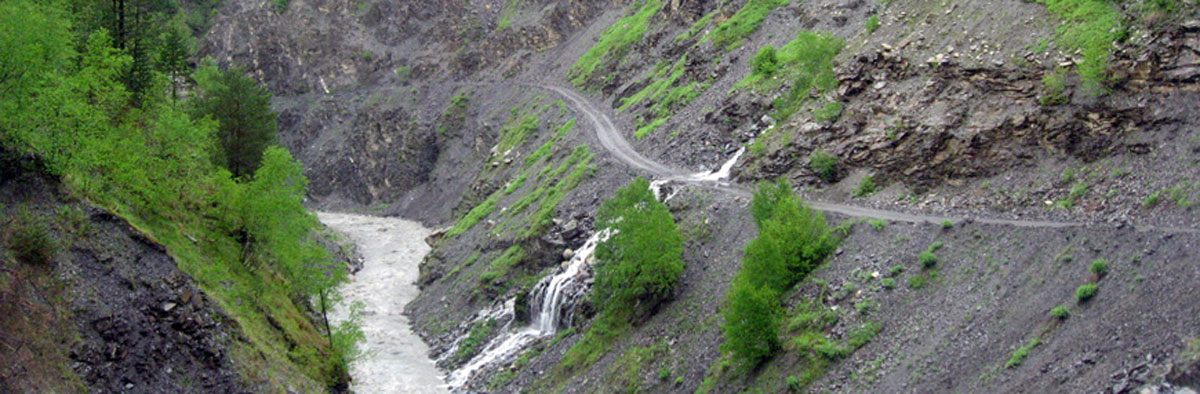
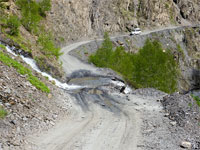
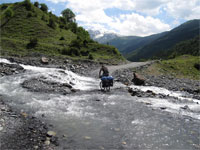
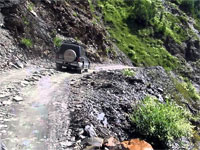
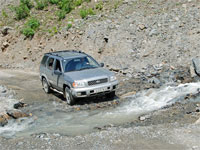
Actually the road is still pretty ropey, but they are making strides on getting it concreted - in fact the worst bits were where they were installing new roadway. Then there were a number of landslides, which will continue to be endemic on this road. It is the sort of experience that one can fondly look back on, but at the time was not that much fun
Click on any of the thumbnails to get a bigger version of the picture
 |
 |
 |
 |
 |
 |
 |
 |
 |
 |
 |
 |
 |
 |
 |
 |
 |
 |
 |
 |
Ushguli
Click on any of the thumbnails to get a bigger version of the picture
 |
 |
 |
 |
 |
 |
 |
 |
 |
 |
 |
 |
 |
 |
 |
A virtually abandoned Merkmeli village near Ushguli
Click on any of the thumbnails to get a bigger version of the picture
 |
 |
 |
 |
 |
 |
 |
 |
Then back to Mestia, via the same, the only road, that goes from Mestia to Ushguli
Click on any of the thumbnails to get a bigger version of the picture
 |
 |
 |
 |
Back to Mestia for a night, then on to Batumi