 |
 |
 |
 |
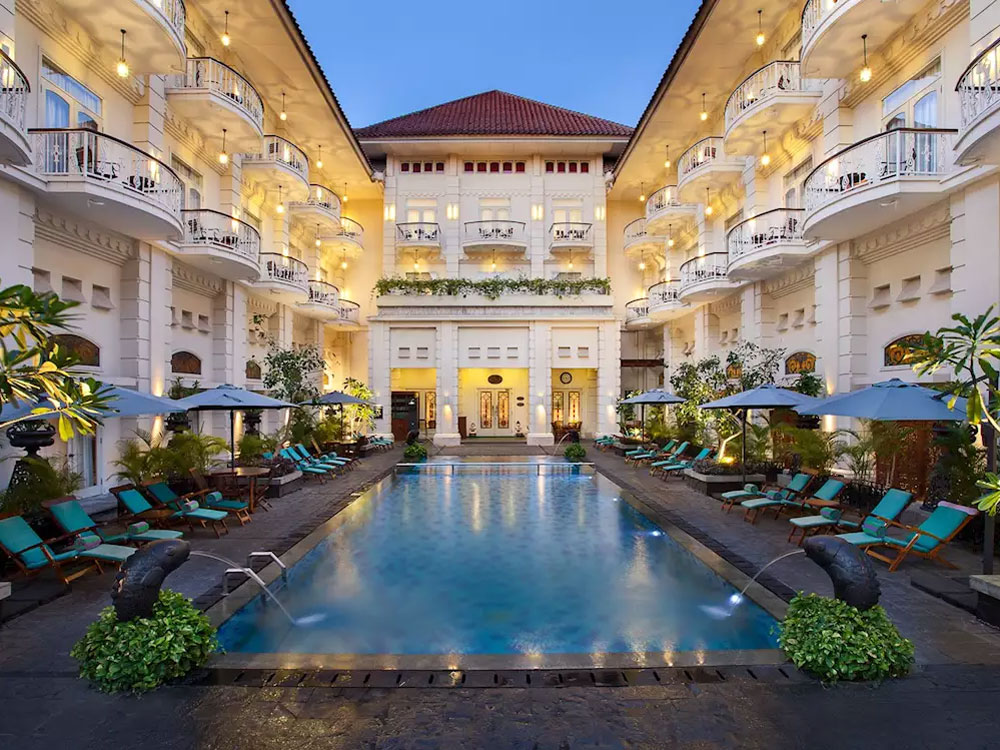
The Phoenix Hotel was commissioned by a rich Chinese merchant was originally used as a private residence, becoming a hotel in 1951. Today it retains its colonial charm, combining Asian and European styles, and its elegantly designed rooms offer a comfortable, sophisticated retreat from the streets of Yogyakarta. Located in the popular Malioboro district, it's just a short walk away from the city's many cultural sites. The Phoenix Hotel provides a haven from the hustle and bustle of Yogyakarta’s buzzing markets, with a beautiful outdoor swimming pool and a number of in-house dining options to enjoy.
The one main restaurant, Paprika, is located next to the swimming pool in the open-air courtyard, serving a variety of international cuisine including Indonesian, Chinese and Western dishes. Make sure to try the hotel's signature dish, bakpia, which are round, sweet pastry rolls filled with beans or meat, known locally as the ‘Oleh Oleh’. There are also two bars, 1918’s Terrace Lounge, which is open all day, and Vino Bar for evening drinks. The breakfast buffet is served each morning from 6am in Paprika and room service can be ordered at any time of the day.
|
|
|
|
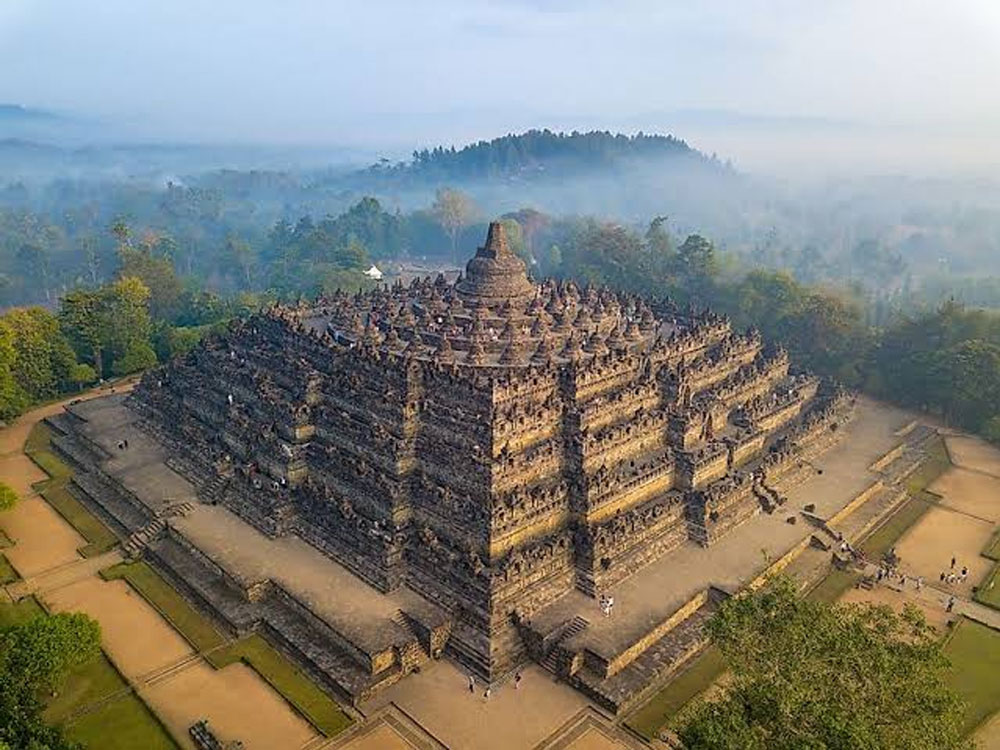
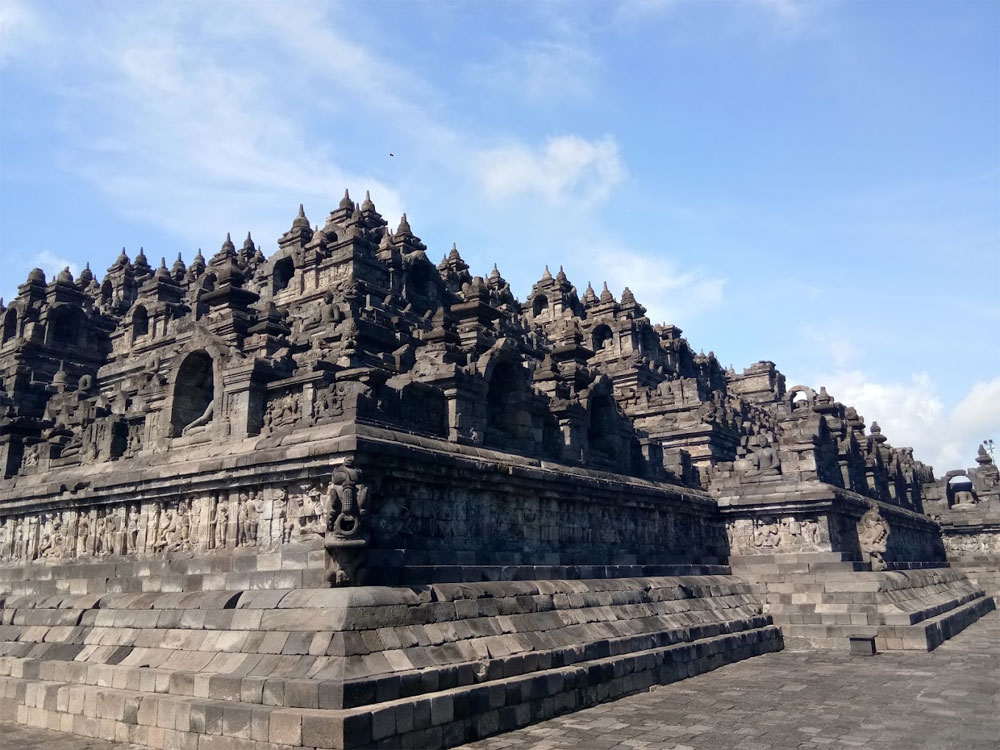
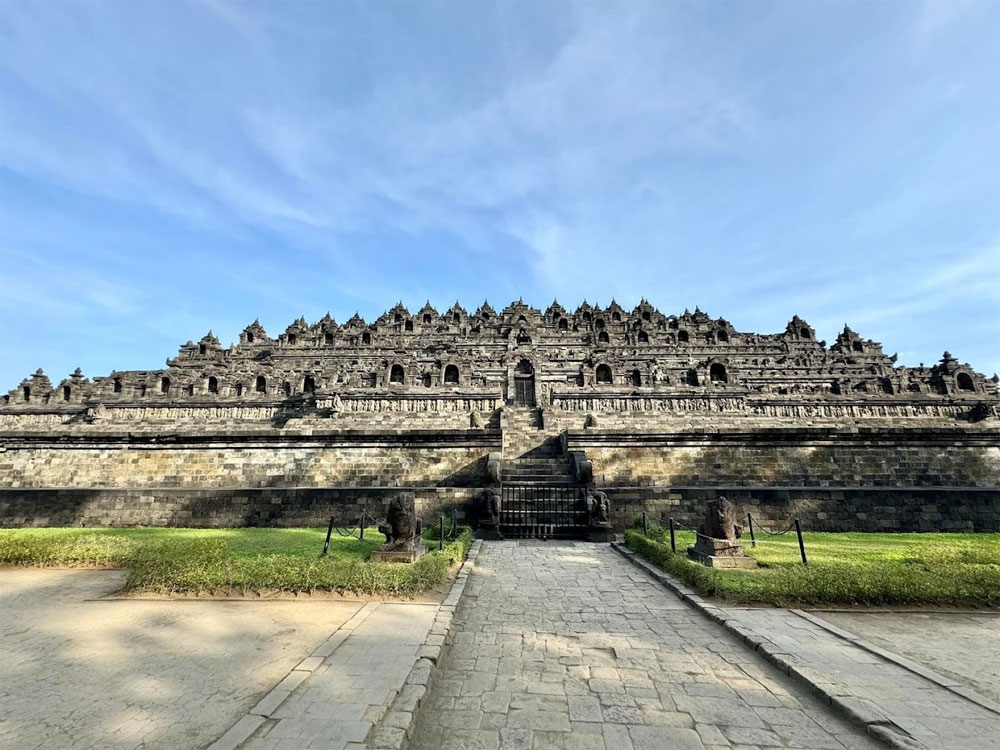
Close to Yogyakarta is the vast pyramidal structure of Borobudur, one of Southeast Asia’s greatest religious relics. Detailed galleries and terraces tell tales of ancient gods and immortalising long-resolved battles.
Built in the 8th century, the Borobudur monument stands serenely on a hill overlooking lush fields. Your guide will describe the religious, historical and architectural background of the monument. Being one of Java's most visited attractions, the weekends can be busy so weekday trips are recommended.
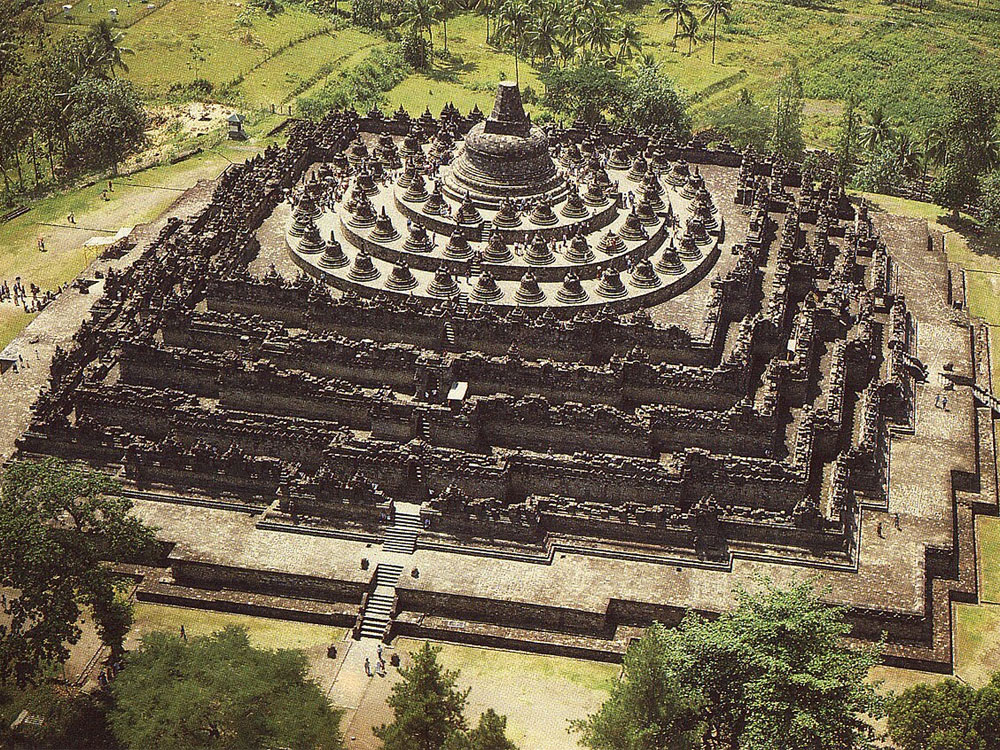
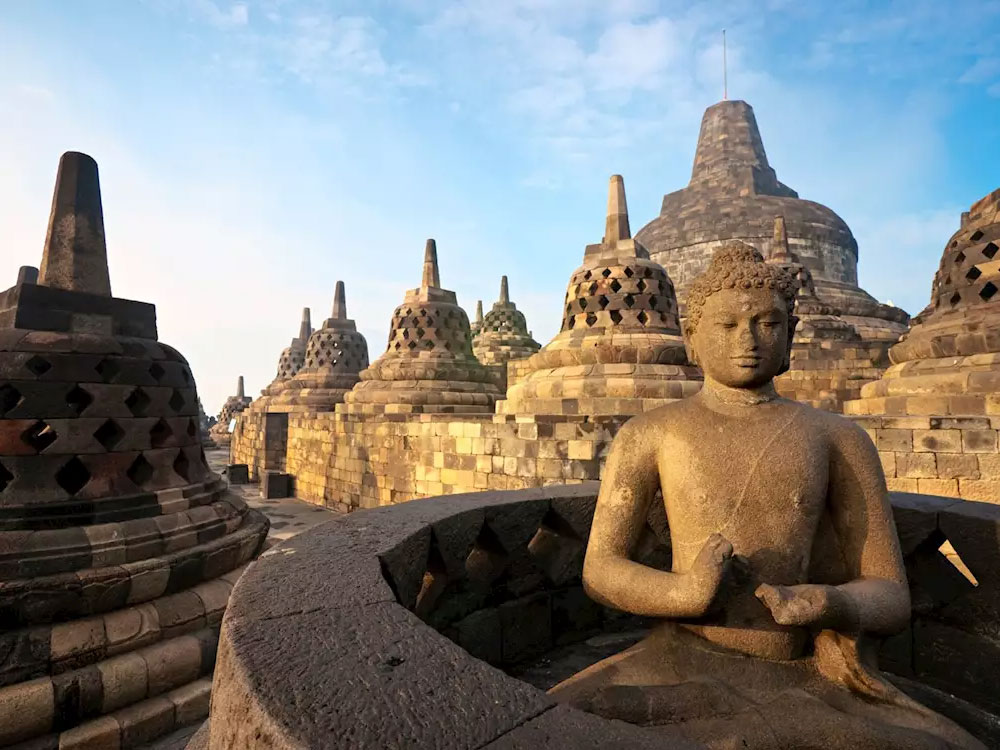
This famous Buddhist temple, dating from the 8th and 9th centuries, is located in central Java. It was built in three tiers: a pyramidal base with five concentric square terraces, the trunk of a cone with three circular platforms and, at the top, a monumental stupa. The walls and balustrades are decorated with fine low reliefs, covering a total surface area of 2,500 m2. Around the circular platforms are 72 openwork stupas, each containing a statue of the Buddha.
Borobudur lay hidden for centuries under layers of volcanic ash and jungle growth. The facts behind its abandonment remain a mystery. It is not known when active use of the monument and Buddhist pilgrimage to it ceased. Sometime between 928 and 1006,
Following its discovery, the restoration began in 1907, led by Theodoor van Erp , a Dutch army engineer.The first seven months of restoration were occupied with excavating the grounds around the monument to find missing Buddha heads and panel stones. Van Erp dismantled and rebuilt the upper three circular platforms and stupas.The restoration was completed in 1911 and at first glance, Borobudur had been restored to its old glory
The monument was restored with UNESCO's help in the 1970s.
The monument is the single most visited tourist attraction in Indonesia. In 1974, 260,000 tourists visited the monument; 36,000 of them were foreigners. The figure climbed to 2.5 million visitors annually (80% were domestic tourists) in the mid-1990s, before the country's economic crisis. Annual Volume: In 2024, approximately 1.3 million tourists visited the complex (including around 200,000 international visitors). To control numbers access is by a timed ticket
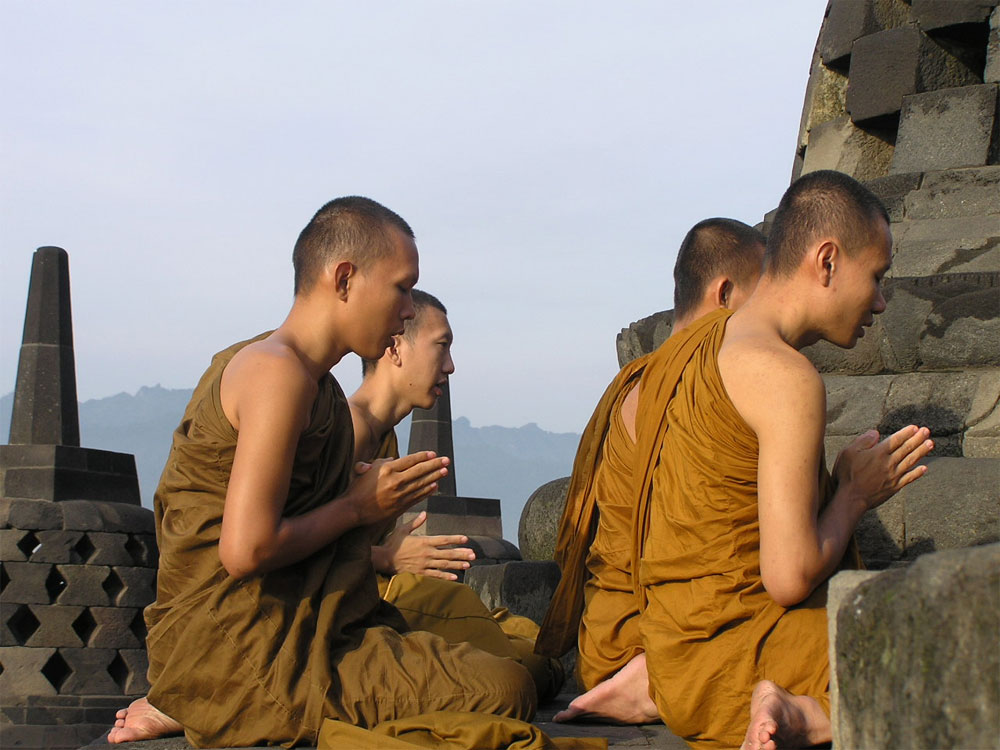
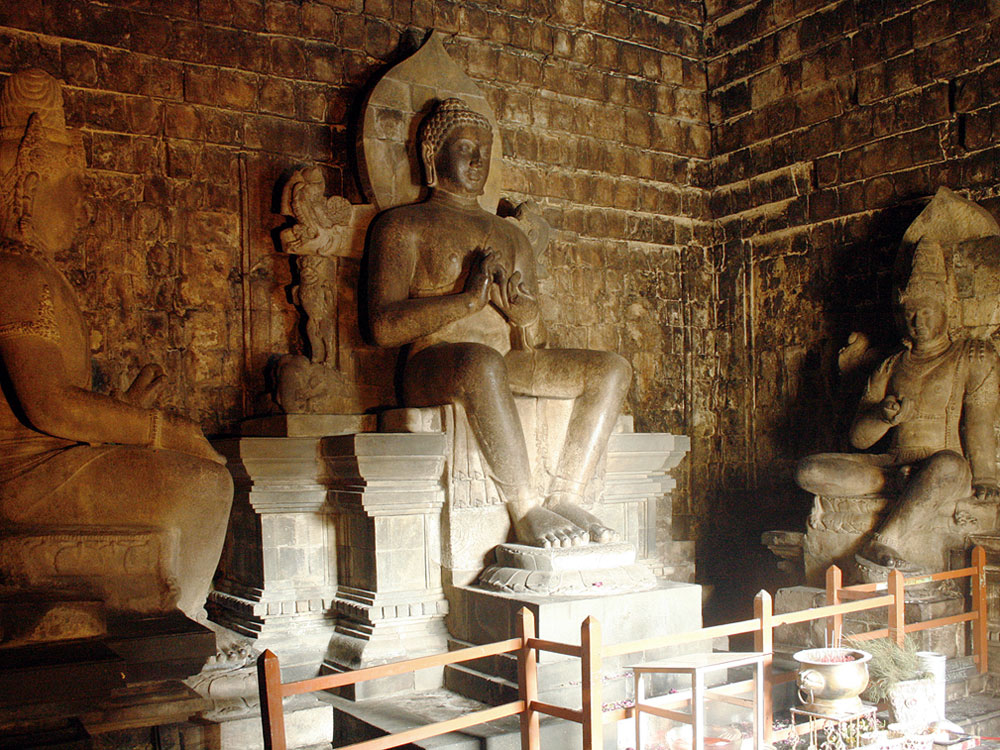
Situated 3 km to the east of Borobudur is Candi Mendut. This is a Buddhist temple built in 824 AD by King Indra of Sailendra dynasty. This temple is older than Borobudur and is used every May full moon to celebrate Waisak Day (Buddha's Day of Enlightenment). There are some wonderful scriptures on the walls and the architecture is fascinating — well worth a visit.
 |
 |
 |
 |
 |
 |
 |
 |
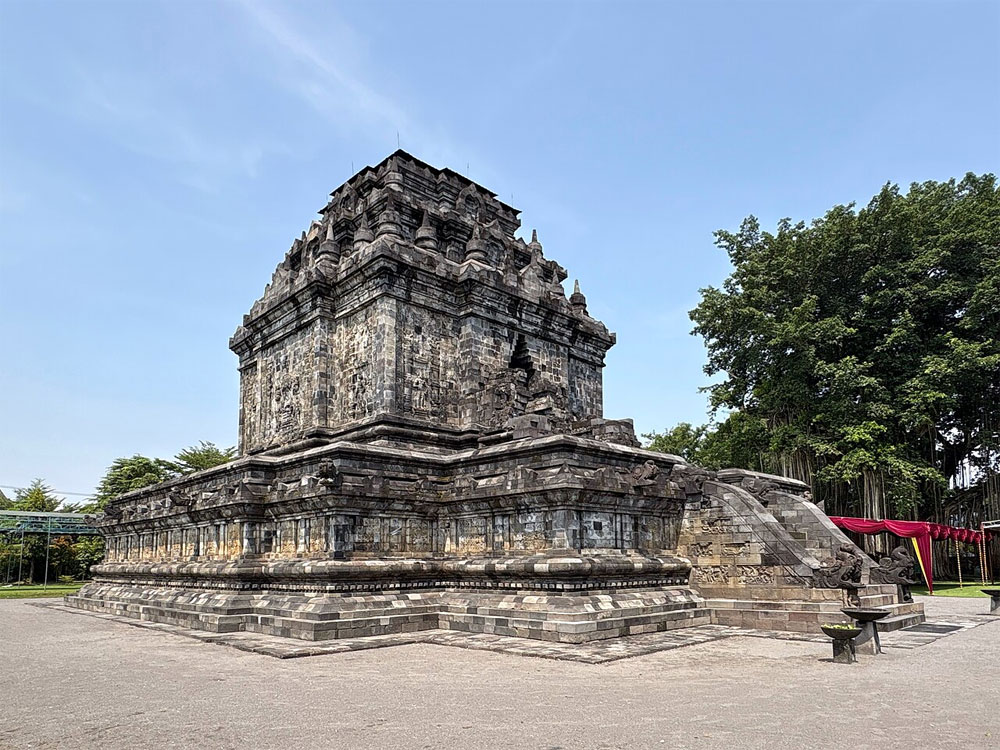
Mendut
Mendut is a ninth-century Buddhist temple, located in Mendut village, Mungkid sub-district, Magelang Regency, Central Java, Indonesia. It is located about 3 kilometres (1.9 mi) east of another temple, Borobudur, and along with Pawon forms a straight line of three temples. There is a mutual religious relationship between the three temples, although the exact ritual process is unknown.
Built around the early ninth century AD, Mendut is the oldest of the three temples including Pawon and Borobudur. According to the Karangtengah inscription, the temple was built and finished during the reign of King Indra of the Shailendra dynasty. The inscription, dated 824 AD, mention that he constructed a sacred building named Venuvana, which means "bamboo forest". The Dutch archaeologist JG de Casparis has connected this description with
Pawon
Pawon (Indonesian: Candi Pawon) is a Buddhist temple in Central Java, Indonesia. Built during the Sailendra dynasty (8th–9th centuries), it is a part of the Borobudur Temple Compounds which consists of three temples located on the same axis; Borobudur, Pawon, and Mendut. All three temple are inscribed UNESCO World Heritage Sites.
 |
 |
 |
 |
| Mendut | Mendut | Pawon | Pawon |
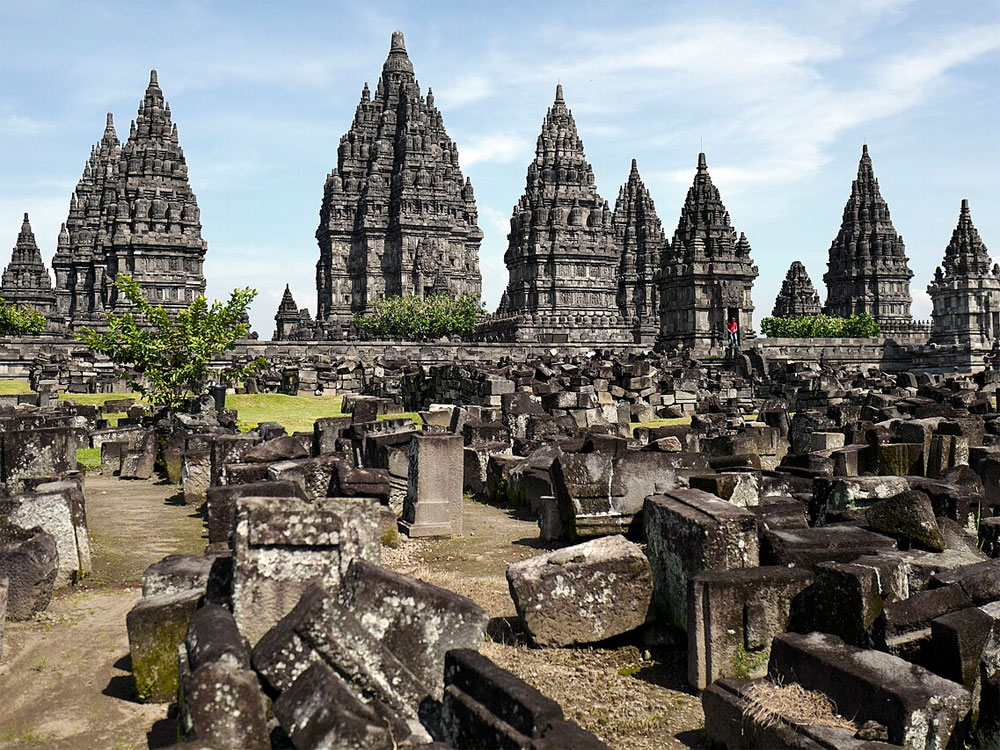
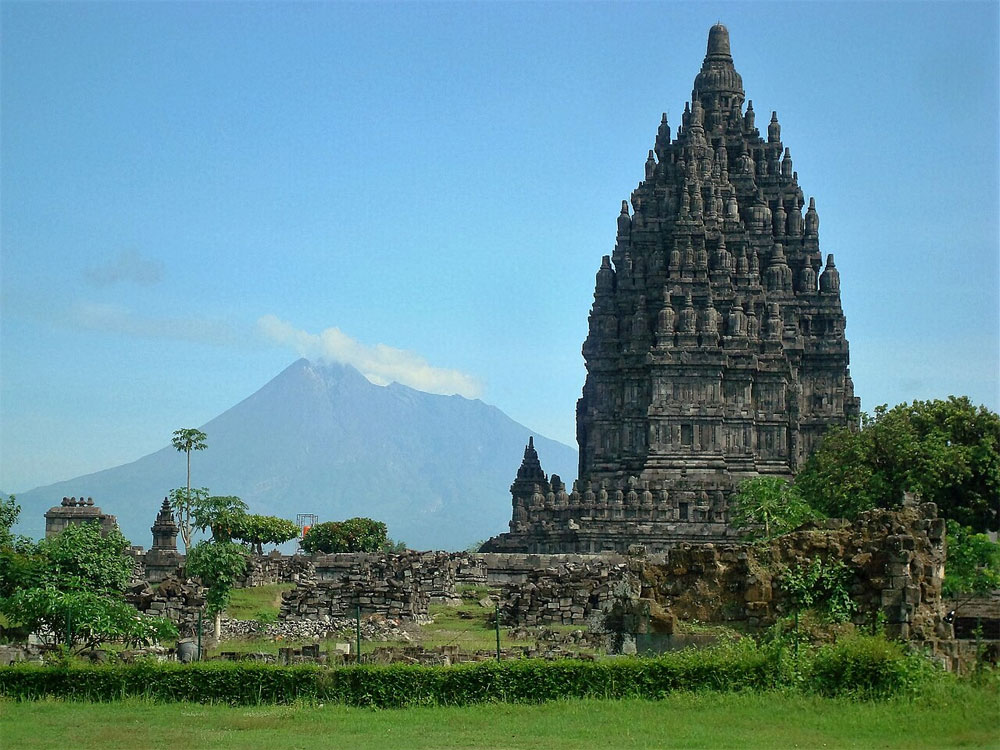
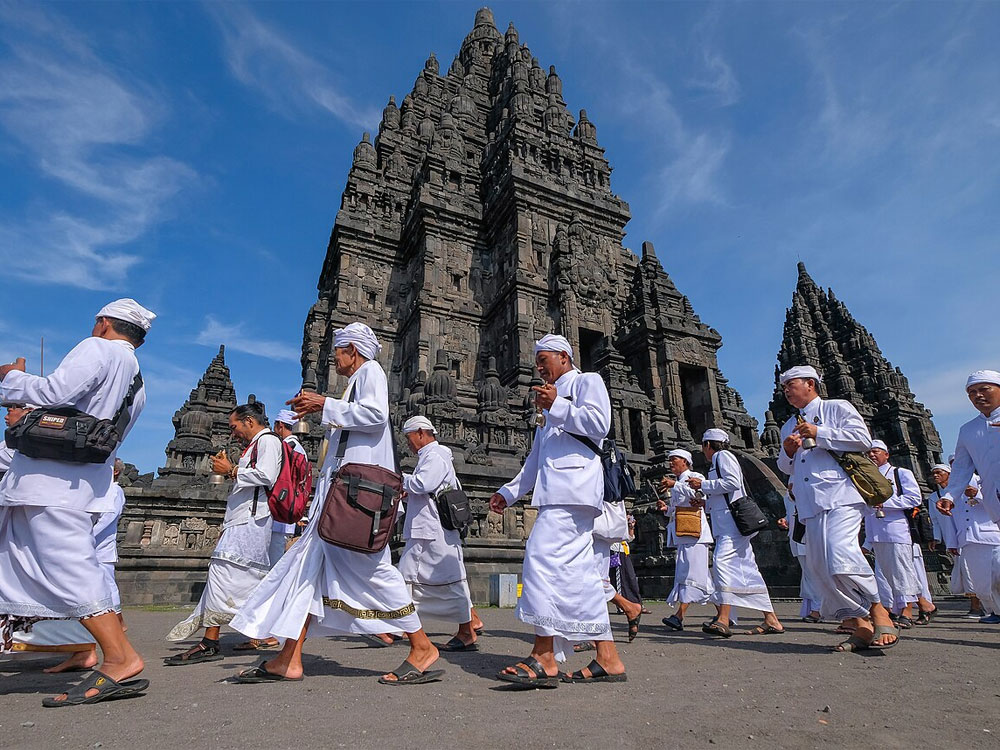
Prambanan
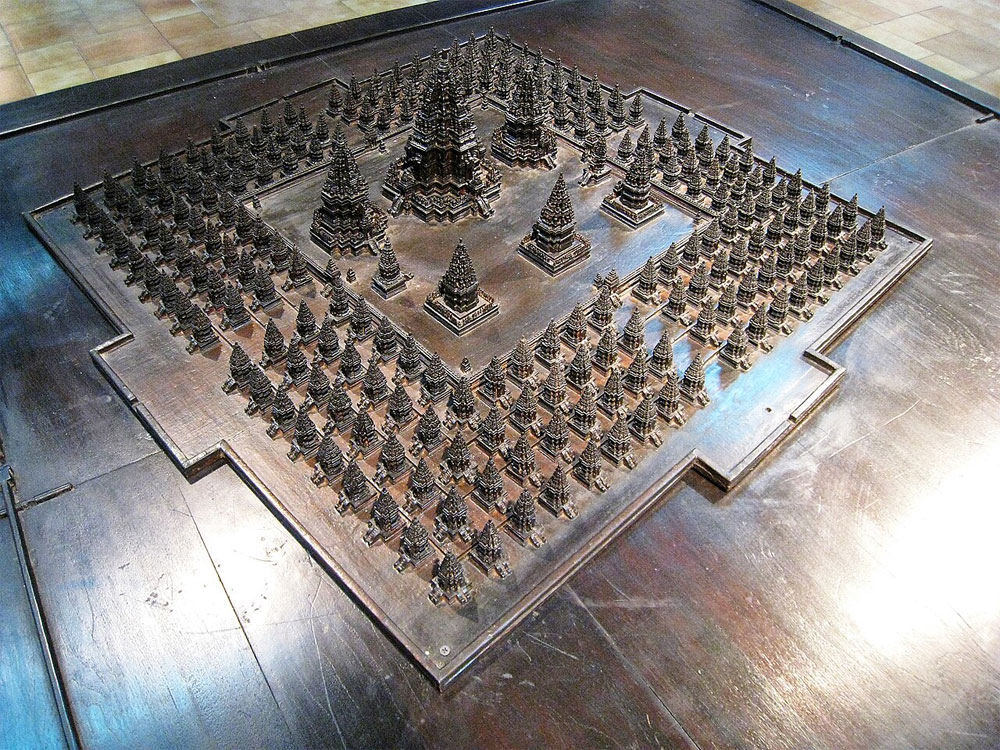
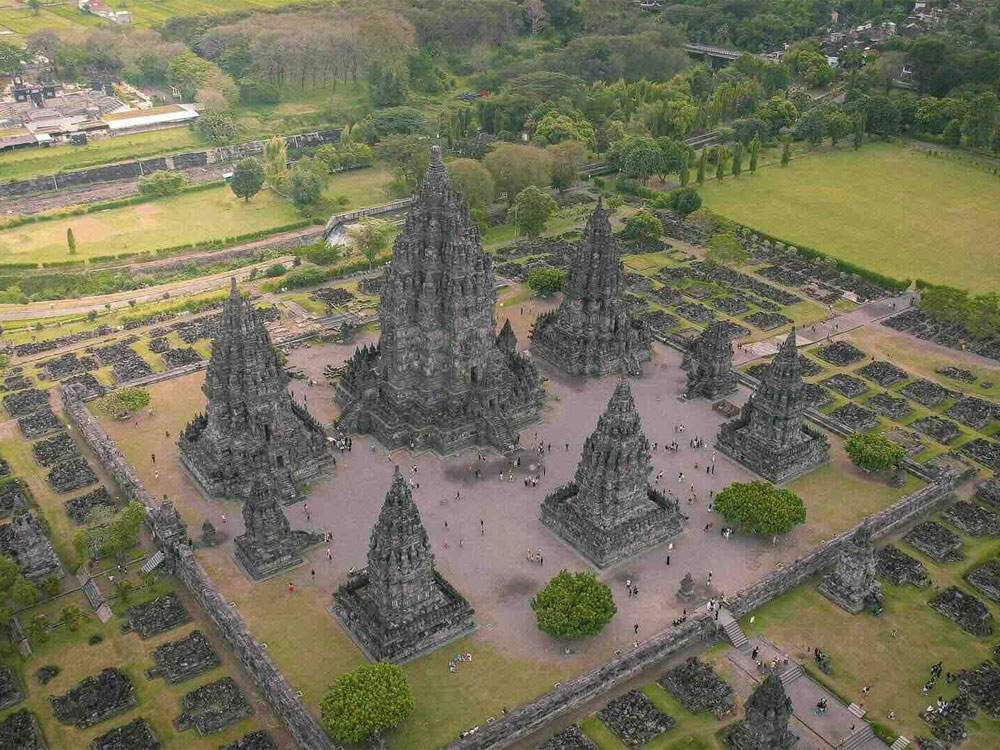
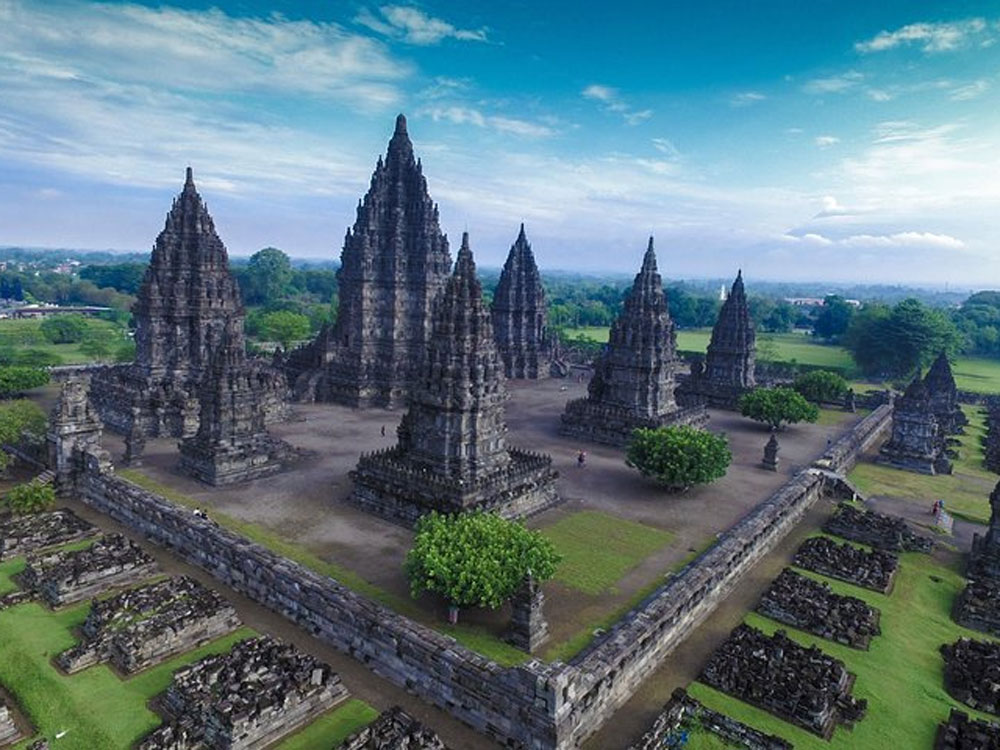
The temple compound, a UNESCO World Heritage Site, is the largest Hindu temple site in Indonesia and the second-largest in Southeast Asia after Angkor Wat. It is characterized by its tall pointed architecture, typical of Hindu architecture, and by the towering 47-metre-high central building inside a large complex of individual temples. The compounds originally consisted of 240 temple structures, which represented the grandeur of ancient Java's Hindu art and architecture, and it is also considered a masterpiece of the classical period in Indonesia.
After being used and expanded for about 80 years, the temples were mysteriously abandoned near the half of the 10th century. The temples collapsed during a major earthquake in the 16th century.In 1918, the Dutch colonial government began the reconstruction of the compound; however, proper restoration only commenced in 1930. Due to the massive scale and the sheer numbers of temples, the efforts at restoration still continue up to this day. he reconstruction used the anastylosis method, in which a ruined temple is restored using the original stone blocks as much as possible.
 |
 |
 |
 |
 |
 |
 |
 |
To get a larger photo, click on one of the thumbnails below
To get a larger photo, click on one of the thumbnails below