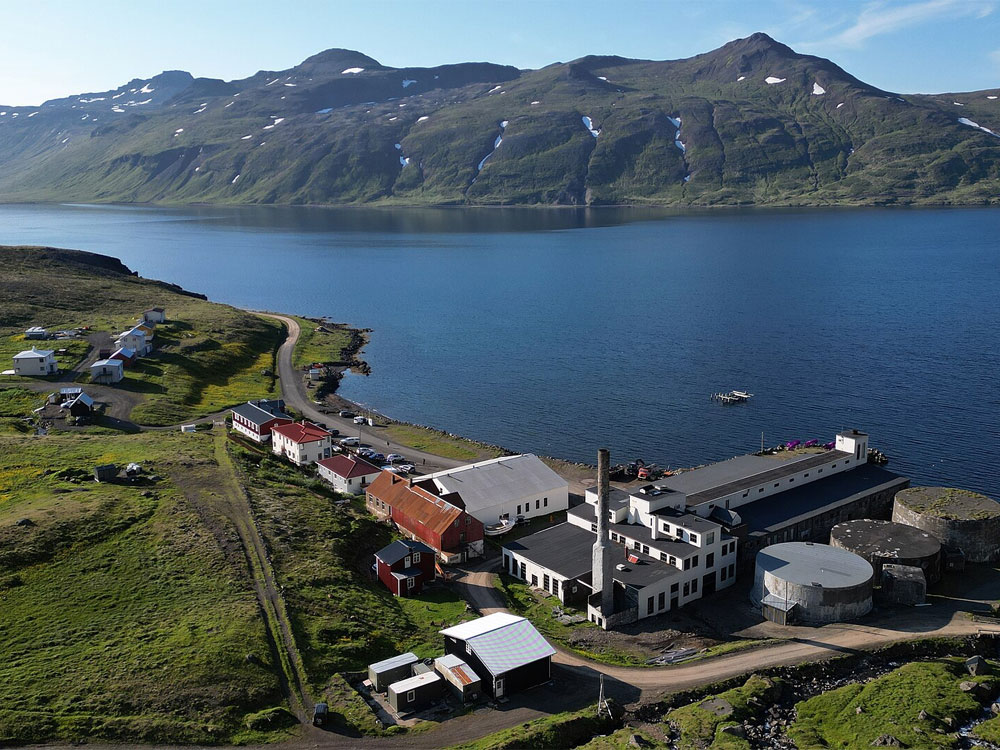
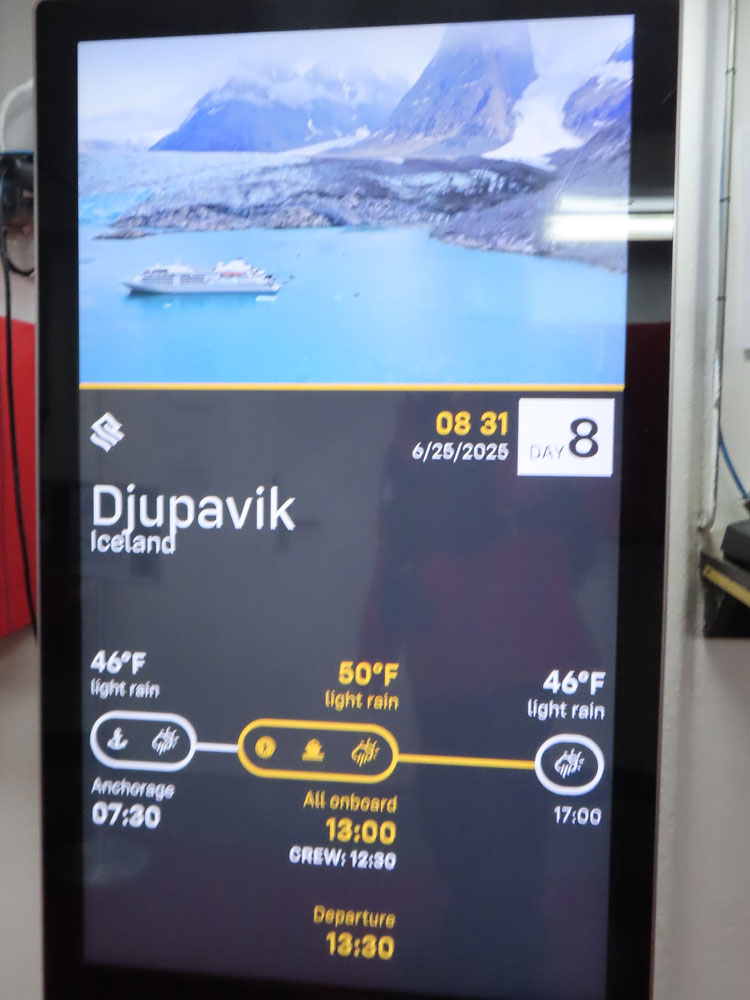
Wednesday, June 25. Djupavik
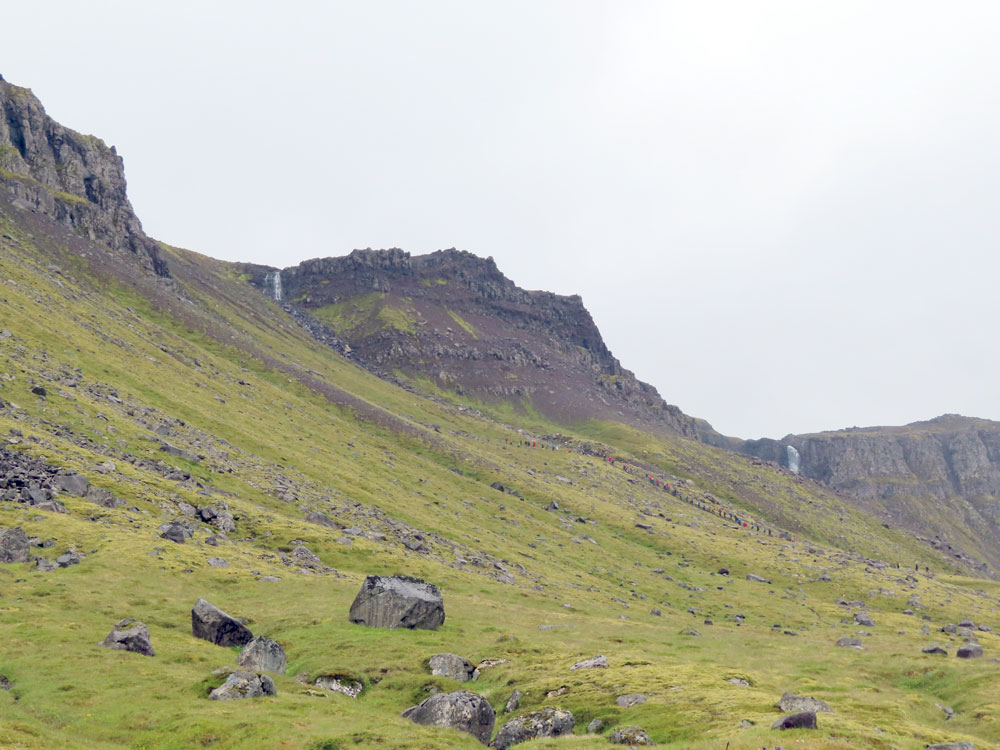
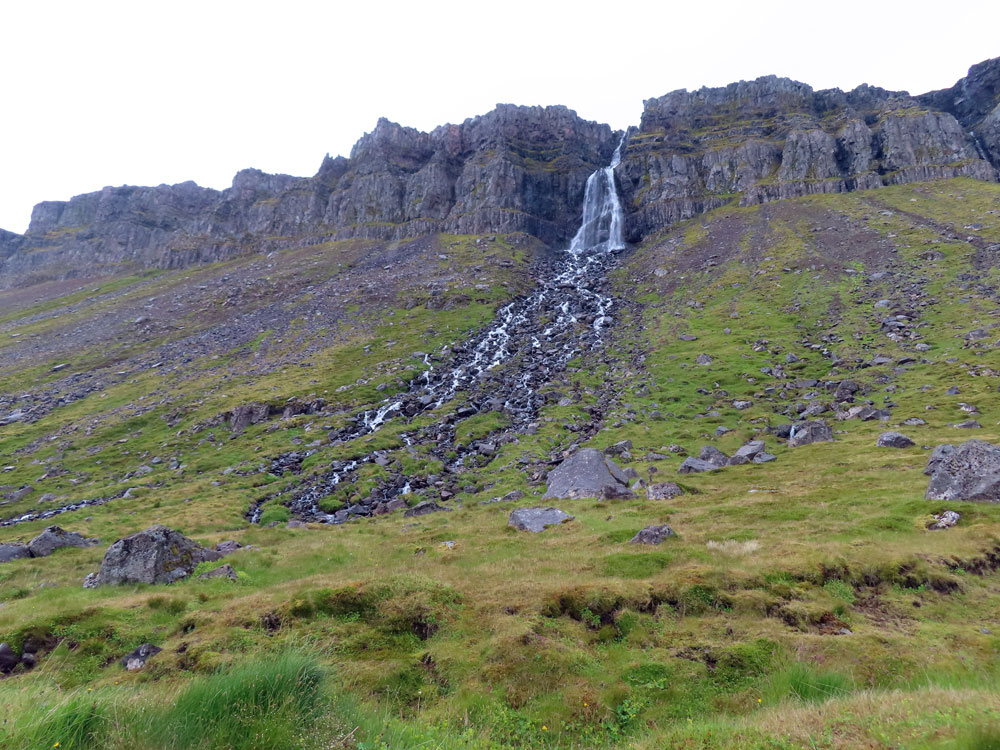
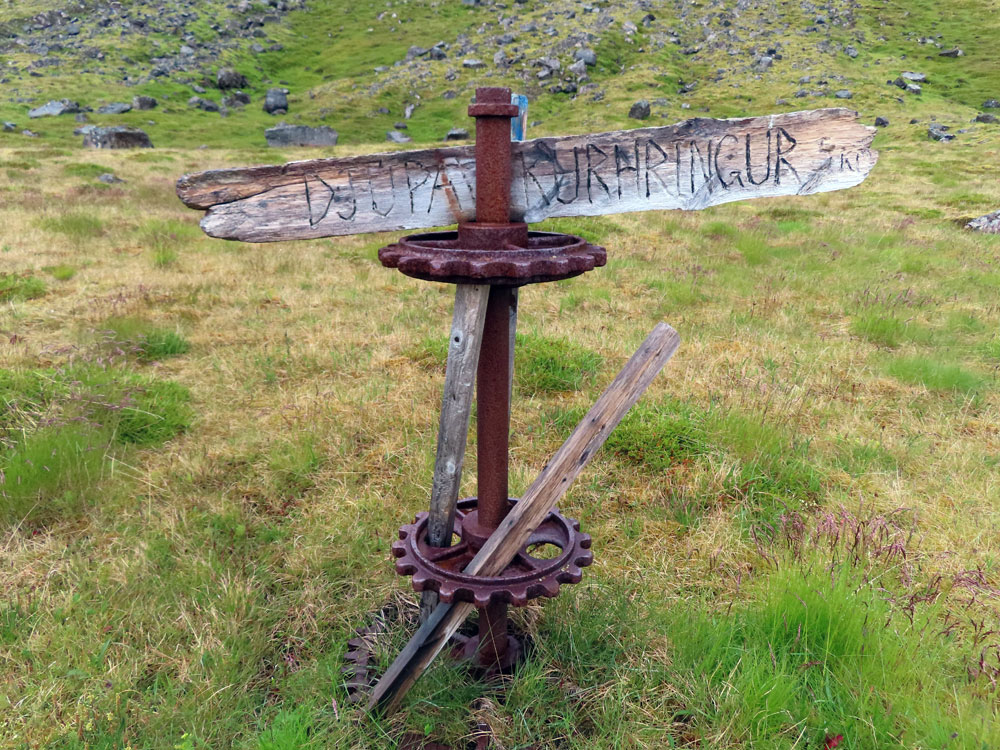
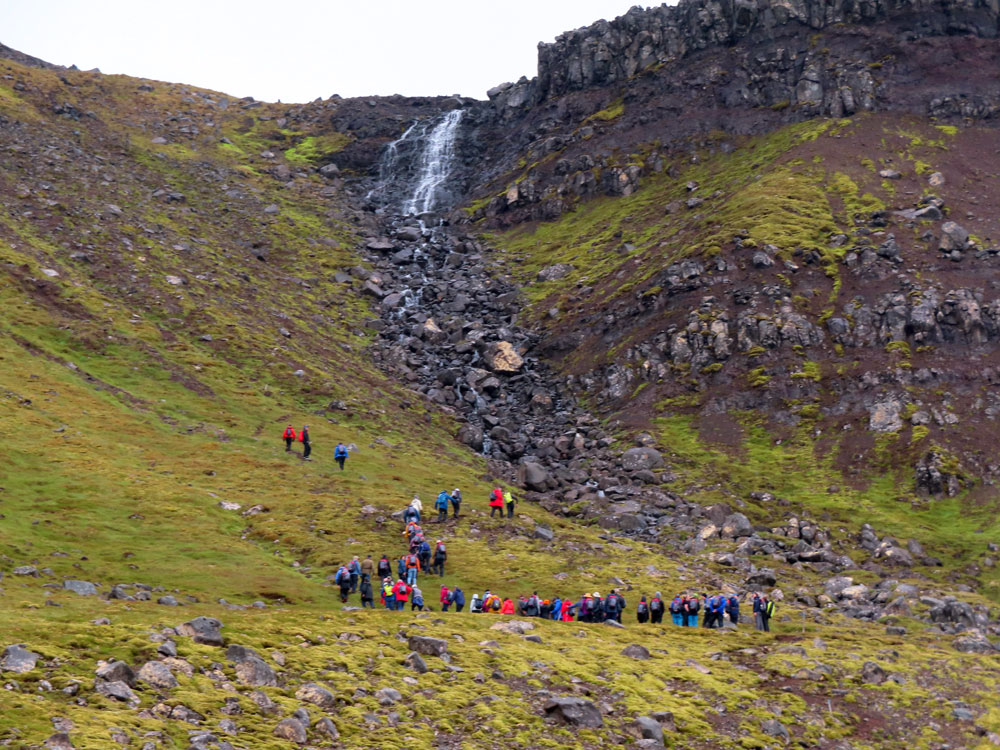
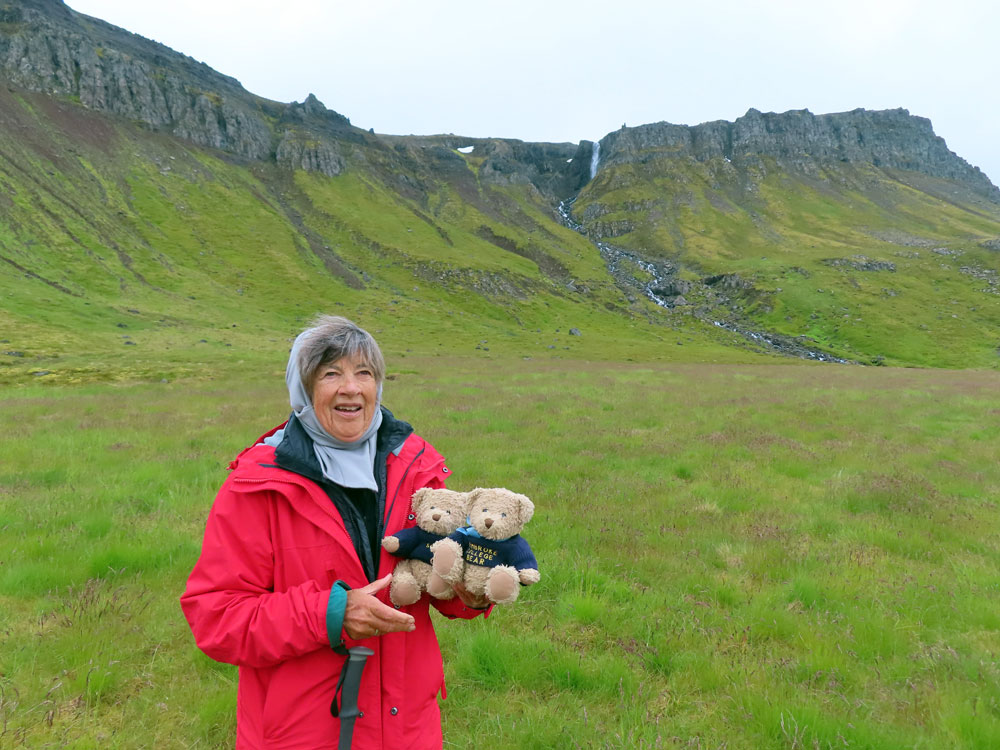
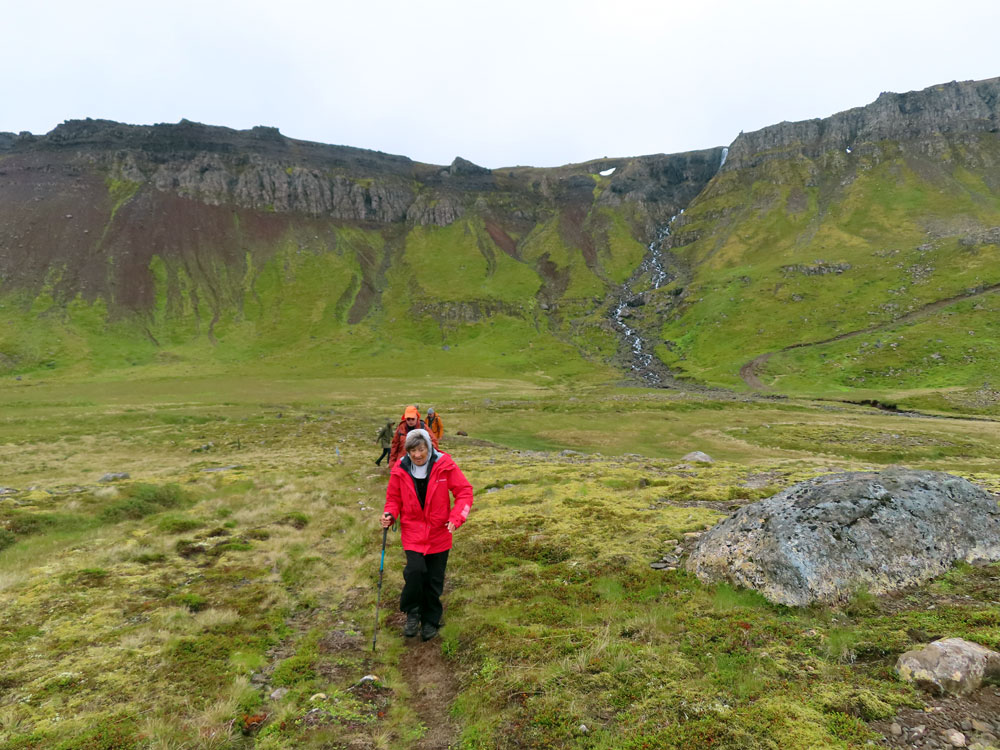
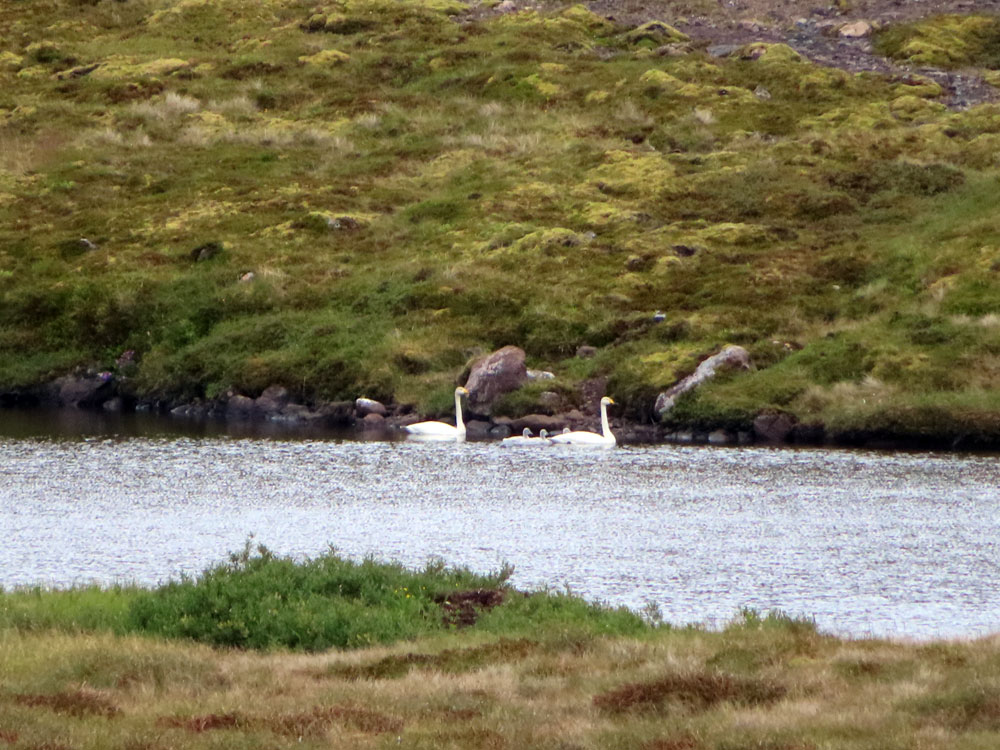
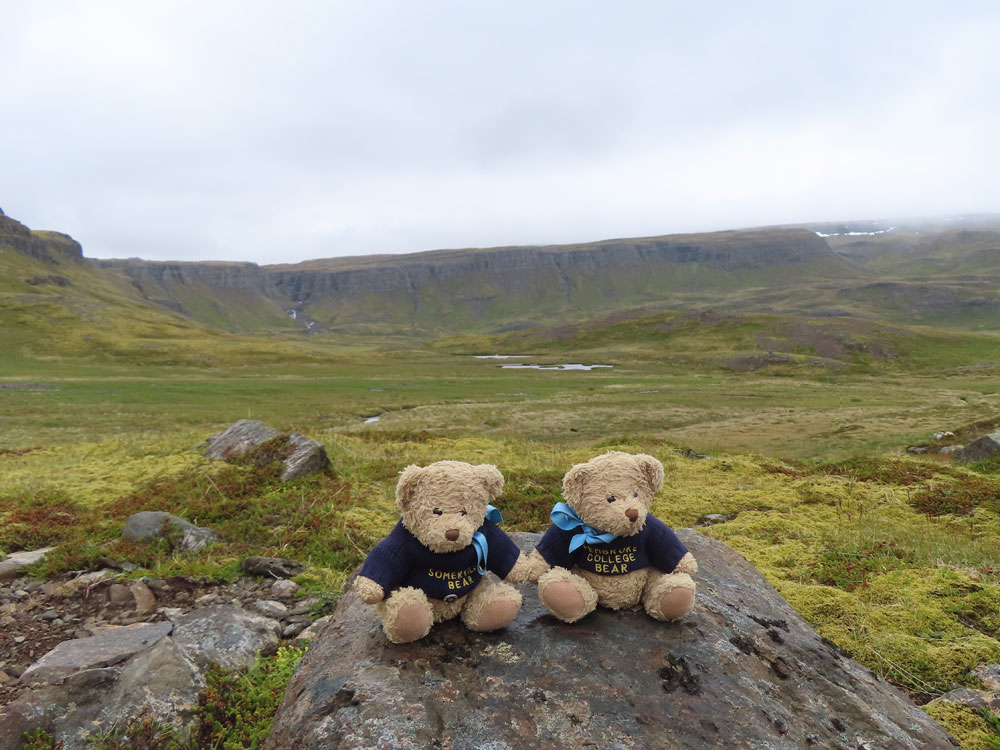
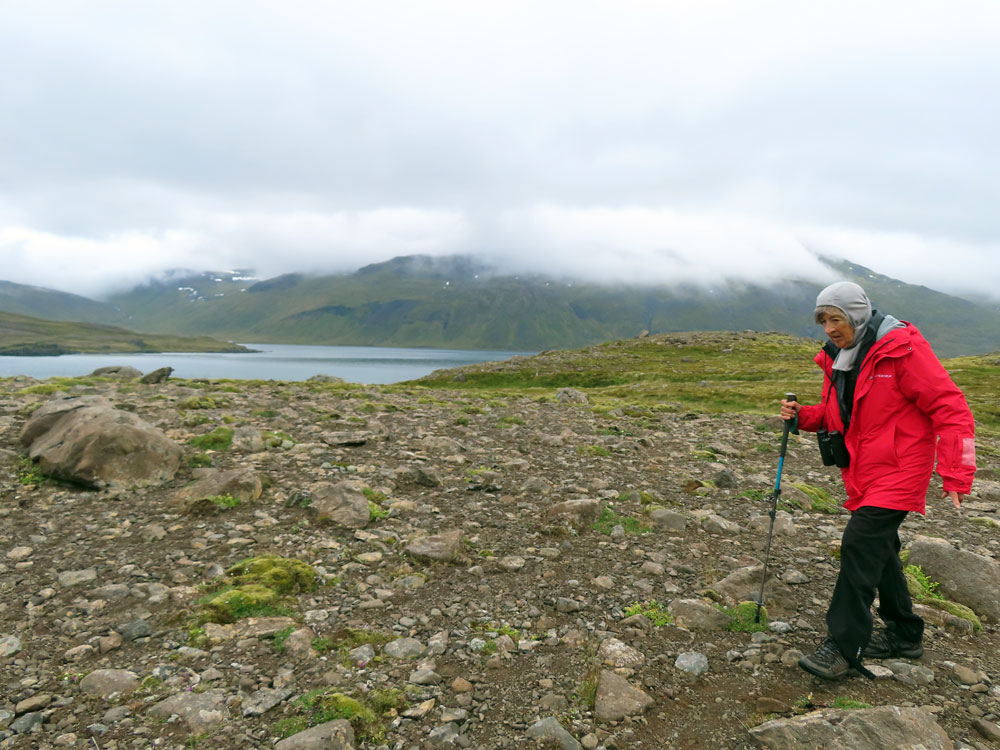
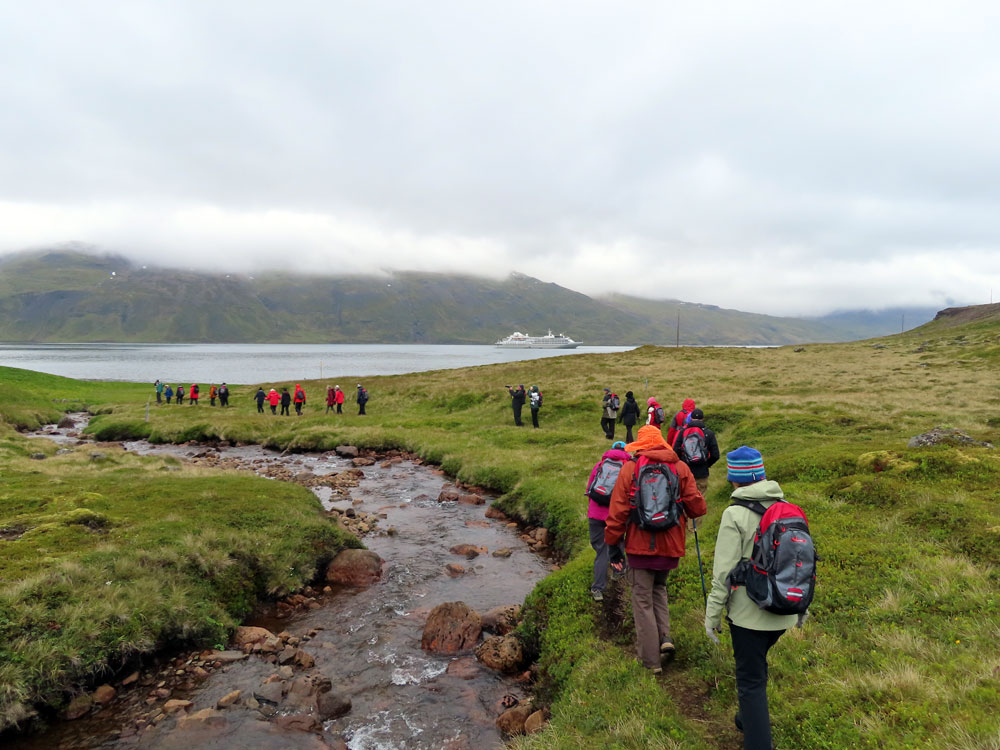
We had an early breakfast and disembarked for the medium hike at 8:15 am. This was led by Malcolm and had about 30 people in it and consisted in going over grassy and uneven land for the first 2/3 and finally back along the edge on the road to the herring factory.
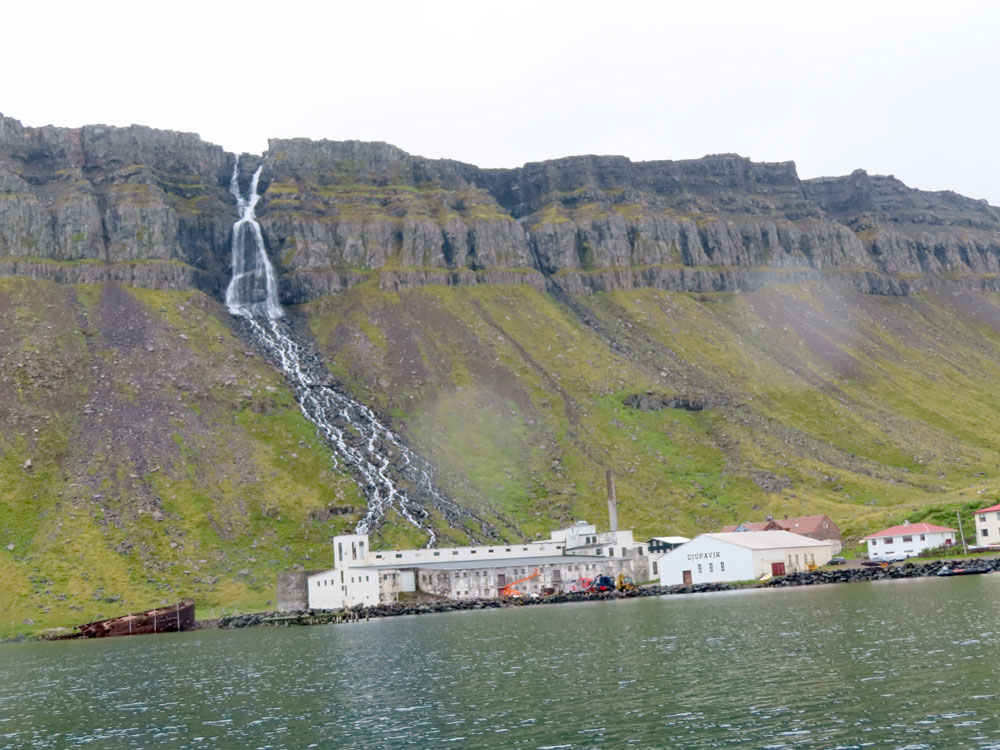
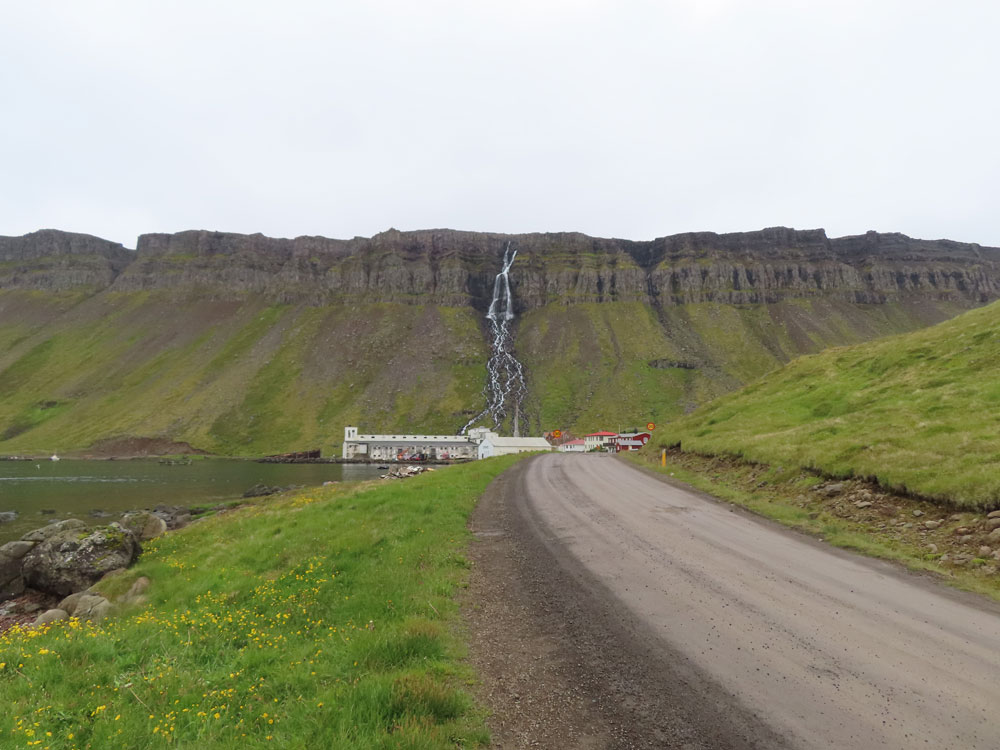
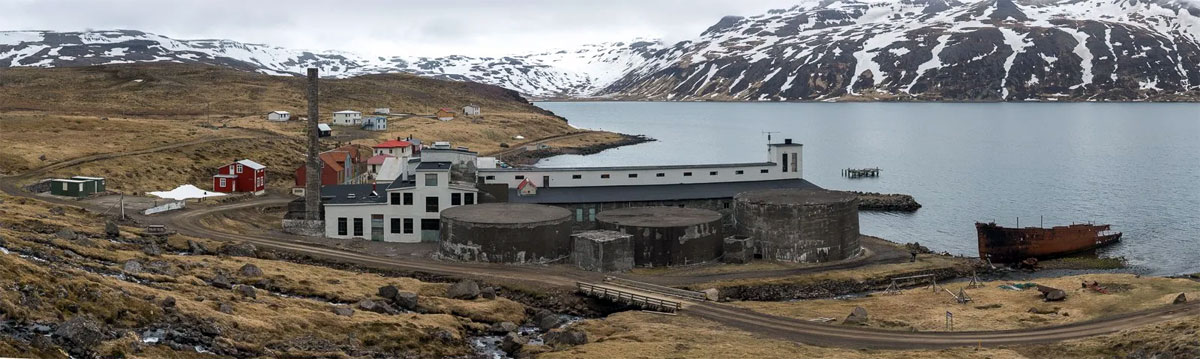
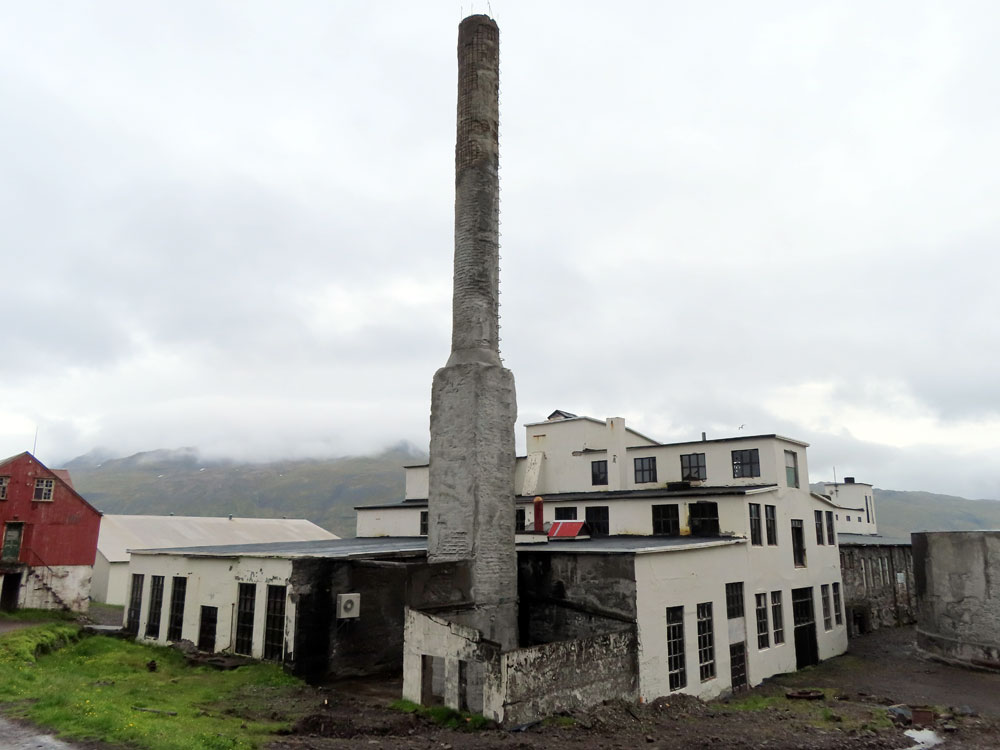
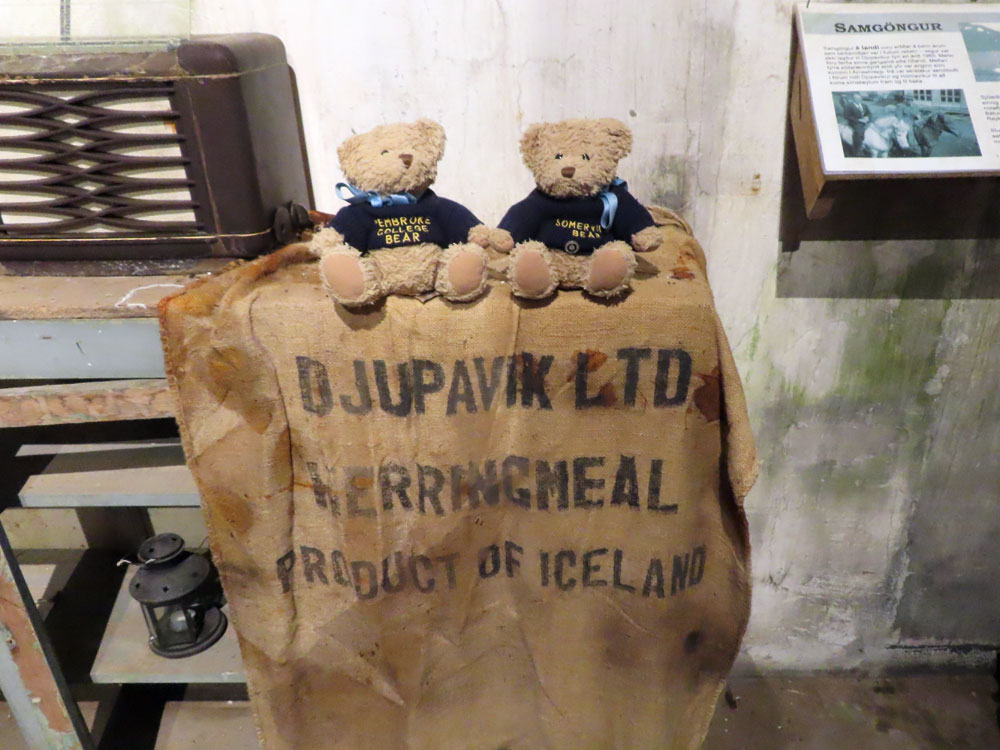
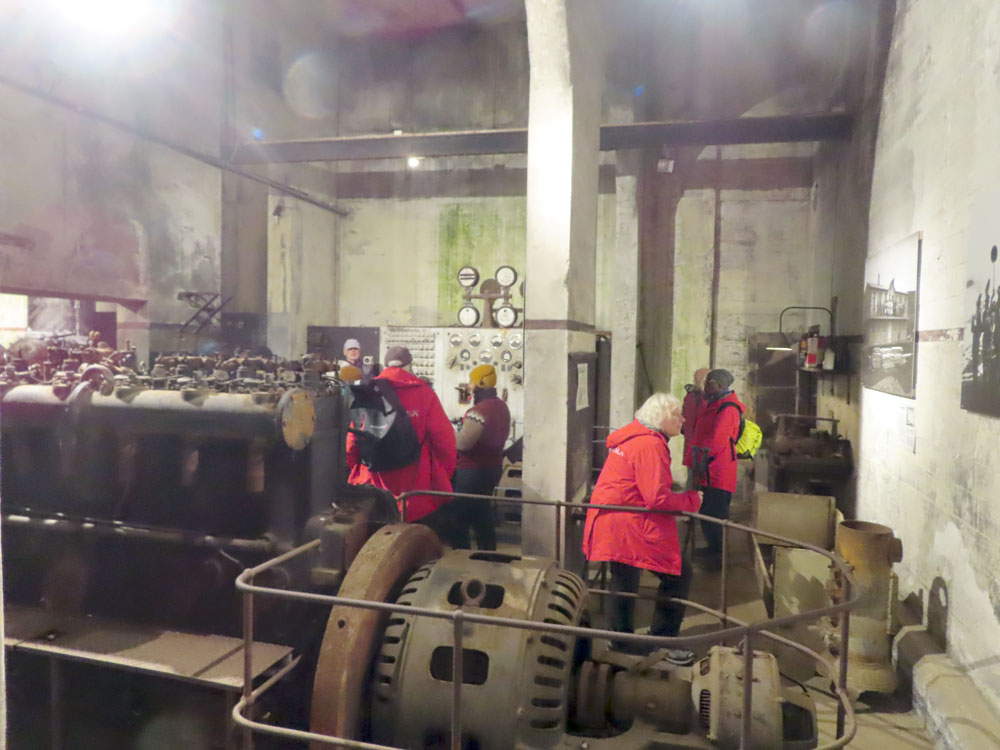
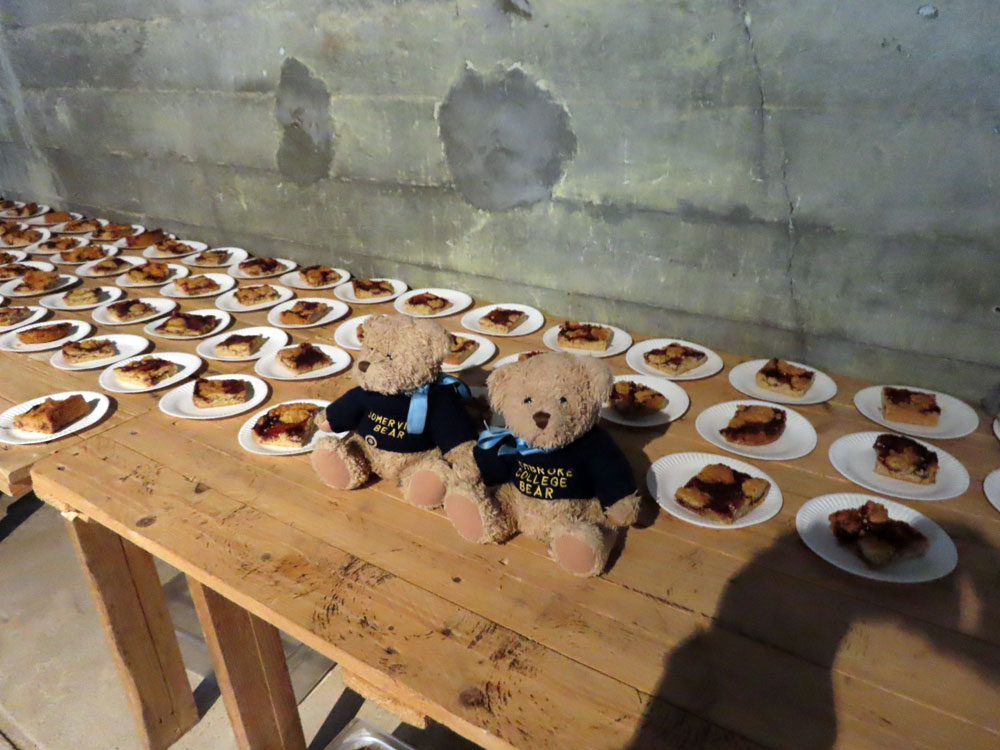
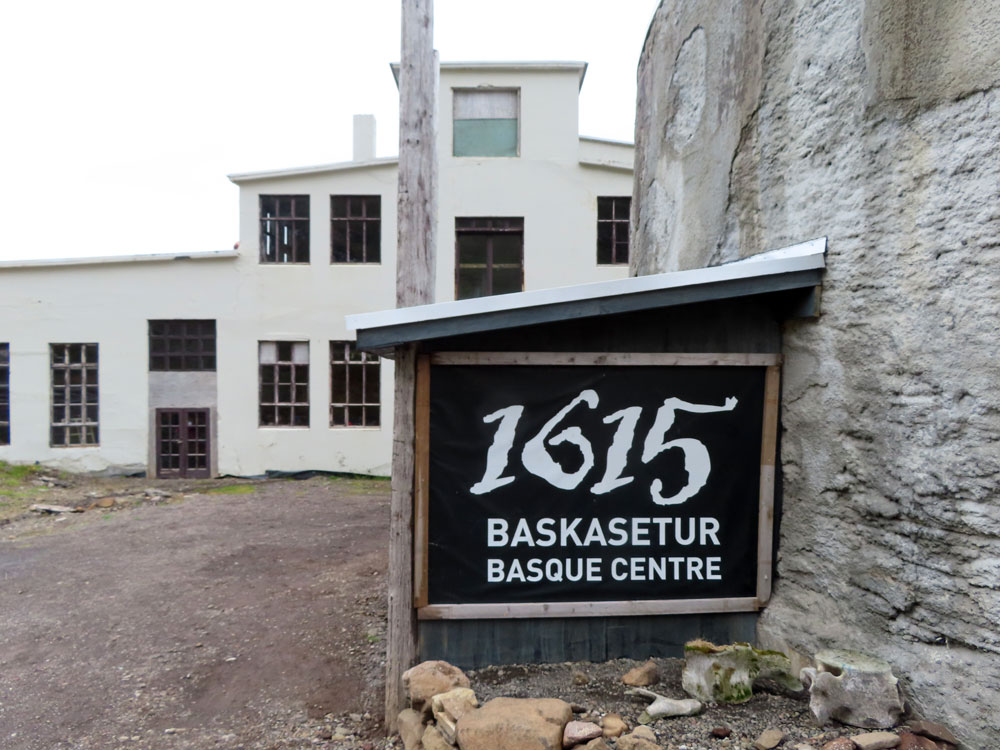
I found the first part middling difficult due to my sight, not being able to distinguish the stones in three dimensions. We then had a tour round the derelict herring factory, which have been at its peak in the 1930s, then very much state of the art, producing tons and tons of herring oil for the world market.. Nowadays it was completely derelict and in any other country would have been forbidden for any tourist to enter due to health and safety. It was absolutely vast and had been saved since the 1980s by one man who had also established a hotel here. He also claimed to have an art gallery here but this was virtually non existent. At the end of the tour we were given a slice of "happy marriage cake" plus coffee. There was also a museum on Basque whaling in one of the old fish oil tanks.
Click on any thumbnail below to get a larger photo
 |
 |
 |
 |
 |
 |
 |
 |
 |
 |
 |
 |
 |
 |
 |
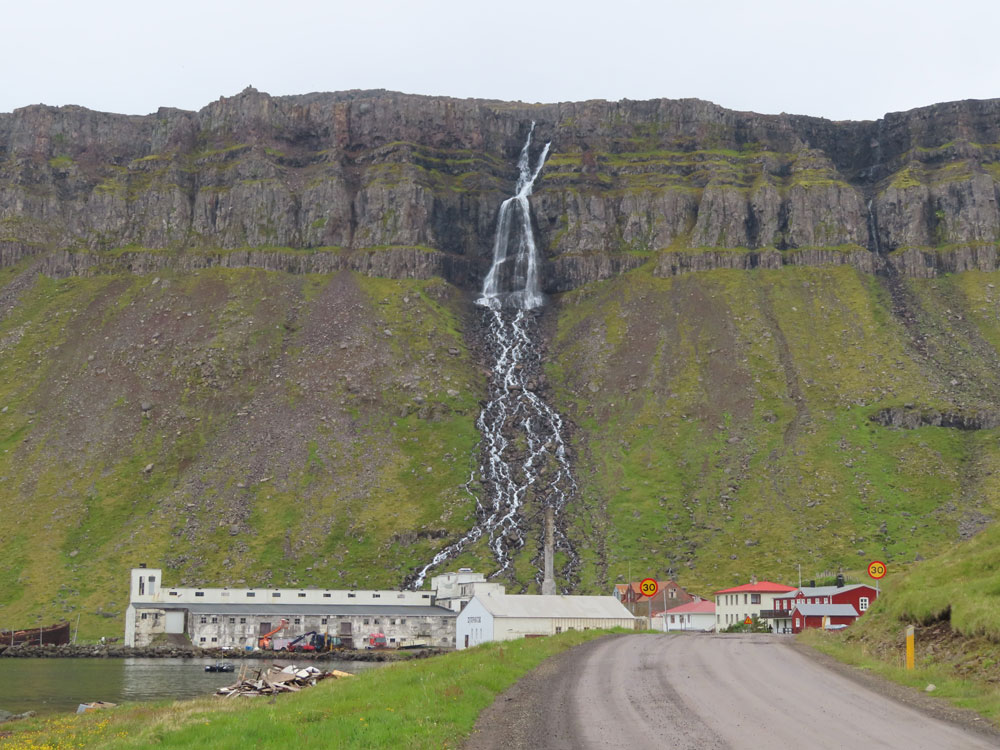 |
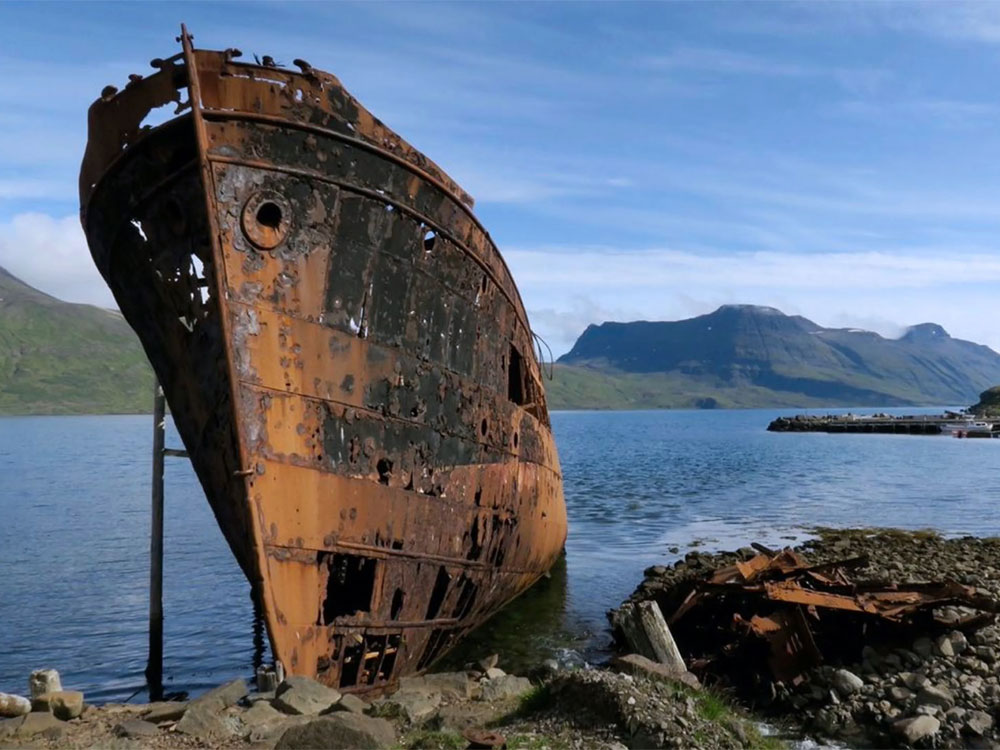
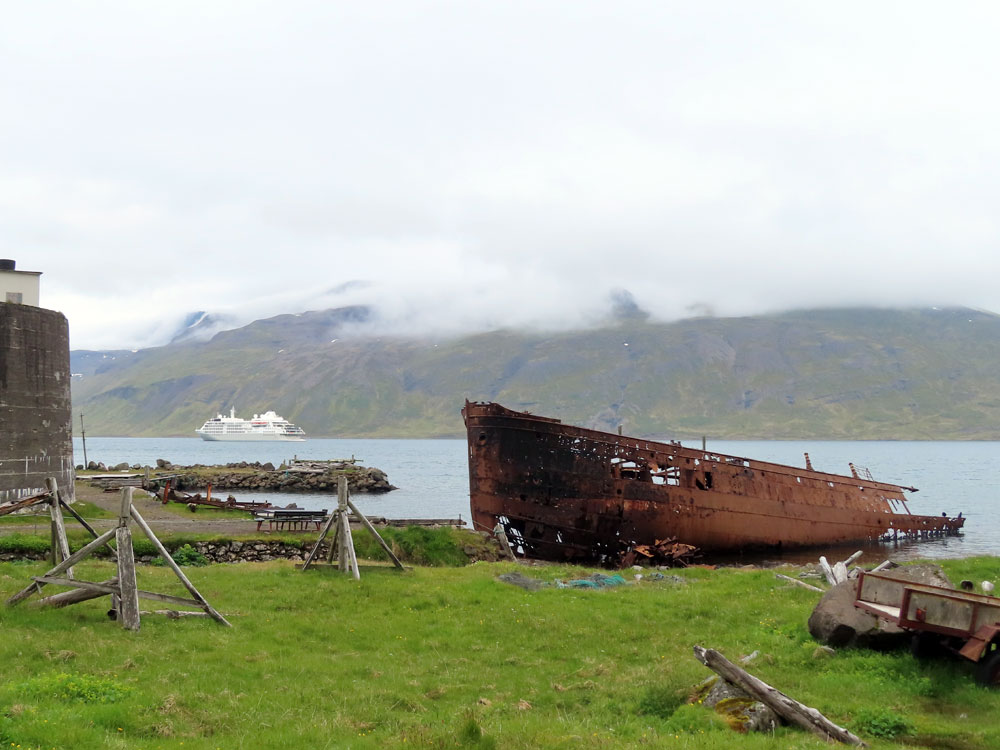
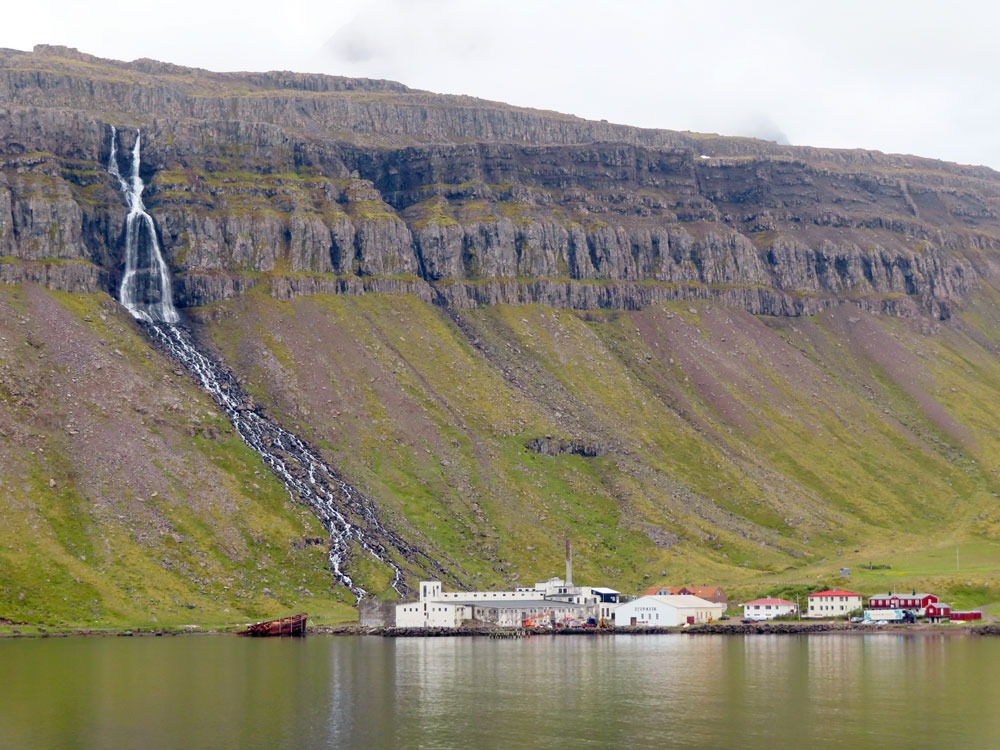
Tour round the old fish factory. In the past there was a thriving, state of the art, fish processing factory. But overfishing led to fewer fish and the eventual closing of the factory . At present it only consists of seven houses, a hotel and the ruins of a herring factory.. . At present the hamlet only consists of seven houses, a hotel and the ruins of the herring factory.
The factory was operational from 1917 to 1921, when it went bankrupt and was abandoned. It was empty till 1934 when it became commercially viable to produce fish oil.
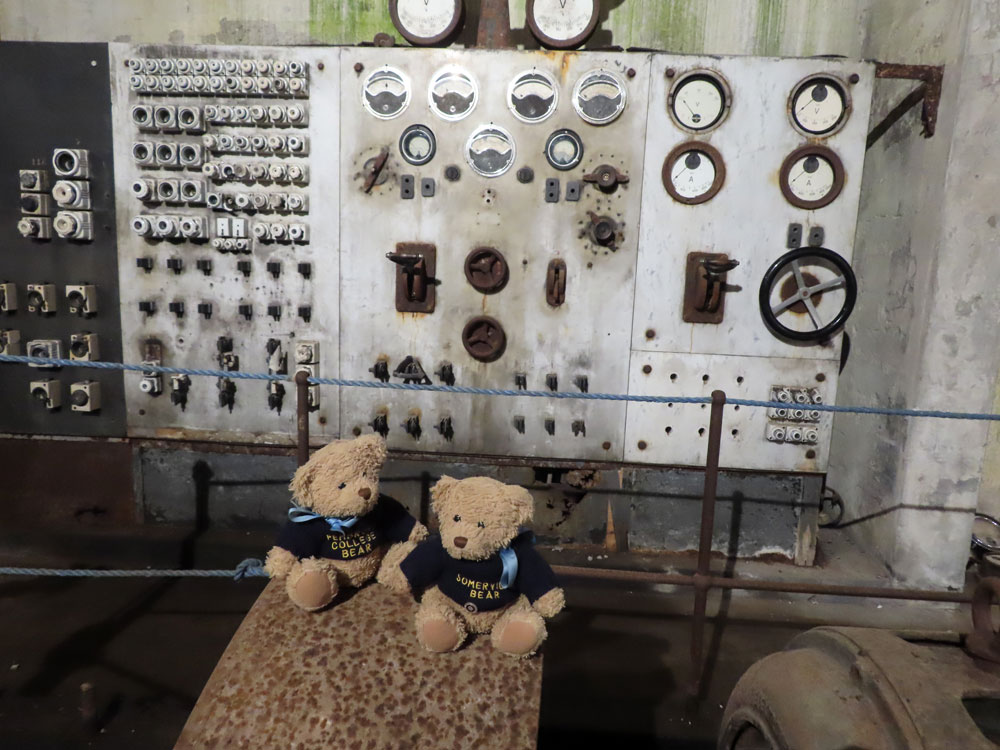
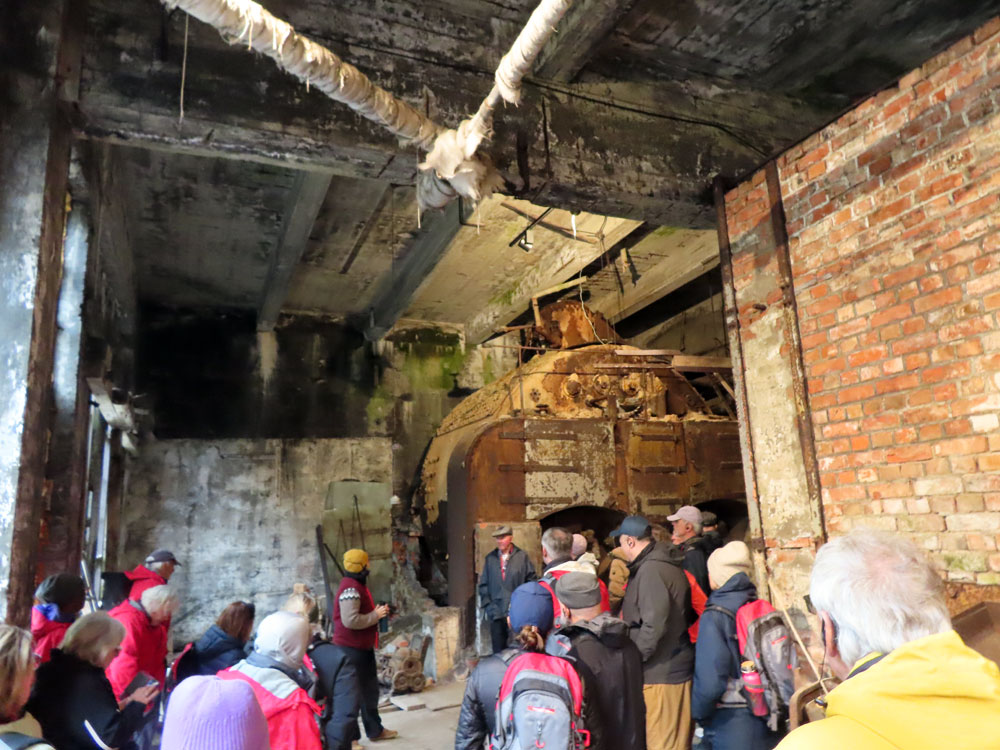
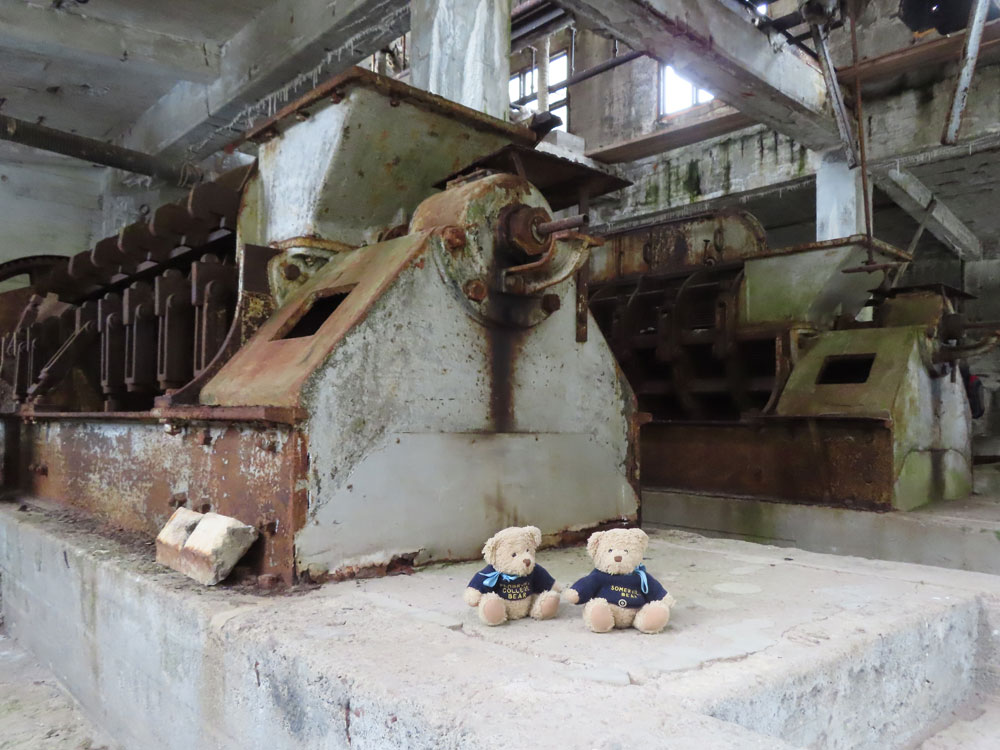
The new factory was built, and at 90 meters in length it was the largest concrete building in Iceland and one of the largest in Europe. There were no roads to Djupavik so all supplies arrived by ship. Despite the harsh conditions, the construction was completed within the span of just one year and the factory was operational by July 1935. It was one of 12 new herring oil and meal factories in Iceland. However, the Djupavik factory was unique. It was the first fully automated fish factory in Europe, with conveyor belts running from dock to basement storage rooms, then to coal-fired steam cookers, oil-extraction presses, coal-fired dryers, and meal grinders. Powerful electric fans then blew the hot fish meal through ducts that passed outside the factory for cooling and finally to chutes in the upper level where 100 kg meal bags were filled for transport. Electricity was generated by four German-built diesel engines salvaged from submarines and an Icelandic guard ship. The 60-tonne boiler used to generate steam for cooking was also salvaged from a ship. Initial worries that the catches would not meet requirements proved unfounded and during its early years the enterprise boomed, bringing improved financial status and living standards to the whole region. Eventually the the factory ceased operations in 1954. Then it 1984 it was bought by the present owner, who used one of the buildings as a hotel, and the old factory as a tourist attraction
Click on any thumbnail below to get a larger photo
 |
 |
 |
 |
 |
 |
 |
 |
 |
 |
 |
 |
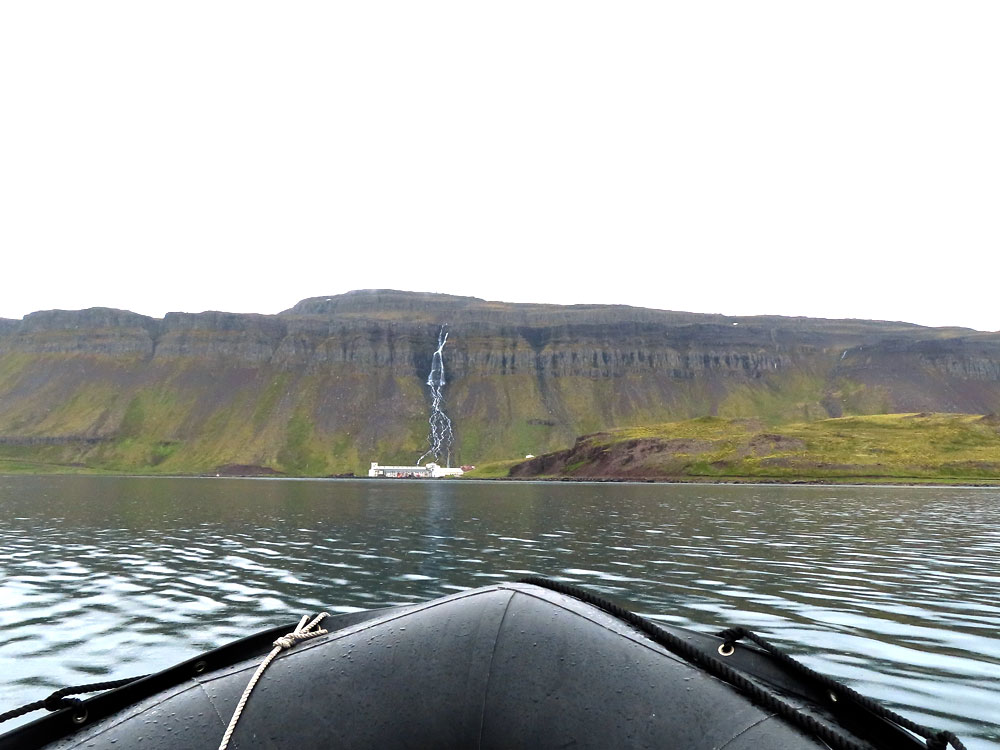
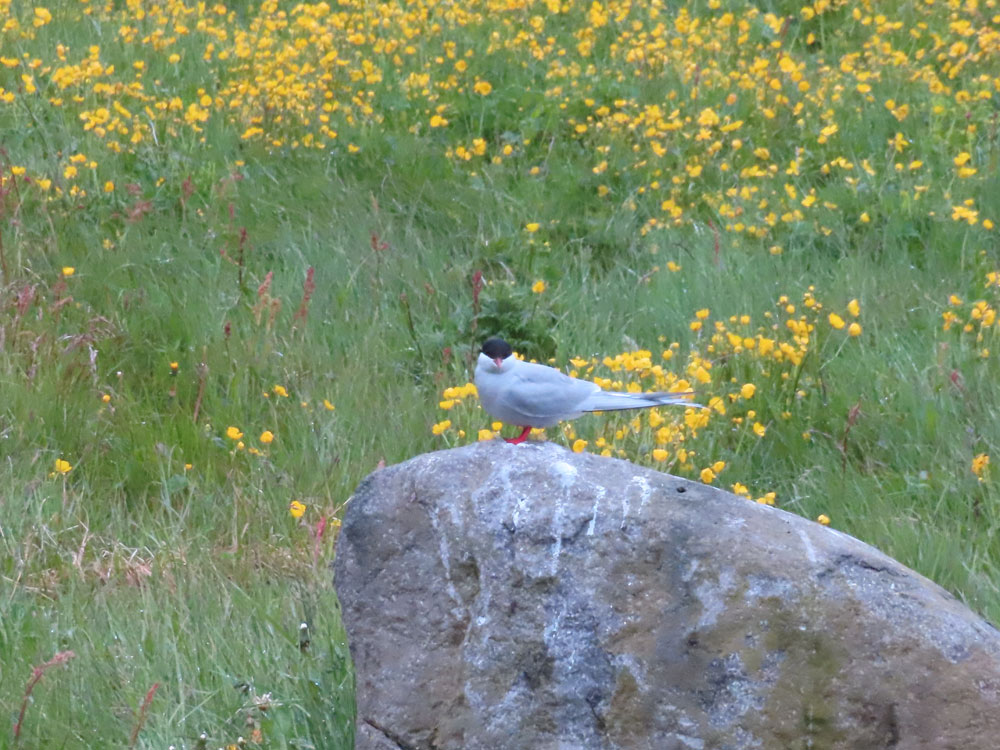
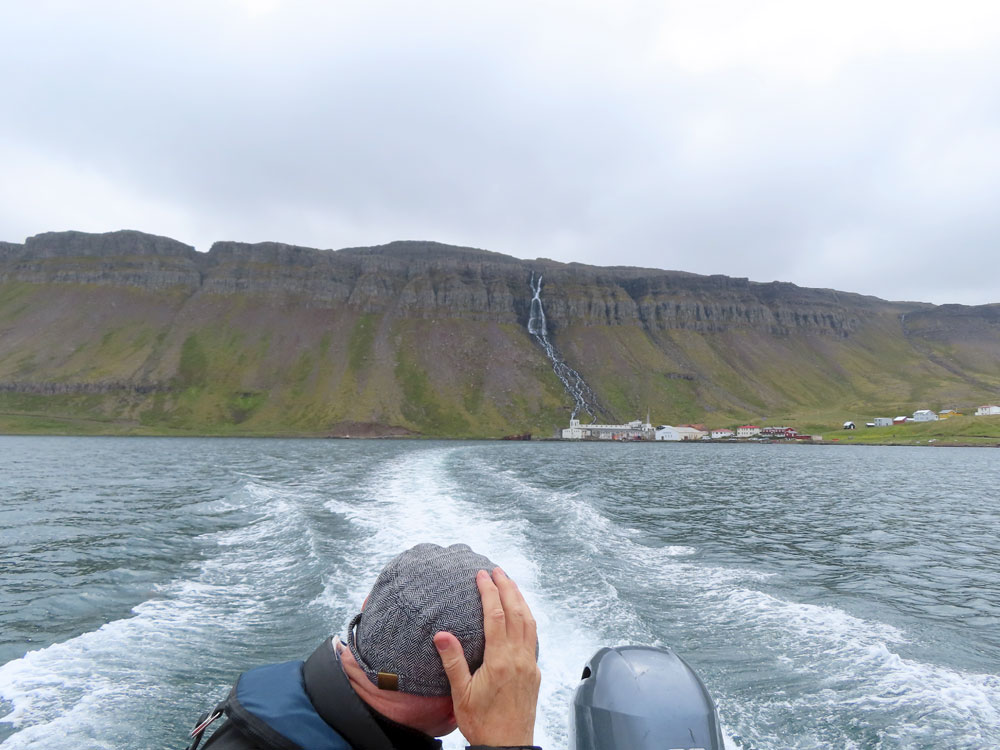
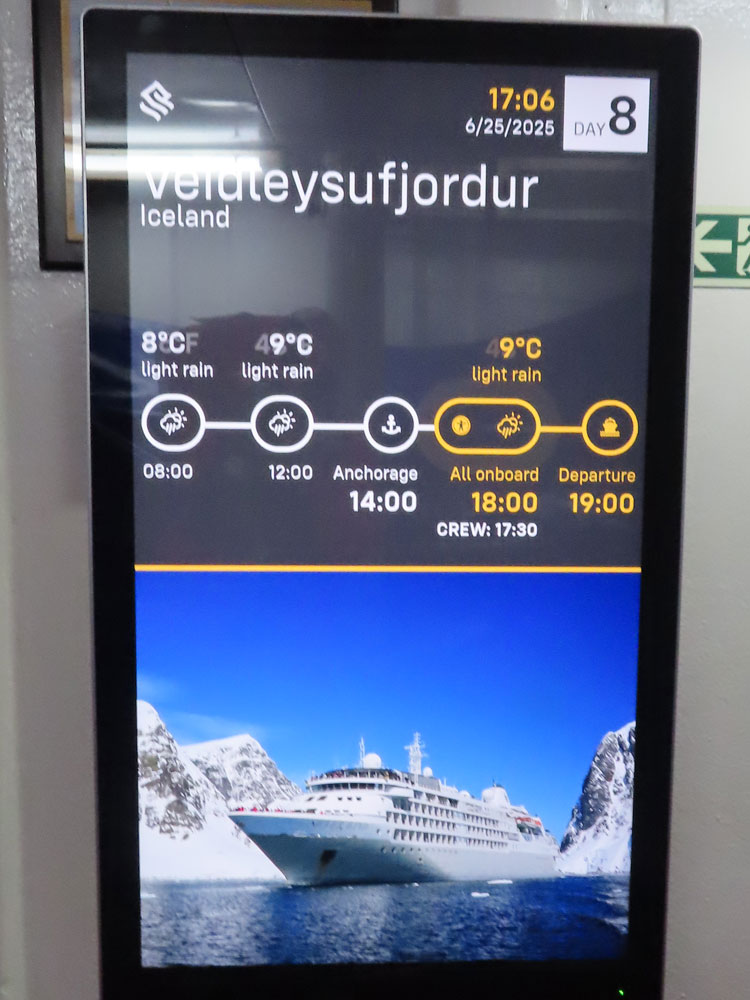
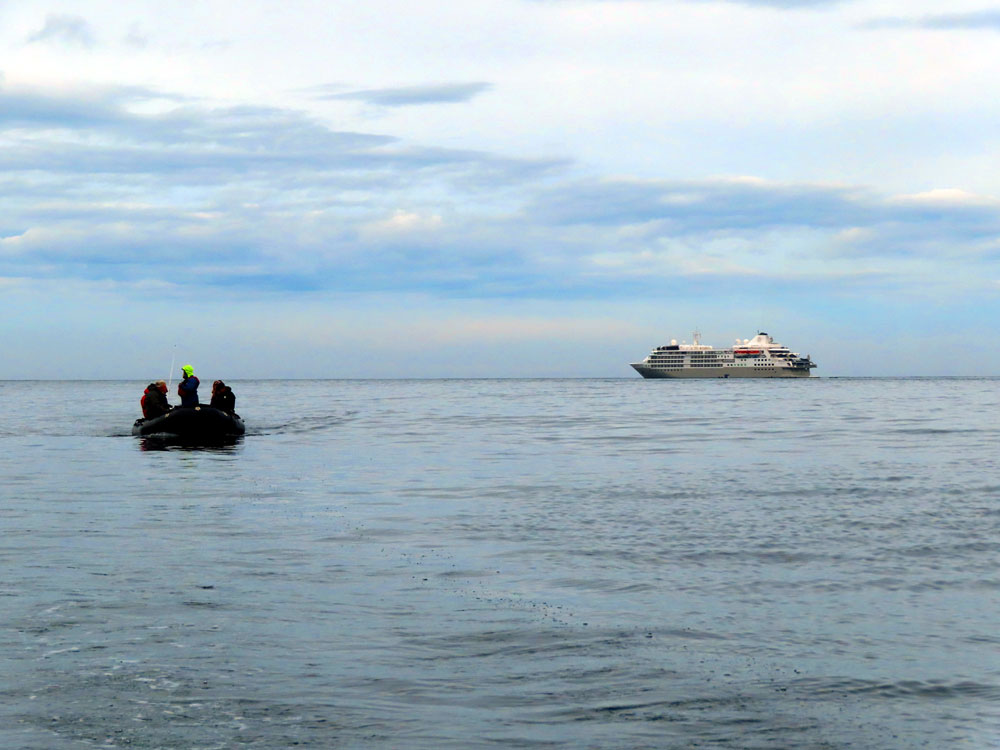
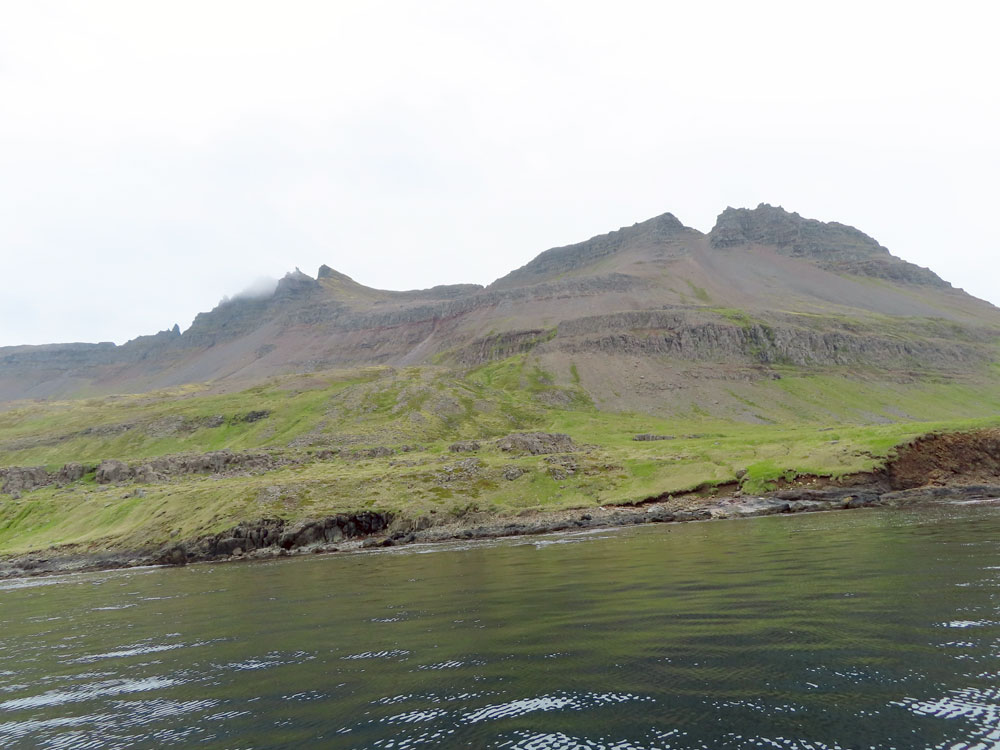
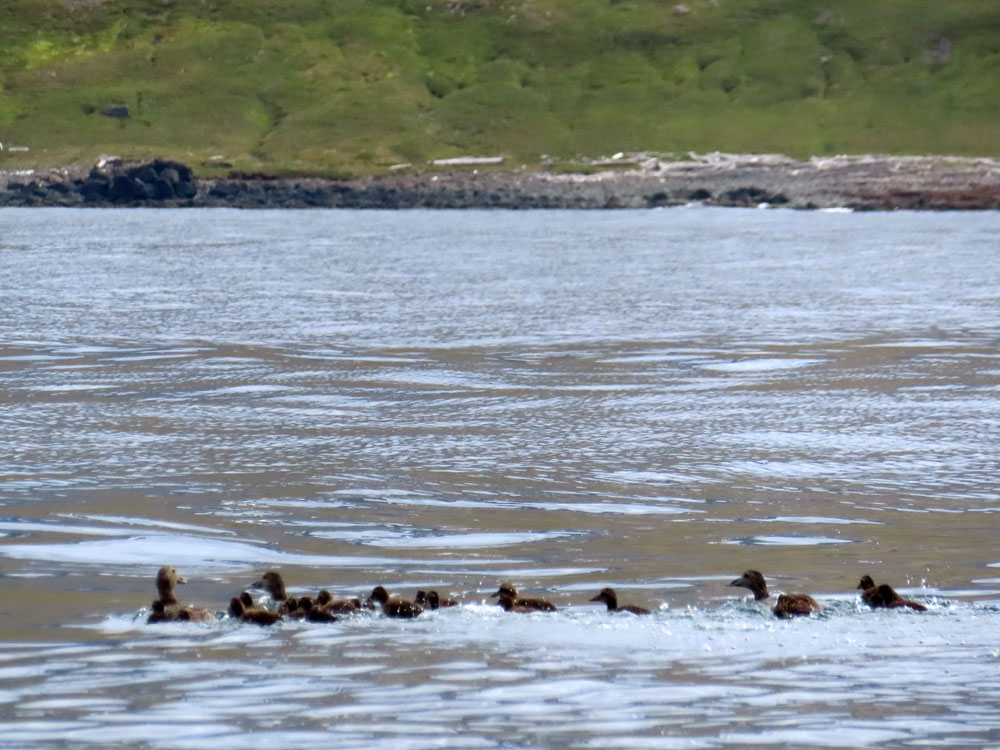
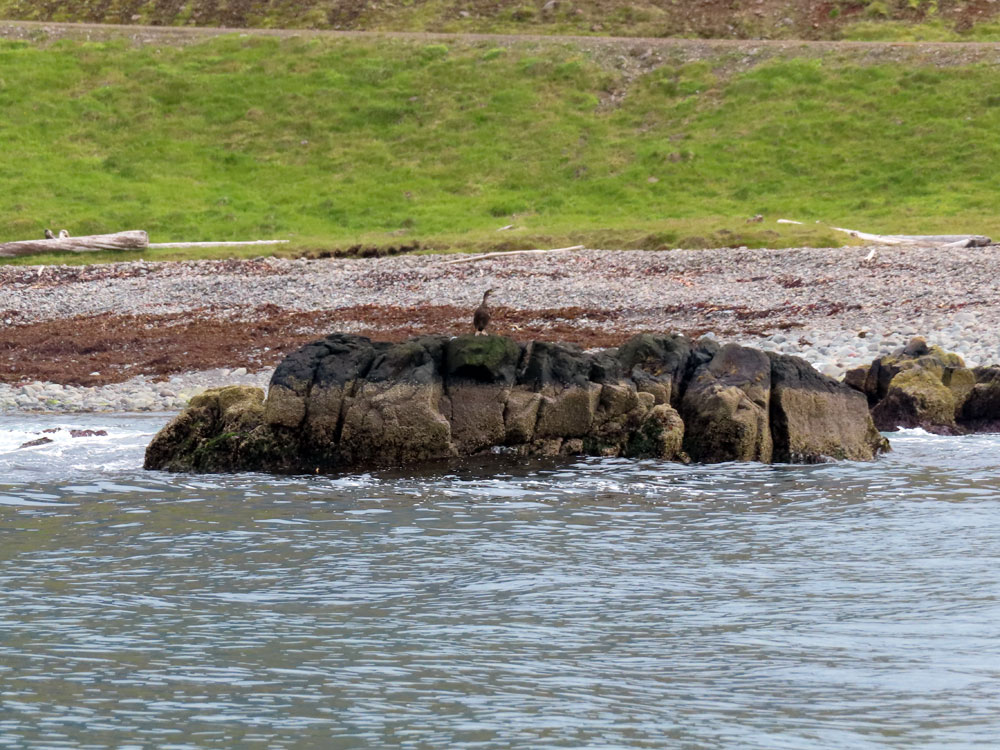
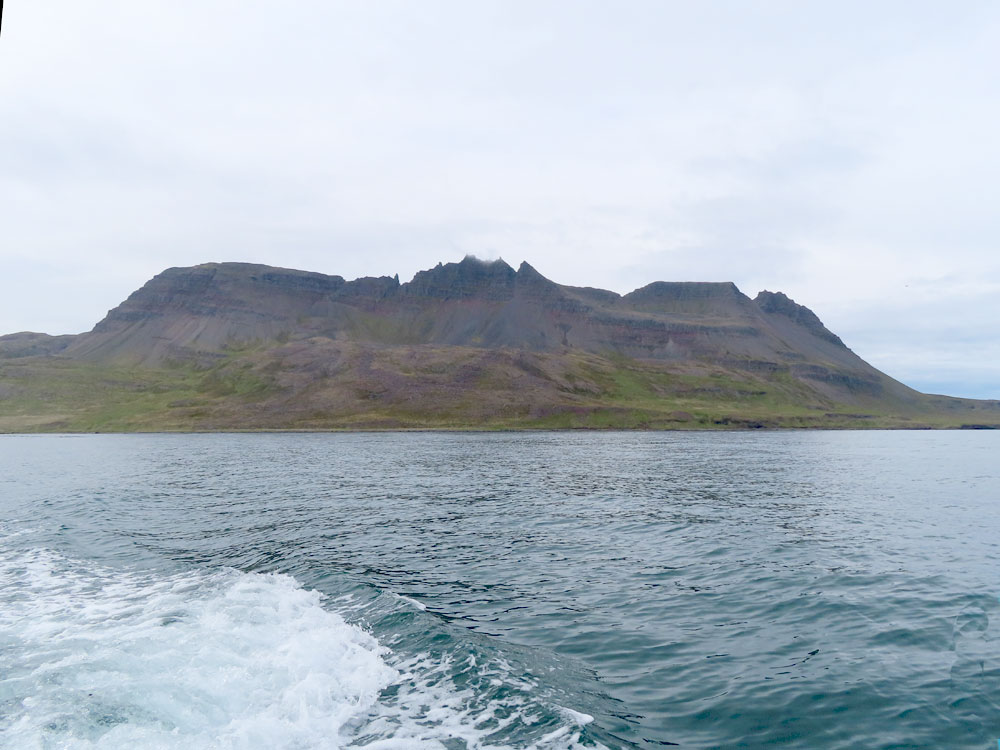
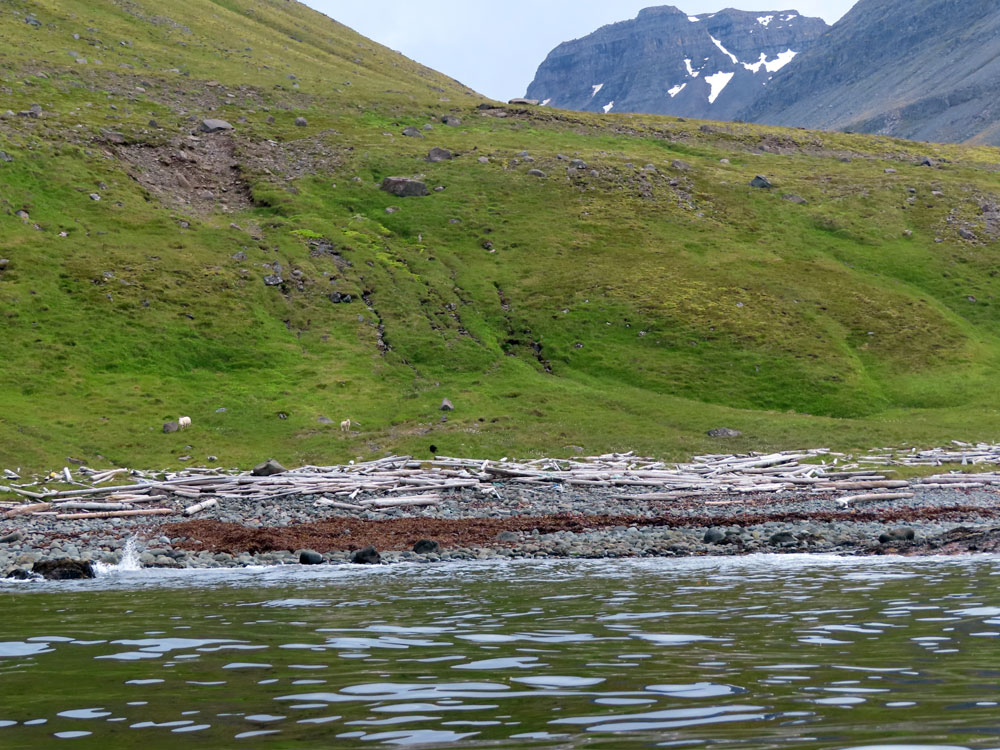
We were back on the ship soon after noon in time for lunch . Then a siesta for an hour before a coffee in the cabin at 4 pm we went on a Zodiac cruise round Veidleysufjordur in very calm conditions but with little to be seen other than a few birds and one or two seals, but I actually saw nothing.rist, playing and singing.
Click on any thumbnail below to get a larger photo
 |
 |
 |
 |
 |
 |
 |
Once back aboard we had some bread and cheese in the cabin with a cup of coffee before Werner’s briefing at 6:15 pm.
Then to the panorama lounge for a cocktail and canapés before its normal closure at 7:30 pm. Dinner in the restaurant at 8:30 pm where we had a long chat with Pierre after a very agreeable meal then into the panorama lounge where there was sufficient space still available to listen to Nico, the guitarist