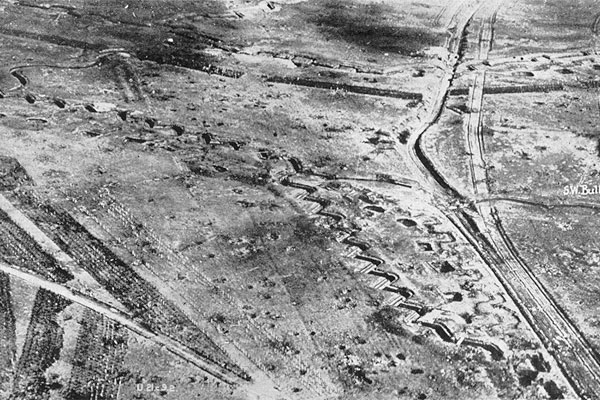
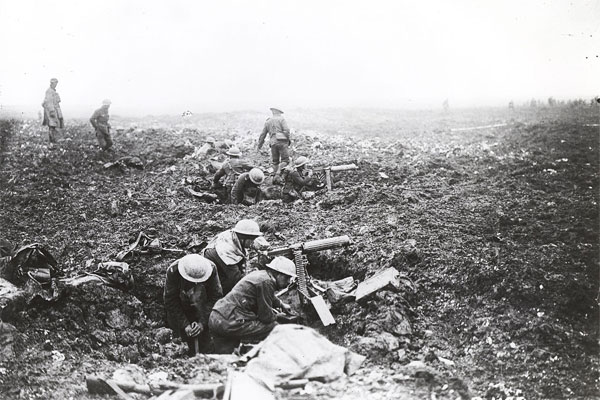
The Battle of Arras (also known as the Second Battle of Arras) was a British offensive on the Western Front during the First World War. From 9 April to 16 May 1917, British troops attacked German defences near the French city of Arras on the Western Front. The British achieved the longest advance since trench warfare had begun, surpassing the record set by the French Sixth Army on 1 July 1916. The British advance slowed in the next few days and the German defence recovered. The battle became a costly stalemate for both sides and by the end of the battle, the British Third Army and the First Army had suffered about 160,000 casualties and the German 6th Army about 125,000
The most quoted Allied casualty figures are those in the returns made by Lieutenant-General Sir George Fowke, Haig's adjutant-general. His figures collate the daily casualty tallies kept by each unit under Haig's command.[80] Third Army casualties were 87,226; First Army 46,826 (including 11,004 Canadians at Vimy Ridge) and Fifth Army 24,608, a total of 158,660. German losses are more difficult to determine. Gruppe Vimy and Gruppe Souchez suffered 79,418 casualties but the figures for Gruppe Arras are incomplete. The writers of the German Official History Der Weltkrieg, recorded 85,000 German casualties, 78,000 British losses to the end of April and another 64,000 casualties by the end of May, a total of 142,000 men. German records excluded those "lightly wounded". Captain Cyril Falls, the author of "Military Operations France and Belgium 1917*" (the History of the Great War volume on the battle) estimated that 30 per cent needed to be added to German returns for comparison with the British. Falls made "a general estimate" that German casualties were "probably fairly equal". Nicholls puts them at 120,000 and Keegan at 130,000.