
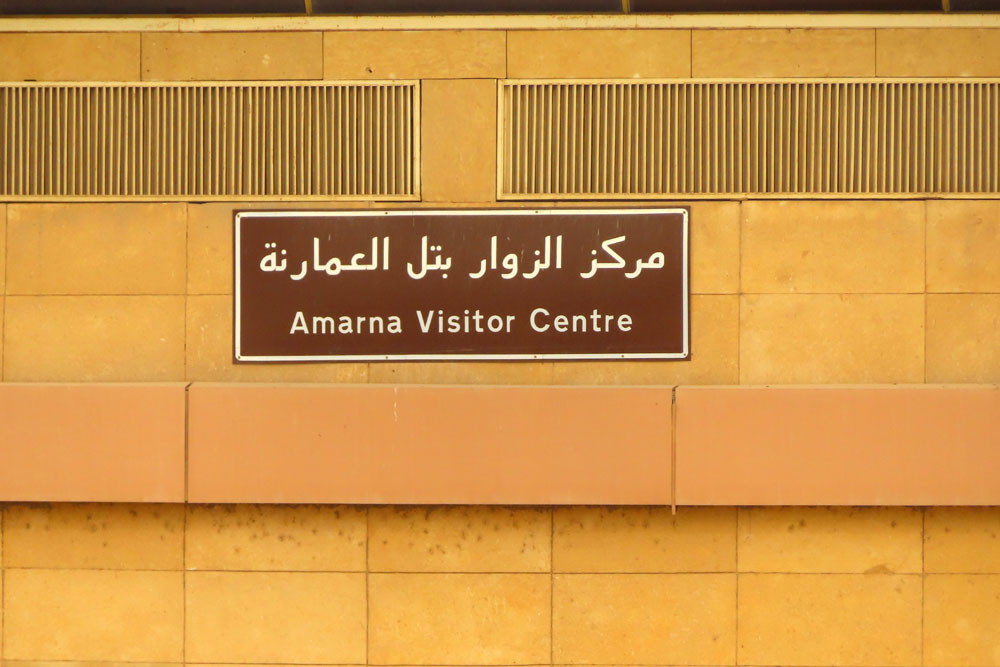
Saturday 27th April.. Amarna
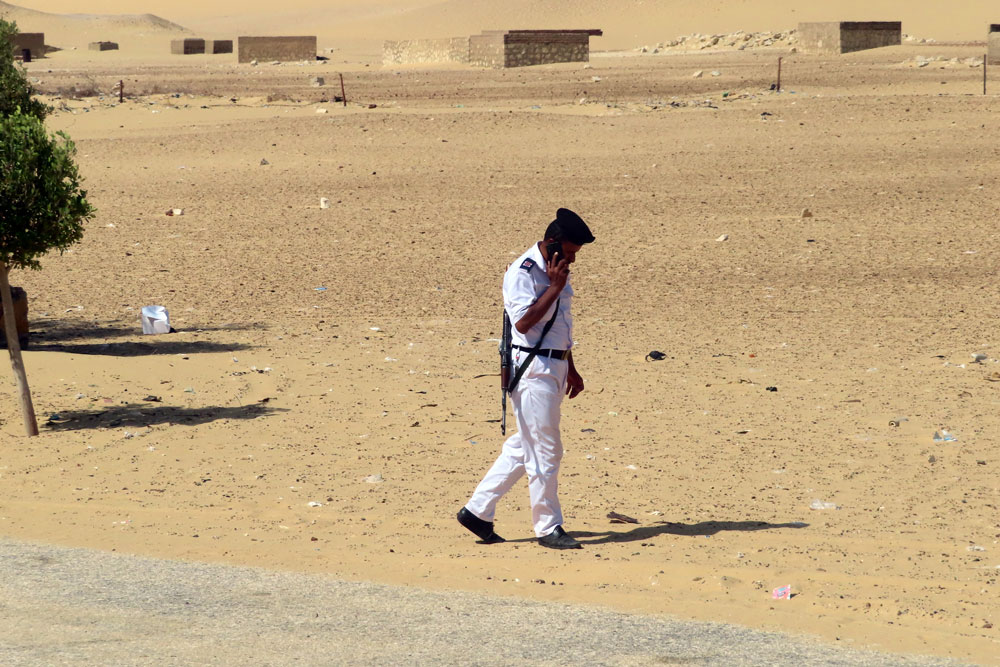
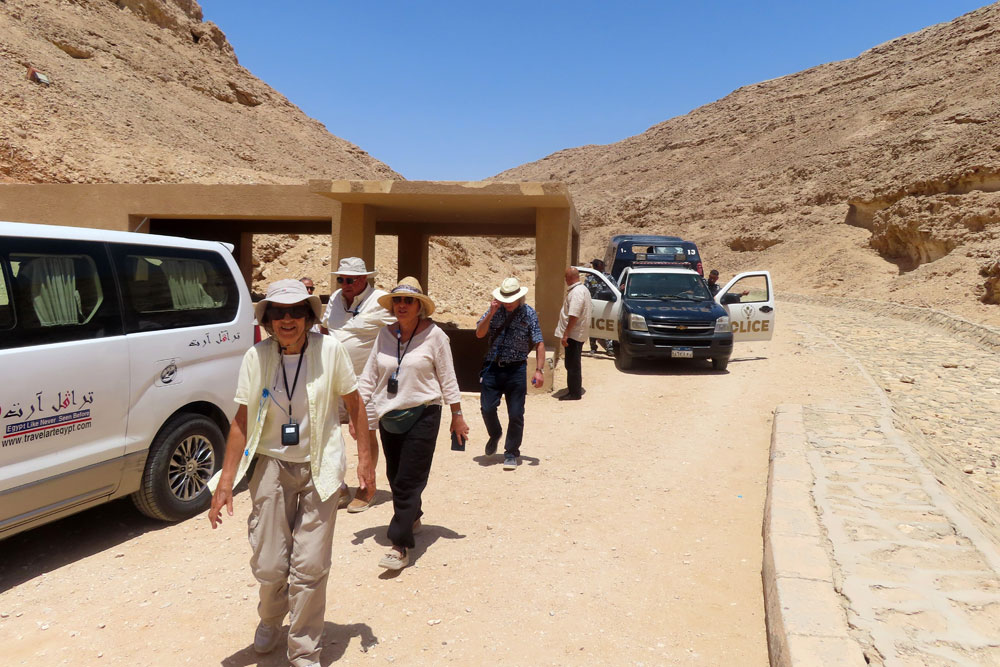
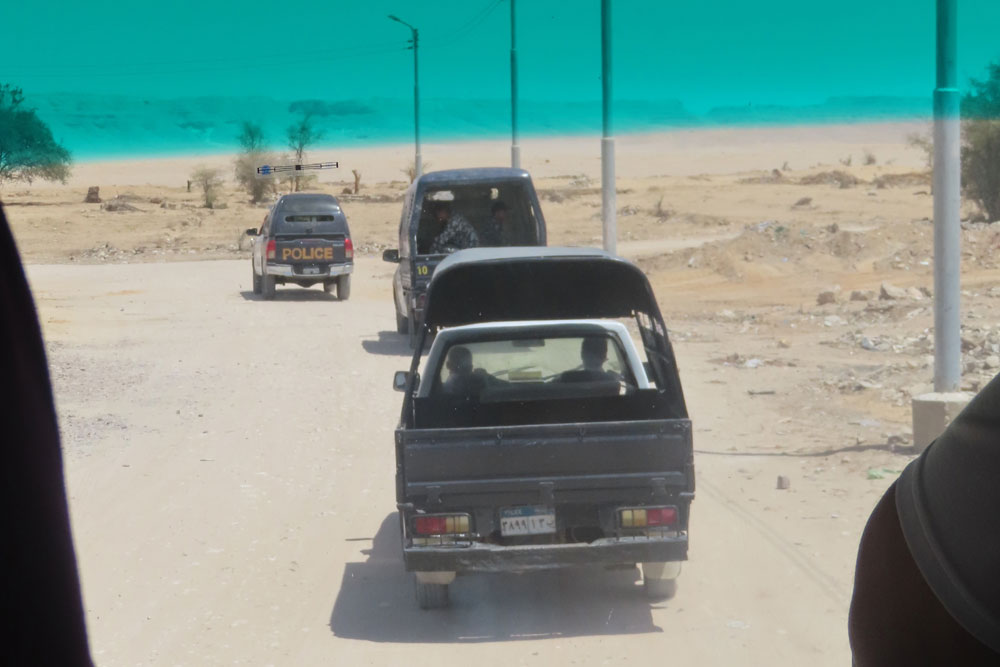
We left the ship at 6: 30 after an early breakfast . Security was ramped up here, and we went to.Ashmunein with a full police escort of three cars and a motorcycle outrider.
We stopped at Ashmunein to inspect two very large Statues of baboons which were Roman. and also saw the layout of the old town ..
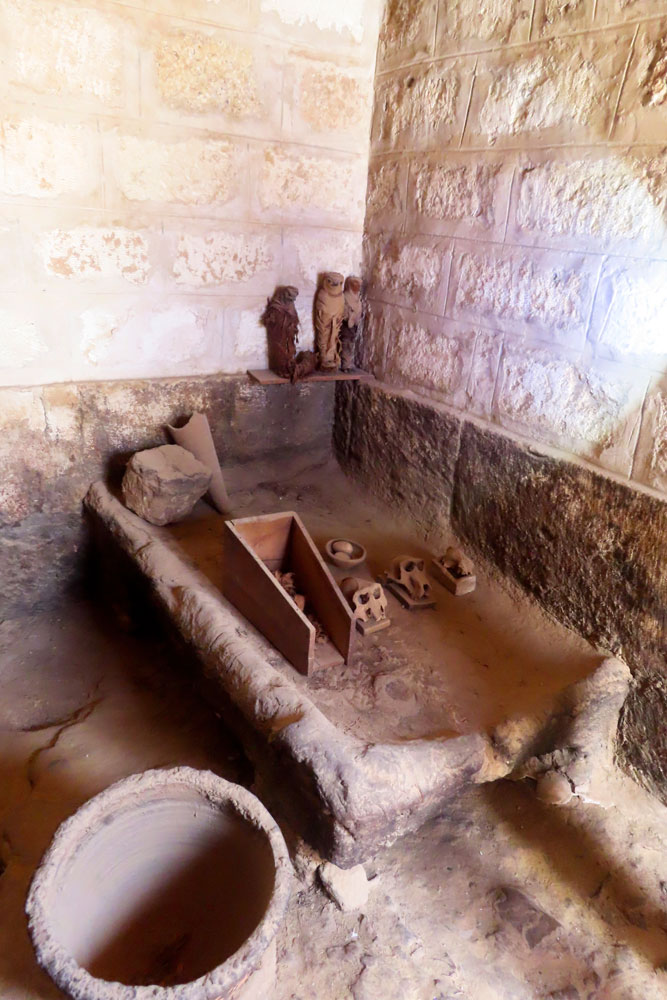
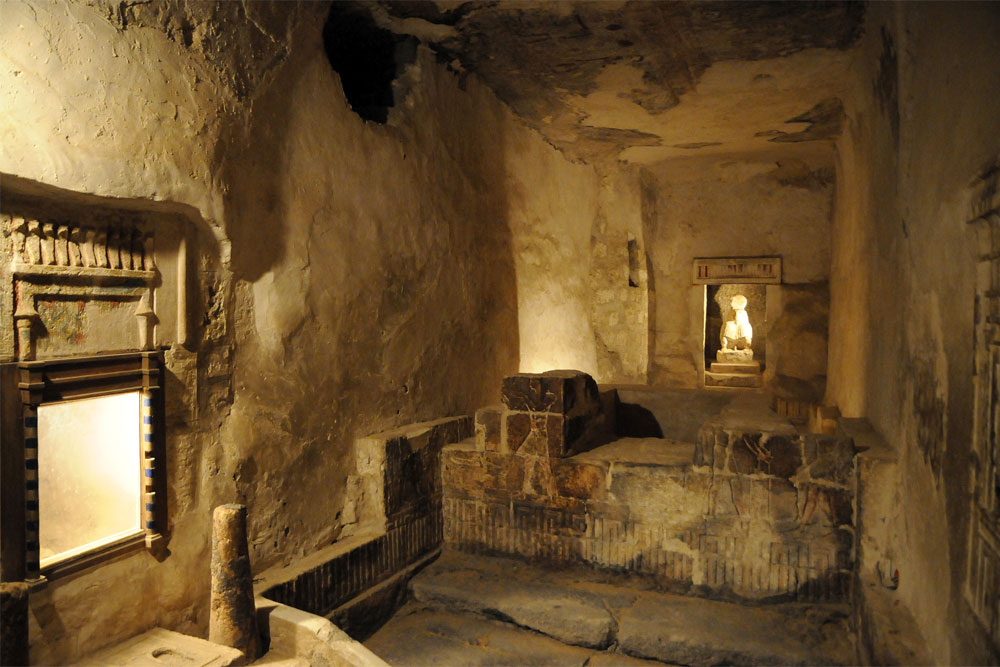
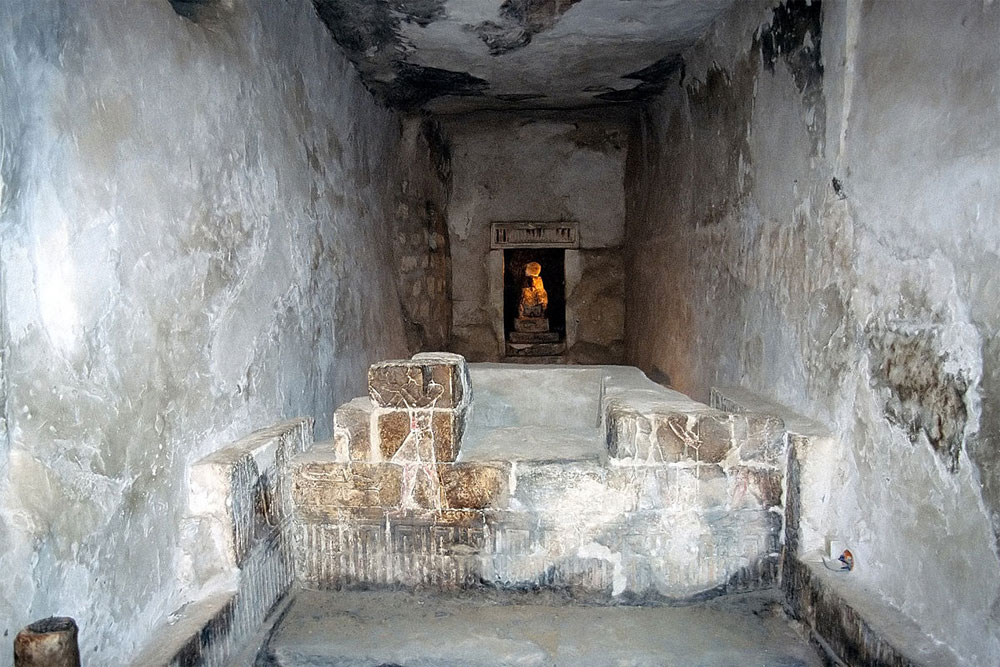
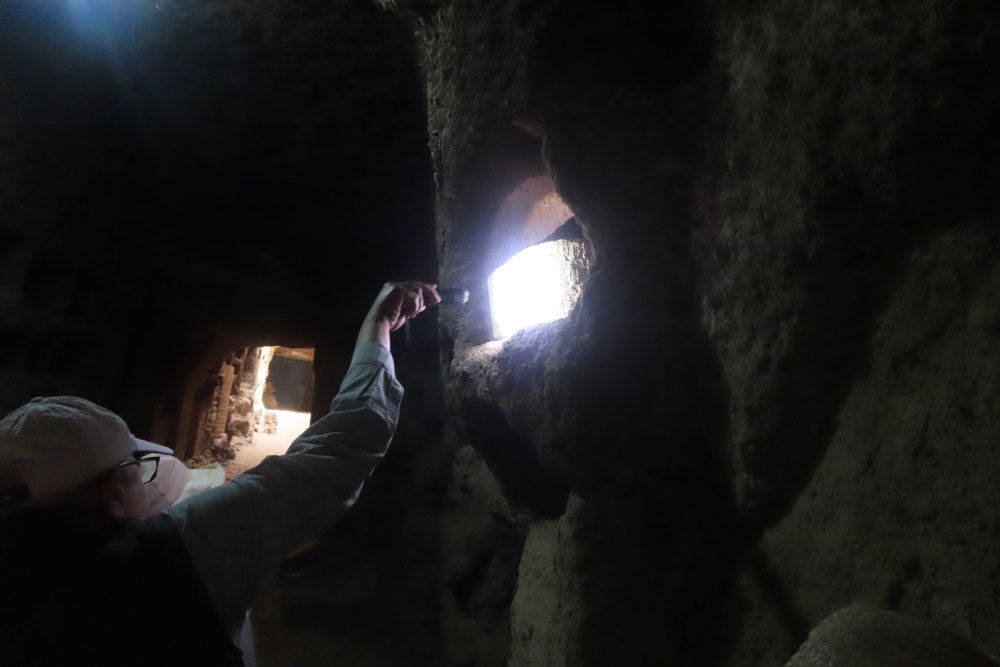
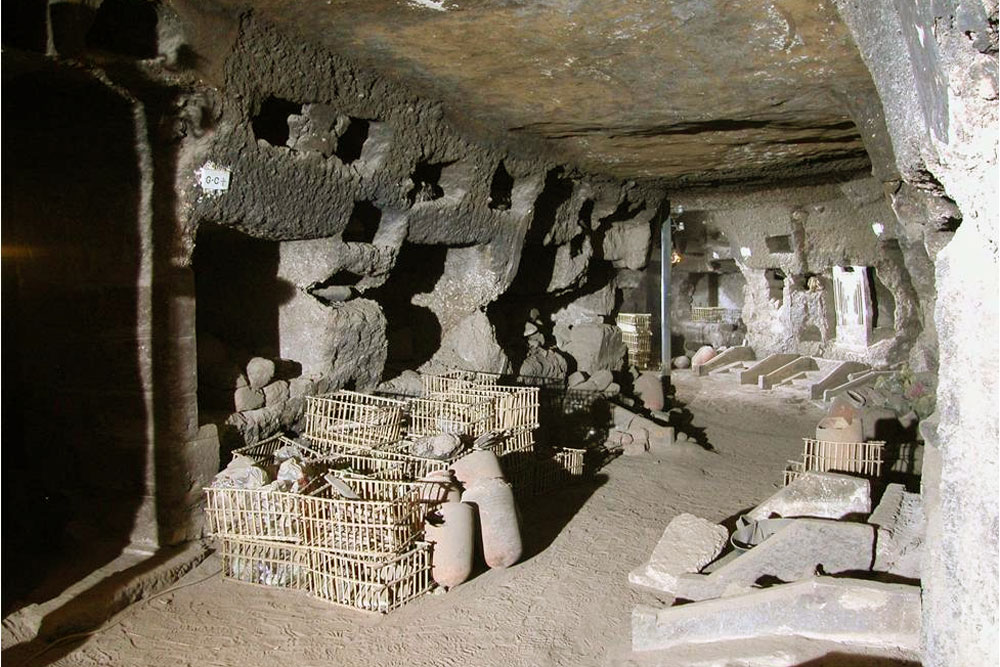
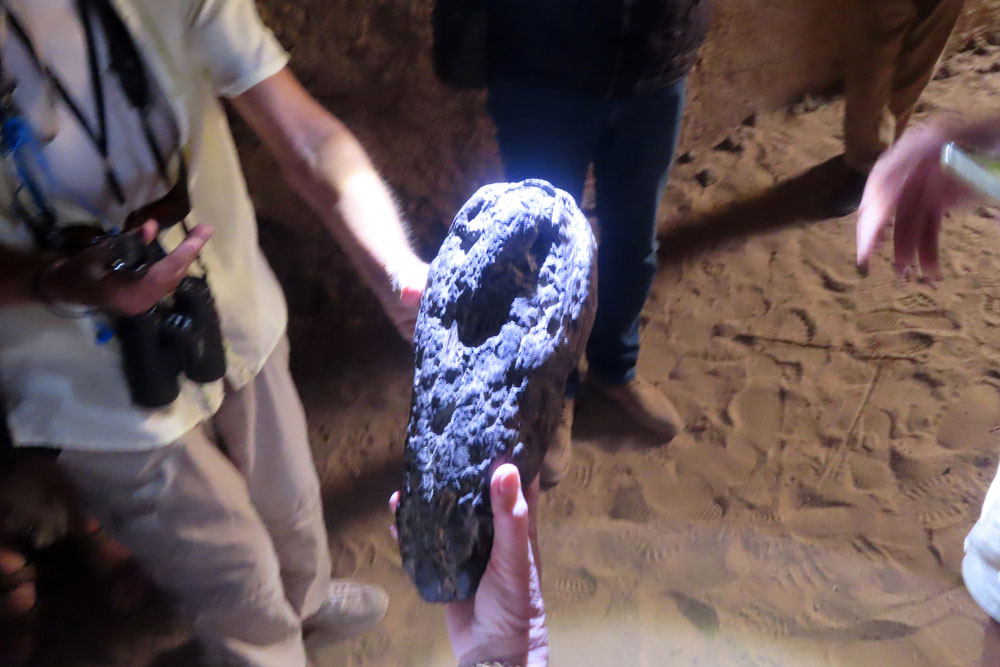
Next we had stopped at Tuna el Gebel which was the series of underground catacombs where apparently several; millions jars of ibises and baboons had been mummified. This was the most spectacular part of the visit and one we will remember. There were literally miles of streets underground filled with jars of mummified animals in them.
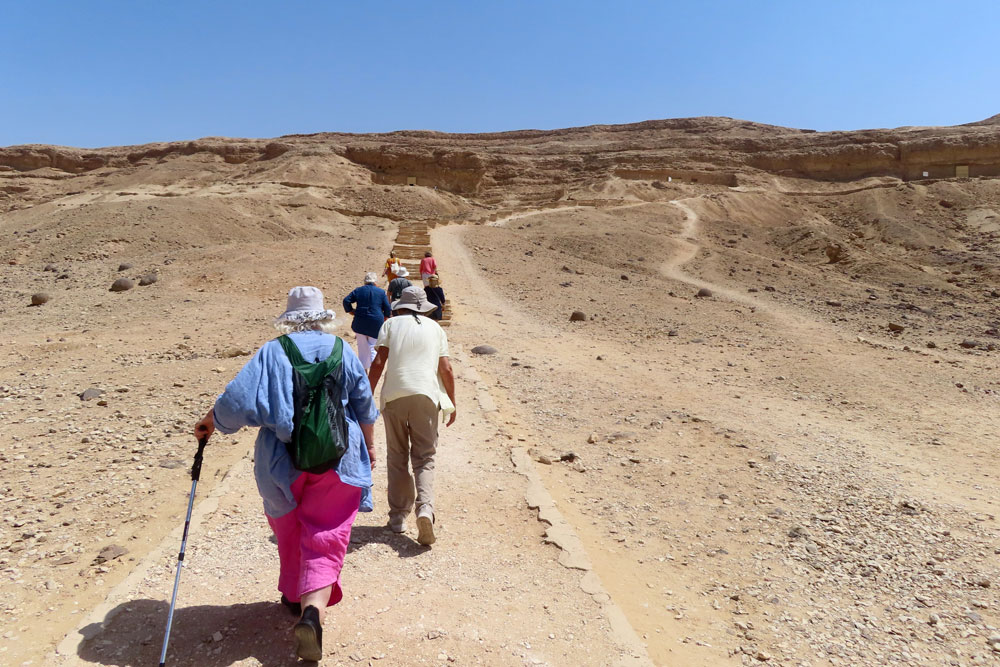
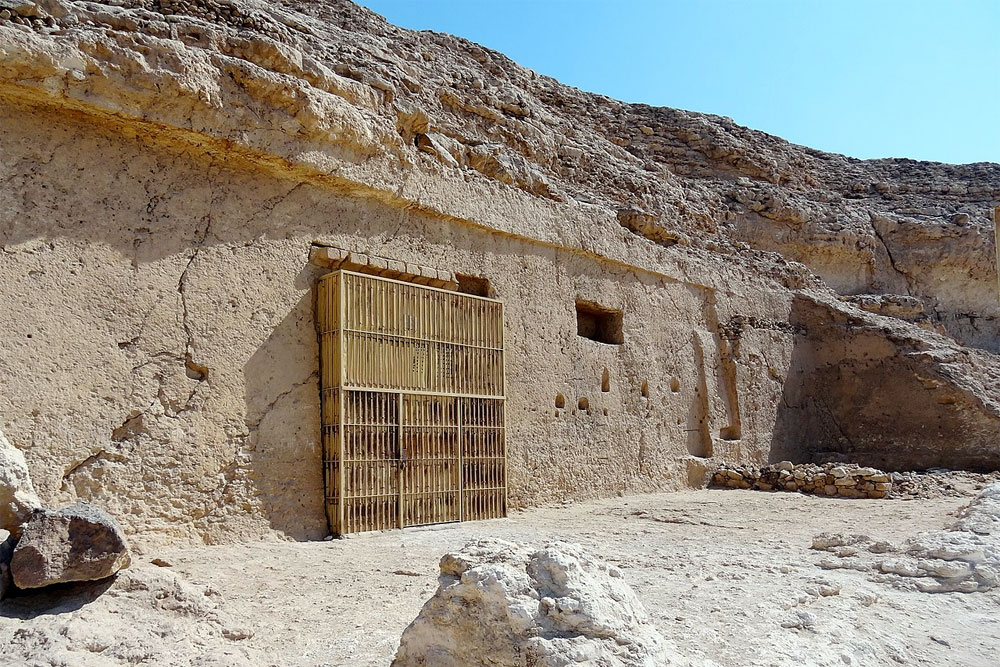
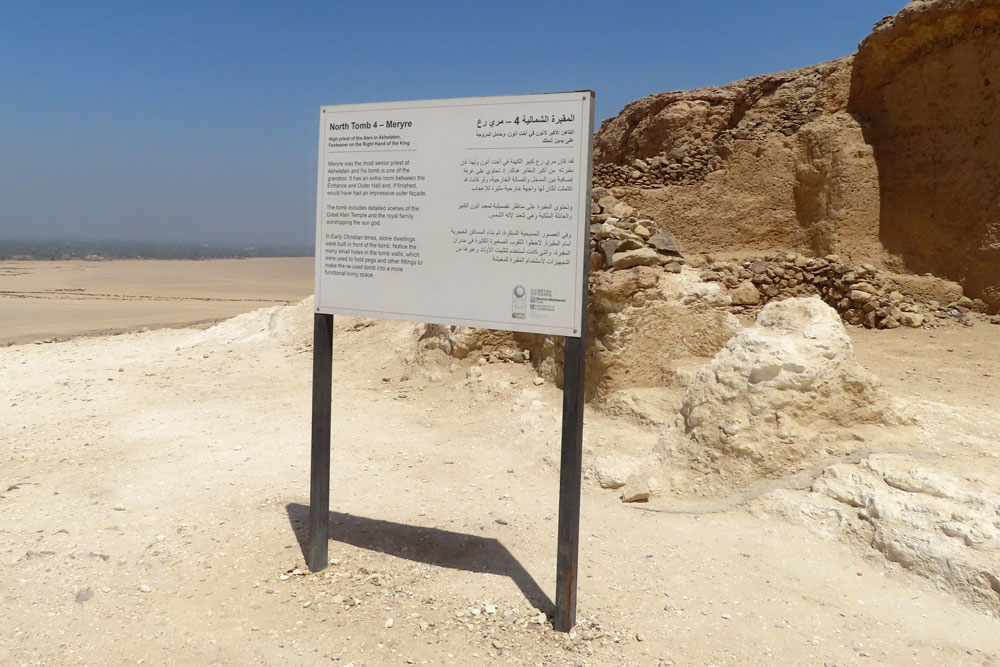
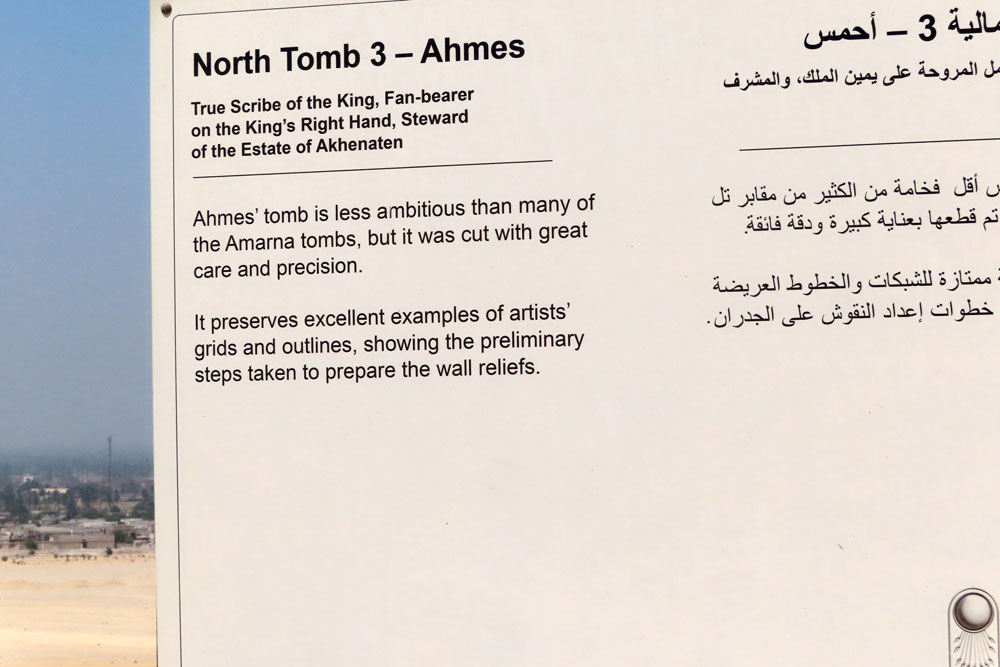
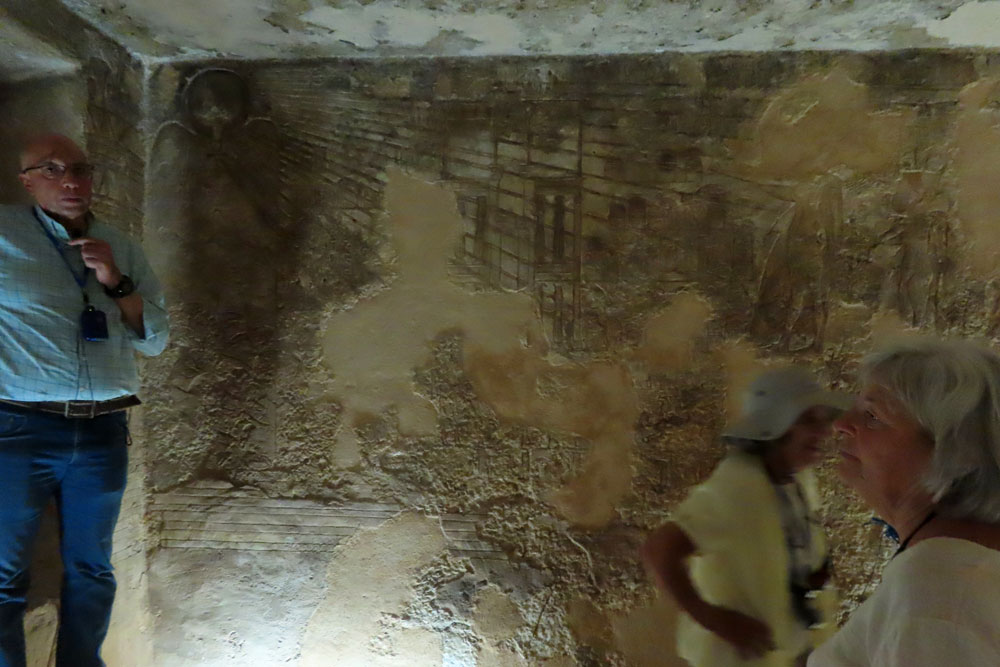
Then on to the city of Amarna, starting at the northern tombs. There was a fairly demanding climb up a steep cliff path to the three tombs that we visited. From here, on to the Royal tomb which had been damaged by floods in the 1990s but apparently it has also been damaged well before this period,
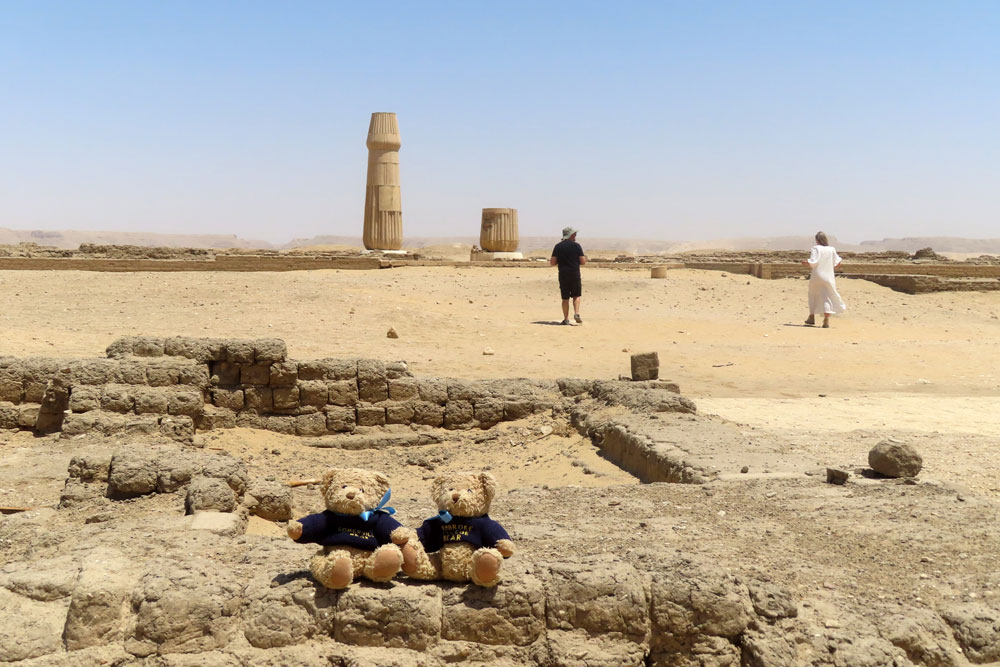
And we ended up with a photo stop at the temple of Amarna , where very little remained. What the bears call "old stones",
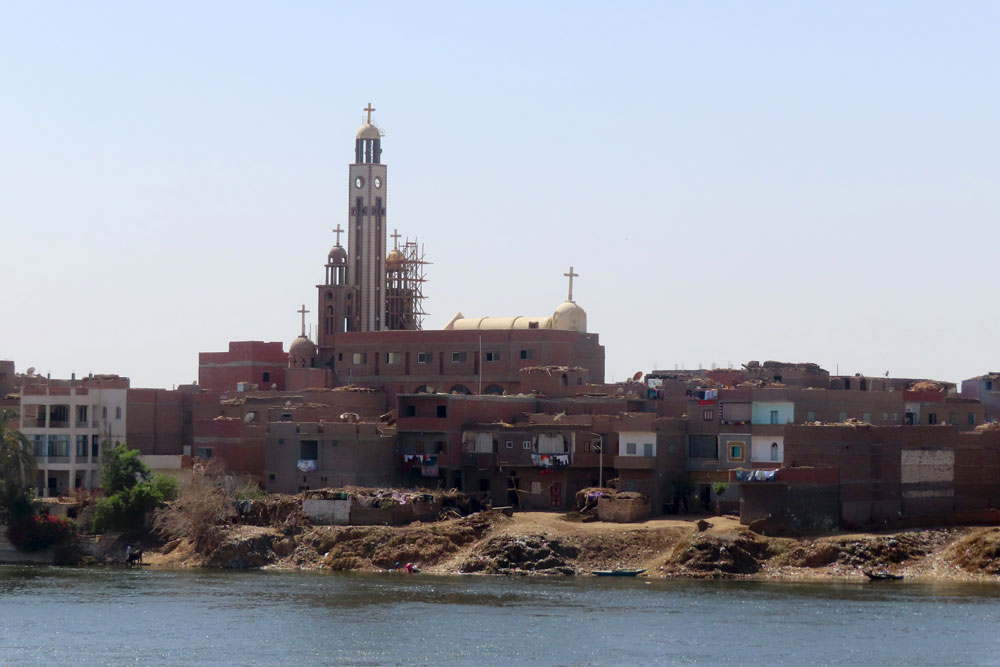
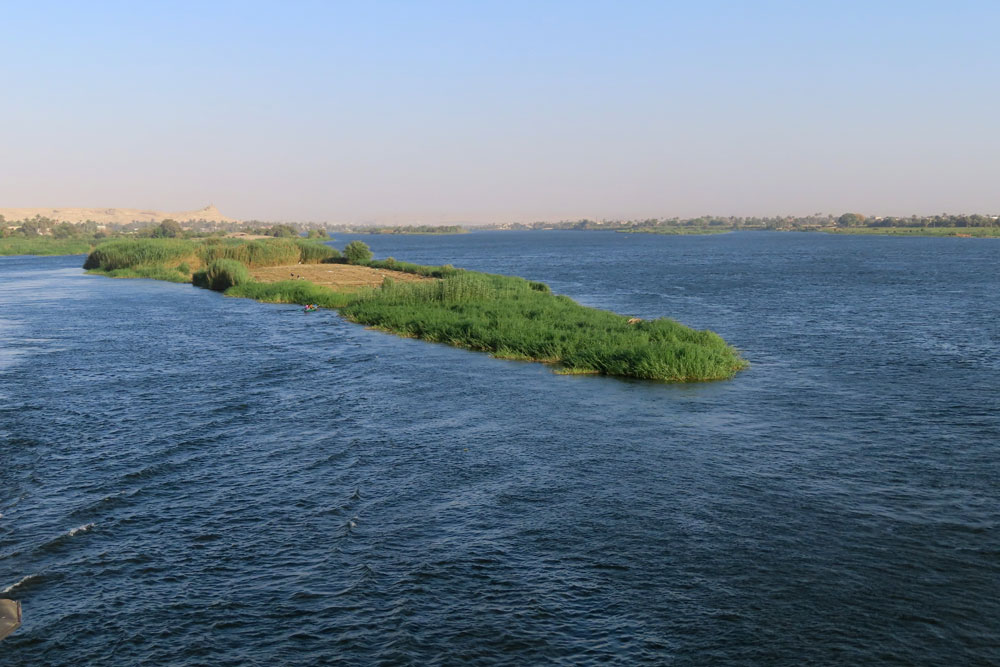
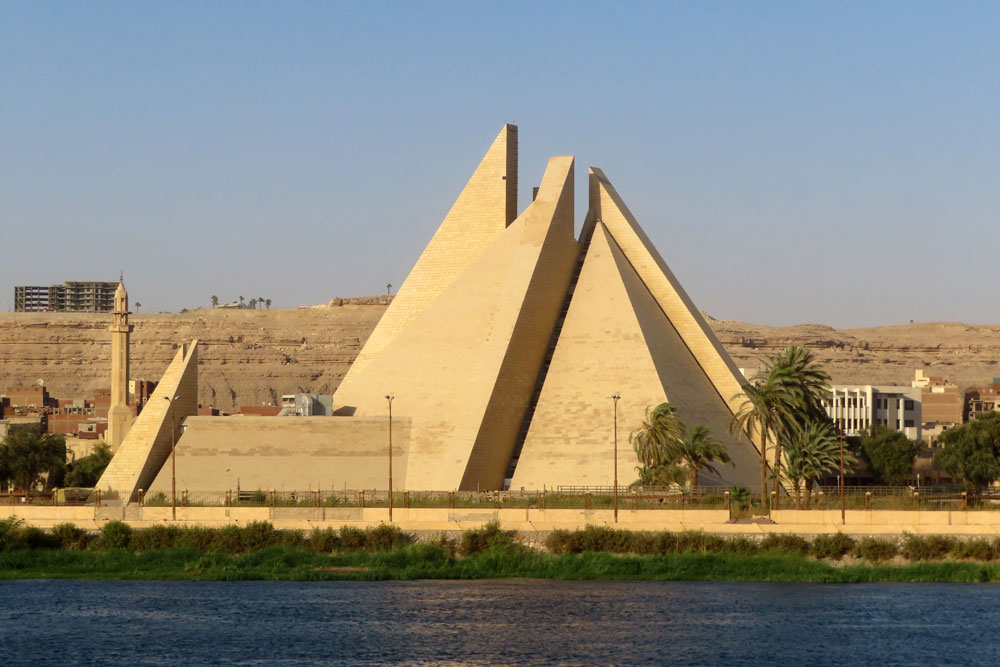
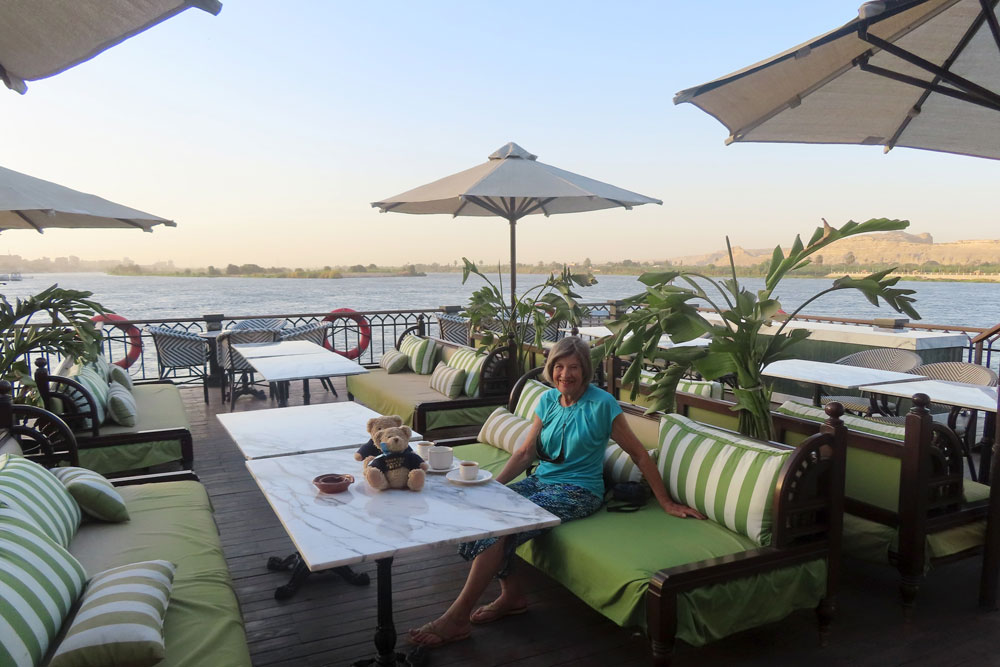
Back at the boat soon after 2 pm, Chris enjoyed a swim and we sunbathed on a windy upper deck. Then afternoon tea on the lower deck where it was slightly less windy. About 18.00 we moored at Minya and enjoyed cup of coffee on the back deck. A vegetarian buffet supper where some of the waiters were new and somewhat inefficient. There was a folklore show with whirling dervishes , which we watched for 10 minutes or so, but it was once again an audience participation dance so we left without seeing the whirling dervish perform but we did get a picture of him.
Ashmunein
Two colossal statues of baboons, sacred animals of the god Thoth, stand at the former site of Hermopolis, once the most important cult centre of Thoth and the site of his temple. Little remains of Hermopolis today, the chief remnant of the temple complex being these two baboons dating to the reign of Amenophis III which now stand alone in the village of Ashmunein. A more substantial part of the temple itself still stood up until the early 19th century but was destroyed by flooding, and only its water-logged foundations remain today.
Click on any of the thumbnail photos for a larger version
 |
 |
 |
 |
 |
 |
Tuna el Gebel
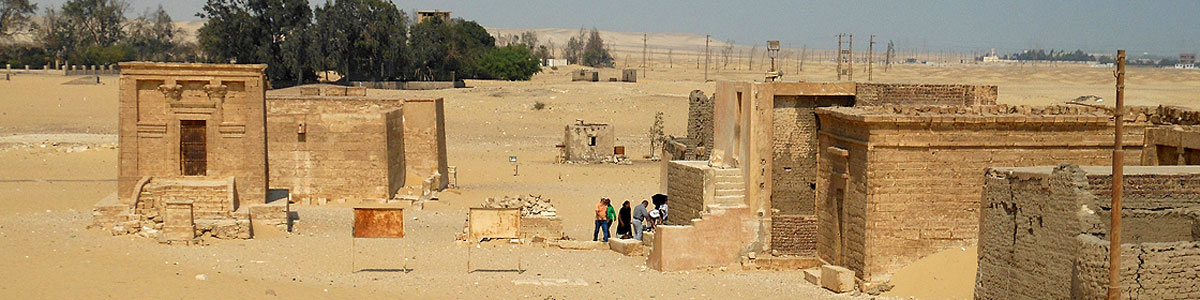
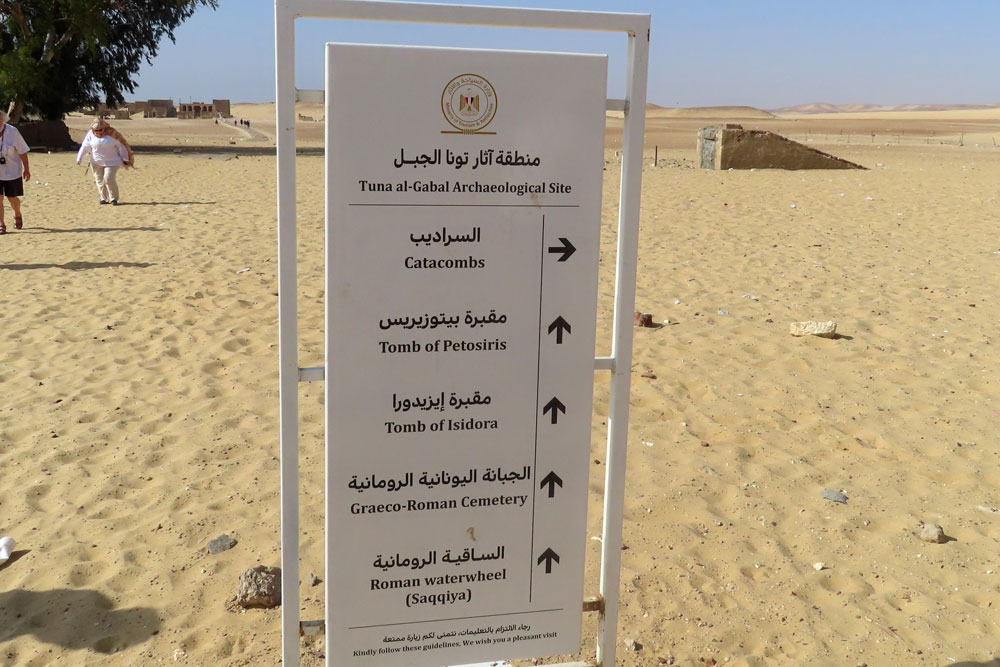
Tuna el-Gebel was the necropolis of Khmun (Hermopolis Magna). It is the largest known Greco-Roman necropolis in Egypt, dating from the New Kingdom to the Roman Period, and seeing heavy use in the Ptolemaic Period.
Click on any of the thumbnail photos for a larger version
 |
 |
 |
 |
 |
 |
 |
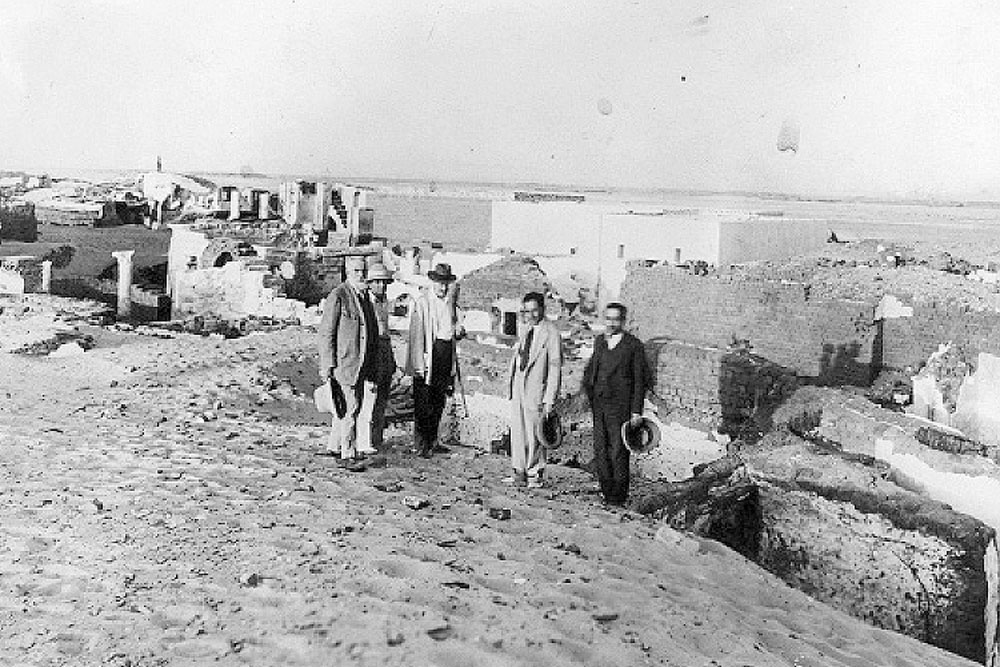 |
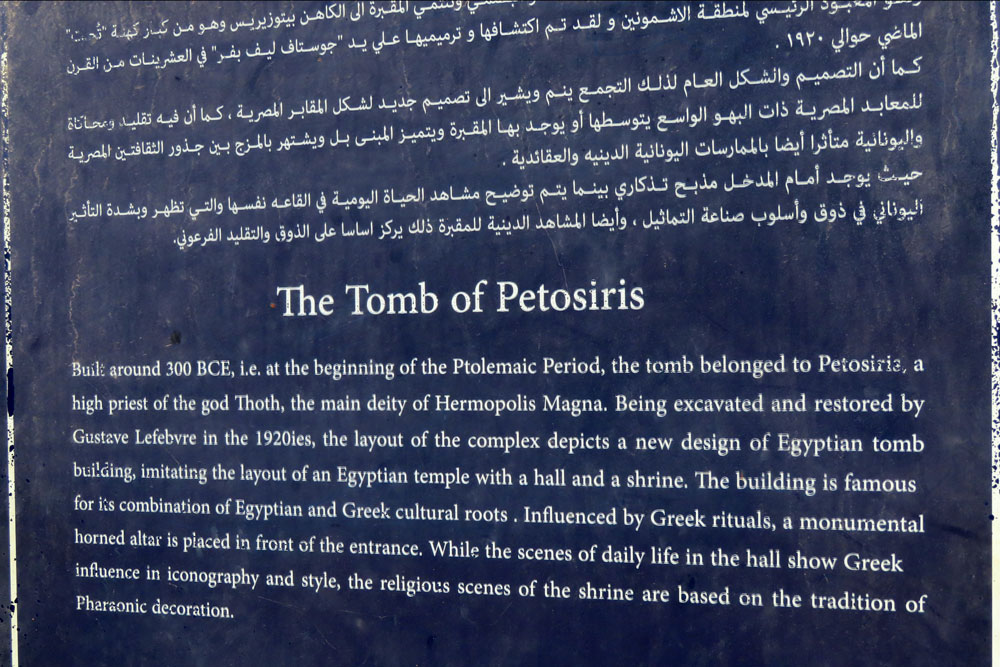
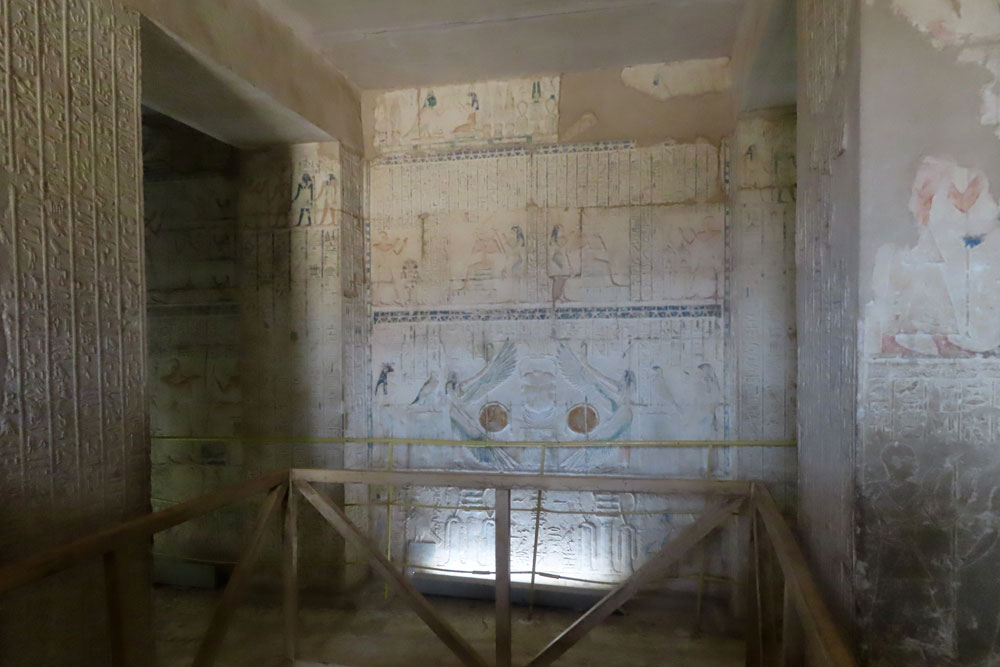
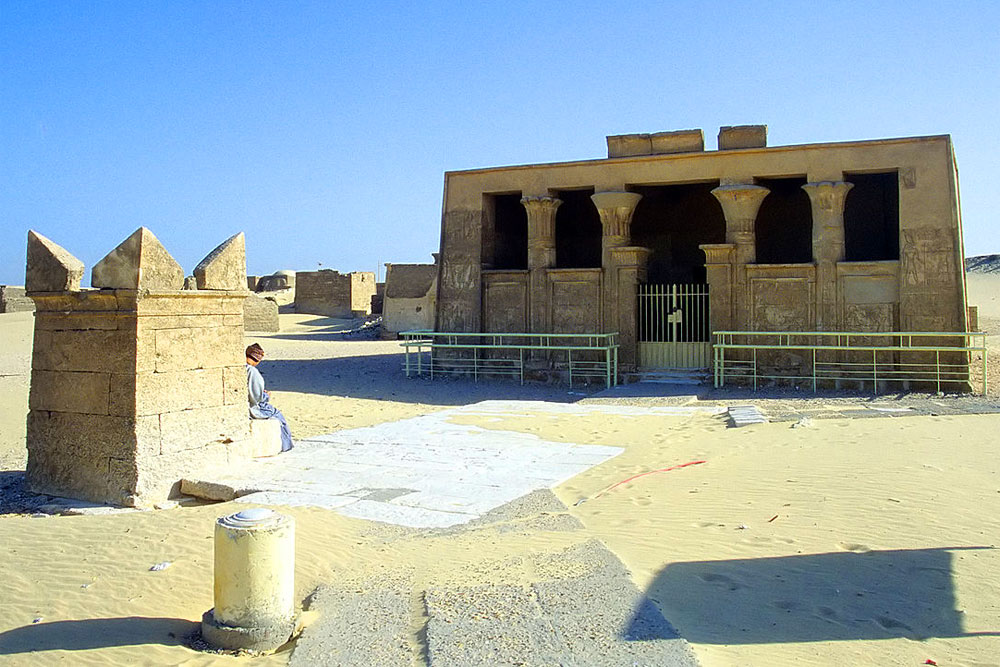
Tomb of Petosiris
Petosiris was the high priest of Thoth at Hermopolis and held various priestly degrees in the service of Sakhmet, Khnum, Amen-Re and Hathor. He lived in the second half of the 4th century BC, during the 28th Dynasty. Petosiris prided himself on having re-established the fortunes of the temples in which he served. There is a pseudepigraphic onomantic text, Petosiris to Nechepso, and it is possible that the priestly Petosiris described in this article is the inspiration for the attribution of authorship. Nechepso lived in the 7th century BC and that the text is likely 2nd century BC.
 |
 |
 |
 |
 |
 |
 |
 |
Click on any of the thumbnail photos for a larger version
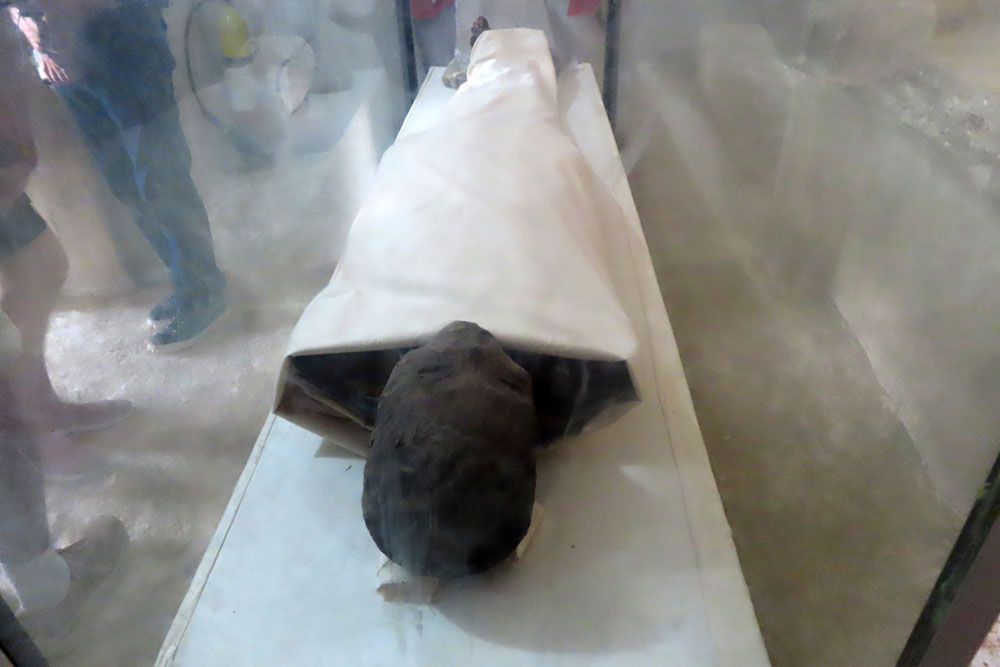
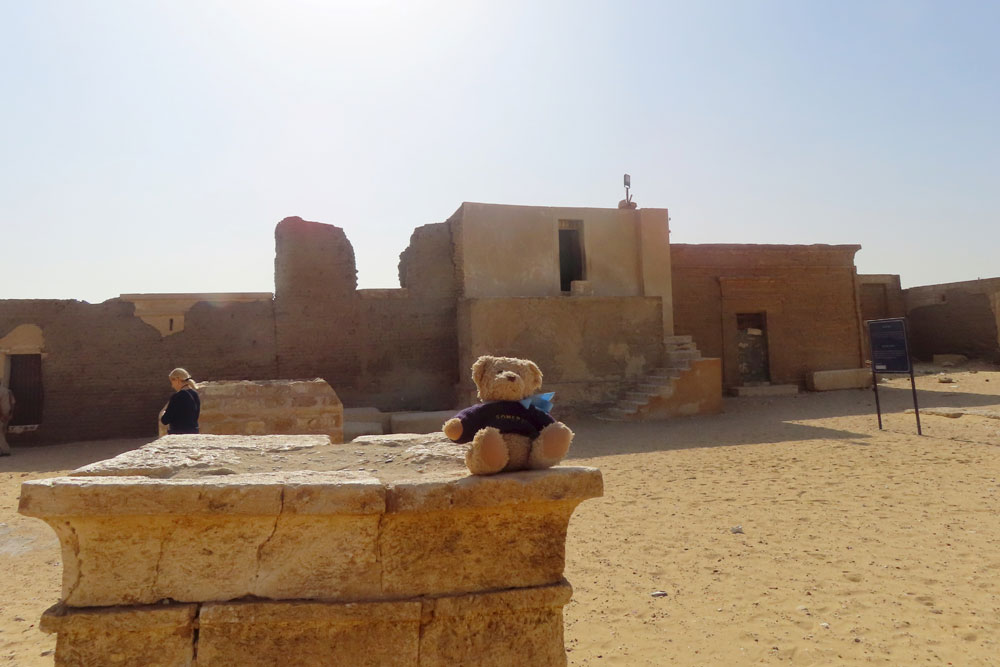
Tomb of Isadora
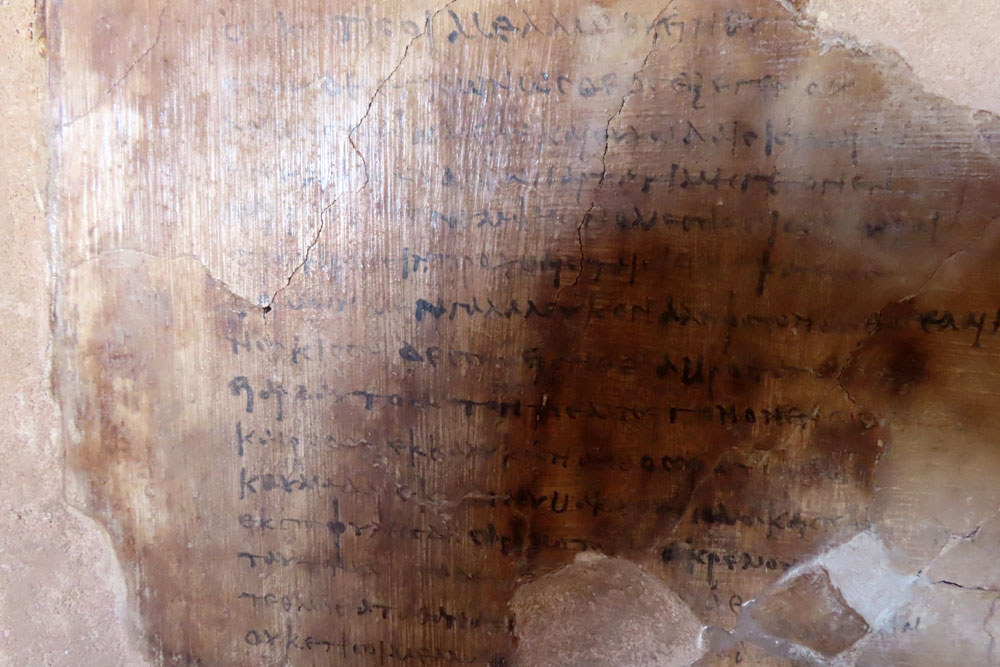
Isadora was a wealthy and beautiful young woman living in Hermopolis during the time when the Roman emperor Antoninus Pius (AD 138–161) ruled over Ægyptus. She fell in love with a young soldier from Antinoöpolis, a love her father disapproved of, and so the two decided to elope. Unfortunately, Isadora drowned while crossing the Nile. Her body was mummified, and her father, overtaken by grief, built an elaborate tomb in her honour; featuring a poem of ten lines inscribed in Greek elegiac couplets. A cult was established around her tomb. Isadora's mummified remains are still present, encased in glass, in her mausoleum – a prominent building at Tuna el-Gebel.
Click on any of the thumbnail photos for a larger version
 |
 |
 |
 |
 |
 |
 |
 |
Underground Animal Catacombs
The necropolis in Tuna el-Gebel during the Late Period was mostly an animal cemetery. The most common burials took place in underground galleries and were of mummies of ibises and baboons representing Thoth, as well as all kinds of bird mummies. These were most likely a result of nearby animal preserves or breeding areas, as well as local Thoth worship.
Tuna el-Gebel features funerary chambers decorated with a mixture of ancient Greek and Egyptian art. “The area is becoming more famous with new discoveries and the village of Tuna el-Gebel has not yet revealed all of its secrets.” The animal burial site is believed to be the largest ever to be discovered. It includes four large catacombs with huge galleries carved in the rock. Ancient Egyptians would bury the mummified remains of sacred ibises and apes inside those galleries.
The cemetery is divided into four parts, the most ancient one dating back to the 26th Dynasty. Inside the cemetery, there are two main roads and other smaller passages with large halls on each side where the birds’ owners would be received. At the entrance was a temple with a small stone altar that was used during funerary rituals specific to ibis and baboons.
The catacombs extend for a distance of more than 10 kilometers.Thousands of mummified ibises and baboons, symbolic of the god Thoth, were found in it. The site also includes the ruins of the great Thoth temple and the dwellings that were inhabited by the priests responsible for the funeral and ritual service in this temple. Another temple was dedicated to the baboon god near the entrance to the cemetery of sacred animals. Animals in ancient Egypt were revered as tribal deities, and their burial was an important religious ritual during that historical era. Perhaps one of the most distinctive characteristics of the Egyptian deities were their depiction with the heads of birds and other animals. Around 800 BC and thereafter many sacred animals were mummified and buried in cemeteries dedicated to them in sacred places in different parts of the country. The baboon and the ibis were two animals sacred to the god Thoth, while cats were the sacred animal of the god Bastet.
The animals were mummified in the same way as human mummies, with modifications. Mummification mainly relies on drying the body to prevent the spread of bacteria that lead to mould. Ancient Egyptians usually emptied the body by making an opening in its left side or along its stomach. To mummify humans, the guts were also mummified after they were removed from the body and were placed in special containers called canopic pots. Only birds’ guts were returned to the body after drying them in Natron salt. The drying process usually took 40 days and the complete mummification process took 70. This period probably varied in the case of smaller animals. And after drying, the animal was rubbed with different oils to restore softness to its limbs before wrapping it in linen and preparing it for burial
Click on any of the thumbnail photos for a larger version
 |
 |
 |
 |
 |
 |
 |
 |
 |
 |
 |
 |
Amarna
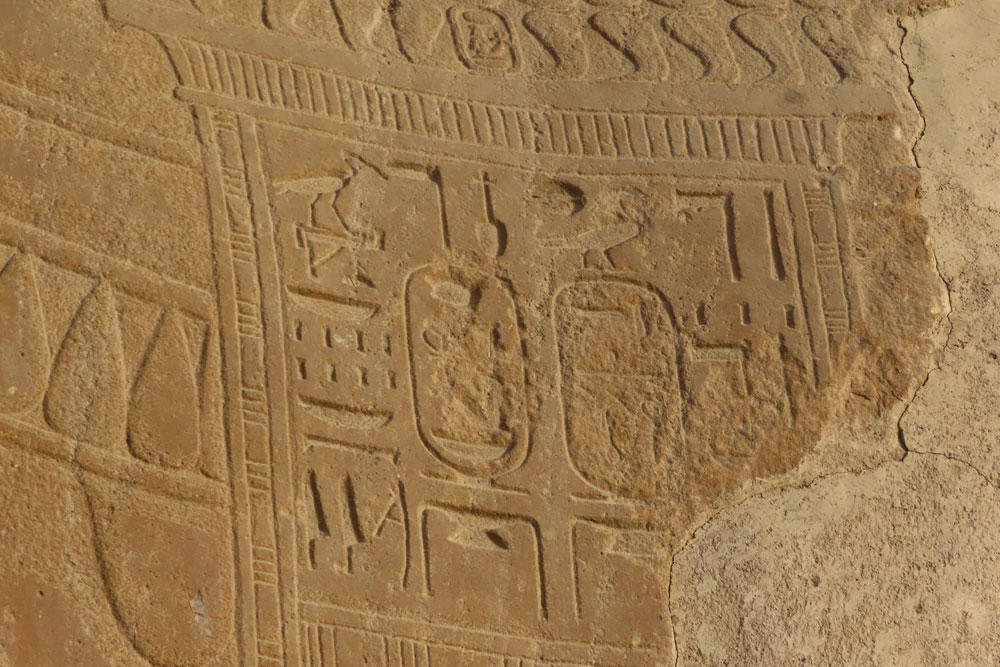
Amarna is an extensive ancient Egyptian archaeological site containing the remains of what was the capital city during the late Eighteenth Dynasty. The city of Akhetaten was established in 1346 BC, built at the direction of the Pharaoh Akhenaten, and abandoned shortly after his death in 1332 BC.
The name that the ancient Egyptians used for the city is transliterated as Akhetaten or Akhetaten, meaning "the horizon of the Aten". The site is 312 km south of the Egyptian capital, Cairo. Activity in the region flourished from the Amarna Period until the later Roman era
The city was built as the new capital of the Pharaoh Akhenaten, dedicated to his new religion of worship to the Aten. Construction started in or around Year 5 of his reign (1346 BC) and was probably completed by Year 9 (1341 BC), although it became the capital city two years earlier. To speed up construction of the city most of the buildings were constructed out of mudbrick, and white washed. The most important buildings were faced with local stone. It is the only ancient Egyptian city which preserves great details of its internal plan in large part because it was abandoned almost completely shortly after the royal government of Tutankhamun quit the city in favour of Thebes (modern Luxor).
The city seems to have remained active for a decade or so after his death, and a shrine to Horemheb indicates that it was at least partially occupied at the beginning of his reign, if only as a source for building material elsewhere. Once it was abandoned, it remained uninhabited until Roman settlement began along the edge of the Nile. However, due to the unique circumstances of its creation and abandonment, it is questionable how representative of ancient Egyptian cities it actually is. Amarna was hastily constructed and covered an area of approximately 13 km of territory on the east bank of the Nile River; on the west bank, land was set aside to provide crops for the city's population.
The entire city was encircled with a total of 14 boundary stellae detailing Akhenaten's conditions for the establishment of this new capital city of Egypt. Most of the original 14 boundary stelae have been badly eroded, but som survive. A surviving document records the pharaoh's wish to have several temples of the Aten to be erected here, for several royal tombs to be created in the eastern hills of Amarna for himself, his chief wife Nefertiti, and his eldest daughter Meritaten as well as his explicit command that when he was dead, he would be brought back to Amarna for burial.
Much of what is known about Amarna's founding is due to the preservation of a series of official boundary stelae (13 are known) ringing the perimeter of the city. These are cut into the cliffs on both sides of the Nile (10 on the east, 3 on the west) and record the events of Akhetaten (Amarna) from founding to just before its fall. To make the move from Thebes to Amarna, Akhenaten needed the support of the military. Additionally, everyone in the military had grown up together, they had been a part of the richest and most successful period in Egypt's history under Akhenaten's father, so loyalty among the ranks was strong and unwavering. Perhaps most importantly, "it was a military whose massed ranks the king took every opportunity to celebrate in temple reliefs, first at Thebes and later at Amarna."
Click on any of the thumbnail photos for a larger version
 |
 |
 |
 |
| Armana was delineated with stelae marking the strategic places | |||
 |
 |
 |
 |
 |
 |
 |
 |
 |
 |
 |
 |
 |
 |
 |
 |
 |
 |
 |
 |
 |
 |
 |
 |
 |
 |
 |
 |
And back to the ship
Click on any of the thumbnail photos for a larger version
 |
 |
 |
 |
 |
 |
 |
 |
 |
 |
 |
 |