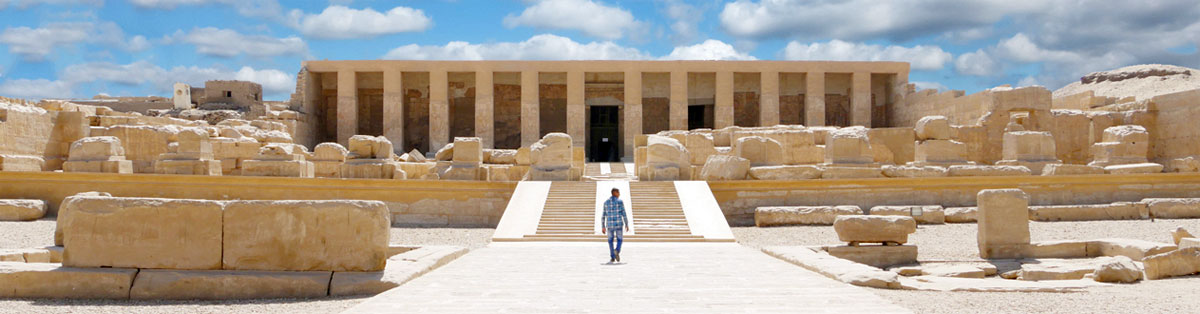
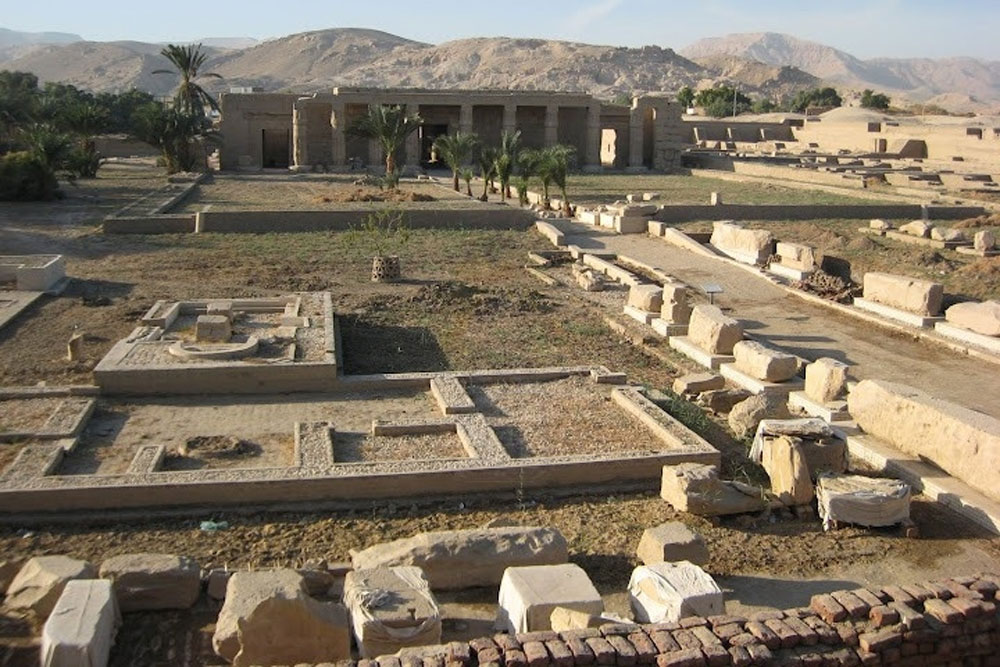
Thursday 25th April . Abydos Temple
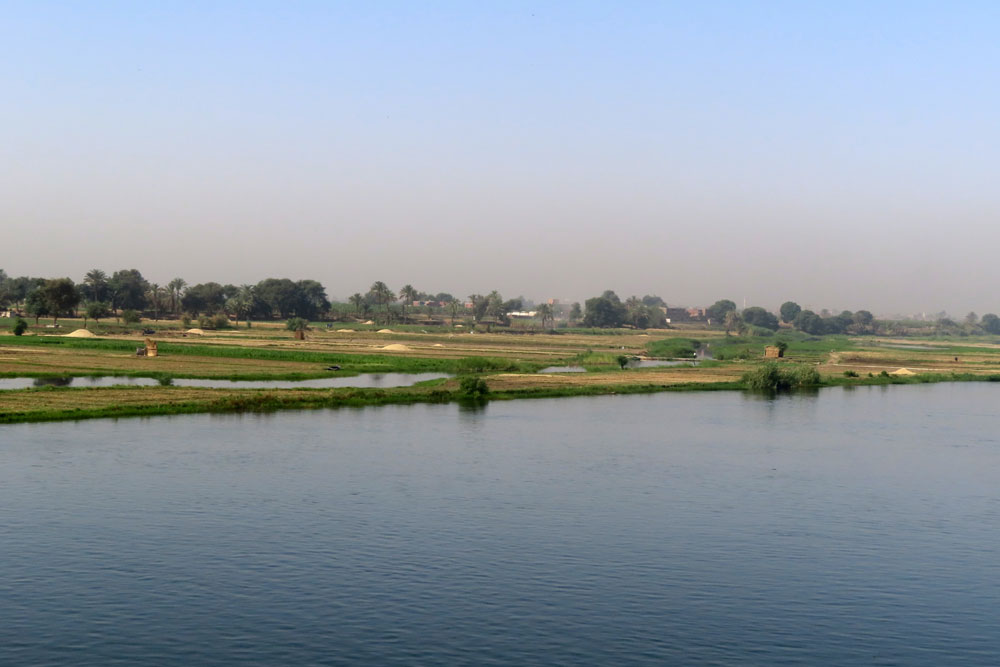
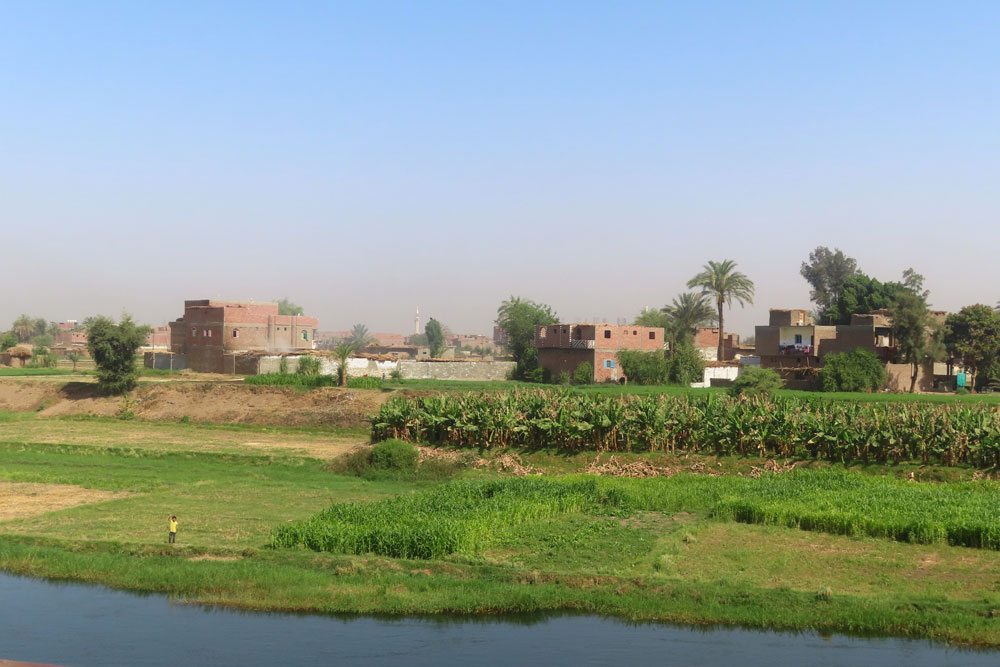
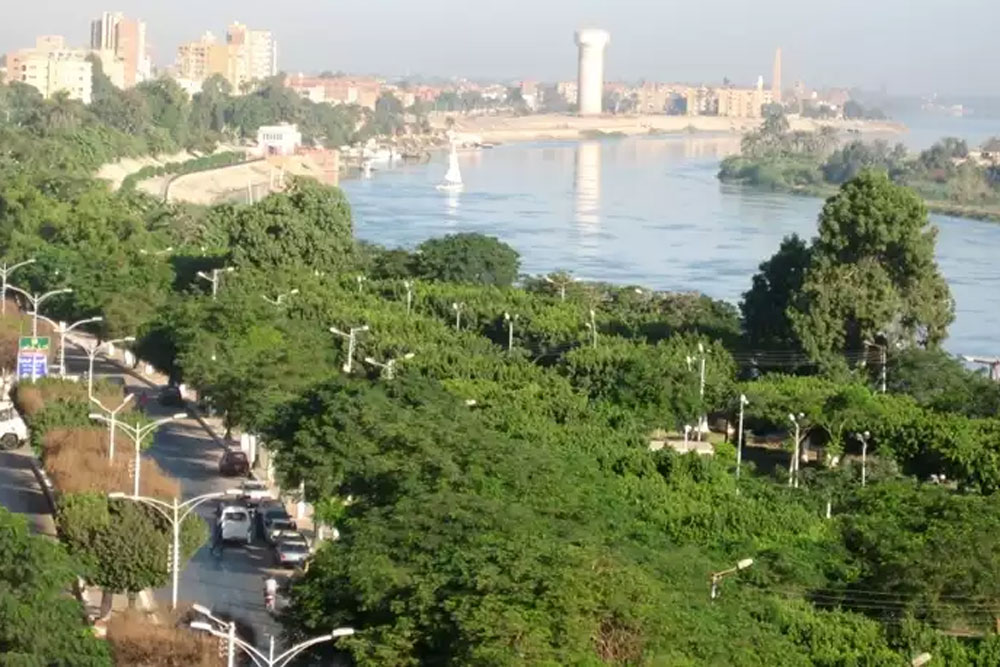
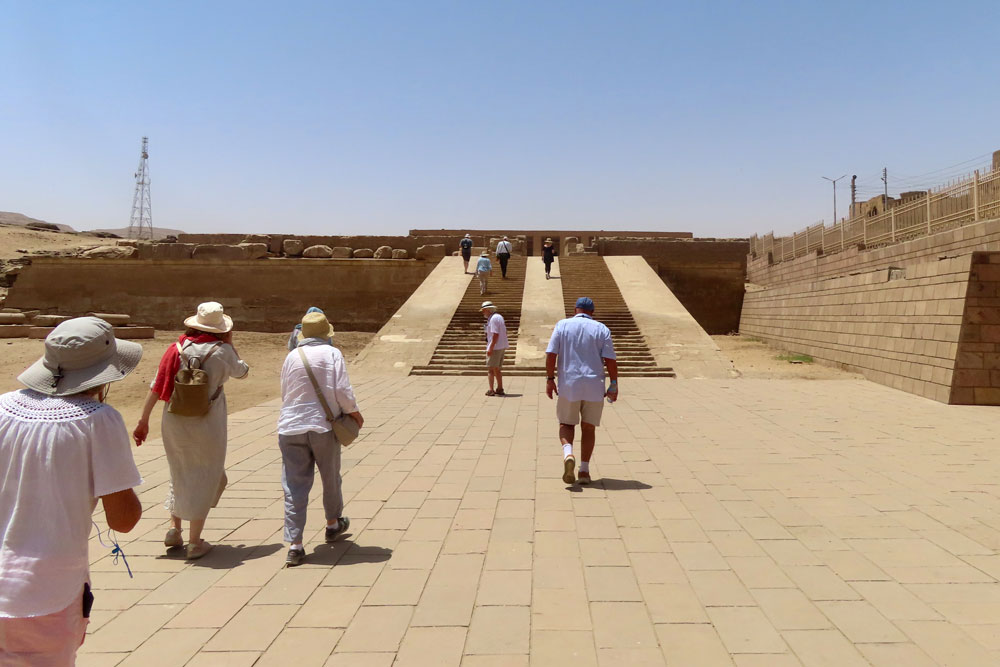
Moving northwards on the Nile to reach the temple of Abydos. We woke up early at 6 pm and went up on deck for an hour before breakfast. This included Chris having a swim. Then breakfast after nine and onto the coach at 10 for a 15 minute drive to the Abydos Temple. It was not as splendid as the one we visited the previous day. We were back on the ship at 1:30 for a British buffet lunch:: the roast beef was brisket and a bit iffy but the battered fish (and chips) was excellent.
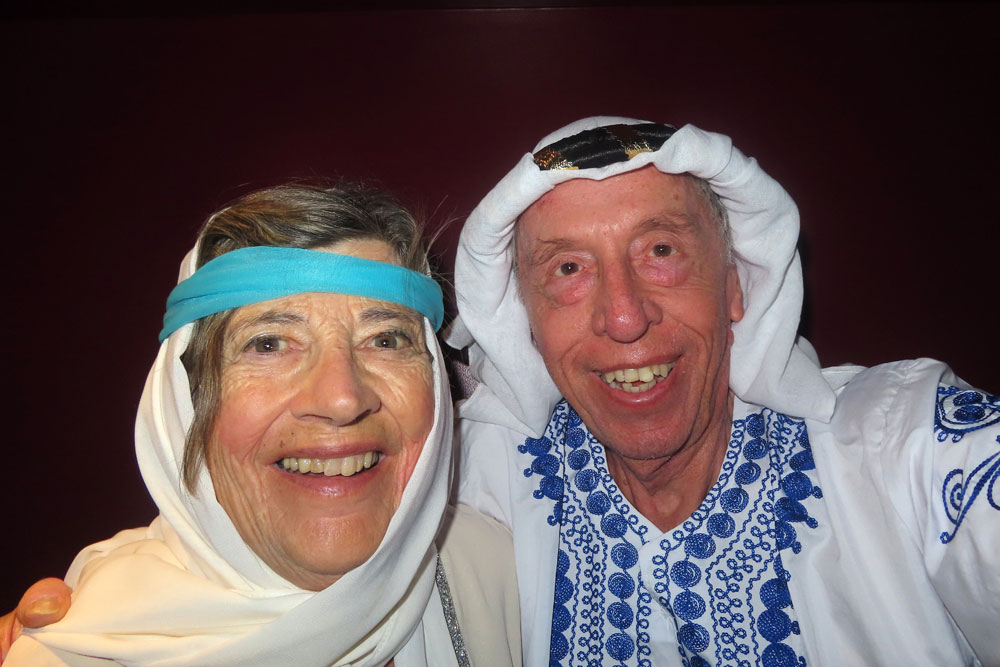
We then read in the cabin and Chris had a short siesta before going up on deck for two hours, a swim soon after six. We then came down to prepare ourselves in our Egyptian and Saudi Arabian clothes for the Egyptian evening.
At seven there was a so-called crew show. This turned out just to be the crew dancing with the passengers, not our cup of tea, so we left and took our bears up on deck. The Egyptian buffet dinner had turkey as its main dish. There was then a quiz that we declined to go to this and went back on deck enjoying the balmy evening before turning in.
Egyptian summer time started during the night so we lost an hour's sleep.
Click on any of the thumbnail photos for a larger version
 |
 |
 |
 |
 |
 |
 |
 |
 |
 |
 |
 |
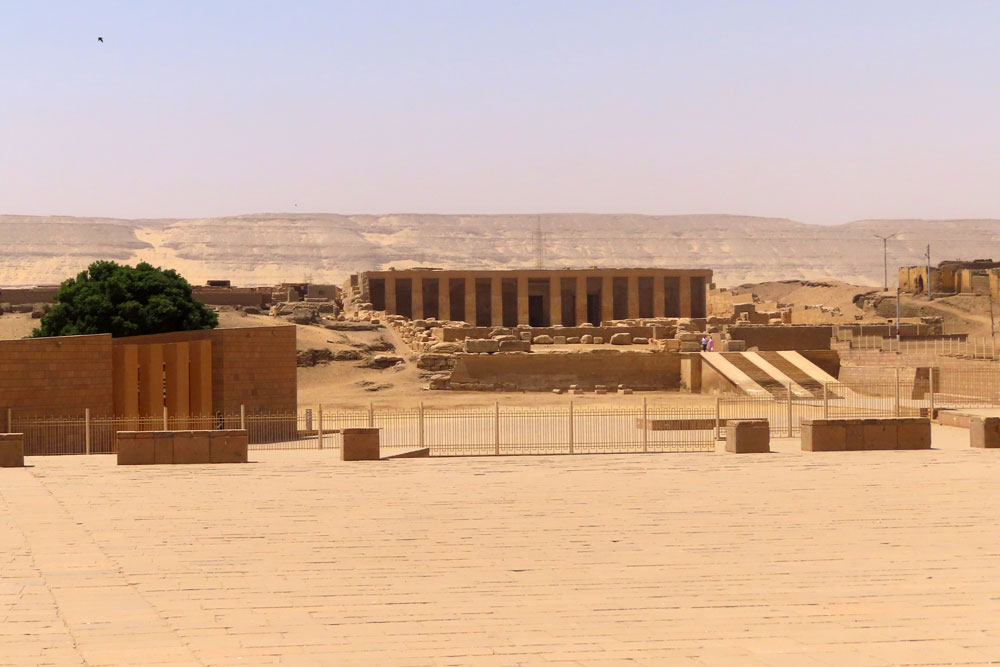
Abydos Temple
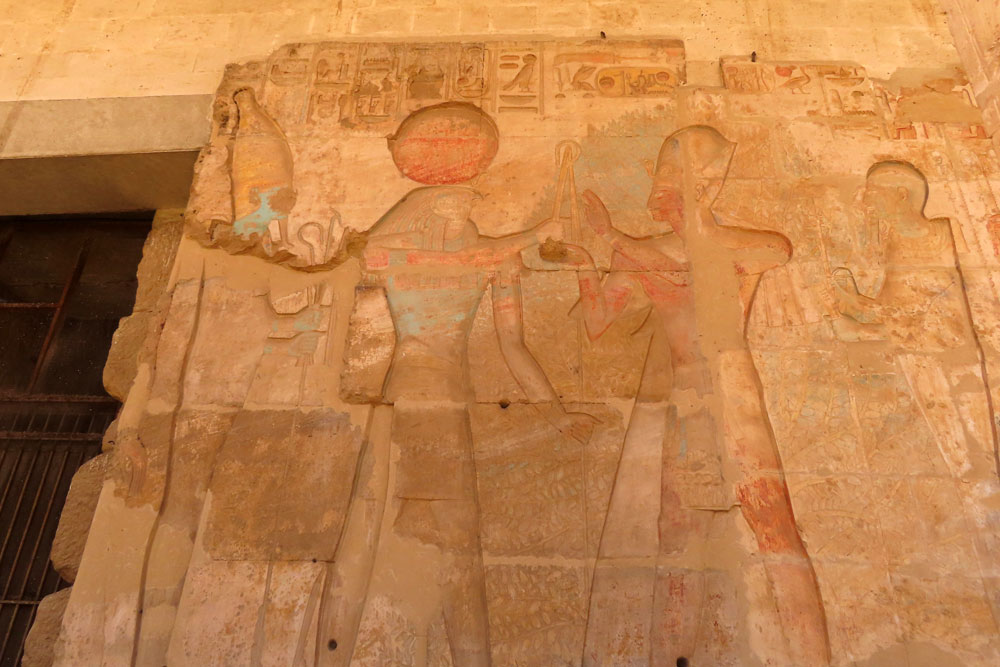
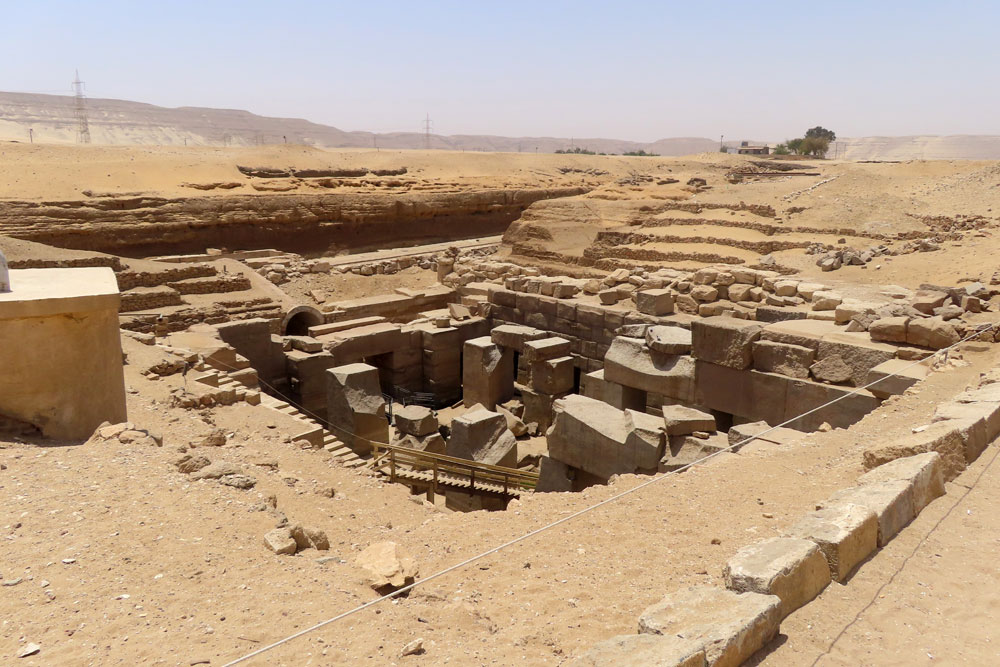
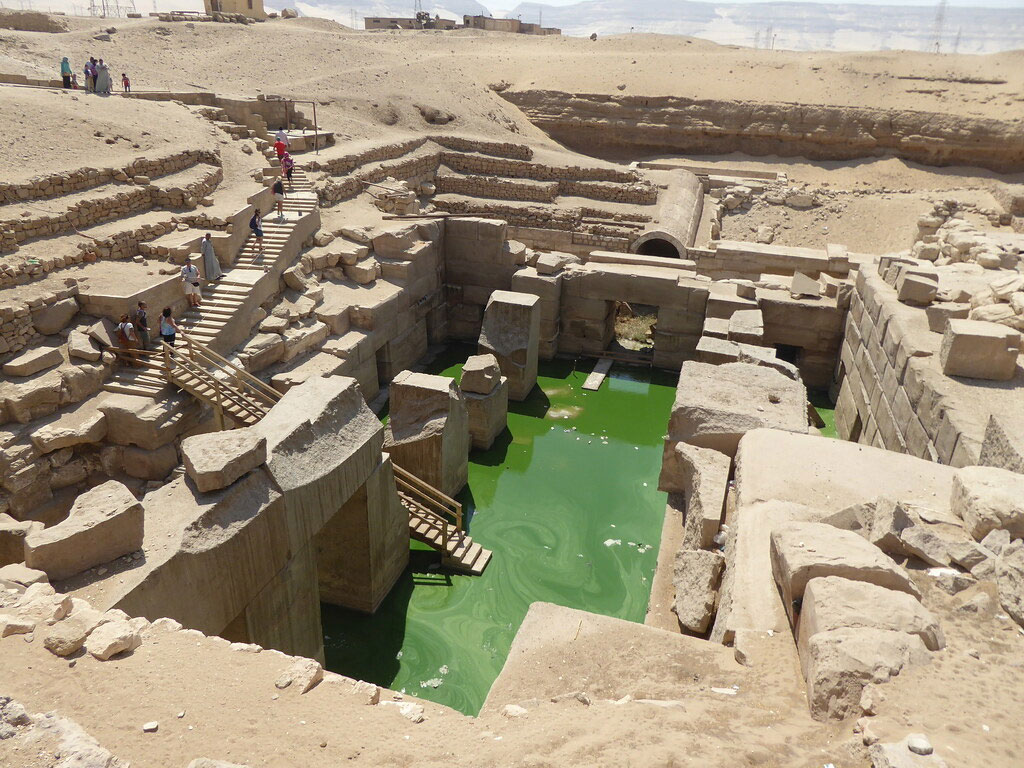
The Temple of Seti I, also known as the Great Temple of Abydos, is a major historical site in Abydos. The temple was built in 13th century BC by pharaoh Seti I. Incorporated at the rear of the temple is the Osireion, a largely subterranean complex built with large stone blocks.
The temple is also notable for the Abydos graffiti, ancient Phoenician and Aramaic graffiti found on the temple walls.
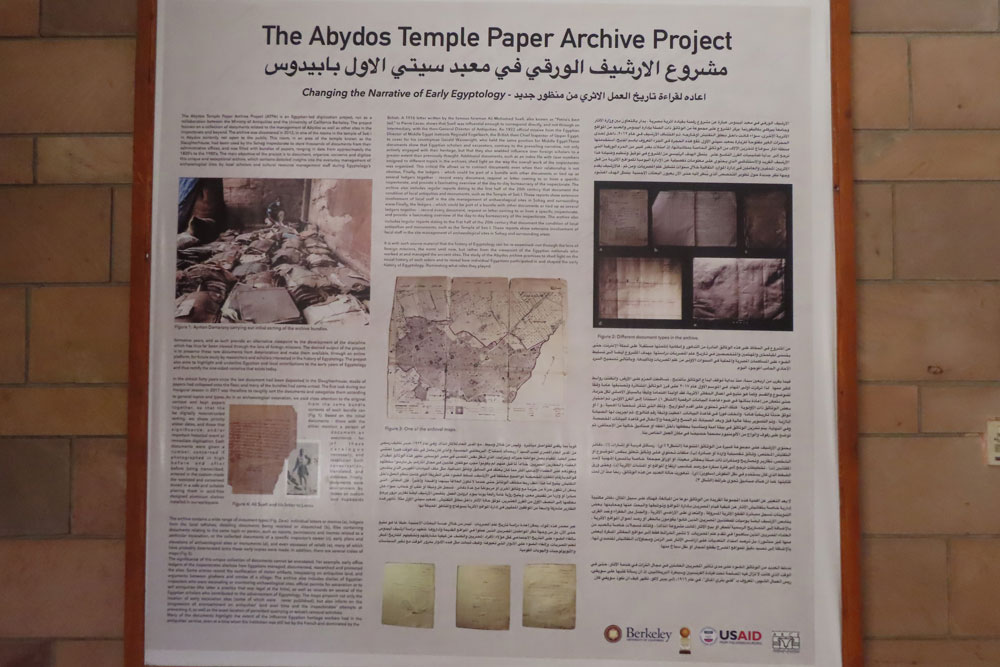
The long list of the pharaohs of the principal dynasties—recognized by Seti—are carved on a wall and known as the "Abydos King List". There were significant names deliberately left off of the list. As an almost complete list of pharaoh names, the Table of Abydos, rediscovered by William John Bankes, has been called the "Rosetta Stone" of Egyptian archaeology.
Dorothy Louise Eady (1904 – 1981), also known as Omm Seti was a British antiques caretaker and folklorist. She was keeper of the Abydos Temple of Seti I and draughts woman for the Department of Egyptian Antiquities. She is known for her belief that in a previous life she had been a priestess in ancient Egypt, as well as her considerable historical research at Abydos. Her life and work has been the subject of many articles, television documentaries, and biographies.

The "helicopter" image is the result of carved stone being re-used over time. The initial carving was made during the reign of Seti I and translates to "He who repulses the nine [enemies of Egypt]". This carving was later filled in with plaster and re-carved during the reign of Ramesses II with the title "He who protects Egypt and overthrows the foreign countries". Over time, the plaster has eroded away, leaving both inscriptions partially visible and creating a palimpsest-like effect of overlapping hieroglyphs.
Click on any of the thumbnail photos for a larger version
 |
 |
 |
 |
 |
 |
 |
 |
 |
 |
 |
 |
 |
 |
 |
 |
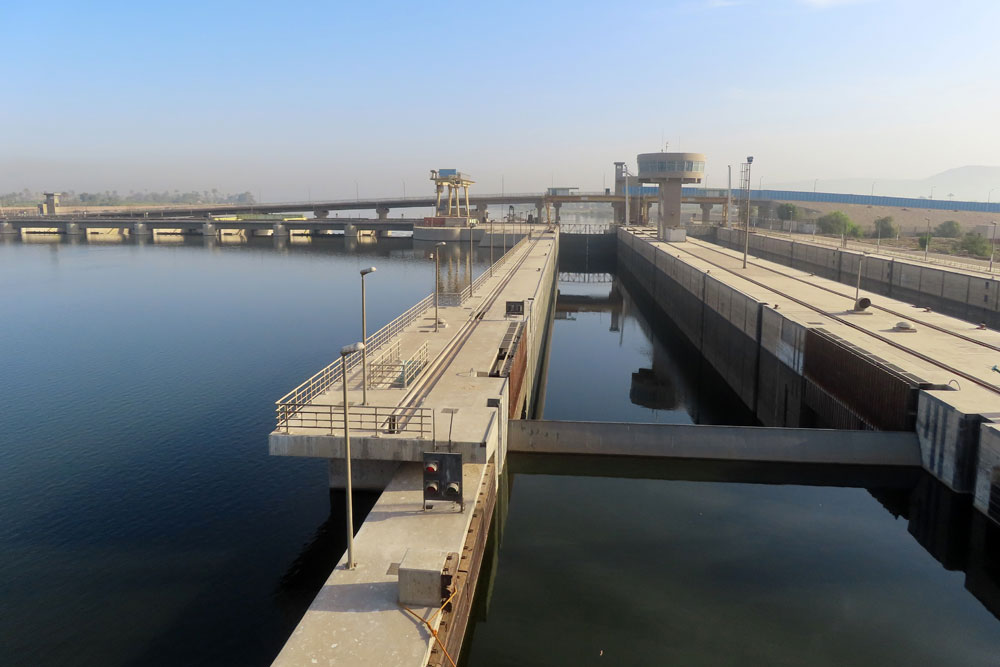
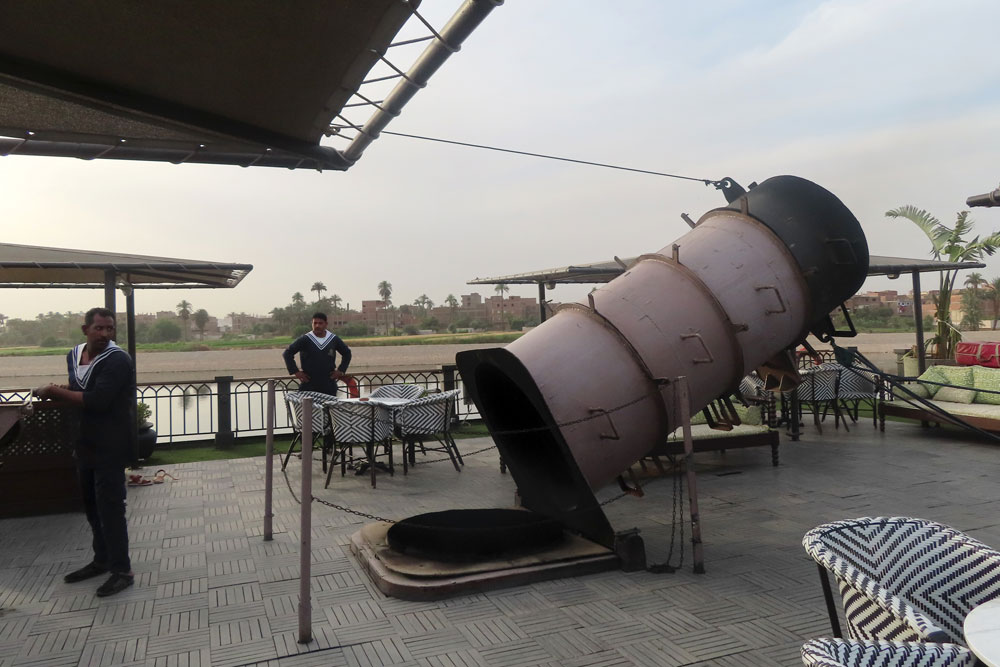
Back on board, under a few bridges and on to the let down of their "crew show"
Click on any of the thumbnail photos for a larger version
 |
 |
 |
 |