November 12th
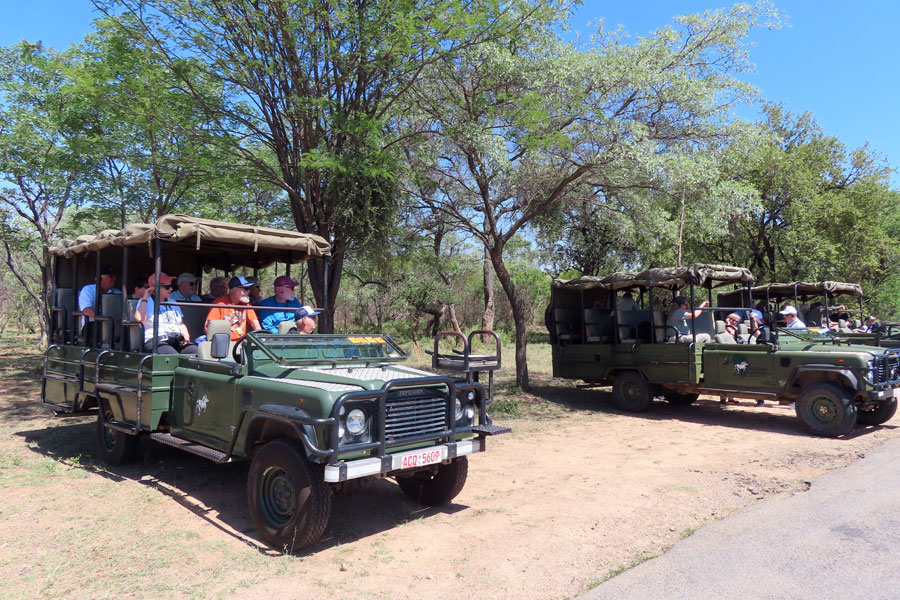
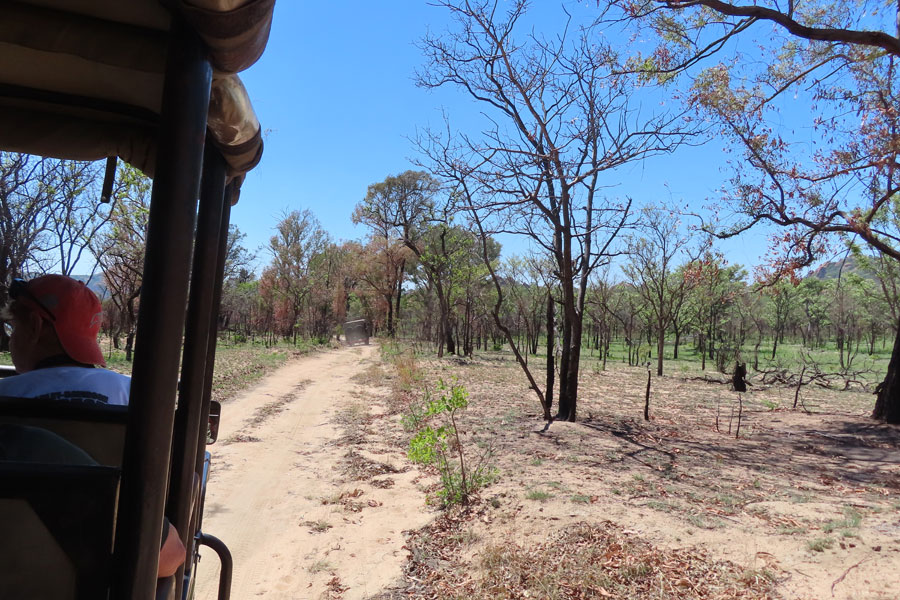
We disembarked the train in Bulawayo at 9 am so were able to have a leisurely breakfast. We then drove for about 30 minutes to Matobo National park where we decamped into three Safari wagons. Our driver and guide was called Dylan who had Portuguese parents.
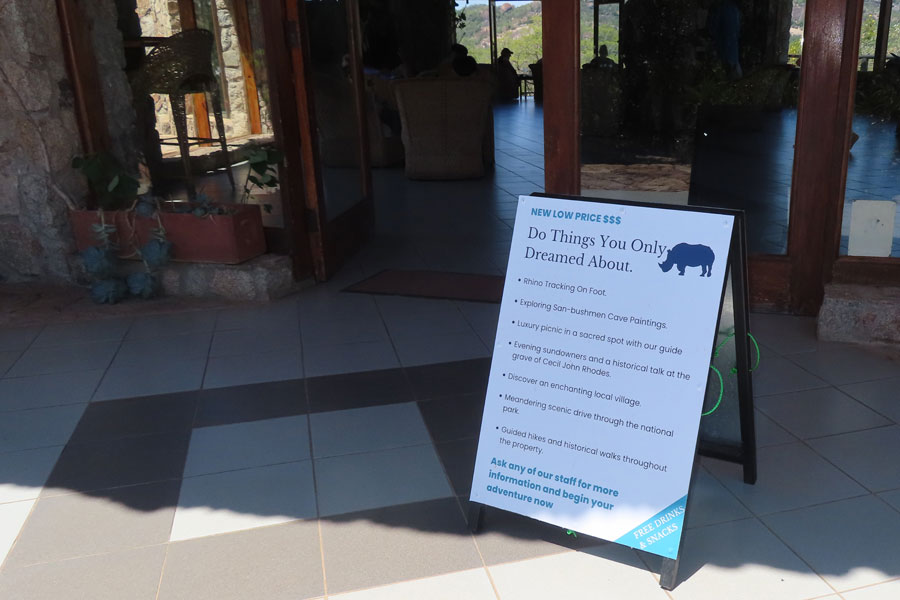
After a while we stopped for a bush walk to see three rhinos. We were able to get quite close to these animals, a grandfather rhino and 2 5 to 6-year-olds. It was really interesting to get up close with these animals on foot
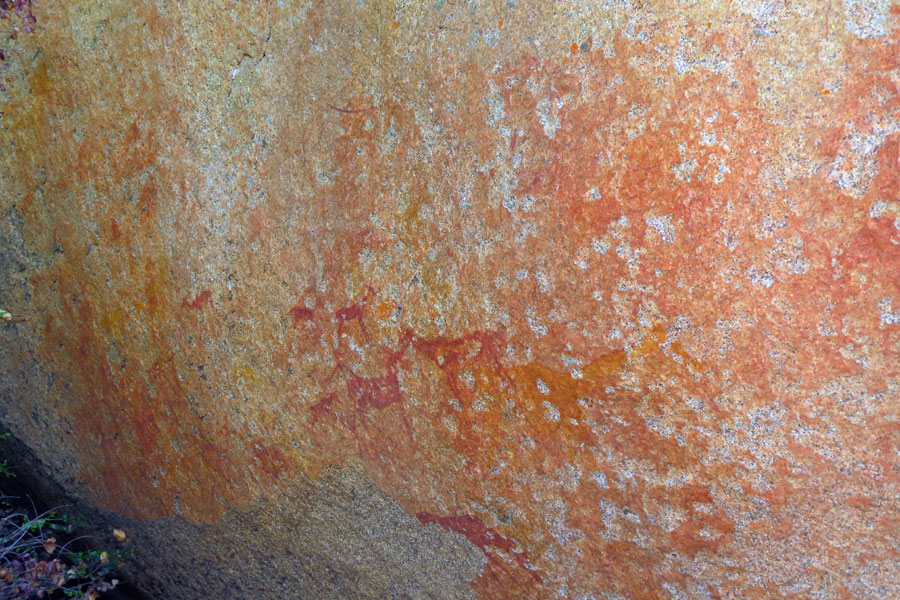
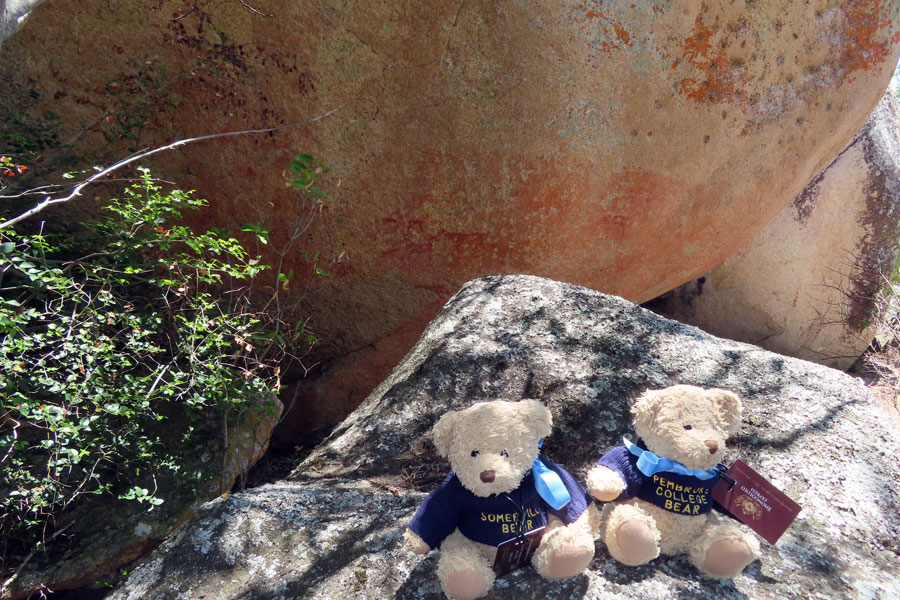
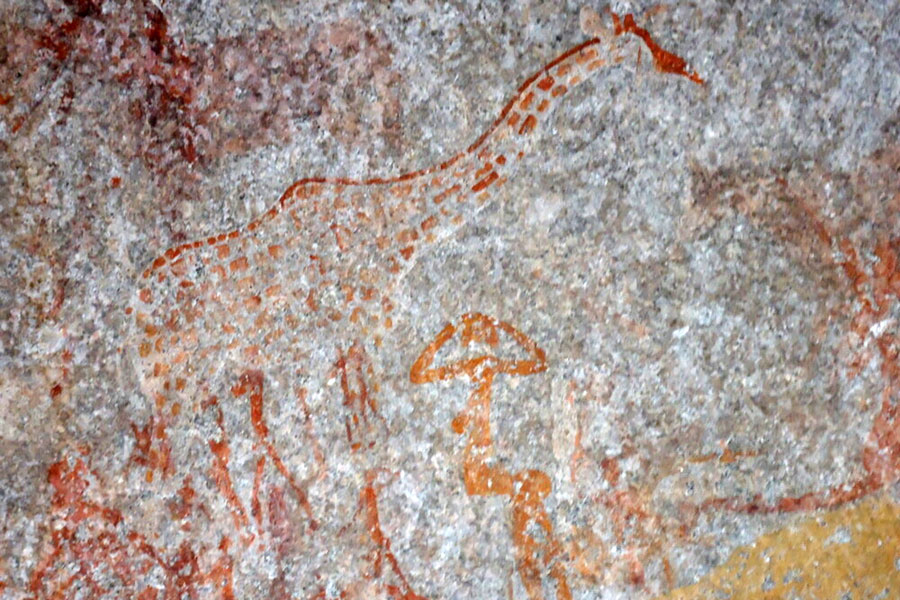
After this, we stopped to see some ancient cave paintings by bushman and heard about how many bushman had existed .
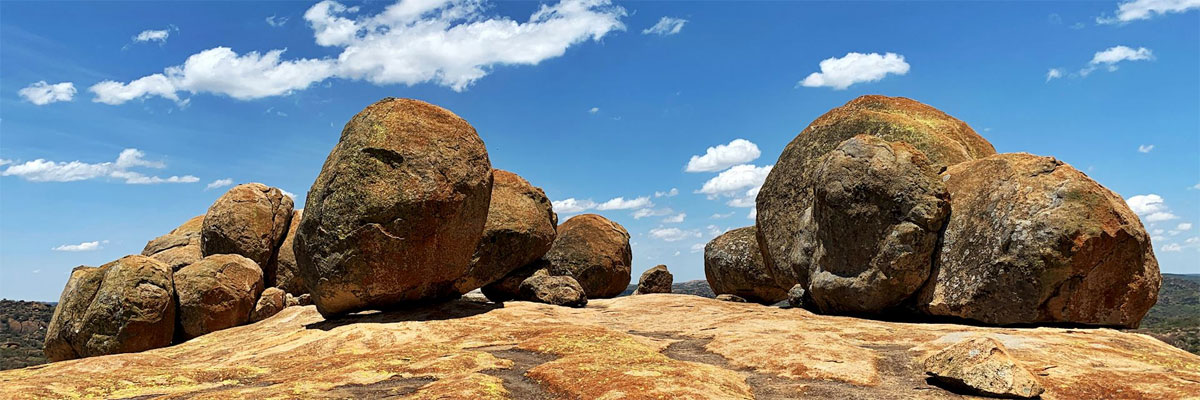
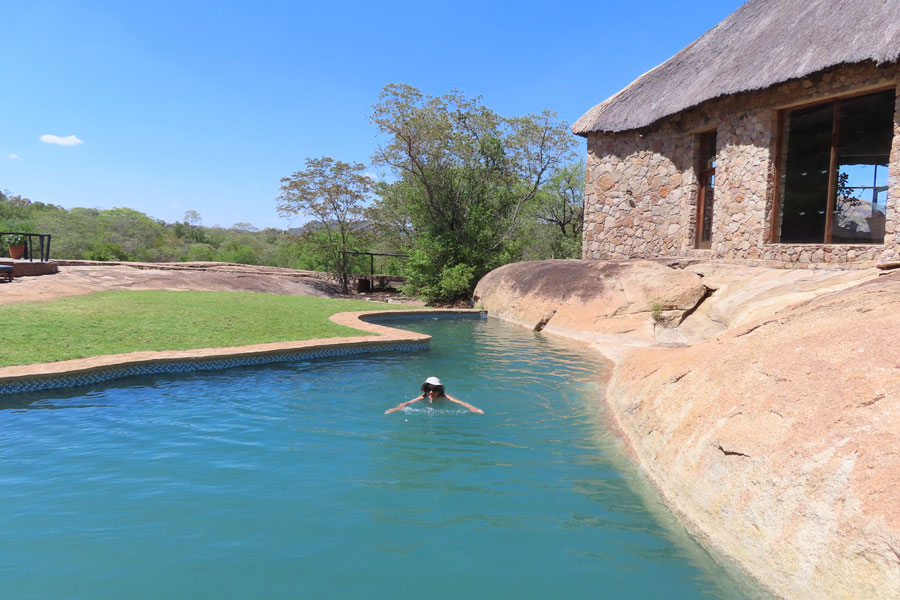
Next stop was lunch at the Matobo Hills Lodge. This was an idyllic session with the mountains and huge rocks surrounding it. After lunch, I had a swim in the wondrous: pool, but with difficulty walking along the surrounding pause in bare feet, due to the intense heat of the paving stones. But the swim experience was well worth this discomfort. We then had a talk from Ian Hams, the owner, who was a real conversationalist
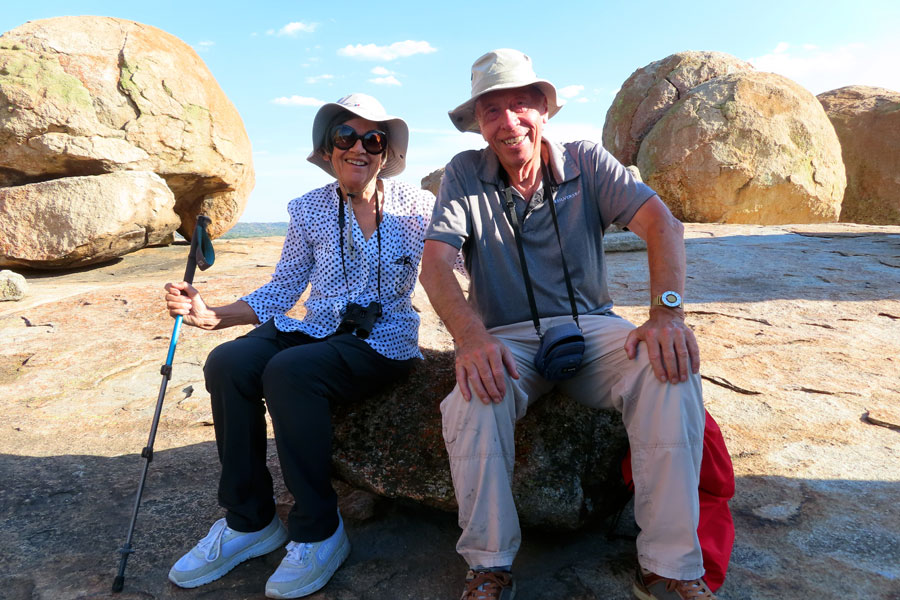
After lunch we departed for the grave of Cecil Rhodes, which we had visited in 1972, and had fond memories of it . The view from the top of it was fantastic.
Back at the entrance gate the coach eventually turned up and we got back to the train soon after six. After dinner, in the bar we had an conversation with Leonie, one of the hostesses, which gave us an interesting view on South African dating customs .
Click on any of the thumbnail photos for a larger version
 |
 |
 |
 |
 |
 |
 |
 |
 |
 |
 |
 |
 |
 |
 |
 |
The Matobo Hills have perhaps the best preserved San Bushman paintings anywhere in the world. There are over 3,000 Rock art sites in the hills, some inside massive caves, whilst most others are paintings or sketches on the side of a rock or overhang. Ancient people probably started painting in the caves of the Matobo Hills around thirty thousand years ago but the art we see today would be no more than two to three thousand years old at most. This is because of all the weathering that has taken place over the millennia. The oldest dated San Bushmen paintings in the Matobo Hills are around 13,000 years old, these were found at Pomongwe cave. San Bushmen is a collective term used to describe the many different hunter-gatherer-fisher groups living in southern Africa who have related languages and cultural traditions.
The rock art of the Matobo Hills is as varied as that of the rest of Zimbabwe, mainly consisting of depictions of animals and human figures often grouped in complex scenes, clustered or represented in rows. Human figures are predominant, with males being more numerous than women and children very rare. They are usually depicted in a slender style, facing left or right but with the upper part of the body facing front, and often carrying bows, arrows or other objects. Regarding the animals, mammals dominate, with the kudu antelope being especially numerous although this animal is not commonly found in the Matobo Hills. A wide range of animals such as smaller antelopes, giraffes, zebras, ostriches, monkeys, eland antelope, rhinoceros and to a lesser extent carnivores are also depicted. The animals are represented in very different attitudes and may be depicted standing still, running or lying. Humans and animals are often related in hunting scenes. Along with animals and human figures, a fair number of geometric symbols are present, including a very characteristic type of motif made of a series of narrow oval-like shapes (formlings) usually depicted vertically, and sometimes interpreted as beehives.
Click on any of the thumbnail photos for a larger version
 |
 |
 |
 |
 |
 |
 |
 |
Matobo Hills Lodge
Click on any of the thumbnail photos for a larger version
 |
 |
 |
 |
 |
 |
 |
 |
Cecil Rhodes Grave

Digging the original grave
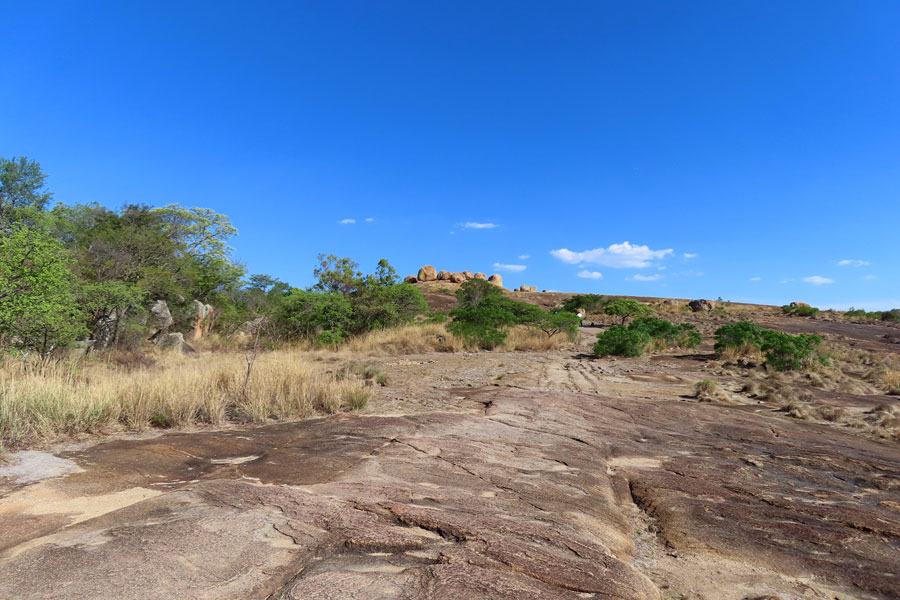
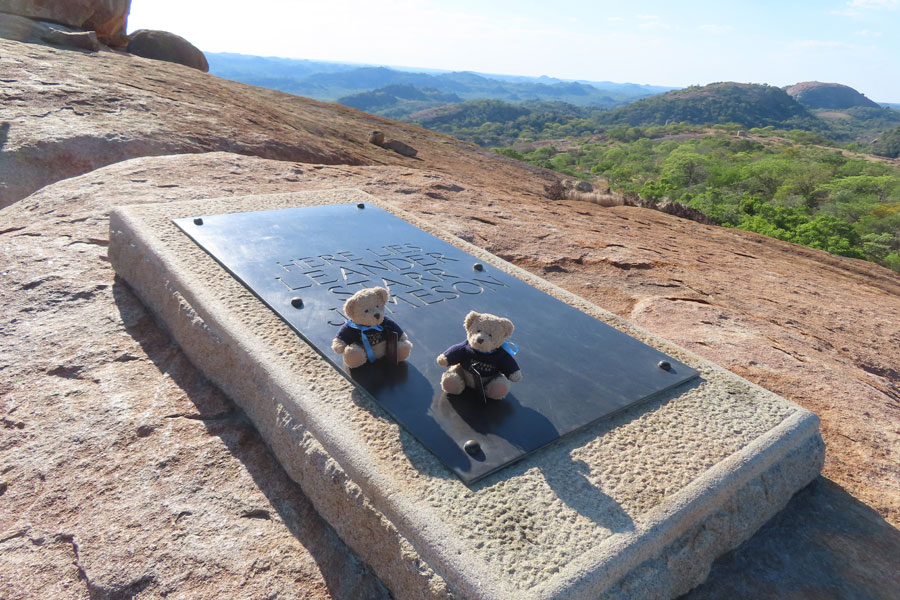
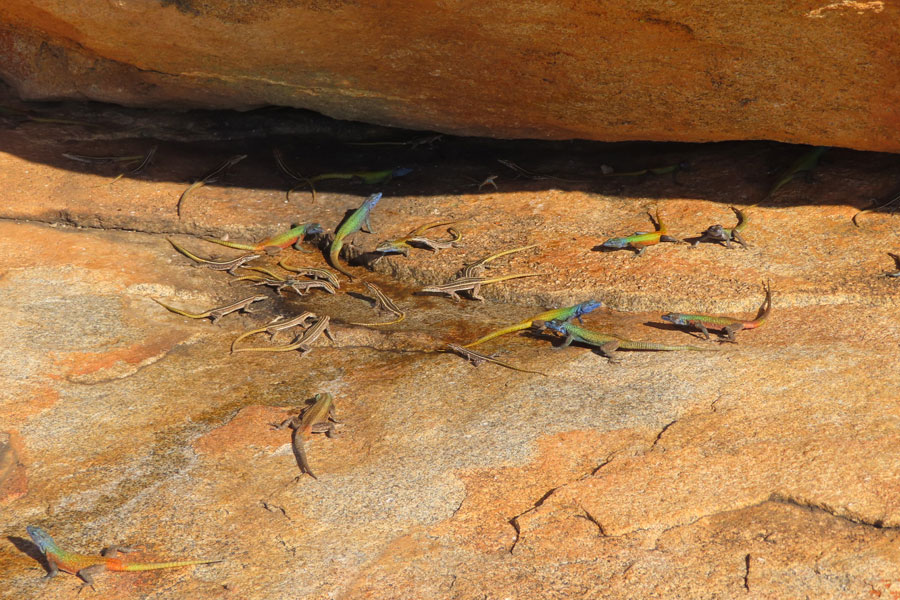
The remains of Cecil John Rhodes lie under a slab of stone atop a granite hill in Matobo Park, largely unscathed by political ferment over a man whose colonial legacy rankles many in Africa nearly a century after his death. Lizards scamper around a grave that, while occasionally vandalized, attracts tourists and has been tolerated by the Zimbabwe government. The burial site of a historical figure who is increasingly vilified seems secure, for now, in a country that has long accused Western powers of clinging to a colonial mindset. Monuments to colonial rule have been removed in many countries across Africa, though some remain.
Cecil John Rhodes was extremely fond of the Matobo Hills, and he set up a trust, which administered the newly formed "Rhodes Matopos National Park". He also funded a railway line, in his own words "to make a short railway line....So that the people may enjoy the glory of the Matopos from Saturday to Monday". Rhodes died in 1902 in Muizenberg, in the Cape. His body was brought up via rail, and then the body was transported on the back of a gun carriage drawn by a team of oxen.
Also buried at Worlds View as it was better known, is Leander Starr Jameson (Rhodes partner in crime in the infamous Jameson raid), as well as Allen Wilson and the 34 men killed on the banks of the Shangani river, while in pursuit of king Lobengula. The Shangani Patrol (or Wilson's Patrol) was a 34-soldier unit of the British South Africa Company that in 1893 was ambushed and annihilated by more than 3,000 Matabele warriors in pre-Southern Rhodesia, during the First Matabele War. Headed by Major Allan Wilson, the patrol was attacked just north of the Shangani River in Matabeleland, Rhodesia. Its dramatic last stand, sometimes called "Wilson's Last Stand", achieved a prominent place in the British public imagination and, subsequently, in Rhodesian history, similarly to events such as the Battle of the Little Bighorn and the Battle of the Alamo in the United States.
According to Rhodes's wishes, a memorial to the Shangani Patrol was erected at World's View in July 1904. The monument, called the Shangani Memorial, is an oblong, flat-topped structure, about 10 m tall and made from granite from a nearby kopje. Each of the memorial's four sides bears a bronze panel , depicting members of the patrol in relief. The main inscription reads, "To Brave Men", with a smaller dedication given beneath: "To the enduring memory of Allan Wilson and his men whose names are hereon inscribed and who fell in fight against the Matabele on the Shangani River on December the 4th. 1893. There was no survivor."
Jameson, also buried here, had assembled a private army outside the Transvaal in preparation for the violent overthrow of the Boer government. The idea was to foment unrest among foreign workers (Uitlanders) in the territory, and use the outbreak of open revolt as an excuse to invade and annex the territory. The subsequent Jameson Raid was a debacle, leading to the invading force's surrender. Chamberlain ordered Sir Hercules Robinson, Governor of the Cape Colony, to repudiate the actions of Jameson and warned Rhodes that the company's Charter would be in danger if it were discovered that the Cape Prime Minister were involved in the Raid. The Boers captured most of them and eventually they returned the prisoners to London for trial, and the Transvaal government received considerable compensation from the company. Jameson was tried in England for leading the raid; during that time he was lionised by the press and London society. Jameson was sentenced to fifteen months in gaol, but was soon pardoned. Sir Leander Starr Jameson, 1st Bt., died 1917, at his home in London. His body was laid in a vault at Kensal Green Cemetery, where it remained until 1920 when it was exhumed and reburied alongside Cecil Rhodes in the Matobo National Park
Rhodes, who was prime minister of the Cape Colony in the late 19th century, made a fortune in gold and diamond mining. He colonised Southern and Northern Rhodesia, today Zimbabwe and Zambia. Accusations. Statues of Rhodes, who died in 1902, were uprooted in Zimbabwean cities after independence. He became a polarizing figure again in 2015 when students defaced a statue of him at South Africa’s University of Cape Town, which removed the monument. And recently the University of Oxford in Britain, which allocates scholarships named after Rhodes, said it would not take down a statue of its benefactor despite protests by some students.
The Rhodes grave lies in Matobo National Park, a United Nations heritage site where granite spires and other unusual rock formations captivate visitors, and where indigenous spirits are said to dwell. About 15,000 people visit the grave annually. The grave generates badly needed cash in a country beset by economic turmoil. A foreign adult pays $15 to get into the park, and then another $10 to see the burial site. A Zimbabwean adult pays a total of $8.
Click on any of the thumbnail photos for a larger version
 |
 |
 |
 |
 |
 |
 |
 |
The memorial was to The Memorable Order of Tin Hats (M.O.T.H.), which was founded in 1927 as a brotherhood of South African former front-line soldiers. The ideal is to help comrades in need, either financially or physically; and to remember all servicemen who have answered the Sunset Call, both in war and peacetime.[
Click on any of the thumbnail photos for a larger version
 |
 |
 |