November 6th
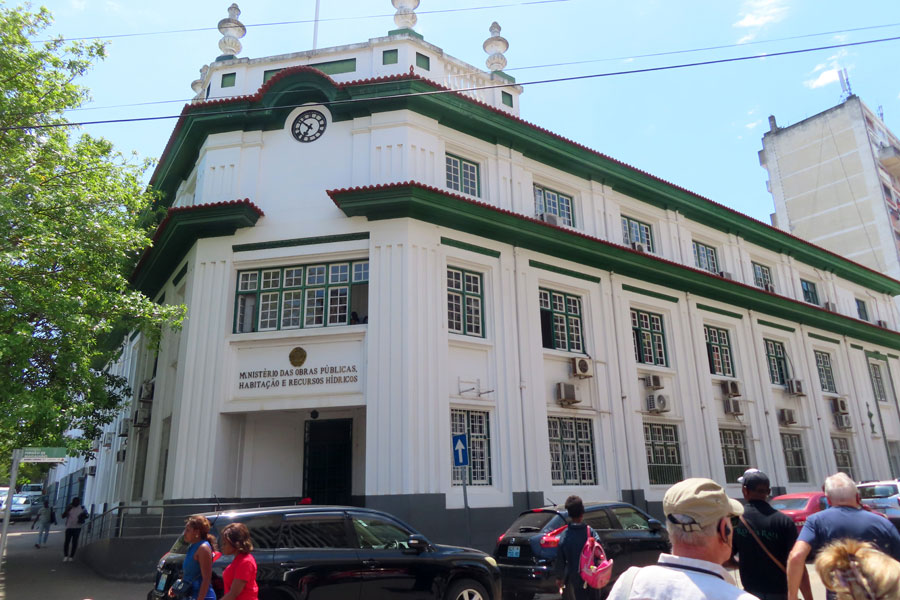
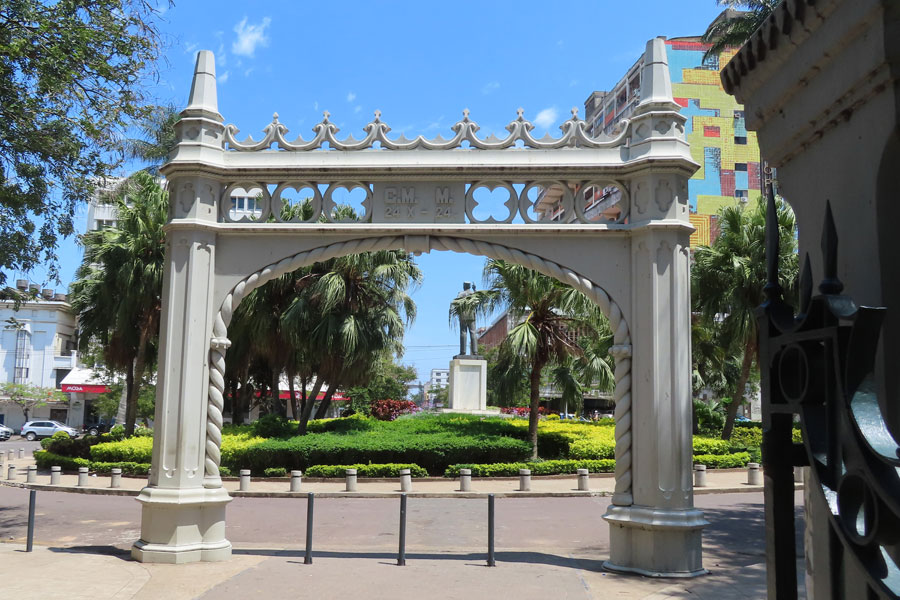
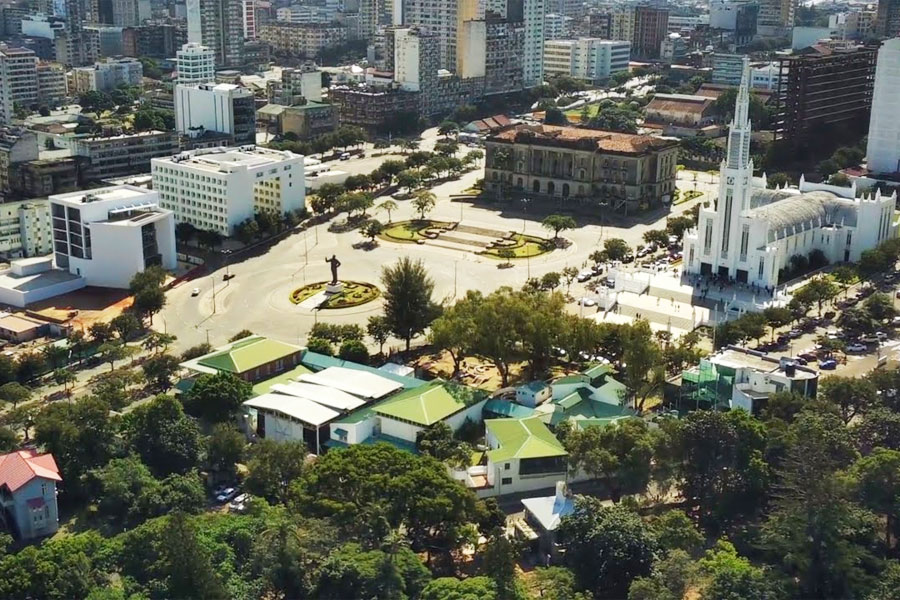
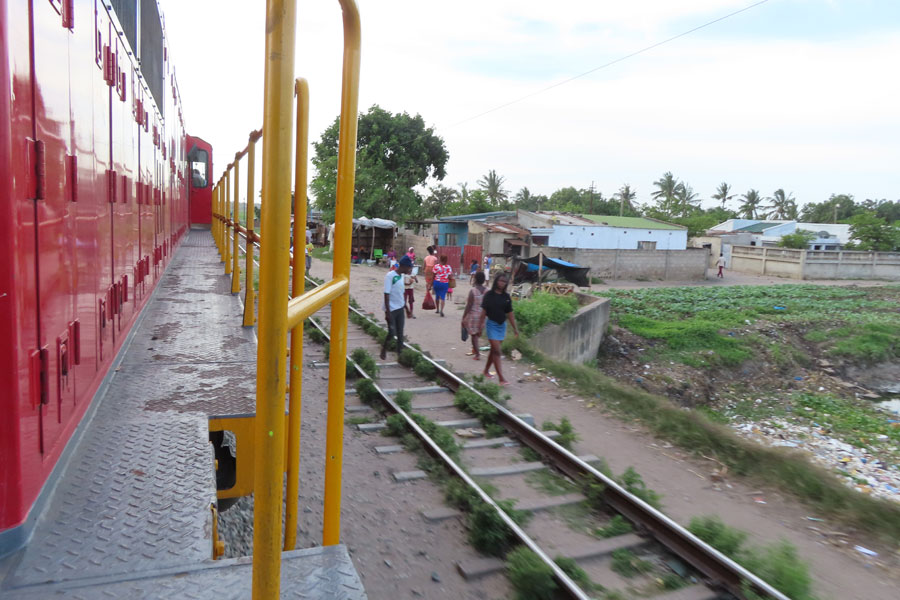
A really bad night with the train jolting until it came to a halt in Maputo. Breakfast was chaotic and we left the train by 9 o’clock for a tour of this capital of Mozambique. Maputo is an aesthetically attractive, if dilapidated, city. Building range from magnificent Colonial buildings, to brutalist, run down apartment blocks. With wide avenues lined by jacaranda and acacia trees. The city is known for its distinct, eclectic architecture, with Portuguese colonial Neoclassical and Manueline styles alongside modern art deco, bauhaus, tropical modernism and Brutalist buildings.
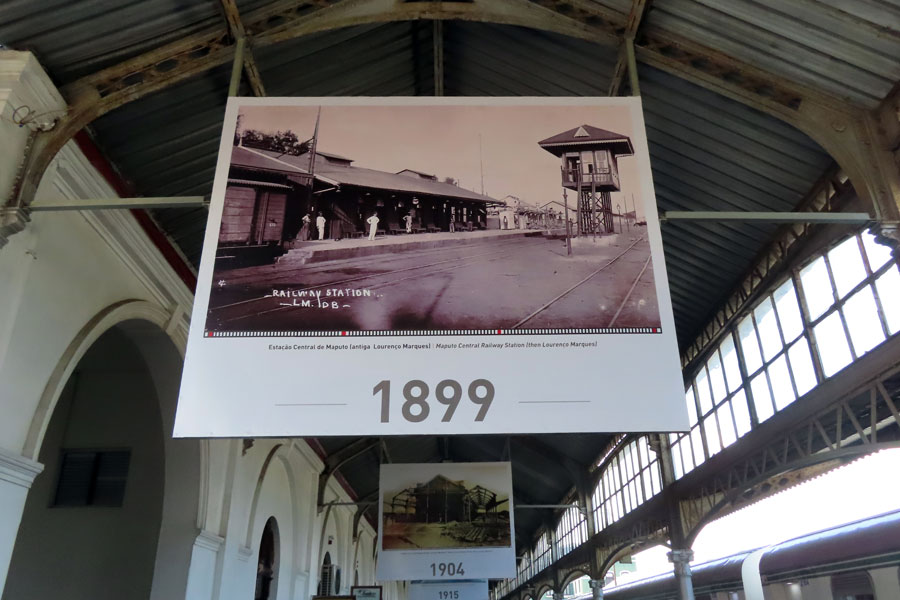
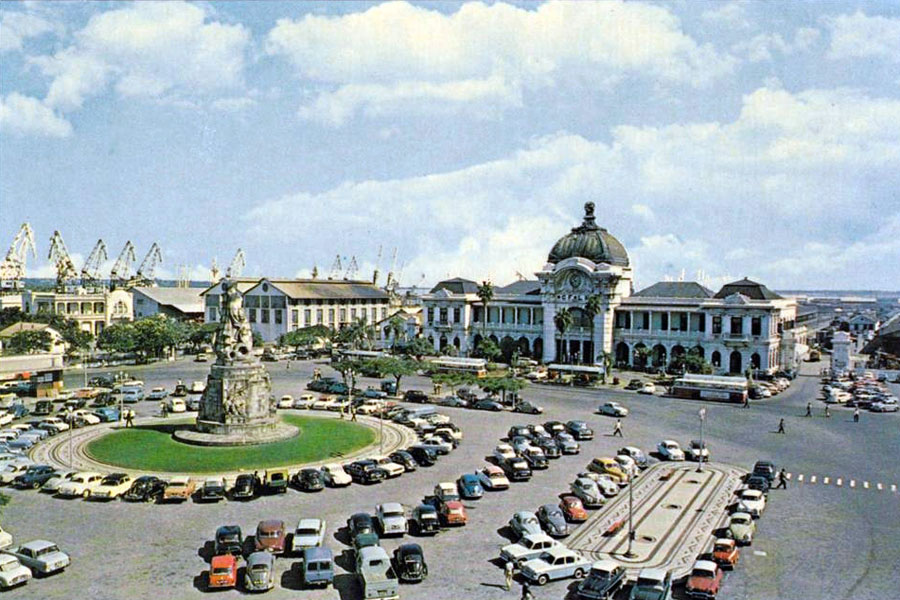
Maputo is the capital, and largest city of Mozambique. Located near the southern end of the country, it is within 120 kilometres 75 miles of the borders with Eswatini and South Africa. The city has a population of 1,088,449 (as of 2017) . It is also noted for its vibrant cultural scene and distinctive, eclectic architecture. Maputo was formerly named Lourenço Marques until 1976.
The modern city traces its origins to a Portuguese fort established on the site in 1781. A town grew around the fort starting around 1850, and in 1877 it was elevated to city status. In 1898, the colony of Portuguese Mozambique relocated its capital there. In the late 19th and early 20th centuries, Lourenço Marques grew both in population and economic development as a port city. Upon Mozambican independence in 1975, the city became the national capital and was renamed Maputo. During the Mozambican Civil War, the city's economy was devastated. When the war ended, the FRELIMO government launched a program to revive the city's economy, and to clean up the city by forcibly removing criminals, squatters, and undocumented residents.
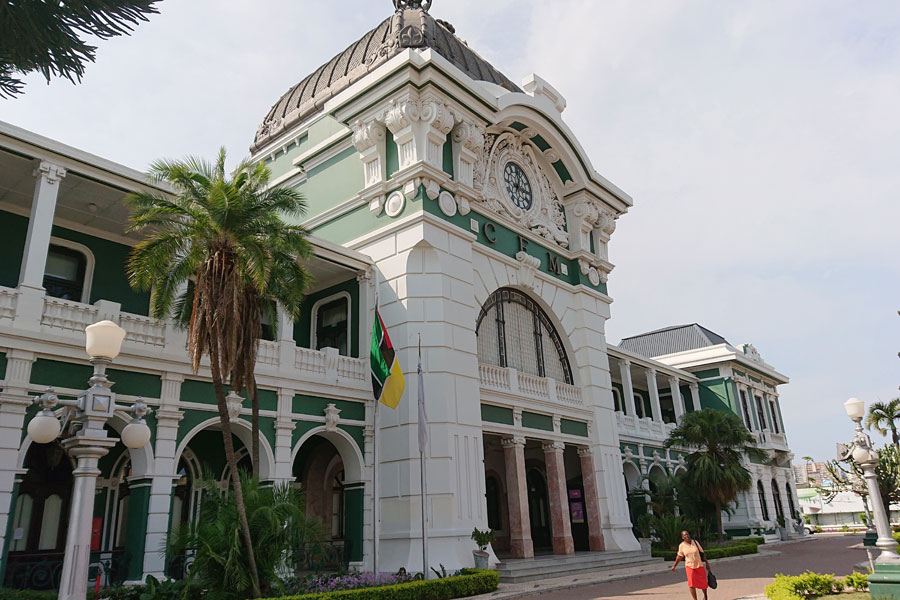
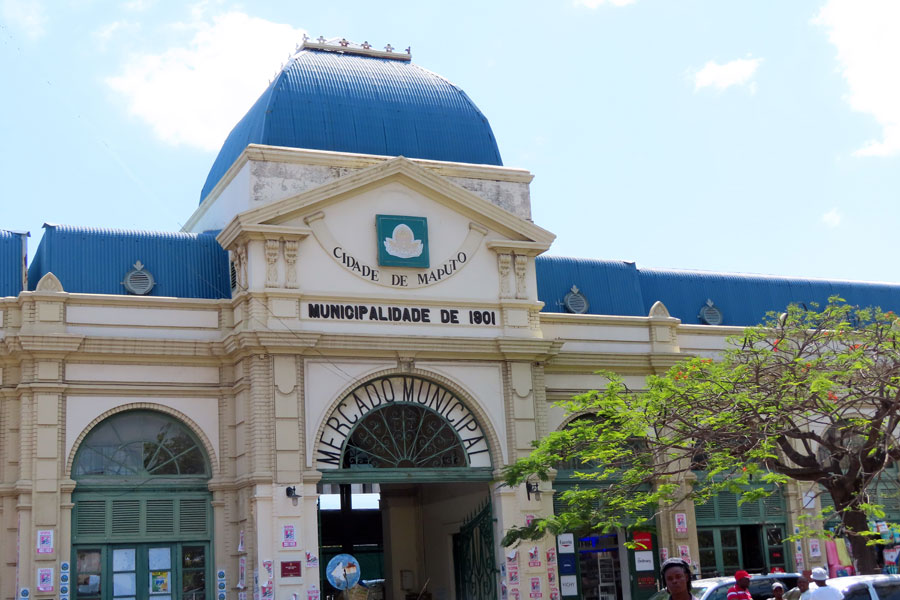
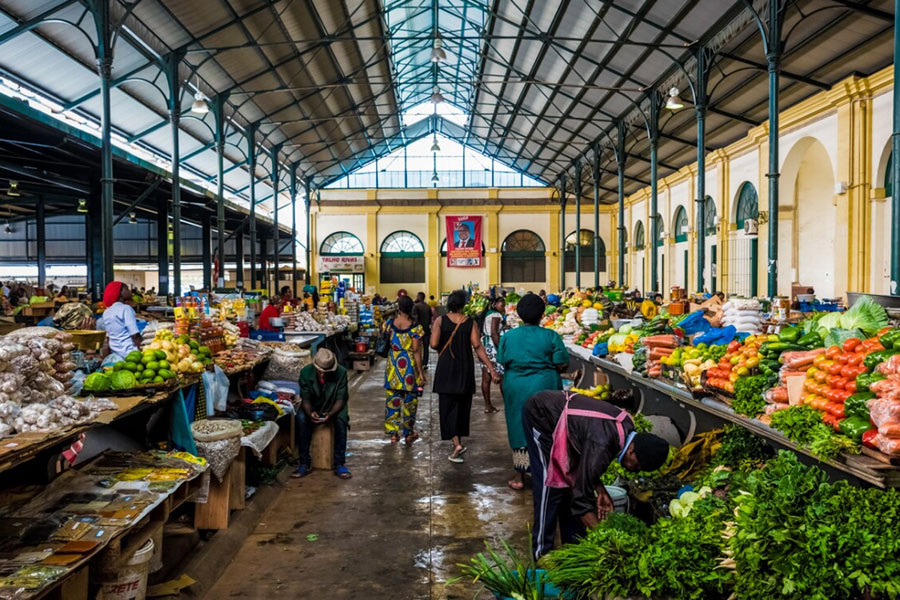
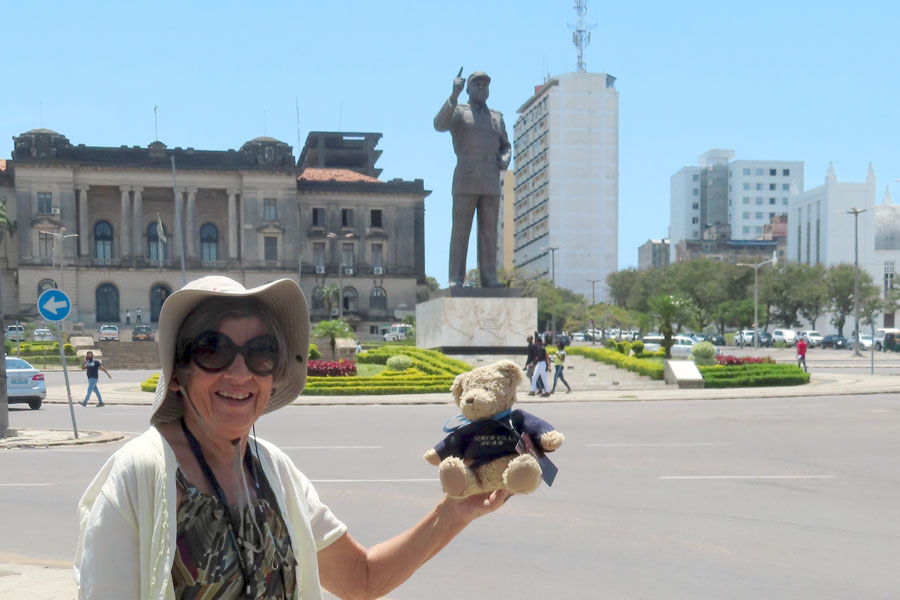
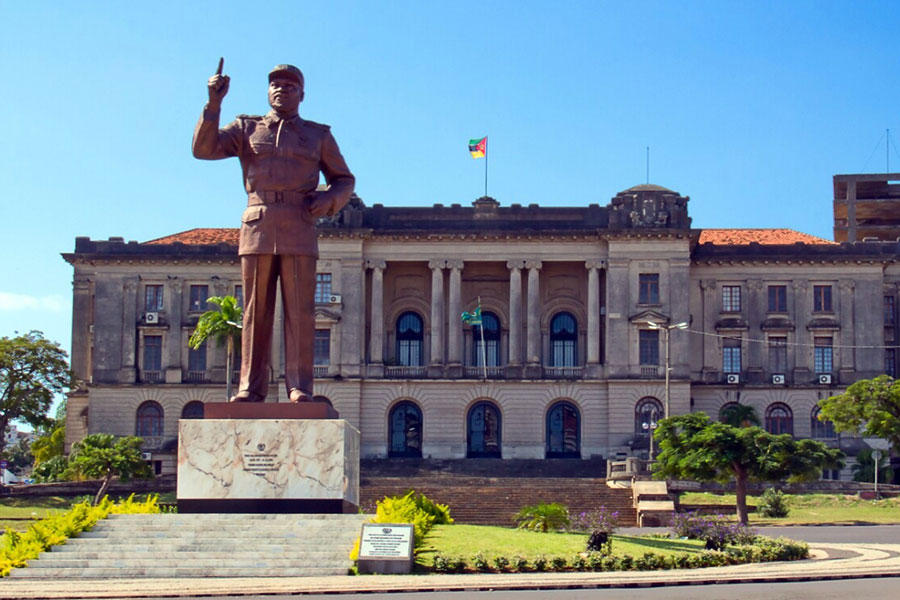
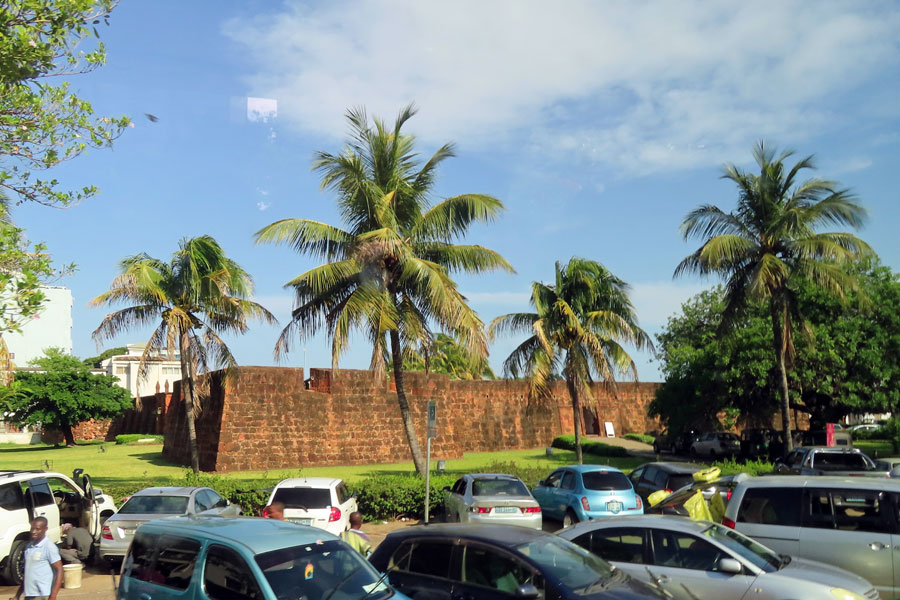
Maputo has a number of landmarks, including Independence Square, City Hall, Maputo Fortress, the central market, Tunduru Gardens, and Maputo Railway Station.
Independence Square has a giant statue of Samora Machel, the first President of independent Mozambique from 1970, and who was killed in an air crash in 1984. He was aa MArxist. The air crash is controversial, and it seems unlikely to be solved now. It is surrounded by conspiracy theories, like President Kennedy or Princess Di. Certainly the "facts" are nothing like those that our tour guide PJ gave to the group.
In 1998 South Africa promised a new inquiry. But that never happened, despite Mandela’s promise on the 10th anniversary of the crash. Paying tribute to Machel as a ‘universal hero’, Mandela said: ‘There are unanswered questions along the journey that led to the loss of more than thirty lives on this hillside. And we shall leave no stone unturned to ensure that, in the fullness of time, nothing but the whole truth is known about these events.’
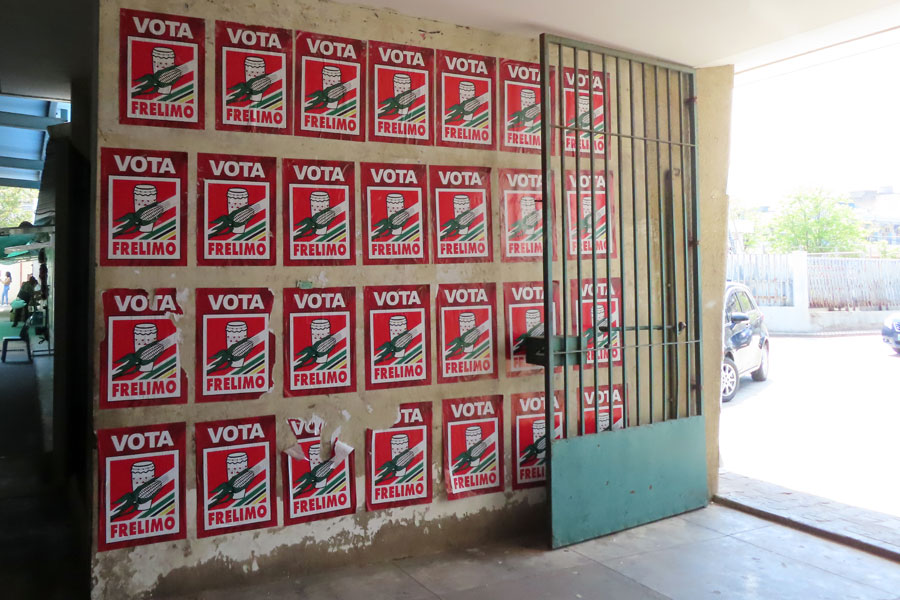
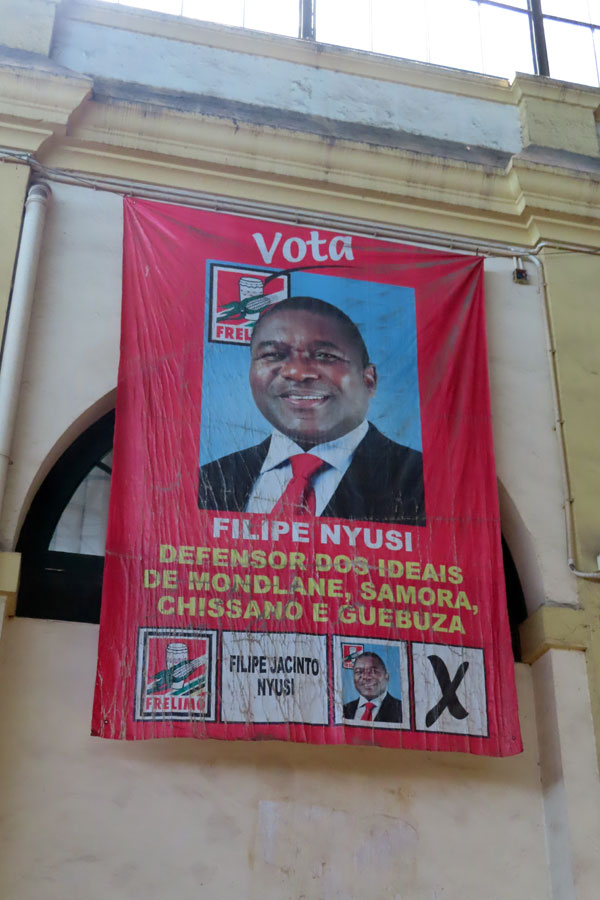
Meanwhile Frelimo is still the dominant party in Mozambique and has won a majority of the seats in the Assembly of the Republic in every election since the country's first multi-party election in 1994.
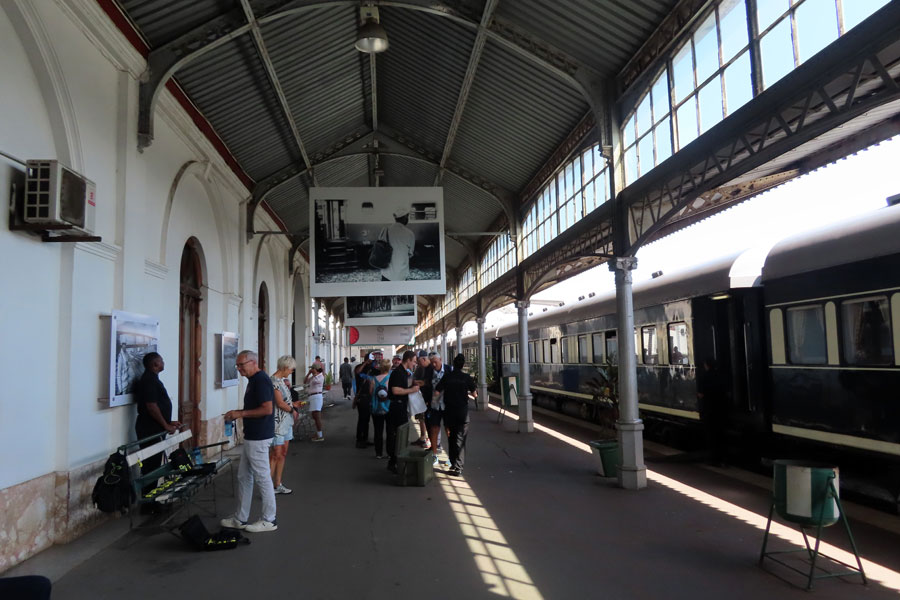
We walked round the impressive station, which was listed as one of the 10 top stations in Africa.
Then we walked to the market which was very much like markets everywhere so we stayed outside for about 20 minutes waiting for the rest to exit. After this, we headed to the botanical Gardens, where PJ gave a talk about Mozambique, African wars and how this affected Mozambique today.
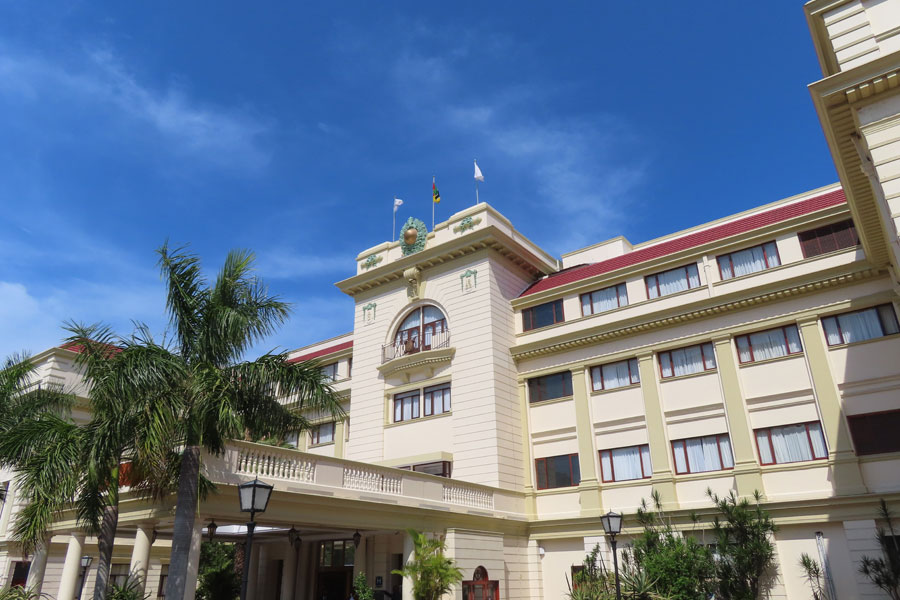
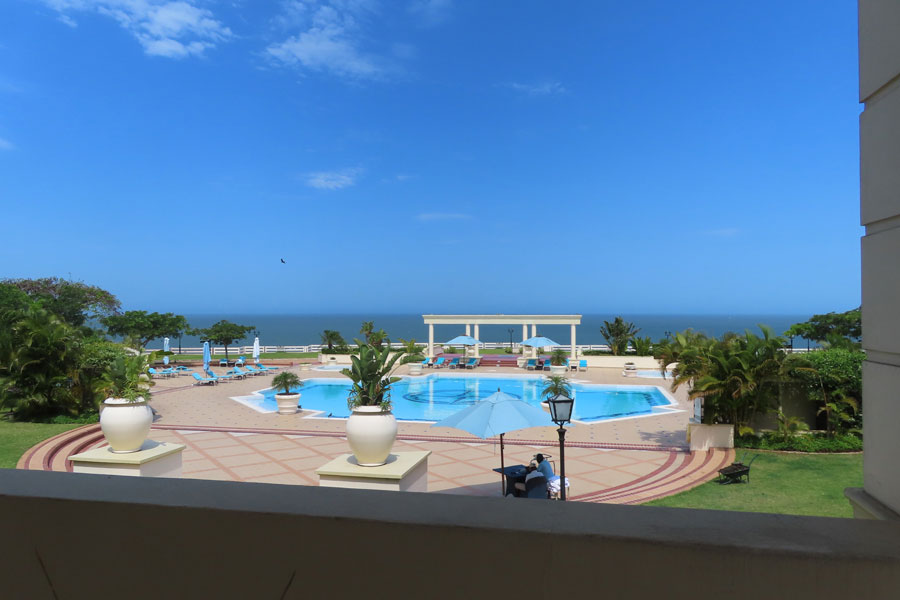
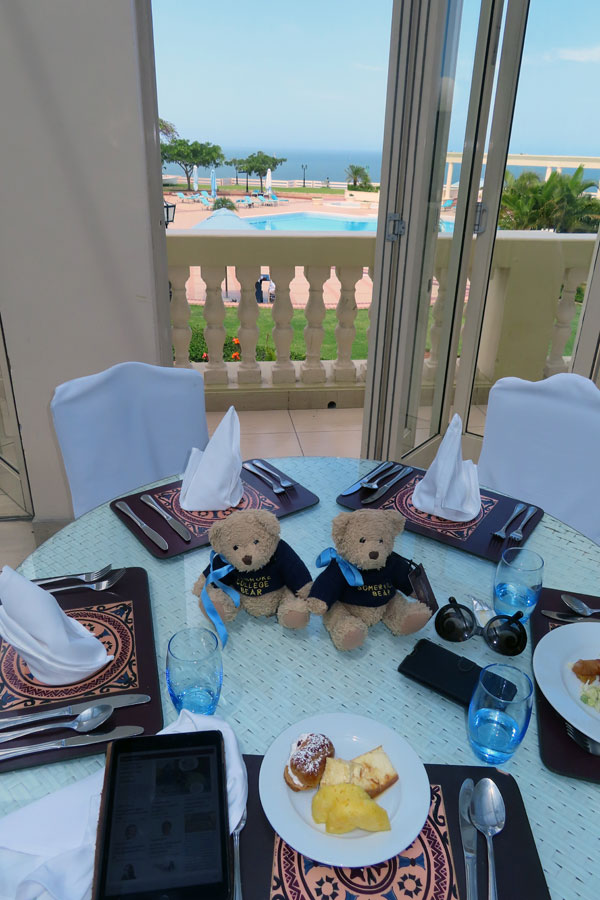
Then we had some free time before heading to the lunch hotel, with a drive along the Costa del Sol.: it was a very luxurious hotel, the Serena, and the salad selection was excellent. We were allowed almost 2 hours for lunch but we’re not allowed to swim in the pool so we had lots of time to waste.
Then a drive back to the train passing by the fort. We were back aboard by four and I had a siesta before going to the observation lounge to see the departure from town. We had dinner with Denise and Jilly who had worked as teachers in Lesotho. Then a nightcap in the bar before hopefully a good night sleep with the train at rest.
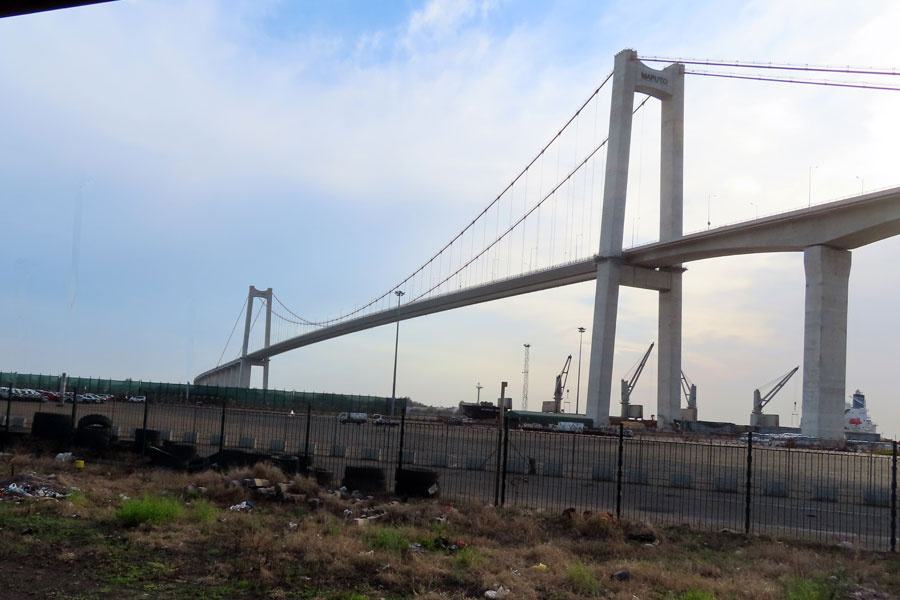
We passed under the harbour bridge on the exit from Maputo. . The bridge connects Maputo, on the northern bank, with its disjunct suburb of Katembe on the southern bank. Construction work began in 2014 and the bridge officially opened 10 November 2018. The construction work was carried out by the Chinese China Road and Bridge Corporation; a large part of the project is financed by loans from the Chinese Exim Bank. The bridge is the longest suspension bridge on the African continent and cost around $800 million
Click on any of the thumbnail photos for a larger version
 |
 |
 |
 |
 |
 |
 |
 |
 |
 |
 |
 |
 |
 |
 |
 |
 |
 |
 |
 |
 |
 |
 |
 |