 |
 |
 |
 |
 |
 |
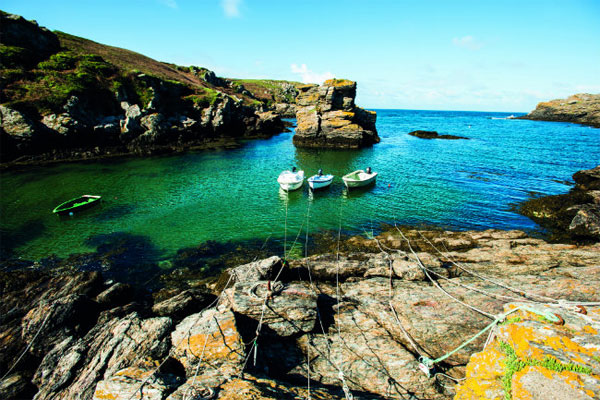
Situated only 5 kilometres off the Brittany coast and short ferry ride from Lorient, Ile de Groix is like a jewel, small but sparkling. Visitors delight in exploring both its rich human and natural history on foot or by bicycle. Arriving at Port Tudy, the Ecomusée is a great first stop to learn of the island’s history, including its role as France’s main tuna fishing port between 1870 and 1940. A short distance further uphill and amongst the picturesque houses you will notice this fishy theme prevailing: the church bell tower is topped by a tuna. Bicycle rental is available in the village and opens up 40 kilometres (25 miles) of tracks, allowing you to cross the island’s moorland interior and take in the dramatic southern cliffs and sights like Trou de Tonnère (thunder hole) and the Trou d’Enfer (hell hole).
At Plage des Grands Sables, walk the sands of Europe’s only convex beach, with a dynamic point that shifts over the years depending on the sea currents. Watch out for standing stones as you cross westward - Brittany is renowned for these prehistoric megaliths - to arrive at the geological climax of Pointe des Chats, where up to 60 minerals have been recorded in the nature reserve there. For those more interested in the living, moving natural world, the nearby Pointe de Pen Men offers cliff tops blanketed in botany and views of some of the island’s breeding seabirds. There is only one thing you might regret after visiting Groix, and that is not having stayed longer.
tour 1. Biking Tour in Groix and Abalones Tasting
|
|
|
|
|
|
Discover Groix as you bike the island's north coast on this half day (three hours) tour. Embark from the pier and rent your bicycle. With your guide, explore the paths that crisscross the island. Make your way through this fragile territory and its vast remarkable natural spaces. Pedal the short distance to Poulziorec. Dismount your bike and take a walk down the path to a secret cove. Then hop back on your bike for the short ride to St. Leonard Chapel, a historical church typical of the island. Get out your camera for the photo opportunities here. Next, ride back to the village and return you bike to the rental shop.
Visit the nearby abalone farm, rare in Europe, to learn about cultivation of this little-known mollusk. Enjoy an abalone tasting while you are here. Abalones are marine snails. Farming of abalone began in the late 1950s and early 1960s in Japan and China. Since the mid-1990s, there have been many increasingly successful endeavors to commercially farm abalone for the purpose of consumption. Overfishing and poaching have reduced wild populations to such an extent that farmed abalone now supplies most of the abalone meat consumed. As abalone became more popular and less common, the prices adjusted accordingly. In the 1920s, a restaurant-served portion of abalone, about 4 ounces, would cost (in inflation adjusted dollars) about US$7; by 2004, the price had risen to US$75. In the United States, prior to this time, abalone was predominantly eaten, gathered, and prepared by Chinese immigrants. Abalone started to become popular in the USA after the Panama–Pacific International Exposition in 1915, which exhibited 365 varieties of fish with cooking demonstrations, and a 1300-seat dining hall. In Japan, live and raw abalones are used in awabi sushi, or served steamed, salted, boiled, chopped, or simmered in soy sauce. Salted, fermented abalone entrails are the main component of tottsuru, a local dish from Honshū. Tottsuru is mainly enjoyed with sake.
tour 2 Expedition Activities with Silversea Expedition team
 |
 |
 |
 |
 |
 |
Discover part of the island of Groix, a source of magic that will not leave you indifferent. Mineralogical treasure born of a geological whim of extreme rarity on the planet, this 1,500 hectare island, rich of 17 villages, offers a great diversity of coastal landscapes. Stop at the unique Convexe Beach in Europe and go to the Cat peak and its lighthouse and the south of the Island .