 |
 |
 |
 |
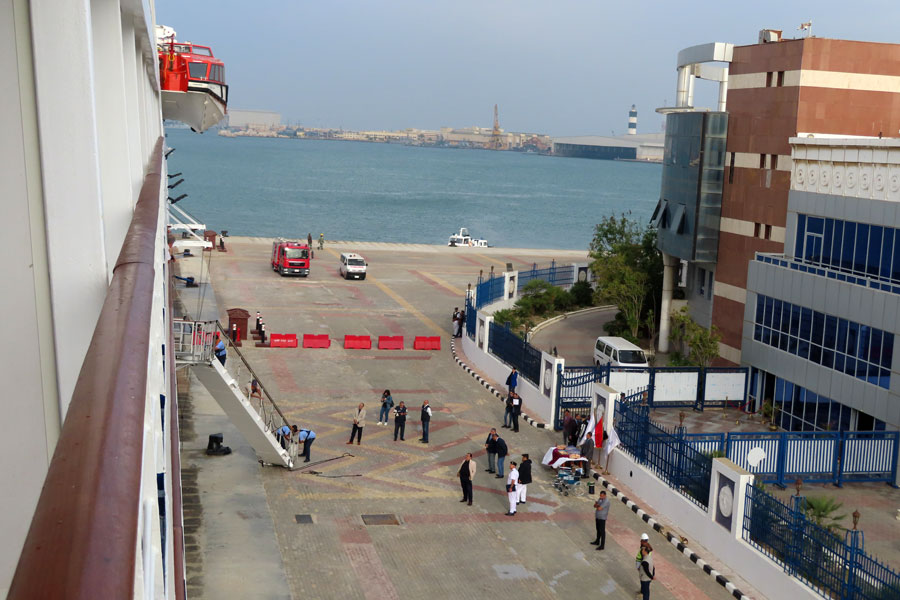
Alexandria, was founded by Alexander the Great in the 4th century BC. Modern Alexandria has been built on the ruins of the old, a city that was capital of Egypt from the 3rd century BC until AD 642, when the Arabs first arrived. Overlay a map of the contemporary city with one from antiquity, and you see that many of the streets have remained the same
Yet only fleeting glimpses of this ancient city peak through the modern crust. By the early 20th century, Alexandria was a wealthy trading port. The merchants were fantastically rich—cosmopolitan without being intellectual—and they enjoyed the sort of idle existence that is born of privilege, a privilege not of high birth but rather of colonial rule, which shielded foreigners from Egyptian law. They lived in villas with extravagant gardens, frequented luxurious shops, gossiped over tea in grand cafés, and lounged on the beach in private resorts along the coast. The population was a multicultural mix of Greeks and Arabs, Turks and Armenians, French and Levantines, Jews and Christians, and this spawned a unique atmosphere.
Then quite suddenly everything changed. The intellectuals and merchants fled, driven out of Egypt by the nationalist revolution of the 1950s, the wars with Israel, and the nationalization of their businesses. It's been five decades since most of the foreigners left—some Greeks and Armenians remained. But if you take the city as it is today and not as a faded version of what it once was, you will find that Alex (as it's affectionately known) remains an utterly charming place to visit. The Mediterranean laps at the seawall along the Corniche, and gentle sea breezes cool and refresh even in the dead of summer. Graceful old cafés continue to draw lovers and friends—Egyptians now, rather than foreigners—while the streets remain as lively and intriguing as ever. Alexandria is still a great city, even now, shorn of its many pasts.
We took the tour of the EL Alamein Battlefield
The Second Battle of El Alamein (23 October – 11 November 1942) was a battle of the Second World War that took place near the Egyptian railway halt of El Alamein. The First Battle of El Alamein and the Battle of Alam el Halfa had prevented the Axis from advancing further into Egypt. In August 1942, General Claude Auchinleck had been relieved as Commander-in-Chief Middle East Command and his successor, Lieutenant-General William Gott was killed on his way to replace him as commander of the Eighth Army. Lieutenant-General Bernard Montgomery was appointed and led the Eighth Army offensive. The British victory was the beginning of the end of the Western Desert Campaign, eliminating the Axis threat to Egypt, the Suez Canal and the Middle Eastern and Persian oil fields. The battle revived the morale of the Allies, being the first big success against the Axis since Operation Crusader in late 1941. The battle coincided with the Allied invasion of French North Africa in Operation Torch on 8 November which opened up a second front in North Africa.
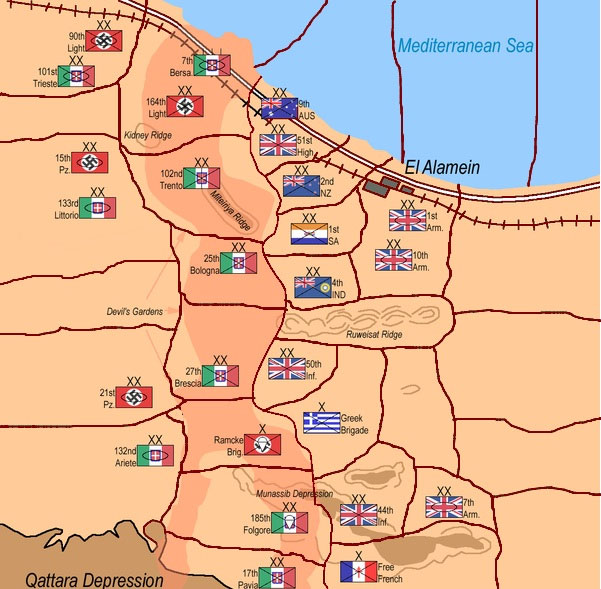
Montgomery's plan was for a main attack to the north of the line and a secondary attack to the south, involving XXX Corps (Lieutenant-General Oliver Leese) and XIII Corps (Lieutenant-General Brian Horrocks), while X Corps (Lieutenant-General Herbert Lumsden) was to exploit the success. With Operation Lightfoot, Montgomery intended to cut two corridors through the Axis minefields in the north. One corridor was to run south-west through the 2nd New Zealand Division sector towards the centre of Miteirya Ridge, while the second was to run west, passing 2 mi north of the west end of the Miteirya Ridge across the 9th Australian and 51st (Highland) Division sectors. Tanks would then pass through and defeat the German armour. Diversions at Ruweisat Ridge in the centre and also the south of the line would keep the rest of the Axis forces from moving northwards.
Montgomery expected a 12-day battle in three stages: the break-in, the dogfight and the final breaking of the enemy. For the first night of the offensive, Montgomery planned for four infantry divisions of XXX Corps to advance on a 16 mi front to the Oxalic Line, over-running the forward Axis defences. Engineers would clear and mark the two lanes through the minefields, through which the armoured divisions from X Corps would pass to gain the Pierson Line. They would rally and consolidate their position just west of the infantry positions, blocking an Axis tank counter-attack. The British tanks would then advance to Skinflint, astride the north–south Rahman Track deep in the Axis defensive system, to challenge the Axis armour. The infantry battle would continue as the Eighth Army infantry "crumbled" the deep Axis defensive fortifications (three successive lines of fortification had been constructed) and destroy any tanks that attacked them.
El Alamein was a British victory, although Rommel did not lose hope until the end of the Tunisia Campaign. Churchill said, It may almost be said, "Before Alamein we never had a victory. After Alamein we never had a defeat". — Winston Churchill. The Allies frequently had numerical superiority in the Western Desert but never had it been so complete in quantity and quality. With the arrival of Sherman tanks, 6-pounder anti-tank guns and Spitfires in the Western Desert, the Allies gained a comprehensive superiority. Montgomery envisioned the battle as an attrition operation, similar to those fought in the First World War and accurately predicted the length of the battle and the number of British and Commonwealth casualties. British artillery was superbly handled and British air support was excellent, in contrast to the Luftwaffe and Regia Aeronautica, which offered little or no support to ground forces, preferring to engage in air-to-air combat. Air supremacy had a huge effect on the battle. Montgomery wrote, The moral effect of air action [on the enemy] is very great and out of all proportion to the material damage inflicted.
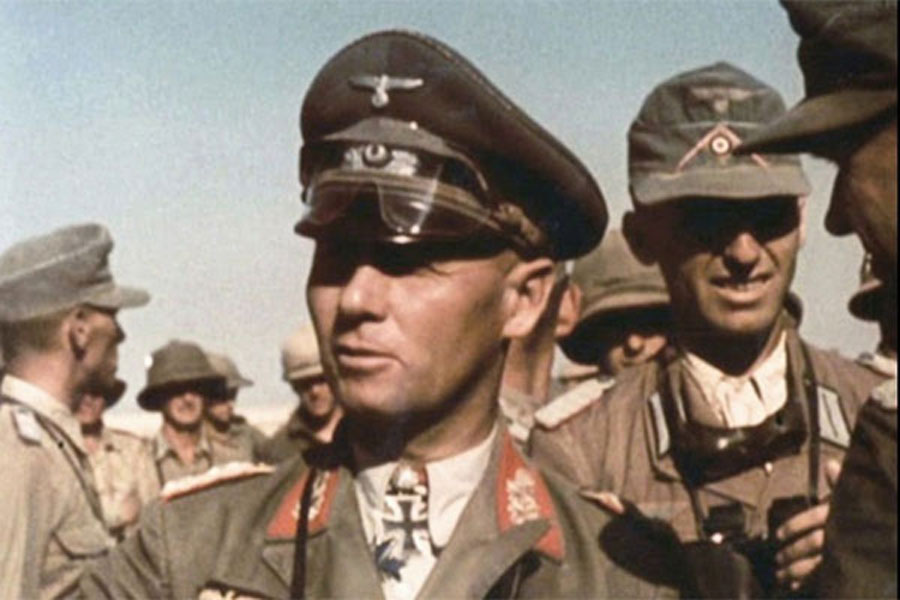
In the reverse direction, the sight and sound of our own air forces operating against the enemy have an equally satisfactory effect on our own troops. A combination of the two has a profound influence on the most important single factor in war—morale. — Montgomery Historians debate the reasons Rommel decided to advance into Egypt. In 1997, Martin van Creveld wrote that Rommel had been advised by the German and Italian staffs that his army could not properly be supplied so far from the ports of Tripoli and Benghazi. Rommel pressed ahead with his advance to Alamein and as predicted, supply difficulties limited the attacking potential of the axis forces. According to Maurice Remy (2002), Hitler and Mussolini put pressure on Rommel to advance. Rommel had been very pessimistic, especially after the First Battle of El Alamein, and knew that as US supplies were en route to Africa and Axis ships were being sunk in the Mediterranean, the Axis was losing a race against time. On 27 August, Kesselring promised Rommel that supplies would arrive in time but Westphal pointed out that such an expectation would be unrealistic and the offensive should not begin until they had arrived. After a conversation with Kesselring on 30 August, Rommel decided to attack, "the hardest [decision] in my life".
We were disappointed with the tour, which turned out to be mainly a visit o 3 War Grave sites - German Italian & British. A visit to a bad military museum, and lunch
The 100 odd km drive to El Alamein was all through "urban beach communities". Mile after mile of holiday flats, of differing cost levels
click on a thumbnail to get a bigger photo
|
|
|
|
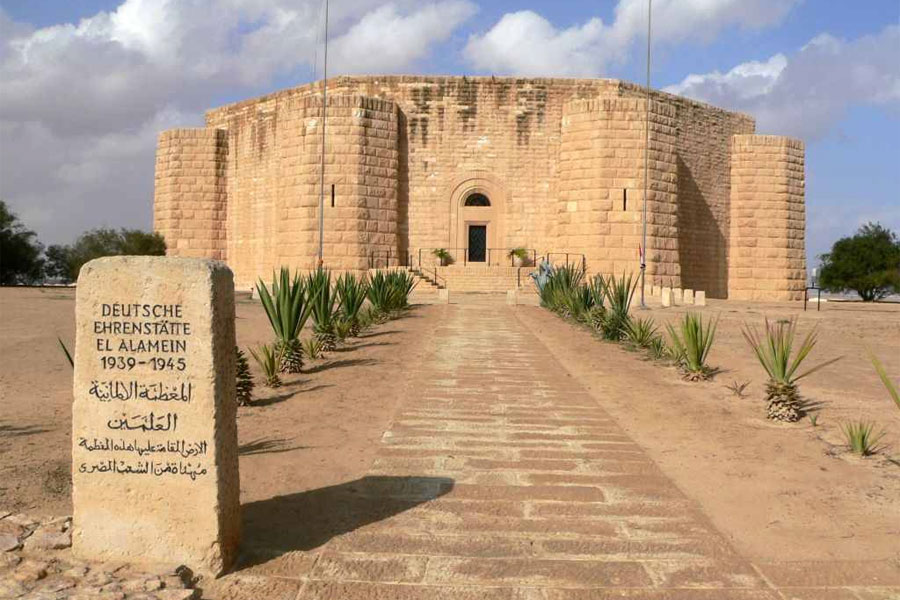
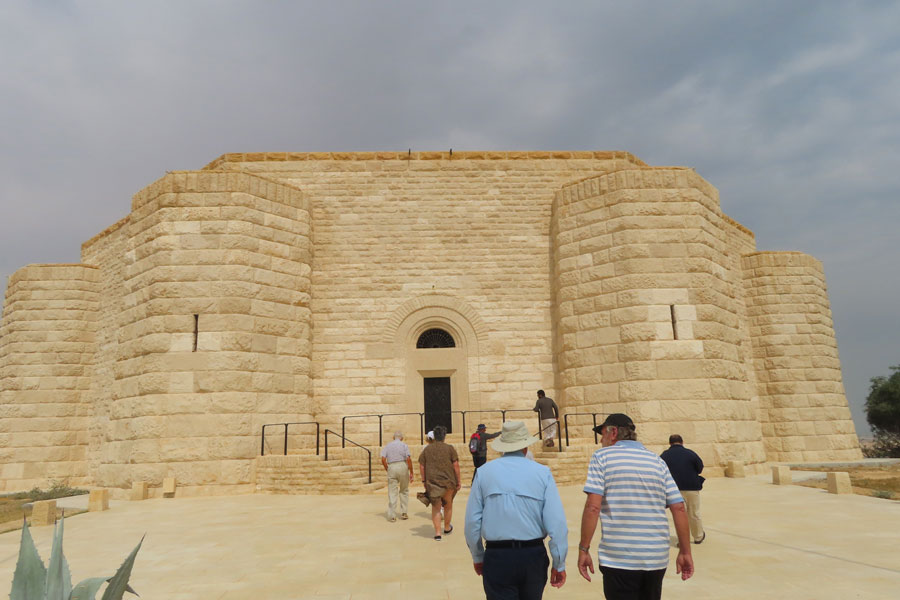
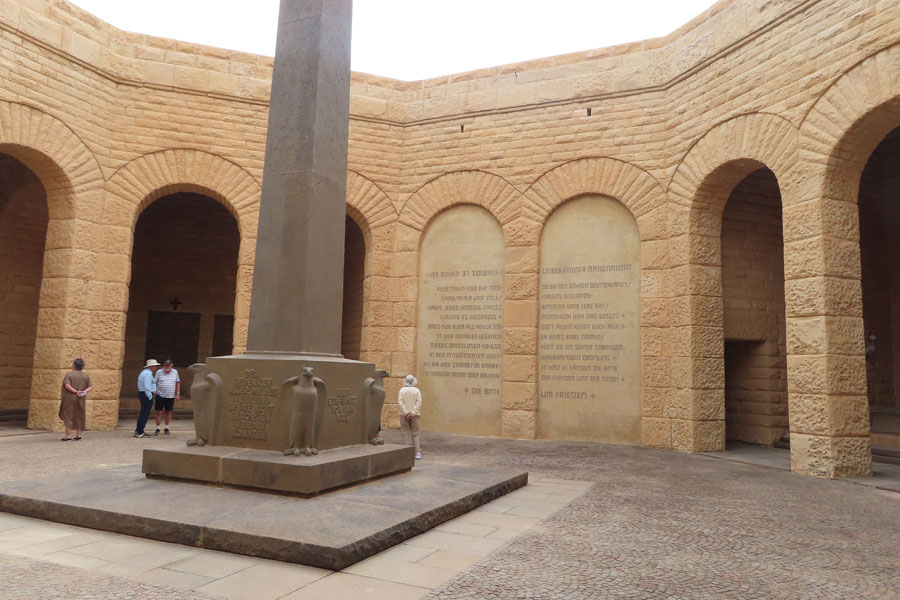
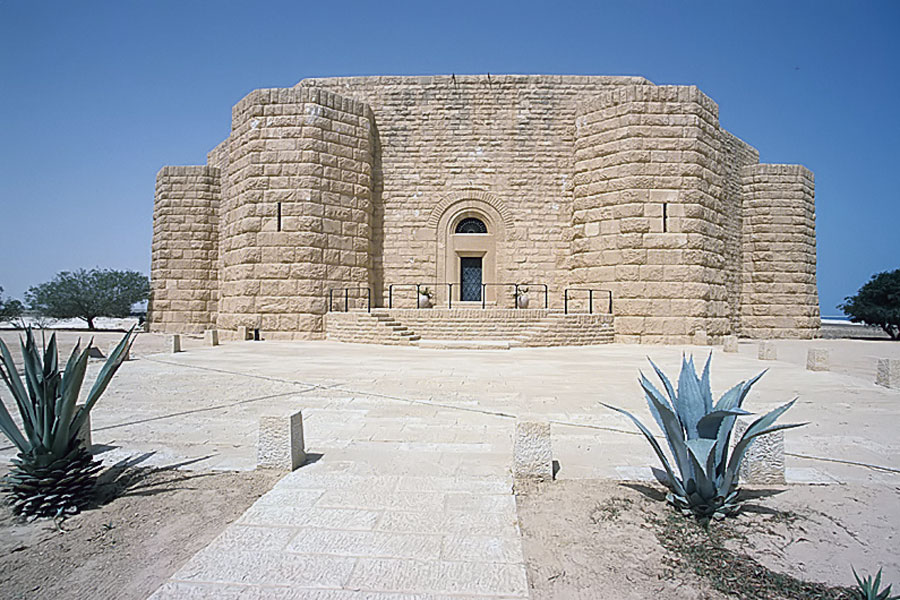
German War Graves - el Alamein
El Alamein German War Cemetery was built in the shape of a fortress. It contains 4,213 German burials from the Second and 30 from the First World War. There are also 31 casualties with an unknown nationality buried here. Inside the war memorial, each side of the octagonal courtyard houses an alcove, with symbolic remains of some German soldiers. The medieval looking Teutonic stronghold stands on a ridge between the Allied and Italian cemeteries. It took three years to construct and was inaugurated in 1959. The German memorial is the creation of Robert Tischler, principal architect of the German War Graves . In Alamein, Tischler wanted to evoke Ancient Egyptian architects who were considered world masters when it comes to honouring the illustrious dead. Hence the 11.5 meter high basalt obelisk supported by four falcons purposefully located in the centre of the mausoleum's inner courtyard. On the German memorial's plates and mosaic panels, which hang in covered alcoves and burial chambers, are engraved the names of approximately 4,200 German soldiers. Just like the Allied mausoleums, the expanse of land on which the German mausoleum stands was offered to the German government by the people of Egypt.
click on a thumbnail to get a bigger photo
|
 |
 |
 |
 |
 |
 |
 |
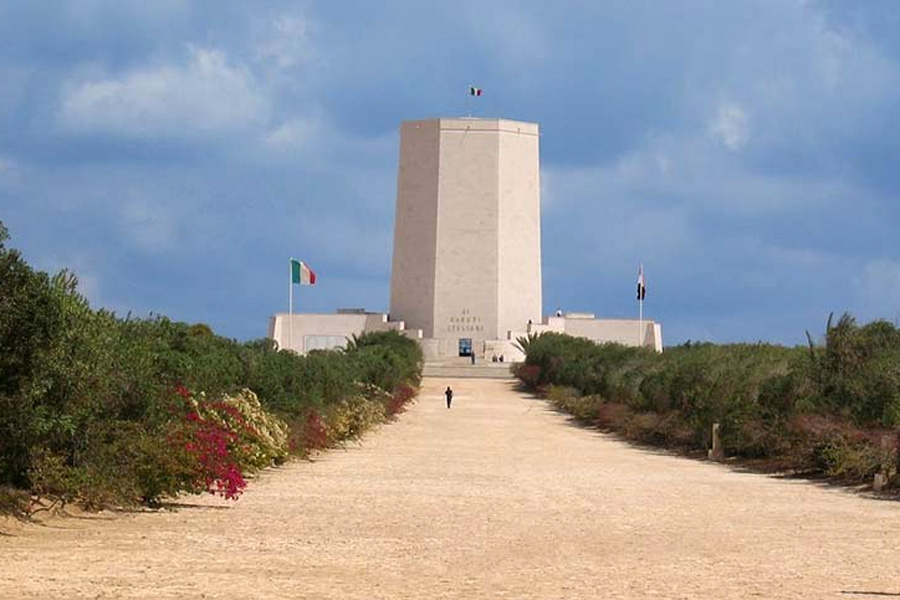
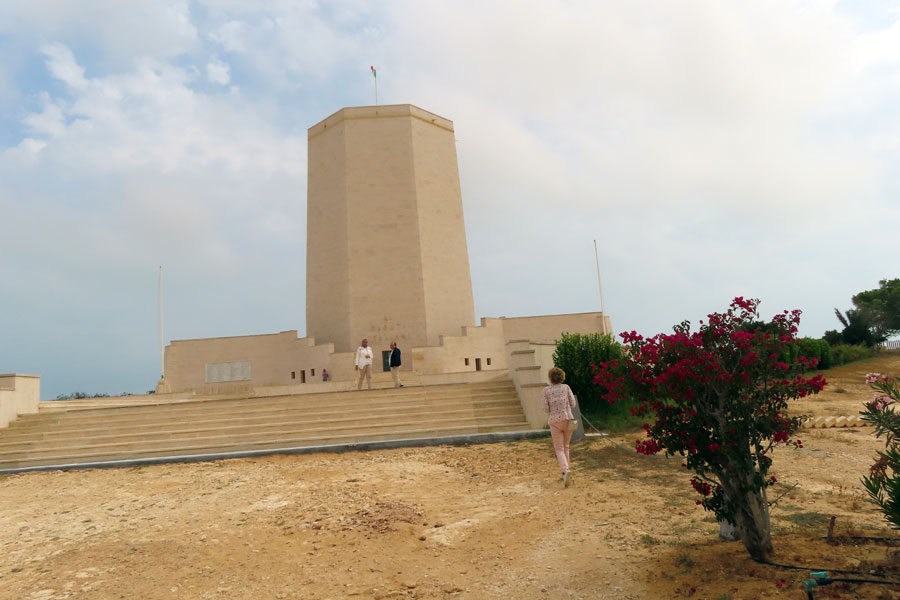
Italian War Cemetery
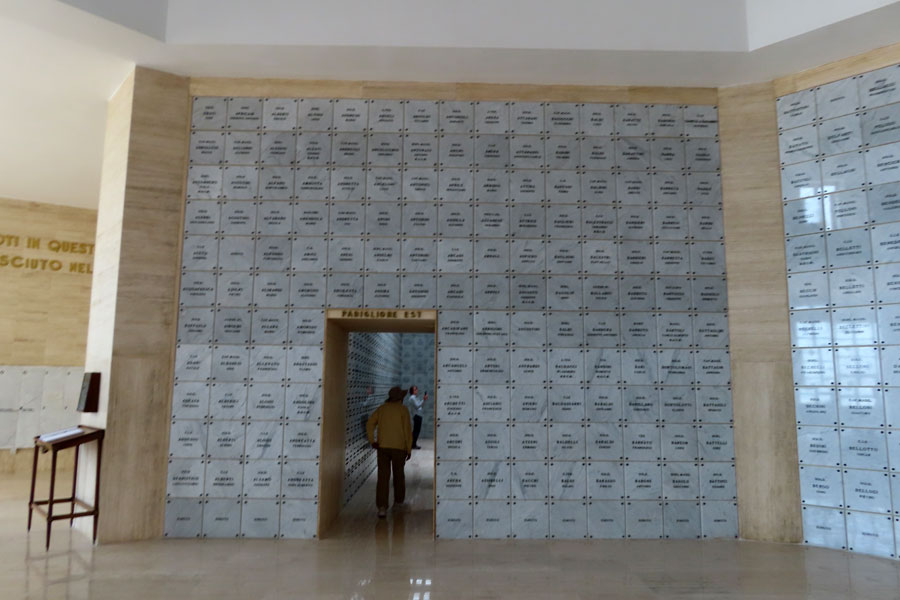
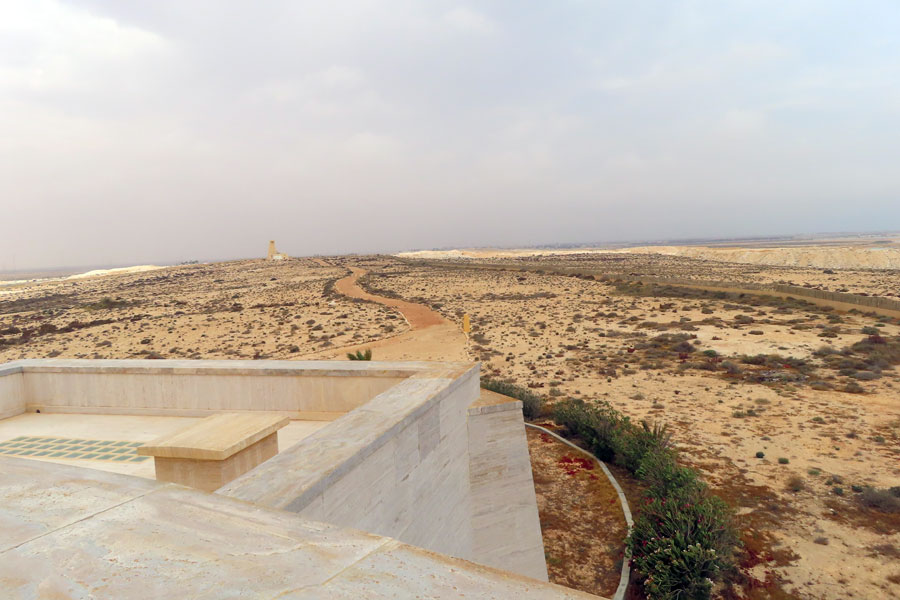
The Italian war memorial is built on Tel el-Eisa (Hill of Jesus) near the coast, a site of heavy fighting during the battle. (Tel el-Eisa is also referred to as "Hill 33" in descriptions of the battle.) It is the largest of the various national memorials at El Alamein.
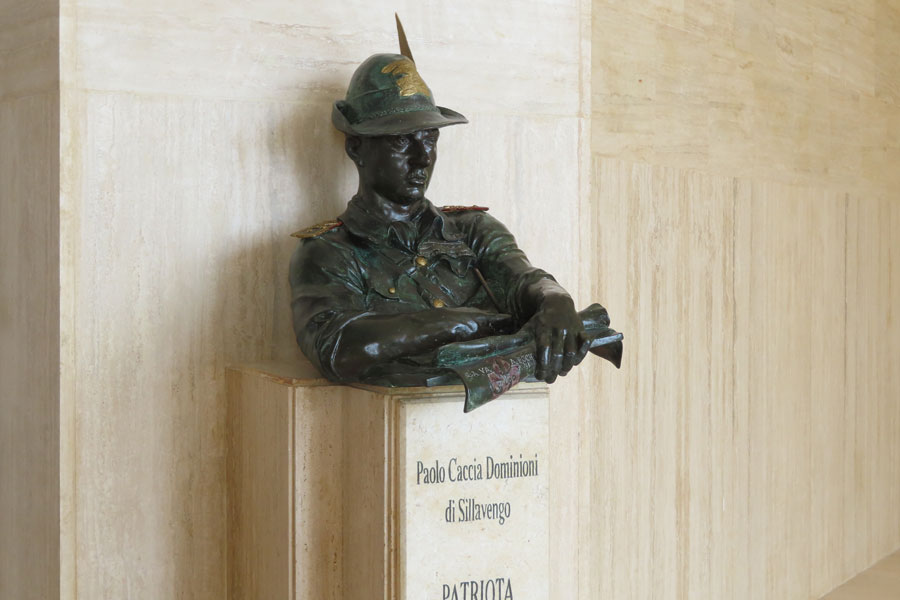
The main structure is a white marble tower. Paolo Caccia Dominioni, who had been at the battle, was the driving force behind the construction of the memorial. Dominioni devoted his postwar life to collecting the remains of Italian dead from the battlefield and advocating for the construction of a memorial. He designed the memorial, which was constructed between 1954 and 1958 by the Italian government under Dominioni's direction (an Italian cemetery had existed at the site since 1943). The cemetery contains several thousand graves, many marked "Ignoto" ("Unknown"). Some 38,000 Italian soldiers whose remains were never recovered are also honoured. Due to Paolo Caccia Dominioni's twenty years of effort, the remains of thousands of German and British soldiers (as well as Italian) were also eventually identified and received a proper burial.
On 30 October 2012, an historical park was opened on the battle site to show visitors key points in the battle.
click on a thumbnail to get a bigger photo
 |
 |
 |
 |
 |
 |
 |
 |
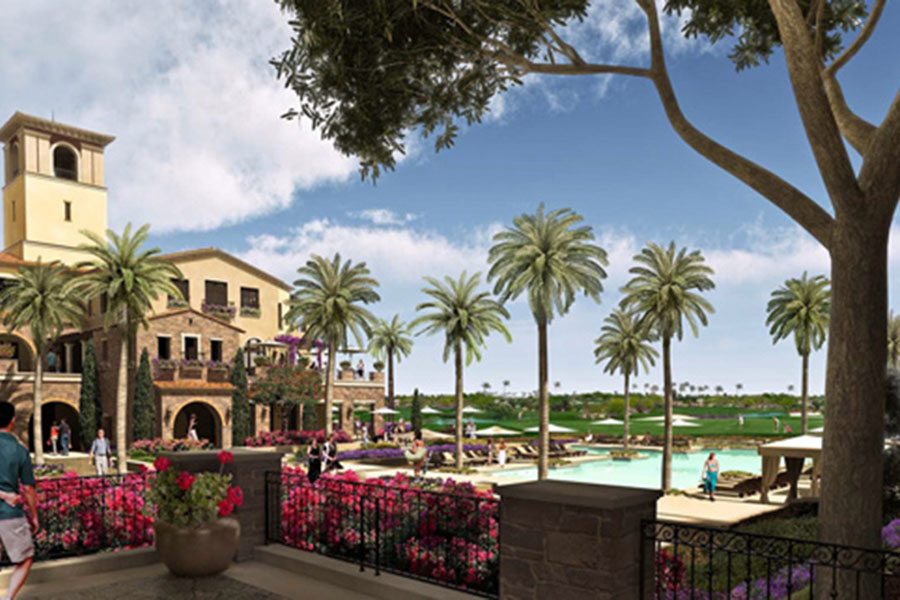
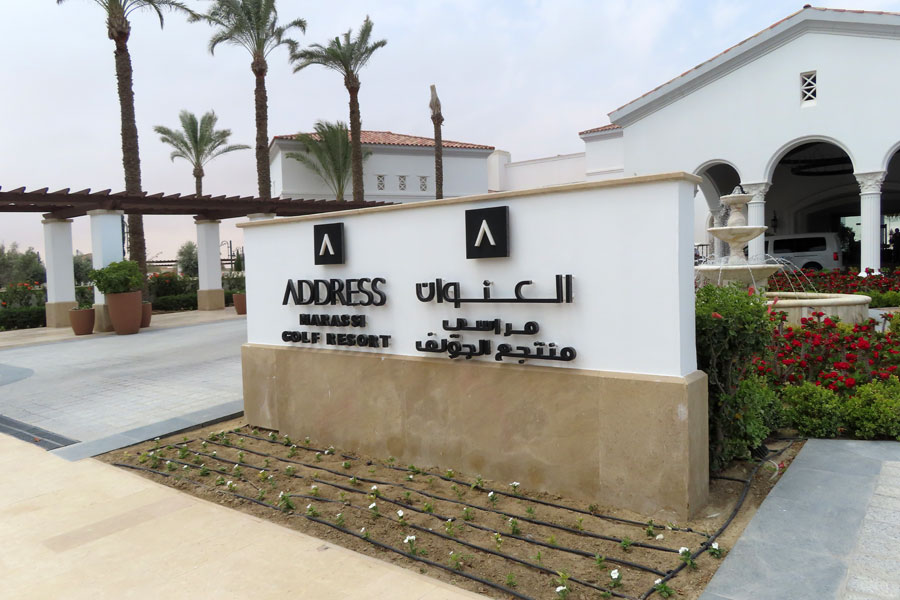
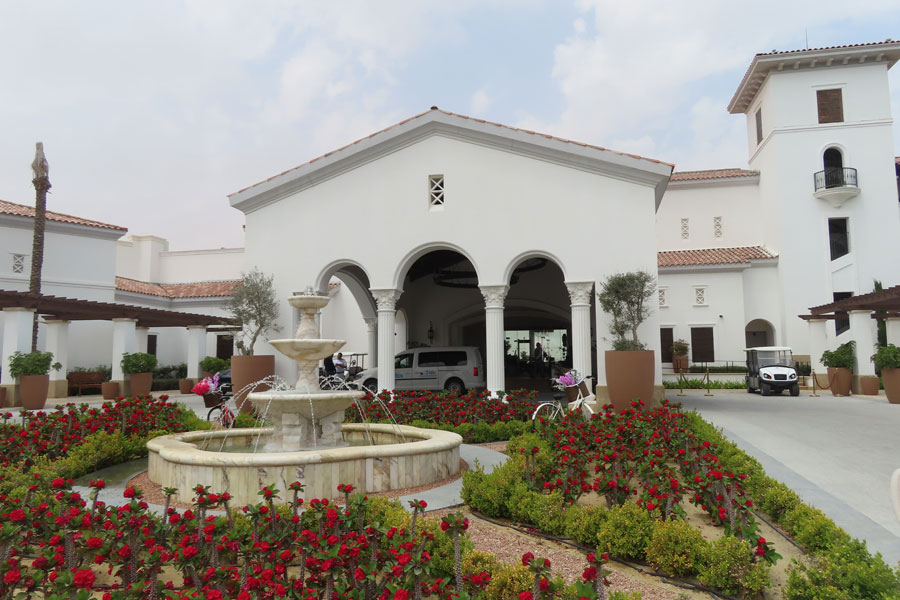
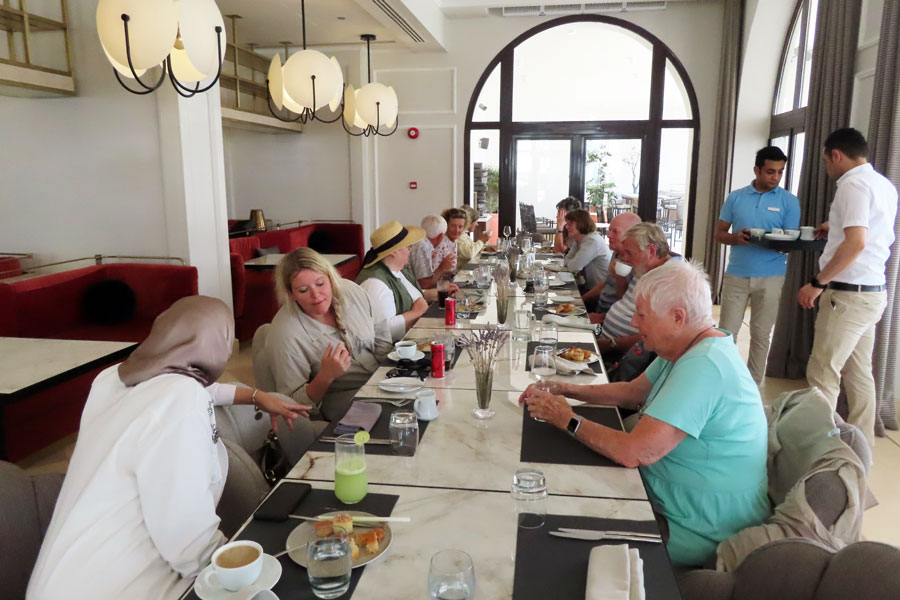
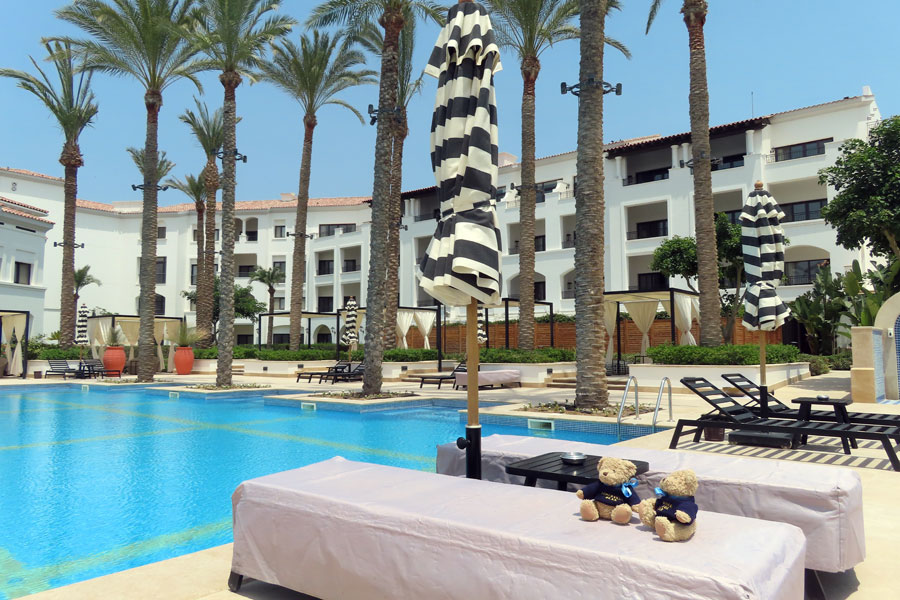
Marassi Golf Resort, Alamein for lunch
Quite a posh golf hotel or our lunch. But it was memorable only in being unmemorable. In fact the only thing I recall from lunch is that the beers we had all ordered did not arrive, and I had to find the waiter who was skulking with them in the background.
click on a thumbnail to get a bigger photo
 |
 |
 |
 |
 |
 |
 |
 |
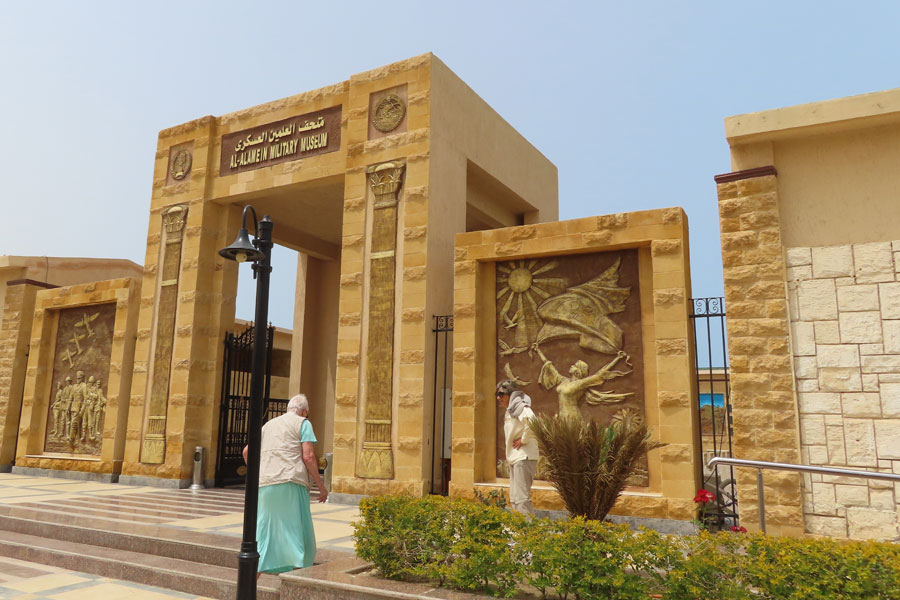
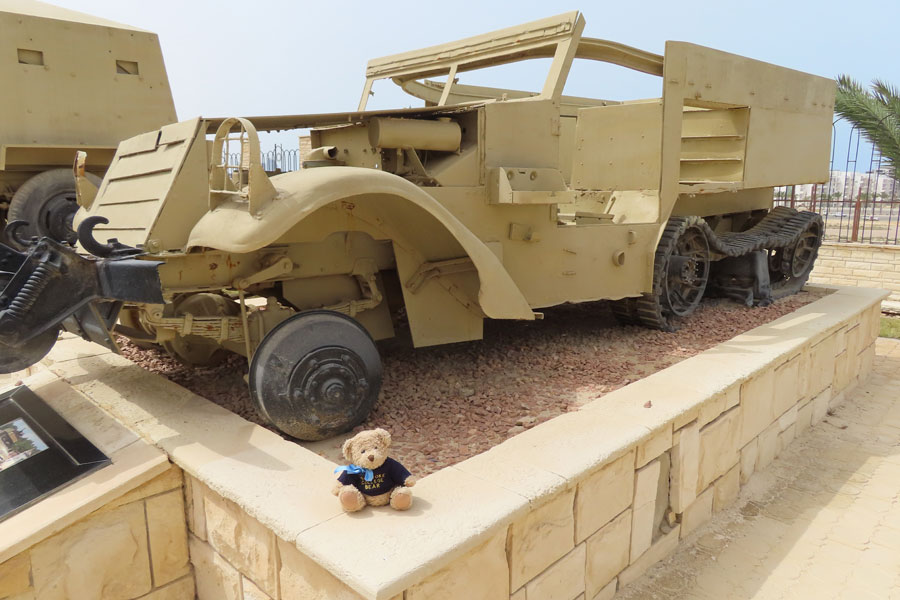
El Alamein Military Museum
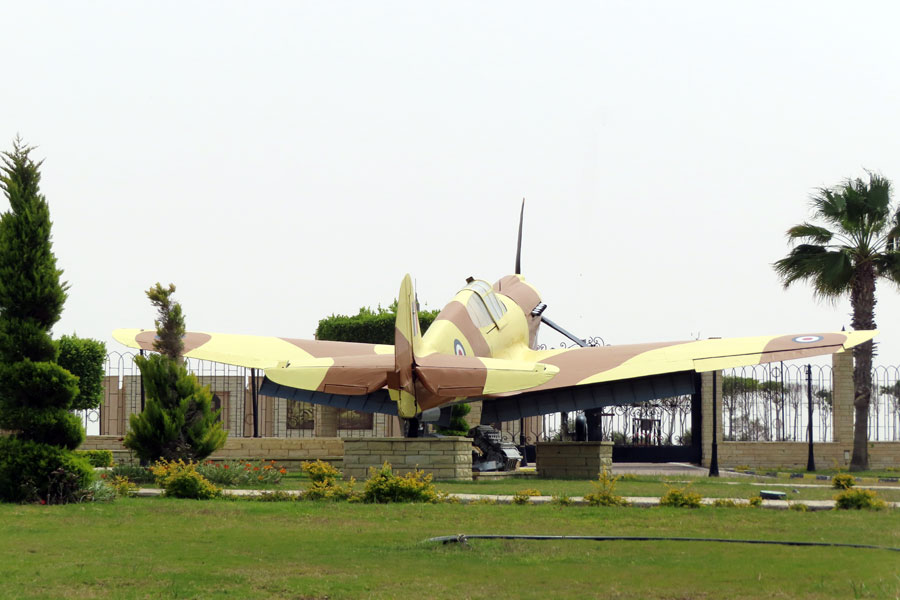
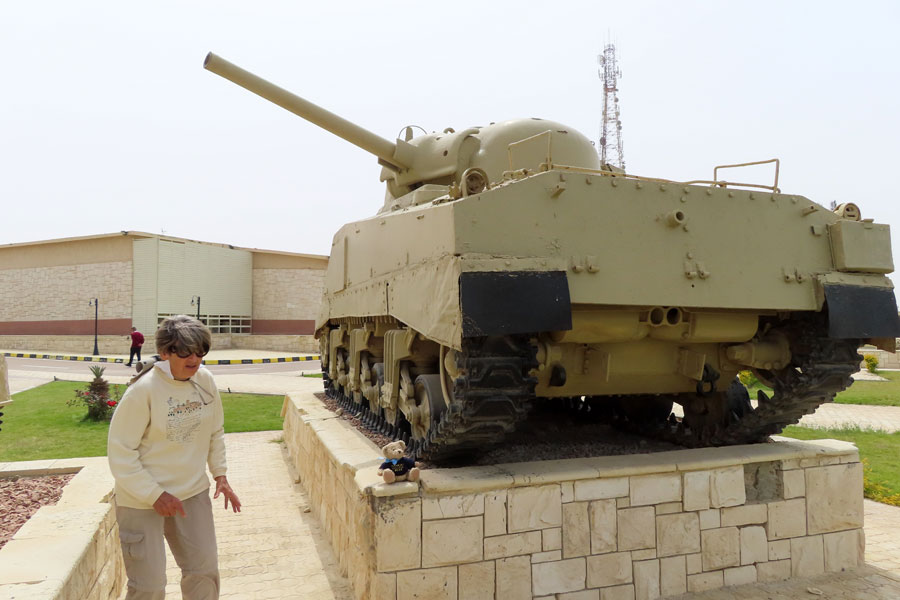
I was disappointed at the museum. It consisted of rooms featuring the uniforms and equipment of the nations involved in the battle, but little or no explanation was given of the battle itself. The semi-restored military vehicles in the grounds of the museum were more interesting.
click on a thumbnail to get a bigger photo
 |
 |
 |
 |
 |
 |
 |
 |
 |
 |
 |
 |
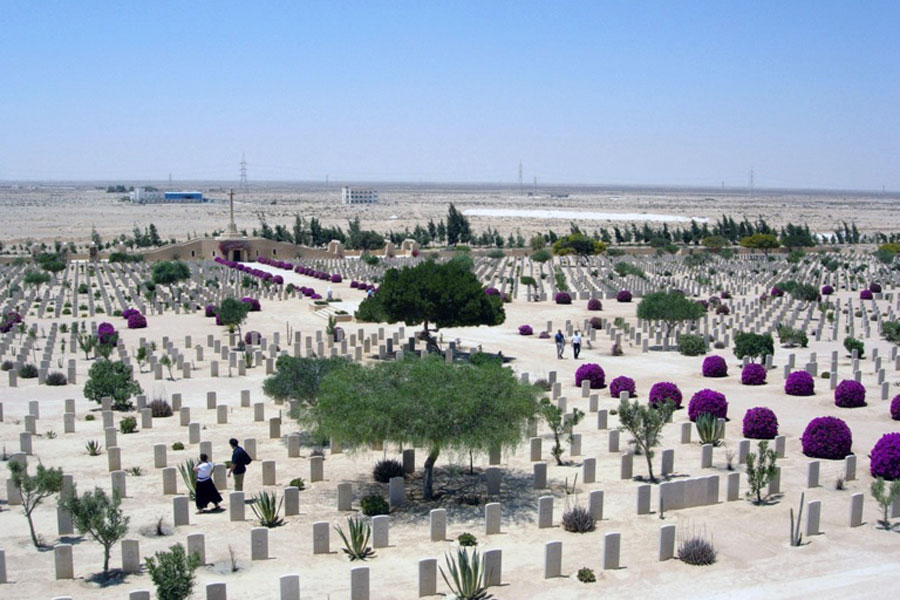
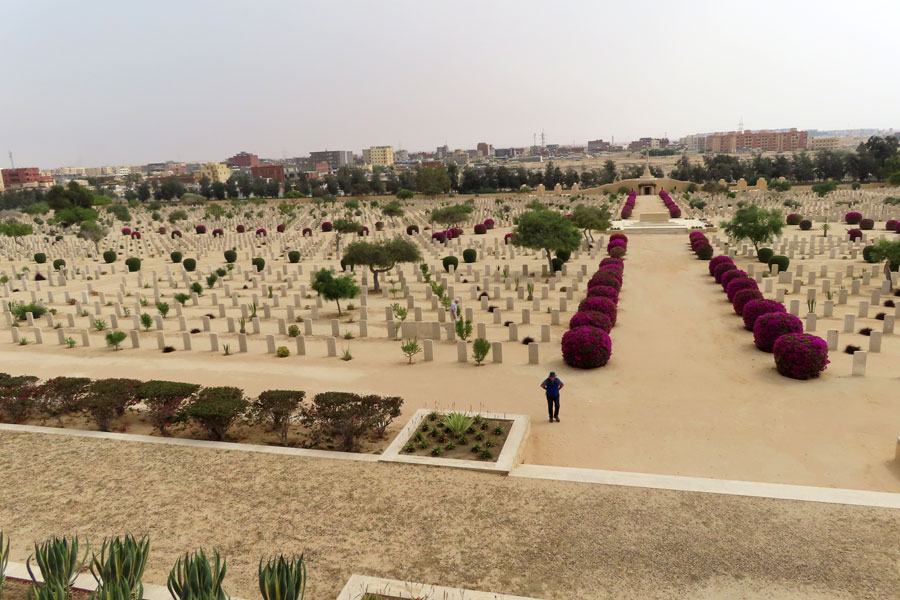
Commonwealth War Graves Military Cemetery
The campaign in the Western Desert was fought between the Commonwealth forces (with, later, the addition of two brigades of Free French and one each of Polish and Greek troops) all based in Egypt, and the Axis forces (German and Italian) based in Libya. The battlefield, across which the fighting surged back and forth between 1940 and 1942, was the 1,000 kilometres of desert between Alexandria in Egypt and Benghazi in Libya. It was a campaign of manoeuvre and movement, the objectives being the control of the Mediterranean, the link with the east through the Suez Canal, the Middle East oil supplies and the supply route to Russia through Persia.
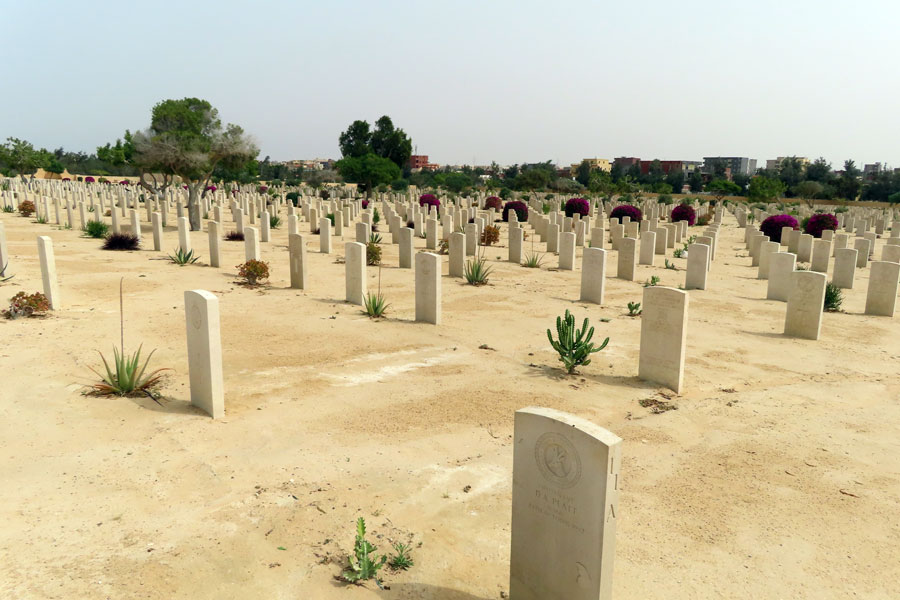
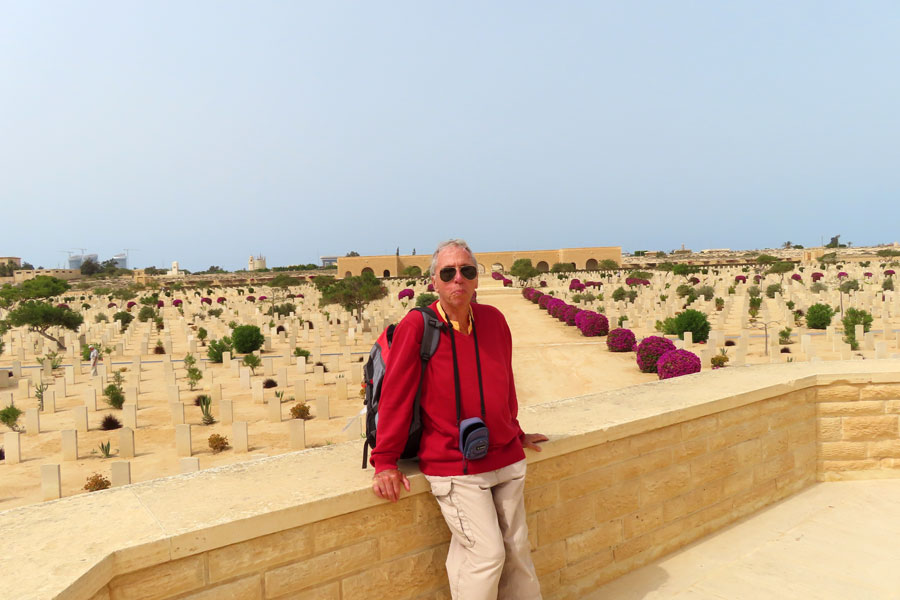
EL ALAMEIN WAR CEMETERY contains the graves of men who died at all stages of the Western Desert campaigns, brought in from a wide area, but especially those who died in the Battle of El Alamein at the end of October 1942 and in the period immediately before that. The cemetery now contains 7,240 Commonwealth burials of the Second World War, of which 815 are unidentified. There are also 102 war graves of other nationalities.
The ALAMEIN CREMATION MEMORIAL, which stands in the south-eastern part of El Alamein War Cemetery, commemorates more than 600 men whose remains were cremated in Egypt and Libya during the war, in accordance with their faith.
The entrance to the cemetery is formed by the ALAMEIN MEMORIAL. The Land Forces panels commemorate more than 8,500 soldiers of the Commonwealth who died in the campaigns in Egypt and Libya, and in the operations of the Eighth Army in Tunisia up to 19 February 1943, who have no known grave. It also commemorates those who served and died in Syria, Lebanon, Iraq and Persia. The Air Forces panels commemorate more than 3,000 airmen of the Commonwealth who died in the campaigns in Egypt, Libya, Syria, Lebanon, Iraq, Greece, Crete and the Aegean, Ethiopia, Eritrea and the Somalilands, the Sudan, East Africa, Aden and Madagascar, who have no known grave. Those who served with the Rhodesian and South African Air Training Scheme and have no known grave are also commemorated here. The cemetery was designed by Sir J. Hubert Worthington.
click on a thumbnail to get a bigger photo
 |
 |
 |
 |
 |
 |
 |
 |
Then back down the same long stretch of (depressing) developed coast , to the ship in Alexandria. We went back through the heavy port security to get back to the ship. Certainly the Egyptian government are not taking any chances
click on a thumbnail to get a bigger photo
 |
 |
Skipped Captain's farewell Dinner. Enjoyed our dinner with Skulk and 4 Australians