Explore the best, and most compelling, archaeological gems of Al Ula during your overnight experience.
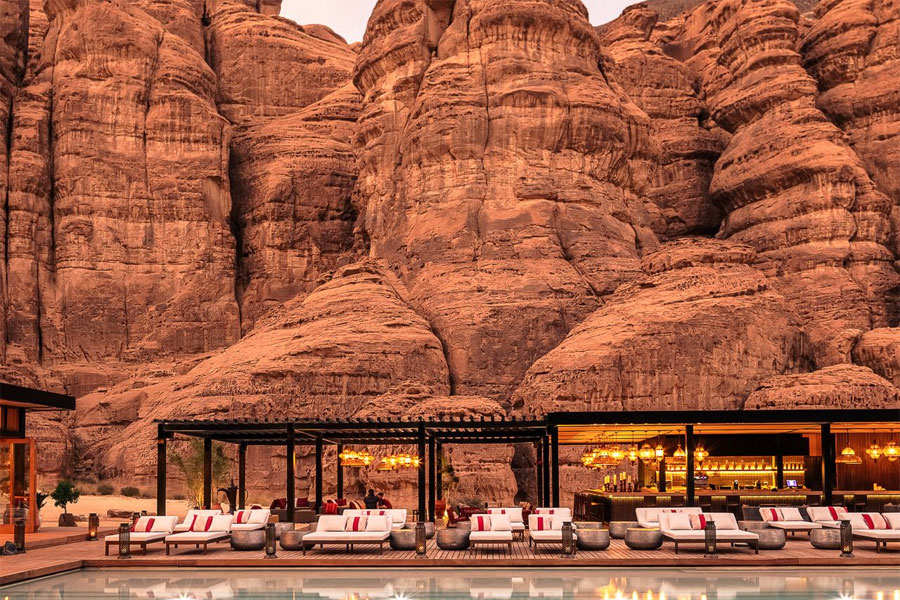
Depart the pier 07.00 for the transfer to Jeddah Airport for your chartered, approximately one-hour and half flight to Al Ula. Upon arrival transfer to Habitas Hotel Resort for check-in. Take some time to visit the stunning hotel and the surrounding area.
 |
 |
 |
After lunch, travel to the Jabal Al Feel (Elephant Rock). Located near the Madain Saleh in Al Ula, the amazing Elephant Rock is so huge that people look like tiny creatures standing with it. Made naturally out of carved rocks and standing approximately 164 feet (about 50 metres) in height, the rock is named after its shape, which resembles that of an elephant.


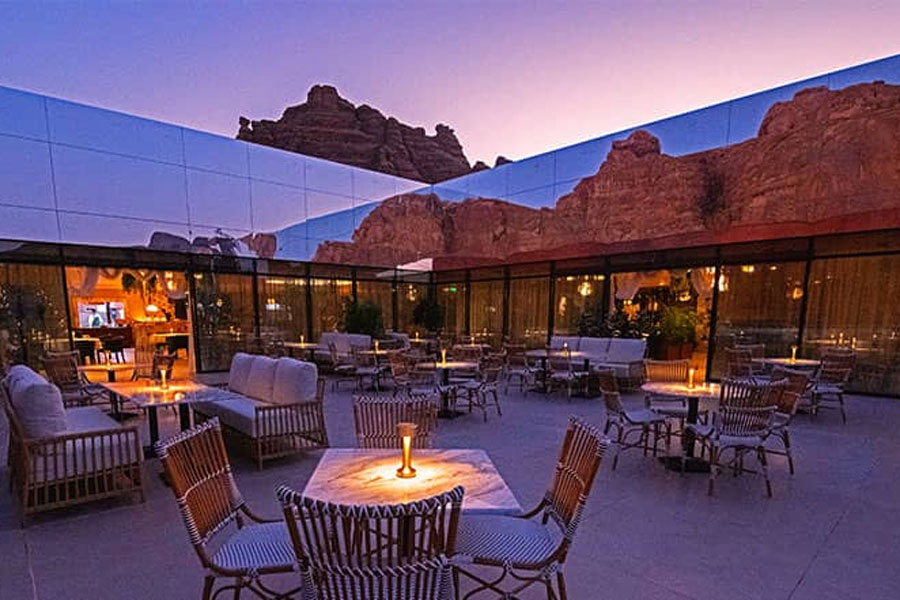
Leaving the Elephant Rock, head to the Maraya. Maraya is a stunning piece of art set in the desert canyon of Ashar Valley. Designed to blend into the surrounding landscape, it rises from the sand like a mirage. The state-of-the-art structure is covered in 9,740 mirrored panels reflecting AlUla's beauty and celebrates AlUla's significant role in history as a crossroads of cultures for centuries. As the perfect modern ode to the past, Maraya is the centerpiece of AlUla's growing cultural scene from spectacular concerts and thrilling performances to art residency programs and arthouse films.

Perched atop Maraya stands the much-anticipated restaurant, Maraya Social. Maraya Social features produce sourced from local farms in a selection of sharing plates and high-quality mocktails, all served in Atherton's signature style. Chef Jason Atherton's latest passion project reflects the flavors of the AlUla Oasis in a stunning new dining concept. After dinner drive to a remote desert location for a spectacular experience of stargazing before your overnight at Shaden Resort

After breakfast and check out travel to Hegra Archaeological Site, the first UNESCO World Heritage Site in Saudi Arabia and second-largest city of the Nabatean civilization. Founded around the 2nd century B.C., Hegra is an outstanding example of the Nabataeans' architectural accomplishment and hydraulic expertise. Journeying through Hegra can be an adventure in and of itself, a dramatic stone city with more than hundreds of artistically hewn well-preserved tombs that enliven the sandstone outcrops. Creating an enthralling mix of structures, these sheer cliffs lined with artistic carvings and inscriptions reminiscent of ancient architecture. Within these cliffs are borrowed some of the most elite burial places of the ancient society that symbolizes the extensive history of the region. In addition to the monumental tombs with decorated facades, the large number of artificial wells in Hegra, also bear witness to the Nabatean agricultural techniques.
 |
 |
 |
Among the most significant archaeological discoveries in all of Al Ula, Dadan was the ancient capital of the Dadan and Lihyan kingdoms. Expertly carved from a towering, red-rock formation overlooking the valley's oasis, the Dadan Kingdom dates back between the late-9th and early-8th century B.C., and the Kingdom of Lihyan dates from the 5th-2nd century B.C. During your visit, see more than a dozen tombs cut into the red-rock cliff faces east of the city. From afar, these look like simple dark rectangles. A closer look reveals skilfully crafted funerary monuments, including the seated, approximately 164-foot-high (about 50-metre-high) lion sculptures that mark the famous Lion Tombs.
After lunch head to Al Ula Old Town located in the narrowest part of the AlUla Valley. Built on a slight elevation, the town is overlooked by the Musa bin Nusayr Castle, a citadel dating back approximately to the 10th century. Take a guided walk of this essential, 12th-century settlement along the pilgrimage route from Damascus to Makkah.
 |
 |
 |
At the conclusion of your visit, re-board your coach and transfer to the airport in Al Ula for your chartered, approximately one-hour and half return flight to the Jeddah Airport. Upon arrival, transfer back to the ship.