

We left Rosses Point and continued to follow the Wild Atlantic Way north into Donegal. We soon entered narrow roads and dramatic countryside
Of particular note was Malinbeg, a secluded bay dramatised by the surrounding high, horseshoe shaped cliffs. The Bay is accessed by a steeply sloping series of steps. The headland on the Western side of the Bay presents the remains of fortifications beyond which Rathlinn O’Birne Island is just visible. Such is its fame that we even came across an almost stranded German tourist coach, on a road so narrow that it could not keep both wheels on the road, and unable to get round tight bends unless cars were prepared to back for hundreds of yards to allow it to progress.
We also had an interesting stop at a woollen mill shop. Given the paucity of road traffic in June, one wonders how they paid staff wages. Anyway we bought some drink coasters and the Boys had their photos taken.
Click on any of the thumbnails to get a bigger version of the picture
 |
 |
 |
 |
 |
 |
 |
 |
 |
 |
 |
 |
 |
 |
 |
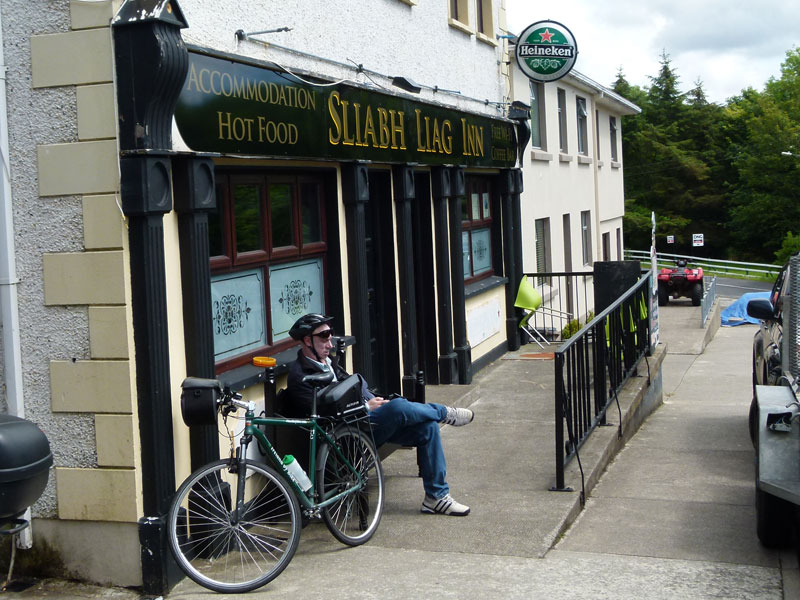
Sliabh Liag Inn

There was not a great choice of lunch stops in this part of Donegal. This pub looked interesting from the outside with its traditional Irish pub fascia, but was less good inside. Our lunch was fine without being exceptional. In other words it was what you expect from most pubs in Ireland. Though I think if was here again, I would try one of the other pubs
Strangely thee were no beers on draft, the owner said they were waiting for a licence, but was able to sell me a bottle, but when I ordered a bottle, he proceeded to pour 2 bottles into a glass. I suspect the chap had just bought the pub, and really had no idea how to run it.
Click on any of the thumbnails to get a bigger version of the picture
 |
 |
 |
 |
Glencolmcille Folk Village
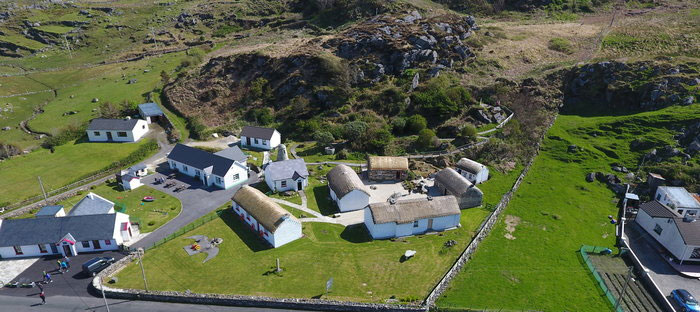
The Folk Village Museum is a cluster of several small cottages, called a ‘clachan’, perched on a hillside overlooking the sandy curve of Glen Bay Beach in the Gaeltacht (Irish-speaking area) of South West Donegal. Designed, built and maintained by the local people. Each cottage is an exact replica of a dwelling used by the local people in each of the 18th, 19th and 20th centuries and is equipped with the furniture, artifacts and utensils of its particular period. A reconstructed school house, fisherman’s dwelling and tiny pub-grocer offer additional insights into rural Irish life in one of the most remote corners of the country.
The Folk Village Museum was the initiative of a dynamic Donegal priest, Father James McDyer. It opened in 1967 with three cottages, built and furnished in just three months through local community effort. At the time of Father McDyer’s arrival in 1951 the parish of Glencolmcille was suffering from a long-standing cycle of unemployment and emigration. Over the next three decades Father McDyer worked to help break this cycle, lobbying for amenities, organising community projects and supporting the development of local industries, many of which, like the Folk Village, are still successful today.
New cottages and exhibits have been added over the years, and the Folk Village Museum is still very much a community concern. Local people regularly donate time, expertise, artifacts, stories and photographs.
Click on any of the thumbnails to get a bigger version of the picture
 |
 |
 |
 |
 |
 |
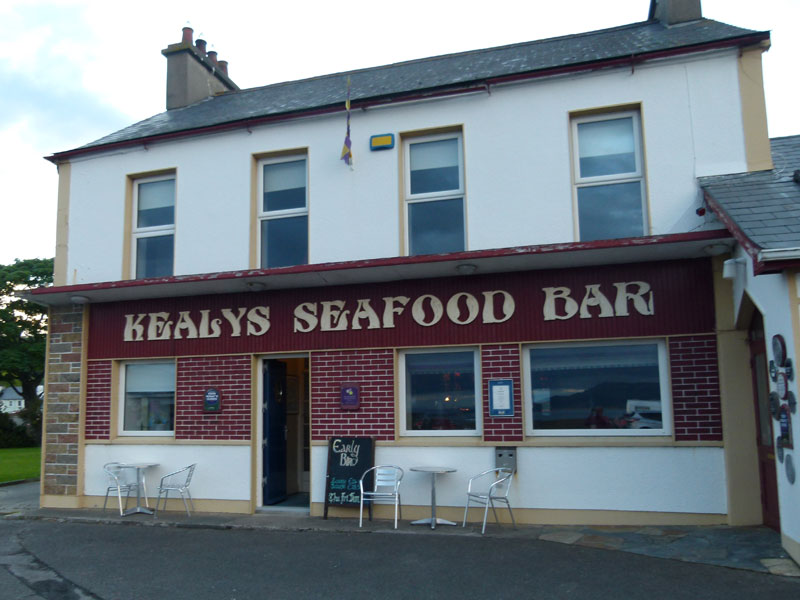
Kealy's Seafood Bar
As our B&B did not do dinner, we checked in and went straight down to the pub in the local town, Greencastle. This is an up-market pub, serving good pub food.
It is not gourmet, but probably would not class itself as gourmet. The service is reasonable without being exceptional, but that is not what they set out to offer. So you get what you came for, a very good pub restaurant meal, at what I thought was a reasonable price.
It is really a question of what your expectations are, and it fulfilled my expectations
Click on any of the thumbnails to get a bigger version of the picture
 |
 |
 |
 |
 |
Templeview Lodge

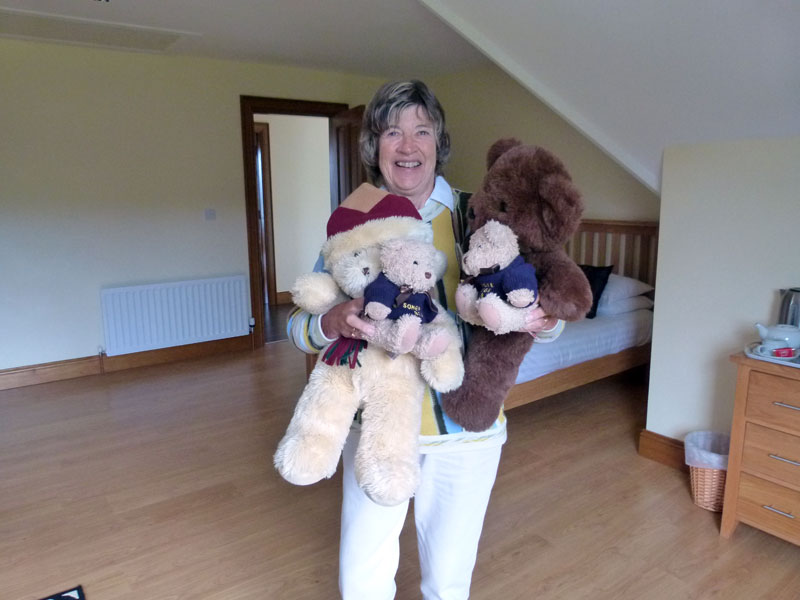
We have stayed at many B&Bs around the world, and this really is one of the best. Sheilagh McCormack extends a genuine warm Irish welcome and the rooms and guest lounge are great, plus of course the fantastic view out over Lough Foyle and Northern Ireland over on the other side. Indeed I would suggest that most B&B owners in Ireland book in here for a night to see how it should be done.
Tourists stay at a B&B rather than a hotel not just because it is a cheaper alternative, but because you see the "real" Ireland. Sheilagh goes out of her way to make sure that you see everything there is to see locally. And will also recommend and book local restaurants for you. In addition I never like to feel I am intruding in the owner's home, and here they get round that problem by having a guest lounge on the first floor with great views, as well as being very comfortable place to relax after a day's sightseeing
This is somewhere that I am very enthusiastic about.
Click on any of the thumbnails to get a bigger version of the picture
 |
 |
 |
 |
 |
A Second Day on the Wild Atlantic Way in Donegal


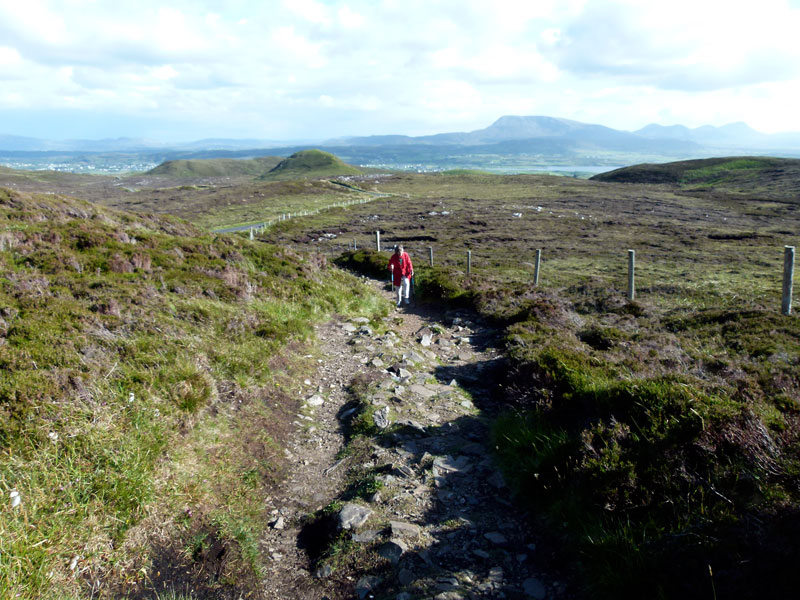
The morning was round the Inishowen Peninsula, which is very scenic. This included Malin Head, below. Then up the east side of Lough Swilly
We had lunch at Dunree Fort which is strategically situated near the mouth of Lough Swilly in an area of stunning natural beauty. It has been attacked many times over the years by nearly everyone trying to get a foothold in Ireland - the Vikings, the Normans, the Gallowglassses, the English, the Germans and the French. In 1798 Wolf Tone was intercepted by the English navy on a French vessel near this location. During WW1, the British moved their entire north Atlantic fleet into Lough Swilly from Scapa Flow in Scotland as it was deemed a strategic and safe location. It was also one of only three ports in Ireland retained by the British until 1938 after the Irish Free State was established in 1921 (the other two being Berehaven and Cobh). The fort is now a military museum which can be accessed by a small bridge over the natural fissure in the rocks.
We then drove east along the Wild Atlantic Way for as long as time allowed. We turned back at Horn Head, which meant that we had not driven Horn Head to Glenties section on this trip.
A lot of fantastic beaches, but we only ever saw one swimmer.
Click on any of the thumbnails to get a bigger version of the picture
 |
 |
 |
 |
 |
 |
 |
 |
 |
 |
 |
 |
 |
 |
 |
 |
 |
 |
 |
 |
 |
 |
 |
 |
 |
Malin Head

Malin Head is the most northerly point on the Irish mainland - ironically in the Republic of Ireland and not in Northern Ireland.
Malin Head is a rugged stretch of coastline that was formed millions of years ago by retreating glaciers. The rocky cliffs have long been a strategic lookout point to keep track of potential invading danger. Starting in the early 1800s, Malin Head became an important location for communications and defence. The British built a lookout tower at Baba’s Crown to keep an eye out for possible French invasions during the Napoleonic Wars. In 1902, a signal station was built close to the old watchtower. The station was used by the insurance company Lloyds of London to contact ships offshore as they passed close to the northern tip of Ireland. While there is no longer a need for watchtowers or telegram lines, the extreme northern outpost still provides important information to sailors because there is now a BBC weather station which provides information for shipping forecasts from Malin Head.
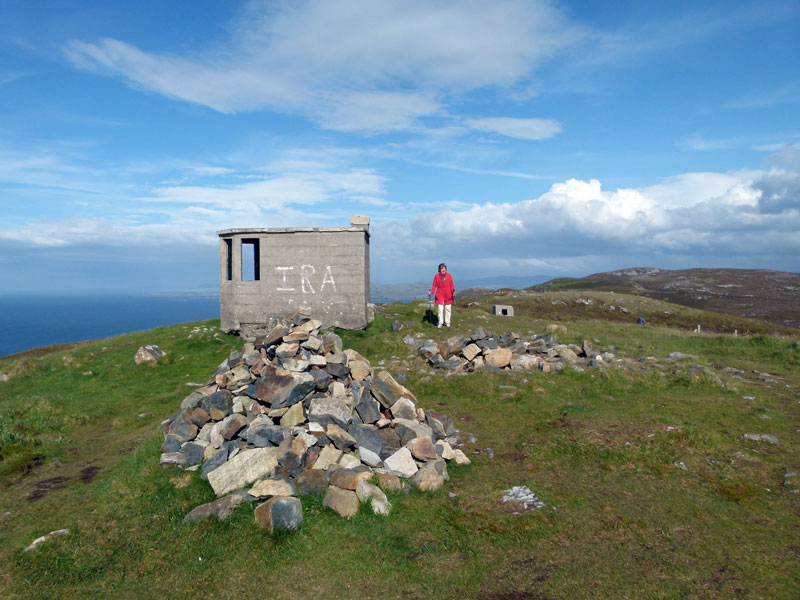
The ‘Eire’ sign at Malin Head, with the lookout post number ’80,’ has been restored. The sign was an important navigational marker for pilots in World War II to alert aircraft to neutral Ireland. Eight of the signs can still be seen on headlands in Donegal, where the greatest number of them has survived. Three of these are still visible on the Inishowen Peninsula: No.80 Malin Head, No.81 Glen Gad Head and No.82 Inishowen Head. The sites were numbered, with number 1 being located in Bal lagan Point, County Louth, and number 82 on Inishowen Head, County Donegal.
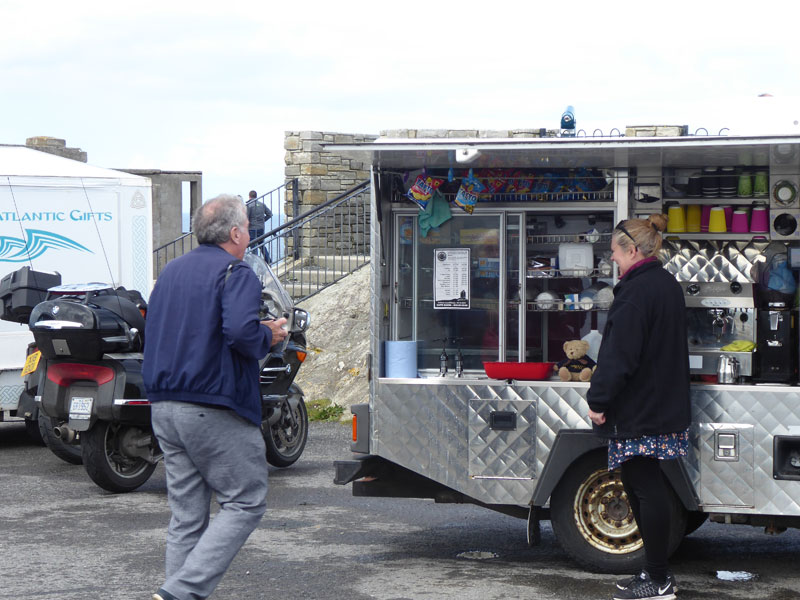
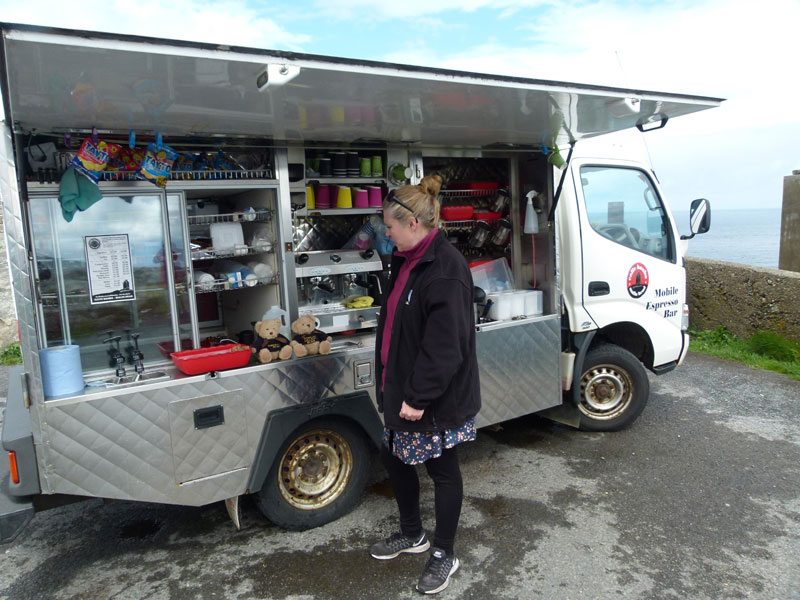
I enjoyed a good cup of coffee and a slice of Bakewell tart from the resident catering wagon
Click on any of the thumbnails to get a bigger version of the picture
 |
 |
 |
 |
 |
 |
 |
 |
 |
 |
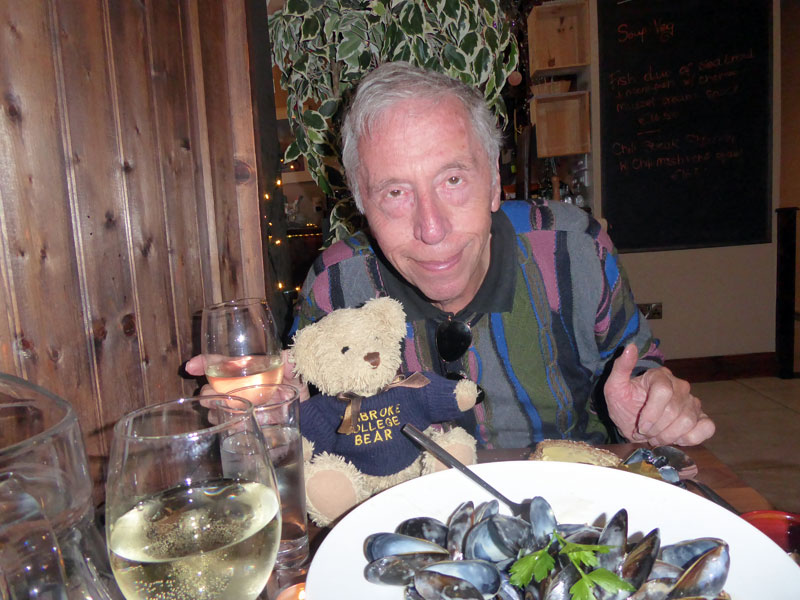
Inish Fusion, Moville

We enjoyed our dinner here - the food, service and ambiance were all good.
The only criticism I had was that the layout does not allow for the easy placing of tables - but that was no great inconvenience
It is well known locally so was very busy, even on a Sunday night. The fish is, as you would expect/hope , very good. Service was cheerful, and value for money excellent.
If you need dinner in Moville, you could do a lot worse than eat here
Click on any of the thumbnails to get a bigger version of the picture
 |
 |
 |
 |
 |
And next morning we were off south to Kells, via a detour through Northern Ireland