

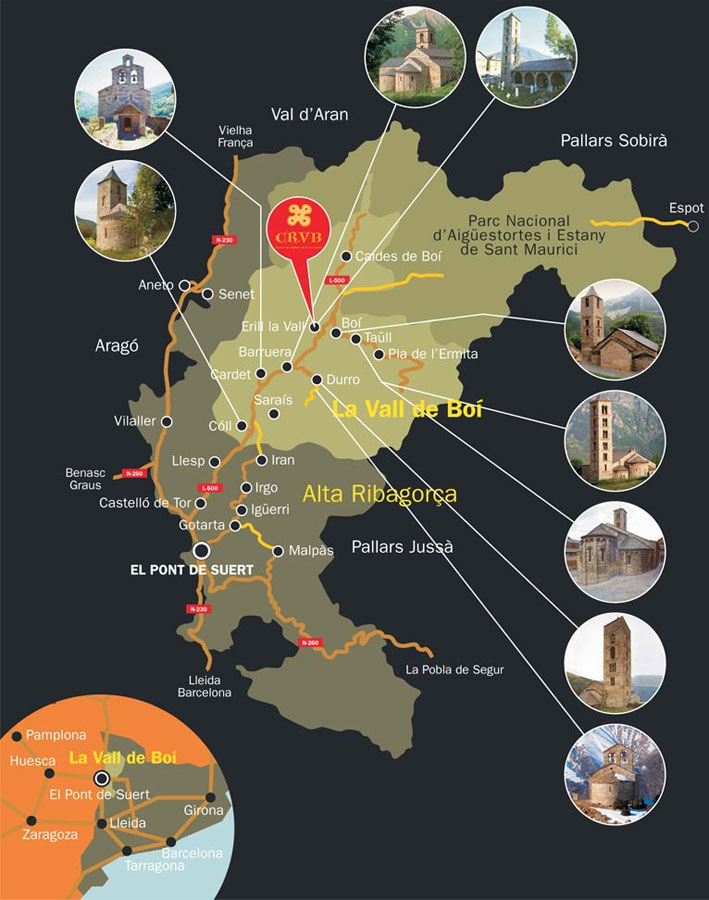
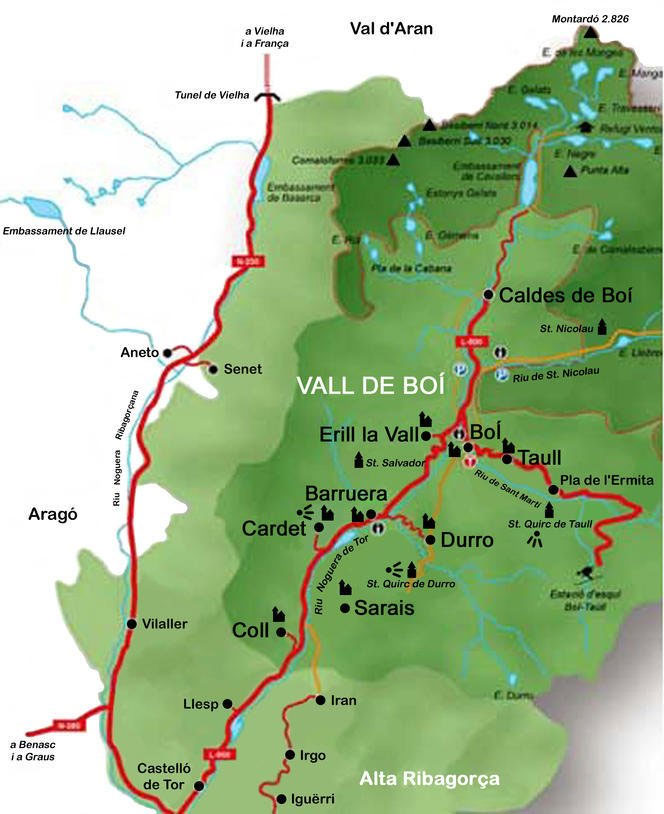
The Vall de Boí is a narrow, steep-sided valley and a small municipality in the province of Lleida, in the autonomous community of Catalonia. It lies in the northeastern corner of the comarca of Alta Ribagorça, on the edges of the Pyrenees.
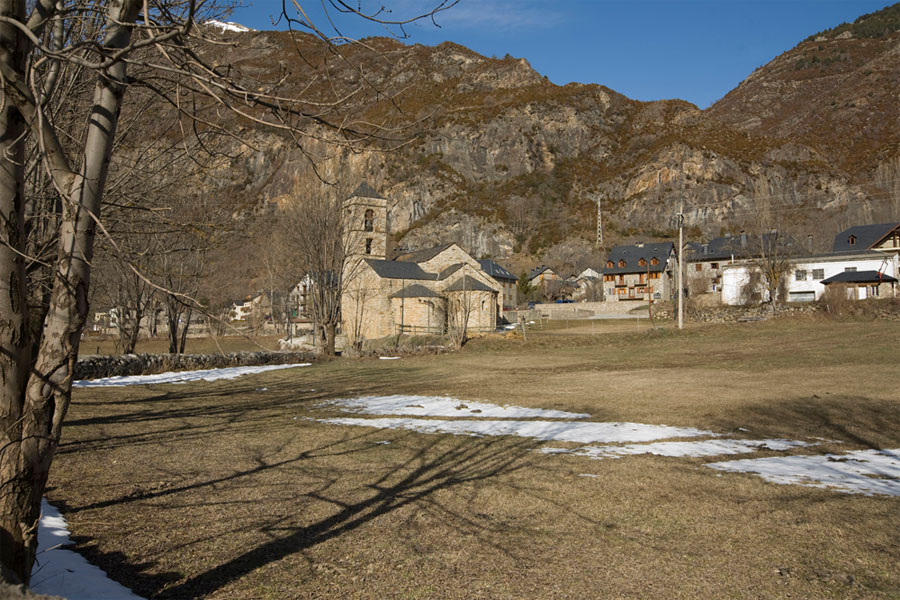
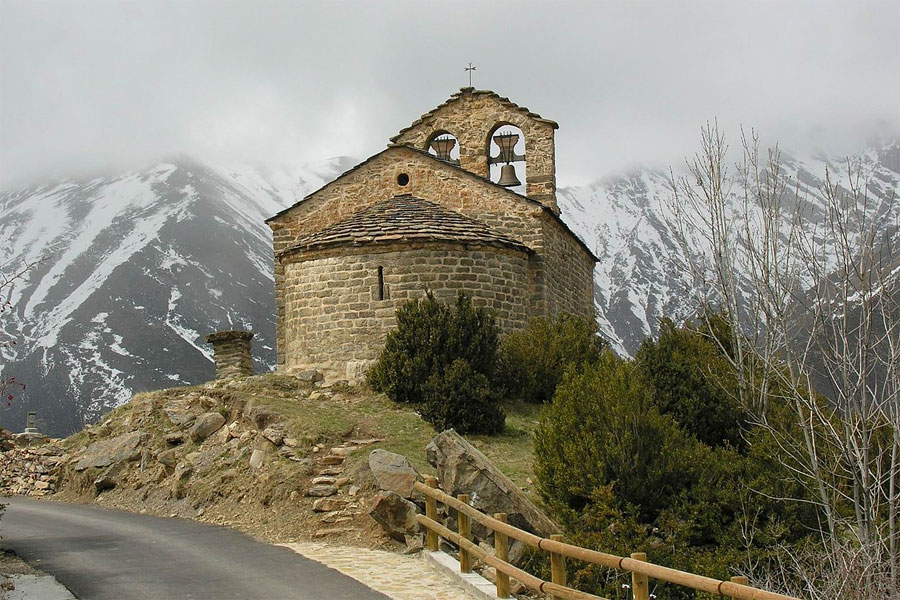
It is the largest municipality of the region, with its main town being Barruera. The valley is best known for its nine Early Romanesque churches, making it the site of the densest concentration of Romanesque architecture in Europe. It was designated as a World Heritage Site by UNESCO in 2000. The valley also includes the highest ski resort in the Pyrenees, at Boí-Taüll, and borders the Aigüestortes i Estany de Sant Maurici National Park which lies to the northeast.
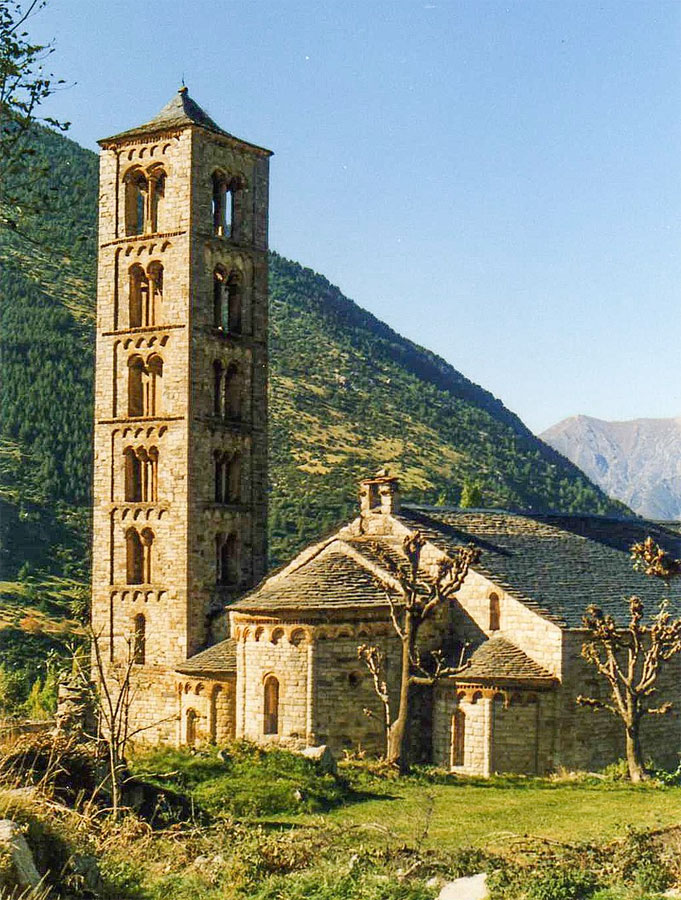
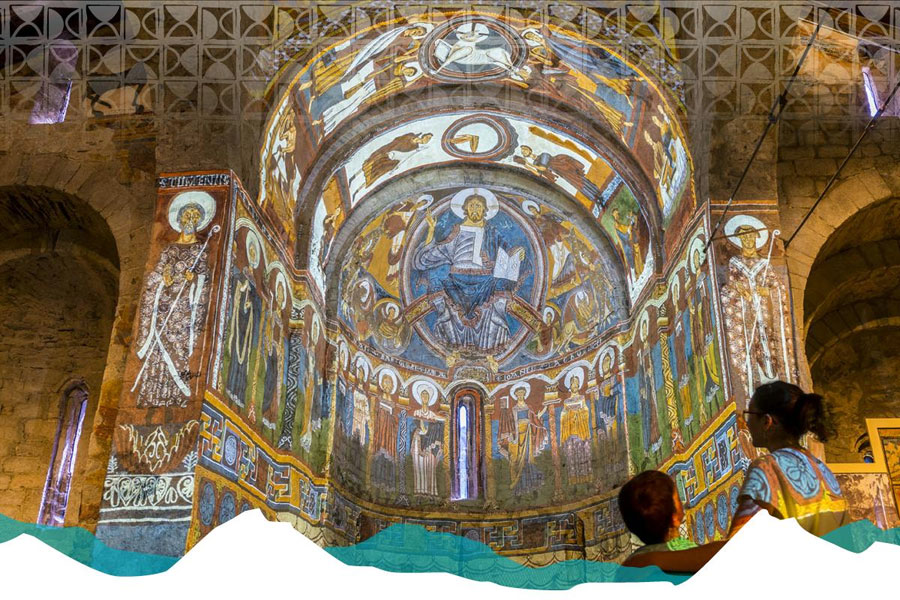
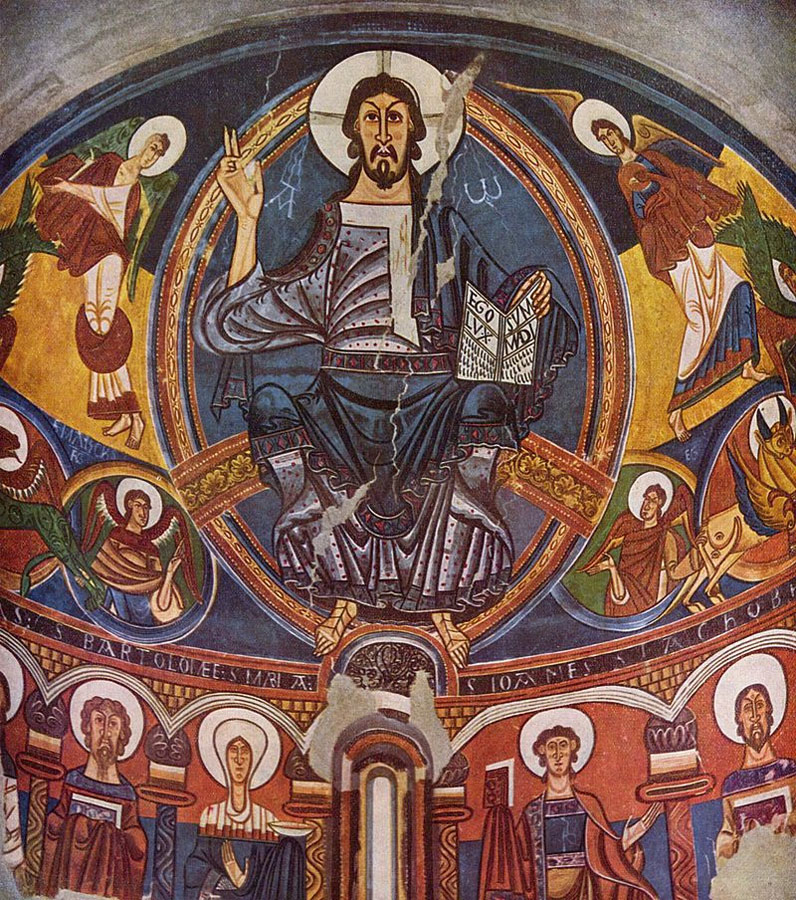
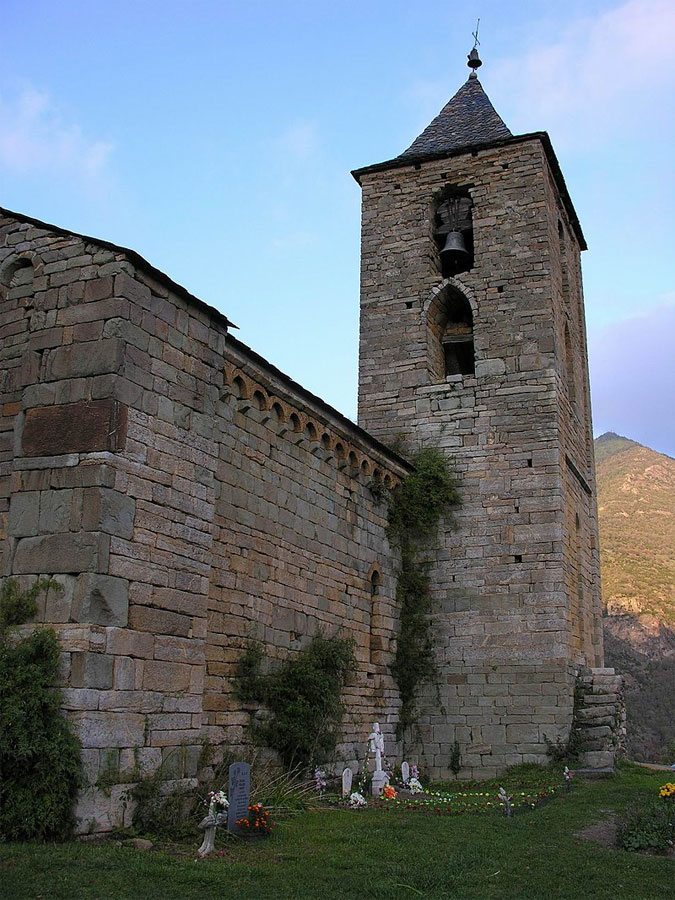
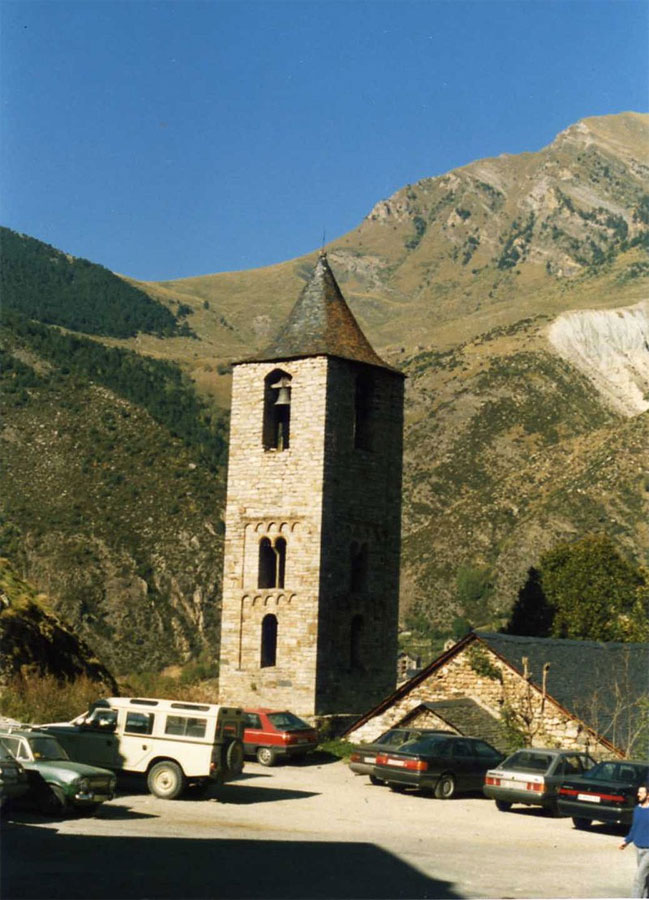
Although the valley had a relatively low population in the Middle Ages, large quantities of silver enriched the local dignitaries to encourage them to join the Catalan campaign to recover Barbastro and Zaragoza. Much of the wealth was spent on the construction of many churches from the 11th to the 14th centuries, in the new architectural style imported from Lombardy. The churches are characterized by elaborate stonework and elegant bell towers. Wall paintings from the churches are conserved at the National Museum of Art of Catalonia in Barcelona.
Many of the churches have remained in use for religious worship since they were constructed and consecrated in the 11th and 12th centuries. Nine churches were included in the World Heritage Site:
Click thumbnail for a larger photo
 |
 |
 |
 |
 |
 |
 |
 |
 |
 |