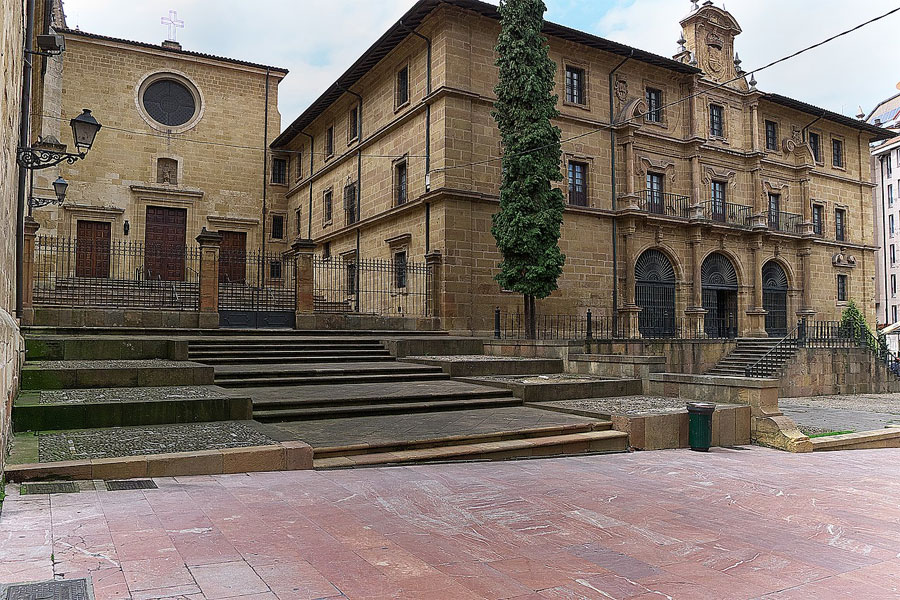
Oviedo


Monuments of Oviedo and the Kingdom of the Asturias
In the 9th century the flame of Christianity was kept alive in the Iberian peninsula in the tiny Kingdom of the Asturias. Here an innovative pre-Romanesque architectural style was created that was to play a significant role in the development of the religious architecture of the peninsula.
- Santa María del Naranco is located three kilometres outside the city of Oviedo. It was originally built as a palace for King Ramiro I in 848, but was later converted into a church. Today, it’s a magnificent UNESCO World Heritage Site
- San Miguel de Lillo is located on Mount Naranco, close to the old Palace of Naranco, just outside the city of Oviedo. It was built by King Ramiro I in the 9th century as his private chapel, and is Romanesque in style. Today, however, only part of the building remains, including the choir stalls and the three naves.
- San Julián de los Prados can be found in the city of Oviedo and is one of the monuments in the region that have been designated as UNESCO World Heritage Sites. Also known as Santullano, it was the largest Christian building in Spain until the 11th century. Built between 812 and 842, it’s pre-Romanesque in style and is made from wood and stone. Look out in particular for the beautiful colourful murals on the walls inside.
- Santa Cristina de Lena lies just south of Oviedo and is part of the region’s UNESCO World Heritage status. It is an interesting example of Romanesque and Ramiro styles and was built around 850. As well as the church, visitors can see the Educational Hall, located in the old railway station nearby, which dates back to the pre-Romanesque period. Inside, visitors can learn all about the historic and artistic context in which the church was built.
- Cámara Santa is part of the gothic Oviedo Cathedral, lies along the Camino del Norte and is a major stop for pilgrims on their way to Santiago de Compostela. Built in the late 13th century, it comprises a tower, cloisters and chapterhouse. It’s pre-Romanesque in style and was built in the 9th century, and has been declared a UNESCO World Heritage Site.
- Associated with them is the remarkable contemporary hydraulic engineering structure known as La Foncalada.T he Fountain of Foncalada is one of the best examples of hydraulic engineering from the late Middle Ages and is part of Oviedo and Asturias’ UNESCO World Heritage status. It’s based on a Roman model and was built during the reign of Alfonso III the Great (866–910). The outer housing protects a natural drinking fountain, which is fed by spring water brought up from underground.
Visiting the Old Town of Oviedo. The Old Town (Casco antiguo) of Oviedo has some of the most important monuments of the city
Spain UNESCO World Heritage