Merida
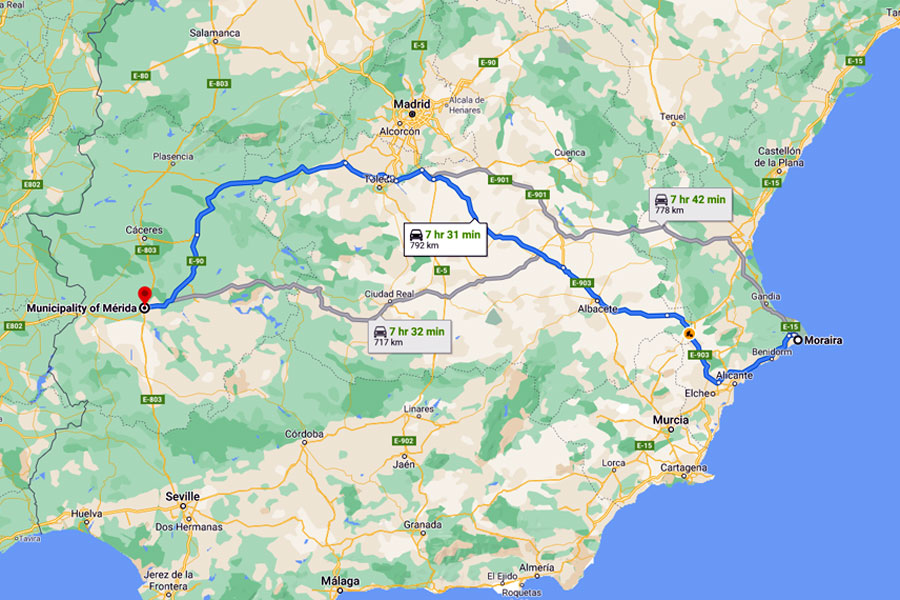

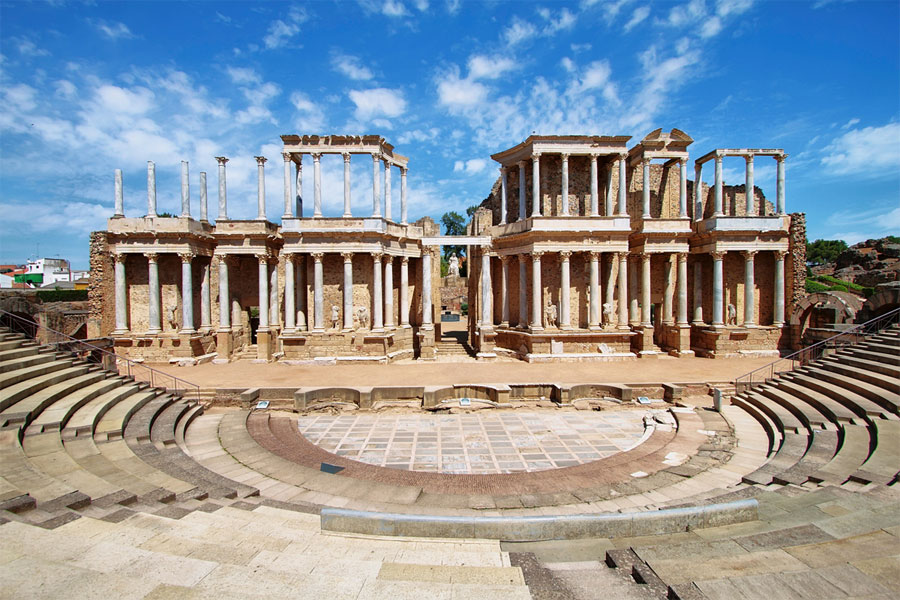
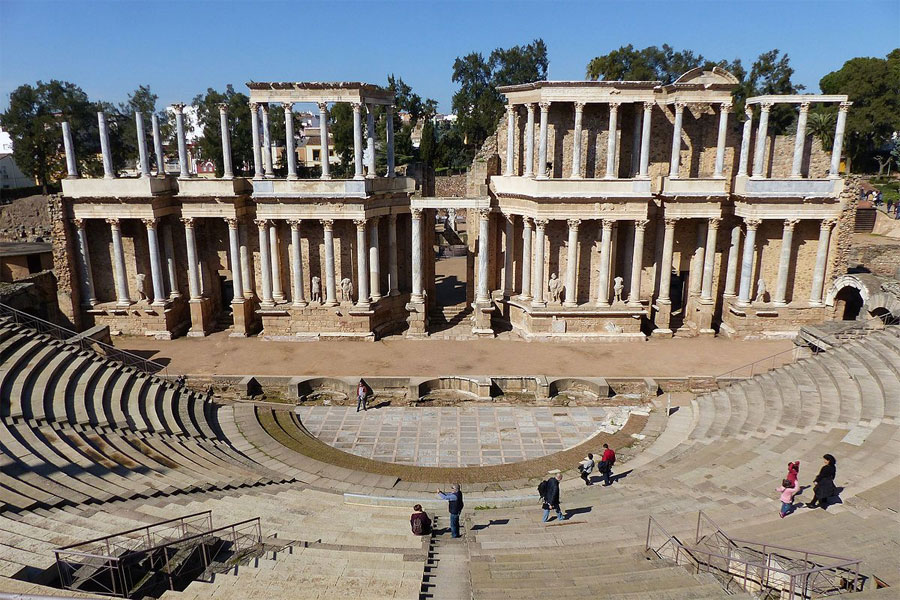
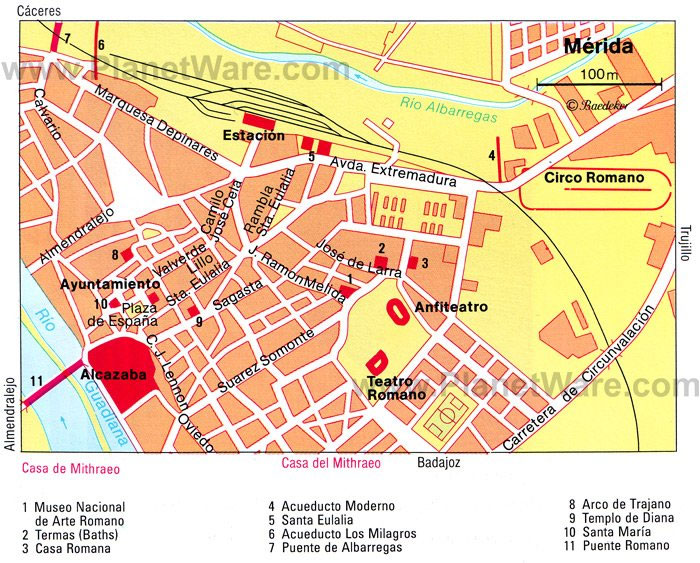
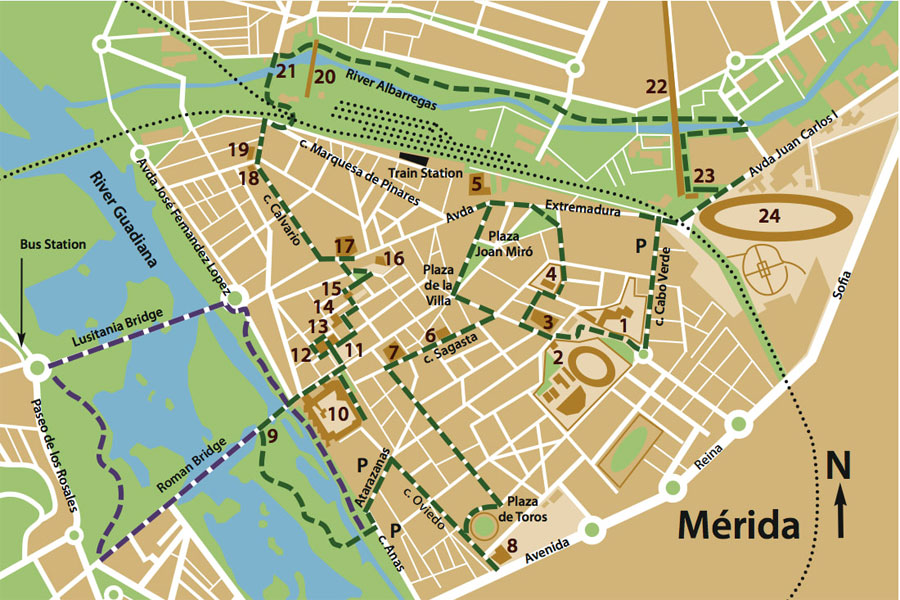
Mérida, the capital of western Spain's Extremadura region, was founded by the Romans in the 1st century B.C. Remains of the ancient city include the still-used Teatro Romano, which has a double tier of columns rising onstage. The ancient Puente Romano, a 792m bridge spanning the Río Guadiana, adjoins the Alcazaba, a 9th-century Islamic fortress built over Roman walls.
Among the remaining Roman monuments are:
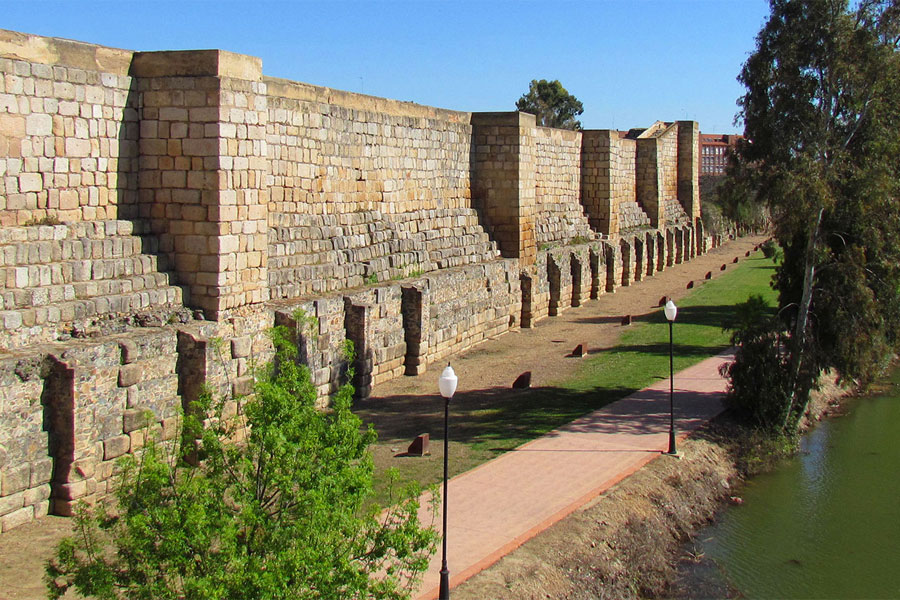
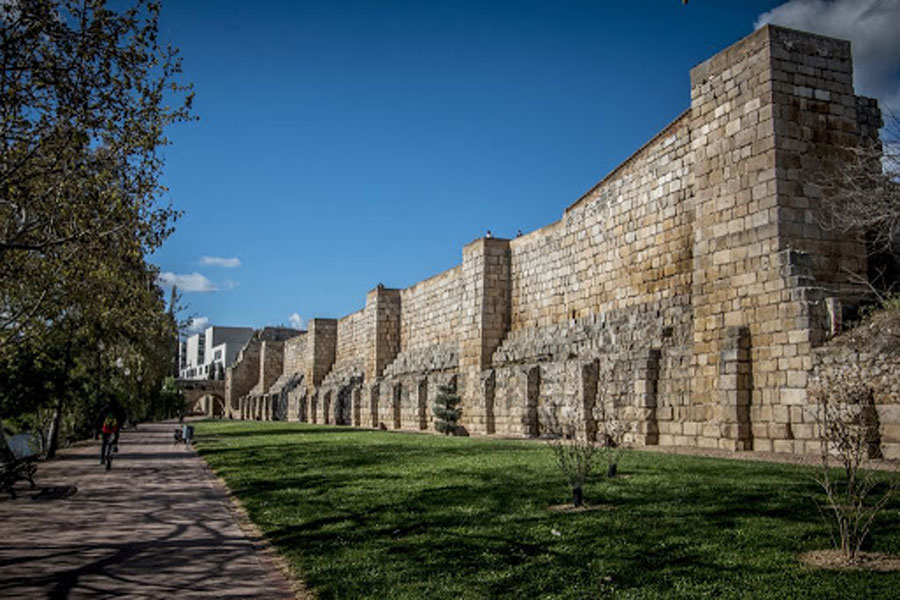
- The Puente Romano, a bridge over the Guadiana River that is still used by pedestrians, and the longest of all existing Roman bridges.Annexed is a fortification (the Alcazaba), built by the Muslim emir Abd ar-Rahman II in 835 on the Roman walls and Roman-Visigothic edifices in the area. The court houses Roman mosaics, while underground is a Visigothic cistern.
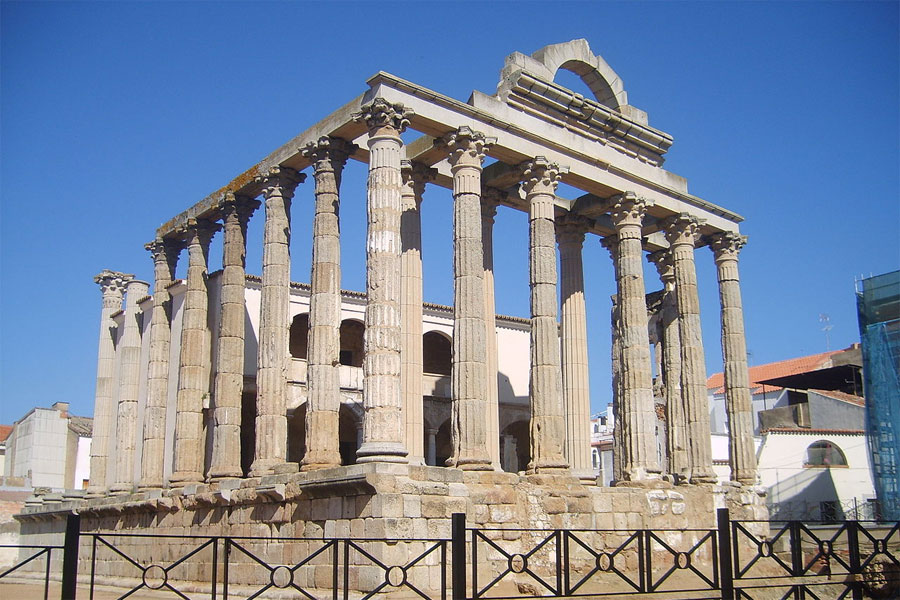
- remains of the Forum, including the Temple of Diana, and of the Roman Provincial Forum, including the so-called Arch of Trajan
- remains of the Circus Maximus (1st century BC), one of the best preserved Roman circus buildings
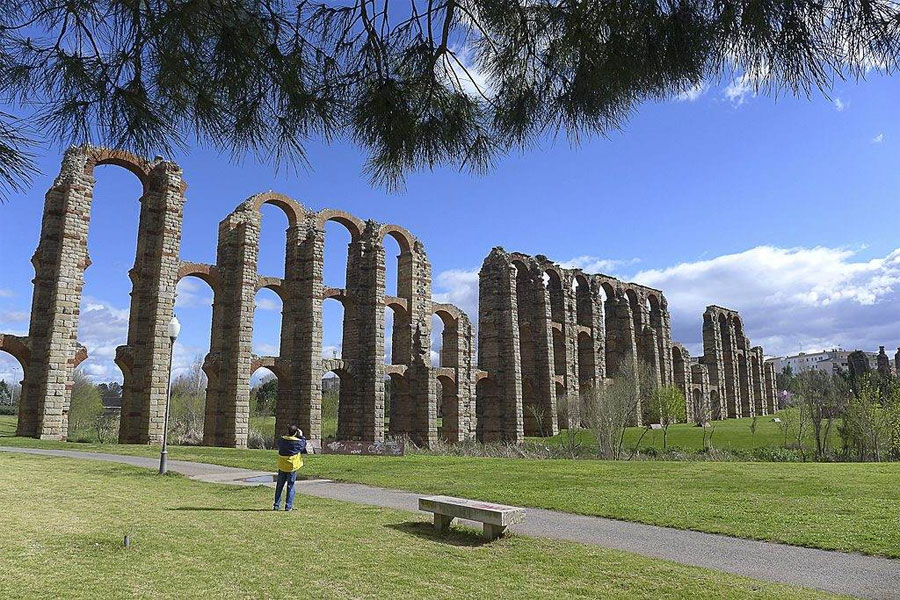
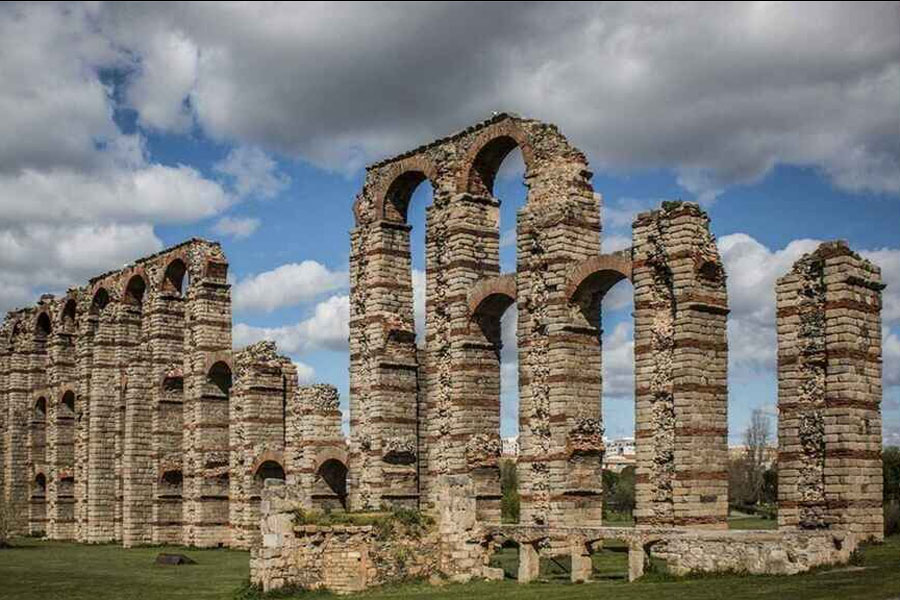
- Acueducto de los Milagros (aqueduct of Miracles)
- patrician villa called the Villa Mitreo, with precious mosaic pavements
- Proserpina Dam and Cornalvo Dam, two Roman reservoirs still in use
- the Amphitheatre, and the Roman theatre, where a summer festival of Classical theatre is presented, usually with versions of Greco-Roman classics or modern plays set in ancient times.
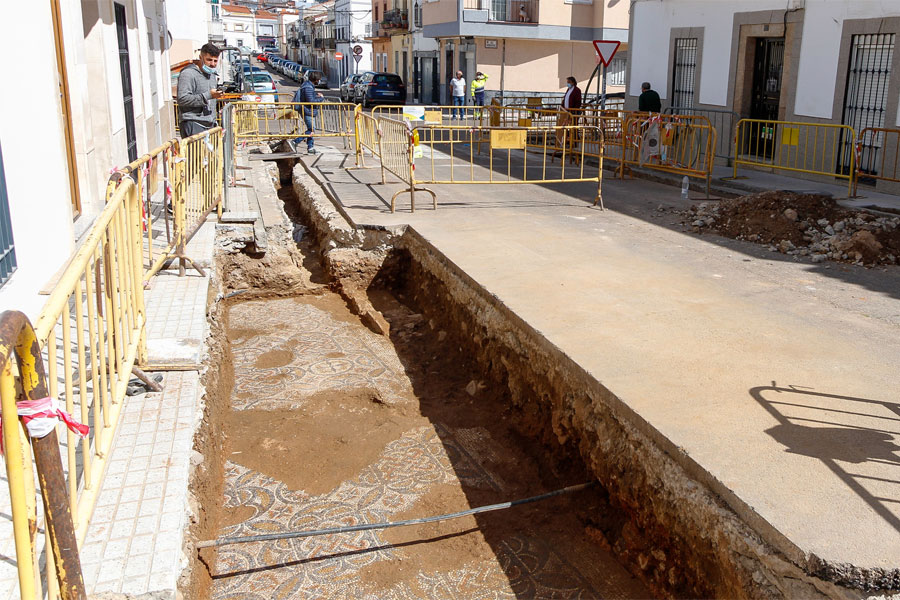
- Morerías archaeological site
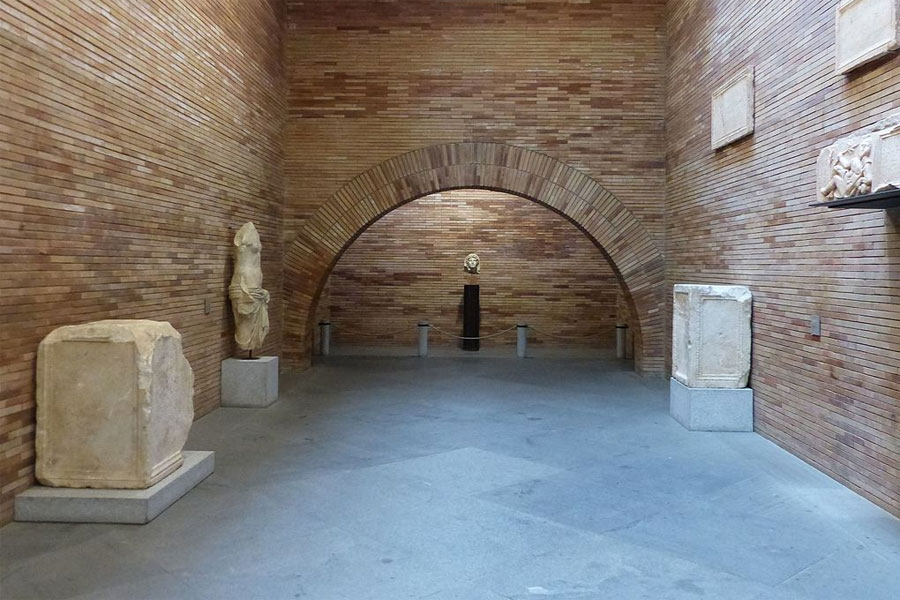
- Museo Nacional de Arte Romano (National Museum of Roman Art) designed by Rafael Moneo
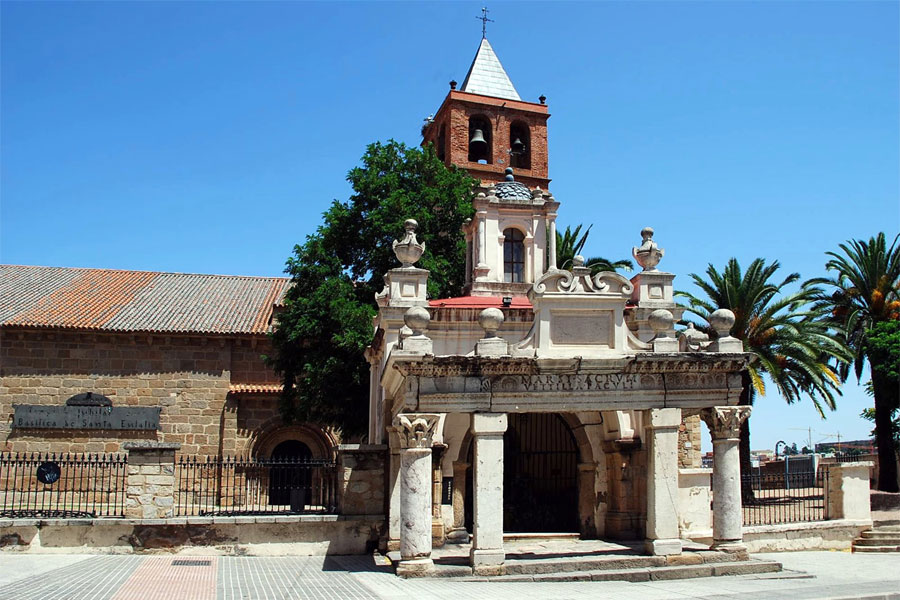
- Church of Santa Eulalia, dating to the 4th century but rebuilt in the 13th century. Its portico reuses parts of an ancient temple of Mars.
Other sights include:
- Cathedral of Saint Mary Major (13th-14th centuries)
- Renaissance Ayuntamiento (Town Hall)
- Church of Santa Clara (17th century)
- Gothic church of Nuestra Señora de la Antigua (15th-16th centuries)
- Baroque church of Nuestra Señora del Carmen (18th century)
Click thumbnail for a larger photo
Spain UNESCO World Heritage