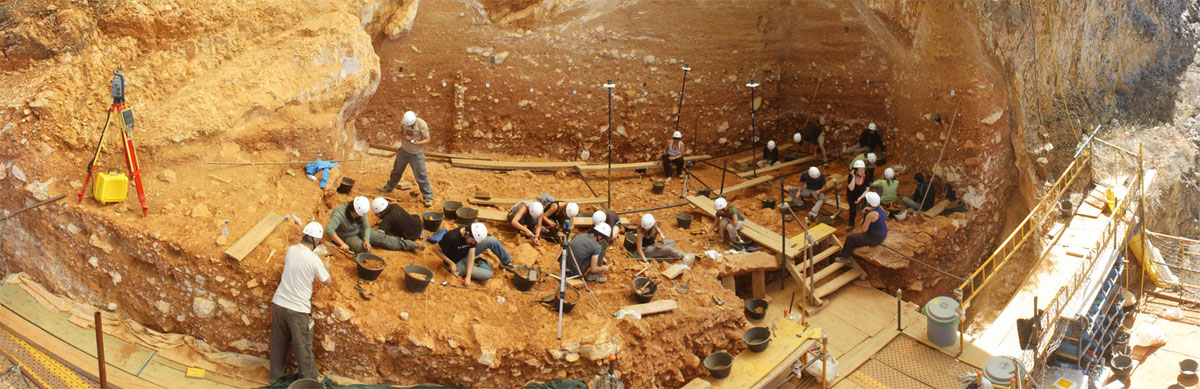
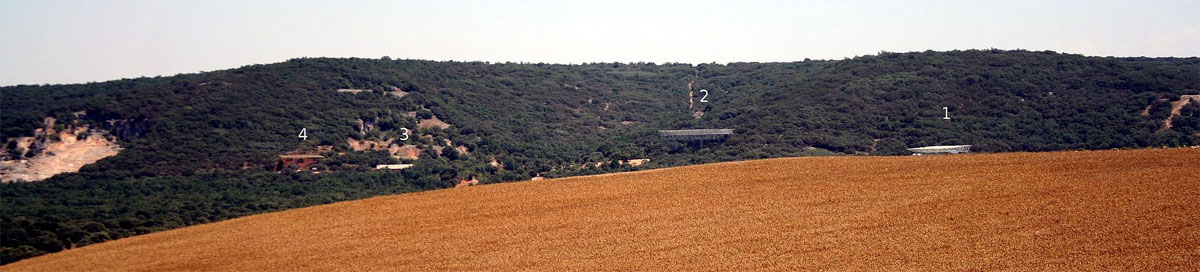
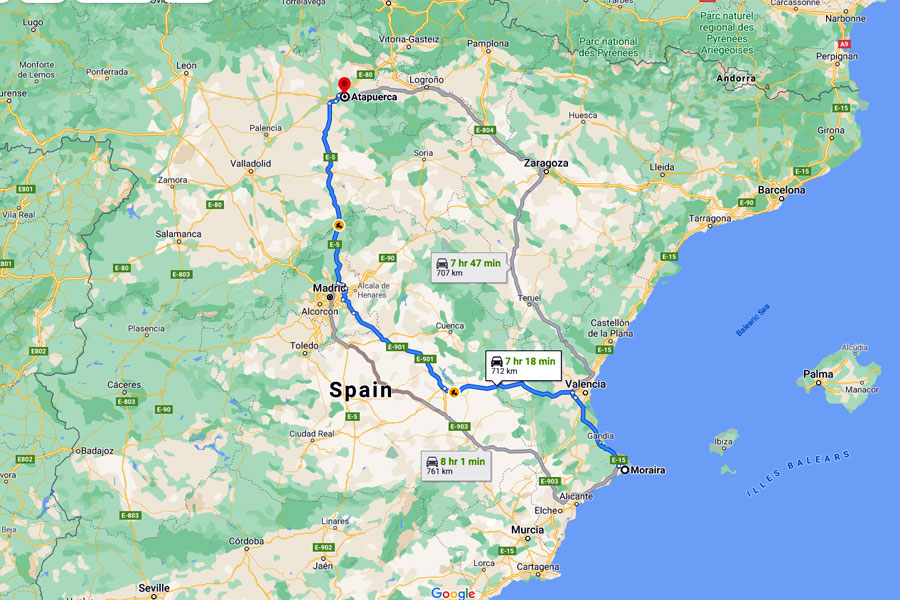
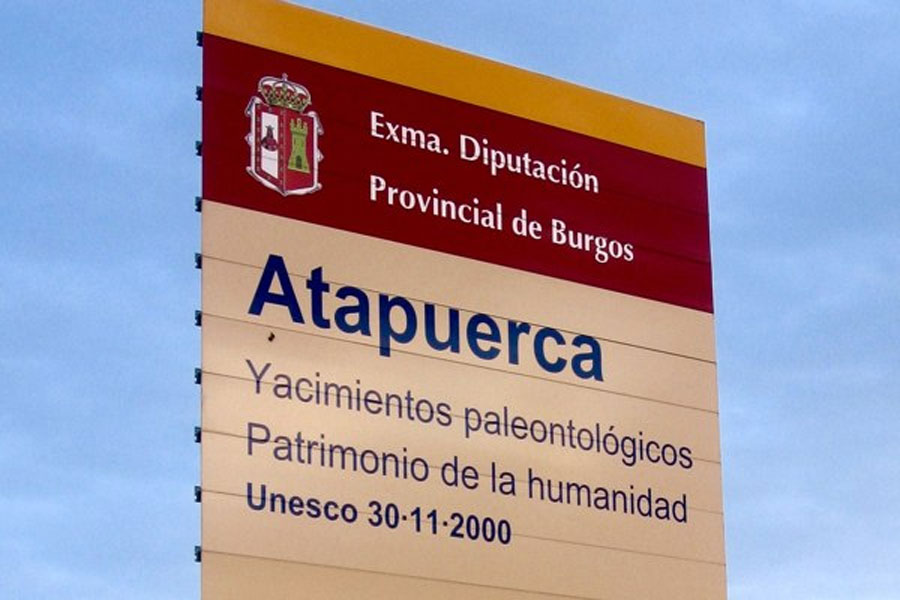
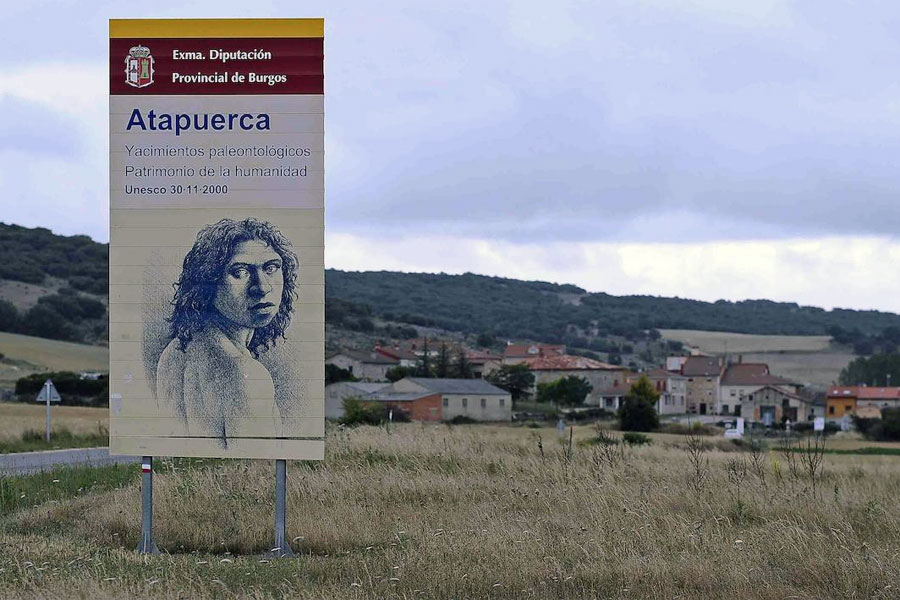
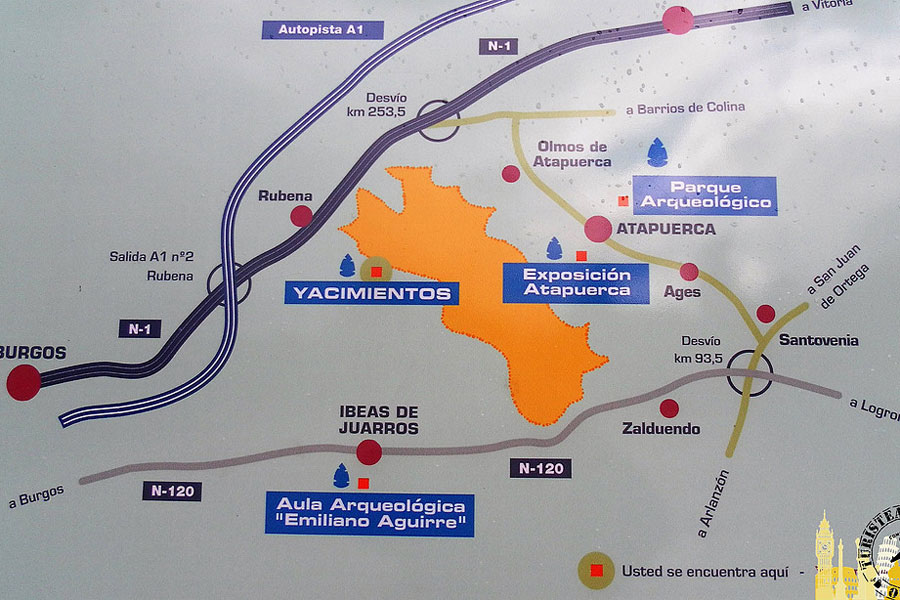
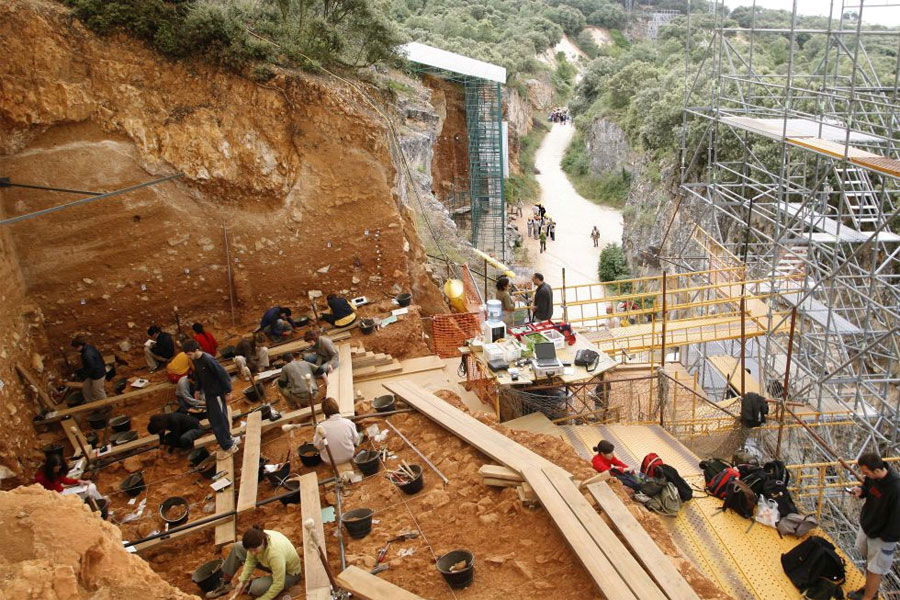
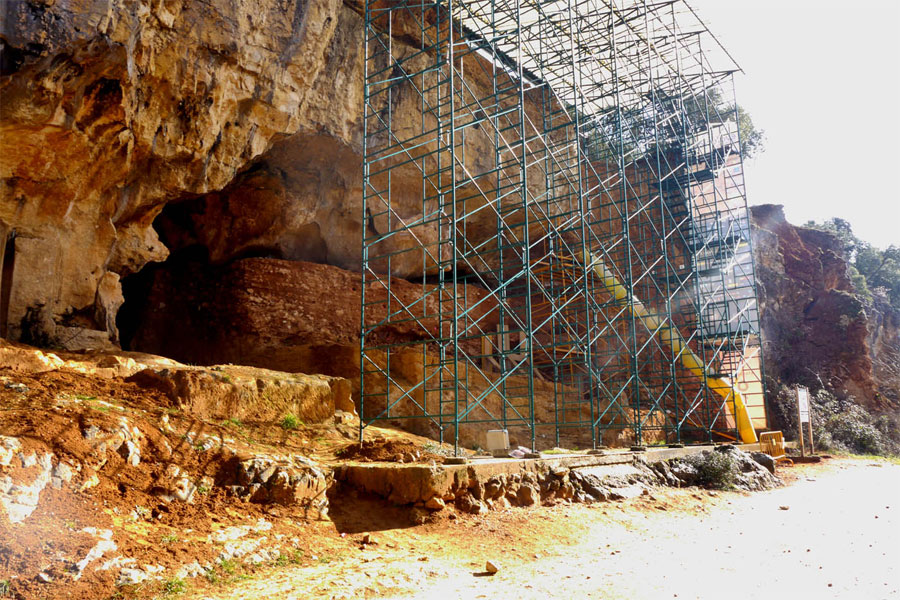
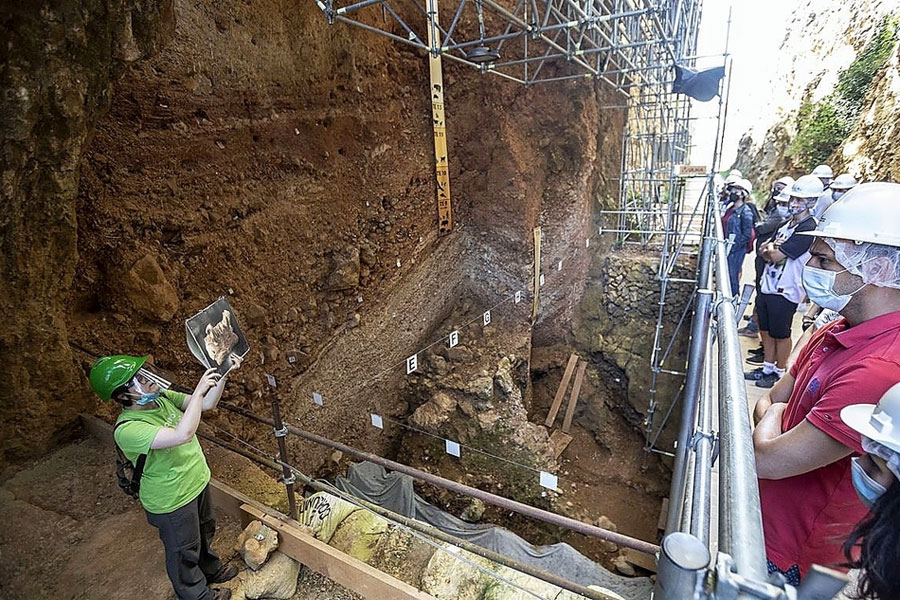
The archaeological site of Atapuerca is one of the most important in Europe, because it has traces of hominid life in the area from a million years ago. The site lies in the small municipality of Atapuerca, about 20 kilometres north east of Burgos. The Sima de los Huesos is a cave where bones from over 32 bodies of people of all different ages and both genders have been discovered, and is one of the best known examples of a colony from that era. The site was declared a World Heritage Site by UNESCO in 2000.
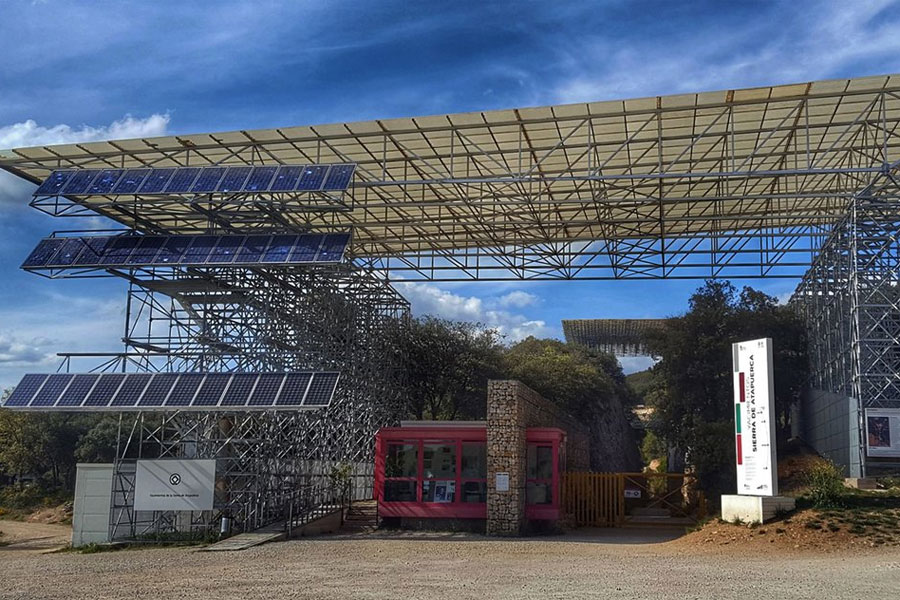
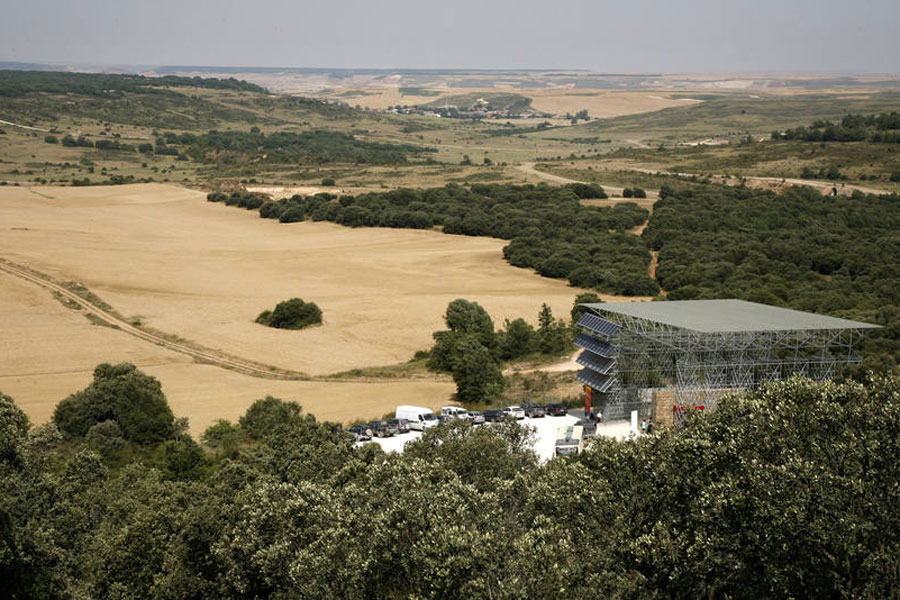
The archaeological site of Atapuerca is located on the Atapuerca Mountains in the north of Spain. The archaeological significance of the area became increasingly apparent during the construction of a railway line as deep trenches were cut through the rocks and sediments of the Gran Dolina site, the Galería Elefante and at Sima de los Huesos. The subsequent excavation of 1964 succeeded with the discovery of anthropogenic artifacts and human fossils from a broad time range of early humans, hunter-gatherer groups to Bronze Age occupants and modern human settlers. The site was designated a UNESCO World Heritage Site, under the name, Archaeological Site of Atapuerca.
The caves of the Sierra de Atapuerca contain a rich fossil record of the earliest human beings in Europe, from nearly one million years ago and extending up to the Common Era. They represent an exceptional reserve of data, the scientific study of which provides priceless information about the appearance and the way of life of these remote human ancestors.
The Sierra de Atapuerca sites provide unique testimony of the origin and evolution both of the existing human civilization and of other cultures that have disappeared. The evolutionary line or lines from the African ancestors of modern humankind are documented in these sites. The earliest and most abundant evidence of humankind in Europe is found in the Sierra de Atapuerca. The sites constitute an exceptional example of continuous human occupation, due to their special ecosystems and their geographical location. The fossil remains in the Sierra de Atapuerca are an invaluable reserve of information about the physical nature and the way of life of the earliest human communities in Europe. In addition, painted and engraved panels have been recorded, with geometrical motifs, hunting scenes, and anthropomorphic and zoomorphic figures.
 |
 |
 |
 |
 |
 |
 |
 |
 |
 |