 |
 |
 |
 |
 |
 |
 |
 |
 |
 |
 |
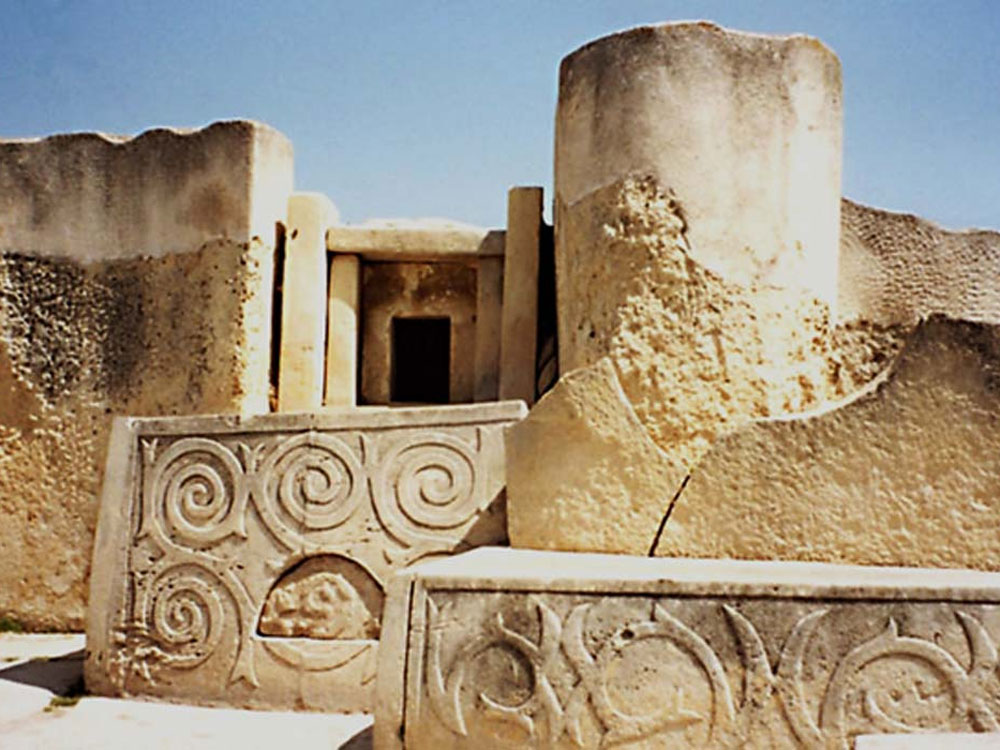 |
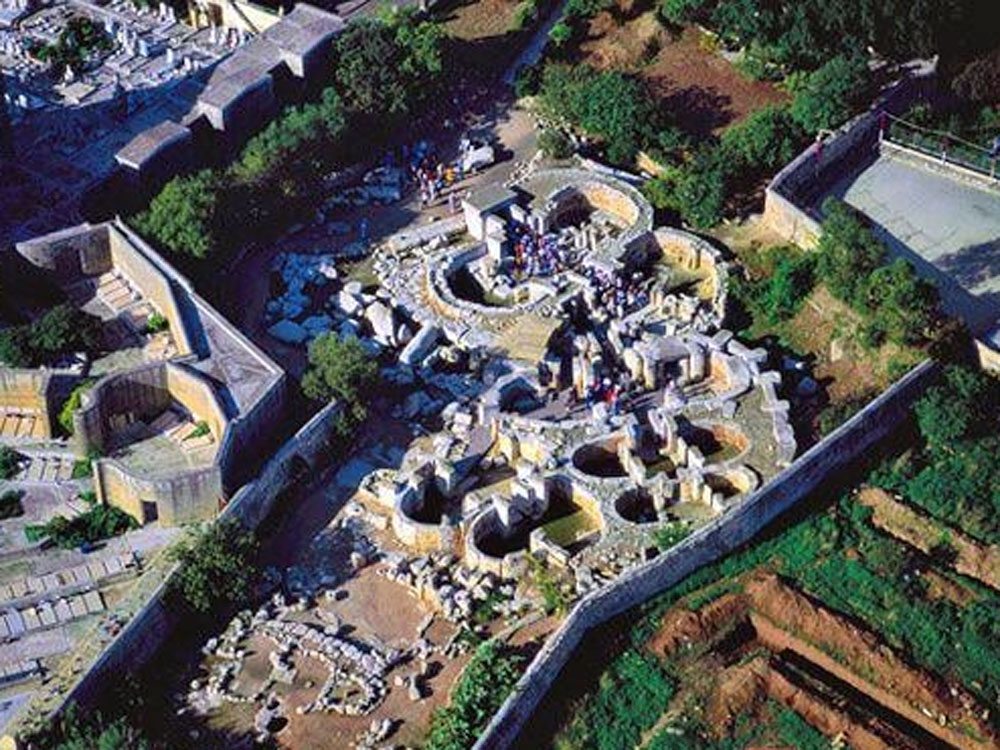
The lower part of a colossal statue of a figure wearing a pleated skirt stands sentinel to the dawn of civilization in the highly decorated South Temple within the Tarxien Neolithic Complex site. Discovered in 1913 by farmer Lorenzo Despott, the site consists of a complex of four megalithic structures built in the late Neolithic and then readapted for use during the Early Bronze Age. Only the lower part of the walls survives in the easternmost structure, the oldest part of the complex.
However, it is still possible to see its concave façade and five chambers. The extensive archaeological excavations undertaken between 1915 and 1919 were led by Sir Themistocles Zammit, Director of Museums at the time. The South structure is rich in prehistoric art, including bas-relief sculpture depicting spirals and animals. The domesticated animals depicted include goats, bulls, pigs, and a ram. The large number of animal bones discovered in this complex, most of which were found in specific areas, indicates the importance these animals played at the time. The eastern building follows the traditional design of these megalithic structures, with a central corridor flanked by a semi-circular chamber on each site.
Evidence of arched roofing in the unique six-apsed Central Structure, the last of the four to be built, helps visitors imagine how these temples might have looked when covered. Passages between different areas of the complex are sometimes blocked by physical barriers, suggesting that parts of these buildings were accessible to only a part of the community. A large hearth in the corridor between the first apses and a smaller one in the corridor between the second pair of apses of the central structure are evidence of the use of fire within. Although we know little of what took place within these buildings, evidence suggests that they were important structures central to the lives of the Neolithic inhabitants of the island. In the early Bronze Age (after 2,000 B.C.), new arrivals to the islands turned some areas within the site into a cremation cemetery, leaving a rich record of customs and objects.
Click on any of the thumbnail photos for a larger version
|
|
|
|
|
|
|
|
|
|
|
|