 |
 |
 |
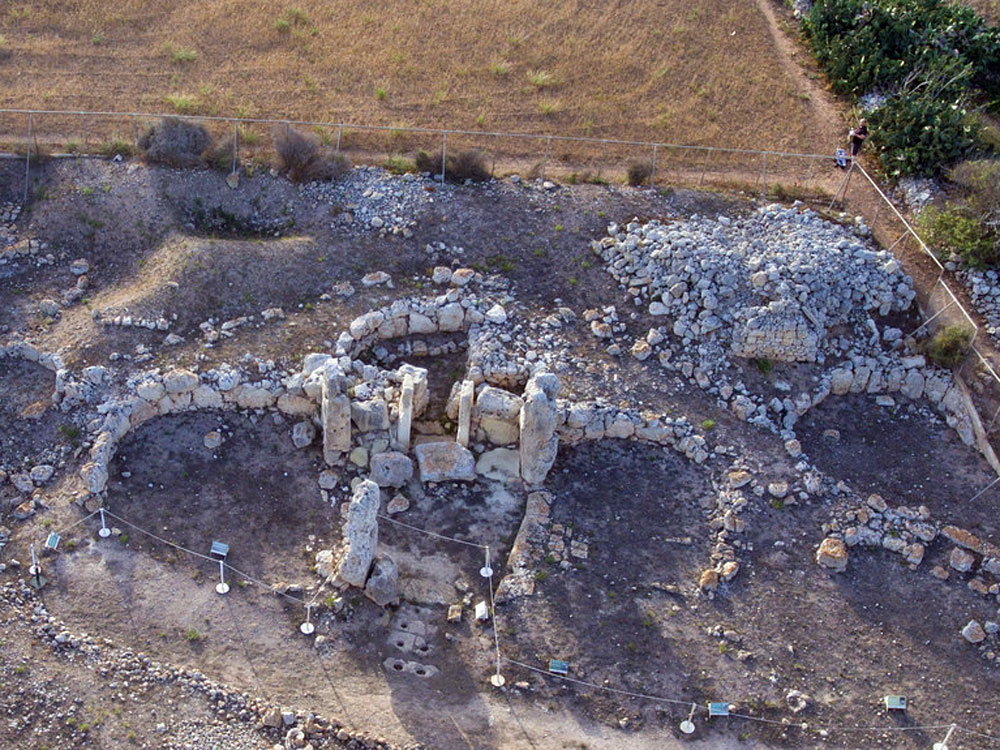
| The aerial shot gives a better idea of the site | ||
 |
 |
 |
Let Skorba’s rural location put you in a similar landscape setting that surrounded Malta’s prehistoric builders. Situated on the outskirts of Mġarr, Malta, Skorba was designated a UNESCO World Heritage Site in 1992, forming part of the inscription ‘Megalithic Temples of Malta’. Skorba was excavated by renowned archaeologist David Trump in the early 1960s. As this was quite late when compared to similar sites, Skorba was important in filling gaps of knowledge that had been left unanswered by the excavation of other sites using earlier techniques.
The scientific advances since the excavations at Skorba meant that sites excavated later were able to build further on the knowledge gained from this site. Excavations at Skorba were instrumental in providing crucial evidence concerning the domestic aspect of the Neolithic inhabitants sincethe remains of several domestic huts, in which the prehistoric builders used to dwell, were discovered here. Remnants from the Red Skorba phase include two small structures flanked on two sides by a paved area, similar to a yard.
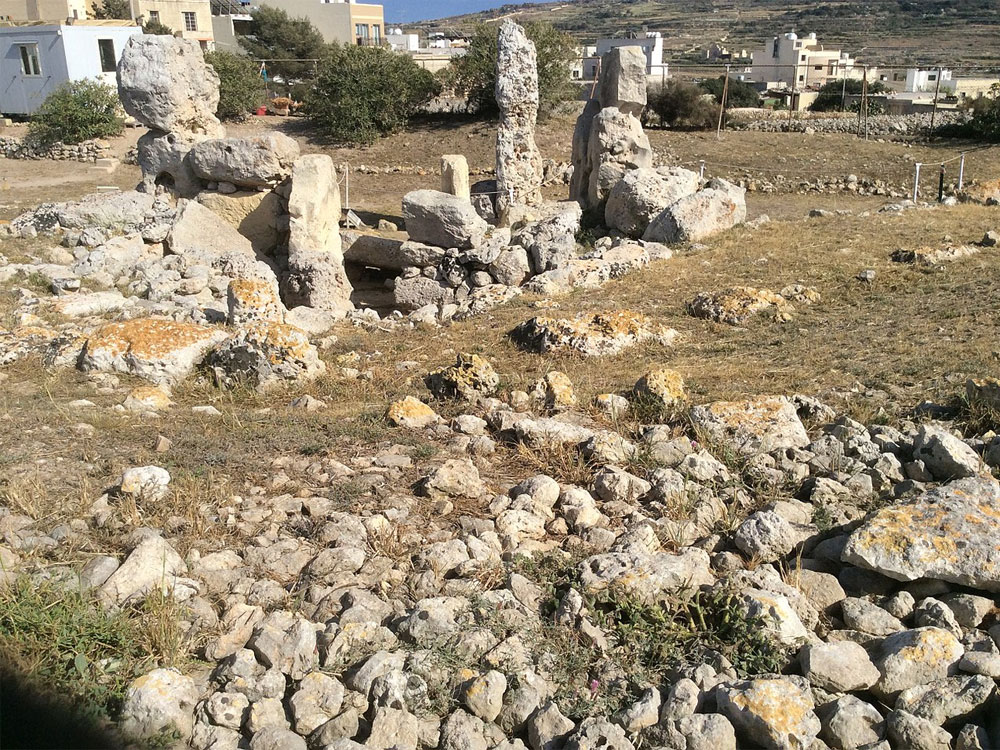
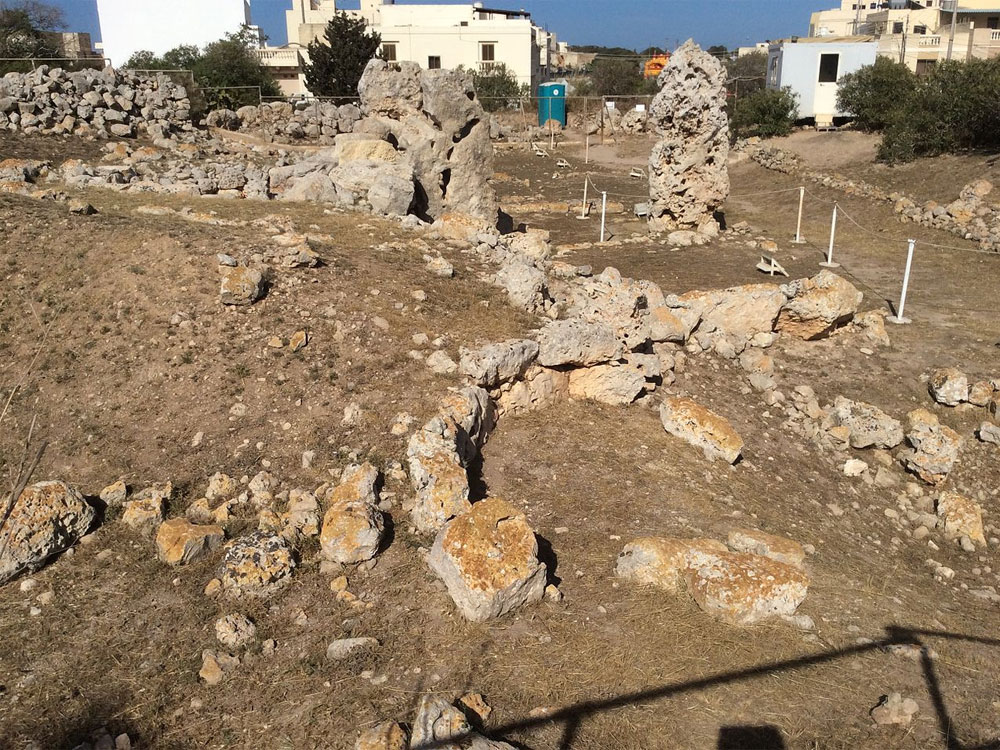
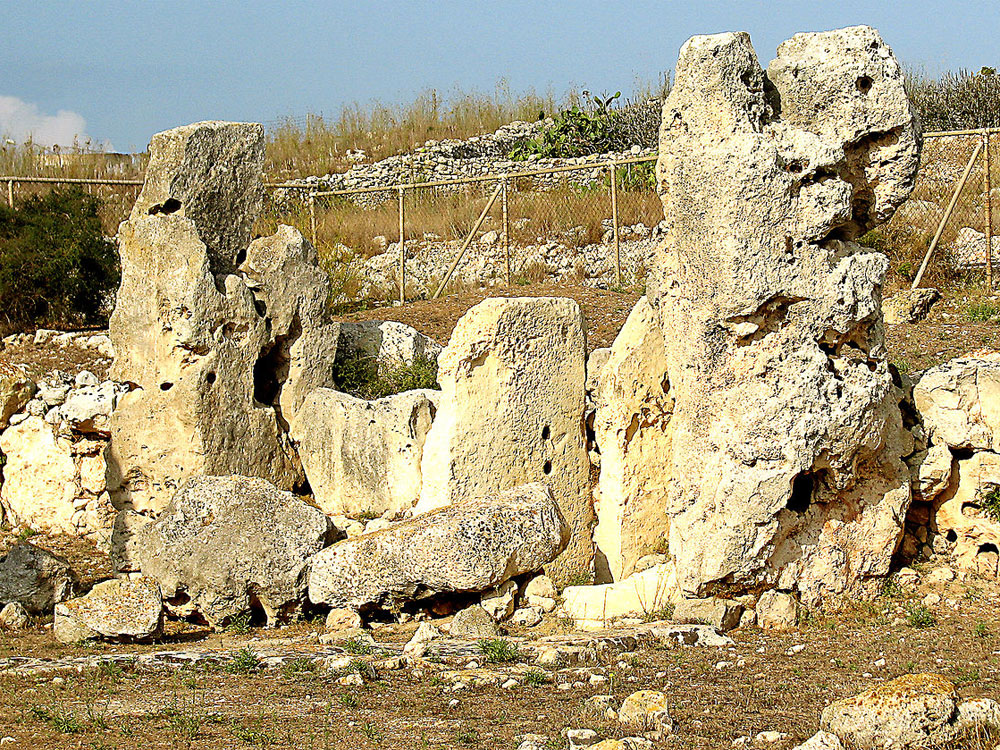
Built of stone and mudbrick, these structures are oval in shape and have an irregular rock floor. Together with large quantities of pottery fragments and animal bone, fragments of stylised female figurines were found inside these structures. Earlier structures found at Skorba date to the earliest phases of the Neolithic Period and therefore are amongst the oldest on the Maltese Islands. The site also contains the remains of two megalithic structures, one of which dates back to the Ġgantija Phase while the other was built at a later stage in prehistory, that is the Tarxien Phase.
In truth there is very little here. It only has sporadic opening hours, but you can in fact see everything from outside the wire fence
Click on any of the thumbnail photos for a larger version
|
|
|
| The aerial shot gives a better idea of the site | ||
|
|
|