
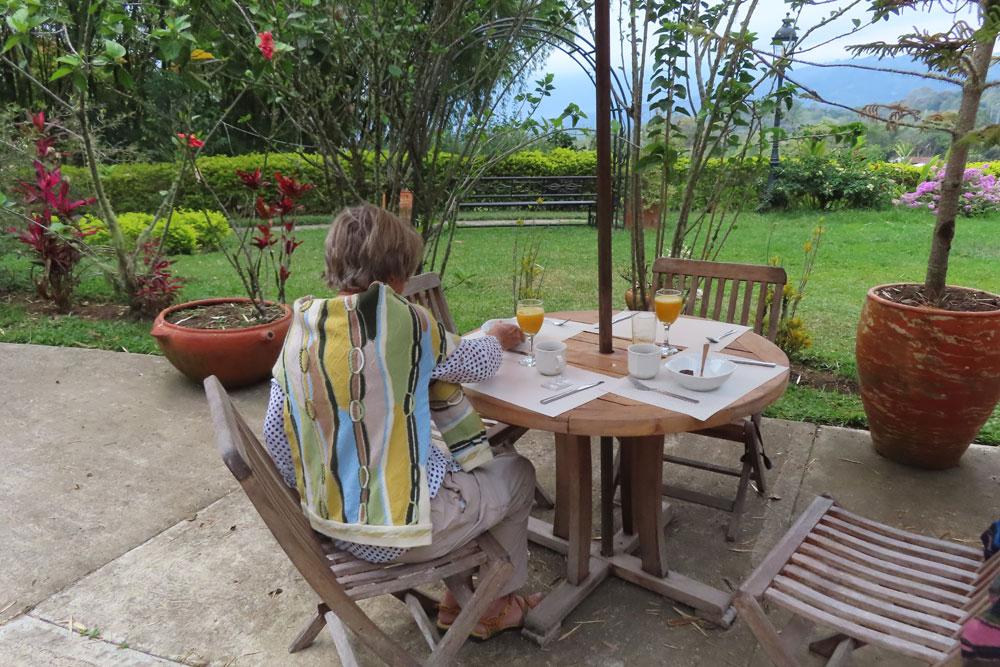
We went to breakfast pronto at 7:30, but it was already over occupied, but we found a table on the lower patio and had a pleasant breakfast. Great views over the countryside.
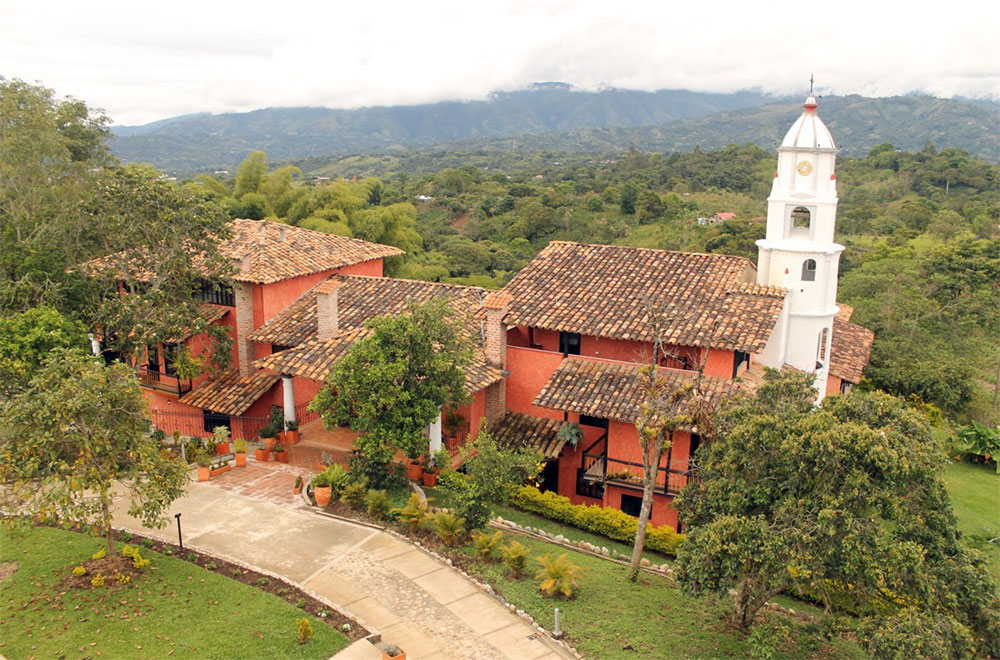
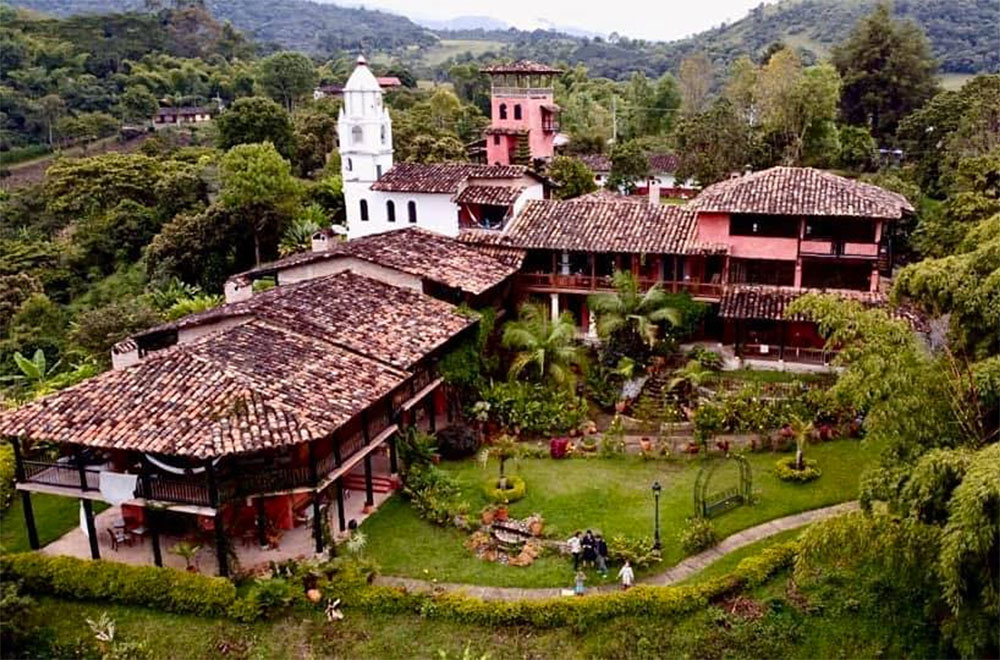
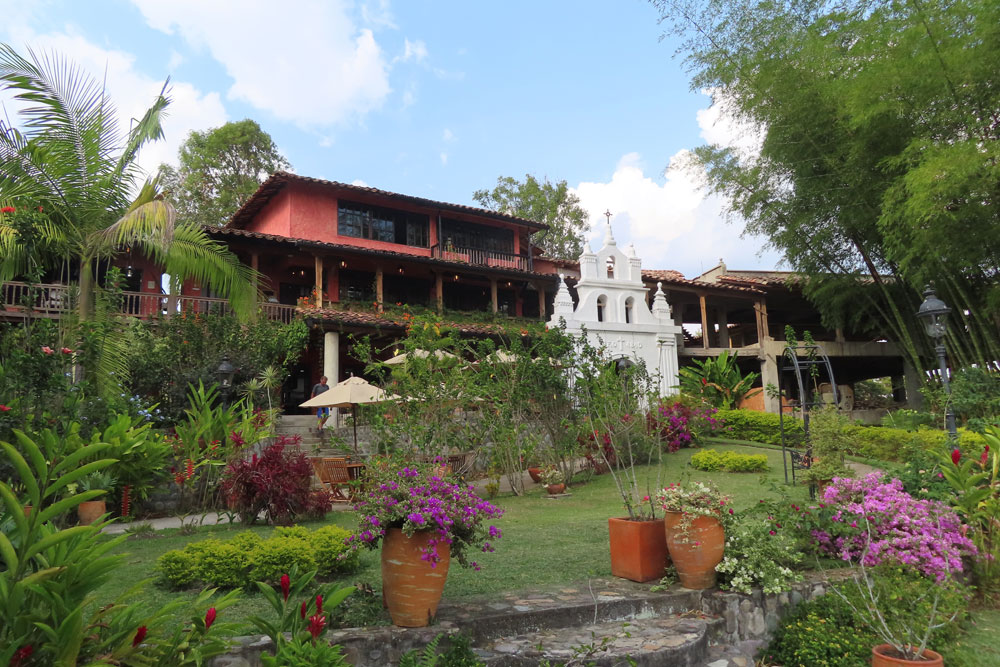
Monasterio Hotel
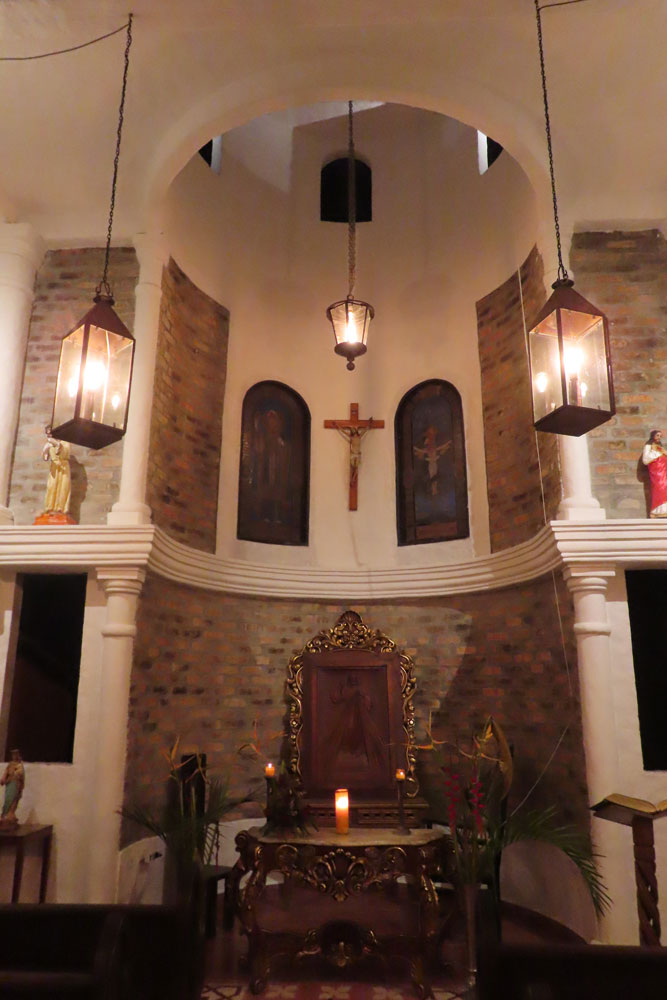
The monastery had been built in 1810 but we were unable to find out anything about its history. We did discover that it had been converted into a hotel only in 2016. We never did find out how much of the building was new, and how much recovered.
I think that they had to reduce their staff a lot during Covid, and are only just now picking up the pieces.
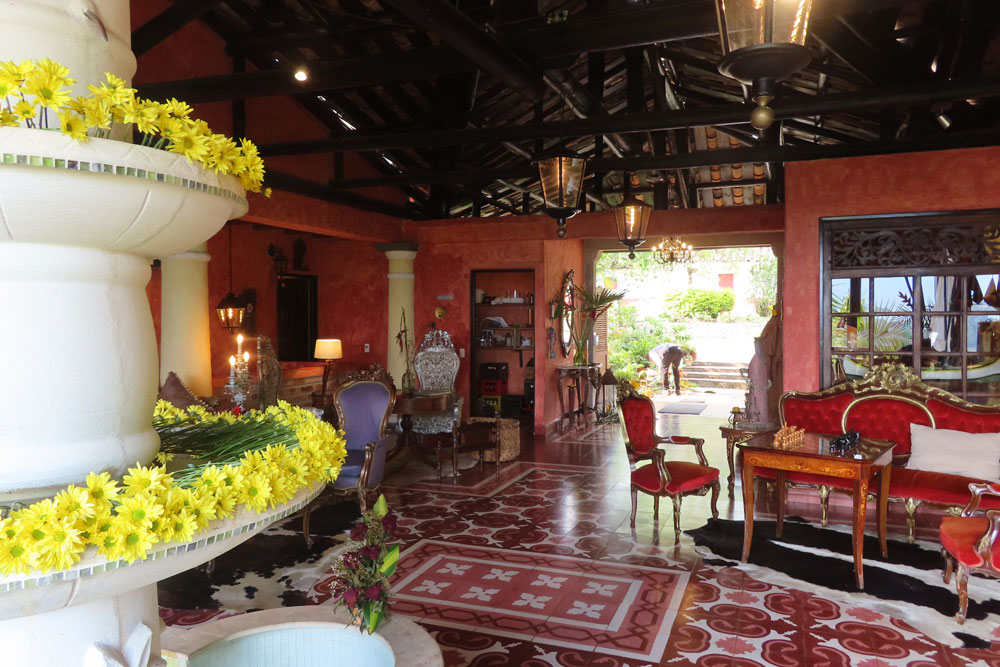
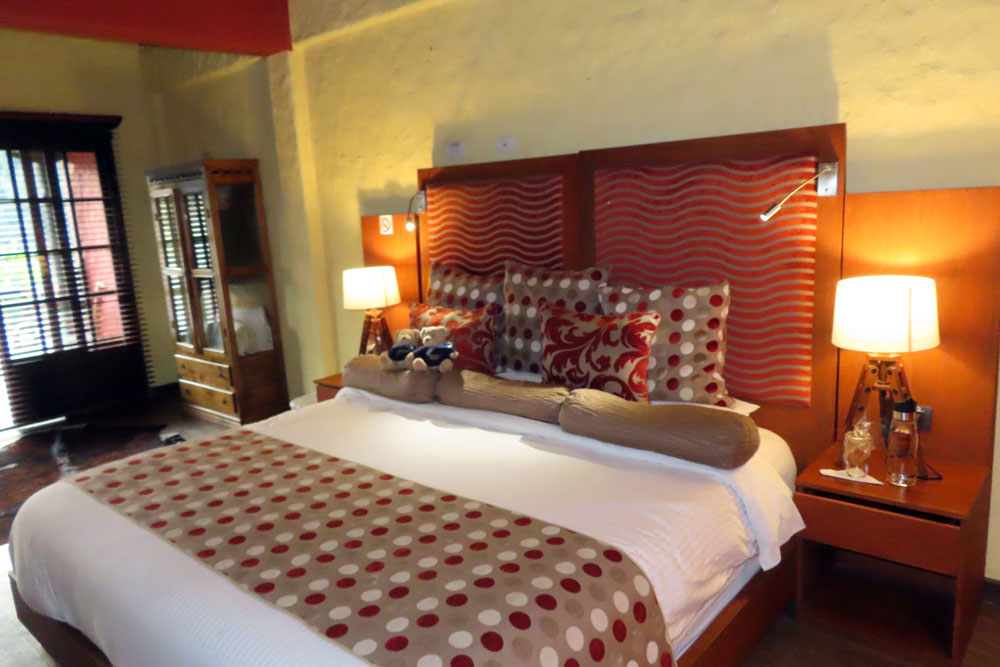
The position of the hotel is marvelous, high on a hillside, with sweeping views. The rooms are all individually furnished in local style and are both large and comfortable, nay luxurious
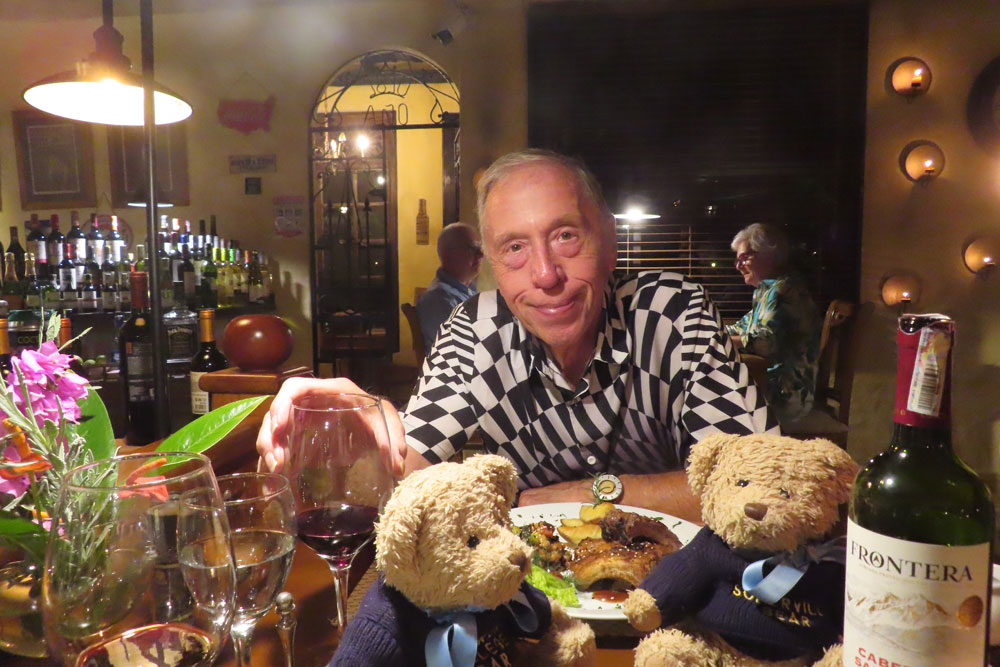
The only fault we found was with the service. Bar service was non existent unless you could winkle out a staff member from back stairs. And they took, understandably groups, which tended to swamp the place. Of our three nights here, there were a couple of groups on one of the days - the result was crowding at breakfast and dinner
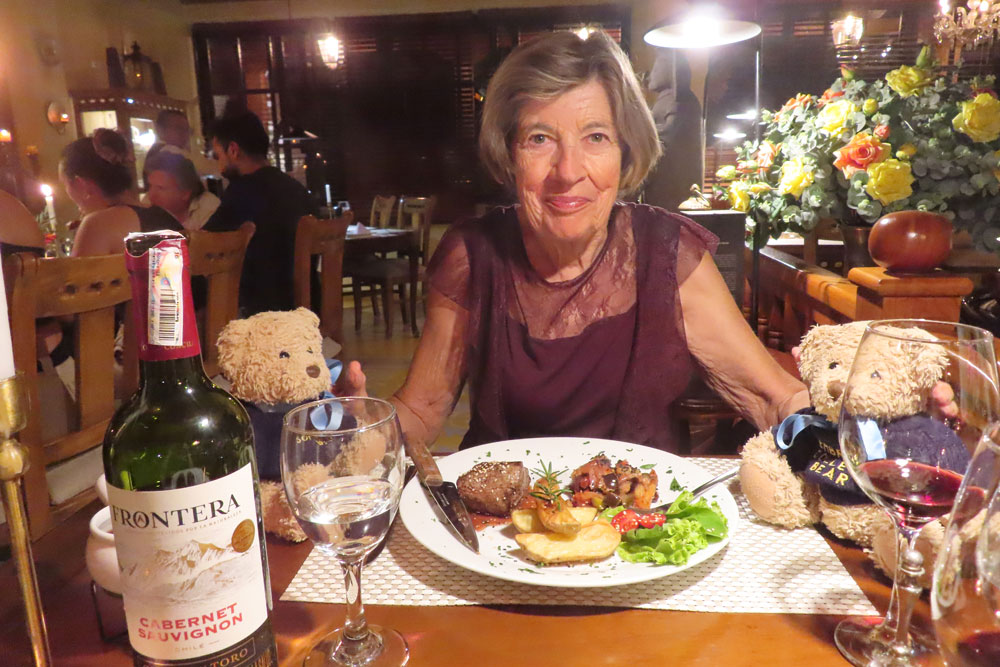
The food at both breakfast and dinner was first class. Given the location, this was a remarkable hotel
Click on any of the thumbnail photos for a larger version
 |
 |
 |
 |
 |
 |
 |
 |
 |
 |
 |
 |
 |
 |
 |
 |
We were picked up at 9 am by Freddie and a new guide, Julian. We drove to the San Agustin Statue Park, a UNESCO site. Here tombs and guardian statues had been discovered by a German in 1913 since then little archaeology had really been done and no one knew who these ancient statues of more than 2000 years ago had been constructed and why.
This is the largest group of religious monuments and megalithic sculptures in South America and stands in a wild, spectacular landscape. Gods and mythical animals are represented in styles ranging from abstract to realist. These works of art display the creativity and imagination of a northern Andean culture that flourished from the 1st to the 8th century. The dates of the statues are uncertain, but they are believed to have been carved between 5–400 AD. The origin of the carvers remains a mystery, as the site is largely unexcavated.
The San Augustin Archaeological Park has three separate properties, totaling 116 ha, comprising the Archaeological Park: San Augustin (conformed by the Mesita A, Mesita B, Mesita C, La Estación, Alto de Lavapatas and Fuente de Lavapatas sites), Alto de los Ídolos and Alto de Las Piedras. The park is at the core of San Agustin archaeological zone featuring the largest complex of pre-Columbian megalithic funerary monuments and statuary, burial mounds, terraces, funerary structures, stone statuary and the Fuente de Lavapatas site, a religious monument carved in the stone bed of a stream.
The sites were abandoned around 1350 AD and rediscovered during the 18th and 19th centuries, which led the looting and disturbance of most of the monumental tombs while looking for grave goods which proved to be very scant. Erosion, earthquakes and human intervention displaced stone slabs and the contents of many tombs, but this did not destroy the original funerary architecture. The main values of the San Agustin monuments, expressed in the megalithic stone elements, funerary layout and stone carvings and painting, have been preserved, as well as the original construction techniques and associated archaeological deposits. Direct intervention is limited to research and conservation requirements. Even though the sites suffered long ago from looting, the early creation of the park in 1931 provided a stable adequate protection for the monuments and surrounding ceremonial centre.
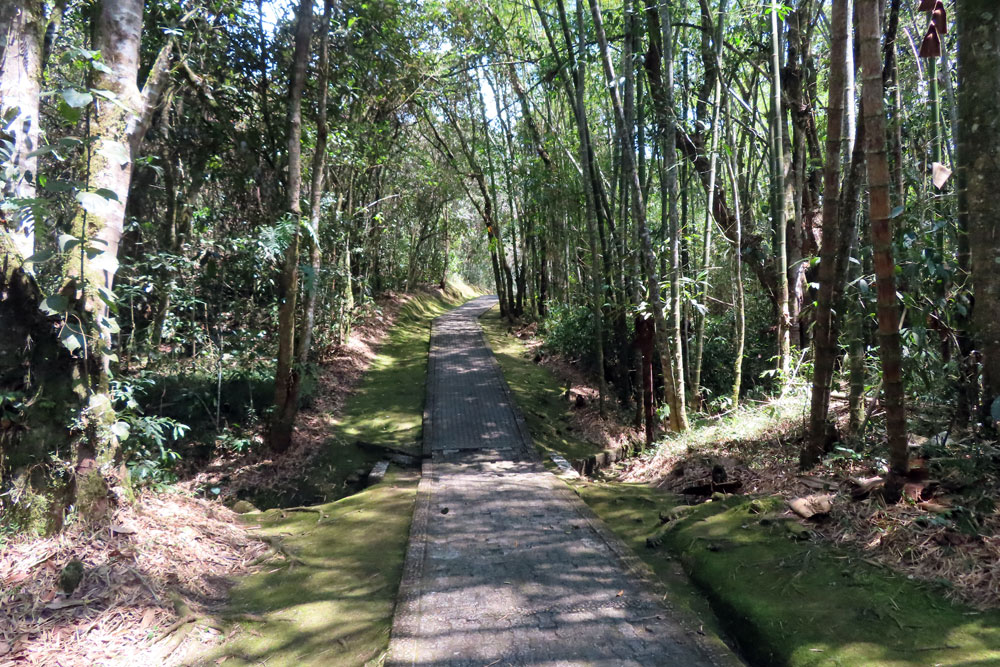
First stop was the museum, which was not very inspiring. Then we set off on a long walk round the site eventually climbing up to a plateau with a wondrous view along the way. We passed many of the guardians statues. Also a fountain in the river.
We stopped for fresh juice and the cake at the on-site tea room.

Click on any of the thumbnail photos for a larger version
 |
 |
 |
 |
 |
 |
 |
 |
 |
 |
 |
 |
 |
 |
 |
 |
We were back at the hotel by 2 pm and had the afternoon off, this included a little walk of discovery around the hotel complex and a beer in the garden. And dinner in the restaurant again that night.
Next day we had a really pleasant breakfast. We left at 9 for a full day tour with Julian and Freddie. The first stop was at the narrows of the Magdalena River. The Magdalena River, the most important of Colombia, crosses the country and is 1,500 kilometres from south to north before emptying into the Caribbean Sea. Here its width is about 2.2 meters.at its narrowest. We were lucky that there was only one other set of tourists there, and also a busker pair playing music. There is a cross for the grave of someone who died trying to jump the narrows
Click on any of the thumbnail photos for a larger version
 |
 |
 |
 |
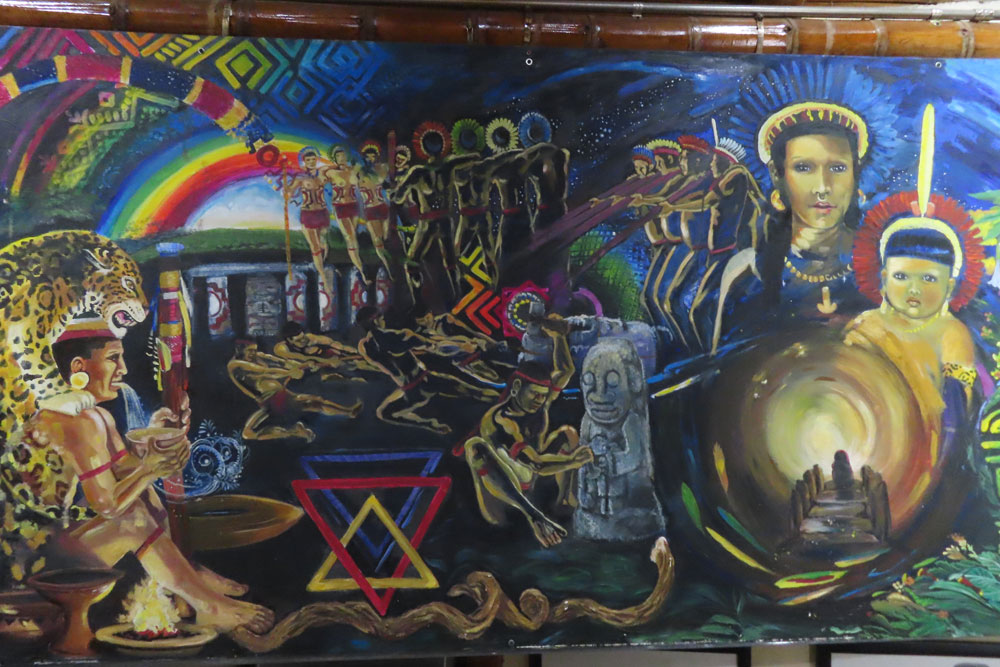
Then we went to the village of Obando where there was a museum run by the local people. This consisted of some deep tombs outside and an indoor section.
Click on any of the thumbnail photos for a larger version
 |
 |
 |
 |
 |
 |
 |
 |
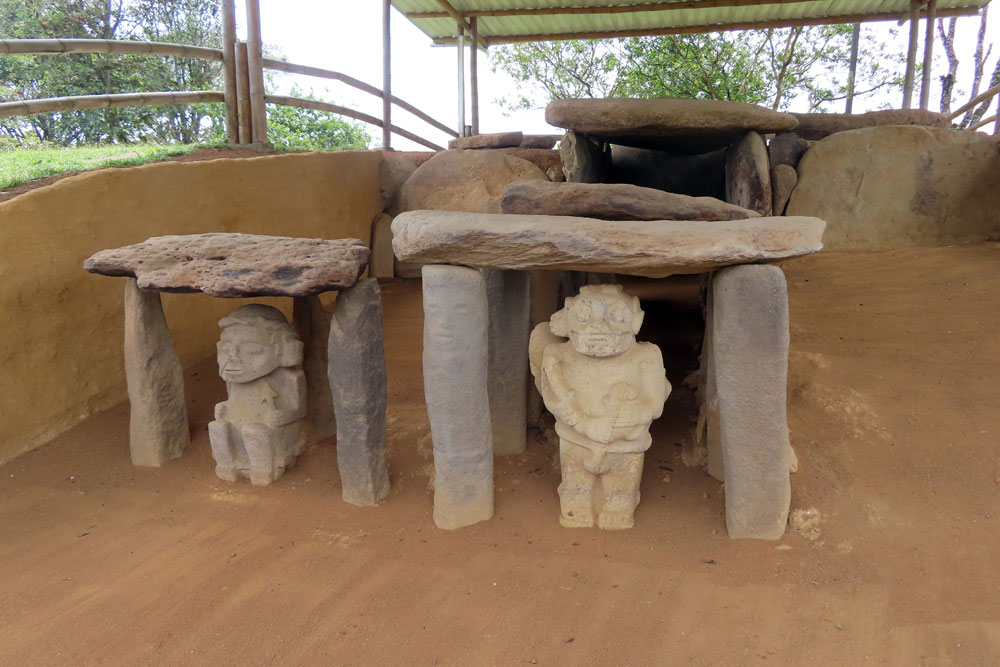
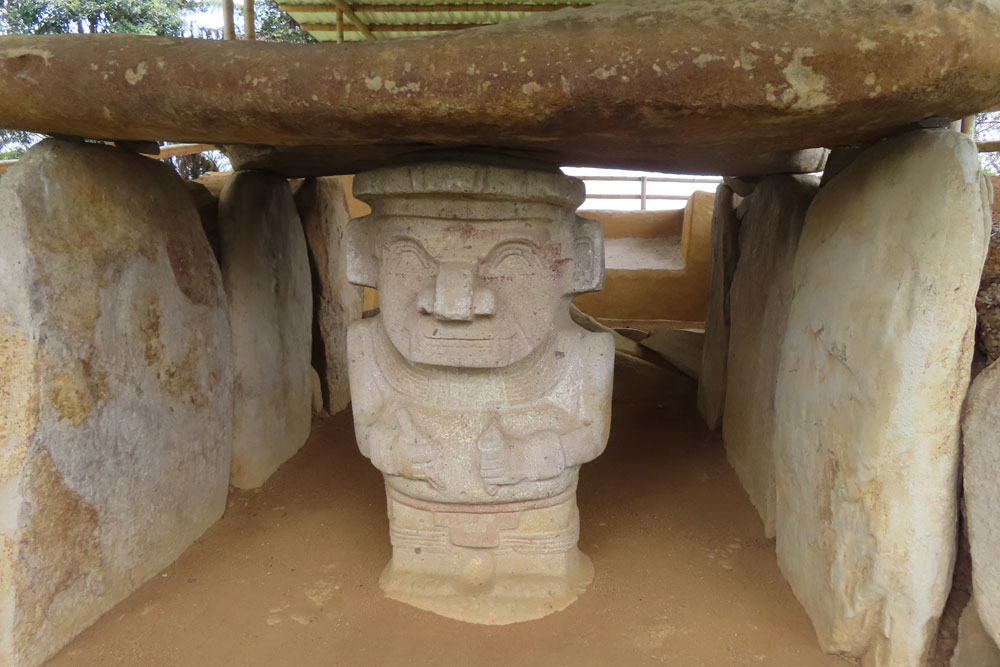
The scenery all the time was magnificent between the different lines of the Andes. First stop the Altos de los Idolos, The second largest group of tombs in the area. We had to walk uphill. It seemed like an eternity to reach the large plateau where these tombs were situated. They were quite impressive but obviously not in their original positions. The walk back down was so much shorter, or so it seemed. From here we proceeded to the Altos de las Piedras with about a dozen graves. Then, back through the town of Isnos. We stopped along the road to look at coffee bushes before arriving back in San Augustine, David went to an ATM.
Click on any of the thumbnail photos for a larger version
 |
 |
 |
 |
 |
 |
 |
 |
 |
 |
 |
 |
 |
 |
 |
 |
We were back at the hotel before three p.m. Later in the afternoon, we sat on the terrace and enjoyed a beer. Dinner was very pleasant but the detachment of the management was quite extraordinary. However when we checked out, I came across the lady owner, and had a chat to her about the "management" problem. It was in Spanish, as I think her problem was that she avoided talking to English speaking people as she was self conscious about her lack of English. At the end of the day we parted friends
Another pleasant breakfast and we were on the road with Freddie by 9 o’clock on our way to Popayan, this journey took just four hours, despite the unpaved road for 90 minutes through the National park. There was not much to see here other than trees. We were held up a couple of times by long roadworks.
Click on any of the thumbnail photos for a larger version
 |
 |
 |
 |