In the mid-15th century, the Portuguese landed on the Senegal coastline, followed by traders representing other countries, including the French. Various European powers—Portugal, the Netherlands, and Great Britain—competed for trade in the area from the 15th century onward. In 1677, France gained control of what had become a minor departure point in the Atlantic slave trade—the island of Gorée next to modern Dakar, used as a base to purchase slaves from the warring chiefdoms on the mainland. 18th century European missionaries introduced Christianity to Senegal in the 19th century. It was only in the 1850s that the French began to expand onto the Senegalese mainland after they abolished slavery and began promoting an abolitionist doctrine.
Getting independence from France in 1959, Senegal was ruled by Senghor till 1981. His hand picked successor then was President from 1981 to 2000. Abdoulaye Wade then became president from 2000 to 2012. The 2012 presidential election was controversial due to President Wade wanting to stand for a further term, but the opposition argued he should not be considered eligible to run again. In the end, Macky Sall, of the Alliance for the Republic, won, and Wade conceded the election to Sall.
In comparison to many African countries, Senegal has had a peaceful history since independence
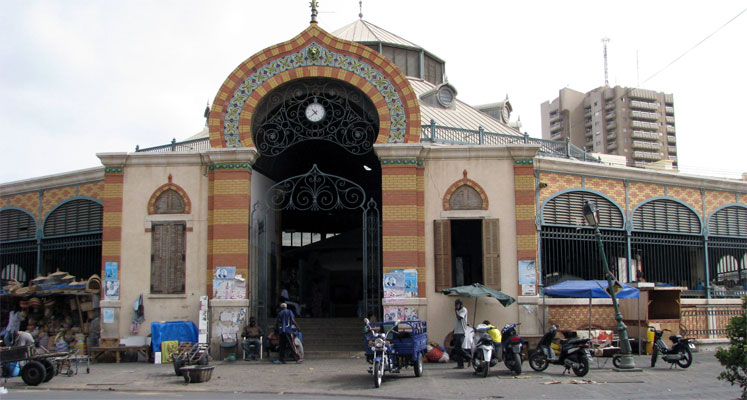
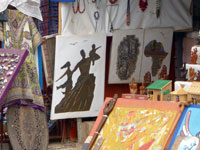
Our tour started with the inevitable "local market", though Dakar's market was more up-market than the others we had seen in West Africa
Click on any of the thumbnails to get a bigger version of the picture
 |
 |
 |
 |
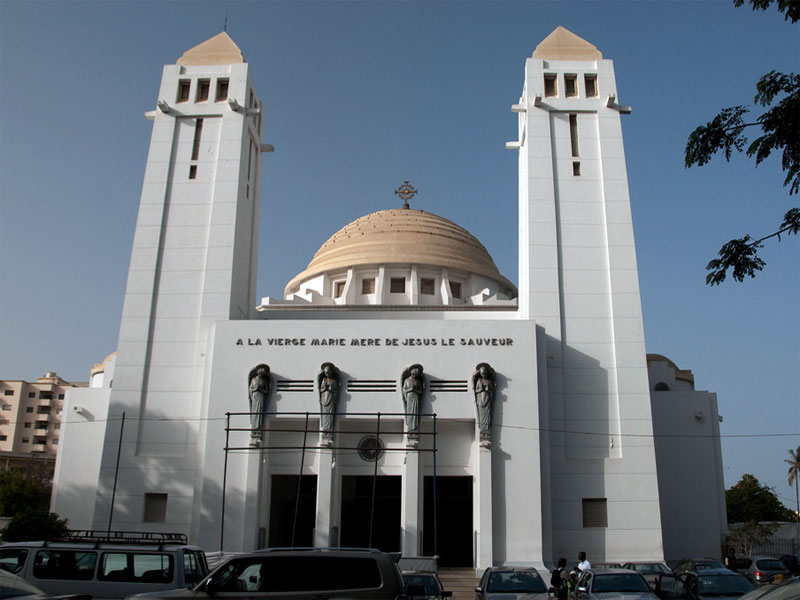
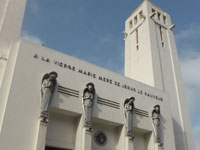
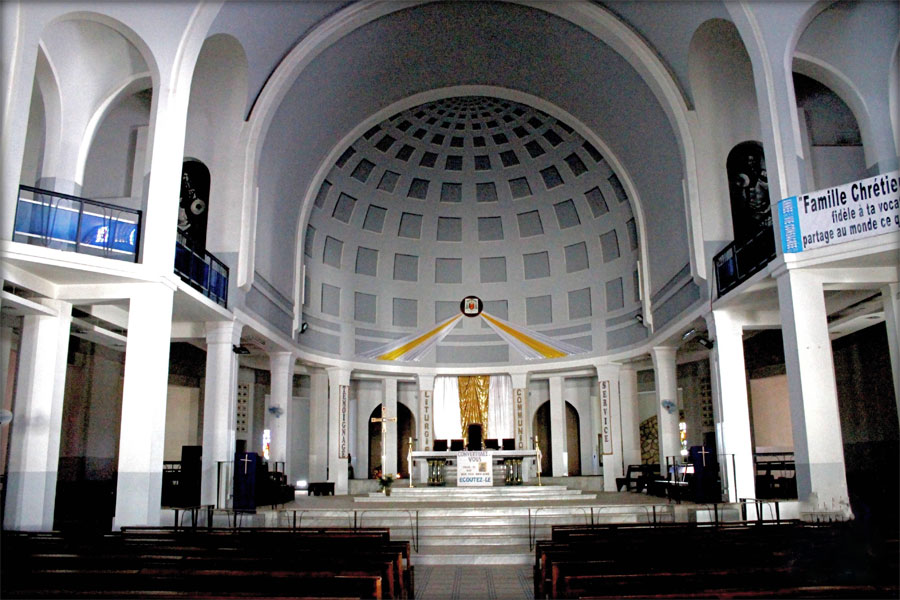
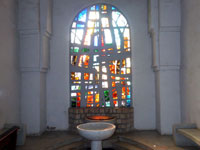
Dakar Cathedral was built on the site of an ancient Muslim cemetery, whose land was granted by the government to the church. The cathedral was consecrated by Cardinal Jean Verdier, archbishop of Pari,s on 2 February 1936. In 2001 the funeral of former President Leopold Senghor was held in the church here
Then we had an odd photostop at The Grand Mosque which was opened in 1964 by Hassan II, King of Morocco, and Senegalese President Senghor. It was designed by French and Moroccan architects.We were not permitted to enter.
Click on any of the thumbnails to get a bigger version of the picture
 |
 |
 |
 |
 |
 |
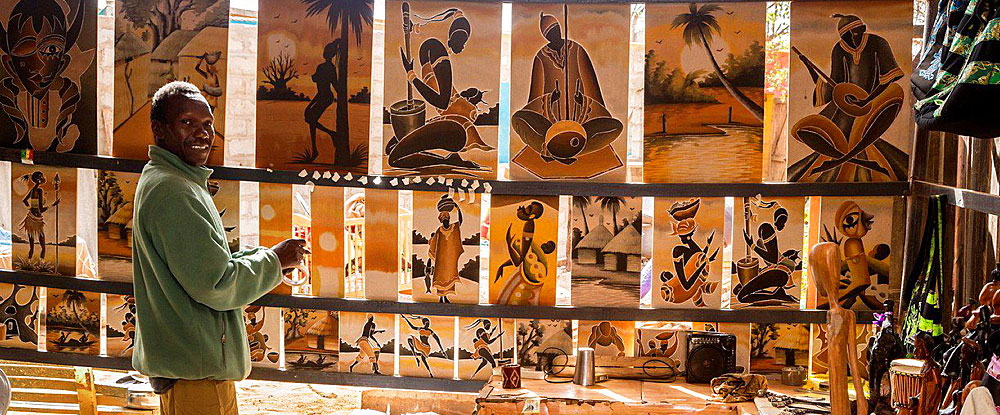
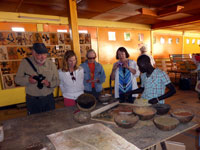
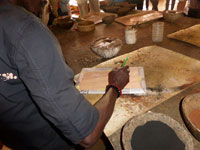
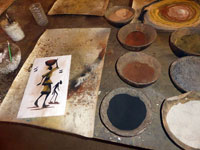
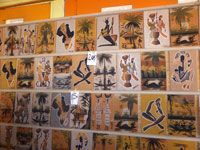
The most interesting stop was to see Sand Painting. The artist paints his picture using a white glue of Arabic gum from the acacia tree and from the sap of the baobab. This picture base is nearly invisible on white paper, The sand is poured over the paper: the sand being of a variety of colours from locations across the country. At this stage the painting looks like just a heap of sand - all higglety pigglety. The final dramatic flourish is to tip the thing upside down, the surplus sand falls away and you see for the first time the finished artwork
Click on any of the thumbnails to get a bigger version of the picture
 |
 |
 |
 |
 |
 |
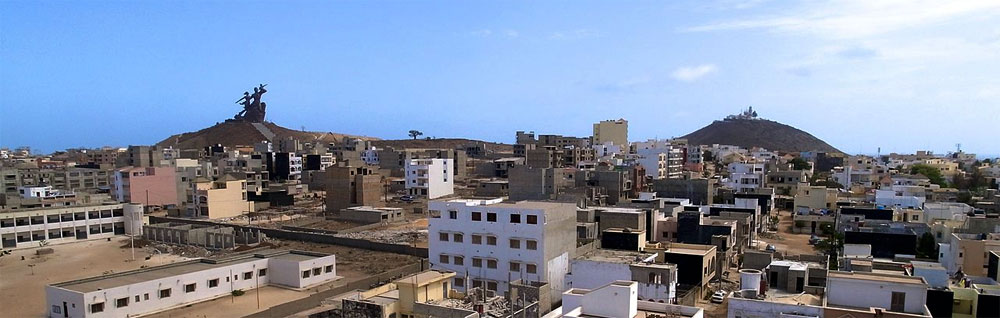
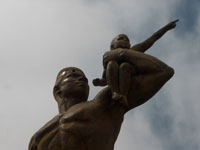
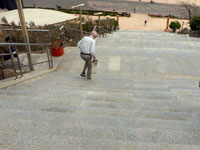
The African Renaissance Monument is massive and approached by a stiff climb up hundreds of steps. It is a 49 meter tall bronze statue located on a hilltop outside Dakar. Built overlooking the Atlantic, the statue was said to be designed by the Senegalese architect Pierre Goudiaby after an idea presented by president Abdoulaye Wade and built by a company from North Korea. Site preparation on top of the 100-meter high hill began in 2006, and construction of the bronze statue began 2008. It was completed in 2010. It is the tallest statue in Africa.
Opponents of the statue noted that the endeavour cost the Senegalese government over $27 million despite a country-wide economic crisis. In addition to the exorbitant price tag, the statue received a great deal of criticism due to the fact that it used very few African people in its creation. Despite claims to the contrary, it seems that the piece was designed by a Romanian architect and subsequently built by a North Korean construction firm. The design itself has also come under fire for its startlingly sexist overtones- given themuscular male figure seemingly rescuing a damsel whose single breast has been revealed in the swoon. Unfortunately, Senegal could not afford the $27m price tag and found itself in the ironic position of paying for its independence statue by ceding land to the state-owned North Korean firm that built it
The giant landmark was expected to bring a great deal of tourist revenue to the country: however ,in a fiercely contested move, Wade himself claims 35% of all such revenue citing intellectual property rights!.
Click on any of the thumbnails to get a bigger version of the picture
 |
 |
 |
 |
 |
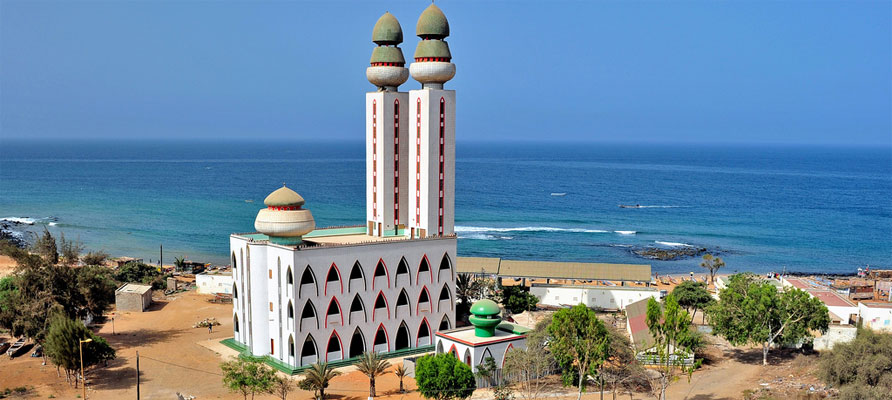
The Mosque of the Divine was built by Mohamed Gorgui Seyni Guèye (1926–2007), a holy man who claimed to see the mosque in a dream. He followed the dream to the beach on June 28, 1973, where he received an order from the Lord to build it. The mosque has become a "photostop" for tourists to and from the African Renaissance Monument. You view it from afar.
Click on any of the thumbnails to get a bigger version of the picture
 |
 |
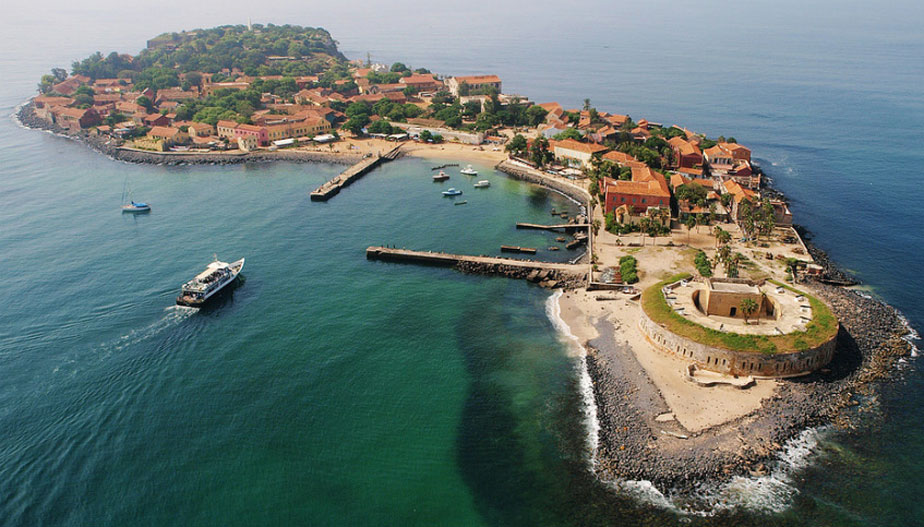
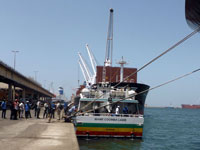
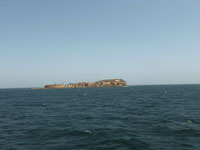
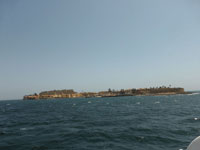
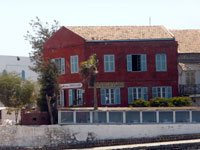
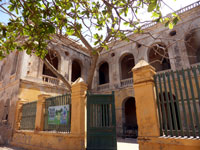
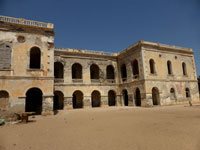
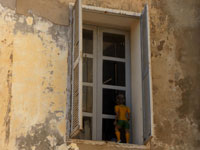
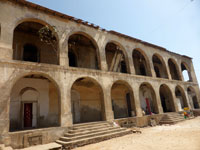
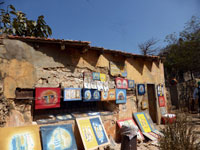
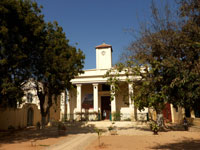
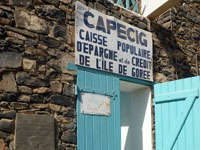
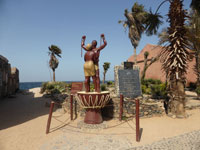
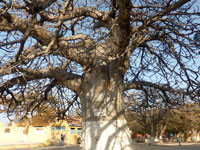
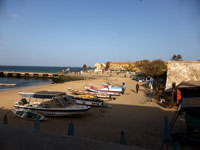
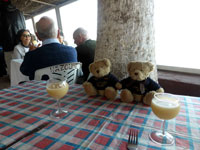
Gorée Island was both a high point on the trip and a low point. The high was the island and its wonderful architecture that, though a bit tumbledown in places, was the original. The island has not had any modern development. The low was the Silversea organisation - 200 of us eating dinner in a cold building with cold food, in a restaurant that could clearly only handle half that number
Gorée is a small island 900 metres in length and 350 metres in width. Being almost devoid of drinking water, the island was not settled before the arrival of Europeans. The Portuguese were the first to establish a presence on Gorée c. 1450, where they built a small stone chapel and used land as a cemetery.
Gorée is known as the location of the House of Slaves, built by an Afro-French Métis family about 1780. It is now used as a tourist destination to show the horrors of the slave trade throughout the Atlantic world. After the decline of the slave trade in the 1770s , the town became an important port for the shipment of peanuts, peanut oil, gum arabic, ivory, and other products of the "legitimate" trade. It was probably in relation to this trade that the so-called Maison des Esclaves was built. The building started gaining reputation as a slave depot mainly because of the work of its curator, who was able to move the audiences who visited the house with his performance.
The official story is that millions of African slaves passed through the house's Door of No Return, which faces West across the Atlantic; countless visitors have come to contemplate the slave trade and to pay heartfelt tribute, including Nelson Mandela, Pope John Paul II and the last three U.S. presidents.
Historical studies suggest that 33,000 slaves were transferred from Gorée Island – a huge number to be sure, but a tiny fraction of what the island's official history claims. And, of those, perhaps zero were moved from the House of Slaves or out of its Door of No Return. "Historians say the door faced the ocean so that the inhabitants of the house could chuck their garbage into the water," the AP says. "No slaves ever boarded a ship through it." The historian Ana Lucia Araujo told the news agency, "It’s not a real place from where real people left in the numbers they say.” Historians first uncovered the apparent truth about Gorée in the 1990s. But almost 20 years later, the site's emotional power is still strong – as is its prominent place in a history that it actually had very little to do with. But that might be about something much bigger than just the persistence of myth or the challenge in overturning a too-good-to-be-true story.
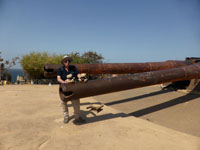
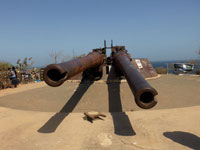
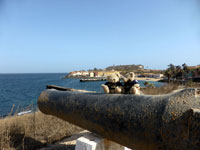
The 240mm guns on the top of the island came from a French battleship, and played a significant part in seeing off the British in 1940 in the Battle of Dakar. No one on the Silver Cloud seemed to know anything about the battle, nor the guns!!
Our dinner was at Chevalier de Boufflers, a run down restaurant near the quay which could not handle 200 people. There was a cold wind, and we had too much time to spare after looking round the island.
Click on any of the thumbnails to get a bigger version of the picture
 |
 |
 |
 |
 |
 |
 |
 |
 |
 |
 |
 |
 |
 |
 |
 |
 |
 |
 |
 |
 |
 |
 |
 |
 |
 |
 |
 |
 |
 |
 |
 |
 |
 |
 |
 |
 |
 |
 |
 |
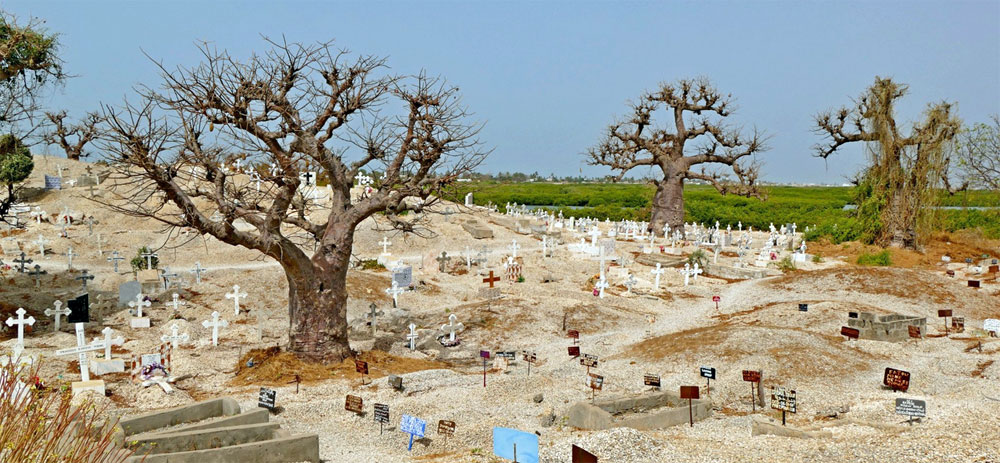
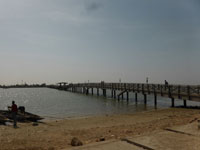
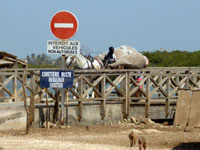
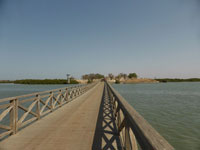
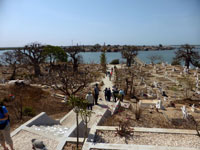
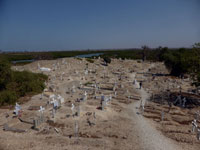
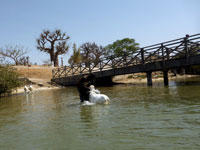
Fadiouth, linked by a bridge to Joal on the mainland, is an island made entirely of clam shells washed up by the tides. The millions of seashells accumulated over the years have been held strong by the roots of mangroves, reeds and giant baobabs. Shells are a part of everything in the town and are incorporated into the architecture as well. While the streets paved in shells draw a crowd, the second shell island, connected to Fadiouth via a stilted wooden bridge, is the true gem of the area. Known only for its cemetery, the second island is also completely made out of shells. Although its simple and barren landscape could easily be ignored, the island is in fact very unique. 90% of people in Senegal adhere to Islam, yet this entire island attached to Fadiouth is dedicated to a cemetery of simple graves, marked by white Christian crosses. Also buried in shells, the cemetery is a strange monument to the minority religion of the nation, and has adapted to the island’s shell landscape to form a beautiful graveyard.
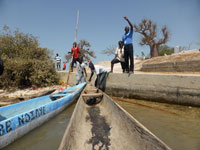
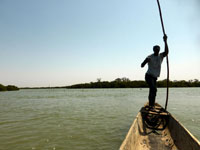
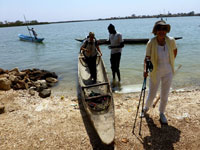
We walked across the long wooden bridge to get to the island, then through a small village, the narrow streets lined with "craft" shops, and eventually came to a second bridge that led to the shell cemetery. Chris could not face the long walk back so we took one of the available dugout canoes - but she could not get in to it and in spite of our shouts of "no" the canoe owner picked her up bodily, and managed to crack one of her ribs in throwing her unceremoniously over his shoulder.
Click on any of the thumbnails to get a bigger version of the picture
 |
 |
 |
 |
 |
 |
 |
 |
 |
 |
 |
 |
 |
 |
 |
 |
 |
 |
 |
 |
 |
 |
 |
 |
 |
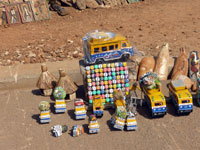
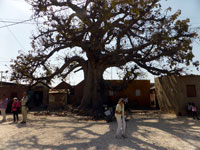
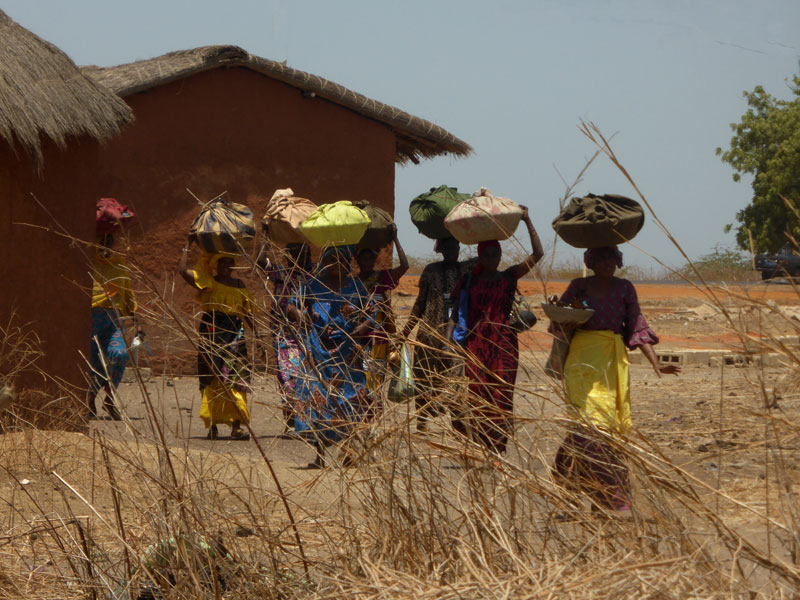
We stopped at a genuine local village, and were allowed to see it all, warts and all. They had not been fully warned as it took a good 10 minutes for half a dozen village ladies to get organised with their trinkets for sale.
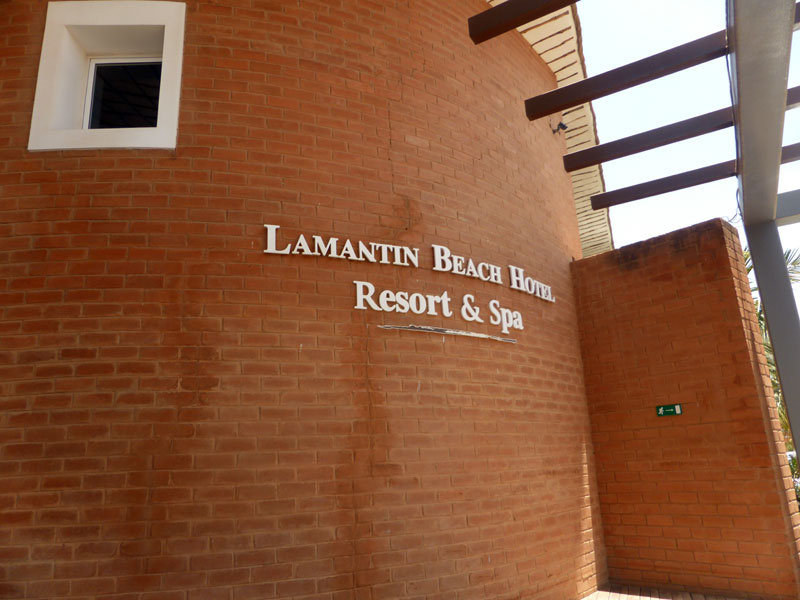
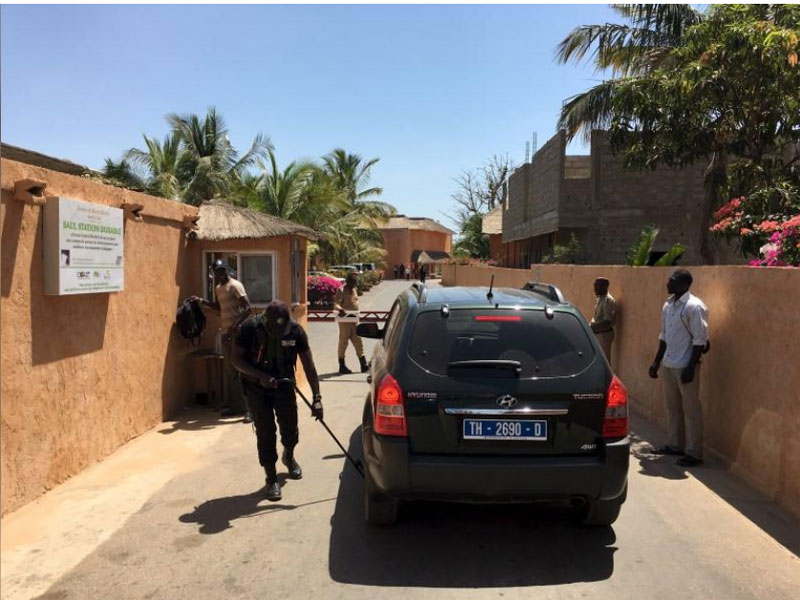
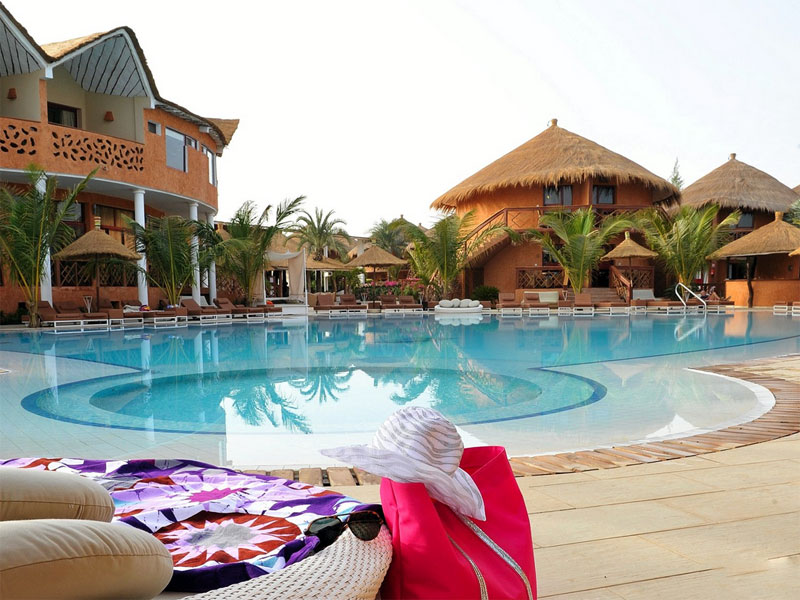
And a good, albeit buffet, lunch at Lamantin Beach Resort. The fact that our bus could not enter the hotel grounds and we all had to go through airport style security in order to get our lunch, shows that Senegal is on some sort of terrorist emergency; but I never found out what the threat was.
Click on any of the thumbnails to get a bigger version of the picture
 |
 |
 |
 |
 |
 |
 |
 |
 |
 |