The town and its architectural monuments are listed by UNESCO.
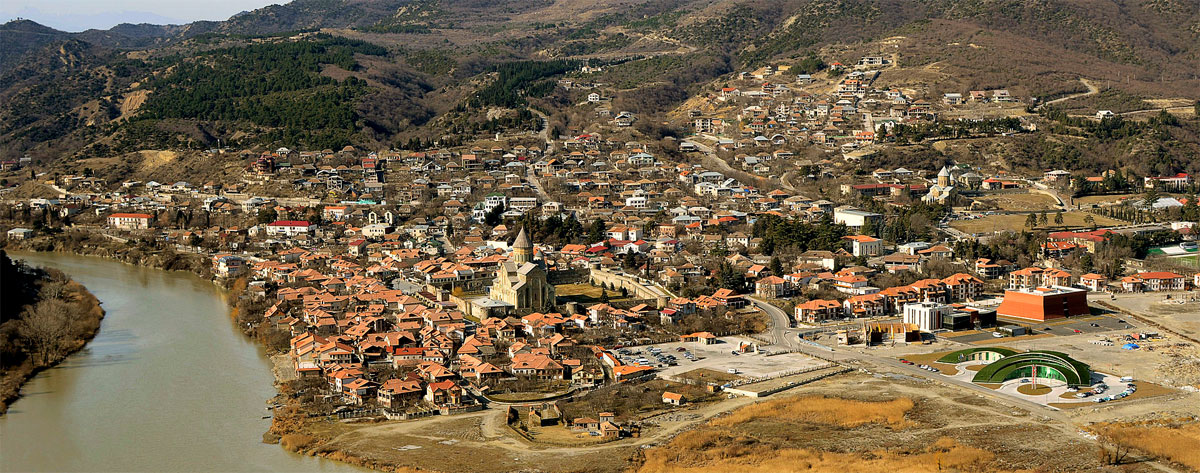
Mtskheta is one of the oldest cities of Georgia, it is about 20 kilometres north of Tbilisi, at the confluence of the Kura and Aragvi rivers. Due to its historical significance and several cultural monuments, the "Historical Monuments of Mtskheta" became a UNESCO World Heritage Site in 1994. As the birthplace and one of the most vibrant centres of Christianity in Georgia, Mtskheta was declared as the "Holy City" by the Georgian Orthodox Church in 2014. In 2016 the Historical Monuments of Mtskheta were placed by UNESCO under Enhanced Protection, a mechanism established for the Protection of Cultural Property in the Event of Armed Conflict.
Visitors, mainly day visitors, travel out from Tbilisi to admire the Jvari Monastery and the Svetitskhoveli Cathedral. The streets of the town are pleasant to wander round, but are mainly selling tourist tat. We enjoyed a wine icecream - actually no different in taste to normal ice creams
Jvari Monastery
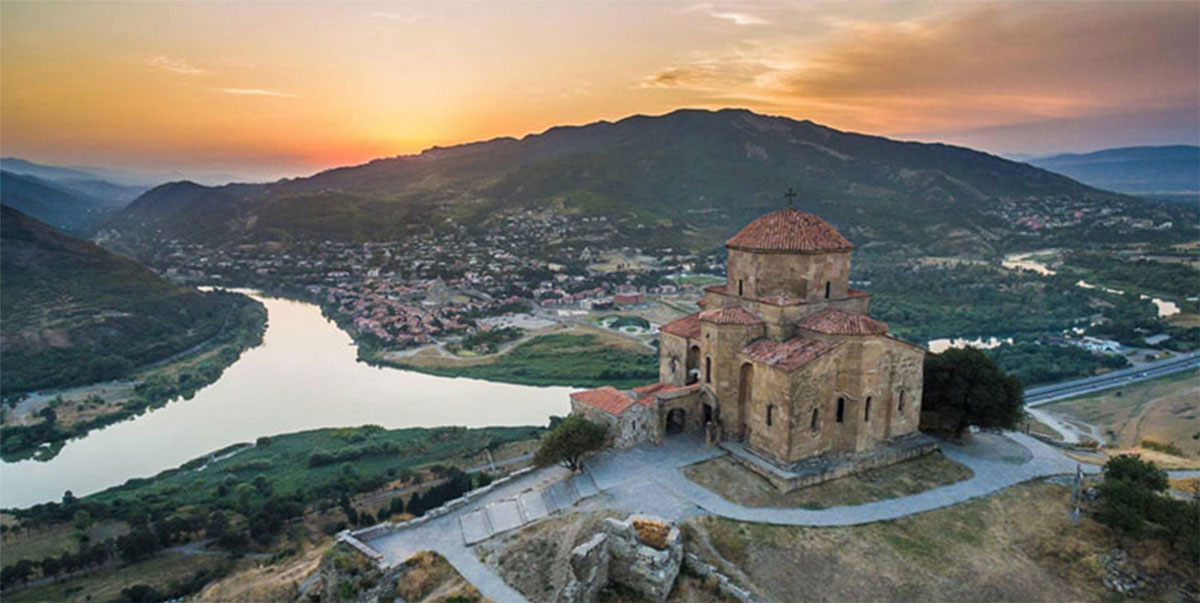
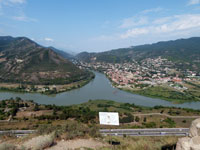
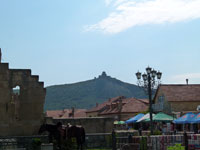
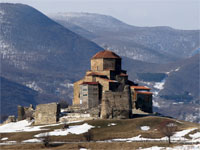
Jvari Monastery dates from the 6th century. It stands on the rocky mountaintop at the confluence of the Mtkvari and Aragvi rivers, overlooking the town of Mtskheta. According to traditional accounts, on this location in the early 4th century Saint Nino, a female evangelist credited with converting King Mirian III of Iberia to Christianity, erected a large wooden cross on the site of a pagan temple. The cross was reportedly able to work miracles and therefore drew pilgrims from all over the Caucasus. A small church was erected over the remnants of the wooden cross in c.545 named the "Small Church of Jvari".
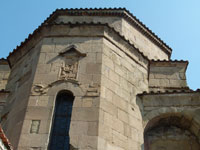
The present building, or "Great Church of Jvari", is generally held to have been built between 590 and 605 by Erismtavari Stepanoz I. This is based on the Jvari inscriptions on its facade which mentions the principal builders of the church: The importance of Jvari complex increased over time and attracted many pilgrims. In the late Middle Ages, the complex was fortified by a stone wall and gate, remnants of which still survive.
During the Soviet period, the church was preserved as a national monument, but access was rendered difficult by tight security at a nearby military base. After the independence of Georgia, the building was restored to active religious use. Jvari was listed together with other monuments of Mtskheta in 1994 as a UNESCO World Heritage Site for its outstanding universal value. The historic churches of Mtskheta, are outstanding examples of medieval religious architecture in the Caucasus and demonstrate the high artistic and cultural level attained by this ancient kingdom.
Click on any of the thumbnails to get a bigger version of the picture
 |
 |
 |
 |
 |
Svetitskhoveli Cathedral
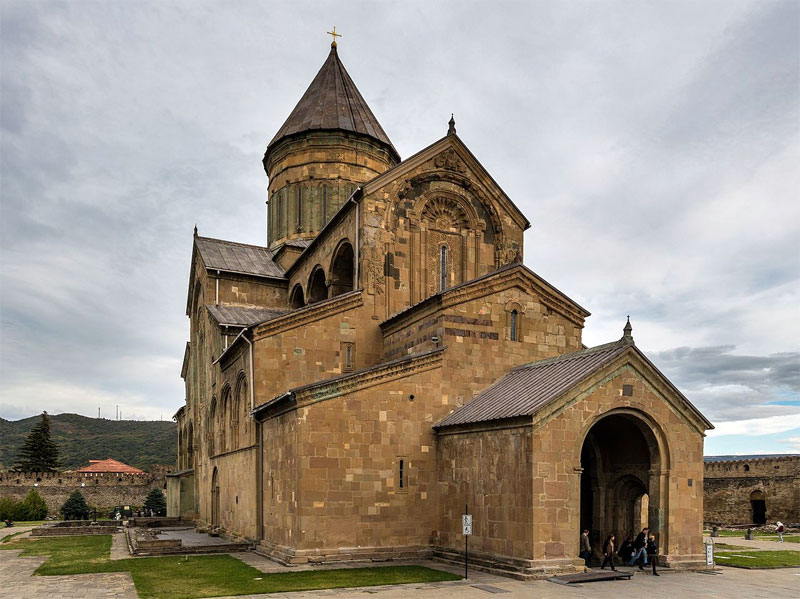
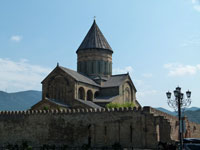
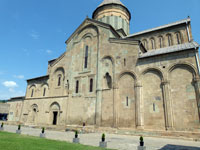
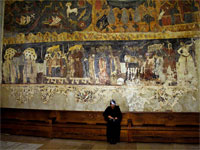
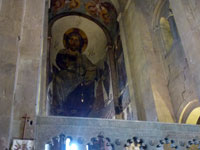
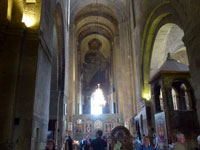
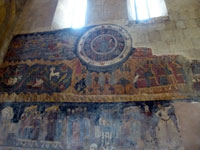
Dates from 11th century.. Known as the burial site of Christ's mantle, Svetitskhoveli has long been one of the principal Georgian Orthodox churches and is among the most venerated places of worship in the region. The present structure was completed in 1029 by the medieval Georgian architect Arsukisdze, although the site itself dates back to the early fourth century. Svetitskhoveli is considered an endangered cultural landmark; it has survived a variety of adversities, and many of its priceless frescoes have been lost due to being whitewashed by the Russian Imperial authorities
Arguably the most well known cathedral in Georgia, Svetitskhoveli is also one of the biggest in the country. The temple is on another UNESCO World Heritage listing because of its glorious architecture. Svetitskhoveli was the religious centre for all Christians for many centuries. There is a legend that a seamless robe of Jesus Christ is buried within the temple. Another legend states that King Giorgi ordered the hand of amputated Svetitskhoveli’s architect, so that he could never recreate something so beautiful ever again. There is still a hand depicted on the Northern facade of the building. Small fragments of paintings which date back to the 11th century let you live through the lives of ancient Georgia.
Click on any of the thumbnails to get a bigger version of the picture
 |
 |
 |
 |
 |
 |
 |
 |
 |
 |
On from Mtskheta we followed the Georgian Military Highway, which has existed as a route since ancient times, but until the 19th century it was little more than a track. The Russians made it into a major road as an aid to suppressing rebellious tribes in the Caucasus, and the highway bores through mountains in a sequence of tunnels and climbs over passes frequently blocked by snow in winter.
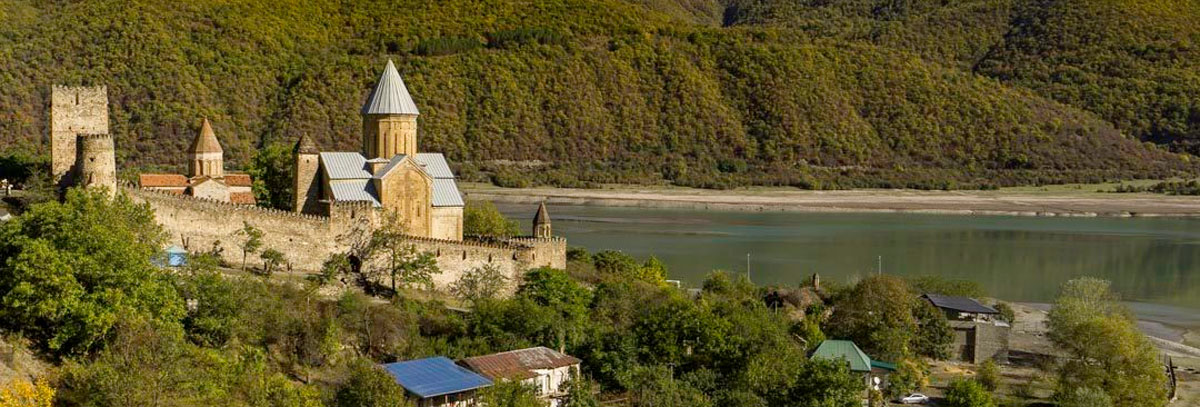
A viaduct leads to the churches and fortress of Ananauri . A UNESCO site which occupies a wonderful location overlooking the Aragvi Valley and Zhinvali Reservoir.