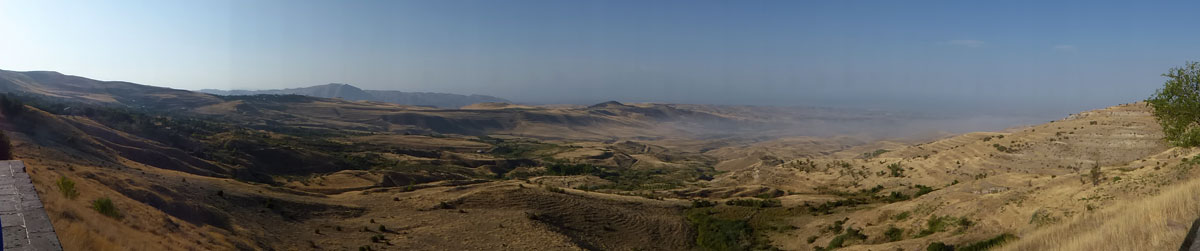

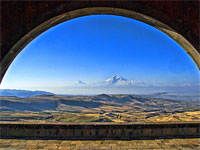
“One of the most peaceful places, and the clouds came in front of the Mount Ararat (Masis), but still looked beautiful”, National Geographic are perhaps a bit over the top with their description about this place. It is on the direct route from Yerevan to Geghard and Garni, so the number of tourists takes the edge off any peacefulness. The view with clouds in place is still good, but I would have liked to have seen it with Ararat visible
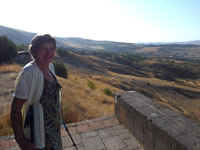
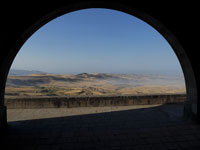
The Arch of Charents was erected in 1957 and named in honour of Armenian poet Eghishe Charents, who wrote the best poem, dedicated to Armenia, full of true love and pride. They say, Charents loved this place and used to visit it frequently. The author of the construction is prominent architect Rafayel Israyelyan.
Click on any of the thumbnails to get a bigger version of the picture
 |
 |
 |
 |
| We saw this, but we .. |
..should have seen this |
Geghard
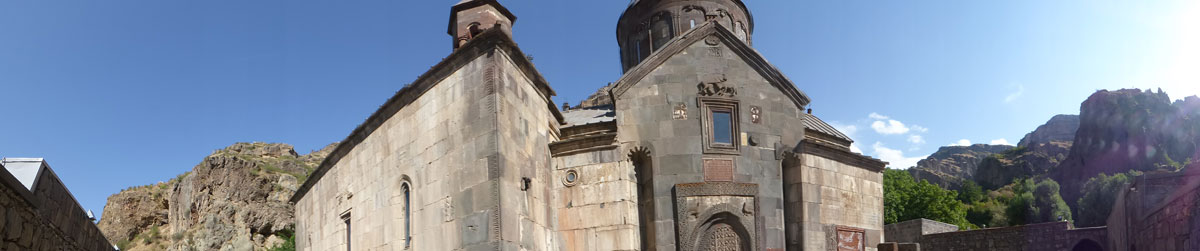
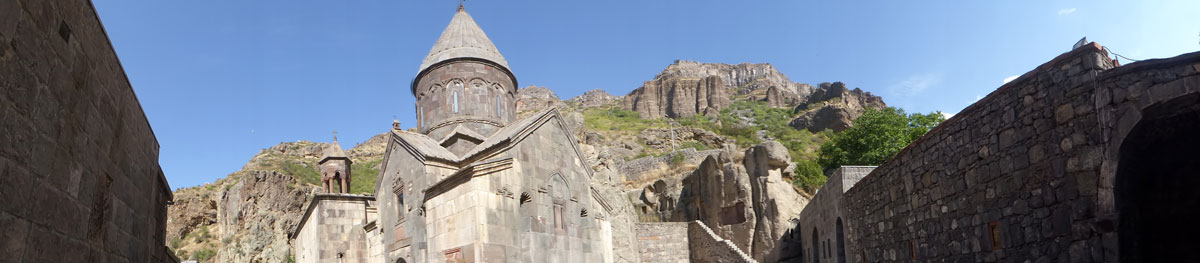
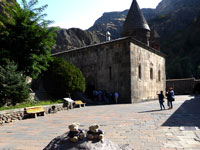
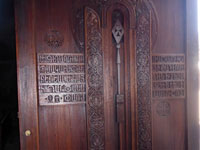
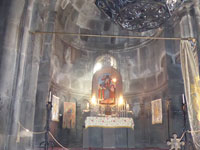
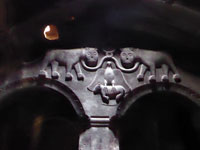
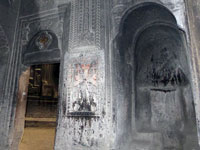
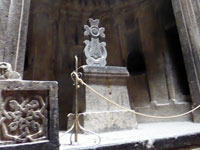
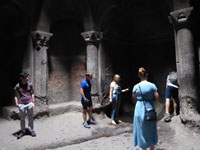
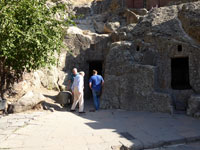
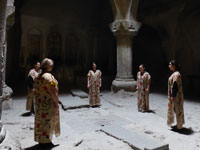
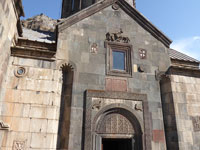
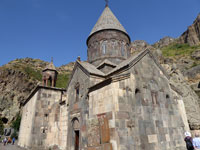
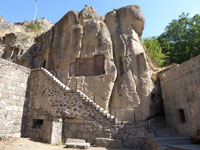
Geghard is a medieval monastery in the Kotayk province of Armenia, being partially carved out of the adjacent mountain, surrounded by cliffs. It is listed as a UNESCO World Heritage Site.
While the main chapel was built in 1215, the monastery complex was founded in the 4th century by Gregory the Illuminator at the site of a sacred spring inside a cave. The monastery had thus been originally named Ayrivank, meaning "the Monastery of the Cave". The name commonly used for the monastery today, Geghard, or more fully Geghardavank meaning "the Monastery of the Spear", originates from the spear which had wounded Jesus at the Crucifixion, allegedly brought to Armenia by Apostle Jude, called here Thaddeus, and stored amongst many other relics. Now it is displayed in the Echmiadzin treasury.
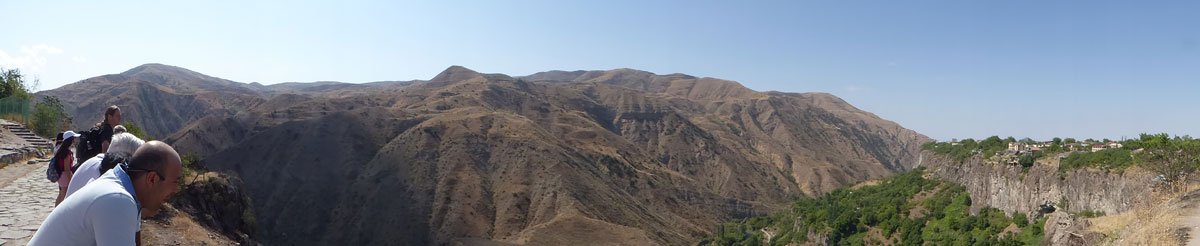
The spectacular towering cliffs surrounding the monastery are part of the Azat River gorge, and are included together with the monastery in the World Heritage Site listing. Some of the churches within the monastery complex are entirely dug out of the cliff rocks, others are little more than caves, while others are elaborate structures, with both architecturally complex walled sections and rooms deep inside the cliff.
Click on any of the thumbnails to get a bigger version of the picture
 |
 |
 |
 |
 |
 |
 |
 |
 |
 |
 |
 |
 |
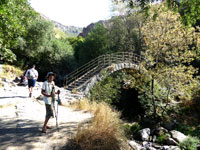 |
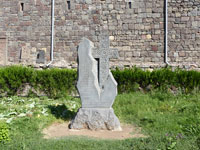 |
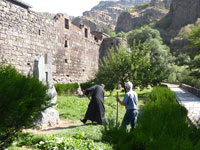 |
Temple of Garni
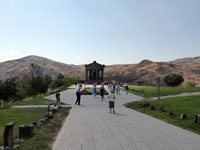
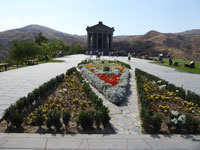
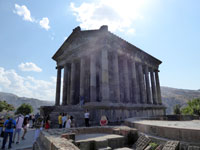
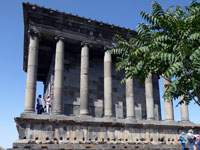
The Temple of Garni is the only standing Greco-Roman colonnaded building in Armenia and indeed in the whole of the former Soviet Union. An Ionic temple located in the village of Garni, Armenia, it is the best-known structure and symbol of pre-Christian Armenia. The structure was probably built by king Tiridates I in the first century AD as a temple to the sun god Mihr. After Armenia's conversion to Christianity in the early fourth century, it was converted into a royal summer house of Khosrovidukht, the sister of Tiridates III. According to some scholars it was not a temple but a tomb and thus survived the universal destruction of pagan structures.
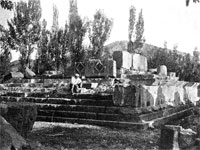
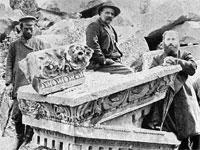
It collapsed in a 1679 earthquake. Renewed interest in the 19th century led to excavations at the site in early and mid-20th century and its eventual reconstruction between 1969 and 1975. It is one of the main tourist attractions in Armenia and the central shrine of Armenian neopaganism.
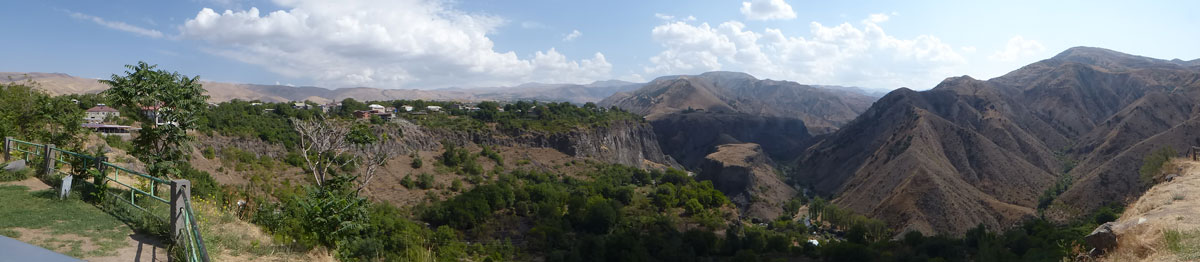
Click on any of the thumbnails to get a bigger version of the picture
 |
 |
 |
 |
 |
 |
 |
 |
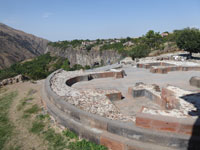 |
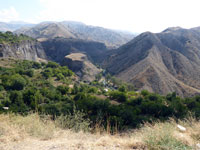 |
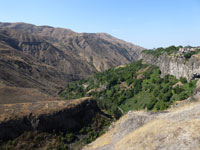 |
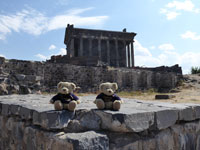 |
 |
 |
 |
 |
Showing reconstruction |
Garni in 1918 |
Lunch at Three Jugs
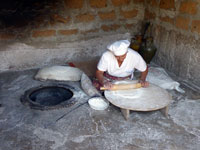
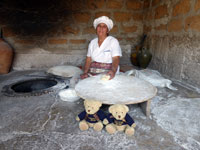
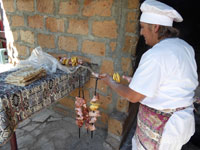
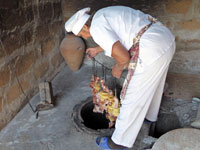
Their gizmo when we had lunch here was to prepare and bake Georgian bread in their own oven. The lady made the dough, slapped in onto the inside of the hot clay oven, and a few minutes later extracted the finished product, which we enjoyed with our lunch.
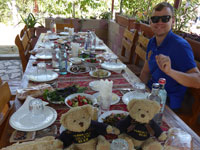
Lunch was at a table in the garden, and we were with a group of 8 people. I doubt that you could get lunch for 2 here by just turning up.
A typical Georgian lunch, with all the bits that you would expect in Georgia
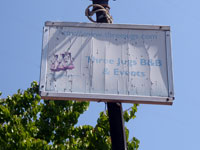
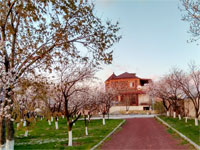
It is at the very edge of Tbilisi, so you would lunch here going to or from local monasteries, rather than coming from the city. It is not easy to find, their sign is a bit faded
Click on any of the thumbnails to get a bigger version of the picture
 |
 |
 |
 |
 |
 |
 |
 |
We got back to Yerevan soon after lunch, as it was early to bed - pick up from the hotel at 02.00. Still the delights of Business Class meant at least that we were not slumming it too much
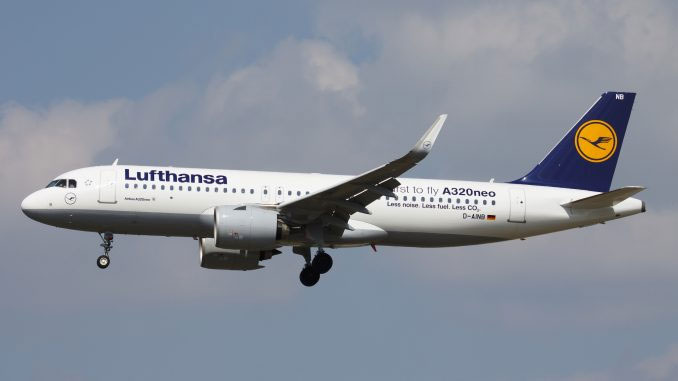
Armenia has so few friends in the world that to get back to Barcelona, our route was Yerevan to Vienna,: Vienna to Frankfurt: Frankfurt to Barcelona. Then the drive back to Moraira, got us back home around 20.00 after 18 hours travelling.
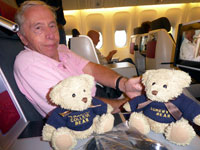
Actually most of Lufthansa's Business Class was rubbish, with 1.5 seats each at the front of a standard A320, with food much as one used to get on tourist class. The one decent flight was from Vienna to Frankfurt, all be it only a hour in duration, which was in a proper business class cabin
Click on any of the thumbnails to get a bigger version of the picture
 |
 |