
Arequipa was founded in 1540 by Garcí Manuel de Carbajal as "Villa Hermosa de Nuestra Señora de la Asunción". After Peru gained its independence from Spain in 1821, Arequipa acquired greater political significance, and was the capital city of Peru from 1835 to 1883.
Since its Spanish founding and over three centuries, the population of the city was mostly of Spanish origin. One aspect that distinguished Arequipa from the rest of the country was the particularly explicit and public commitment of the city to the Spanish Crown, a phenomenon called fidelismo. As a result, the Spanish Monarchy gave the city the title of Faithful by Royal Charter in 1805. Also, because of its distance from other Peruvian cities, Arequipa was not heavily influenced by libertarian movements. Although those libertarian movements (like the one commanded by Pumacahua) and pro-independence military troops entered Arequipa, the city remained under Spaniard control until the Battle of Ayacucho (1824).
Its location at the crossroads of the trade route of silver during colonial times and, after independence, the wool trade route, allowed Arequipa to accumulate administrative, commercial and industrial power. Arequipa is today the country's second city
In 2000, the historic centre of Arequipa was declared a World Heritage Site by UNESCO. However, an 8.4-magnitude earthquake, on 23 June 2001, damaged several of the historical buildings.
Click on any thumbnail photo to get a larger picture
 |
 |
 |
 |
 |
 |
 |
 |
 |
 |
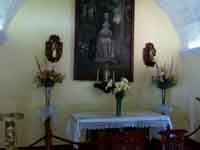
The Monastery of Santa Catalina is a monastery of nuns of the Dominican Second Order. It was built in 1579 and was enlarged in the 17th century. The over 20,000-square-meter monastery was built predominantly in the Mudéjar style, and is characterized by its vividly painted walls. There are approximately 20 nuns currently living in the northern corner of the complex; the rest of the monastery is open to the public.
The monastery was founded by a rich widow, Maria de Guzman. The tradition of the time indicated that the second son or daughter of a family would enter a life of service in the Church, and the monastery accepted only women from upper class Spanish families. Each family paid a dowry at their daughter's admission to the monastery. The dowry expected of a woman who wished to enter as a choir nun--indicated by wearing a black veil—and who thereby accepted the duty of the daily recitation of the Divine Office, was 2,400 silver coins, equivalent to about $150,000 (U.S.) today. The nuns were also required to bring 25 listed items, including a statue, a painting, a lamp and clothes. The wealthiest nuns may have brought fine English china and silk curtains and rugs. Although it was possible for poorer nuns to enter the convent without paying a dowry, it can be seen from the cells that most of the nuns were very wealthy.
In 1871 Sister Josefa Cadena, O.P., a strict Dominican nun, was sent by Pope Pius IX to reform the monastery. She sent the rich dowries back to Europe, and freed all the servants and slaves, giving them the choice of either remaining as nuns or leaving.
At its height, the monastery housed approximately 450 people (about a third of them nuns and the rest servants) in a cloistered community. In the 1960s, it was struck twice by earthquakes, severely damaging the structures, and forcing the nuns to build new accommodation next door. It was then restored in stages by groups including Promociones Turisticas del Sur S.A. and World Monuments Fund and opened to the public.
Click on any thumbnail photo to get a larger picture
 |
 |
 |
 |
 |
 |
 |
 |
 |
 |
 |
 |
 |
 |
 |
 |
 |
 |
 |
 |
 |
 |
 |
 |
Museo Santuarios Andinos
In September 1995, during an ascent of Mt. Ampato (6309 m), Reinhard and Zárate found a bundle inside the crater that had fallen from an Inca site on the summit. To their astonishment, the bundle turned out to contain the frozen body of a young girl. They also found many items that had been left as offerings to the Inca gods strewn about the mountain slope down which the body had fallen. These included statues and food items. A couple of days later, the body and the items were transported to Arequipa, where the body was initially kept in a special refrigerator at Catholic University. Owing to melting caused by volcanic ash from the nearby erupting volcano of Sabancaya, most of the Inca burial site had collapsed down into a gully that led into the crater. Reinhard published a detailed account of the discovery in his 2006 book entitled, The Ice Maiden: Inca Mummies, Mountain Gods, and Sacred Sites in the Andes.
As Reinhard and Zárate struggled to lift the heavy bundle containing Juanita's body on Ampato's summit, they realized that her body mass had probably been increased by freezing of the flesh. When initially weighed in Arequipa, the bundle containing "Juanita" weighed over 90 pounds (40.82 kilos). Juanita is almost entirely frozen, making her a substantial scientific find. Like only a few other high-altitude Inca mummies, Juanita was found frozen and thus her remains and garments were not desiccated like that of mummies found in other parts of the world. She was naturally mummified, instead of being artificially mummified, such as is the case with Egyptian mummies. Her skin, organs, tissues, blood, hair, stomach contents and garments are extremely well-preserved, offering scientists a rare glimpse into Inca culture during the reign of the Sapa Inca Pachacuti.
Radiologist Elliot Fishman concluded that she was killed by blunt trauma to the head. He observed that her cracked right eye socket and the two-inch fracture in her skull are injuries "typical of someone who has been hit by a baseball bat." The blow caused a massive haemorrhage, filling her skull with blood and pushing her brain to one side.
It is thought that Juanita was killed as an offering to the Inca gods sometime between 1450 and 1480 when she was approximately 11–15 years old. "Juanita" has been on display in the Catholic University of Santa María's Museum of Andean Sanctuaries (Museo Santuarios Andinos) in Arequipa, Peru almost continuously since 1996, and was displayed on a tour of Japan in 1999.
Juanita was thought to be the best-preserved Inca mummy in the world until 1999, when three frozen other mummies were discovered by another Reinhard-led team atop a mountain in Argentina. Those were so well-preserved they still had blood in their hearts and lungs, unlike the Ice Maiden.
Click on any thumbnail photo to get a larger picture
 |
 |
 |
 |
 |
Chicha por Gaston Acurio
This well converted old colonial building must be the place to eat in Arequipa: it offers really good food and a very pleasant ambiance to eat it in. Silverseas sometimes surprised me with really good places for lunch, and today was one of them. To tell you the truth, I had no idea who Gaston was (think in terms of an upmarket version of Jamie Oliver) , or that he was famous in Peru, but having had a meal in this restaurant, I can see why he is famous. The restaurant is right opposite the Convent so makes a good place to lunch either before or after visiting the Convent.
Click on any thumbnail photo to get a larger picture
 |
 |
 |
 |
The voyage on Silversea Explorer in South America